Blog Archives
The Arkencrest Chronicles: Battle for Crossroads


The Arkencrest Chronicles: Battle for Crossroads is an epic fantasy that lays out a vast world shaped from the bones of a fallen god, threaded with nations, factions, magical histories, and a young man’s coming-of-age journey. The book opens with myth, maps, and lore, then shifts into the story of Bourdain, an eighteen-year-old raised in the scholarly city of Ikvia, who carries the weight of his parents’ mysterious deaths and the quiet push toward a larger fate. His decision to leave home and join a caravan heading into the wider world feels like the real spark of the narrative. The story blends high fantasy worldbuilding with a classic hero-sets-out structure, and it’s clear from the very first chapters that the stakes will eventually reach the scale of kingdoms and maybe even gods.
I kept noticing how much care the author put into the setting. Whole sections read almost like ancient chronicles, especially the creation myths and the detailed accounts of elves, dwarves, orcs, and other races. Sometimes those lore chapters felt dense, but in a way that reminded me of leafing through the appendices of a much-loved fantasy series. I found myself slowing down to appreciate the small touches, like the smell of ink and seawater in Ikvia or the way the elven forest seems to breathe around its people. When the story shifts back to Bourdain, the tone changes just enough to feel more grounded. His scenes have a quiet emotional center, especially his conversations with Kael and his uncle, which helped balance the heavier mythic material.
I also appreciated the author’s willingness to give readers a wide view of the world right away. You can feel that this is a story about more than one kingdom or one hero. The factions, the ancient seals, the threat of the Devourer, the politics of Sovar, there are a lot of threads, and the book asks you to trust that they’ll matter later. Sometimes I caught myself wishing the pace would sit a little longer with Bourdain before expanding outward, but I was also genuinely curious about each new layer. It felt like walking into a bustling market: overwhelming for a moment, then strangely energizing once you settle into the rhythm.
By the time I finished the opening arc, I felt invested. Bourdain is easy to root for. The world feels lived in. And the writing has a steady confidence, switching between poetic and straightforward without calling too much attention to itself. It’s the sort of fantasy that invites you in slowly, giving you the sense that you’re only glimpsing the start of something much larger.
If you love epic fantasy with rich lore, detailed cultures, and a world that feels ancient and complicated beneath the surface, this book will land well for you. Readers who prefer fast, plot-driven fantasy might find the early chapters a bit methodical, but anyone who enjoys settling into a world and watching a young hero take his first real steps into danger will find plenty to appreciate here. I’d recommend it especially to fans of expansive, map-filled adventures who like to feel the weight of history behind every choice.
Pages: 383 | ASIN : B0FYHW5ZLY

The Shattered Ones

The Shattered Ones follows Ace, a worn-down former protector living in a world swallowed by endless darkness. The sun has vanished. Cities crumble. People lose themselves. Ace tries to drink away what he used to be until a terrified man shows up with news that sparks a search for others like Ace. The story turns into a fight against a brutal gang, a ruthless corporation, and a rising evil while Ace pieces together a strange calling and a fragile hope. By the end, the light finally returns, and the survivors stand in a new world trying to understand what comes next .
I kept feeling this push and pull between grit and heart. The writing dives hard into bleak moments, and sometimes it hit me hard. The city felt alive in a sad way, full of broken people stumbling through pitch-black days. But the author slips in these quiet emotional beats that land with surprising force. Ace’s exhaustion felt real. His shaky hope felt real, too. Those shifts kept me leaning in. I found myself rooting for him even when he was trying his best not to care.
Then the book swings into big action scenes and wild turns. At first, I thought the scale jump might drown the human parts, but it actually worked for me. The chaos made the tender moments brighter. One scene near the end, when the group finally sees the first glow of returning sunlight, honestly caught me off guard with how moving it felt. The writing eases up and lets that warmth sit for a moment.
By the time the epilogue rolled in, the hopeful tone felt earned. The world is far from fixed, but the people are trying, and that small spark of rebuilding hit me in the gut. Seeing Ace in a park months later, watching kids laugh while the city comes back to life, made the whole journey feel worth it. It showed how much he lost and how much he still carries.
I’d recommend The Shattered Ones to readers who like dark worlds but need a thread of light to hold on to. Anyone who enjoys character-driven dystopian stories, rough-edged heroes, or tales about finding purpose in a broken place will get something out of this. It’s heavy at times, sure, but it leaves you with a feeling that you’ll remember.
Pages: 338 | ASIN : B0DBZX1FWS
The Magic Circle

The Magic Circle follows the life of Mary Armstrong, the daughter of a powerful senator whose secret history of incest, trauma, and metaphysical obsession comes to light through her diary. The narrator, Mary’s childhood friend, takes that diary and retells the story as a blend of memory, confession, myth, linguistics, erotic mysticism, and psychological unraveling. The book moves through Mary’s childhood abuse, her attempts to understand it through religion and philosophy, her fixation on the Magi, and her belief that orgasm and God are the same force. As the narrative unfolds, it spirals into ideas about guilt, family collapse, incest as cosmic metaphor, cultural history, race, violence, and the long shadow of forbidden desire.
Reading this book felt wild, stirring, and at times emotionally overwhelming. The writing swings between sharp humor, painful honesty, and surreal insight. Sometimes I felt pulled along by the narrator’s voice, which is chatty and almost confessional. Other times, I felt pinned down by the weight of Mary’s thoughts as she tries to decode her past through religion, linguistics, anthropology, and mythology. I caught myself reacting with both shock and strange admiration. The author does not flinch. She leans into discomfort, and the effect is gripping. There are scenes that left me uneasy, others that made me strangely moved. The mix of intellectual curiosity and emotional rawness kept me on edge in a way that felt honest. The book refuses to tidy anything, and I actually liked that. It mirrors the chaos Mary lived in.
What struck me most was how the story keeps circling back to the idea that forbidden intimacy shapes a life, long after the act itself. The narrator shows us how Mary interprets that childhood violation as something magical, terrifying, and foundational. Her thinking is messy and bold. It is full of leaps that made me raise my eyebrows and then reread the lines just to sit with them. I kept feeling that the book wanted me to see how trauma bends a person’s sense of God, morality, memory, and even language itself. The voice is emotional, angry, tender, and sometimes darkly funny. I felt pulled between sympathy and disbelief. It is rare to read something that so openly stirs up confusion and still feels intentional.
The Magic Circle left me feeling unsettled in a way I appreciated. It is not a light read. It is intense, clever, sometimes messy, and often surprising. I would recommend this book to readers who like psychological depth, taboo subjects, and stories that blend intellect with raw emotion.
Pages: 288 | ASIN : B0G45N7LFH
Do You Have Any Fairies?

Faery Academy of QuillSnap follows Tansy WaterSprite, a “Little” in the Human Realm, being held by her evil guardian, when a mysterious visitor shows up at the toadstool house with an invitation to attend the Faery Academy. She will first have to get there, where she will have to find her inner strength and courage and uncover answers to family and faery secrets.
What was the inspiration for the setup of your story?
One afternoon with my 4-year-old granddaughter on my farm in the Enchanted Land of Iowa, where I live, is in a forest. I took her to see the forest that had just been trimmed of dead branches and brush, which now looks like a true Enchanted Forest.
She said, “I love your Enchanted Forest, Mimi, but do you have any fairies?”
Thinking quickly, I responded, “Of course I do. Over here is where they live, and over here is where they go to school, because they are not born a fairy; they have to go to school to be a fairy.”
She was deep in thought as she considered this information. She was getting ready to go to preschool and didn’t think it was a good idea, since she already knew everything; however, if fairies had to go to school too…
At night, she preferred fairy stories instead of reading a book. Kids are really smart and remember if you repeat part of the story, and I would quickly be told, “Mimi, you already told us that!” I had to start writing it down, and today it is the Faery Academy of QuillSnap: Night of the Purple Moon.
There is a lot of time and care spent on descriptions and building the setting and tone of the story. Was this out of necessity to develop the depth of the story, or was it something that happened naturally as you were writing?
This came naturally as I was telling my granddaughter the story that was inspired by our afternoon in the Enchanted Forest that sparked the story.
What were some themes that were important for you to explore in this book?
Adversity builds character, I think I can becomes I know I can, Girls and women can do anything.
Will this novel be the start of a series, or are you working on a different story?
I am currently working on the sequel, hoping to go to editing by the first of the year.
Author Links: GoodReads | X | Facebook | Facebook- author| Website
US Review of Books RECOMMENDED
International Impact Award Winner
Readers’ Favorite 5-Star Award
Finalist Independent Author Award
Finalist for Global Book Awards
In a world invisible to human eyes, the enchanting Faery Realm exists. Entering a secret portal from the mundane to the magical begins Tansy WaterSprite’s adventure of sparkling danger. Her evil guardian is stalking her with a different, dark agenda. Only “littles” who have been monitored since birth and passed secret tests are invited to attend the Faery Academy of QuillSnap, but not everyone gets to stay. Those who overcome the dangerous obstacles during the Night of the Purple Moon will determine who stays. Hidden family secrets shape Tansy’s destiny as she uncovers her inner strength and resilience, forging a new path guided by newfound courage—a new kind of faery tale for all ages.
Humans Amaze Me
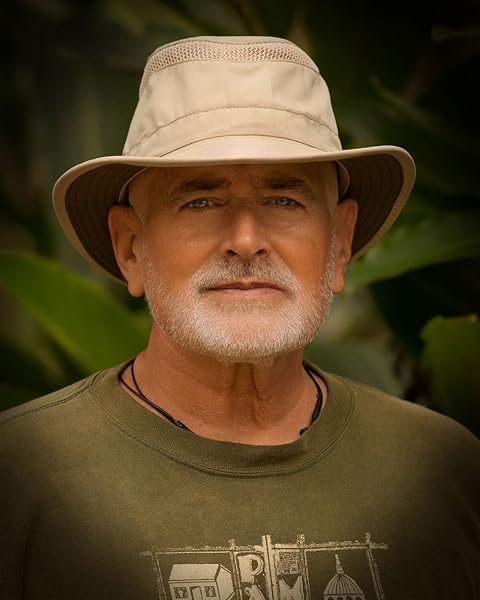
I, Robot Alien follows Scoots, a robot created by transcendent alien beings and sent to a devastated Earth to guide humanity back from devolution, while avoiding involvement in any significant event.
What are some things that you find interesting about the human condition that you think make for great fiction?
I am constantly amazed at the vast gulf between the highest qualities, skills, and positive attributes of human beings and their propensity for depravity, ignorance, and violence. Due to the apparently infinite reservoir of possibilities, there is no dearth of material for great fiction.
I find that, while writing, you sometimes ask questions and have the characters answer them. Do you find that to be true? What questions did you ask yourself while writing this story?
Yes, that’s true, because every character has an individual answer to every question, thus revealing much about themselves through their answers. My personal questions have much more to do with maintaining credibility, continuity, consistency, and clarity—a whole lot of ‘Cs’ to keep in mind.
I hope the series continues in other books. If so, where will the story take readers?
There will be 2 more books in the series. I am currently writing I, Robot Tessa, about a female robot, which will be published on August 10, 2026. The fourth book, I, Robot Human, promises to be darker and less optimistic than the first three.
Author Links: GoodReads | Facebook | X (Twitter) | Website | Amazon
I was created by beings who couldn’t touch this world … only watch it crumble.
Every twenty years, a new tribe … a new hope … a new failure.
I was told, “Do not interfere.”
But watching them die … again … again …
I wasn’t meant to change history … only guide it.
Silently.
Humanity had a second chance … I was left to make sure they didn’t waste it.
But I broke Directive Three.
Can they survive a second collapse … can I?
Empowering Family Members
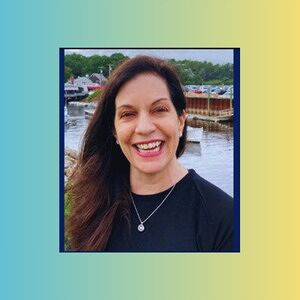
Tiger and My Eye Patch follows a young girl bullied for wearing an eye patch to correct her vision whose courage becomes evident when she sets out to save her canine companion. What was the inspiration for the setup of your story?
I’ve noticed many elementary school students are reluctant to wear their glasses and eye patches because they’re worried about being ridiculed by peers. I was diagnosed with amblyopia or lazy eye as a child and experienced similar angst, prompting me to write Tiger and My Eye Patch. As I began outlining the story, I considered opening with a scene of two boys taunting the main character and pointing at her glasses and eye patch as she enters the classroom. Instead, the story begins with the main character smiling as she prepares to spend the summer with her grandparents and their Great Dane Tiger in Johnson City. This setup or opening scene places the focus on empowering family members rather than unkind classmates. I think this positive emphasis is more helpful to young readers.
Is there anything that you now wish you had included in Colleen’s story?
After Tiger and My Patch was released, I reflected on two things that could have been included in the book. I think a section with tips for parents and teachers to motivate children to wear their glasses and eye patches would be helpful. Also, a list of nonprofit organizations that give unwanted Great Danes a second chance could raise awareness about these volunteer initiatives. If an updated version of my book is released, I’ll add these resources.
Do you have a favorite moment in the book? One that was especially enjoyable to write?
The entire story rekindles fond memories of spending school vacations with my grandparents and their gentle giant. One of my favorite scenes is the pivotal moment the little girl in the story realizes she can rescue Tiger when he’s stuck in the middle of a busy street. I think this scene shows children that their unique traits can help others and solve problems. I particularly enjoyed writing this part of the story because throughout my childhood my late grandmother liked retelling the story of how I assisted local police officers coax Tiger back to safety whenever he got loose during my summer visits. “When you called him with your little voice, he’d come,” she said. “Tiger listened only to you.”
What is the next book you are working on, and when will it be available?
I’m currently working on rewriting two children’s stories featuring Baxter the Beagle that I originally wrote to read to my elementary students. In Baxter’s DelightfullyDifferent Book Club, Baxter discovers the rewards of accepting differences and bypassing stereotypes. In The Super Beagle of Kindness, Baxter uncovers the power of treating others with compassion and empathy. Both fiction narratives provide young readers with life lessons in a lighthearted and entertaining way. The stories are scheduled for release in 2026.
Author Links: Website | Amazon
Be Recognized: The AI Authority Engine for Experts Who Want to Be Known, Be Profitable, and Be Published


Be Recognized: The AI Authority Engine for Experts Who Want to Be Known, Be Profitable, and Be Published is a fast and bold guide that lays out a clear path for experts who want to build authority, grow a business, and embrace AI instead of fearing it. The authors walk through the changing landscape of visibility, the rise of AI content systems, and the steps entrepreneurs can take to position themselves as leaders. They explain why a book becomes the defining asset of your brand and how AI tools can turn that book into the engine that powers visibility, sales, and long-term authority. The chapters move from mindset to practical frameworks to future strategy, and the message stays consistent. If you want to be seen, you must publish, position yourself, and build systems that keep working even when you’re offline.
The writing is direct and friendly, and at times it feels like the authors are sitting across from you, reminding you to stop hiding and start owning your voice. I liked how many of the ideas blend personal stories with straightforward instruction. The concept that visibility is now the real currency really resonated with me. The book makes that point over and over again. The warnings about staying invisible stung me a little because they rang true to me. The energy of the writing kept pulling me forward, with short lines and a clear push to take action, not just learn.
What surprised me most was how emotional some of it felt. The authors challenge you to look at your habits, your excuses, and your fears about being seen. I appreciated how they fold AI into the story without making it cold or mechanical. Instead of painting AI as some giant force, they describe it as a partner that reinforces the voice you already have. I laughed a few times at the casual jokes and real-life examples because they made the ideas easier to absorb. The book doesn’t pretend the world hasn’t changed. It just says, “Here’s how you keep up and stay ahead.” That honesty gave the whole thing a stronger punch.
I walked away thinking this book would be great for any entrepreneur, consultant, coach, or leader who knows they have something meaningful to say but hasn’t put their message into the world in a strong way. It’s especially good for people who feel overwhelmed by AI or by the constant pressure to create content. The tone makes the process feel doable. The steps feel practical. And the push to publish a book as a core authority move really stands out. If you want a clear path to getting noticed and building a smarter business, this book is a solid choice.
Pages: 234 | ASIN : B0FS2C5MFH
Awareness of Life’s Purpose
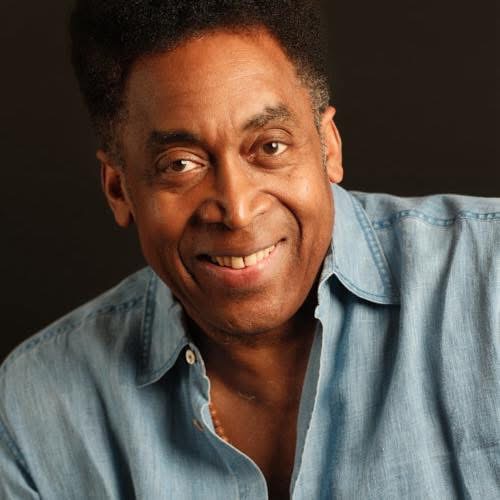
The Diary of Vivienne tells the story of a society through the eyes of Vivienne and Richard, as they navigate strife, natural disasters, and moral decay while following the teachings of a mysterious entity called Neferatu. What was the inspiration for the setup of your story?
The spirit world is enmeshed in our physical existence whether or not we are aware of it. Much of what we witness in the world has a spiritual basis. There is the famous dictum: “The devil made me do it.” We often speak of a good angel sitting on one shoulder while an evil one perches on the other. These are telling. What drives us has its origins in the subtle realms – the spiritual world. Having a figure like Neferatu playing such a significant role in the life of the protagonist and other characters is indicative of this reality.
This is an intriguing setup to a novel that is high in social commentary. What was your moral goal when writing this novel, and do you feel you’ve achieved it?
The goal has always been enlightenment, meaning, our awareness of life’s purpose. The novel strives to promote this through the centrality of the mythic figure, Neferatu. Amid greed, selfishness, and the violence we create out of ignorance, there are seeds of goodness that grow in us, if we but allow them. The dissolution of evil is always imminent. The ‘Diary’ never swerves from this truth.
What are some things that you find interesting about the human condition that you think make for great fiction?
Suffering. We all suffer – no matter our station in life. This is indisputable. Suffering is arguably the nature of the human condition. We suffer not only physically, but morally, emotionally, and psychologically. And throughout, we strive to surmount this enduring pain using every method known. This is in itself is intriguing and the basis of every literary endeavor that captures the imagination.
What is one thing that you hope readers take away from The Diary of Vivienne?
That we are spirits experiencing a physical existence; and that ultimately we must journey home to our origins – pure and unblemished; that our experience here is transient but significant, for without its many challenges, we cannot attain enlightenment. Without surmounting our every challenge, we cannot journey home victorious.
Author Links: GoodReads | X (Twitter) | Facebook | Website | Amazon
The plot unfolds against a backdrop of war, suffering, and societal collapse, set in the future, where characters grapple with existential crises and moral dilemmas. The narrative explores the complexity of human nature – our ability to be both selfless and destructive – and delves deeply into spirituality, particularly through a figure called Neferatu, a mysterious entity whose teachings shape the lives of the characters.
As the world moves through strife, natural disasters, and moral decay, the characters, led by Vivienne, struggle to survive and make sense of their circumstances. The story transitions from this chaos into a utopia, where peace and enlightenment reign. However, it poses critical questions about idealism and whether humanity can truly learn from its mistakes or is doomed to repeat them.



 LITERARY TITAN