Blog Archives
The Deaths at Jonestown

Paradise Undone is a powerful and deeply unsettling exploration of one of the most tragic events in modern history, the Jonestown massacre. Where did the idea for this novel come from?
In 2004, I gave a reading at the U. of N. Dakota Writers Conference to a crowd of 600, where I was a master teacher in residence. In the story, about the intersection of 9/11 and a Jewish family I knew back in New York, the parents go to a deprogrammer in an attempt to rescue their daughters (based on two friends) from a nameless cult in the Southwest. The programmer tells them he lost his daughter in Jonestown four years earlier. That was the sole mention of Jonestown in the story excerpt, which went on to win some prizes and be published in Sequestrum and Glimmer Train .
Afterward, a friend came up to me in tears, telling me of his colleagues who had lost family — siblings and nephew — in Jonestown. A powerful and unexpected response to my story. A month later, preparing for my sabbatical, in which I planned to write Hippie Ruins, a novel about the communes in Southern Colorado where I would spend the year ahead, I perused the shelves at Powell’s City of Books in Portland, OR, passing from COMMUNES to CULTS, where I discovered dozens of books about Jonestown. Thus, my bookstore aisle epiphany: remembering my friend in tears, I decided to write my book about Jonestown instead. The hippies could wait, while the story of an unscrupulous charismatic man leading altruistic souls to their demise felt urgent. Twenty years later, in this election year, my book just published, that urgency pulses with even greater danger.
Did you find anything in your research of this story that surprised you?
When I began researching, the most basic facts concerning the deaths at Jonestown — about which I knew little, like most Americans alive in 1978, when I was 18 — stunned me. The dead were 2/3 female, 80% African American, and 1/3 of those 900+ bodies were children. The media of the day, and even now, present those dead human beings as brainless, drugged-out zombies, led by a crazy man to “drink the Kool-Aid,” a salacious and sensationalized portrait so misleading. The dead of Peoples Temple were families, a third of them elderly, and the group as a whole comprising idiosyncratic individuals. It was not a mass suicide; it was murder, an example of coercive control gone ballistic.
What was one of the hardest parts of Paradise Undone for you to write?
I chose to narrate Nov. 18, 1978, from the first-person perspective of Marceline Baldwin Jones, Jim Jones’s wife of nearly 30 years, a founding member of the altruistic work of Peoples Temple in 1950s Indianapolis, who witnessed its decline in Jonestown’s final years, as her husband became an addict and monomaniac. The only fact we know about her demise that day is that she was one of the 900+ who died from poison. Two people died of gunshot wounds: Jim Jones and his nurse, Annie Moore. I wanted to give her a voice, a will, and a longing to stand up to her husband. However, she is human and weak and does not prevail. Living inside her consciousness for hours while the poison is dished out by others in cups and syringes in varying doses measured for infants, toddlers and adults, resonated with pain. She loves these hundreds of people who call her Mother. But there are armed guards surrounding her, guarding the vat of Flavor-Aid (not, in fact, Kool-Aid), and the crowd rises up against the one woman, Christine Miller, who argues with Jones not to go forward with his plan of so-called “Revolutionary Suicide.” Paralyzed with fear, Marceline does not act.
What is the next book that you are working on, and when will it be available?
My next book will be linking short stories about other members of Peoples Temple, including characters I wanted to write about in my novel but could not include due to narrative constraints. I plan to have it published on the 50th anniversary of the massacre in 2028. However, PARADISE UNDONE was ready for the 30th anniversary in 2008, with a NY agent who tried his best but, despite two close calls, returned it to me. Fifteen years later, despite hundreds and hundreds of rejections, in addition to being a finalist 17 times in various contests, I finally found a UK publisher, by chance, who eagerly snapped it up. Am hoping for a pub date closer to my goal this time around, with fewer years on my biological clock remaining!
Author Links: GoodReads | X (Twitter) | Facebook | Website | Instagram | Threads | Amazon
Imagine a community full of rainbow families where everyone comes together in the spirit of equality and fraternal love.
Shy pastor’s daughter Marceline and her new husband Jim Jones found Peoples Temple in the face of rampant hostility and aggression in 1950s segregated AmeriKKKa.
They give hope to the poor, the miserable, the alienated and disenfranchised of all colors, and build a commune in the jungle of British Guyana.
But this Eden too has its serpent. One who is also jealous of God, and where he goes, everyone must follow, even to the grave.
Be A Giant Killer
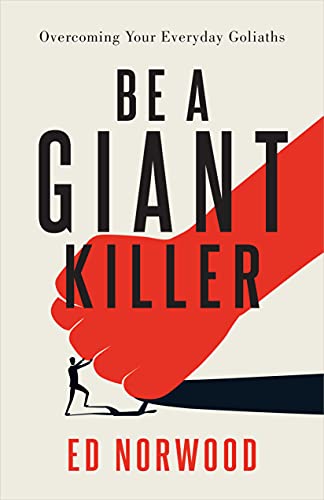

Presented alongside verses in the Bible, the book is separated into the seven giants you will face in life. You need not be religious to understand the clear message that author Ed Norwood has laced throughout the pages. That is, to overcome these giants we must not run from them but towards them. It is the only way to truly transform and benefit the next generation of lives, but doing so is not pleasant.
Norwood begins his book with his shocking personal experience and the giant he faced which was Jim Jones, a cult leader, and a murderer. He lost twenty-seven family members in the Jonestown massacre. A situation that turned others away from God and all religion instead was used as a source of strength and survival for the author. I immediately connected with Norwood as he overcame an experience that many will find hard to come back from. Norwood’s writing is inspiring and uplifting as he makes you feel like you can do anything.
The author doesn’t force religion upon the reader but he does provide examples of how having strong faith can give you the strength you need to overcome your giant. The seven giants that the author lists are very common giants that we all face in our day-to-day activities, such as fear, dissatisfaction, unforgiveness, addiction, laziness, procrastination, and folly. I enjoyed reading the real-life examples that the author shares about his own battles with each giant. I feel this brings authenticity to the author’s words and allows readers to make a personal connection as they may find a story similar to one of their own.
Be A Giant Killer: Overcoming Your Everyday Goliaths is a self-help book based on Christian religion for those that want to take a hard look in the mirror and unpack their true fears. It captures readers’ attention from the first page. A must-read for those seeking guidance through the use of biblical power and to overcome the demons in their own world.
Pages: 302 | ASIN : B09CVCTB4F




 LITERARY TITAN