Blog Archives
9 Habits of Happy Retirees: Discover the Secrets to a Fulfilling Retirement


9 Habits of Happy Retirees offers a warm, upbeat, and very accessible guide to reimagining life after work. The book walks through the emotional phases of retirement, the mindset shifts needed to stay grounded, and the habits that build a joyful and meaningful post-career life. It blends practical advice with simple explanations about mental health, purpose, relationships, physical well-being, and the importance of staying curious and socially connected. The chapters move from preparation to mindset to hobbies to health, then social ties, learning, giving back, and travel. The whole arc forms a picture of retirement as a chance to grow instead of slow down.
This book felt surprisingly personal. I went in expecting a very standard self-help outline, but the writing has a friendly tone that made the ideas easy to absorb. The author speaks plainly, almost like a coach who wants you to feel excited about what’s ahead, and that energy made me lean in. I especially appreciated the focus on emotional transitions. Retirement is usually described as a reward and nothing more, yet the book spends time acknowledging loneliness, identity loss, and boredom. That honesty felt refreshing.
I also found myself reacting strongly to the sections about meaning and purpose. The reminders to try new things, build community, and stay flexible struck a chord. The book made me think about how often people assume retirement should mirror a fantasy rather than a real life with ups and downs. I liked the push to experiment, make mistakes, and adjust. I did wish for more storytelling or real-world examples in some chapters, but the spirit of the message carried the reading experience. The tone is upbeat without feeling sugary, and the steady encouragement made me feel motivated.
9 Habits of Happy Retirees is a strong fit for readers who want a straightforward, positive, and compassionate guide to the emotional and practical sides of retirement. It’s especially helpful for people who feel unsure about what comes next or who want gentle direction rather than technical advice. If you like clear language, simple steps, and a friendly voice that nudges you toward growth, this book will feel like a welcome companion.
Page: 136 | ASIN : B0D78Q1NWD

Irony is Overwhelming
Coming of Age in Retirement is a funny, thoughtful, and eye-opening memoir-meets-social-commentary about stepping away from a high-powered advertising career and fumbling through the uncertain terrain of retirement. Why was this an important book for you to write?
I was at the point in my life where I was trying to understand the intricacies of life in general and retirement life in particular. The more I thought about my existence, the less about it I understood. I was lost without my nearly 50-year career, my work-friends, the national TV commercials I wrote and directed, the production shoots that I executive produced, and my packed schedule that included more than 180,000 hours of work I had amassed. It wasn’t replaceable, and certainly not in an instant.
I took to heart the words of the Buddha, who said, “There is no path to happiness. Happiness is the path.” And that clicked with me. From that clickage came my new book, which is my path of revelation and enlightenment. I had heard time and again that the transition into retirement, for many, wasn’t as simple as it appears to be, so it was important for me to share my struggles, fumbles, and missteps in hopes that others might learn from my ineptitude.
What is one of the biggest misconceptions that social media and advertising try to convince people about retirement, and what is the fallout when the truth is revealed?
The misconceptions are so prolific, I barely know where to begin. But the takeaway for anyone, regardless of their age, is that the perceptions about retirement, in many shapes and sizes, are dictated to us — both positively and negatively — by advertising agencies and their employees, who, in many cases, are 25-year-olds. The irony is overwhelming that the impressions created about retirement are messages developed by juniors who know nothing about seniors. It’s sorrowful, but also damaging and damning. In my book, I prove this beyond any doubt.
So, what we have are either perceptions of retirement bliss, mostly in an effort to sell retirees something, either a product or a service, or retirement angst, also in an attempt to sell us something, but by way of fear of losing everything. There’s no effort to empower retirees, only a well-established effort to devour us.
There is prolific research that shows purposeful advertising impressions of seniors and the elderly to be incompetent, technologically incapable, lonely and sad, without purpose, and to be physically wrinkled, dotted with age spots, and even imagery of us drooling. This couldn’t be further from the truth. My retired friends, and I have hundreds of them, are probably in better shape than people I know who are half their age.
What were some ideas that were important for you to share in this book?
It’s difficult to whittle it down, but I think your Editor-in-Chief, Thomas Anderson, did an insightful job when he reviewed my book and wrote, “This isn’t a how-to. It’s not about finances and hobbies. It’s about getting honest with yourself. About reckoning with who you’ve been, who you might become, and what matters in the time you have left. For me, it was both a reality check and a relief.” I think that’s right.
And I also think we owe it to ourselves to be ourselves and not what we are supposed to be because of these myths and stigmas that surround seniors and the notion of what retirement is supposed to look like, which, incidentally, we think of as so American. In fact, most of what we know retirement to be is almost completely shaped by what retirement is in other countries and continents. I would also add that it’s important to find your path, not someone else’s, or some guidebook on how to retire happy. There’s no formula, no concoctions, and certainly no elixir that guarantees some sort of happiness spritzer.
What advice do you have for individuals approaching retirement or who have recently entered it?
Of course, the advice I’ve always given to people, whether it’s business advice, retirement advice, or matters of the heart, has always been, “Don’t take my advice!” That said, I will tell you that I’ve heard from dozens of people and reviewers who have received the ARC (Advanced Reader Copy) of the book that they wished they had read the book before they retired. I do remind them that it’s never too late.
Aside from the fact that this sounds swollen-headed, and I’m typically not that way, I would say read the book; there’s literally never been any book written about retirement the way this manuscript is written, and certainly nothing has ever been written about the history of retirement from the perspective of an ad man, the unblemished truth, supported by one fact after another, how our perceptions of retirement are not our own, and the notion of failure in retirement transitioning, my own, in such a raw and honest style.
Author Links: LinkedIn | Website

The 7 Benefits of Retirement Planning
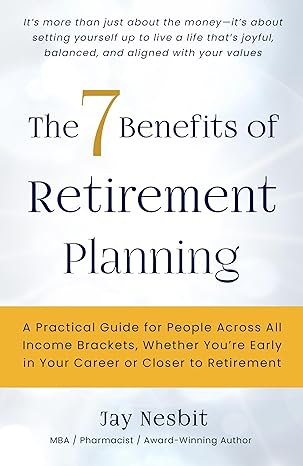
Jay Nesbit’s The 7 Benefits of Retirement Planning is a refreshing and straightforward guide that goes far beyond 401(k)s and nest eggs. This isn’t just a money manual. It’s a full-picture roadmap to living with more joy, purpose, and freedom. With a warm and conversational tone and real-life stories sprinkled throughout, Nesbit lays out seven emotional and practical benefits of retirement planning, from reducing stress and deepening relationships to finding purpose, improving health, and staying adaptable in the face of life’s curveballs. This book is a gentle nudge to start building a life that feels meaningful now and later.
What struck me most was the book’s soul. Yes, there are budgeting worksheets, charts, and tips for managing debt. But what Nesbit really delivers is peace of mind. In Chapter One, we meet Amina—a 23-year-old recent graduate with student debt, a new job, and a fierce drive to succeed. Nesbit walks through tangible, bite-sized steps she can take to get control: budgeting, setting short- and long-term goals, and understanding the power of starting early. That chapter alone made me wish I’d read this book at 22. It’s not preachy—it’s empowering. The author clearly believes that financial planning is a form of self-care, and that comes through on every page.
I also loved how Nesbit tied emotional well-being into the concept of retirement. In Chapter Two, the story of David and Jill—parents juggling careers, childcare, debt, and big dreams—really resonated with me. There’s this honest recognition of how hard adulting can be, and yet, the advice is never overwhelming. Nesbit breaks things down simply: review your insurance, make time for health, revisit your estate plan. His tone is like a good friend who happens to be financially wise.
Chapter 14, Life Planning 101 – Designing Your Dream Life, is where Jay Nesbit shifts gears from financial strategy to full-blown life design—and it’s one of the most inspiring chapters in the book. He encourages readers to get crystal clear about what they actually want from life, not just what they think they should want. It’s less about spreadsheets and more about values, passions, and purpose. Nesbit walks you through visualizing your ideal lifestyle, identifying what brings you joy, and aligning your retirement plan with those things.
All in all, this book surprised me. It’s not flashy or packed with complicated finance jargon. And that’s exactly why it works. It’s written for real people living real lives. I’d recommend The 7 Benefits of Retirement Planning to anyone who feels overwhelmed by the idea of “planning for the future” and wants a calm, caring guide to help figure it all out.
Pages: 266 | ASIN : B0DYYK4PPY
Estate Planning Essentials
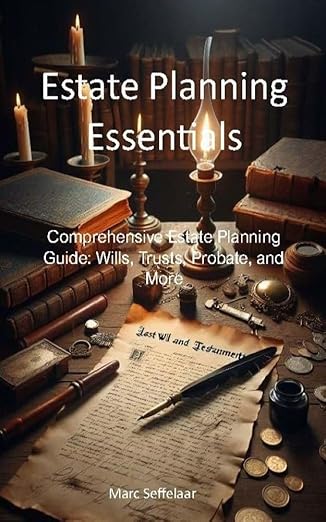

Estate Planning Essentials by Marc Seffelaar is a no-nonsense, thorough guide for anyone looking to get their estate in order. The book walks you through everything from writing a will and choosing a guardian for your kids to setting up trusts and avoiding probate nightmares. It’s clear Seffelaar’s aim is to make what is usually a dry, intimidating topic feel manageable, and he pulls it off pretty well.
What I really liked about this book is how practical and grounded it is. Seffelaar gets to the point about why having a will isn’t just for the wealthy or elderly. He breaks it down in a way that feels personal. For instance, he writes about how not having a will can tear families apart with fights and legal messes something I’ve seen happen in real life. That hit home. The way he talks about planning as an act of love, not just a legal task, felt real and relatable.
Another thing that stood out was how the book digs into the emotional side of estate planning without getting too sentimental. The chapter on choosing a guardian for minor children? Whew. That one really got me thinking. It’s not just about logistics, it’s about values, stability, and trust. Seffelaar doesn’t sugarcoat how hard that choice can be, but he gives solid advice on how to talk to potential guardians and prepare them. He even suggests naming backups, which I hadn’t thought of before. It felt like advice from a friend who’s been through it, not just a lawyer rattling off rules.
That said, some parts do read a little like a checklist. The chapter on asset inventory dragged for me. It’s packed with details; bank accounts, intellectual property, digital assets but I found myself skimming. That stuff is necessary but I wish there was a bit more storytelling or examples in that section to break it up. It’s functional, just not as engaging as the rest. His discussion on trusts and avoiding probate was super clear. Trusts have always sounded mysterious and lawyer-y to me, but he demystifies them with calm clarity.
I’d definitely recommend Estate Planning Essentials to anyone who wants to get serious about their will or just understand the basics of estate planning. It’s especially great for people who feel overwhelmed by the whole thing, Marc’s tone is steady, encouraging, and never patronizing. This book would be a great fit for new parents, small business owners, or frankly, anyone who doesn’t want to leave a mess behind. It won’t make the topic sexy, but it sure makes it doable and that’s half the battle.
Pages: 55 | ASIN : B0CSKP2TH1
Strategic Planning For a Prosperous Retirement
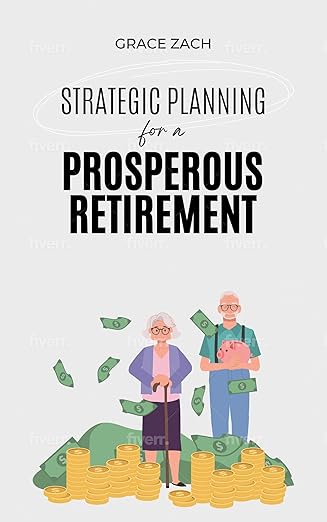
Grace Zach’s Strategic Planning For a Prosperous Retirement is a comprehensive roadmap to navigating the intricate world of retirement planning. With a pragmatic tone and detailed instructions, Zach takes readers step-by-step through strategies for financial independence, healthcare planning, and income management. The book covers everything from maximizing savings and investment strategies to understanding Medicare and estate planning. It’s essentially a toolbox for anyone wanting a retirement free from financial stress.
What I liked most about Zach’s writing was its clarity and accessibility. Retirement can feel like a maze of spreadsheets and calculators, but she makes it approachable. For example, in Part 1, Zach breaks down the basics of estimating retirement needs into clear categories. Her advice to “picture your mornings, afternoons, and evenings” when defining your retirement goals adds a personal touch that makes planning feel less like a chore and more like dreaming. It’s practical advice like this that keeps the book grounded.
The advice, while solid, occasionally circles back to the same principles—like the importance of diversifying investments or the 4% withdrawal rule. Still, the repetition works for readers new to these concepts, as it reinforces key ideas.
Zach also shines when tackling healthcare and insurance. Her section on Medicare is a fantastic. She demystifies terms like “Part A” and “Part D” with simple language, explaining how each piece fits into the bigger picture of retirement health. The book doesn’t shy away from difficult topics like long-term care insurance or rising medical costs, which I appreciated. It’s practical without being alarmist. The tools she includes, like healthcare cost estimators and worksheets, are a thoughtful addition that makes the guide actionable.
The Ultimate Retirement Survival Guide is perfect for those starting to think about their golden years or those deep in planning who need a nudge in the right direction. If you’re someone who enjoys straightforward advice without unnecessary complexity, this book is worth your time. I’d particularly recommend it to readers who appreciate practical tips, real-world examples, and easy-to-follow planning tools.
Build Financial Security

Strategic Planning for a Prosperous Retirement offers readers a clear and comprehensive guide to help them navigate the process of saving for retirement by encouraging them to envision their ideal retirement lifestyle and covering topics such as Medicare, inflation, and financial security. Why was this an essential book for you to write?
Strategic Planning for a Prosperous Retirement was an essential book for me to write because I’ve seen firsthand how a lack of planning can lead to stress and uncertainty in what should be a fulfilling and enjoyable phase of life. Retirement is not just about finances; it’s about creating a lifestyle that reflects your dreams, values, and priorities. This book allows me to share insights that can empower individuals to take control of their future, address challenges like inflation and healthcare costs, and build financial security. It’s deeply rewarding to guide readers toward making informed decisions and achieving a secure and truly prosperous retirement.
How much research did you undertake for this book, and how much time did it take to put it all together?
Writing Strategic Planning for a Prosperous Retirement required extensive research to ensure the information was accurate, relevant, and practical for readers. I spent months diving into topics like retirement savings strategies, the nuances of Medicare, the impact of inflation on retirement funds, and various financial security tools. This involved reviewing the latest data, consulting with financial planners, and analyzing real-world case studies to provide actionable insights.
The process of gathering, organizing, and writing took about a year. This included drafting the content, refining the message to make it accessible to readers, and collaborating with experts to validate the material. The effort was well worth it, knowing the book could serve as a valuable roadmap for individuals navigating the complexities of retirement planning.
What ideas were important for you to share in this book?
In Strategic Planning for a Prosperous Retirement, several key ideas were central to my message:
Envision Your Ideal Retirement: Retirement isn’t just about financial numbers; it’s about understanding the lifestyle you want and planning for it. I wanted readers to feel encouraged to dream and define what a fulfilling retirement looks like for them.
Start Early but Know It’s Never Too Late: While starting early is ideal, I emphasized that effective strategies can still be implemented later in life to improve financial outcomes.
Navigate Medicare and Healthcare with Confidence: Healthcare is one of the most significant retirement concerns. I made it a priority to demystify Medicare, address long-term care planning, and provide practical steps to manage healthcare expenses.
Combat Inflation and Plan for Longevity: I highlighted the importance of understanding inflation’s impact and planning for a longer life expectancy to ensure financial resources don’t run out.
Financial Security Through Diversification: I emphasized the value of diversifying income sources—such as investments, pensions, and Social Security—to create a stable and sustainable financial foundation.
Emotional and Lifestyle Preparedness: Retirement is also an emotional transition. I included insights on finding purpose, maintaining relationships, and staying active and engaged.
Author Links: GoodReads | Website | Amazon
Key Benefits:
Gain confidence in planning for retirement with practical tools and checklists.
Understand investment strategies that align with your financial goals.
Protect your assets and prepare for potential health expenses.
Enjoy peace of mind with a solid, tailored retirement plan for stability and success.
Whether you’re just starting to plan or looking to refine your strategy, Strategic Planning for a Prosperous Retirement offers a path to a secure and fulfilling future.
Strategic Planning For a Prosperous Retirement
Retirement planning can be daunting, but Grace Zach’s Strategic Planning for a Prosperous Retirement offers a clear and comprehensive guide to help navigate the process. Zach emphasizes tailoring retirement plans to individual goals and realities. She begins by encouraging readers to envision their ideal retirement lifestyle and follows with a detailed breakdown of financial components, including essential, discretionary, and unforeseen expenses. Key topics like Medicare, inflation, and financial security are addressed with practical strategies.
Zach doesn’t sugarcoat the potential difficulties of retirement planning. Her emphasis on flexibility underscores the need to anticipate change and adjust accordingly. What sets this book apart is Zach’s approachable and empathetic writing style. She blends professionalism with a personable tone, making even complex topics feel manageable. Free of intimidating jargon, the book is accessible to those without a background in finance, yet rich in detail for readers seeking deeper insights. Her systematic exploration of retirement planning ensures thorough coverage, spanning from envisioning an enriching lifestyle to crafting realistic budgets and building emergency funds.
Detailed sections on Medicare and other critical services elevate the book’s utility, particularly for those navigating the unique challenges of retirement in the U.S. Zach’s logical structure and the depth of her content make the guide as practical as it is comprehensive. Zach incorporates relatable examples, thought-provoking questions, and direct calls to action. Readers are not merely absorbing information; they are actively reflecting, planning, and applying insights to their own lives. Exercises and real-world considerations create an immersive experience, making the guide as dynamic as it is informative.
Strategic Planning for a Prosperous Retirement is a masterful resource for anyone seeking to build a retirement plan that reflects their unique vision and needs. Grace Zach has provided a roadmap not just for financial security but for a fulfilling and prosperous retirement.
Pages: 113 | ASIN : B0DF5KTNTD
My Early Retirement Purpose

Escape The Clock offers readers a comprehensive guide to achieving financial independence and planning for early retirement. Why was this an important book for you to write?
Escape The Clock was an important book for me to write because I’ve lived the financial challenges and breakthroughs it addresses. I started out over $100,000 in debt after putting myself through school, and as someone naturally organized, I developed strategies and action plans to turn my situation around. My career as a professional program manager at some of the largest companies in the world refined those skills even further, teaching me how to design and execute complex programs.
When I retired early, it shocked a lot of people—many who had been on autopilot with their careers and finances. They started asking me how I did it, and I realized I had something valuable to share. Writing this book became my early retirement purpose: to provide others with the guide I wish I had at 17—the “secret cheatsheet” to taking control of your time, money, and life.
I wrote Escape The Clock to help people at every stage of their journey: those just starting out, those aiming to finish work early, and even those already retired who want to thrive and make the most of their independence.
How much and what type of research did you undertake in order to put this book together?
About 80% of this book came naturally because I’ve been doing the research for the past 20 years while running my own program. Over that time, I worked with more than a dozen financial and tax advisors, learning everything I could, and translating those lessons into actionable strategies was both fun and rewarding.
The final 20% required deeper research. For example, while I had extensive experience with stocks, including options trading, I hadn’t explored futures or margin trading. Similarly, while I owned my own home, I had no personal experience with real estate investing. To fill these gaps, I sought out experts—interviewing people who specialize in these areas and digging into additional research.
Between personal experience, expert interviews, and feedback from pilot reviewers, I ended up learning a lot myself as I worked to make this book as comprehensive as possible.
What is one misconception you think many people have regarding retirement planning?
A common misconception is that retirement planning requires paying a financial advisor to figure out how to save an unrealistic amount of money for a far-off, late-in-life retirement. More people are beginning to realize that they don’t have to wait until a government-prescribed age to truly start living their lives.
The truth is, it’s much harder to follow your own agenda when you’re older, so creating a path to leave work earlier is a smart and achievable goal. Unfortunately, societal norms often scare people away from this idea. Some financial advisors may even prey on those fears, pushing overly large savings goals.
In reality, if you understand what you want to do with your retirement and can get your average annual costs under control, you can use proven, real-world strategies to save enough—and even replace the lost cash flow that comes from quitting work early.
What is one thing you hope readers take away from Escape The Clock?
The one thing I hope readers take away from Escape The Clock is that they can have a healthier relationship with work, money, and time. The “norm” tells us to start working as soon as possible and give our all for 50-plus years, but this can be soul-draining and leave people feeling trapped.
When you reframe work as a means to an end—achieving financial freedom—you suddenly feel more empowered. You might push for that raise you deserve, take an extended break to avoid burnout, or talk about money more openly. Honest conversations about fair wages and financial goals ensure that your most valuable resource—your time—is properly compensated.
Ultimately, the biggest takeaway is this: your time is your most valuable commodity. If you can create a path to escape the cycle of work and reclaim it, you might surprise yourself with how you spend it and the freedom you feel.
Author Links: GoodReads | Amazon
Escape The Clock is your ultimate guide to achieving financial freedom on your terms. Written by a retired professional program manager who led successful initiatives at some of the largest companies in the world—and achieved early retirement in his early 40s using his own proven financial plan—this book provides practical, step-by-step strategies for building wealth to retire early, while still ensuring a secure full retirement later.
Leveraging decades of expertise in strategic planning and execution, Escape The Clock equips you with the tools to create a personalized financial plan that works for your goals. From understanding costs and forecasting income to setting SMART milestones and mastering long-term planning, this book turns complex financial concepts into actionable, achievable steps.
Whether you’re just starting out or refining your financial strategy, Escape The Clock delivers the knowledge and confidence you need to stop living paycheck to paycheck and start creating the life you’ve always dreamed of. Your journey to financial freedom begins here.



 LITERARY TITAN