Blog Archives
When Will Black Lives Truly Matter?
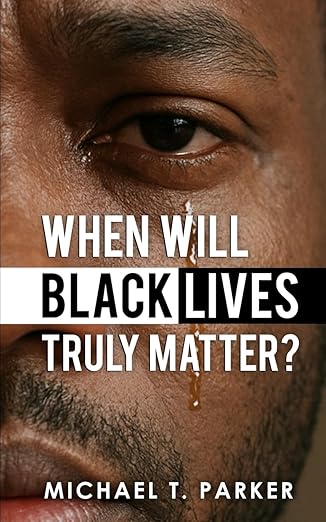

When Will Black Lives Truly Matter? tells a story that is both deeply personal and urgently collective. The author weaves together his own past, marked by crime and survival in Detroit, with broader histories of slavery, systemic racism, and the struggles and triumphs of Black America. He doesn’t just point to the harm done by outside forces. He also calls out the need for accountability within Black communities themselves. The chapters move through personal narratives, stories from across the country, well-known figures like Emmett Till, Rosa Parks, and Malcolm X, and finally toward concrete calls for reform, community building, and empowering the next generation.
The writing is raw and straightforward, which makes it hit hard. At times, it feels almost like sitting across the table from someone who has lived it all and is telling you exactly what they think, no filter. That voice has power, though occasionally it runs over details that might have deserved more depth. Still, the honesty makes up for it. Parker’s focus on personal responsibility alongside systemic reform can feel tough to wrestle with.
What I appreciated most was the balance of pain and hope. The book doesn’t just dwell on violence, racism, and despair. It shines a light on community programs, stories of people turning their lives around, and the potential of young people to lead change. The rhythm of personal anecdotes mixed with statistics and historical context kept me engaged. I respected the blunt delivery because it felt like truth spoken without polish or pretense.
I’d recommend this book to readers who want more than headlines or soundbites. It’s for people ready to sit with uncomfortable truths, people who want to hear directly from someone who has lived the complexity of these struggles. Activists, educators, and anyone working in community spaces would find it especially valuable. It’s not an easy read emotionally, but it’s a necessary one, and it leaves you thinking about what role you can play in making change.
Pages: 78 | ASIN : B0FNGMKX9J

We Can Do This Better

The Adoption Paradox weaves together your story, historical records, and interviews with nearly a hundred people from across the “adoption constellation” into an unflinching look at the industry’s ethical and emotional complexities. Why was this an important book for you to write?
I started out wanting to write a deep exploration of adoption’s emotional complexities from all sides. I’m very new to this internal awakening in my life’s journey. As an adoptee from a standard closed adoption from 1965, I had an overall good experience. As my parent’s only child, I felt loved and accepted for the most part within my family and our larger culture.
Then in 2020 with both of my adopted parents gone, I finally started to search for my birth family, which fueled the emotional curiosity that led to this work. I read books written by adoptees about their search. Then others about the birth mothers who relinquished us back in the era I was born in. What I learned shocked and saddened me. I felt this deep inner shift, and started questioning the typical storyline I’d always been fed. It was one thing to know that in ’65 my mother didn’t have the same choices I did growing up in the 1980s. It was another thing to come face to face with how badly many of these young women were treated.
There was more to tell in all of this I was sure, but I didn’t see any other books out there that had the voices and the deep research and thru lines for everyone in the adoption triad: adoptees, along with birth and adoptive parents. So, I decided to audaciously tackle that niche myself. That’s what started it all. This book is for me, in part, but my hope is that in reconciling the stories within, others find it helpful too.
What were some ideas that were important for you to share in this book?
There is no one adoption story. Ever. There are many sides, and all have this vastly diverse lived experience, even within one family. You can have an adoptee who feels completely seen and understood by the people who raise them, and another who feels isolated, lost and alone and their parents have no idea they are struggling. That’s heartbreaking. Adoption always begins with a loss, and our society completely forgets that narrative in popular culture. It’s just assumed we are lucky as adoptees, and that our families are fantastic! The truth is it’s often a mix.
There are misconceptions and oversimplifications about adoption and foster care among the general public. Adoption can heal, save lives and fulfill its potential to create a loving home for a child who needs one. But in modern times that is not generally what’s driving a relinquishment. Infant adoptions usually occur due to a lack of resources experienced by the natural parent(s). Then, understand we have allowed commercialism and an unchecked profit motive to proliferate within an industry that is responsible for the placement of children into homes. How can that possibly be beneficial for those affected or our society at large? Most people are complexly unaware of these realities. What gets lost in the shuffle of that are the needs of the adopted person. Not just as a youngster, but for their entire lives.
When we make assumptions about people, we flatten out their stories and miss the depth and nuances that are part of each and every family. I can have a good adoption story, and there is always some sadness behind it. We need to live in places of truth, both fiercely and gently with each other, and how we build or defend our families.
What was the most challenging part of writing your book, and what was the most rewarding?
Definitely stories of abuse were the hardest to hear, and it was also I think essential for those folks to feel seen and heard. Listening and sitting with them through their pain was validating for both them and me. Receiving the trust from all of those interviewed was by far the most rewarding experience.
The other bonuses have come from adoptees, adoptive parents and birth parents who unknown to me have already shared how the book has helped them feel affirmed, taught them something, or caused a shift in their mindset. They are the reason – because we can do this better.
What is one thing that you hope readers take away from The Adoption Paradox?
If parents are more informed before they adopt, their kids do better and are less likely to struggle. If natural parents and treated with dignity and fairness by our statutes then their rights are protected, because they deserve nothing less than that. My hope is the general public will understand our laws need revising and modernizing beyond the way we currently practice adoption.
In most states, we still overwrite adoptees birth certificates as part of this legal process and seal them away – inaccessible without a court order. Why can’t we create a “certificate of parentage” that doesn’t overwrite a person’s truth of who they are, where they came from, and deny them access to their medical history? Everyone in this story deserves better than these archaic systems we currently have.
I am not anti-adoption, but I am interested in our culture evolving to embrace a better future for how we practice adoption and answer the real needs of families interacting with the child welfare system. The most important thing is that we talk honestly with each other and listen. I hope my book begins and stirs that conversation. Thank you!
Author Links: GoodReads | Facebook | Website
Adoption impacts countless families worldwide, yet the voices of those directly involved—especially adoptees, the central focus of the process—are rarely highlighted. In The Adoption Paradox, nearly one hundred individuals are interviewed, from domestic, international, and transracial adoptions, as well as foster care, along with adoptive and birth parents, therapists, experts, and allies. These narratives reveal both the love and the emotional costs borne by everyone affected, exposing adoption as a complex and challenging experience. Healing is possible with the right support, but addressing adoption’s hidden issues requires activism to confront unethical practices that lack oversight. These moving stories shed light on unaddressed pain and systemic flaws, calling for a more transparent and compassionate approach to adoption.
How To Celebrate Your Fandom


How to Celebrate Your Fandom is both a guidebook and a love letter to the communities that form around shared passions. It is structured around 52 activities designed to help fans of any age dive deeper into their chosen interests. From writing an elevator speech about your fandom, to hosting watch parties, making crafts, or even creating charity projects, the book celebrates creativity, connection, and joy. The later sections include interviews with fans of all ages and backgrounds, showing just how wide and welcoming fandom culture can be. The tone is encouraging, lighthearted, and inclusive, with constant reminders that there is no “wrong” way to be a fan.
I loved the spirit of this book. It feels like a big hug from the fandom world, the kind of thing that makes you smile while reading. The writing is simple, but it’s clear that the authors want everyone to feel included and safe. I especially liked the emphasis on kindness and respect, because fandoms can sometimes get messy. The little tasks are fun and surprisingly practical. Even something as small as decorating a bag with fan art or sending someone a compliment reminded me of why I fell in love with my own fandoms in the first place. It’s not just about stuff. It’s about joy, and that comes across on every page. The charming sketch artwork scattered through the book gives it a playful, handmade feel that makes the whole thing warmer and more inviting.
Some of the activities, like “put a photo of your fandom on your phone wallpaper,” made me smile because I already do that without thinking twice. But then I realized that’s part of its charm. The book isn’t about reinventing fandom, it’s about celebrating even the small things. It’s almost childlike in tone, but there’s a sincerity here that cuts through cynicism, and in a world that’s often harsh, that kind of sincerity is refreshing.
I think this book would be a wonderful fit for younger fans just starting out, or for families who want to share fandom activities together. It’s also a sweet pick for anyone feeling jaded and looking for a reminder of why being a fan matters. If you’ve ever cheered too loudly at a game, cried at a show finale, or stayed up way too late talking about your favorite character, you’ll find something here that sparks a smile. It’s not heavy reading, but it is heartwarming, and sometimes that’s exactly what we need.
Pages: 135 | ASIN : B0DGN4VSLK
The Adoption Paradox: Putting Adoption in Perspective

Jean Kelly Widner’s The Adoption Paradox is both a sweeping history and a deeply personal exploration of adoption in America. It weaves together her own adoptee story, historical records, interviews with nearly a hundred people from across the “adoption constellation,” and an unflinching look at the industry’s ethical and emotional complexities. From the history of orphan trains and the Baby Scoop Era to the modern foster system and open adoptions, Widner covers the many ways adoption has shaped and sometimes wounded those involved. The book moves between heart-wrenching firsthand accounts, legal and cultural context, and thoughtful calls for reform, all while acknowledging the strange dualities at the heart of adoption: love and loss, gratitude and grief, hope and harm.
I was struck by the sheer variety of voices in this book, from adoptees, birth parents, and adoptive parents. Each is speaking in their own words, often with raw vulnerability. Widner doesn’t sanitize their stories, and she doesn’t steer the reader toward easy conclusions. I appreciated her willingness to admit there’s no single truth here, no one-size-fits-all narrative. There’s a tenderness in her approach, but also a certain steel; she makes it clear that the industry needs scrutiny, and that the myths we’ve been fed, especially the “all adoption is beautiful” trope, do real harm. At times, the weight of the stories struck me deeply, but that’s part of what made the reading experience so powerful.
I also found myself impressed by the way Widner balances the historical with the personal. She’ll pull you deep into archival laws or social movements, then drop you right into a living room or hospital hallway where someone’s telling the story of the day their child was taken, found, or lost forever. The shift between head and heart kept me engaged, even when the subject matter was painful.
I’d recommend The Adoption Paradox to anyone touched by adoption, whether you’re an adoptee, a birth parent, an adoptive parent, or simply someone who wants to better understand what adoption really means beyond the Hallmark version. It’s not light reading, but it’s the kind that stays with you. This is a book for people who can hold complexity, who aren’t afraid to see the cracks alongside the light. It’s a brave and necessary book.
Pages: 487 | ASIN : B0F6X136JN

Universal Truths

Taming the Fetal Tyrant, and Its Ancestral Delusional Love Stories is an exploration of human nature, consciousness, and the cultural delusions that shape our beliefs and behaviors. What made you write a book about this topic? Anything pulled from your life experiences?
My interest began about 66 years ago but I had, upon reflection, an epigenetic experience at age 5. Of course, I had no idea what it was then. Today, with my observations and research I now know that ALL LIFE has such experiences and the importance of it needs to be known by all on this planet.
What were some ideas that were important for you to share in this book?
As a doctor I wanted to know the person behind the health history form they filled out. Specifically, I wanted to know how the thoughts of life became manifested as real biological molecules in people. When I combined the sciences of biology, chemistry, and physics and added a spell of my own making, that was in line with the three sciences, I had achieved a life’s goal and had to tell people how to use their minds in a modern way as opposed to the cave way that places us all 90 seconds from doom on the doomsday clock. No scat, lady, NONE. This vindicated me and I’m now ready to be pummeled mercilessly.
What is one thing that people point out after reading your book that surprises you?
Not many have read it but it has been professionally reviewed.
What is one thing that you hope readers take away from Taming the Fetal Tyrant, and Its Ancestral Delusional Love Stories?
To think in terms of universal truth and not to confuse it with personal truths I call opinion, bias, prejudice, and faith. We kill each other over the latter, never the former.
Author Links: Website | Book Review
Socrates: “Employ your time in improving yourself by other men’s writings, so that you shall gain easily what others have labored hard for.”
Taming The Fetal Tyrant And Its Ancestral Delusional Love Stories

Taming the Fetal Tyrant is an ambitious exploration of human nature, consciousness, and the cultural delusions that shape our beliefs and behaviors. It delves into the concept of megalomania starting in the womb, where author Steve Pasin posits that the fetus develops a tyrannical sense of self, believing it is in control of the entire world. This notion serves as a foundation for the book’s broader discussions, which blend epigenetics, human psychology, and culture. The book is a critique of how culture, religion, and societal structures nurture and perpetuate delusions, often in ways that undermine our health and well-being.
Reading this book is a wild ride. Pasin’s style is unapologetically direct and often combative, which makes it both challenging and refreshing. He doesn’t shy away from taking aim at cultural sacred cows, from religion to the human ego. One of the most striking parts of the book is his discussion on epigenetics and how our thoughts and beliefs, largely shaped by our environment, have tangible effects on our genes and health. This idea is explored in Chapter 6, where Pasin introduces stress and its role in shaping not just individual well-being but the health of future generations. While the writing is dense at times, the ideas are compelling, and Pasin’s passion for his subject shines through.
I particularly enjoyed the chapter on megalomania. It was eye-opening and unsettling to consider the idea that we’re all born with a megalomaniacal view of the world, only to have it stripped away by society. Pasin’s descriptions of how culture imposes itself on us, turning us into people obsessed with winning, control, and domination, hit hard. His examples of historical figures like Mother Teresa and Hitler having the same underlying human nature were provocative and, honestly, a bit hard to swallow at first, but it made sense in the context of his argument.
Taming the Fetal Tyrant, and Its Ancestral Delusional Love Stories is a book for thinkers, those who aren’t afraid to have their ideas about life, religion, and culture shaken up. I think it is best suited for readers with a deep interest in psychology, philosophy, and biology who want to challenge their worldview. If you’re looking for light reading or are easily offended by critiques of cultural norms, this might not be for you. But if you’re up for a mental workout and ready to question some deep-rooted beliefs, this book will have an impact.
Pages: 238 | ASIN : B0DJPQYMH8
Black On Madison Avenue

Mark S. Robinson recounts his experiences as an African American professional in the US advertising sector for over 40 years in his compelling memoir, Black on Madison Avenue. Through his writing, Robinson raises much-needed awareness of an industry that, despite some improvements over time, remains entrenched in racial prejudice and structural discrimination.
Robinson’s natural storytelling flair shines throughout the book. Each anecdote is engaging and rich with details about the advertising world. His impressive roster of clients, including Unilever, HBO, and Coors, and encounters with numerous celebrities add a captivating layer to his narrative.
Despite the serious underlying message, the book maintains an optimistic and humorous tone. The heart of the book lies in Robinson’s critique of the advertising industry’s systemic racism. He does not shy away from discussing the obstacles he faced, such as the challenges of proving minority ownership and dealing with passive-aggressive behaviors from colleagues. These experiences are eye-opening and serve as a powerful indictment of the industry’s failures. Robinson’s decision to push back against these injustices, even when it could potentially harm his career, showcases his resilience and integrity.
One of the most striking aspects of the book is Robinson’s emphasis on the importance of mentorship and community. His involvement with the Minority Advertising Internship Program (MAIP) and his continuous support for upcoming black professionals in advertising highlight his commitment to fostering diversity and inclusion. These sections of the book are particularly inspiring, as they show how individual efforts can contribute to broader social change.
Black on Madison Avenue, by Mark S. Robinson, is a must-read for anyone interested in the advertising industry, racial dynamics in professional settings, or personal stories of overcoming adversity. Robinson’s memoir is both a historical document and a guide for future generations. It is especially valuable for young Black professionals seeking inspiration and for industry leaders who need to understand the importance of diversity and inclusion.
Pages: 285 | ASIN : B0C1QWS2C9
Tickling is Bizarre

Almost Everything You Wanted to Know About Tickling is a fascinating study on a topic that is not often discussed or looked at from the unique perspective of women. Why did you want to write about subjects such as tickling?
Tickling is bizarre physiologically and psychologically. On balance, it must be a good thing or humans would not have evolved to become ticklish in a way that is different from all other animals. On the other hand, tickling is often unpleasant and detrimental to relationships. Any behavior that causes many different kinds of positive and negative consequences, none of which are well-understood, is worth exploring.
The second reason I wanted to write this book was that I was especially qualified to do so. Not only did I have excellent experience using the necessary methodologies during a long career in academic research, but I was retired. Tickling is not a respected topic, and active researchers who pursue it risk their careers.
What were some goals you set for yourself as a writer in this book?
My goals changed throughout the study. They appeared in the following order.
1. Design a method for an independent researcher working alone to study tickling?
2. Identify the most interesting questions that could be studied about tickling. I found many, but the ones most thoroughly explored in the book were how ticklish are women throughout the world, and how much did women throughout the world enjoy being tickled.
3. Evaluate what characteristics of the women influence how ticklish they are and how much they liked being tickled.
4. Finally, I wanted to present respectable science so that it would be understandable and interesting to the general reader. I predicted that scientists would consider this topic trivial, but some general readers would be curious. This book is for them.
How much research did you undertake for this book, and how long did it take to put it all together?
This book involved a huge amount of research over more than four years. Much of the research I did was left out of the book because my target audience was the general reader. I spent more than a year trying to hire someone who could write this book for me. When I realized that was not possible, I spent another couple of years writing it myself.
What is the next book that you are writing and when will that be published?
You sound like my wife. I have ideas for several possible books on the topic of how people relate to each other. I’m not far enough along on any of them to make a meaningful prediction of when one might be completed.
Author Links: GoodReads
Why read this book.It is the best book about tickling that has been written. Since it’s the only book about tickling, that’s not a big claim, but it is a good book.
It makes you think about why tickling evolved and what good it may do.
The information is interesting and socially important.
It provides fodder for book groups and informal conversations.


