Blog Archives
The Sinister Nature of Power

The Bent Nail follows a man born into filth and neglect who becomes both a victim and an instrument of a shadowy organization bent on reshaping the world through brutality. What was the inspiration for the setup of your story?
The inspiration for The Bent Nail, or its predecessor, Nails, came from a sole source. The initial story structure stemmed from a challenge made by a close friend to see if I could develop multiple, separate plot lines and weave them together into a single, coherent, exciting story line. Challenge accepted.
What came from that challenge was the original Nails, a story that introduced the reader to three truly flawed individuals: Tau, Gideon, and Simon; three individuals who erroneously thought they were the uncontested wielders of power in their respective worlds. In effect, they thought they were the hammers of society; individuals who could pound on others and rule with impunity, only to discover their power was an illusion. They were merely nails just like anyone else.
The inspiration for the main character, Tau, is personal experience. I had the opportunity to work closely with an organization whose cause was helping the hopeless. That effort brought me elbow to elbow with people society had cast out into the streets because that was easier than looking for productive alternatives. These people were the products of an unforgiving world, chemical abuse, mental instability, or just bad luck. That was where Tau came from. Tau represents those in our society who are forgotten, lost, and disposed of, but he refuses to be dismissed. He resorts to violence because it’s the advantage he possesses. We fear him because he has nothing to lose. His character hits us hard, not just because he’s a repugnant and vicious individual, but also because he’s so damaged and we see his potential for good.
The story is motivated by what we experience contemporarily. We are bombarded by streams of questionable, repetitive soundbites intended to manipulate, separate, and control. What we end up with is a powerless people subjugated to the will of others. I wanted to portray the sinister nature of power and those individuals who use this to their advantage. Some readers consider The Bent Nail as a warning of the future, others, a reflection of today.
The violence in the book is raw and sometimes difficult to endure. What role does discomfort play in your storytelling?
I wrestled with this. You use the term raw, and it is. And that is very intentional. The violence was necessary to drive home the idea that the world we know is not the comfortable place we believe it to be. A veil of civility might cover up the violent, self-serving nature of man, but that rawness still exists. We see violence, greed, and the desire to control in almost all aspects of society when we look close enough. The Bent Nail challenges us to check ourselves so as not to be seduced by power and wealth.
For me, storytelling requires emotional engagement. Comfort rarely seems to fit with that concept. That’s not to say that my stories are all violent or even troubling. I would suspect many would suggest my Countenance of Man, a touching story of man rediscovering his father through the eyes of others, is emotionally wrenching, but hardly troublesome. The Bent Nail deals with power and corruption; it would be unfair to treat this kindly.
The book challenges the idea of freedom itself. Do you believe freedom is real, conditional, or illusory?
Superb question. Certainly, The Bent Nail would suggest that freedom is illusory, something we think we possess even when the evidence would suggest otherwise. Do I believe that? Not really. In our western society, freedom is absolutely real, not just an abstract concept; however, it is continuously under attack. The struggle is that freedom is not an immutable idea. We have become too comfortable with the notion that freedom never changes, something that once we have it, it will always be there. It’s not. The Bent Nail throws that reality in our face. It challenges us to continuously fight for it even when the consequences might be frightening. In this story, I hope the reader grasps that however frightening it might be to stand up for one’s rights, the alternative is far worse. If not, The Bent Nail becomes something more than a novel; it becomes prophecy.
To quote Benjamin Franklin, “Those who can give up essential liberty to obtain a little temporary safety, deserve neither liberty nor safety.
If The Bent Nail leaves readers unsettled long after they close it, what do you hope they do with that feeling?
I hope it leaves the reader unsettled. We live in an unsettled world filled with warring factions fighting for power. The Bent Nail surfaces that and it should bother us all. It illustrates how easy it is for those in authority to manipulate us, be it through engendering class envy, spoon feeding us with blatant misinformation, seducing us with the promise of power, or imposing their will through coercion. Our challenge is to understand who is behind the manipulation and to stand up to them.
The second point I want to leave with the reader is the need to be objective in assessing the world. Not everything is as it seems; adopting the beliefs of friends and neighbors merely because it seems easy and comfortable is dangerous. Of course, if one desires to be nothing but a nail, hammered into acquiescence, in a world similar to one I’ve invented, just keep capitulating to those who desire to control us through power.
Lastly, speaking of power, it is insanely seductive – for all of us. It can overwhelm the desire to do what we know to be right. People might look at these comments in light of what is going on in our society today and assume that The Bent Nail is either right wing or left wing. That’s a perspective thing and would be a tremendous mistake. Neither political side has a monopoly on being correct. Don’t let others tell you what to believe.
M.D. reintroduces the three flawed characters you hated in Nails: Simon, a journalist without a conscience; Gedeon, a murderer without a heart; and Tau, a man without hope. In this masterful sequel, their lives collide as they each struggle to avoid becoming nothing more than hammered nails underpinning a centuries-old, secretive family committed to world dominance. Through deceit, mass murder and economic control the Family seeks to establish a new and lasting world order under their direct and unquestioned authority. Corruption and the seductive nature of power provide the backdrop as Tau, Simon, and Gedeon wrestle with their personal demons as they seek to survive.
Although The Bent Nail is a story that will disturb and frighten even the boldest of readers, it is one that will pull you in and capture you from the first page, a story you won’t be able to put down… and one that you will remember forever.
The Bent Nail


M.D. Nuth’s The Bent Nail is a dark, unflinching exploration of power, corruption, and the human cost of control. It begins in the chaos of a Delhi marketplace and spirals into a global web of political manipulation, personal ruin, and moral decay. At its center is Tau, a man born into filth and neglect who becomes both a victim and an instrument of a shadowy organization bent on reshaping the world through brutality. From street-level despair to the high offices of government, the novel draws a line between the powerless and the powerful, showing how desperation and authority twist into something monstrous.
Reading this book felt like riding a rollercoaster. Nuth’s writing hits hard. The language is raw and often brutal, but it feels right for the world he’s built. I could almost smell the filth of the streets and feel the emptiness in Tau’s heart. The dialogue is jagged, messy, and alive. It sounds like people breaking apart, trying to make sense of what’s left of their lives. The pacing is relentless. There were moments I had to pause just to breathe, especially in scenes that blended violence with eerie calm. It’s not an easy read, but it’s gripping.
What surprised me most was how much I cared for characters who probably didn’t deserve it. Tau, especially, is a walking wound, and even as he kills, I felt something like pity. Nuth doesn’t excuse evil, he shows how it’s born. The story’s ideas about government control, manipulation, and the illusion of freedom hit close to home. It’s a political thriller, yes, but it also feels like a prophecy, a mirror held up to our worst tendencies as people.
I’d recommend The Bent Nail to readers who like their fiction sharp, ugly, and honest. It’s perfect for those who aren’t afraid of dark themes or moral gray areas. If you want a story that challenges you, unsettles you, and makes you question the world you live in, this one’s worth every page.
Pages: 294 | ISBN : 1681607840

Fatal Castle

David Boito’s Fatal Castle is a vivid blend of historical fiction, mystery, and modern suspense. The novel begins in 1850, as Queen Victoria receives the fabled Kohinoor diamond, a gem steeped in blood and superstition. The scene, rich in imperial detail, establishes the diamond’s dual identity as both a symbol of conquest and a vessel of curse. From there, Boito shifts to 2023, where the story follows Ashley Bellamy, an American graduate student researching British history, and her father, Clive, the Chief Yeoman Warder of the Tower of London. When Ashley handles the same diamond that once adorned Victoria’s crown, the quiet rhythms of her life and her father’s duty-bound existence are disrupted by echoes of the past.
Boito’s command of setting is remarkable. The Tower of London is rendered as more than a historical monument; it becomes a living organism, filled with its own shadows and echoes. The description of the “castle amidst skyscrapers” evokes both reverence and unease, as if the past refuses to die beneath the modern skyline. The opening chapters, particularly those involving Queen Victoria and Lord Dalhousie, are grounded in historical authenticity while introducing the supernatural undertone that ripples through the rest of the book. The contrast between the 19th-century grandeur and contemporary London life creates a fascinating tension between legacy and change.
The novel’s strength lies in its emotional core: the strained but tender relationship between Ashley and her father. Clive’s old-world devotion to tradition clashes with Ashley’s modern independence, creating a dynamic that mirrors Britain’s own struggle between history and progress. Their exchanges, especially the scene in which Ashley presents her father with an AI-powered informational kiosk, only for him to perceive it as a threat to his calling, reveal Boito’s sensitivity to generational conflict. Through them, the novel suggests that inheritance is not only material or historical but deeply personal.
Though the pacing shifts between the historical and modern storylines, these transitions ultimately enhance the novel’s rhythm. Boito’s seamless fusion of factual history and imaginative suspense creates a narrative that remains consistently engaging, both intellectually stimulating and genuinely thrilling.
Fatal Castle will appeal to readers who enjoy historical thrillers with intellectual depth and emotional resonance. It offers a compelling meditation on how relics, whether jewels, buildings, or memories, continue to shape those who guard them. Poised between history and haunting, Boito’s novel is an ambitious and evocative exploration of the legacies we cannot escape.
Pages: 264 | ASIN : B0FSC9MWXS

A Confluence of Factors

Father Lost Child Found follows three amateur sleuths — one searching for answers about her father’s death, one searching for a mystery woman who left a child in her basket, and one searching for extraterrestrials. What was the inspiration for the setup of your story?
As is often the case, a confluence of factors shaped the development of the story. Some ideas were sparked by things I’d heard or experienced personally, while others came from readers of Alone with a Tasman Tiger.
The opening scene of Father Lost Child Found was directly inspired by a conversation I overheard at Brisbane railway station while waiting for a train. A young man, freshly released from jail, was talking about his experiences. He mentioned that his father wasn’t in the picture anymore. I felt for him — his honesty, his observations — and thought he’d make an interesting character. He became the unlikely hero of my opening chapter.
I also received feedback from readers who wanted to know what happened next to Galina, the heroine of Alone with a Tasman Tiger. She wasn’t (spoiler alert!) the winner of the survival competition, but she won readers’ hearts. That encouragement got me thinking about her future.
Around the same time, I heard a radio segment about eulogies — those speeches at funerals where people sometimes say things they perhaps shouldn’t. I had great fun researching this and knew I wanted to weave a scene like that into the book.
Expanding the synopsis a little… Galina’s father died in an accident on an oil platform twenty-four years ago — on September 11, 2001, in fact. During a eulogy for one of his former colleagues, doubts are raised about the true cause of Aleksandr Ivanov’s death, setting Galina on a dangerous search for the truth.
I was also reading two brilliant novels by Terry Hayes — I Am Pilgrim and The Year of the Locust. Both are fast-paced thrillers, the latter edging into science fiction. They made me want to write something equally pulse-pounding.
Then there was an interview I heard on ABC Radio’s Conversations, where Sarah Kanowski spoke with a radio astronomer about the possibility of life on other planets. That definitely fired the neurons. And, over coffee one day, a friend and I started talking about the mysterious crop circles near Tully, first reported sixty years ago — circles that can’t easily be explained away by pranksters. That conversation sealed it.
What aspects of the human condition do you find most interesting — the things that make for great fiction?
Loss is something most of us experience at some point. You never really get over it — you just learn to manage it, if that’s the right word. Certain triggers can bring the pain rushing back.
Loss often leads to vulnerability, which is another universal theme. When we feel vulnerable, we become risk-averse — but without risk, it’s hard to escape an unhappy or stagnant situation.
And then there’s forgiveness. When someone wrongs you, the question becomes: can you forgive them? That decision always carries consequences for both sides.
What themes were important for you to explore in this book?
Identity – Who am I? I even toyed with calling the book Daughter. Drummer. Sailor. Spy. — a nod to John le Carré’s Tinker Tailor Soldier Spy.
Spying – What it requires, what it costs, and what it demands of a person. The secrecy, the deception, the time away from home — and the toll that takes.
Secrets – Discovering that someone you thought you knew was living a double life. Perhaps they weren’t an oil worker after all, but a spy.
Connection and relationships – With family, and with doing what you love. Galina leaves the survival competition in a new relationship forged under extraordinary circumstances. Can it survive the real world? Seb has already taught her to swim — now he wants to teach her to sail.
Motherhood – For Charlotte, it’s about what it truly means to care for a child, and the sacrifices and choices that come with that role.
Where do you see your characters after the book ends?
Each of the three amateur sleuths undergoes a profound transformation through the events of Father Lost Child Found. They’ll each carry those experiences into their futures — but you’ll have to wait for the next book in the series to see how those changes shape their careers and their lives.
Author Links: GoodReads | X | Facebook | Bookbub | Website | Pinterest
Charlotte Wyatt-Harmon has taken a break in cycling from Hua Hin to Phuket. While shopping at markets near the border with Myanmar, someone leaves a child in her basket, sending Charlotte on a frantic search for the mother.
Mason Murray is a journalist with a personal interest in crop circles. Some believe these patterns were created by extraterrestrials and Mason is determined to find out for himself.
These amateur sleuths learn that everyone is hiding something: a secret, a spy, even an alien presence.
FATHER LOST, CHILD FOUND delivers a twisty-turny plot until the very last page.
Father Lost Child Found

On the surface, Father Lost Child Found is an espionage thriller that opens with a daring rescue on a Brisbane train platform and spirals into a global chase across Estonia, Thailand, and beyond. Beneath that, though, it’s the story of Galina Ivanof, a woman trying to untangle the mystery of her father’s death while confronting the ghosts of her past. What begins with crop circles and whispers of buried secrets soon collides with questions of family, loyalty, and truth. The novel blends spycraft with a touch of science fiction, weaving personal heartbreak into a much larger tapestry of conspiracies and otherworldly puzzles.
The writing caught me off guard in the best way. The style is brisk and punchy, yet the author lingers at just the right moments on small sensory details. A crutch abandoned on a train platform, the cold smell of snow-soaked pine, the weight of silence between mother and daughter, these flashes made the story breathe. Sometimes the prose veers into melodrama, but I didn’t mind. In fact, I found myself leaning into it. I liked the mix of high-stakes action with quiet, vulnerable scenes, especially the strained relationship between Galina and her mother. It gave the thriller bones a very human heart.
On one page I was in the thick of a spy story tangled with oil companies, government secrets, and drones. On another, I was reading what felt like a family saga about loss and reconciliation. And then there’s the sci-fi layer with crop circles and UAPs, which added a lot of intrigue and gives readers a break from the emotional threads. I appreciated that the author took risks. It’s rare to see a thriller that dares to stretch across genres and landscapes in such an ambitious way.
I’d recommend Father Lost Child Found to readers who like their thrillers to swerve off the predictable highway. If you’re open to a story that mixes spy games with family wounds, political secrets, and just enough science fiction to keep you guessing, this book will be a ride worth taking. It’s heartfelt and surprising, and that’s what made me keep turning pages.
Pages: 186 | ASIN : B0F7JTL4SJ
Deadly Vision
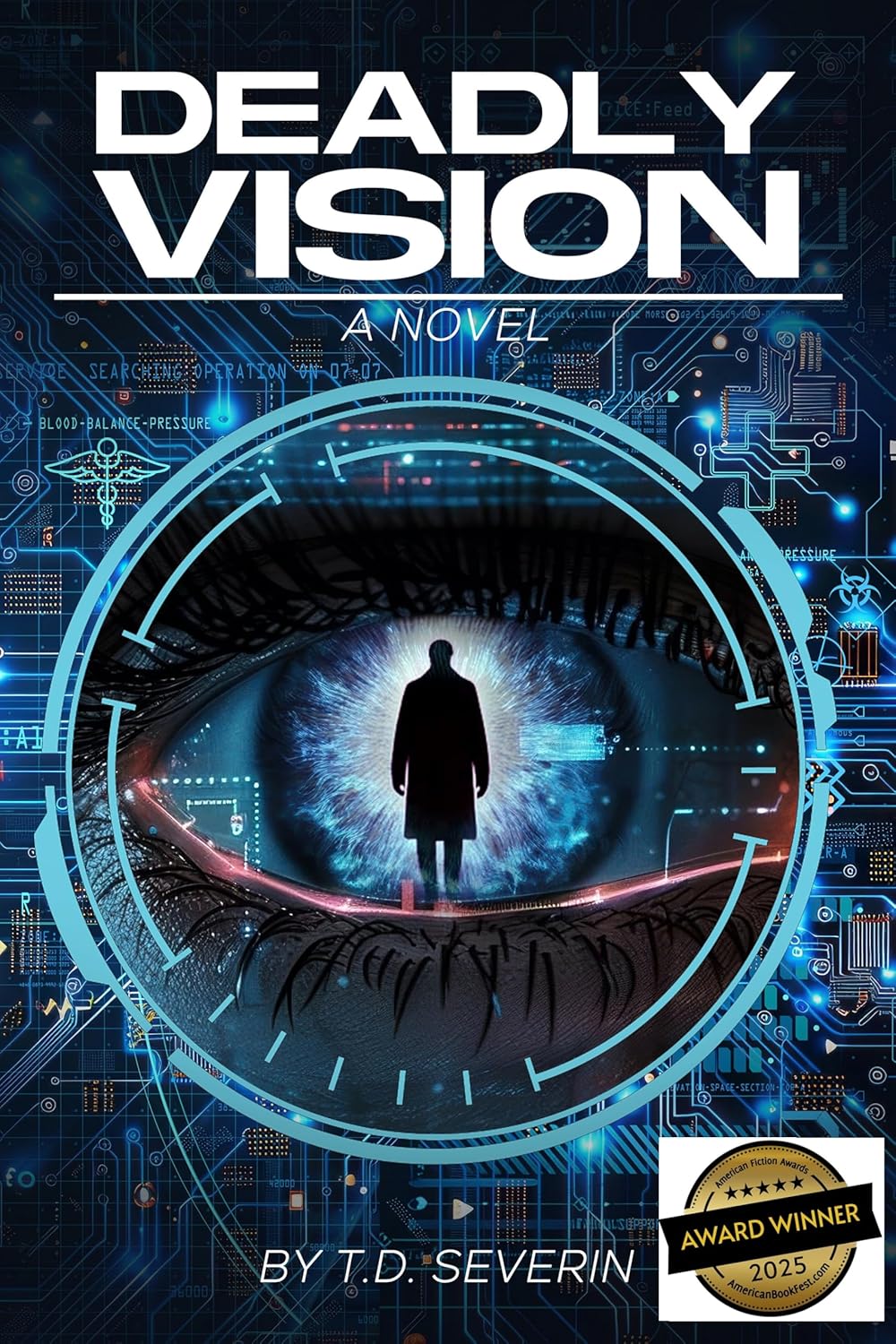
Deadly Vision starts like a high-tech thriller but unravels into something much deeper and darker. It follows Dr. Taylor Abrahms, a driven ER doctor whose research into virtual reality medicine collides with political greed, corporate secrets, and moral decay. From a Silicon Valley conspiracy to a presidential campaign in chaos, author T. D. Severin stitches together the worlds of science, power, and human frailty with an eerie sense of realism. The story opens with a murder and keeps up a relentless pace, jumping between operating rooms, campaign dinners, and backroom plots. At its heart, it asks one big question: how far would we go in the name of progress?
Severin’s writing has a cinematic quality. Scenes move like quick cuts in a film, filled with blood, urgency, and political swagger. The dialogue feels authentic, sometimes clinical, other times sharp enough to draw blood. The medical details are vivid and intense, almost uncomfortably real, and the moral tension keeps you off balance. Abrahms is compelling, but he’s also hard to love, too focused, too numb from exhaustion. And that’s the point, I think. Severin doesn’t romanticize science or heroism. He shows their cost.
What struck me most wasn’t the tech or the politics but the fear under it all. The fear of losing control, of letting machines replace human touch, of progress turning against its maker. The book hums with that dread. It’s ambitious and messy and alive. The villains feel terrifyingly real because they believe they’re doing the right thing. And Severin has a knack for making every ethical question feel personal. There’s a sadness that lingers after the last page, the kind that stays with you longer than the plot itself.
I’d recommend Deadly Vision to readers who like their thrillers with brains and bite, people who enjoy Michael Crichton’s scientific tension or Robin Cook’s medical intrigue but want something a bit grittier. It’s not a light read, and it doesn’t hand you easy answers. But if you like stories that make you squirm, think, and wonder what’s really possible when science meets ambition, this book will grip you from start to finish.
Pages: 468 | ASIN : B0DZ3JWVYX
Happy Sun Farm: Behind the Facade
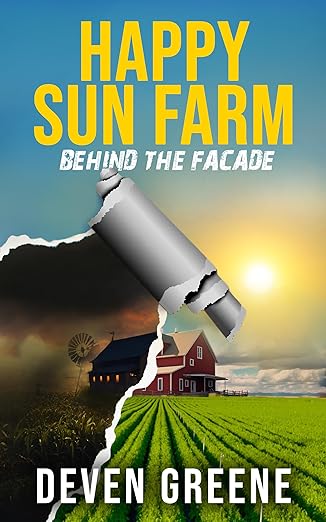
Berry comes home from college carrying fresh knowledge and heavy grief. Her father has died, and while mourning, she clings to the belief that her degree in agricultural economics might help turn the struggling family farm into a success. That confidence shatters quickly. The land she expected to inherit has already been sold; her mother signed it away to a corporate behemoth called Sunny Happy Farm. Even more unsettling, Berry discovers that her father had been resisting their advances, a battle he didn’t live to win. Determined to uncover the truth, she begins investigating the company, only to find that every new discovery points to something darker, something calculated. The question isn’t just what Sunny Happy Farm wants, but how far it’s willing to go to get it.
Happy Sunny Farm: Behind the Façade by Deven Greene is a genre-bending tale that wears many disguises. At times, it feels like a Stephen King narrative rooted in small-town unease; at others, it channels John Grisham’s legal-tinged suspense. Instead of feeling scattered, the shifting tones enhance the novel’s energy. Thriller mechanics mix with black comedy, while undercurrents of romance soften the edges. The result is unpredictable; just when you settle into one rhythm, the story pivots, demanding fresh attention.
At the center stands Berry, a heroine both wounded and formidable. Her grief never feels forced; instead, Greene peels back layers of her relationship with her father, making her pain not just visible but palpable. That emotional foundation fuels her fury at a faceless corporation that grows more ruthless with every revelation. Berry’s fight becomes personal for the reader, too, as Sunny Happy Farm emerges less as a caricature of corporate greed and more as a disturbingly believable machine.
Perhaps the novel’s greatest strength lies in that believability. Greene treads into territory that, in lesser hands, might feel exaggerated. Here, it lands with chilling plausibility. The cynicism woven through the plot isn’t sensational; it’s sobering. Readers may want to dismiss some of the book’s implications as extreme, yet Greene makes it impossible. The scenarios echo too closely with reality to ignore.
This is, in every sense, a page-turner. Deven Greene delivers a sharp, multifaceted story, both entertaining and unsettling, carried by a strong feminist voice and anchored by a protagonist worth rooting for. Happy Sunny Farm: Behind the Façade is a bold achievement, one that refuses to be easily categorized, and one that lingers long after the last page is turned.
Pages: 356 | ASIN : B0FGKQ2HSL
Prophets of War
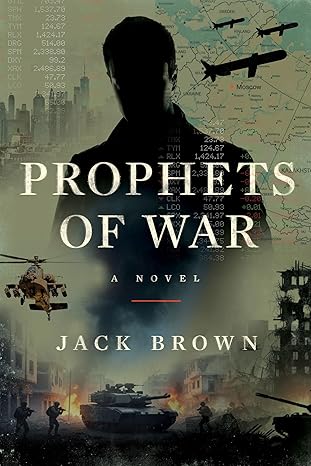

Prophets Of War follows Alex, a young financial advisor who stumbles onto a horrifying truth: his own father has created a shadowy business empire that bankrolls Russia’s invasion of Ukraine. What begins as a Wall Street career quickly spirals into a nightmare of offshore shell companies, secret deals in Tortola, oligarchs with bottomless bank accounts, and a sprawling conspiracy called the “Business of War.” The story stretches across years, peeling back layers of betrayal, greed, and the way capital can be twisted into a weapon. It is a thriller about money and morality, but also about family, ambition, and the unbearable weight of knowing too much.
Reading it was both exciting and unsettling. I found myself drawn to the writing in a way that made it difficult to put down. Jack Brown’s prose is sharp, direct, almost conversational, and it has this raw energy that carries you forward. The emotions are messy and real. The narrator swears, second-guesses, and drinks too much, and it all makes him feel believable. Still, the style can be over the top, even exhausting, with its constant intensity, but that relentlessness matches the chaos of the world he’s describing.
The central concept that war itself can be commodified, that it thrives not on ideology but on profit, is chilling because it feels close to the truth. The book doesn’t come across as a lecture, though. It’s more like watching someone wake up to a nightmare and realizing you’re in it too. There were points where I laughed bitterly, other times where my chest tightened with dread. And then there’s the father-son dynamic, which added a gut-punch of personal betrayal on top of the political corruption. That made the story hit even harder for me, because it wasn’t just about governments or faceless corporations, it was about blood ties and the price of silence.
By the time I finished, I felt both drained and oddly hopeful. Drained because the world it paints is so dark. Prophets Of War is best for readers who like fast-paced thrillers that are unafraid to mix politics with personal stakes. People who enjoy the works of John le Carré or Robert Ludlum but want something grittier and more contemporary will likely appreciate this story.
Pages: 174 | ASIN : B0FL2YB474



 LITERARY TITAN