Blog Archives
The Cost of Remembering

The Symbol: Awakening follows a fierce prosecutor dedicated to combating violence against women who, along with her allies, fights to dismantle systemic oppression and bring justice to survivors. What was the inspiration for the setup of your story?
The Symbol: Awakening was born from real-life pain. As a Brazilian attorney, I worked for years supporting women who survived gender-based violence. I carried their stories with me, their silenced voices, their broken systems, and their quiet resilience. Eventually, those truths demanded a fictional home. The futuristic Council is a metaphor for the institutions that failed them. Louise is a mirror: she’s a prosecutor trying to do the right thing in a world that punishes those who dare to speak.
It’s not just a dystopia. It’s a cry for justice.
What were some of the trials that you felt were important to highlight Louise’s development and shape her into the woman she is now?
Louise’s development is rooted in trauma and contradiction. I wanted to show a woman who fights for justice but is also broken by the system she serves.
She loses her mother to domestic violence. She carries a symbol of resistance (the button) since childhood. She trusts the law, then watches it collapse under silence and control. Her most important trials are emotional: learning to trust again, to remember who she is, and to embrace her voice even if it puts her in danger.
Her strength is not in being fearless. It’s in being terrified and still choosing to act.
What were some themes that were important for you to explore in this book?
There are many layers, but five themes are central:
• Systemic violence against women
• Institutional silence and complicity
• The cost of remembering (trauma)
• The complexity of justice
• Hope as resistance
The book also explores power through language, memory, and surveillance. Who gets to tell the truth? Who gets believed? What happens when silence becomes law?
I wanted to write about pain, but more than that, about transformation through pain.
Where does the story go in the next book, and where do you see it going in the future?
In Book II, Louise will no longer work within the system; she will rise against it. She becomes the public voice of a growing rebellion, but that comes with consequences. Enemies will rise from both sides. The movement she inspired begins to fracture.
The second book is about navigating power without becoming what you fought against.
Author Links: GoodReads | Website | Instagram | Amazon
Since childhood, Louise has carried a button inherited from her mother, a silent symbol of resistance against tyranny and violence against women. The book follows her journey through pain, discovery, and courage as she investigates crimes, exposes the Council’s lies, and confronts deep human dilemmas. Alongside allies like Emma, Joe, and Sam — the latter a mysterious man torn between his past and a chance for redemption — Louise finds herself at the center of a plot involving conspiracies, assassinations, and the darkest secrets of power.
THE SYMBOL
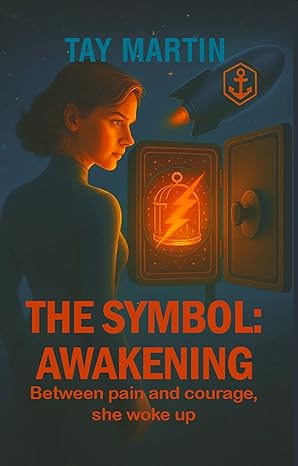

Tay Martin’s The Symbol: Awakening is a futuristic dystopian novel set in a technologically advanced world dominated by a repressive global Council. The story follows Louise Stuart, a fierce prosecutor dedicated to combating violence against women. Through flashbacks and vivid memories, we learn of her tragic past, including the brutal murder of her mother by her abusive father. These events shape her mission to dismantle systemic oppression and bring justice to survivors. Blending elements of science fiction, social commentary, and psychological realism, the novel explores deep emotional scars, the complexities of power, and the enduring human need for connection and hope.
The opening chapters with young Louise and her mother were raw and devastating. Martin doesn’t sugarcoat trauma. Instead, she pushes you face-first into it. Louise’s voice felt personal. Sharp but tender. I could feel her fear, her rage, her exhaustion. What gripped me most wasn’t the flashy futuristic world, though that part was cool, it was the quiet, painful intimacy of surviving and the way that pain echoes years later. Martin weaves together trauma and resistance with such care that you don’t feel like a spectator, you feel like a participant.
Sometimes the narrative leans into exposition, especially when it comes to describing tech or Council protocols. There were moments I wished the dialogue would let the characters speak with more silence and space. But then Martin hits you with lines so real they sting. The pacing could feel uneven, sure. But emotionally, it was constant. One minute, I was furious at the Council. The next, I was holding my breath as Louise tried not to fall apart. I also appreciated the warmth, her friendship with Emma, her complicated bond with Joe, her stubborn, enduring humanity.
I’d recommend The Symbol: Awakening to anyone who cares about justice, trauma recovery, and stories led by resilient, complicated women. If you like dystopias with heart, or character-driven narratives where healing is messy but possible, this is for you.
Pages: 239 | ASIN : B0FGDTR2PZ




 LITERARY TITAN