Blog Archives
Daughter of Starlight
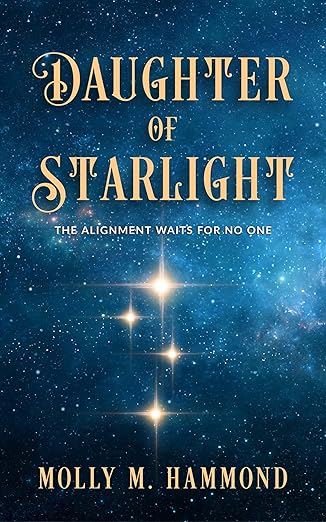

Daughter of Starlight follows Luma, a fierce, guarded young woman aging out of foster care, who stumbles across a hidden cave in the Colorado mountains and ends up transported to the magical world of Edira. There, she learns she’s no ordinary girl; she’s the one marked by the stars, the key to healing the ancient Sacred Stones and stopping a dark tide of invading wizards. With a mix of gritty real-world struggles and rich fantasy adventure, Molly M. Hammond spins a story that feels both deeply personal and sweepingly epic.
Hammond’s writing made a profound impact on me from the very first chapter. She sets up Luma’s pain, the blood on her knuckles, the loneliness, the worn kindness of her social worker Frank, with such realness that I was immediately hooked. That opening scene, where Luma picks at the scars on her palms while waiting to be lectured, felt so heartbreakingly tangible. Hammond doesn’t waste words but paints her world with quick, sharp brushstrokes that sink in deep. Even later, when Luma first hears her name whispered in the mountains during the storm, I could feel the same eerie pull she did. It’s hard to find YA fantasy that captures both grounded reality and wonder so seamlessly, but this book pulls it off.
While the middle of the book took a slightly more deliberate pace, I appreciated the deeper look into Luma’s early interactions with Corr, the gruff yet oddly endearing elf guide. Their spirited exchanges added texture to their relationship and highlighted Hammond’s talent for character dynamics. Moments like Luma’s stumbles and Corr’s teasing remarks provided a playful contrast to the story’s more intense scenes. And when the raptera attack burst onto the page, chaotic, brutal, and utterly thrilling, the story’s momentum surged, and I found myself completely engrossed once again. Hammond’s prose truly shines during these breathtaking moments of magic and mystery.
The themes explored in the novel, particularly those concerning destiny, loneliness, and belonging, resonated with me more deeply than I had anticipated. Luma’s reluctance to embrace the role of a hero and her belief that she is not inherently special felt especially poignant, reflecting sentiments with which I could personally identify.That deep reluctance, that aching disbelief in her own worth, felt incredibly real. When she finally unleashes her starlight powers to save Corr from the monstrous bird (and then immediately pukes afterward, because of course she would), I found myself grinning like an idiot. Hammond doesn’t write magic as something clean or effortless; it’s messy, painful, and exhausting. That choice made Luma’s journey feel earned instead of just fated.
I came away from Daughter of Starlight deeply moved by its heart and emotional resonance. It is a beautifully crafted fantasy that offers real emotional depth, a stubborn and relatable heroine, and a story that intertwines everyday struggles with dazzling magic. It is the kind of book that keeps you reading late into the night and leaves you sitting quietly afterward, feeling both a little wrung out and a little more hopeful as you linger over the final page.
Pages: 289 | ASIN : B0DHWBV71Q

Wearing a Different Paint Job

Kianola follows a shy teen who discovers an unexpected side of himself in a video game where he gains a newfound confidence that he takes back into the real world. What was the inspiration for the setup of your story?
This story was inspired by my own. Growing up, I was shy, and making friends was a skill I didn’t have. Video games have always been a big part of my life, and I found that playing online video games at an early age allowed me to interact with people without that barrier and practice being the version of myself I wanted to be.
In many contemporary coming-of-age fiction novels, authors often add their own life experiences to the story. Are there any bits of you in this story?
Absolutely. My story and the stories of people very special to me are layered throughout this one, although maybe wearing a different paint job.
What were some themes that were important for you to explore in this book?
The most important theme would be friendship. The best part of playing an online video game isn’t the game itself but the bonds you form with the other players. Some of those bonds are shallow, and others run so deep you carry them in some way for the rest of your life.
What is the next book that you are working on and when can your fans expect it to be out?
A rewrite of Notion, my first fantasy novel should be finished early 2025!
Author Links: GoodReads | Website | Amazon
Kianola
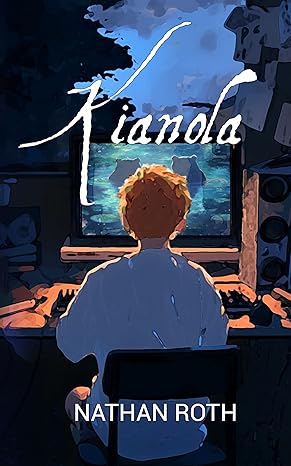
Nole, an eighth-grader who’s quiet, shy, and often overlooked by his classmates, discovers an unexpected side of himself in the virtual world of Enix. In this realm, he evolves from an awkward boy into a courageous hero, confronting mythical beasts and diving headfirst into thrilling adventures. Each triumph in Enix sparks a newfound confidence in him—a spark that he carries back into the real world, where he faces relentless bullies, an unspoken crush, and the daunting everyday challenges of middle school. Yet, the central question remains: Can this digital bravery withstand the trials waiting for him beyond the screen?
In Kianola, Nathan Roth crafts a touching, resonant story centered around Nole’s journey of self-discovery. The narrative pulls you right into the life of this timid eighth-grader, making his brave virtual escapades feel familiar and surprisingly uplifting. Roth’s vivid descriptions of Enix’s fantastical realm draw you in, making it easy to imagine standing beside Nole as he learns that the victories he earns in a game may shape the way he faces his reality. What stands out in Kianola is Roth’s nuanced portrayal of gaming not as mere escapism but as a space where Nole unearths parts of himself he never knew existed. The blend of real and virtual worlds is seamless, creating a singular, compelling journey that mirrors many young people’s struggles: dealing with bullies, navigating first crushes, and yearning to belong. Enix isn’t just a game; it’s a crucible where Nole’s courage is tested and forged, and Roth’s heartfelt crafting of this world gives it depth and resonance. The novel doesn’t shy away from meaningful themes. It touches on identity, courage, and the quiet struggle for self-confidence that many young readers will find relatable. Roth’s approach to these themes is refreshing—he presents Nole’s challenges with honesty and a light touch, never veering into melodrama. Each of Nole’s interactions, whether with his friends, family, or himself, unfolds naturally. We see how the smallest encounters can leave a lasting impact, shaping who he becomes. Roth reminds us that courage can be found in unexpected places and that even lessons learned in fantasy worlds can hold true in real life. Roth’s writing style strikes the perfect balance: engaging, straightforward, easy to connect with, yet rich enough to make Enix come alive. He brings just the right amount of detail to keep the fantasy realm exciting while grounding the story in the genuine, relatable experiences of middle school life. The dialogue flows effortlessly, making Nole’s world feel authentic and compelling. Roth creates a fast-paced yet meaningful narrative, where readers will find themselves cheering Nole on as he learns to face his fears, whether on-screen or off.
Kianola is a must-read for middle-grade readers, young gamers, or anyone who has ever felt like they don’t quite fit in. With relatable themes, engaging storytelling, and a protagonist you can’t help but root for, this book is a wonderful recommendation. For those who have ever wondered if the courage found behind a screen can translate into real-life bravery, Kianola offers a story that might just provide an answer.
Pages: 649 | ASIN : B0DH7T3V51
A Universal Truth

Children of Madness follows five children from an outcast town who are promised a better life if they fulfill a dangerous quest from the realm’s king. What was the inspiration for the setup of your story?
My six-year-old daughter Alex Beam. Every day she proves how much of a better person she is than me. She is positive and outgoing, dumbly brave, and non-judgmental. Down for anything and always expecting the best out of people. Loyal to a fault.
My previous sci-fi trilogy (The Station Trilogy) focused on true anti-heroes, damaged characters who did as much bad as good. It was dark and brooding and lacked hope. With Children of Madness, I wanted to write about true heroes with pure hearts. I wanted to showcase the power of children, who maintain wonderful qualities that most adults lose somewhere along the way.
Light shines brightest amidst darkness, so I needed to place this group of child friends in a world of war, sickness, greed, and perversion. But unlike adults, who would fold under such evil pressures, the children would persevere, powered by duty, loyalty, love, and friendship.
Finally, I wanted to show that, despite best intentions, well-laid plans, and strong support systems, bad things happen… horrible things. The world can be ugly, but there is always beauty to be found. Unfortunately, oftentimes only young eyes can see it.
All of your characters are well-developed and bring the story to life, drawing readers into their lives. What character did you enjoy writing for? Was there one that was more challenging to write for?
Potty-mouthed Fincher Bugg was great fun to write for. I’d like to say that I based him on myself, but this would be a lie. Fincher was who I wanted to be—brash, outspoken, and confident which is why I really connected with the Ditto character. Ditto was quiet, fiercely loyal, and unsure of himself. Take away Ditto’s size, strength, and maturity, and you probably come close to me as a kid.
None of the characters were particularly challenging, but Ash changed quite a bit from my initial plans. Ash was going to be the fearless one, the first to throw a punch or leap into danger. However, given her past trauma and great physical loss, it made more sense that she would be the careful, practical member of the group. We all think we’re immortal until we glimpse death, and that permanently changes how we view the world and our fragile place within it. Ash Bugg was no different.
What were some themes that were important for you to explore in this book?
Above all, friendship, loyalty, and duty, particularly regarding those that you choose to call family. I also wanted to touch on elements of oppression and discrimination, believing that many of the most wondrous individuals are products of such environmental factors—pressure creates diamonds, you know. Finally, I wanted to tell a story that showcased a universal truth that we all are guilty of forgetting or discounting—adults can learn more from children than they can from us.
Is this the first book In the series? If so, when Is the next book coming out, and what can your fans expect in the next story?
Coming on the heels of a trilogy that took a lot out of me (and tired of all the series that flood the fantasy market), I was determined to write a standalone novel. In my opinion, the story has been completed… at least for now. But I admittedly love these characters. If the perfect continuation or prequel idea came to me (well down the road), I would be open to revisiting the world. I mean, who doesn’t want to see old friends again?
Author Links: GoodReads | Amazon
FOR A WORLD GONE CRAZY, ONLY THOSE RAISED AMONG MADNESS CAN HELPThe Imperator of Quaan restlessly awaits the centennial arrival of the Snail-Gods to cure the Gloomtide, a shadow of melancholy blanketing the Titian Empire. But when the Supreme Helices finally make landfall, they do so just out of reach of the distressed monarch, beyond a poisonous grove that separates man from messiah.
Fincher Bugg leads the Sour Flower Gang, the preeminent child harvesters of the Stenches, a town of outcasts condemned to diminished lives toiling away in toxic conditions. As Fincher and his four friends endure external abuse from outsiders, internally they also suffer, watching as their parents slowly succumb to the Maddening. Despite the solace of unbreakable friendship, life is unrelenting.
When a desperate king makes a seemingly magnanimous offer to a hopeless population, the Sour Flower Gang sets out on a harrowing expedition to find God for the very people who cast them aside.
During a journey in which the children encounter the unimaginable—both beautiful and nightmarish—a terrifying question takes shape. Are the Snail-Gods here to once more save mankind, or is the Gloomtide that has enveloped Quaan a precursor to humanity’s deserved end?
Vivid Memories

Out of Body follows a teenage girl experiencing weird dreams who discovers they are not dreams but out-of-body experiences. What inspired the setup of your story?
Sometimes I dream that I’m flying, and after one particularly vivid dream, I wondered, “What if these aren’t dreams? What if my spirit actually leaves my body while I’m sleeping and goes flitting around town?” My next thought was, “What a great premise for a novel!” The idea marinated in my brain for a couple of years before I finally got around to turning it into a novel.
In many contemporary coming-of-age fiction novels, authors often add their own life experiences to the story. Are there any bits of you in this story?
Absolutely. I have vivid memories of my angsty teenage years. Unrequited love, shifting friendships, school drama—I lived it all, so it was easy for me to incorporate those elements into my story. For instance, in Out of Body, Abby has brilliant imaginary conversations with the boy she likes, but when she encounters him in person, she morphs into a tongue-tied idiot. Yep—been there, done that!
This sets up the novel to deliver some very entertaining scenes. What scene was the most fun to write?
At one point in the story, Abby’s astral travels take her to a very bizarre place, so I had to do some serious world-building. Those scenes were fun to write because I could let my imagination run wild. Since this was a made-up fantasy world, I didn’t have to worry about adhering to the laws of physics or biology. I just had to make sure everything seemed plausible in the context of the story. Constructing that world from scratch made me feel a little bit like a demigod: powerful, omnipotent, creative.
Will there be a follow-up novel to this story? If so, what aspects of the story will the next book cover?
Astral projection is a fascinating subject, one with infinite plot possibilities, so there could very well be additional books. Since finishing Out of Body I’ve been working on an unrelated project, but I do have a solid idea for a sequel. In Out of Body, Abby sets out to save her cousin after he gets lost on the astral plane. Without giving too much away, I can say that in the sequel, Abby will be the one in trouble, but it will be a different sort of trouble. Her world will be turned upside down, and she will have to go on the run as she figures out how to save herself.
Author Links: GoodReads | X (Twitter) | Facebook | Instagram | Website | Amazon
Our Intricate Whole
A Maiden’s Wish: A Novella follows two sisters who are offered a glimpse of a better life from a powerful shaman. What was the inspiration for the setup of your story?
Initially, I aimed to tell a much shorter morality tale about two friends: a vain and misguided young woman and her humbler companion who are both offered a wish-making proposition by a supernatural entity. The entity promises fame and fortune to the one but warns that this fate will be achingly empty. In contrast, to the other woman, it promises an eternally rewarding life laden with hardships and heavy burdens. “You will not see the fruits of your efforts in this lifetime,” the entity tells the humble woman who desires to use her talents for humanity’s goodwill. “But they will echo across eternity.”
This concept, set in modern times, was eventually abandoned in favor of A Maiden’s Wish, which plays to some of the same narrative beats but has a much richer journey, more ideas, and (in my opinion) a superior ending.
Bayelle and Evora experience a vast range of emotions as they come to realize the cost of the choices they make. Are there any emotions or memories from your own life that you put into your characters’ lives?
Bayelle and Evora represent the internal struggles I’ve contended with as a young woman, especially in the flippant, sometimes predatory internet sphere. Evora is the identity I chose, along my social media path, to reject: male manipulation, self-objectification, and abuse of beauty for “likes” and flattery. Conversely, Bayelle embodies my frustrations and deepest longings as a woman and, indeed, a human being: the desire to love, be loved, and impress an eternal impact upon the world through my creative skills.
Bayelle encounters opposition from worldly wickedness, oppressive opinions, and erroneous religious teachings along her journey, representative of our culture’s current divisions in the realms of feminism, “red pill” society, and the Christian church. As I have come to triumph over the flaws and failings in each of these groups, I developed the satisfaction I have been privileged to bestow upon Bayelle at the peak of her struggle.
What were some themes that were important for you to explore in this book?
Mankind has a warped view of what constitutes a fulfilling life, and it also holds a warped perception of women. As a race, we’re made for so much more than the glazed-eyed, hazy-minded daily grind. You can own as much “stuff” as you like; the stuff won’t fit into the hole in your heart. It can’t plug up and force away the sadness we sometimes feel or keep joy locked inside. Beauty, in its physical form, will erase its bloom from every face that weathers enough time and exposure to this world. The good news? That’s okay.
Appearances are one small and impermanent part of our intricate whole, and beauty that penetrates no deeper than one’s moisturizer cannot affect a grander purpose. A Maiden’s Wish asks our divisive culture to be realistic and seek deeper things than what is readily seen. Women are beautiful, and our femininity distinguishes us from men, but visuals don’t make or break us, just as they don’t make a book interesting beyond a fleeting glance. Women are not toys, commodities, objects (whether exploited by self or others), or beings of inferior purpose and intellect, all tailored for the same purpose—we are equals under God and accountable to none but Him.
Will there be a follow-up novel to this story? If so, what aspects of the story will the next book cover?
The power of this story, for me, is its brevity and finality; I do not anticipate a sequel or spin-off, but I’m sure it will have “spiritual successors” of a sort. The book’s themes, gentle magical varnish, and the nature of the characters within made for a wonderfully appealing writing process that might be cathartic to explore in a different, unrelated world and plot.
Author Links: Goodreads | Website | Amazon
The human heart harbors many desires—some fulfilled, others forgone. But young Bayelle and her sister have a guaranteed chance at a better life in the form of a powerful shaman who can grant them each one wish. When dreams and reality clash and the dust of their decisions settles, Bayelle and Evora discover what is truly worth wishing for… and the consequences of entrusting one’s future to the forces of magic.
A coming-of-age and morality tale.
Making Complicated Choices
The Wolves of Orkerion follows a young princess born from the union of a god-king and a troll king who wants to prove her worth as a warrior and carve out her own destiny. What was the inspiration for the setup of your story?
The inspiration came from me wanting to start Lunaria off as a young character who is changed by combat. With the Wolf-Ones, I wanted them to feel desperate and that rebelling was their only option.
I find the world you created in this novel brimming with possibilities. Where did the inspiration for the setting come from and how did it change as you were writing?
I used Norse mythology as a base for my world. The trolls being a large people with strength much greater than any human, I wanted their world to show that. I would say most thing stayed the same during the writing process.
What were some themes that were important for you to explore in this book?
The themes I wanted to explore are many, but the main one is choice. I find it interesting when characters are forced to make complicated choices. Choosing to go to war isn’t on easy choice to make, neither is killing those who are just following their leaders out of loyalty or other reasons. Another theme is growing up. We all have to do it eventually. The third theme is parenting. Ithagmir is not a good parent, but she does try to love Lunaria.
Can you tell us more about where the story and characters go after book one?
I do plan on expanding the story. After the first book, Lunaria will be a changed woman. She’ll be more accepting of violence and may commit savage acts. Due to her heritage, Lunaria will also be an important political figure, but not all will be so welcoming of her. Lunaria will meet her father and get some much-needed answers. Her extended family will also be a focus for the next installments.
Author Links: GoodReads | Instagram | Facebook | Twitter | Website
The Wolves of Orkerion (The Lightning Child Book 1)

Quinn Lamothe’s The Wolves of Orkerion is a riveting journey set in a dynamic, fantasy world. Centered around the young princess Lunaria Druutha, the narrative unfolds in the enchanting realm of Orkerion. Born to a god-king and a troll queen, Lunaria is a character of great determination, poised to carve a distinct path in the legacy of the nine realms. The story gains momentum as Lunaria’s mother, the esteemed High Queen Ithagmir Druutha, faces a formidable uprising, propelling Lunaria into a vortex of conflict and self-discovery. As the continent is engulfed in civil unrest, she encounters the legendary Wolf-Ones and her own kin, the trolls, in a series of conflicts that test her mettle and shape her identity as a warrior.
The novel excels in its harmonious blend of brisk action and imaginative storytelling. Lamothe’s prowess in constructing the world of Orkerion is noteworthy, crafting a landscape rich in cultural and mystical nuances. The well-developed characters add depth to the story’s complex tapestry. Particularly captivating is the juxtaposition of the enigmatic Wolf-Ones with the formidable trolls, a combination that infuses the tale with intrigue and surprise. Lamothe’s narrative style is compelling, drawing readers into the heart of Orkerion’s struggles and triumphs. The author’s attention to detail in world-building is remarkable, with each aspect of Orkerion intricately designed to immerse readers in its vibrant and mystical atmosphere. From the vast landscapes to the societal structures, every element contributes to an expansive and immersive reading experience.
The Wolves of Orkerion is a testament to Lamothe’s skill in blending action and fantasy. It offers an engaging and thoroughly enjoyable story. This vivid and imaginative foray into the fantasy genre is sure to captivate and entertain readers.
Pages: 386 | ASIN : B0CV8P4ZQC




 LITERARY TITAN