The Dragon Moonstone follows a young man who discovers he’s inherited wizard blood and must learn to control his unstable magic before it consumes him. What was the inspiration for the setup of your story?
I write primarily to inspire my grandsons to discover the joy of reading. We’re all flawed—that’s what makes us human—and I wanted them to see Noah, a young man who discovers his inherited wizard blood, grappling with unstable magic just like any beginner. Even the greatest wizards start somewhere, and I hope Noah’s journey shows them that mastering your gifts is a process worth celebrating.
I find the world you created in this novel brimming with possibilities. Where did the inspiration for the setting come from, and how did it change as you were writing?
My stories tend to unfold organically as I write—I never start with a rigid plan, and it often feels like Noah himself is in the driver’s seat, steering the adventure. The inspiration for the brimming world of The Dragon Moonstone came from my love of classic fantasy realms, blended with everyday wonders I share with my grandsons.
Courage, perseverance, and the drive to make things right were essential themes I wanted to weave throughout The Dragon Moonstone. These aren’t just plot devices—they’re the story’s true heartbeat, lessons I hope to impart to my young readers. Noah embodies this when life hurls challenges his way: unstable magic, self-doubt, and unexpected losses. Through it all, he learns to step up, push through, and emerge stronger, reminding us that true power comes from facing our flaws head-on.
Can you tell us more about what’s in store for Noah and the direction of the next book?
Grief has threaded through Noah’s journey so far, and the next book dives deeper into it as he learns to process his sadness and confront his challenges head-on. Along the way, he’ll discover that kindness isn’t a weakness—it’s a quiet strength—and that being the underdog comes with its own fierce advantages. Above all, Noah will embrace the power of paying it forward, turning his losses into legacies that inspire those around him. Expect more magic, more heart, and even higher stakes when you dive into The Griffin Moonstone.
The Dragon Moonstone: Book Two of The Moonstone Legacy Series
Noah never asked to be a wizard—too bad magic doesn’t take requests. Patience? Not exactly his strong suit. With messy, unpredictable powers that have a mind of their own, Noah puts his friends at risk. So, his great-aunt Shirley pulls some strings and sends him and his friends to Castle Dragon, where they’re in for a bumpy ride convincing the legendary sorcerer to come out of retirement and train them.
As Noah’s emotions tangle with his chaotic magic, a seemingly harmless shortcut spirals into disaster. To fix his blunder, he must find rare dragonroot, the only cure for his magical mishap. But fate throws him another curveball: the Dragon Moonstone has gone missing, and the realm’s balance hangs by a thread. Without it, chaos could reign, endangering everyone he cares about.
With a vengeful witch, a devious bounty hunter, and nearly every Fae in the Otherlands pursuing their own agendas, Noah knows he can’t do this alone. His quirky and brave friends offer their support, but in a world rife with deception and treachery, trust is a dangerous gamble.
When tragedy strikes, Noah confronts a haunting question: does the reluctant hero have what it takes to save the realm, or is he destined to be the guy who always ruins everything?
Join Noah and his friends on a fast-paced fantasy adventure filled with magic, humor, and action. Tailored for teens and adults who enjoy action-packed contemporary fantasy with a mystery to solve.
The Raven Moonstone follows an orphaned high schooler who discovers a wizard’s journal and accidentally turns the town librarian into a goat, sending him on an adventure to find an arcane artifact to reverse his spell. I enjoyed the depth of the main character, Noah. What was your process to bring that character to life?
I wrote The Raven Moonstone, sitting cross-legged in the back of our van. It was a time for stepping outside my comfort zone. I walked away from my career in IT and decided it was time to retire. The plan was to drive the backroads of America and explore. Somewhere in Missouri, we had pulled into a free campsite, and sometime during the night, another camper arrived. In the morning, I peeked out the window to catch a glimpse of our neighbor when a young man opened the back of his SUV to let his dog out. But it wasn’t a dog, but a goat. My curiosity sparked, and I grabbed my coffee and walked over to introduce myself. The young man’s name was Noah, and he was traveling cross-country with a pet goat with no name.
My grandson is just learning to read, so I thought I’d write him a story. It had always been on my bucket list to write a book. I’d thought it’d take years, so I targeted it for when he’d be about twelve. My goal was twofold: 1) create a fun story, and hopefully he’d grow to love books as much as I do, and 2) pass on words of wisdom, as a legacy, in a way that he wouldn’t. I was speaking to him. After my character Noah showed up on the page, the book wrote itself.
What themes were particularly important for you to explore in this book?
The Raven Moonstone is a weird, funny, whimsical story of family and secrets and courage, but underneath it all, it’s a story about the undeniable power of forgiveness.
Can you tell us more about what’s in store for Noah and the direction of the second book?
The Dragon Moonstone, book 2 in Noah’s adventures, brings us to Castle Dragon, where Noah is sent to master his gifts. Noah’s magic is out of control, and his powers caught the attention of some unsavory characters. Noah is impulsive and impatient, and decides to take shortcuts during his lessons, which turns out poorly. Determined to right his wrong, he is sent on a quest, but his plans become complicated when the Dragon Moonstone goes missing. He must find it and restore the balance to the realm. Along the way, Noah meets many new characters, all with their own agenda. Typically described as a loner, Noah must rely on his friends and work together and learn to trust if he is going to solve the mystery.
When Noah discovers a wizard’s journal, he accidentally turns the town librarian into a goat. Naturally, he hides her at his uncle’s farm.
Now ominous ravens lurk in the shadows, watching his every move.
Noah is determined to reverse his magical mishaps. To do that, he must find a powerful arcane artifact—the Raven Moonstone. With the help of his friends, Sara and Jesse, he sets out to solve the mystery behind the missing heirloom.
With unexpected magic, an evil witch, and a herd of feisty goats, Noah’s journey is about to spiral wildly out of control.
Dominion follows a leader of the Dragon Guild, who discovers her brother is a primary target, putting him and his dragon in grave danger, and tries to protect him while preparing for battle. What was the inspiration for the setup of your story?
The character, Gabri, inspired the adventures of her little brother, Alex. As a baby in an earlier series, Gabri had used one of her powers to save Terra from destruction. It made sense to me that her baby brother would be born with the same gifts. Alex’s intellect is far advanced for his age. Like a child, he’s headstrong and emotional. Because of his powers, he feels invincible and doesn’t believe he’s in any danger. He knows he can defeat the evil entity that is capturing and hurting dragons.
Much wiser and having learned to live without her powers, Gabri rightly fears what the Shadow will do to Alex when he discovers the boy and his abilities. She’s torn between protecting him and fighting the enemy.
Their conflict developed organically. I had no idea the story would end the way it did until I got there.
The writing in your story is very artful and creative. Was it a conscious effort to create a story in this fashion, or is this style of writing reflective of your writing style in general?
That’s a tough question. I would say it’s a combination of the two. The words flowed as the story unfolded in my mind. I became immersed in the scenes, invested in the characters, and intrigued by the emerging story.
My writing style may have developed because of the many books I’ve read and enjoyed in this genre. In short, I wrote a book I would like to read.
Friendship, love, sacrifice, and finding one’s place are virtues that are highlighted throughout the story. Why are these important to telling the story?
They’re elements of life. Both friendship and love involve some sacrifice. There is no love or friendship that doesn’t require giving up a bit of oneself. The journey is different for everyone, but it makes for some great stories.
Finding one’s place, one’s anchor, one’s tribe, has immeasurable rewards, but the process of getting there can be daunting and can make interesting reading. As an Army Brat, it took me years to realize my place, my home, was with my core family, no matter where we lived. The pain of saying goodbye to my friends as they left, or as I left them behind, was a sacrifice born of my love for them. As a parent, loving our children requires giving them up to live their own lives. No character-driven story would be complete without some such life elements.
After surviving so much, where do you see your characters after the book ends?
I don’t want to give away the ending! I will say that some of the characters might show up in other stories. They can become quite insistent, and I feel a plot or two percolating.
While the Dragon Guild battles dark forces obsessed with utter dominion, Gabri and Makani must first protect Gabri’s younger brother, in danger of becoming a primary target. Alex and his dragon, Tito, have a plan. Those around him believe he is a defenseless little boy, but Alex and Tito disagree.
As tensions rise, and Gabri, Elio, and their dragons prepare for battle, Alex and Tito embark on a daring mission to rescue Phoenix, a dragon caught in the crossfire of a sinister plot.
Treacherous challenges await the Dragon Guild as they harness their unique abilities and forge alliances to secure the safety of their loved ones and the future of their planet. Will courage and determination be enough to overcome the darkness threatening to engulf them? Will Gabri lose her little brother in their fight to regain dominion over their world?
Aerie is a continuation of the Dragon Guild saga, where Gabri and her dragon Makani seek peace in a mountaintop refuge, only to be swept into a cross-realm rescue mission that tests the bonds of love, loyalty, and identity. What were some new ideas you wanted to explore in book two?
Thank you for your interest in Arie and in me.
At the end of SANCTUM, Gabri was a 16-year-old who had lost all her enhanced abilities when she’d been abducted. Her family on Terra was doing all they could to find her and bring her home. She had bonded with her dragon, Makani, and her Aracai, Ting.
After chapter 1 of AERIE, Gabri’s story continues at age 18. While people flee to Sanctum in droves to escape the evil ruler of Umbra, Gabri and Elio join with other dragons and riders to protect their home and everyone on the planet. This book explores Gabri’s relationships with Elio, who is in love with her, and with Donny, the one she was sure she would build a life with. Donny is still searching for her. New challenges, far more complex than before, test her and the ones she loves. Will Gabri survive and overcome them? Who will she choose to be her life partner?
Gabri’s emotional journey is so raw and personal. Was there a specific experience or inspiration that shaped her arc in Aerie?
Personally, I grew up as an Army brat, moving from one environment to another, sometimes with little warning. Leaving friends behind, or seeing them leave, broke my heart. Changing schools was daunting, especially when we moved during the school year, which often happened. More so, moving from one country to another, from a familiar culture and language to one completely different, left me feeling temporarily powerless. Personal growth occurred as I learned to overcome every obstacle (such as learning another language) and as my broken heart mended after each move. In many ways, I identify with Gabri.
As for Gabri’s character arc, two experiences come to mind. One happens when Gabri is captured by Ozul and discovers he is not the one who abducted her from Terra. She encounters Katzir, the being behind her abduction and the one controlling the planet. She shows great courage, despite being separated from her bondmates and Elio. Before she can reunite with Makani and Elio, Ozul wipes her memory.
The second occurs as she slowly recovers her memories. Donny re-enters her life, and she must make a decision. Elio or Donny? Aerie or Terra?
The dragons feel uniquely alive and soulful. How did you develop Makani’s personality and her bond with Gabri?
Although intertwined with Gabri’s thoughts and emotions through their bond, Makani is very much herself, a being with reason and opinions all her own. She’s highly intelligent, strongly emotive, and, in some ways, a bit clingy. She loves to play during flight but can be serious and intuitive when necessary. Her relationship with Gabri developed as I wrote. It became organic, and I knew how she would interact in any given circumstance. Makani is the dragon I wish I had.
Time shifts and interdimensional travel play a big role. How did you keep the pacing balanced between high action and emotional depth?
It wasn’t easy. As I wrote, I used a spreadsheet, with Terran time in one column and the corresponding Aerie time in another. The spreadsheet kept me sane. After the first draft, I separated the chapters into Terra and Aerie, then wove them together in a way that made sense according to the parallel timelines. The pacing balance seemed natural to me. The story needed to breathe. Picture the high action as an inhale and emotional depth as the exhale. One wouldn’t work without the other. As life ebbs and flows through our seasons, a story should do the same.
Trained for battle, bonded to her dragon, and with a growing interest in Elio, the leader of Dragon Guild, Gabri could lose it all.
A young warrior in the Dragon Guild, Gabri and her beloved dragon, Makani, fly patrol through the inner world of Sanctum with Elio and his golden dragon, Kealohi. While investigating an abandoned enemy outpost, Gabri is captured and isolated from Makani and everyone she loves. Imprisoned and implanted with a mind control device, can Gabri break free, unite with Makani, and reclaim her lost memories?
Together with Elio and his dragon, Gabri and Makani embark on a quest to reclaim their world from a sinister enemy. As they face formidable foes and uncover hidden truths, their bonds of friendship and courage will be tested like never before. Will they succeed in their mission?
With themes of courage, friendship, and the power of love, Aerie invites readers into an enchanting adventure filled with danger, hope, and the unbreakable bonds between humans and dragons.
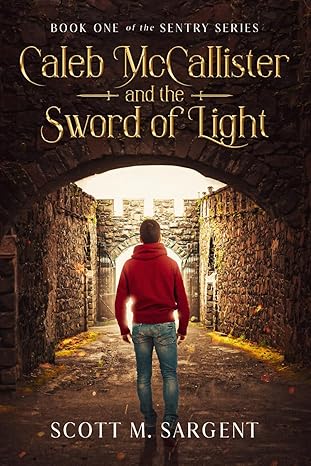
Caleb McCallister and the Sword of Light, by Scott M. Sargent, is a captivating modern fantasy steeped in the rich lore of Irish mythology. The story follows 14-year-old Caleb, a boy worn down by his father’s constant retelling of ancient Irish myths. Feeling abandoned by his often absent father, Caleb gravitates toward his traumatized uncle Seamus. But on a school field trip with his best friend Scott, the myths he thought were mere stories come to life. As darkness rises and demons emerge, Caleb and his newfound allies must face unimaginable threats to protect the world and save those they care about.
What really stood out to me was the way the author seamlessly wove Irish legends into a modern setting. I have a deep appreciation for world cultures, and learning about the ancient myths alongside Caleb was a fascinating experience. Caleb, though far from a perfect hero, is relatable in his flaws. His struggle with abandonment and his frustration with the world around him felt real. Frankly, he got on my nerves in the first half of the book—mostly because he reminded me of myself at that age. But that’s the brilliance of his character. Caleb’s growth is one of the highlights of the story. Supporting characters like the sarcastic leprechaun “Lucky,” the fierce Siobhan and the shy yet loyal Scott added layers of charm and depth to the narrative. Even Kieran, the elven college student, brought his own unique energy to the mix.
There are sections where the story drags a little, particularly when it goes deep into the family history and the backstory of the Tuatha Dé Danann. While this mythology is fascinating, I found myself getting lost in the details at times, yearning to get back to the action. That said, the legends themselves are a treat. The way Sargent ties the mystical artifacts—the Sword of Light, Lugh’s Spear, and the other treasures—into the plot is seamless. Caleb’s gradual discovery of his connection to these ancient myths is compelling, especially when he learns about his father’s secretive role in this world, a revelation that is hinted at with tension throughout the book. The story skillfully blends magical elements with real-world problems—issues of identity, family, and the weight of expectations.
The book wraps up with a solid, if somewhat abrupt, conclusion while leaving room for more adventures in future installments. It’s a real page-turner with action and adventure around every corner, and I was fully immersed in its world. Caleb McCallister and the Sword of Light is an exciting tale of growth, self-discovery, and embracing one’s destiny. Scott M. Sargent delivers a brilliant debut, and I’m eager to see what comes next from this promising author.
Butterfly Ink follows a recent high school graduate who, while visiting her best friend, Becca on a private island off the coast of Florida, is offered a magical tattoo promising her fame and beauty. What was the inspiration for the setup of your story?
The inspiration for this story began as an idea for a picture book, which may sound crazy. My daughter had always been captivated by water application tattoos, so I wanted to create a story about a magical one. As the idea developed into a young adult novel, I also wanted to create an atmosphere that would feel as enchanting as the tattoo itself. That’s when Wellington Island came to life. Additionally, my daughter was at an age where she expressed her desire to be beautiful to resemble the girls she saw on Pinterest and Instagram. This also served as inspiration for the story’s setup.
Calli undergoes some dramatic transformations, not just physically but also with her beliefs and self-worth. What morals were you trying to capture while creating your characters?
I wanted to address the pressure that young girls feel to conform to societal beauty standards and explore the idea of self-acceptance and inner beauty. In the story, the main character discovers that the magical tattoo she receives grants her physical beauty, but she soon realizes that true beauty comes from within. Through her journey, she learns to embrace her uniqueness and appreciate her own individuality.
What were some themes that were important for you to explore in this book?
In Butterfly Ink, self-acceptance was a crucial theme for me to explore. The protagonist goes through a journey of learning to embrace and love herself, flaws and all. This theme is important because it highlights the significance of accepting ourselves for who we are, rather than striving for unattainable perfection. The novel also emphasizes the idea that we can forgive mistakes. Through the characters’ experiences, I wanted to convey the message that everyone makes mistakes, and it is essential to learn from them and move forward. This theme aims to instill a sense of hope and redemption in the readers. Last, the novel emphasizes the value of true love, whether it be from friendship or a romantic relationship. It showcases the power of genuine connections and the impact they have on our lives. By exploring this theme, I wanted to remind readers to cherish and appreciate the people who truly care for them, as they bring immense joy and support. Overall, Butterfly Ink aims to inspire readers to accept themselves, learn from their mistakes, and value the love that surrounds them.
What is the next book that you are working on, and when will it be available?
The release date for my next book, ANGELS IN THE SAND, is for January 2025. It’s about a ten-year-old girl named Jess who embarks on a journey of self-discovery as she navigates the complex emotions surrounding loss. Struggling to come to terms with her father’s untimely death and the impending loss of her beloved grandmother, Jess finds solace in the most unexpected places. As she encounters a diverse group of individuals who have all experienced profound loss and have developed a unique ability to perceive signs from their departed loved ones. These encounters prove transformative for Jess, as she learns to interpret the subtle messages that surround her and finds comfort in the belief that her father and grandmother are still with her from beyond. ANGELS IN THE SAND is a heartfelt and poignant tale that explores the universal themes of grief, healing, and the extraordinary ways in which we connect with our loved ones, even after they are gone.
Fresh out of high school, Calli Stockton, a volunteer at a children’s horse camp in Arkansas, is feeling uncertain about what lies ahead. What better way to figure things out than to spend the summer working alongside her best friend at a private island resort off the coast of Florida?
Little does she know, this experience will change her life forever. After a chance encounter with a mysterious man offering her a magical tattoo, promising fame and beauty, suddenly, Calli’s life seems to be perfect. Or is it?
When Calli faces an unexpected crossroads, she must make a challenging decision. Will she choose the life the magic offers, or will she walk away from her deepest desires and choose the people she loves the most?
Dive into the pages of Butterfly Ink and experience a splash of magic, first love, and fame, all while discovering what it truly means to be …






 LITERARY TITAN