Blog Archives
The Old Rose Villa


Tuula Pere’s The Old Rose Villa is a heartfelt story about family, perseverance, and the ties that bind us to our past. The story follows Mihir, a boy who grows up in the mountains, making a treacherous journey to school each day, driven by the hope of a better future. His parents, who are hardworking and struggling, encourage him to pursue education so he doesn’t share their fate of laboring in the fields and on construction sites. Mihir eventually succeeds, moving abroad and becoming a respected engineer. When he returns home, he surprises his parents with a beautiful house in the same villa where his father once carried bricks as a laborer. What unfolds is a touching exploration of love, duty, and the inevitable passage of time.
One of the things that struck me most about this book was its deep emotional core. Mihir’s love for his parents is unwavering, and the way he repays their sacrifices is genuinely moving. When he buys them the Old Rose Villa, it’s not just about providing comfort but also about restoring dignity to the people who shaped him. There’s something incredibly powerful about that moment when his father realizes the very house he once labored over now belongs to his son. It’s a rare kind of storytelling that doesn’t just tell you a happy ending but makes you feel the weight of every step taken to get there.
The writing is simple, yet it carries a strong emotional punch. Pere doesn’t overcomplicate the prose, and that works in favor of the story. The descriptions of the villa, the rose garden, and the everyday lives of the caretakers are vivid without being flowery. The dialogue feels natural, especially in moments like when Mihir’s father hesitates to accept luxury, saying, “It feels strange to have servants. I’m almost embarrassed.” That line hit me because it captures the humble nature of a man who has spent his whole life working, never expecting anything in return. It’s those small, quiet moments that make the story linger long after you finish it.
What really made me think was the theme of returning home. Mihir, despite all his success, feels the pull of his childhood, the familiar roads, and the people who watched him grow. When he finds the lucky coin he buried as a child, it’s like the past is reminding him of his dreams. But there’s also the bittersweet realization that time moves forward, and we can never fully return to what once was. The final moments, with Mihir contemplating whether he should move back, feel incredibly real. Success and progress are wonderful, but what good are they if they leave behind the people and places that made us who we are?
I’d recommend The Old Rose Villa to anyone who enjoys stories about family, nostalgia, and personal growth. It’s especially perfect for those who appreciate tales with emotional depth but don’t want to wade through overly complex prose. If you’ve ever felt torn between moving forward and holding onto the past, this book will resonate with you. It’s a beautiful, heartfelt read that reminds us that home isn’t just a place, it’s the people who make it special.
Pages: 54 | ISBN : 952820077X

Our Song, Our Voice
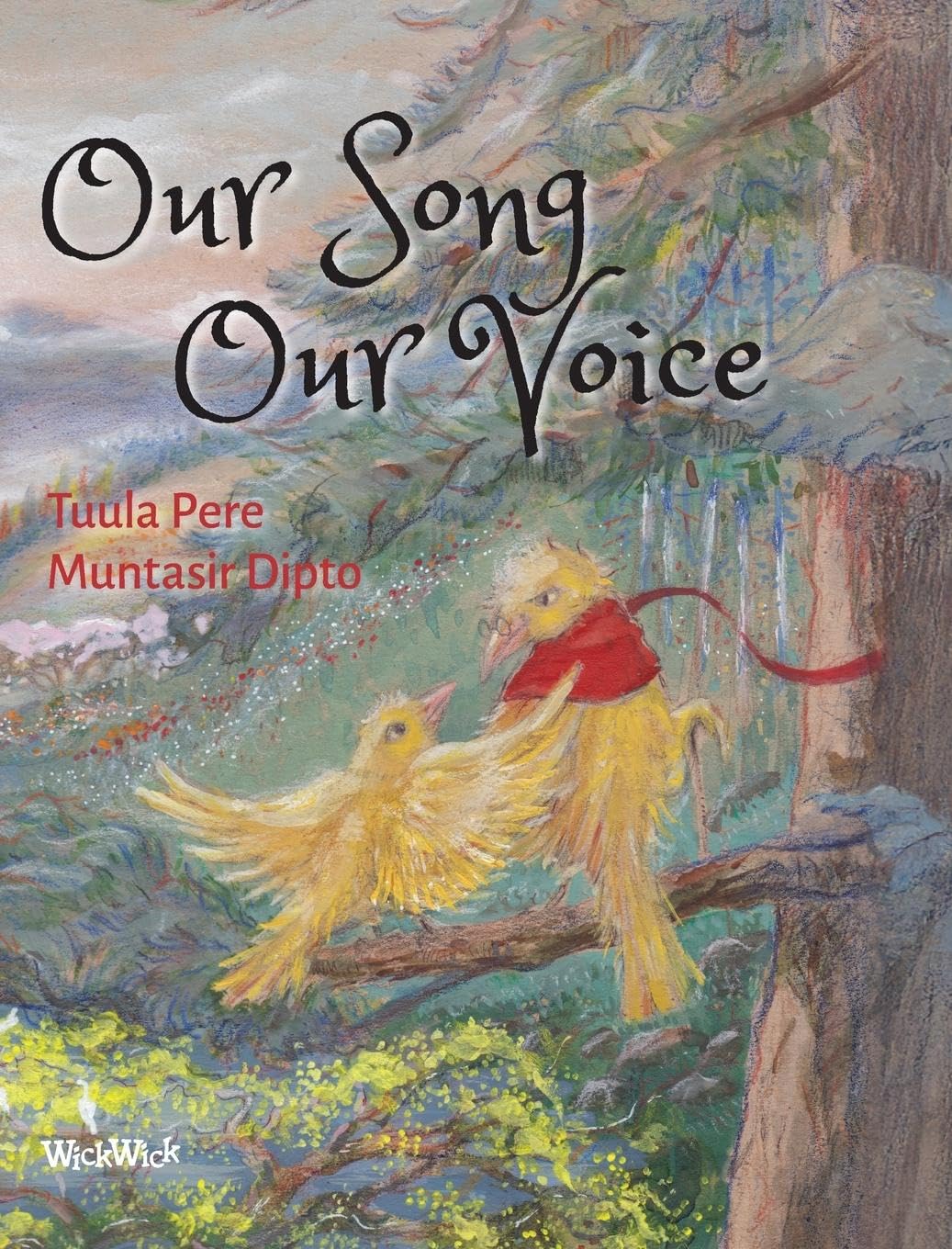
Tuula Pere’s Our Song, Our Voice is a heartfelt story about a young golden crow named Sisu who embarks on a journey to save his beloved grandmother and preserve the traditions of his endangered flock. Set in a valley threatened by deforestation and invasive species, the book follows Sisu as he learns ancient songs, finds his courage, and sets out to retrieve a powerful healing resin from the distant Blue Mountains. Along the way, he discovers the power of music, the wisdom of elders, and the importance of preserving one’s heritage.
One of the most touching aspects of the book is the relationship between Sisu and his grandmother, Una. Their bond feels genuine and warm, full of love and wisdom. Una teaches Sisu not only about survival but also about values, culture, and the importance of knowing where one comes from. The way Pere weaves life lessons into the story feels natural and never preachy, making them all the more effective.
The story also does a great job of portraying resilience and bravery. Sisu, though small and inexperienced, takes on a daunting journey when no one else believes in the old traditions. When his parents dismiss his grandmother’s wisdom, he listens anyway. When he’s told he’s too young or weak, he pushes forward. His moment of triumph, when the old golden crows recognize his song and guide him, is one of the most rewarding parts of the book. The idea that language, tradition, and song can connect generations, even across time and distance, gives the story emotional weight.
The destruction of the golden crows’ home due to deforestation mirrors the plight of many endangered species today. The struggle to keep traditions alive, especially when they are deemed unnecessary or outdated by others, is something many cultures face. Our Song, Our Voice doesn’t just tell a story, it encourages readers to think about what’s worth preserving.
Our Song, Our Voice is recommended to anyone who enjoys meaningful, emotionally rich stories. Younger readers will appreciate the adventure, while older ones will find deeper themes to reflect on. It’s perfect for families to read together, as it sparks conversations about heritage, bravery, and the environment. Pere’s storytelling, combined with Muntasir Dipto’s charming illustrations, makes this children’s book both engaging and thought-provoking.
Pages: 40 | ISBN: 9528202179
The Dream House

Some dreams come at a cost, and for Samira’s family, that cost was almost everything. The Dream House follows Samira, her parents, and their journey to build a vacation home in her father’s childhood village. At first, it’s all excitement—fresh mountain air, family traditions, and the dream of a home away from the city. But things take a turn when an unreliable builder, Akam, enters the picture. With each promise he makes, their dream house starts feeling more like a nightmare. Money disappears, deadlines pass, and eventually, reality sets in, Akam was never planning to build their home. Yet, in the face of betrayal, the kindness of the village community helps them rebuild not just their house, but their faith in people.
From the start, I was drawn in by the warm, almost nostalgic way the author describes the family’s love for the mountain village. Samira’s excitement about wading in the stream, buying new shoes, and exploring the alleys made me feel like I was right there with her. But what really hit home was how fast excitement turned to disappointment. The moment Akam convinced Samira’s father that everything would be “easy and cheap,” I could feel the red flags waving. Yet, her father remained hopeful, and that blind optimism felt painfully real. The writing captures that gut-wrenching mix of excitement and dread the kind you get when something seems too good to be true, but you don’t want to believe it.
The emotional weight of the story really hits when the family arrives at the construction site, expecting a nearly finished home, only to find barely more than a foundation. Samira’s father is so full of dreams and plans, he just sits down on a sack of cement, completely devastated. That moment stuck with me. It’s not just about money lost; it’s about trust broken, about realizing you’ve been fooled. But what I loved about this book is that it doesn’t wallow in that loss. Instead, it pivots. When the villagers step in to help, there’s this quiet, powerful shift from despair to resilience. The idea that kindness and community can rebuild what was lost is one of the strongest themes, and it gave me a sense of hope.
I also appreciated how the book showed that sometimes, what we end up with is better than what we originally wanted. Samira’s family had to let go of their “luxury villa” dream, but in the end, they got something more meaningful, a real home, built with love and honesty. And the detail about the gate, stolen by the scammer but later recovered and placed at their new house? That was the perfect way to show that even in loss, some things can be restored.
The Dream House is a touching and beautifully written story about dreams, trust, and the people who show up when things go wrong. Kids will connect with Samira’s emotions, while adults will see deeper messages about life’s ups and downs. It’s perfect for families who enjoy heartfelt stories with a strong moral core, and for anyone who’s ever faced a setback but found a way forward.
Pages: 48 | ISBN : 9528200850
Gaining Confidence

Ava as a Top Seller, follows a young girl who dreams of becoming a market vendor and gets a chance to help a local shopkeeper one weekend. What was the inspiration for your story?
Almost all of us have childhood memories of how much fun it was to create our own play store. I’ve set up many of these shops with my siblings, friends, and later with my children. I’ve been both a salesperson and a customer, and it has always been just as enjoyable.
That kind of play is full of imagination and, at the same time, practicing essential skills. The best experiences from my own childhood were shops where the diverse selection consisted of various natural products.
Some of the sold items were edible, such as berries or vegetables in the summer. But others were stones, sticks, plant leaves, hay – anything our imagination turned into interesting goods or treats. My little sisters started a flower shop, selling wildflower bouquets to passersby. The related funding, however, sparked discussions with parents…
Now, it’s fun to watch my visiting grandchildren rush to the same toy vegetable store where my adult children once played with the sales counters, cash registers, baskets, and toy fruits and vegetables.
Ava has a special bond with Mr. Stuff, and he helps guide her while allowing her to problem-solve and learn. Did you have your own “Mr. Stuff” growing up?
As a child, I was surrounded by adults who gave me a lot of freedom but enough security. I remember the feeling of encouragement and confidence. Because of this, I dared to tackle new things independently and wasn’t unnecessarily afraid of possible mistakes.
There are many happy memories to cherish. I was able to take out a cookbook and bake the first cinnamon rolls of my life as a surprise for my absent mother. The teacher gave me the task of choosing a play and actors and directing the performance for the Christmas party. It went well!
Throughout my life, I can name many adults who have played a role similar to the friendly “Mr. Stuff” in my Ava as a Top Seller story. I am genuinely grateful to each one of them. They were relatives, teachers, coaches, and tutors for different hobbies.
With their help, I transformed from a curious and enterprising child into an adult who reasonably trusted her skills. This belief in possibilities and survival has helped me sometimes make significant life changes and pursue things that initially seemed very challenging.
What were some educational aspects that were important for you to include in this children’s book?
All of my Axel and Ava series books tell stories for children, parents, and other adults in children’s lives. I hope young readers—and listeners—gain self-confidence from these tales. In these stories, they learn that new abilities must be tested and that damage can occur but can be repaired.
An equally important goal in my books is to make adults aware of the role they play in guiding a child to new experiences and skills. It is a question of finding the appropriate balance of freedom and safety. I hope those adults closest to each child would spend time and effort supporting the child from a suitable distance. It is crucial to find that appropriate distance. This is challenging because every child is an individual, and every family is different.
In my stories, I aim to highlight positive ways for adults to engage with and motivate children to face potential mistakes and harmful situations. I’m sure parents sincerely try to do good in raising their children. Sometimes, they even try too hard and forget that a child’s growth also needs free space. Opportunities to try, fail, and try again.
Perhaps the worst thing an adult can do is continually doubt or belittle a child’s abilities while assuming the role of the adult who knows better. It’s also incredibly frustrating for the child when their past mistakes are frequently mentioned.
With a right mindset, even failure does not leave unpleasant traces but acts as encouragement for needs. There will always be the next day and the next opportunity!
What do you have planned next for Axel and Ava, and when will it be available?
The Axel and Ava Series has four books published so far: Axel and Ava as Cat Sitters, Ava and the Last Bird, Axel Washes the Rug, and Ava as a Top Seller. The books explore various situations in which children’s enthusiasm leads to surprising outcomes.
The lives of active children are full of such situations, so there is no shortage of topics for future parts of the series.
I already have a few funny coincidences in my head for the new parts of the series. It is still too early to reveal the names of these books, but I can tell you that my memories are involved again.
For example, I’m considering a book in which the events revolve around a children’s performance that doesn’t go as planned. Another idea involves a situation full of good intentions to make a loved one happy but not succeeding in that.
I can’t give an exact schedule for the new books in the series, as I currently have many book projects in various stages. During the year, I will also participate in at least three international book fairs in different ways: in the spring, the London Bookfair, and in the fall, the Bologna Children’s Bookfair and the Frankfurt Bookfair.
But I can promise that Axel and Ava will always travel with me, no matter where I go in the world, to talk about children’s books.
Author Links: GoodReads | X (Twitter) | Facebook | Website
By accident, Axel stains his grandmother’s rug with blueberries. During Granny’s afternoon nap, he tries to correct the mistake all by himself. The result is a surprise for both of them!
Free-Growing Nature

A Parrot Tail Lily follows a gardener who discovers a rare plant growing in his garden and focuses all his attention on that one plant, neglecting the others. What was the inspiration for your story?
The inspiration for this book was not originally related to gardens and plants at all, but rather, they have been used as a metaphor for some important issues. Through the roles related to the garden, I wanted to highlight how even a good thing can become a burden and a problem if the attitude is wrong. In this book, the gardener Cosmo gets into a mental breakdown with his rare plant, and eventually, the whole garden suffers. Even the specialty, the parrot tail lily that gets all possible care and attention, will hardy survive.
Of course, I admire flourishing gardens and have tried to take care of some of my own as an adult, but with hardly any success. I admit I’m more of a friend of free-growing nature – forests, beaches, and flower meadows. Such elements are not included in this book. Instead, it focuses on cherishing a rare object or thing and showing how that can go wrong and ultimately no longer bring joy to anyone.
One metaphor that lurks behind this book is parenting. I have always been worried about parents who start excessively grooming their child who has some special skill. With good intentions, they can eventually isolate the child from their natural environment and a free and joyful childhood life. This situation can be related to some talent at school, music, or sports. A child or young person who is the target of the wrong kind of encouragement can begin to feel unwell. There is a risk that the demands and pressures take over and the growing child’s life becomes too narrow and focuses just on a limited view.
What were some ideas that were important for you to share in this book?
As I already mentioned, the garden, with its plants and the people associated with it, is a metaphor for something bigger. Through it, I can express my appreciation for the diversity of life. While a unique and rare plant deserves attention, it is essential to remember that nature is a whole—more than the sum of its parts.
We must understand the mutual interaction of the different parts of nature and the importance of everyone for the other’s well-being. Plants and flowers need wind, water, sun, warmth, insects, and shelter before they can do well. People also need more than just some rarity to care for. We need the joy of color, abundance, the scent of plants, and the opportunity to admire everything around them. This fairy tale emphasizes how important it is to work together with others and enjoy the results with friends.
However, the core message can be summed up in two words: respect and balance. These concepts can encompass the entire human relationship with nature.
Do you enjoy gardening, if so do you have a favorite plant or flower?
I’m not precisely the gardening type. I sometimes build flower beds, plant seedlings, and tend to them, but too many obstacles often arise.
As a child, I made my first flower bed in our yard, but the neighbor’s overactive children rode their bikes over it just as the seedlings sprouted buds. Sometimes, I had to weed and water my mother’s and neighbor’s flower beds, but other summer activities were much more fun. In recent years, I have mainly focused on plants in the yard of our summer house that wouldn’t be appetizing to the nearby herds of roe deer! They eat almost everything!
Of course, I admire beautiful gardens and their floral splendor, but my particular favorites are wildflowers. I collected dozens of plants from the meadows and forests near my childhood home during summer leaves. This school assignment was quite a chore: collecting plants, taking notes, drying, pressing, attaching the dried plants to cardboard, and labeling them with their Finnish and Latin names. However, the chore was enjoyable and taught me a lot about plants and their growing environment.
However, my favorite natural plants are trees—especially birches and pines. Birches are generally gentle-looking trees that change their appearance with the seasons, while majestic pines are easy to admire when they grow, for example, on a high sandy ridge. I also like the idea of trees sheltering birds.
What is the next book that you are working on, and when will it be available?
As usual, I have many books in different stages. Right now, I spend most of my time collaborating with several illustrators—Bangladesh, India, Brazil, Italy, and Ukraine. Even though the brush is elsewhere, it is nice to follow the progress of the work, comment on it if necessary, and answer any questions the illustrators may have.
I just received the illustrations for two books in my Lyrics of Life Series. The pair will be published later this year. The whole series is based on a new, interesting idea. I have also found more books for the new Wickwick Global Hearts Project. There, I translate the stories from English into Finnish. So far, these books have come from Bangladesh, Turkey, and Ghana. It is nice to connect cultures with this bridge-building project. I believe I will also have the book from Africa ready by the next Bologna Children’s Book Fair. Wish me luck!
It is also enjoyable to follow along and comment on the evolving book layouts. Two unique books illustrated in India are nearing completion: The Old Rose Villa and A Dream House. I created these books based on stories my Indian-born friend shared with me. I can’t wait to see how they will be received, and I hope my friend will also like the result!
It will be nice to meet international publisher friends at the upcoming book fairs in London, Bologna, and Frankfurt and present our work results to them. Of course, I am particularly interested in reader feedback, which is always a pleasure to receive! If I reach the target audience, I haven’t written in vain.
Author Links: GoodReads | X (Twitter) | Facebook | Website | Amazon
As Cosmo concentrates on taking care of the rare flower, he forgets everything else. His whole garden suffers, and eventually, the parrot tail lily dies, too. Was it too lonely to survive?
Cosmo’s young niece Nelly reminds the sad gardener about something he has forgotten. The plants need each other and nature around them – just like humans.
Strong Connection to Nature
A Freezing Ski Trip follows siblings Liam and Lily on an exciting yet challenging ski trip through the snowy woods to Pine Cottage. What was the inspiration for your story?
There are many exciting things to tell about winter and skiing in Finland. Our winter can look incredible with thick, powdery snow and glittering ice, and snowy terrain is the best place for recreation and winter sports.
However, freezing and icy conditions can surprise even the most experienced skier or camper, and even light outdoor activity can turn into a fight for survival, as in this story.
In this fairy tale, I wanted to highlight how nature can offer different experiences and circumstances. We should take them into account and take sufficient precautions to prevent damage.
I always hope that my stories inspire children to be brave, not reckless, and to believe in their ability to survive. I also want to point out that when people find themselves in difficult situations, it is essential to cooperate and avoid panicking to survive – just like Liam and Lily did!
The siblings encounter a variety of mishaps while skiing. Did you take any inspiration from your own life when developing this book?
As a child in Eastern Finland, skiing and snowy winters were familiar to us. I have attached two memories to this story, one from my childhood and the other from a dangerous skiing trip I later made as an adult with my family.
In Liam and Lily’s story, they find themselves on a steep hill that is too icy to ski down. I encountered that myself from time to time on my childhood ski trips. The result could be a broken ski—fortunately, no broken bones! Once, my mother accidentally fell off the slope and sank from tip to toe into the soft snow. Other family members laughed, but she didn’t when she got up covered in snow, but luckily in one piece.
However, this book’s primary inspiration is an icy ski trip my husband and I took with two small children to a remote island miles from any settlement. I still get chills when I think about the long route back after sunset and the freezing temperatures. It took all our strength and courage to finally make it across the dark and vast ice fields to the beach where our car was parked. There were no cell phones back then, and no one knew to expect us! The incident inspired a decent book, but I would never do a similar trip
again!
What were some themes that were important for you to explore in this book?
In this story, I have focused on three main themes: connection to nature, confidence in one’s abilities, and the power of cooperation.
I grew up close to nature having the opportunity to wander freely in the nearby forests and fields as well as row and swim in the lakes. Both summer nature and winter snow and frost became familiar, and I learned to act alone even in demanding situations. This is how I developed a strong connection to nature, which has always been my strength. I hope that as many children as possible can experience this.
I was lucky to be surrounded by wise adults who trusted my abilities. A child must have the right balance of freedom and safe boundaries. Encouraging independent decisions is good as long as the child gets enough security when it’s needed.
One of life’s important lessons is that we don’t live alone. Most people have someone close to them with whom they can share activities and experiences. Working together and finding solutions is easier than just coping alone. When the situation is challenging and your abilities are insufficient, it’s better to admit that a helping hand is needed. There’s no shame in being weak or incompetent. Besides, solving difficulties together with a trusted person can be fun!
Making mistakes and failing isn’t the end of the world, as long as you overcome the situation and learn something for future attempts.
What is the next book in the I Did It series that you are working on, and when will it be available?
In addition to the four books already published in my I Did It Series and illustrated by Catty Flores, I have at least two more planned. Those books are already ready-made packages in my mind, and I could turn them into books at any time. I must arrange a suitable time to write them down and agree with my trusted illustrator on the continuation. Right now, we are working on a completely different book with her, which we will publish in the spring. But we may embark on these new adventures soon after that.
I still need to name the next I Did It! books, but I can tell you both are related to bicycles. A bike meant a lot to me as a child. It was a symbol of freedom and independence. It took me to places I couldn’t have visited otherwise, kilometers away from home. I was lucky to have safe surroundings.
In one story, the main character participates in a traffic race at school, facing surprising challenges and disappointments. In the other story, the hero overestimates his own abilities as a road cyclist, and because of that, he gets into great trouble. Both stories tell about not giving up and the satisfaction that comes with it: I Did It!
Author Links: GoodReads | Amazon
Eventually they make it home in the dark and cold, with empty stomachs and broken gear. But they are full of pride over their courage during the difficult trip.
A Parrot Tail Lily
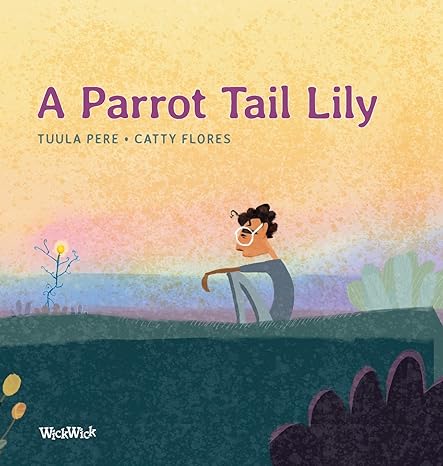
A Parrot Tail Lily by Tuula Pere tells the story of Cosmo, a dedicated gardener who prides himself on his lush garden full of rare and beautiful flowers. However, when an exceptionally rare parrot tail lily sprouts unexpectedly, Cosmo becomes obsessed with nurturing and protecting this single plant. His obsession, though well-intentioned, leads to unintended consequences that threaten his once-thriving garden and his own well-being. The tale unfolds as Cosmo learns the importance of balance and community, culminating in a heartwarming message about the interconnectedness of nature.
One of the most charming aspects of the book is how Cosmo’s relationship with his plants is depicted. He knows every bloom by name, speaking to them with care and pride. The vivid descriptions of Cosmo’s garden are delightful, painting a lush, colorful world that feels almost magical. I was drawn in by lines like, “Cosmo proudly presented his flowerbeds and greenhouses… I know every flower by name!” These details give Cosmo depth, but as his obsession grows, I couldn’t help but feel a twinge of sadness watching his world shrink to one plant. It’s a clever reflection of how single-minded passion can sometimes make us lose sight of what’s truly important. The author’s writing style is both simple and engaging, which makes it perfect for a younger audience while still providing layers of meaning for older readers. The narrative picks up in intensity as Cosmo’s fixation deepens. The story’s resolution, when Cosmo’s niece Nelly arrives, is touching and effective. Nelly’s presence brings a breath of fresh air to both Cosmo and the garden. Her simple, heartfelt advice carries a wisdom that’s easy for readers of all ages to understand. I loved how the author used Nelly’s character to gently nudge Cosmo toward self-realization. The moment when new buds sprout where the parrot tail lily once stood is beautifully hopeful, reminding us that life finds a way, even after our mistakes.
A Parrot Tail Lily is a charming story that skillfully weaves lessons about patience, balance, and the beauty of natural interdependence into its narrative. Tuula Pere’s tale would be especially good for young readers or anyone who loves nature and thoughtful, heartwarming stories. It’s the kind of book that leaves you with a warm feeling and a newfound appreciation for the simple wisdom in letting things unfold as they’re meant to.
Pages: 38 | ISBN : 9528200931
A Freezing Ski Trip

A Freezing Ski Trip, written by Tuula Pere and illustrated by Catty Flores, is a heartwarming children’s adventure story that follows siblings Liam and Lily on an exciting yet challenging ski trip through the snowy woods to Pine Cottage. The plot starts with the siblings’ enthusiasm and eagerness to ski on their own, but as they journey across a frozen lake and navigate unexpected challenges like broken ski bindings and freezing cold temperatures, they have to rely on each other and show resilience. By the end of the book, Liam and Lily not only make it back home safely but also return full of pride, having survived their harrowing winter adventure.
I loved how the author captured children’s pure excitement and spirit of adventure. Right from the beginning, when Lily couldn’t wait to set off and had been “ready all morning with her wool hat on,” I could feel her thrill and impatience. The writing brought back memories of childhood adventures, where even the smallest journeys felt grand. The narrative doesn’t shy away from the reality of the unexpected, like when Liam’s warnings about the steep hill become prophetic, and Lily ends up crashing into a snowdrift. This mixture of excitement and realism makes the story relatable, and the stakes feel genuine, even if they remain accessible to a young audience. The tension and the relationship between the siblings are beautifully woven into the story. Liam, being the older brother, alternates between protective and exasperated, especially when Lily refuses to listen to his cautions. I found myself smiling when he scolded her for speeding, only for Lily to boast about her “young bones.” It’s a classic sibling dynamic that feels both authentic and heartwarming. Yet, Liam’s care for his sister is evident, particularly when the trip becomes tougher, and he reassures her despite his own fear. Their bond is the emotional heart of the book, and the way they look out for each other as things get darker and colder is genuinely touching. The story ends with a sense of triumph as the siblings realize that their courage and determination have carried them through.
A Freezing Ski Trip is a delightful and adventurous read perfect for children who love tales of outdoor excitement. It also carries meaningful themes of courage, sibling support, and perseverance in the face of challenges. I’d recommend it to kids who enjoy adventure stories with a hint of danger or for families who want a cozy storytime book with a wintery theme. It’s a simple yet powerful tale that warms the heart as much as a steaming mug of hot chocolate on a cold winter’s day.
Pages: 34 | ISBN : 9528200613



 LITERARY TITAN