Blog Archives
The Breaking of Time: Chronicles of the Arvynth


The Breaking of Time drops you straight into a life coming apart at the seams. Daniel Ward looks like any middle-aged dad, but he’s actually a centuries-old sorcerer who has been hiding from a ruthless order known as the Arvynth. When he freezes time to save his son from being hit by a truck, he exposes the truth he has buried for twenty years. His wife sees everything. His children sense something they should never sense. The Arvynth find him again. The quiet suburban world he built starts to crack, and those cracks spread fast. The book follows Daniel as he struggles to protect his family while the old world he fled pushes its way back into his life. It blends magic, danger, family drama, and a growing sense that every choice Daniel makes costs him something huge.
I kept rooting for Daniel even when I wanted to shake him. His voice feels worn, tired, and trying so hard to pass for normal that when he breaks, it hurts. I liked how raw the family moments felt. His wife’s shock lands hard. His son’s confusion hits even harder. The scenes where Daniel feels the Arvynth closing in gave me this tight pressure in my chest, like the danger was creeping into the room with me. The writing is clean, quick, and vivid. The magic feels physical. I could almost hear the world stop when he speaks the old words. I found myself flipping pages just to see if he could hold his family together for one more chapter.
Daniel’s past stretches back centuries, and the book keeps teasing details without giving everything away too early. I loved that slow reveal. It made me feel off balance, like the story was letting me overhear secrets not meant for me. And the Arvynth are terrifying in a quiet way, which I really enjoyed. They barely appear at first, yet their presence fills every page. I also liked how the writing shifts between intimate family tension and sweeping magic that feels ancient and dangerous. The mix kept the pace unpredictable in a way that felt alive.
I think this book would land especially well with readers who enjoy fantasy woven into ordinary life, stories about families under impossible pressure, and characters who carry heavy pasts that finally catch up to them. If you like magic that feels tactile and real, or if you enjoy emotional stakes wrapped inside supernatural danger, this book will hit the spot.
Pages: 354 | ASIN : B0G3YH6638

Servant
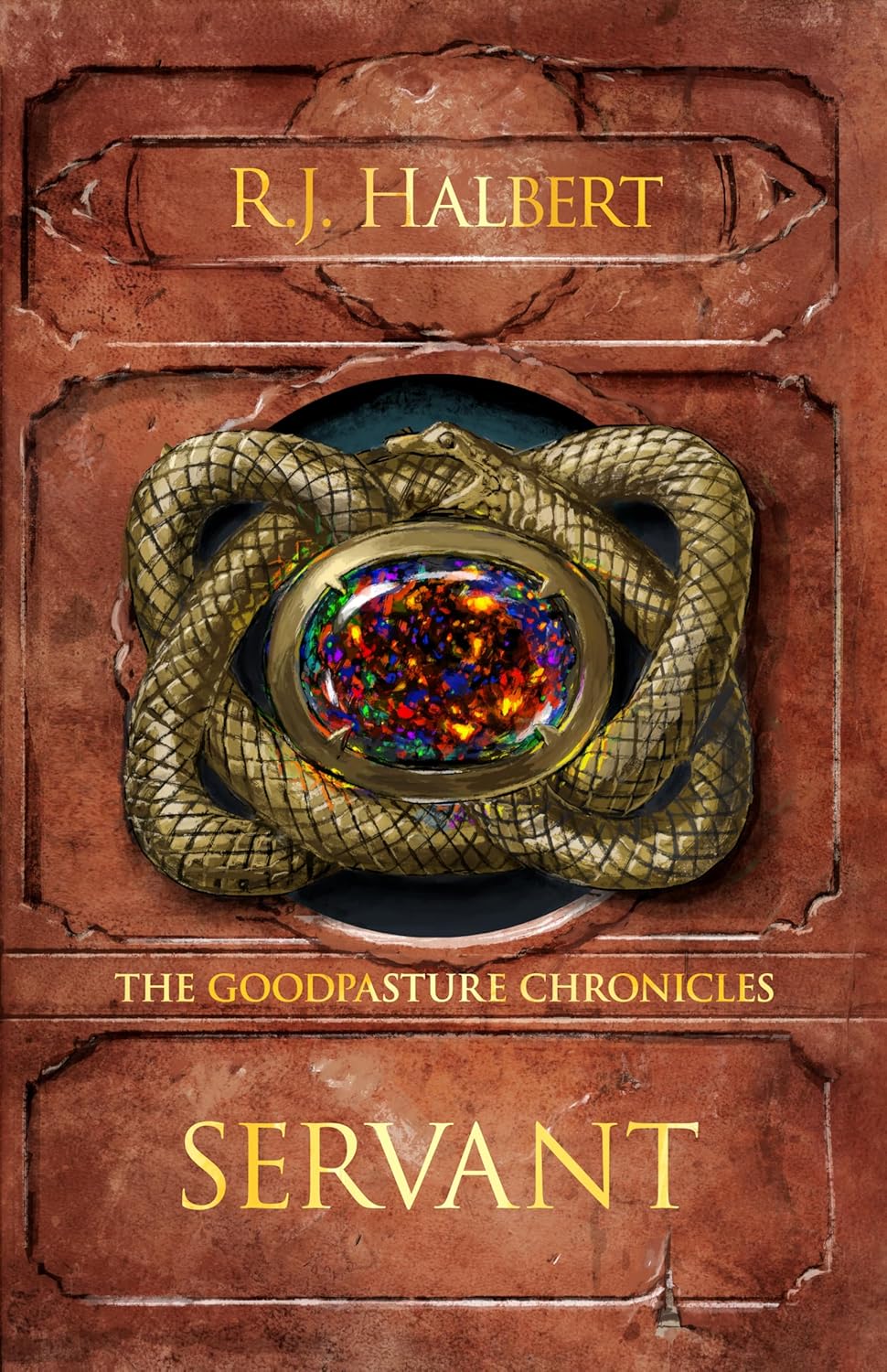
Servant is a supernatural fantasy novel that blends family drama, ancient mystery, and time-crossed storytelling. The book follows two threads that eventually begin to echo one another: Zach, a middle-school kid from the Keane family who vanishes from his house under eerie circumstances, and Akolo, a boy living centuries earlier whose life is marked by war, trauma, and the demands of kings. As Zach’s family searches for him in the present day, he finds himself wandering through stone hallways, oil-lit corridors, and a world that feels pulled straight from his dad’s archaeology stories. Meanwhile, Akolo faces his own captivity in a foreign palace controlled by a ruler who insists he will “need” him. Both boys are caught in places where power, fear, and destiny collide. By the time the book reaches its epilogue, the story has cracked wide open into something larger, hinting at deep magic, interwoven timelines, and a house that is far more alive than anyone wants to admit.
I found myself pulled in by the writing style. It’s simple on the surface but has this steady emotional current running underneath. The authors don’t rush. They let each moment breathe. Even the small scenes, a father making coffee, a daughter complaining about pizza for breakfast, or the house creaking in the early morning, carry a sense of “something is happening here,” even if you can’t name it yet. I liked that. It made me feel like I was sitting inside the Keanes’ home, overhearing bits of life while the bigger mystery brewed just out of sight. And then we cut to Akolo’s story, which feels raw and grounded and ancient. Those chapters landed hardest for me. His fear. His confusion. The way he clutches the jeweled stone in his pocket just to feel connected to something familiar.
I also appreciated the author’s choices around pacing and perspective. Switching between timelines can easily feel gimmicky, but here it feels purposeful. Zach’s modern confusion mirrors Akolo’s ancient disorientation, and that parallel makes the supernatural elements feel earned. I liked how the book doesn’t give its secrets away too quickly. We get hints, symbols carved into doors, fog in places fog shouldn’t be, Marshall knowing more than he says, but the authors trust the reader to sit in the unknown for a while. That kind of patience is rare, and honestly, refreshing. The emotional beats hit hardest because they’re framed by that tension: the Keane parents’ terror when Zach goes missing, Ariel’s mix of resentment and fear, Akolo’s grief for his family, Marshall’s haunted loyalty to forces he doesn’t entirely understand. All of it builds toward that late-book shake of the earth, where the house itself moves as though waking up.
Servant doesn’t wrap everything up, but it feels like a middle chapter that knows exactly what it is. I’d recommend this book to readers who love supernatural fantasy with a human heart, people who enjoy stories about families surviving strange things, or anyone who likes time-slip mysteries tied to ancient cultures. If you want something atmospheric, character-driven, and a little eerie without tipping into horror, this one will hit the spot.
Pages: 262 | ASIN : B0FQ5ZGH1R
River Talk


River Talk is a sprawling and dreamlike journey through myth, memory, and human frailty. It drifts between fables, folklore, and deeply personal reckonings with place and time. At its heart is Marchon Baptiste, a man both haunted and blessed by a heightened sense of connection to the world around him. His story, interwoven with echoes of gods distracted by their own games, high-stakes gamblers rising from the dead, and tribes living outside the reach of modernity, circles endlessly around the question of what it means to belong, or not belong, within the noise of humanity.
I enjoyed how the writing feels unpinned. Sentences sprawl and snap. They carry the same restless energy as the rivers and forests that pulse through the story. Sometimes I felt lost, like I was dropped into someone’s fever dream without a guide, and other times I felt stunned at how vividly the world cracked open. The language is raw, but that’s what gave it its weight for me. I loved how the prose could be coarse one moment, then suddenly dissolve into passages that felt more like prayers than storytelling.
The book kept circling back to this deep divide between human-made noise and natural rhythm. I felt admiration because it made me think about how little we listen, how much we dismiss in our rush to build walls of words and explanations. I can’t shake certain images: Marchon in the swamp hearing the river sing, the gods playing careless games with human lives, the silent communication of tribes who never needed words. These moments felt alive in a way I rarely get from fiction.
I’d recommend River Talk to readers who like stories that don’t walk straight lines. If you enjoy Faulkner’s twisting voices or the mythic strangeness of Toni Morrison’s Song of Solomon, you might find something here to savor. It isn’t a book for quick reading. It’s for anyone who’s willing to wrestle with the unsettling question of what it means to really be connected.
Pages: 222 | ASIN : B0FJR45LQK
The Wonder of Archaeological Digs

Finders follows a group of university students on an archaeological dig in Cornwall who uncover an ornate, gem-encrusted Celtic relic filled with ancient mystery. What was the inspiration for the setup of your story?
I’ve often felt there’s something magical hiding just out of reach in the British landscape. I like walking to hillforts, standing stones, burial mounds, and the like. And I’m interested in reading about archaeological discoveries, watching videos about digs, and listening to history podcasts. All that came together in the opening of Finders.
Capturing the personalities of college students while keeping the story focused and moving forward can be a challenging task. What character did you enjoy writing for? Was there one that was more challenging to write for?
I especially enjoyed writing as Ozzie, mostly because of his wry sense of humour about the world and himself. I got stuck some way through the first draft when my bare, vague plot plan didn’t work, but Ozzie kept making me want to discover what happened next.
It was hard to express the main antagonist’s narcissistic megalomania and at the same-time make him seem like a real person rather than a moustache-twirling, melodramatic villain.
What were some themes that were important for you to explore in this book?
The fascination of exploration and discovery, particularly the discovery of what lies beyond the material realm; and, tied in with that, shifts in awareness. At least I think those are themes. To be honest, I never thought about the book’s themes until my developmental editor asked me what the central theme was . . .
Where does the story go in the next book, and where do you see it going in the future?
Mercie, Ozzie and Petroc journey through what Petroc calls “a more subtle level” of existence, where the relationship between mind and matter is different, as is the relationship between one mind and another. After confronting two of their enemies there, the three return to the dig. Now seeing the “normal” world in a new light, they confront the third of their enemies in a way they did not anticipate.
Author Links: Website | Instagram | Substack
Finders

Robert J. Collins’ Finders kicks off a sprawling story rooted in ancient mystery and young discovery. The novel follows a group of university students on an archaeological dig in Cornwall, where what starts as a search for pottery shards and Roman tiles quickly transforms into something much more extraordinary. At the center is Ozzie, a dry-witted archaeology student who stumbles into a buried enigma, an ornate stone with gem-encrusted carvings and hints of long-lost rituals. As the dig deepens, tensions rise among the team, strange local figures emerge, and what lies beneath the surface, both literal and emotional, begins to shift their reality.
Reading Finders felt like being caught between a campus comedy and a mythic awakening. I absolutely loved the banter between the students. It’s quick, playful, and often funny. Ozzie is a wonderfully grounded narrator, the kind who doesn’t take himself too seriously but still brings a lot of heart to his observations. Collins has a real ear for dialogue. It’s chaotic, clever, and completely believable. But what surprised me most was how seamlessly that humor folded into something deeper. The archaeological details are rich but not overwhelming, and the slow burn of supernatural or symbolic significance unfolding in the knotwork stone was addictive. I didn’t expect a book about digging to keep me turning pages this fast.
The writing isn’t afraid to take its time. Collins lingers in conversations and small moments, and sometimes that gives it a slower pace than I wanted. But by the end, I appreciated the buildup. The characters felt real, not in a polished, archetypal way, but in the clumsy, lovable, kind-of-annoying way real people do. I was drawn to Mercie and her mystical side, to Carl’s playful chaos, and even to the mysterious Petroc, who might be charming or dangerous or both. The book flirts with fantasy, but it keeps one muddy boot firmly planted in the real world. That mix makes it special. It reminded me of Susan Cooper or early Neil Gaiman, only with more beer and sunburns.
Finders is for readers who like their magic grounded and their characters messy. If you enjoy smart young adult fiction with ancient puzzles, witty dialogue, and the tension of something just-about-to-happen, this book is worth your time. It’s not flashy. It’s not fast. But it leaves you curious, unsettled, and thrilled. I can’t wait to see where the story goes next.
Pages: 260 | ASIN : B0FBXCM5BW
A Fantasy Memoir

The Dreamtidings of a Disgruntled Starbeing follows a spirited 13-year-old girl who lives with her dysfunctional family: a narcissistic mother, a psychopathic brother, and a distant father, leading her to find solace in her celestial daydreams and embark on a journey of self-discovery. What was the inspiration for the setup of your story?
To be honest, if there was a genre called Fantasy Memoir, I’d say this story would fall into that as, even though the story is fictitious, it holds many truths from my childhood. Growing up, I needed to find my own supportnet and, like Klara, I used my mind and my perspective to change my experience. In fact, it took me close to fifteen years to finish this novel as I was determined not to share it until I had found a way to portray the story with warmth and humor, while also showing a way forward for when we deal with challenging relationships. (Which I suspect most of us seek to do.)
That said, Klara’s story is also different from mine in many ways. Rani, for instance, is someone I wish I had met as a child, as is her uncle. The three belief systems–Quakerism, Hinduism, and Q’ero Shamanism–I came across later in life, however, I decided to include them as they are belief systems that don’t tell us what to believe, but how to find our own inner truth, which appeals to me.
What were some of the emotional and moral guidelines you followed when developing your characters?
That’s an interesting question. I’d say I wanted to portray the characters without judgment, however, as the story needed an antagonist, and as Klara was to have emotional growth, this may not become clear until the very end.
What were some themes that were important for you to explore in this book?
Oneness, that’s the first thing that comes to mind. Oneness, not only in the way we are all connected as people, but the way we are connected to nature and to the Earth and Cosmos as well.
What is the next book that you are working on, and when can your fans expect it to be out?
As much as I’ve enjoyed my connection with all the people who’ve connected with Klara, my present focus is to reach out to children. Besides writing I’ve had extensive experience with art and illustration and a long dream of mine has been to write and illustrate children’s books. Now, retired, I’m grateful to finally have the time and the space to pursue this dream. To follow my progress, please visit my Instagram account.
Author Links: GoodReads | Instagram | Facebook | Website
Precocious 13-year-old Klara Tippins lives in a refurbished convent in upstate New York with her unwholesome family; a narcissistic mother, a psychopathic brother, and a distant father.
It sounds dire, yes, but this is Klara, a starbeing from a distant star, and she has friends in high places; her starfamily none the less, who give her guidance in her dreams. At least that’s what she likes to think, though, if she’s to be honest, she doesn’t remember much when she wakes up.
As the story moves, three belief systems are brought into Klara’s path: Quakerism, which leads to other people, Q’ero Shamanism which connects her with nature, and Hinduism which provides an understanding of the world and her place in it.
A heartfelt novel about the resilience and determination needed to retain a sense of self when it’s being undermined from the very start. For Klara, it was a matter of reaching beyond her circumstances so that, ultimately, she could reach within herself.
The Quantum Gate
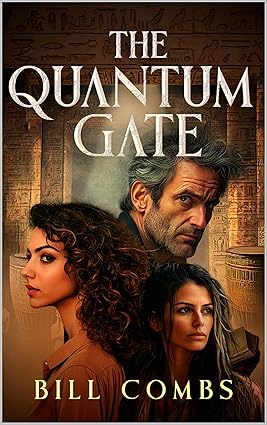
The Quantum Gate by Bill Combs is a richly layered blend of speculative science fiction, metaphysical intrigue, and family drama. The novel follows Ethan Cross, a disgraced physicist whose theories about consciousness and quantum mechanics have cast him out of academia. After receiving a mysterious letter from a presumed-dead mentor and a mystical compass pointing to Egypt, Ethan sets out to uncover the truth behind the fabled Hall of Records, a legendary archive of human knowledge hidden beneath the sands. Alongside him is his estranged daughter Sofi, a staunch rationalist and astrophysicist, whose journey becomes as much about reconciling with her father as it is about the greater cosmic mystery unfolding around them. As ancient secrets clash with shadowy forces, the novel builds toward a confrontation not just between characters, but between faith and reason, memory and truth.
Reading this book felt like falling into a dream that’s just real enough to unsettle you. Combs writes with a cinematic flair; the imagery of Cairo’s sunbaked streets, flickering candlelit archives, and high-stakes archaeological catacombs are vivid and haunting. The characters, especially Ethan and Sofi, are relatable, flawed, conflicted, and driven by wounds that feel real. I appreciated how the novel didn’t rush. It took its time to steep in emotion and doubt, letting revelations come like whispers instead of shouts. There’s a beautiful sadness that runs through the pages, especially in the echoes of lost love and fractured family. That emotional weight gives the high-concept science-fiction backbone a surprising intimacy.
There are moments where the dialogue leans into explanation-heavy exchanges, and some plot turns felt more told than shown. But even so, I never felt like I was slogging. The writing has heart. It feels personal, like a story the author has lived in for a long time. And that makes all the difference.
I would recommend The Quantum Gate to readers who love a thoughtful, emotional dive into mystery and mysticism, especially fans of Dan Brown, Carlos Ruiz Zafón, or those who enjoy science fiction that dares to ask big questions about consciousness, destiny, and the human soul. It’s for anyone who’s ever lost someone and wondered if maybe there’s a hidden truth behind the veil of what we call reality. If you’re open to stories that blend science, spirit, and sorrow, this one will be a great book for you.
Pages: 290 | ASIN : B0F2JBYH5Y

The Dreamtidings of a Disgruntled Starbeing: Life with a psychopathic brother
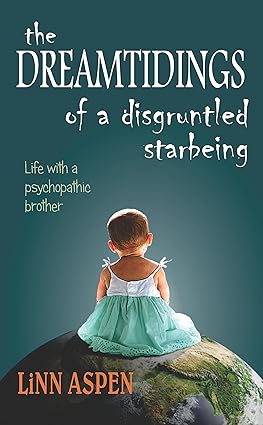
Embark upon a bewitching journey with The Dreamtidings of a Disgruntled Starbeing: Life with a psychopathic brother as it entices you into the rich, imaginative world of Klara Tippins, a spirited 13-year-old whose boundless imagination provides a gateway to ethereal adventures intertwined mysteriously with reality. Nestled in the quaint town of Pennington, New York, Klara navigates through life alongside her parents and brother, Drake, while often grappling with the sensation of being the peculiar member of her family. Her celestial daydreams, which seamlessly blend with the enigmatic realms, offer her not just solace but an unexpected tether to new dimensions.
Klara’s existence is a tapestry of enchanting dreams and intricate family dynamics that spirals into a newfound adventure with the arrival of an enigmatic neighbor, Rani. This mystical lady not only becomes Klara’s cherished confidante but also lights a spark, instigating a transformative journey that reshapes Klara’s perspectives and beliefs.
Author Linn Aspen weaves a lustrous fabric of engaging dialogues, strikingly endearing interactions with Klara’s beloved pet, and multifaceted relationships, particularly spotlighting the complex yet deeply affectionate bond with her brother. Amidst a milieu of vividly crafted characters, Rani emerges as an effulgent beacon, echoing through the pages with her nurturing aura, sensible wisdom, and daring spirit. As conduits to Klara’s evolution from an occasionally abrasive teenager to a being radiating kindness and compassion, Rani’s insights and friendship prove pivotal, reflecting a metamorphosis shaped by deep lessons of personal development.
This book gracefully intertwines young adult fiction with alluring elements of fantasy, spirituality, and celestial beings, concocting a riveting narrative that appeals significantly to those intrigued by these thematic dimensions. While Aspen’s occasional dalliance with esoteric language and the multifaceted plotline may pose a challenge to some readers, it undeniably proffers a singular, contemplative reading experience that lingers, prompting reflections and considerations well beyond its pages.
Intricate, evocative, and laced with a gentle mystery, The Dreamtidings of a Disgruntled Starbeing invites you on a thought-provoking expedition of imagination and profound growth, constituting an immersive read that is undeniably worthy of delving into. Join Klara on a path that transcends mere fiction, interweaving heart, spirit, and an echo of the cosmos within a delicately spun tale of self-discovery and friendship.
Pages: 346 | ASIN : B0BV16FMFT


