Blog Archives
Unconverted: Memoir of a Marriage
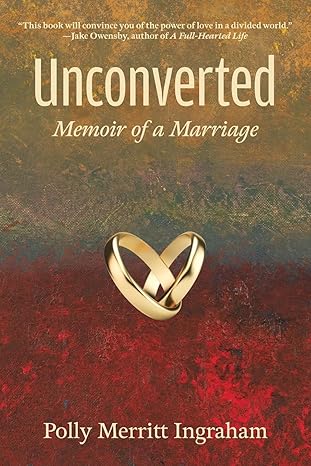

Polly Ingraham’s Unconverted is a moving, often funny, and beautifully written memoir chronicling her unexpected marriage to an Episcopal priest and the even more surprising journey that followed. The book tells the story of a secular woman navigating life, love, and identity inside the deep tradition of the Episcopal Church, not as a convert, but as a skeptic and sometimes reluctant participant. Through candid reflection, Ingraham explores what it means to love someone whose beliefs are fundamentally different from your own and how a marriage can flourish without shared faith, provided there’s shared respect, curiosity, and deep affection.
Ingraham’s writing is sharp and unpretentious, often funny and achingly honest. She manages to be both thoughtful and down-to-earth as she walks us through moments of discomfort, discovery, and the quiet ache of being the odd one out in a world of ritual and belief. Her prose doesn’t waste words. She brings you in close, never asking for sympathy, only understanding. I especially appreciated her refusal to fake devotion just to fit in. That kind of integrity made me root for her all the way through. Her love for Rob is never in doubt, but she doesn’t sugarcoat the strain of being partnered with someone whose life is woven into a faith you don’t share.
There’s also something deeply comforting about her insistence on staying herself, even when the pressure to change would’ve made it easier. I felt her unease during the high church services, her resistance to the wafer and wine, her side-eye at the church politics, and clunky old houses with drafty corners. It felt real. And yet, what held this book together wasn’t doubt or division, it was tenderness. Her marriage, though often challenged by theological distance, is grounded in mutual admiration and a kind of quiet, dogged love that I found deeply moving. There’s no dramatic conversion here, no tidy resolution, but there is growth. And a kind of grace that doesn’t require belief to feel.
I’d recommend Unconverted to anyone who’s ever felt like a bit of an outsider in their own life or who’s struggled to be true to themselves while loving someone very different. It’s especially poignant for secular readers navigating religious families, marriages, or communities. This book doesn’t offer easy answers, but it offers something better: honesty, humor, and hope that two people can build a beautiful life without having to believe all the same things. That feels pretty miraculous to me.
Pages: 284 | ISBN : 978-1578694006

Such a Pretty Picture

Andrea Leeb’s Such a Pretty Picture is a devastating and intimate memoir that tells the story of a childhood marked by trauma, silence, and survival. Set in 1960s and ’70s New York, the book opens with a gut-wrenching scene: a four-year-old Andrea is molested by her father during bath time. Her mother, upon discovering the abuse, collapses and goes temporarily blind—both literally and emotionally. That moment becomes a metaphor for what follows: a house where appearances are cherished, secrets are guarded, and a child is left alone in the fallout. What unfolds is a gripping narrative of emotional abandonment, maternal betrayal, and the long shadow of incest.
Reading this memoir gutted me. Not just because of the trauma Leeb endured, but because of how plainly she lays it bare. She doesn’t use flowery language or metaphors to distance herself—she brings you into the room with her. In Chapter 1, when she says, “The way he touched me felt strange: good but not good,” I felt that sick knot of confusion and fear. What shook me even more was her mother’s reaction—not to rescue, but to disappear. That decision to prioritize denial over protection sets the tone for the emotional cruelty that follows.
Leeb’s mother, Marlene, is portrayed with brutal honesty. She’s fragile, vain, jealous, and deeply wounded, but also dangerous in her indifference. You feel Andrea’s heartbreak not in screams, but in those small silences where a child should have been loved and wasn’t. The mother’s obsession with order and appearances, like matching pink nightgowns or birthday parties, just made the contrast sharper. I found myself mourning what Andrea never had more than anything she lost.
The darkest chapter for me was Chapter 6. Andrea, still a child, tapes her mouth shut, stuffs cotton in her nose and ears, and lies in bed trying to suffocate herself. Her suicide attempt is not melodramatic; it’s quiet, methodical, almost innocent in its execution. All she wants is for her mother to love her again. And when her mother finally holds her and says, “My poor baby. What have I done to you?”—You feel hope. But deep down, you know it’s just a pause before the next wave of pain. That’s the emotional rhythm of this book: brief tenderness followed by long stretches of ache.
This book is brutal. It’s heavy. But it’s honest in a way few memoirs are. It doesn’t try to make pain pretty. It doesn’t ask for pity. Andrea Leeb writes like someone who has lived through hell and made it her mission to tell the truth. I’d recommend this memoir to survivors, to those who work with trauma, and to anyone who’s ever wondered how abuse hides behind closed doors.
Pages: 256 | ASIN : B0DWYSSLL6

Coming Free
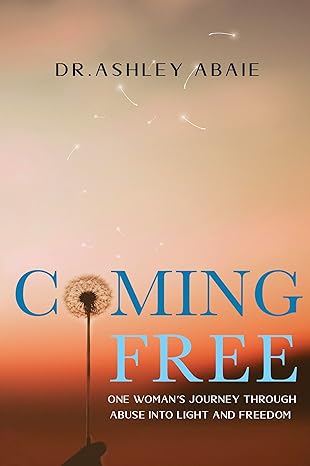
Ashley Abaie’s Coming Free is one of those rare memoirs that grips you from the first page and doesn’t let go, not because it promises fame or glamour, but because it offers something far more compelling—raw truth. It’s a journey through a life shaped by neglect, perseverance, and a relentless hunger to be seen. Ashley walks us through her childhood, adolescence, and early adulthood with stunning honesty, sharing stories of abuse, abandonment, cultural displacement, eating disorders, spiritual awakening, and ultimately, healing. It’s not neat. It’s not pretty. But it’s real. And that’s what makes it powerful.
I liked how Ashley captures the complicated, often contradictory emotions of growing up in a family that looked normal from the outside but was anything but. There’s a passage early on where she describes being forgotten in the snow for hours, wearing flip-flops, only to brush it off as a regular part of life. The way she recounts it—plainspoken, even a bit humorous—is heartbreaking. She doesn’t need to dramatize her pain. It’s just there, quietly devastating. And it’s in these small moments—dragging a bassoon case home alone in the snow, wearing fifth-grade underwear in high school, watching her brother spiral while trying to stay invisible—that I felt her loneliness, deep and aching.
The writing itself is conversational, poetic at times, but never pretentious. Ashley’s voice feels like a friend who’s finally decided to spill everything over a long coffee date. Her humor is dry, her observations sharp, and her emotions raw. When she writes about collapsing from malnutrition and basking in the rare moment of attention from her dad at a Mediterranean restaurant, it broke me. “I basked in my dad’s care,” she says. It’s such a simple line, but loaded with years of hunger—for food, yes, but more for love. I found myself rooting for her not just to survive, but to thrive. And when she finally begins to find that spark of purpose during a service trip in Mexico, it felt like breathing fresh air after being underwater.
What surprised me most was how she finds redemption not in the usual places, but in unexpected acts of service and spirituality. Her accidental dive into Christianity—after unknowingly signing up for a missionary trip—is both hilarious and oddly moving. She’s skeptical, awkward, and completely unprepared, yet open in a way that makes the experience feel authentic. Her reflections on mixing concrete, building homes, and connecting with strangers in a colonia in Reynosa are among the most touching parts of the book. She writes about laying cinderblocks like she’s laying the foundation for her own rebirth. And in those dusty streets, surrounded by poverty and purpose, she starts to heal in ways therapy hadn’t yet managed.
Coming Free isn’t tied up with a bow. Ashley doesn’t pretend to have it all figured out, and that’s what makes her voice so trustworthy. It’s a book for anyone who has felt invisible, who’s been through the fire and come out the other side unsure of what’s next. It’s especially powerful for those navigating childhood trauma, identity struggles, and the long road to self-worth.
Pages: 272 | ASIN : B0DRH75YLC
Terror at the Sound of a Whistle
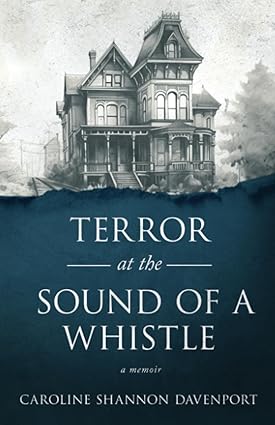
Set on the outskirts of Toledo, Ohio, during the first half of the 20th century, this memoir follows Caroline, Jimmy, their families, and the ever-changing tenants who resided in bungalows on the property. Living in the same large Victorian home but on separate floors, Caroline resided with her parents on the third, while Jimmy’s family occupied the second. Below them, concealed from public view, their fathers secretly ran an illegal after-hours supper club and gambling casino on the first floor. Surrounded by figures of questionable morality, the two children found themselves isolated from their peers at school. Yet, their unusual upbringing forged a quiet, unspoken bond—one of mutual understanding and companionship that grew stronger over time.
Terror at the Sound of a Whistle is a poignant love story stretching from childhood into adulthood. However, as a memoir, it does more than recount personal memories, it reconstructs an era. The story vividly captures the hardships of post-war life, unraveling the complexities of human relationships, whether in the strained dynamics between Jake and Penny or later Jake and Beth, or in the unexpected solidarity among women brought together by shared grief Caroline’s and Jimmy’s mothers, Margie, and Pauline. Equally compelling are the men in the story, disillusioned, weighed down by unresolved trauma, their identities fractured by a world that no longer needs them as protectors yet offers little in return.
What makes this memoir stand out is its storytelling, which is sensitive, nuanced, and deeply immersive. Suspense lingers in the air, an unshakable sense of impending doom keeping the reader engaged. The author’s candid portrayal of raw pain and the devastating void left by sudden loss lends the story a haunting authenticity. One cannot help but wonder if she deliberately crafted this memoir to be as visceral and true-to-life as possible, drawing us into her past until we, too, feel like children playing make-believe once again.
Despite the sorrow woven into its pages, the memoir offers insights into life lessons hidden beneath tragedy’s weight. Emotionally gripping and beautifully written, Terror at the Sound of a Whistle is a must-read for those drawn to tragic love stories and unconventional coming-of-age narratives.
Pages: 260 | ASIN : B0CPQ5SP47
A Personal Reckoning

Twice the Family is your poignant memoir of identity, adoption, and the unyielding bonds of sisterhood, exploring the journey of being “chosen” while searching for belonging. Why was this an important book for you to write?
For me, this book was a greater challenge than writing my debut memoir, Twice a Daughter, the five-year saga about searching for my birth parents to gather family medical history. Twice the Family rose out of readers’ requests to know more about what it was like to grow up as a twin and an adoptee. Yet, for me, the book is more than that. It is a personal reckoning.
Twice a Daughter had a specific frame or timeline. While I provided the necessary backstory, it focused on the events surrounding my adoption search. Because Twice the Family is a coming-of-age story, it has a longer timeline: twenty-seven years. It opens with the births of my twin sister and me, and our subsequent adoption, and culminates with the building of my own biological family.
Choosing the events to include in this new book and tying those moments to the desired themes of love, loss, and family was a deliberate and challenging task. Telling the story and sharing my unique perspective as a twin and adoptee within the context of our family history was a delicate balance. My goal was for the reader to understand the struggles I faced within a loving family governed by the strict rules of Catholicism. While we were soothed by love and instilled with a strong sense of belonging, our formative years were overshadowed by my parents’ infertility and drive to achieve their goal of a big Irish Catholic family. As I matured, I realized some of my parents’ goals and values did not align with mine.
How did your adoptive family’s faith shape your understanding of being “chosen” and your identity?
Some of the foundational tenets of Catholicism are love is patient, love is kind, and love heals all. Also, love your neighbor as yourself. This belief system became ingrained in my siblings and me during our formative years at school, church, and at home. Also, the struggles my parents faced in building their big, Irish Catholic family through adoption, their years of infertility, and subsequent child loss due to stillborn death and sudden illness made a lasting impression on me. It was, however, my parents deeply held religious beliefs, their unrelenting commitment to family, and the strong examples they set about honesty, perseverance, and resiliency that influenced who I am and the person I have become.
I always felt as if I held a strong place in my family. Some of that “chosen” feeling arose from the stature of being the firstborn and a twin. I strongly believe that the adoption of my twin sister, myself, and our younger brother was not what set us apart from our younger siblings––my folks’ biological children––but what strung us all together. We were individuals and my mother recognized that and used it in a cohesive way. My mother is a very inclusive person. If she thought, you were the underdog in a given situation, she became your fiercest champion. I love this trait about her; it made her a faithful and reliable mother, neighbor, and friend.
What message do you hope readers—especially adoptees—take away from your story?
Parenting, whether it comes by way of adoption or not, is not a smooth easy road to success. As parents, we make numerous mistakes, and each child takes note, adjusting their behavior to accommodate it. When it is our turn to build our own families, sometimes we are successful at not repeating the mistakes our parents made. Often though, we make different errors, and so the cycle repeats itself. The point I wanted to make in Twice the Family is that family building, then and now, is no easy road. It takes commitment, but through shared values, love, and consistent efforts, parents succeed in building character among those they call family.
Were there moments during the writing process where revisiting your story became emotionally overwhelming? How did you navigate them?
There were chapters I intended to include in the book that happened so long ago that I knew I needed help with validating facts. Because I wanted a true accounting, I consulted with my twin sister and my mother. Together we revisited those key moments. Collaborating was informative and fun, and it enabled me to craft a true story. The result was one part family history, one part memoir, and one part nostalgia for a bygone era of society. Navigating the tough scenes and events meant the writing process slowed down due to the strong emotional impact of those moments. The aftermath of getting them down, getting them right, and polishing them was both exhilarating and draining. Slowing down and honoring those moments was an important aspect of the writing process. The outcome, Twice the Family, fills me with deep pride and satisfaction.
Author Links: GoodReads | Facebook | Instagram | X (Twitter) | Website | Amazon
In this coming-of-age memoir, set in Chicago’s western suburbs between the 1960s and ’80s, adopted twins Julie and Jenny provide their parents with an instant family. Their sisterly bond holds tight as the two strive for identity, individuality, and belonging. But as Julie’s parents continue adding children to the family, some painful and tragic experiences test family values, parental relationships, and sibling bonds.
Faced with these hurdles, Julie questions everything—who she is, how she fits in, her adoption circumstances, her faith, and her idea of family. But the life her parents have constructed is not one she wants for herself—and as she matures, she recognizes how the experiences that formed her have provided her a road map for the person and mother she wants to be.
Report an issue with this product or seller
My Life in Dog Years: A Poodle Named Henry & Other Melodramas

Candida Pugh’s memoir is a heartfelt exploration of life through the lens of her love for dogs. Each chapter introduces a new canine companion, unveiling not only the unique bond she shares with them but also the profound lessons they impart. From moments of joy to unexpected challenges, every dog shapes Candida’s journey in ways that are as endearing as they are transformative.
One of the standout stories revolves around Henry, a poodle she was advised against adopting. Defying the warnings, Candida brings him home, embarking on a journey of mutual growth. The lessons they teach each other resonate deeply, showcasing the enduring impact of trust and resilience. Every bond she forges with her dogs radiates warmth and authenticity, leaving readers with a sense of connection to her experiences. The writing flows effortlessly, inviting readers into Candida’s world as if they were seated across from her, sharing coffee and listening to her reminisce about her furry companions. The narrative weaves seamlessly through each chapter, intertwining the stories of her dogs with pivotal moments in her life. Together, they navigate challenges and celebrate new experiences, illuminating the profound ways dogs enrich human lives. This memoir also underscores the invaluable lessons dogs teach about loyalty, patience, and love. Their personalities shine through the pages—each dog is a reflection of their environment and their bond with Candida. Acts of love, defiance, determination, and resilience define these relationships, shaping both her life and theirs. For dog enthusiasts, the book offers both emotional depth and practical insights. Readers gain glimpses into various dog sports, training activities, and the fascinating history and capabilities of breeds like the German Shepherd. Jessie, a German Shepherd featured in the memoir, emerges as a personal favorite. Her loyalty and fierce determination to protect Candida add a layer of poignancy to the narrative.
My Life in Dog Years: A Poodle Named Henry and Other Melodramas is a captivating blend of canine tales and personal reflection. Candida Pugh’s stories will make you laugh, cry, and cherish your own relationships with the dogs in your life. This memoir is a must-read for anyone who carries paw prints on their heart and fur on their clothes—a celebration of the indelible bond between humans and their four-legged friends.
Pages: 287 | ASIN : B0DKZHC385
The Significance of Curly Hair: A Loving Memoir of Life and Loss
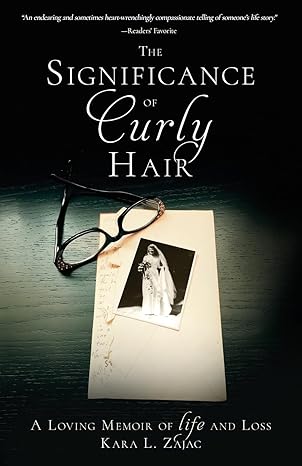
Kara Zajac’s The Significance of Curly Hair is an emotional and heartfelt memoir that delves into the deep bond between the author and her grandmother. At its core, the book is about family, love, loss, and the legacy of memories we hold onto after someone we love passes. Through vivid storytelling, Zajac chronicles moments of joy, heartbreak, and profound personal reflection, offering a touching tribute to a woman who shaped her life.
What struck me first was Zajac’s candid and unfiltered voice. She doesn’t shy away from raw emotion. Take, for example, the chapter where she describes trying to reach her grandmother before she passed. The desperation in her voice, coupled with the chaos of airport logistics, made my chest tighten as if I were the one missing that final goodbye. Her ability to weave universal feelings of guilt and longing into personal anecdotes was compelling. It reminded me of how we all struggle with the inevitability of time slipping through our fingers.
Zajac’s use of flashbacks brings a rich and layered texture to the memoir. Scenes from her childhood, like riding the school bus with her grandmother running alongside in the woods, are not just sweet but illustrative of the eccentric and loving relationship they shared. These moments balance the book’s heavier themes, giving readers a sense of the joy and laughter that defined their bond. At times, though, I found the transitions between past and present a bit abrupt, which occasionally interrupted the emotional flow.
One of the most memorable parts of the book is the chapter where Zajac reflects on her grandmother’s fading health and the helplessness she felt. The scene in the airport, where a stranger offers her comfort, beautifully illustrates humanity’s capacity for kindness. It’s this interplay between personal grief and the support of others that makes the book so moving.
The Significance of Curly Hair is an evocative and deeply personal memoir that will resonate with anyone who has ever loved and lost. Zajac’s writing is vivid and heartfelt, making you feel as though you are right there with her through every laugh, tear, and bittersweet memory. I would highly recommend this book to readers who enjoy reflective family stories or who might be navigating their own journeys of grief.
Pages: 364 | ASIN : B0D2QX3SQ9
Living a Fulfilling Life

My Unexpected Life: Finding Balance Beyond My Diagnosis is your memoir and call to action for accessibility and inclusivity after receiving your diagnosis of Friedreich’s Ataxia (FA). Why was this an important book for you to write?
There are a few reasons, but I’ll stick to two:
I wanted to show a positive representation of living with a disability. For too long, it’s been described as a tragedy and something that needs to be fixed. But that is not always the case. Being disabled has its challenges, no doubt, but living a fulfilling life is possible.
Secondly, I wanted to show people going through similar things that they are not alone.
What were some ideas that were important for you to share in this book?
Some ideas include that the ability to walk does not equal happiness, and disabled people have value and are capable.
What is one piece of advice someone gave you that changed your life?
The neurologist who diagnosed me told me not to let FA stop me from doing what I had planned with my life.
What is one thing you hope readers take away from your story?
Living a fulfilling life with a disability is possible, and don’t assume disabled people aren’t intelligent or capable to do a job.
Author Links: GoodReads | Facebook | Website | Amazon
Jennifer Gasner is seventeen when her dreams are shattered overnight.
Receiving a diagnosis of Friedreich’s ataxia, a rare genetic neuromuscular disease, means she must prepare herself for a life of loss. When she starts college, she can still walk on her own, but as her disease progresses, she spirals further into sadness, denial, and alienation. She turns to alcohol and a toxic relationship to distract her from what she refuses to accept—that her body, her self-esteem, and her hope for her future are failing.
When Jennifer develops a friendship with rock star Dave Matthews, her outlook changes. She begins to understand that using a wheelchair doesn’t mean her life is over. In fact, when she discovers disability culture, she realizes it’s not her body that needs to be fixed but her assumptions about being disabled.
In her captivating memoir, My Unexpected Life: Finding Balance Beyond My Diagnosis, Jennifer invites you into her world, where she must learn to view her changing body with compassion and choose gratitude over anger as she finds strength and acceptance in a whole new way of moving through life.



 LITERARY TITAN