Blog Archives
Living in the Long Shadow: Surviving a Legacy of Mental Illness
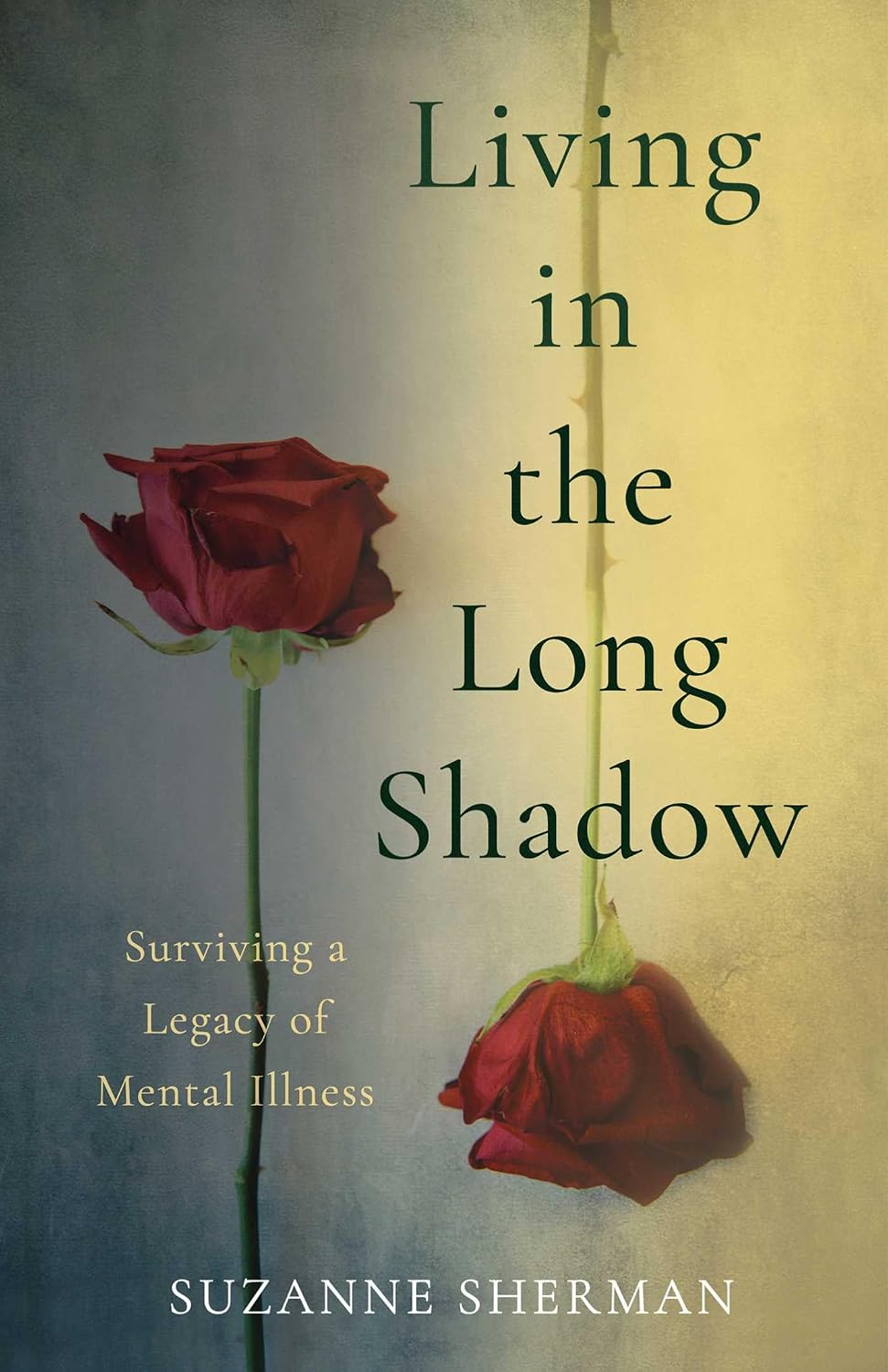

In Living in the Long Shadow, author Suzanne Sherman revisits her childhood as the daughter of Marilyn, a gifted, loving, musically alive woman whose schizophrenia slowly reshapes the family’s world, and then follows the aftermath of Marilyn’s suicide into Sherman’s adulthood. The memoir moves through West Los Angeles childhood scenes, divorce, sibling fracture, hospitals, medication, silence, and grief, but it’s never only a book about damage. It’s also about memory doing its careful work: a child in Sequoia learning to “listen” to the forest with her mother, a birthday cake left suspended in terror, a candlelight peace march led by Marilyn’s guitar and trembling hope, and, years later, roses drifting on the San Francisco Bay like an impossible answer.
I was taken by the book’s refusal to flatten Marilyn into her illness. Sherman writes about her mother’s frightening absences with clarity, but she also restores the radiance that illness couldn’t fully erase. I believed in Marilyn as the woman who made one-sleeved dresses for a daughter in a cast, who turned an environmental poem into a song, who planted lemon trees and noticed birds hatching under the trellis. That tenderness makes the pain sharper. The memoir understands that love and fear can live in the same room, sometimes in the same breath, and Sherman has a rare gift for letting those contradictions remain unsettled.
The writing is intimate, precise, and quietly devastating. Sherman’s structure, moving between childhood recollection and the approaching knowledge of her mother’s death, gives the book a haunted pulse. I found that approach emotionally true, because grief rarely arrives in a straight line. Some passages feel almost unbearably vivid, especially the small domestic humiliations and terrors: the father who insists on logic, the child learning to manage adults’ moods, the sister’s volatility, the stepmother’s cool judgments around food. The ideas beneath the story are equally strong. The book asks what children inherit when a family cannot name what’s happening, and what it costs when mental illness is met with denial, shame, or inadequate care. The density of pain is heavy, but I didn’t find it excessive. It felt earned, the way an old house creaks because every beam remembers.
I finished this memoir moved by its sorrow, but also by its steadiness. Living in the Long Shadow is not a simple recovery story, and that’s part of its grace. It’s a book about surviving what can’t be repaired, then finding language tender enough to hold it. I’d recommend it to readers of reflective memoirs, especially those interested in family trauma, mental illness, suicide loss, complicated mother-daughter love, and the long work of making peace with the past.
Pages: 312 | ASIN : B0GPJ4ZSDG

My Pretty Baby: Seeking Truth and Finding Healing
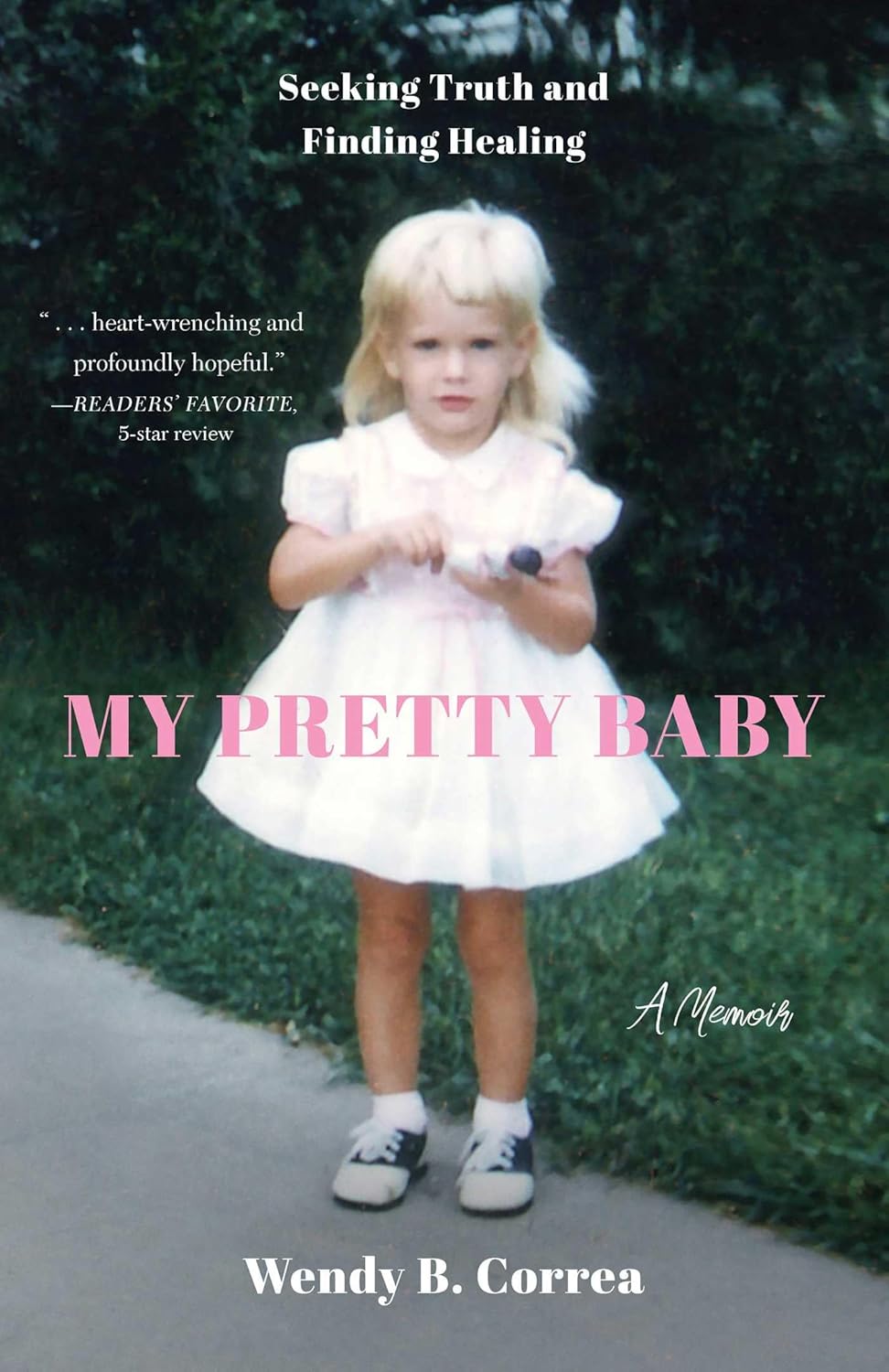
My Pretty Baby is Wendy B. Correa’s tender and searching memoir about growing up inside loss, neglect, alcoholism, and family secrecy, then spending a lifetime trying to turn that pain into understanding. The book begins with a child’s bewildered grief after her father’s death, deepens through her mother’s relationship with a volatile alcoholic stepfather, and follows Wendy into music, Buddhism, therapy, sobriety, Native American ceremony, yoga, motherhood, and marriage. Along the way, she brushes against extraordinary cultural moments, from the Beatles on Ed Sullivan to Joni Mitchell’s living room to Aspen and Hunter S. Thompson, but the real heartbeat of the book is quieter and more intimate. It’s the lifelong question beneath everything: what happened to my family, and how do I survive what I inherited?
What moved me most was how vividly Correa writes from inside the body of her younger self. She doesn’t just tell us she was afraid, she lets us feel the air leave the room. The closing of her father’s casket, the stench of carnations, the Christmas tree hurled to the floor, the child trying to protect her mother from a man who has become suddenly terrifying, these scenes have a terrible immediacy. I admired the way she keeps returning to sensory memory without making it ornamental. Smell, music, weather, smoke, lilacs, cold water, mountain air, all of it becomes part of the emotional architecture. Sometimes the book’s detail is almost overwhelming, but I think that’s also part of its honesty. Trauma doesn’t arrive in tidy summaries. It comes back as fragments, textures, songs, rooms, and smells you can’t quite wash out of your mind.
Correa is writing about healing, but she’s not selling some glossy version of transcendence. Her Buddhism, AA meetings, therapy, sweat lodges, vision quest, yoga, and eventual work with birth and body care all feel like attempts to live more fully inside a self that was once trained to disappear. I liked that the book allows love and anger to coexist, especially in her complicated feelings about Paul, who is frightening and damaging, yet also later tender with her son Mateo. That moral grayness gives the memoir real weight. The final DNA revelations could have felt melodramatic in another writer’s hands. Here, they feel like the last hidden door opening in a house she’s been wandering through all her life.
By the end, I felt that My Pretty Baby had earned its hope. It carries the sprawl of a real life, with its repetitions, ruptures, misreadings, longings, and late-arriving mercies. Correa’s writing is most powerful when she trusts the lived scene and lets the ache speak for itself, and her central idea feels hard-won: the truth may not repair the past, but it can finally let a person breathe. I’d recommend this book to readers who appreciate intimate memoirs about family trauma, recovery, spiritual seeking, complicated forgiveness, and the slow, brave work of becoming whole.
Pages: 318 | ASIN : B0DWNGSF4P
Women in Predominantly Male Cultures
Dancing on Coals is a raw and riveting memoir that chronicles your lifelong pursuit of approval, identity, and peace, capturing the endless loop of seeking love through overachievement. Why was this an important book for you to write?
I wrote the book to try to integrate what felt like two sides within me. I had an extraverted, performative side, and yet deep within me was an introspective, contemplative side that held, I suspected, true wisdom. For many years these two sides were in conflict, battling over real estate in my psyche, but by writing this book and making sense of the full trajectory of my life, from launchpad of trauma to a landing pad of peace, I brought them together in a deeply healing way and came to accept myself more fully.
What were some ideas that were important for you to share in this book?
I wanted to discuss the role of women in predominantly male cultures, such as the theater at that time, and to question the power of Voice. Is the female Voice as respected and powerful as the male Voice in our culture? I don’t think so. I also wanted to highlight the roles psychotherapy and meditation can play in the process of healing and finding one’s true self. The false self gives way to the true self when we explore within, both through therapy and through the silent, transformational art of meditation.
I appreciated the candid nature with which you told your story. What was the hardest thing for you to write about?
The hardest thing to write about was my failure. I felt that I failed as an artist, mostly because I failed to be true to myself as an artist, playing a role designed for me from the outside rather than one that issued organically from the inside. But in fact, that failure launched me into the next phase of my life, which was finding my True North. If I hadn’t failed, I would never have embarked on that search and made that priceless discovery. I wouldn’t trade it for anything!
What do you hope is one thing readers take away from your story?
I hope readers can take away a visceral sense of the transformation of striving, efforting, and over-performing into calm, peaceful abiding and acceptance. I wanted to make these states sensorial, so that reading about my discovery of peace becomes a kind of transmission to the reader.
Author Links: GoodReads | Facebook | Website | Amazon
In Dancing on Coals, Cynthia Moore describes a multi-decade, harebrained search for love in all the wrong places, starting when her narcissistic mother abandons her to a Swiss finishing school. Desperately seeking belonging, she leapfrogs from a polyamorous commune into a high-octane all-male performance group, dancing as if her life depends on it. When she finally quits the theater, earns a masters degree in psychology and develops her own therapeutic approach, she is able to heal herself and find the true belonging and peace she longs for.
At times humorous and self-deprecating, at times poignant and heartbreaking, this is the story of one woman’s path from abandonment to wholeness and authenticity.
DANCING ON COALS: A Memoir of an Overperformer
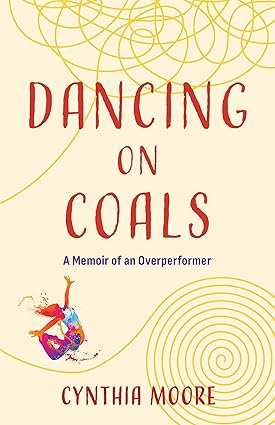

Cynthia Moore’s Dancing on Coals is a raw and riveting memoir chronicling her lifelong chase for approval, identity, and peace. From an uprooted childhood in the Bahamas and Swiss boarding schools to a theater-obsessed young adulthood filled with grueling performances, cult-like communes, and painful love affairs, Moore’s journey is one of constant striving. She captures the endless loop of seeking love through overachievement, shedding layers of artifice as she gropes her way toward authenticity. The book moves through decades of experiences from adolescence drenched in loneliness to womanhood edged with rage and revelation, painting a vivid portrait of a woman who’s learned to stop dancing for others and instead listen to herself.
What hit me hardest in Moore’s writing was how deeply personal it felt without veering into self-pity. Her voice is funny, whip-smart, and fierce even when recounting gutting experiences. Being shipped off to a “finishing zoo” in Switzerland, her mother’s clinical detachment, or performing theater under a sadistic Belgian director. The prose sparkles and burns, often in the same paragraph. She doesn’t pull punches, not with herself and not with the people who failed her. Still, there’s a strange grace in how she carries the pain, folding it into her voice without letting it define her. I found myself laughing in places I didn’t expect to, and aching with her in the next sentence. It’s a rare memoir that feels both deeply literary and emotionally honest.
This book left me stirred up, disoriented, and even a little angry. And that’s what makes it good. Moore doesn’t feed the reader polished wisdom; she invites you into the mess. Her reflections on womanhood, ambition, and the illusion of being “enough” hit close to the bone. She captures what it’s like to exhaust yourself trying to be wanted. And she names, in bright flashing letters, the insidious toll that takes.
If you’ve ever tried too hard, loved too much, or felt like you had to earn your spot in the room, Dancing on Coals will find you. This book is for readers who aren’t afraid to feel deeply, laugh through the tears, and question what we’ve been taught about success and self-worth. It’s especially meaningful for artists, perfectionists, and women raised to please. But really, it’s for anyone ready to quit performing and start living.
Pages: 198 | ASIN : B0D8RFNHJL

Tell Your Story
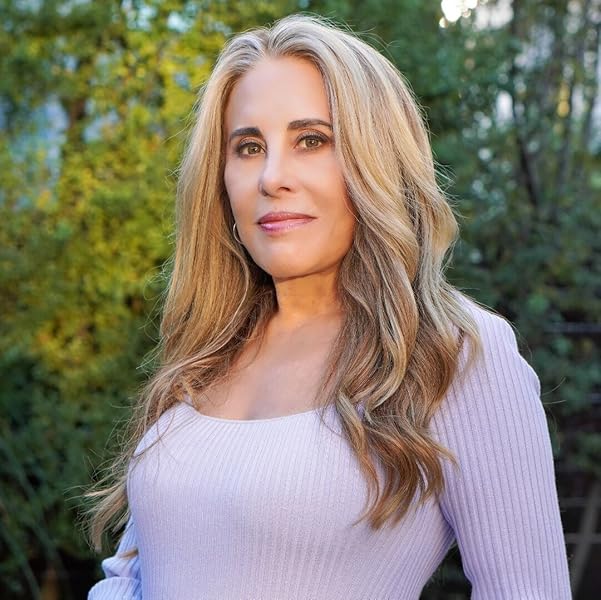
Such a Pretty Picture is a devastating and intimate memoir that tells your story of a childhood marked by trauma, silence, and survival. Why was this an important book for you to write?
Like many memoir writers, I started the book with the intention of turning my personal trauma into art, but over time my intention has evolved. I want to use this book to create awareness about the issue of childhood sexual abuse and to give hope to other survivors. I believe that by telling my story I am sending a message to other survivors–letting them know it is okay for them to tell their stories too.
What were some ideas that were important for you to share in this book?
That childhood sexual abuse can occur in any family, no matter how “pretty” things look from the outside.
That love can exist even in the wake of the most profound betrayal.
That childhood sexual abuse or any abuse can have deleterious effects long after the abuse has stopped but that with therapy and support it is possible to heal; find the north star that resides in each of us.
What was the most challenging part of writing your memoir and what was the most rewarding?
My relationship with mother was complicated one of the most challenging parts of writing the book was allowing myself to write honestly about her abuse and her complicity. That secret was almost harder to reveal than the incest.
The most rewarding has come more recently, as part of my publicity I have shared the ARC on Net Galley, Goodreads as well as with Rape Treatment Providers, the comment I hear most often is that memoir will give hope to other survivors. I can’t wait to get the first email or direct message from someone who the book helped.
What do you hope is one thing readers take away from your story?
That even in childhood marked by trauma, growth, healing, and forgiveness are possible.
Author Links: GoodReads | Website
Andrea is four and a half the first time her father, David, gives her a bath. Although she is young, she knows there is something strange about the way he is touching her. When her mother, Marlene, walks in to check on them, she howls and crumples to the floor—and when she opens her eyes, she is blind. Marlene’s hysterical blindness lasts for weeks, but her willful blindness lasts decades. The abuse continues, and Andrea spends a childhood living with a secret she can’t tell and a shame she is too afraid to name.
Despite it, she survives. She builds a life and tells herself she is fine. But at age thirty-three, an unwanted grope on a New York City subway triggers her past. Suddenly unable to remember how to forget, Andrea is forced to confront her past—and finally begin to heal.
This brave debut offers honest insight into a survivor’s journey. Readers will feel Andrea’s pain, her fear, and her shame—yet they will also feel her hope. And like Andrea, they will come to understand an important truth: though healing is complicated, it is possible to find joy and even grace in the wake of the most profound betrayals.
Such a Pretty Picture

Andrea Leeb’s Such a Pretty Picture is a devastating and intimate memoir that tells the story of a childhood marked by trauma, silence, and survival. Set in 1960s and ’70s New York, the book opens with a gut-wrenching scene: a four-year-old Andrea is molested by her father during bath time. Her mother, upon discovering the abuse, collapses and goes temporarily blind—both literally and emotionally. That moment becomes a metaphor for what follows: a house where appearances are cherished, secrets are guarded, and a child is left alone in the fallout. What unfolds is a gripping narrative of emotional abandonment, maternal betrayal, and the long shadow of incest.
Reading this memoir gutted me. Not just because of the trauma Leeb endured, but because of how plainly she lays it bare. She doesn’t use flowery language or metaphors to distance herself—she brings you into the room with her. In Chapter 1, when she says, “The way he touched me felt strange: good but not good,” I felt that sick knot of confusion and fear. What shook me even more was her mother’s reaction—not to rescue, but to disappear. That decision to prioritize denial over protection sets the tone for the emotional cruelty that follows.
Leeb’s mother, Marlene, is portrayed with brutal honesty. She’s fragile, vain, jealous, and deeply wounded, but also dangerous in her indifference. You feel Andrea’s heartbreak not in screams, but in those small silences where a child should have been loved and wasn’t. The mother’s obsession with order and appearances, like matching pink nightgowns or birthday parties, just made the contrast sharper. I found myself mourning what Andrea never had more than anything she lost.
The darkest chapter for me was Chapter 6. Andrea, still a child, tapes her mouth shut, stuffs cotton in her nose and ears, and lies in bed trying to suffocate herself. Her suicide attempt is not melodramatic; it’s quiet, methodical, almost innocent in its execution. All she wants is for her mother to love her again. And when her mother finally holds her and says, “My poor baby. What have I done to you?”—You feel hope. But deep down, you know it’s just a pause before the next wave of pain. That’s the emotional rhythm of this book: brief tenderness followed by long stretches of ache.
This book is brutal. It’s heavy. But it’s honest in a way few memoirs are. It doesn’t try to make pain pretty. It doesn’t ask for pity. Andrea Leeb writes like someone who has lived through hell and made it her mission to tell the truth. I’d recommend this memoir to survivors, to those who work with trauma, and to anyone who’s ever wondered how abuse hides behind closed doors.
Pages: 256 | ASIN : B0DWYSSLL6

“…but that’s not me.”: Changing the Story of Interpersonal Abuse

“…but that’s not me.”: Changing the Story of Interpersonal Abuse is a compelling and insightful self-help book that sheds light on the complexities of abusive relationships. It challenges conventional perceptions of abuse, revealing that it extends far beyond physical violence. Through the powerful testimonies of domestic abuse survivors and authors Erika Shalene Hull and Dr. Cheryl LeJewell Jackson, the book underscores a universal truth, at the heart of every abusive dynamic lies an imbalance of power. By sharing their personal experiences, Erika and Cheryl have created a practical guide to recognizing, addressing, and, when necessary, escaping abusive relationships.
One of the book’s greatest strengths is its seamless integration of raw and deeply personal stories with psychological insights and precise definitions of various forms of abuse. Erika and Cheryl’s narratives captivate, weaving a tapestry of pain, resilience, and ultimate empowerment. Erika’s harrowing account of financial exploitation, her husband siphoning money to fuel his addictions while she was pregnant with their third child, is particularly haunting. The contrast between the relationship dynamics she observed growing up and those she later endured as an adult highlights a chilling reality: abuse is often normalized before it is recognized.
Cheryl’s experience, shaped by different social circumstances, mirrors Erika’s. Both women initially rationalized and excused the mistreatment they suffered. This universal tendency to downplay or justify abuse is one of the book’s most thought-provoking themes. Many readers will likely see echoes of their own experiences or those of loved ones, reinforcing the importance of recognizing and addressing abusive patterns before they escalate.
This book serves as a crucial tool for identifying the often-overlooked red flags of psychological, financial, and emotional abuse. While the focus remains on domestic violence within romantic relationships, the authors emphasize that abuse knows no gender and can manifest in various interpersonal dynamics. The message is particularly urgent for women, who are often conditioned to overlook or rationalize coercive control in non-physical forms.
I highly recommend …but that’s not me. to anyone seeking a deeper understanding of the psychology behind both abusers and survivors. It is an essential read for those looking to safeguard themselves from toxic relationships, as well as for professionals and individuals passionate about psychology and mental health. Be prepared to feel educated, enraged, heartbroken, and ultimately inspired.
Pages: 456 | ASIN : B0BGJPQHD7
RUN, GIRLS: A Memoir of an Appalachian Family in Crisis


Jenny Cafaro’s Run, Girls: A Memoir of an Appalachian Family in Crisis is a raw and deeply personal memoir that chronicles the author’s tumultuous upbringing in the Appalachian foothills. From the opening pages, it’s clear that this is not a sugar-coated tale but rather an unflinching exploration of generational trauma, survival, and resilience. Cafaro guides readers through her chaotic childhood, marked by domestic violence, poverty, and moments of unexpected grace, as she and her family navigate life in a world both beautiful and harsh.
What struck me most about the book is Cafaro’s ability to vividly capture the emotional and physical landscapes of her upbringing. In “Wallpaper Snow,” she paints a haunting scene where a shotgun blast turns a wall into a cascade of shredded paper, a moment that symbolizes both destruction and surreal beauty. Cafaro’s language here feels cinematic, and I couldn’t help but feel like a silent observer in the room, holding my breath as chaos unfolded.
Her storytelling is visceral and unapologetically honest, which made it impossible for me to put the book down. At times, the sheer weight of the violence and trauma described can feel overwhelming, though this is arguably intentional. These harrowing details serve a purpose, they underscore the desperation and courage of a family trying to escape a dangerous cycle. Cafaro balances these moments with glimpses of her family’s toughness and humor, offering a much-needed reprieve and highlighting the complexity of her experiences.
One of the memoir’s greatest strengths is its portrayal of resilience. Cafaro’s mother emerges as a figure of grit and determination, battling rodents in a camper with a hammer or carrying her children to safety while dodging bullets. These moments left me in awe of the human spirit’s capacity to endure.
Run, Girls is a heart-wrenching yet inspiring memoir that will resonate with readers who appreciate stories of survival against all odds. Cafaro’s candid prose and vivid storytelling make this a compelling read, though it’s not for the faint of heart. I recommend this book to those who value unvarnished accounts of family dynamics and those who find strength in tales of overcoming adversity. This memoir doesn’t just tell a story, it grabs you by the hand and pulls you into the Appalachian hollers, leaving you changed by the journey.
Pages: 264 | ASIN : B0CP3DCLSH


