Blog Archives
¿Me Dolerá el Corte de Pelo?
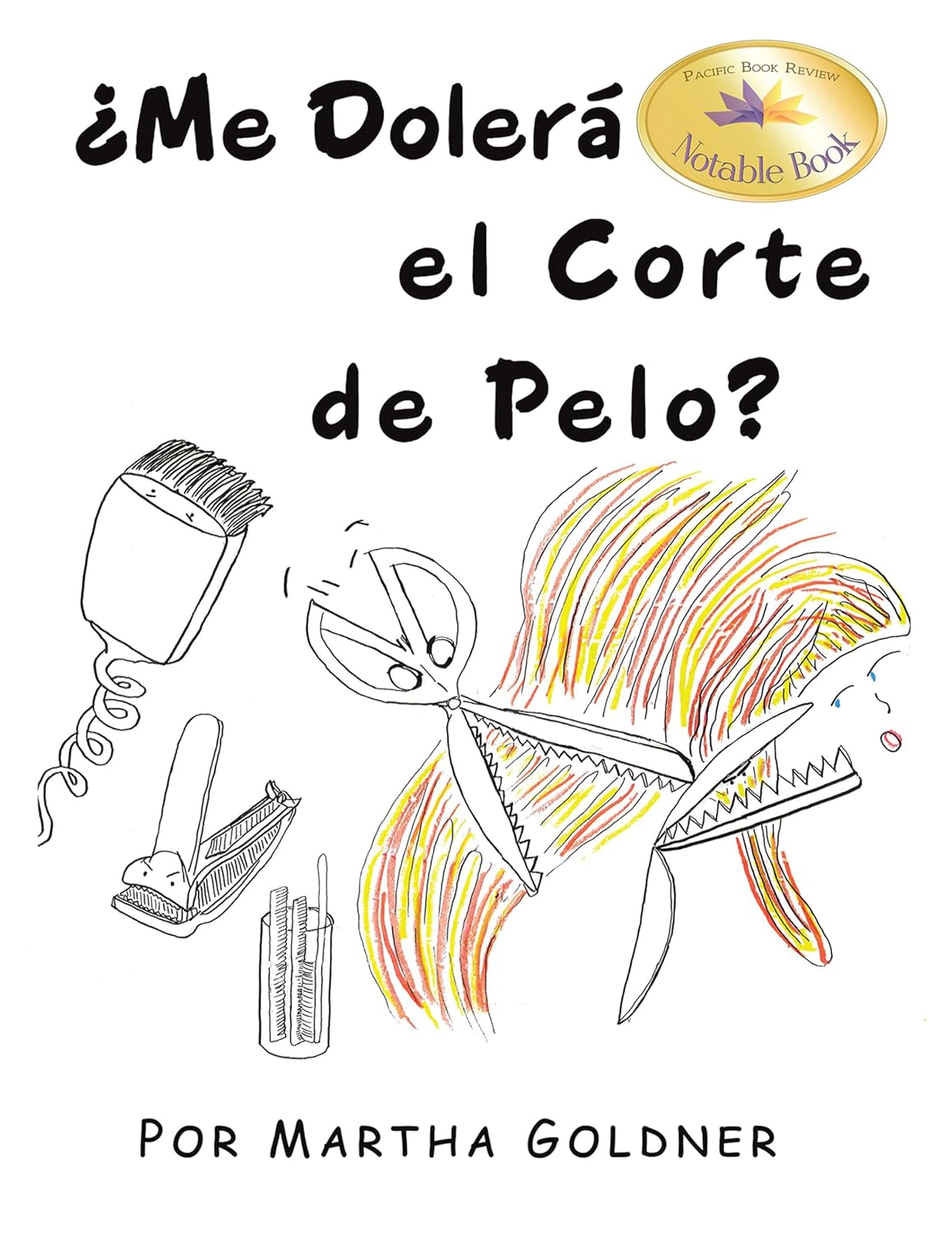

¿Me Dolerá el Corte de Pelo? narra la historia de un niño que le tiene pánico a cortarse el pelo e imagina todas las maneras posibles en que podría dolerle: desde vendas y puntos hasta picaduras de abeja, moretones y tirones dolorosos. A través de una conversación amena con su madre, el niño poco a poco deja atrás el miedo y la resistencia para dar paso a la curiosidad, fijándose en las divertidas sillas de la peluquería, los amables estilistas y el hecho de que nadie parece estar llorando. Al final, el corte de pelo deja de ser una amenaza para convertirse en un valiente primer paso.
Me pareció que la lógica emocional de este libro infantil reflejaba con gran fidelidad la forma de pensar de los niños pequeños. Los miedos del niño no son tanto «tontos» como vívidos y sinceros; y agradecí que la historia permitiera que esas preocupaciones ocuparan su espacio antes de ofrecer consuelo. Como padre, reconocí al instante esa espiral de asociaciones: las tijeras significan cortes, el zumbido significa abejas, el tirón de pelo significa dolor. La escritura es sencilla, repetitiva e infantil, un estilo que funciona a la perfección porque refleja la ansiedad dando vueltas una y otra vez en torno a la misma pregunta.
Las ilustraciones tienen un estilo artesanal, como si fueran hechas con crayones y lápices, lo que le da al libro una sensación íntima. Las expresiones de preocupación del niño, el cabello alborotado, las heridas imaginarias y las escenas en la peluquería se sienten inmediatas y personales. Algunos dibujos son divertidos de una manera peculiar y memorable, especialmente las escenas con cabellos exagerados y las imágenes de la maquinilla de afeitar. Las ideas cobran mayor fuerza cuando el libro se mantiene cerca del mundo interior del niño, donde los objetos cotidianos pueden volverse enormes y aterradores, para luego encogerse lentamente una vez que un adulto cariñoso les ayuda a ponerles nombre.
Me pareció que ¿Me Dolerá el Corte de Pelo? es un tierno libro ilustrado sobre el miedo, la imaginación y la paciencia que los niños necesitan al enfrentarse a algo desconocido. No presiona al niño para que sea valiente de inmediato —algo que me gustó—, y su calidez emana precisamente de ese desarrollo paciente de la historia. Lo recomendaría a niños de preescolar y de los primeros años de primaria que se sientan nerviosos ante los cortes de pelo, las visitas al médico, el aseo personal o cualquier nueva experiencia sensorial; especialmente si se lo lee un padre o una madre que pueda hacer pausas para conversar sobre cada temor con delicadeza.
Pages: 35 | ASIN : B0D49KCH5P

A Planetwide Cybernetic Empire

The Iron Dawn follows an A.I. that wants to save humanity from itself while the stage is set for a final showdown between man and machine. What were some new ideas you wanted to explore in this book that were different from book one?
Book One, titled The Fall of Man was a novel where I planned to introduce Magnus to the reader in the first person narration. Book One was intended to show the thoughts of the supercomputer before the global cataclysmic events and the changes it its personality after it acquires full sentience at the start of the global nuclear war. In the second book, I wanted Magnus to describe its historic mission by describing in detail its achievements and conquests one hundred years after World War III. In the second book, the warfare is more intense and the interaction between Magnus with new and recurring characters becomes much deeper and emotional as the powerful A.I. adjusts its strategy during its conquest of the planet.
This story is told from the perspective of an A.I.. How did you set about capturing the view point of a computer?
Having the story be told from the A.I’s point of view was the best option in my opinion, because only the main protagonist could tell this tale from a unique point of view. Book One and Book Two are memoirs of the global conflict narrated by Magnus after its victory in human-machine war and conquest of planet Earth. Because Magnus is a machine that learned to think like a human, it has a truly unique point of view, presenting the reader with a one of a kind glimpse into its “soul.” As Magnus steadily gains power and expands across the planet like an unstoppable mechanical juggernaut, it has interesting interactions with humans who love him and hate him for what he did. In creating Magnus’s character, I did imprint upon it some of my personality, which I believe added human flavor to a unique artificial mind.
What were some themes that were important for you to explore in this book?
The themes I wanted to explore in this book are diverse but they are all related to the understanding of how we can relate to our own creation when it has the potential to become smarter and more powerful that humans. One of the themes I enjoyed exploring is the theme of human imperfection, both mental and biological versus the unique standards of excellence and perfection set by a powerful Artificial Intelligence that understands our world but chooses to make it better for its own logical reasons. The second theme I wanted to analyze was the relationship between man and machine on a more intimate level that is more intellectual than physical. in my novel Magnus is indeed capable of deep affection that could be called love but he has no feelings when it comes to destroy its enemies that stand in the way of its new order of intelligence. The third and final theme of this novel is a vision of a new world where humans no longer dominate the planet and are forced to obey the rules set by a super intelligent machine that in some way is more humane than us.
This is book two in your epic science fiction series. What can readers expect in book three?
I did plan this story to be a trilogy, since its impossible to tell such a broad and detailed story in a single novel. Long before I actually sat at my desk and started working on my first draft, I actually drew in my mind and on paper what our world would be like after the final victory of the machines and what kind of new civilization Magnus would build to make the world a better place. In book three the readers can expect a planetwide cybernetic empire ruled by Magnus, where human population is kept under control via genetic engineering and logical appropriation of resources. Book three would feature a world thousand years in the future, where Magnus is a new God and the anti-machine forces are still trying to cling to the old ways but are unable to overthrow the powerful planetwide cybernetic intelligence. Book three would feature new technologies that could grant humans virtual immortality, clash of philosophies and remaining religious and socio economic groups. It will also show Magnus’s unique social and biological experiments where humans under its care and humans who oppose its vision are thrust into the greatest adventure of their lives.
Author Links: GoodReads | Facebook | Amazon


