Blog Archives
The Heir


R. W. Kelley’s The Heir is a historical horror novel that turns Windsor Castle in 1795 into a place where family ambition and royal power reach straight into a woman’s private life. Anne-Marie DuPont, a French noblewoman living in England after fleeing the Revolution, enters the royal household through an arrangement made by her father. The Crown’s demand that she produce a male heir places her body and independence under relentless pressure. It’s a premise with immediate emotional force, especially because Anne-Marie already knows how little room her upbringing leaves for her own wishes. Kelley builds the story around that struggle for ownership of her life, giving the elaborate clothes, titles, and ceremonies an ugly significance. Every privilege comes with someone else’s claim on her.
The castle’s everyday routines are some of the book’s most effective sources of dread. Meals, bathing, and lessons in etiquette become occasions for supervision, humiliation, and enforced obedience. Kelley makes you pay attention to who gets to speak, who decides when someone can eat, and whose comfort matters in a room. Anne-Marie’s first-person narration keeps those pressures close, letting us experience her anger, self-doubt, and attempts to make sense of the people around her. Her attachment to a ruby necklace adds a welcome thread of tenderness, connecting her to memories of her mother. I also found the treatment of loyalty compelling. Affection, dependence, and devotion to social rank can pull people toward choices that serve the powerful, even when the personal cost is painfully clear.
This book reminded me of Margaret Atwood’s The Handmaid’s Tale. Both novels imagine systems that treat women’s fertility as a resource controlled by authority, and both show women helping enforce the rules that constrain them. Anne-Marie’s position recalls Offred’s in the way an apparently orderly household organizes itself around reproductive coercion. Kelley gives that shared concern a Gothic setting and an increasingly graphic expression. The invented royal world is full of imposing rooms, restricted movement, and conversations whose polite wording carries a threat. Its concentration on one woman’s experience makes the abuse of power feel immediate and personal. If Atwood’s novel made you think about how institutions turn domination into duty, you’ll recognize that same disturbing logic operating throughout The Heir.
The prose is direct, and Kelley puts Anne-Marie’s emotions plainly on the page. That makes her distress easy to understand, although the repeated descriptions of fear, nausea, and helplessness sometimes slow the momentum. The antagonists also speak their cruelty so openly that their scenes can feel predictable, even as the situation grows more dangerous. I found the quieter details, especially the control exercised through food and manners, particularly persuasive. As the novel progresses, it commits fully to graphic bodily horror and sustained emotional intensity, giving its themes a harsh physical weight. My strongest impression is of a furious story about the human cost of preserving status and bloodlines. For readers drawn to Gothic horror with a strong interest in bodily autonomy, it offers an unsettling, tightly focused experience.
Pages: 216 | ASIN : B0HFBNK2CX

The Madeira Chronicle

Keith Steiner’s The Madeira Chronicle is an entertaining blend of historical mystery, treasure hunting, and modern adventure that takes Robert Louis Stevenson’s Treasure Island in a fascinating new direction. The story follows Paul Anderson, a young history scholar whose research uncovers a possible connection between Stevenson’s famous novel and an actual treasure hidden by Blackbeard and his quartermaster, Israel Hands. The treasure in question is an enormous shipment of eighteenth-century Madeira wine, potentially worth a fortune to modern collectors. When Paul discovers letters suggesting that Stevenson may have incorporated clues to its whereabouts into his novel, he risks his academic career to pursue the mystery. Meanwhile, Ailsa MacLeod, a brilliant Scottish archivist with whom Paul shares a complicated romantic history, begins her own search with the financial backing of a secretive London hedge fund. Their competing investigations eventually become a race to uncover a treasure that has remained hidden for three centuries.
Steiner clearly enjoys history, sailing, and the intricate business of putting together a treasure hunt, and that enthusiasm runs throughout the novel. The historical details are particularly engaging, from the realities of eighteenth-century piracy to the extraordinary value of properly preserved Madeira. The novel moves comfortably between university offices, Scottish archives, Southern waterfront towns, and the sophisticated world of high-stakes investment. Paul and Ailsa make an interesting pair, particularly because they’re both intelligent, stubborn, and occasionally spectacularly bad at communicating with each other. Their personal history gives the treasure hunt an emotional dimension, while the supporting characters, especially the eccentric Professor Maddox Rees and Savannah tavern owner Bobby Cole, contribute humor and warmth. Steiner also devotes considerable attention to the mechanics of the search, including historical maps, Bayesian probability, and modern surveying technology. These technical explanations sometimes slow the narrative, but they give the investigation a convincing sense of scale and make its discoveries feel earned.
Readers familiar with Dan Brown’s The Da Vinci Code will recognize a similar pleasure in watching a contemporary mystery unfold through clues hidden in historical documents and a famous work of art. Both novels invite readers to examine familiar cultural touchstones from an entirely different perspective, and both feature protagonists whose specialized knowledge becomes unexpectedly valuable outside the academic world. Steiner’s approach, however, has a distinctly nautical flavor, drawing heavily on the practical realities of sailing, historical trade routes, and the geography of the American coastline. His use of Treasure Island is especially enjoyable because it encourages readers to reconsider the significance of details in a book they may have known since childhood. The alternating perspectives of Paul and Ailsa also create an effective sense of competition as their separate investigations gradually lead them toward the same destination. When the story reaches its final stages, the painstaking research gives way to physical danger, and the pace accelerates considerably.
What makes The Madeira Chronicle particularly interesting is the way Steiner uses the treasure hunt to explore questions about ambition, personal fulfillment, and the value of discovery. Paul’s struggle between pursuing an established academic career and following his intellectual curiosity gives the adventure a relatable starting point. Ailsa’s financial motivations, complicated by her family circumstances and her changing feelings toward Paul, add another perspective on what a sudden fortune might mean. Even the supporting characters have their own ideas about money, opportunity, and what constitutes a worthwhile life. The novel’s later developments bring these themes together in ways that give the treasure hunt significance beyond its potential financial rewards. Steiner also leaves room for the messiness of human relationships, delivering an ending that combines professional accomplishment, generosity, and lingering romantic uncertainty. With its carefully constructed historical puzzle, colorful characters, and obvious affection for maritime adventure, The Madeira Chronicle is an enjoyable read for anyone who likes the idea that an old book, a forgotten letter, or a seemingly insignificant historical detail might lead to an extraordinary discovery.
Pages: 350 | ASIN : B0HJRWFHGD
Codename: Warlock – Book 2 – No Limits

Zack Volker’s No Limits is a paranormal espionage thriller that mixes Cold War spy fiction with the everyday life of a man whose telepathy and telekinesis make him uniquely useful and uniquely difficult to contain. Tom Newell begins the book still connected to the secret Warlock program, but the story steadily widens beyond government missions into police investigations, organized crime, Soviet operatives, family life, business, and the constant question of what someone with his abilities should do when he knows he can help. That combination gives the novel an unusual identity. It’s a supernatural thriller with spies and covert operations, but it’s just as interested in what Tom does at breakfast, how he raises his daughter, and how he builds a life after the government decides it would rather keep Warlock at arm’s length.
The book’s greatest strength is the matter-of-fact way it handles Tom’s powers. Volker doesn’t treat telekinesis and lie detection as occasional tricks saved for spectacular scenes. They’re part of how Tom thinks, works, solves problems, and understands other people. That makes the procedural sections especially satisfying. Whether he’s tracking an intelligence target, unraveling a criminal case, disrupting a heroin network, locating oil from the air, or dealing with a Soviet sleeper agent, Tom approaches the problem methodically. The result feels like a paranormal spy thriller crossed with a procedural adventure novel. There’s plenty of action, including covert extractions and survival situations, but the appeal often comes from watching Tom figure out the cleanest way to use an extraordinary advantage against very ordinary systems.
Just as important is the domestic side of the story. Tom’s marriage to Gail and their life with Susan keep the Cold War espionage thriller elements connected to something personal. Having a child forces Tom to reconsider habits that once seemed harmless, because a toddler can’t be expected to keep daddy’s impossible abilities secret. Gail is also much more than someone waiting at home between missions. She understands the risks, challenges Tom when his choices affect the family, and helps establish the boundaries that make their unusual life function. That becomes especially important as the novel explores temptation, trust, money, friendship, and the distance Tom’s abilities can create between him and everyone else. Some of the book’s most memorable tension comes from those quieter problems because Tom can’t solve them by levitating something across a room.
No Limits ultimately works as a broad, episodic supernatural action thriller about power becoming part of daily life. Its 53 chapters move through espionage, crime solving, aviation, oil exploration, legal disputes, family milestones, and dangerous assignments, with Tom’s straightforward first-person voice holding those threads together. He’s enormously capable, so the suspense frequently comes from exposure, consequences, moral choices, and the people he cares about. For readers who enjoy paranormal espionage thrillers, Cold War spy thrillers, superpowered protagonists, detailed problem-solving, and stories that spend real time on what happens between the big missions, Codename: Warlock Book 2: No Limits offers an expansive continuation of Tom Newell’s strange attempt to live an ordinary life with decidedly extraordinary abilities.
Pages: 378 | ASIN : B0H2FL8L2W
In Spectacular and Memorable Fashion

In the Wrath of Legends follows a Nez Perce woman torn between two worlds, as she confronts military secrets, supernatural horrors, and her own haunted past in a battle where myth and history collide. What inspired you to blend indigenous spirituality and supernatural elements in a historical setting?
This similar genre mishmash was previously utilized in my first novel (“In the Lair of Legends”) in spectacular and memorable fashion, but for the sequel I wanted to delve deeper into those unique facets of the story by exploring even more of the culture and history pertaining to the Nez Perce and the historical context in which these exciting stories take place. For me, the supernatural elements have allowed me to highlight some very difficult and challenging (and hugely important) political and racial themes by allowing the reader to experience them through the lens of spirituality, legends, and incredible action. I tend to think of these stories as character-driven adventure tales anchored by a foundation of history and faith.
Chenoa Winterhawk is such a layered, resilient protagonist. Was she inspired by a specific person or story?
Chenoa is absolutely my favorite character that I’ve ever written! (And I actually felt that way about her in the previous book when we meet her as a 6 year-old girl who becomes Chief Jolon Winterhawk’s motivation to not only survive, but to completely alter his perception of what duty and fatherhood truly means.) In this book, Chenoa is dealing with the loss of hope, struggling with the concept of fading honor, and feeling betrayed by the very ideals that her father fought for. In these types of action/adventure stories, it’s customary to launch the story with physical threats. But here, I wanted to introduce Chenoa to gigantic emotional obstacles before having her face those monsters of legends and monsters of men. She’s very different from her father, so I wanted to approach her character atypically for the genre. She’s a warrior, certainly, but her motivations and actions are driven by something much more deeply-rooted than what uniform she wears, or what enemy she’s facing. She sees everything from the inside-out, which is a unique perspective for an action hero. Her resiliency stems from faith which allowed me to richly layer and explore her character in fascinating and unforgettable ways.
I felt that some scenes explore the cost of survival and the moral weight of violence. What truths were you hoping readers would wrestle with?
Violence casts a shadow in our lives and in our world; sometimes, it follows behind us for the rest of our lives. In this particular story, characters use violence as both a means of survival and of opportunity; selfish as well as selfless. The human antagonist in the book experienced a great violent injustice, so his retribution was to inflict that same pain and suffering tenfold. He took everything bad he’d experienced and made it worse because he felt that blood (innocent or otherwise) was the only way through his own suffering. Chenoa Winterhawk is a warrior and her own father was a decorated Civil War soldier. Her dichotomy is that she recognized violence as being the answer but wrestled with it as the only solution. Our actions have consequences, and the book deals with how they impact us through generations and into eternity.
What is the next book that you are working on, and when will it be available?
My next novel is called “Suspension.” It’s a standalone adventure/thriller set in 1990 that’s a literary homage to some of my favorite action movies like “Die Hard 2” and “Sudden Death.” It will be published by Black Rose Writing on November 19, 2026.
Author Links: GoodReads | X | Facebook | Website
Chenoa Winterhawk is a battle-hardened member of Oregon’s elite U.S. Army Indian Scouts, sworn to protect travelers across treacherous mountain terrain and dark forests whispering of ancient terrors. As the daughter of legendary Civil War hero Chief Jolon Winterhawk, Chenoa is also a warrior bound by duty, struggling with injustices brought upon the Nez Perce amidst the broken promises that have forced another relocation of her tribe.
While escorting a military leader carrying a mining map of an underground river hidden deep inside the Blue Mountains, Chenoa is ambushed by a rogue Army unit in a deadly dirigible assault. Their sadistic leader is a traitor from her past, driven by revenge to destroy her family’s legacy. The diabolical plan-destroy the mine and unleash the underground river, bringing a destructive flood onto sacred tribal lands to avenge personal betrayals.
Engaging ruthless military forces throughout unforgiving mountain wilderness and abandoned mines, Winterhawk wages the fiercest battle of her life. But she soon discovers that a much darker terror is also stalking her. Monstrous legends, roused from their ancient lair. These enormous creatures of myth were once faced by her father in an epic battle to the death. And now, it’s her turn…
UNTERTAUCHEN
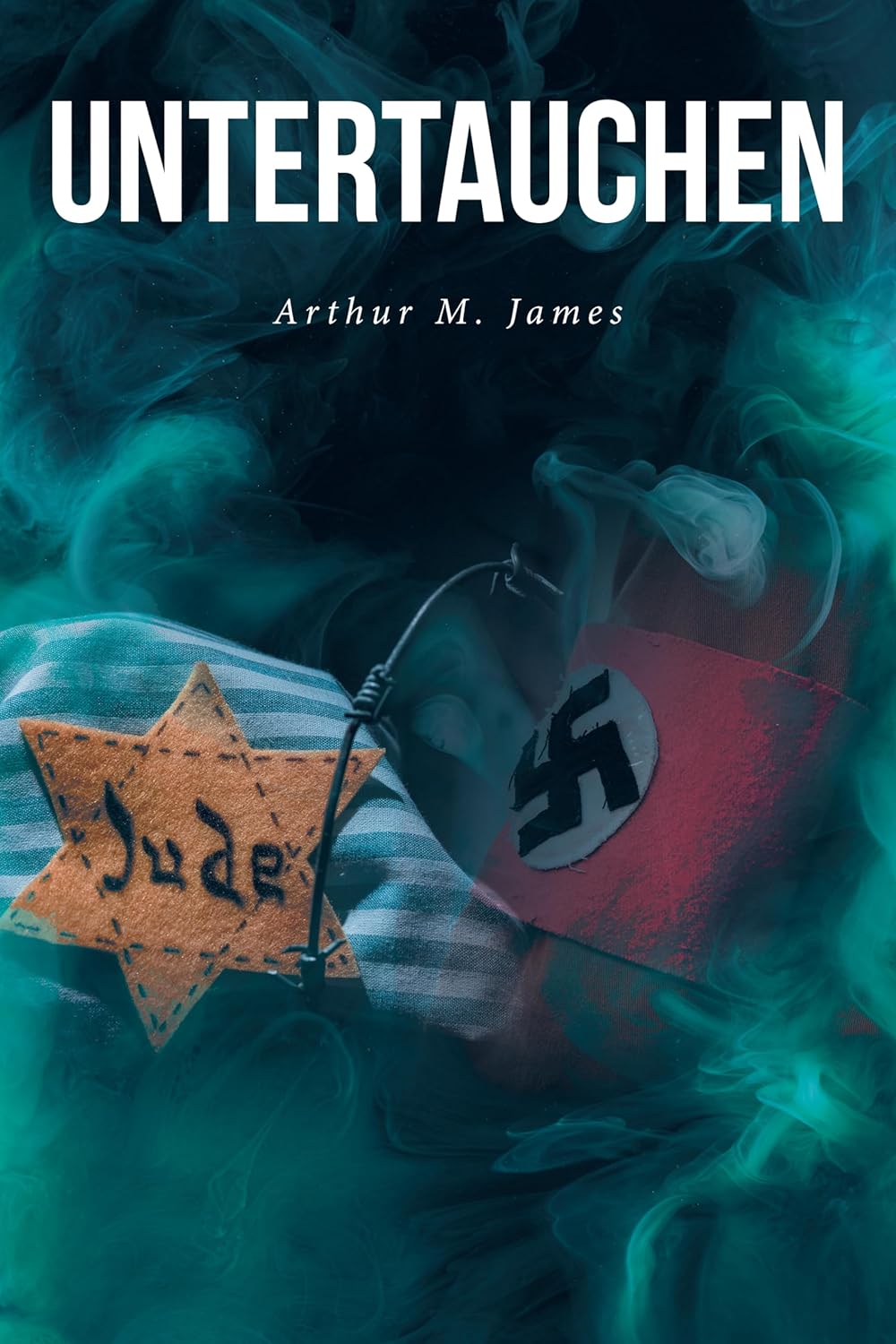

Untertauchen tells the harrowing and intimate story of Hans and Anna Bracher, a Jewish couple caught in the rise of Nazi Germany. Based on true events, the novel begins in the calm years before the storm, then steadily descends into the chaos and cruelty of the Third Reich. It follows their love, their faith, and their desperate need to survive in a country that has turned against them. What struck me most was how personal the story felt. It isn’t just about history. It’s about ordinary people clinging to hope while everything familiar burns away.
Arthur M. James writes with a steady hand, not sensational but deeply felt. The dialogue feels natural, like you’re overhearing real people, not reading characters on a page. His pacing is patient. He lets dread build quietly, almost tenderly, until it suffocates. The writing has a kind of restraint that makes the moments of violence hit even harder. I admired how he never forgot the human faces behind the history. These weren’t statistics. They were parents, lovers, neighbors. I found myself angry at times, then suddenly heartbroken. It’s that emotional swing that makes the book hard to put down.
The cruelty is not graphic for shock’s sake, but it’s honest. And it’s relentless. That’s what makes it powerful. The book reminds you how fear seeps into everyday life, how people adapt just to stay invisible. I loved that James didn’t make the story tidy. There’s no neat justice here. Just survival, loss, and the small flickers of kindness that somehow outlast hate. His prose feels both old-fashioned and immediate, like a letter from another century that still matters now.
When I closed the book, I sat for a while. It left me quiet, reflective, and oddly grateful. Untertauchen is a story for readers who want more than history, they want to feel what it meant to live it. I’d recommend it to anyone who loves historical fiction with soul, to those who study the Holocaust, and to anyone who believes courage isn’t loud but steady.
Pages: 695 | ASIN : B0CWT2MR8M

IN THE WRATH OF LEGENDS

David Buzan’s In the Wrath of Legends is a sweeping historical thriller that fuses mythology, frontier violence, and spiritual depth into a relentless narrative. The story picks up in the late 19th and early 20th centuries, following Chenoa Winterhawk, a fierce, complex Nez Perce woman, caught between two worlds. As she navigates the tensions between Native traditions and the encroaching modern age, she becomes entangled in a web of military secrets, supernatural terrors, and personal reckonings. From the haunted mines of Oregon to the skies above the Blue Mountains, Buzan crafts a story where the past refuses to stay buried, and every legend hides a truth too monstrous to ignore.
The writing is vivid and poetic, often leaning into raw, sensory detail that grips your imagination and refuses to let go. Buzan doesn’t just write scenes; he paints them. The dialogue snaps with tension, and the pacing, alternating between explosive action and quiet, meditative passages, keeps the heart engaged and the mind uneasy. I was struck by how seamlessly he weaves indigenous spirituality and historical realism together. It’s not a romanticized view of history, but a hard look at betrayal, survival, and the thin line between faith and fury. At times, the prose feels almost cinematic, but what gives it weight are the moral undercurrents. This isn’t just a story about monsters; it’s a story about what people become when they’re forced to face them.
Emotionally, the book hit me harder than I expected. Chenoa’s journey is one of constant loss and rediscovery, and I found myself rooting for her even when the darkness seemed too heavy to fight. The monsters in the story, both human and otherwise, serve as mirrors, showing what happens when hope falters. I felt anger, awe, and even sorrow while turning the pages. Buzan writes with a kind of unfiltered honesty that sometimes cuts close to the bone. He doesn’t shield the reader from violence or grief, yet every brutal moment seems to serve a deeper truth about resilience and spirit.
In the Wrath of Legends is for anyone who wants to understand how myth and history can intertwine to reveal the soul of a people. It’s perfect for readers who love stories with grit, mystery, and heart, people who crave character-driven tales set against a backdrop of real pain and impossible beauty. If you want a book that challenges your emotions while thrilling your imagination, this one deserves your time and then some.
Pages: 298 | ASIN: B0FWS1BD91
A Cry for Vengeance

The story begins in Tucson in 1968 with a hospice nurse who records a dying man’s confession. He reveals that his true identity is Franz Dietrich, a Nazi officer who escaped justice and lived under an alias in the United States. What follows is a tense unraveling of secrets. A writer, Bryan De Luca, is drawn into the mystery and begins tracing the threads of Nazi war criminals who were protected after the war. Along the way, he uncovers government complicity, survivor testimonies, and chilling reminders of how the past refuses to stay buried. The novel blends history, moral questions, and suspense into a gripping narrative that moves across personal stories and larger political shadows.
I easily sank into the flow of the writing. The conversations feel natural, almost like eavesdropping on people with something heavy on their hearts. There is a rawness in the way guilt, regret, and fear are drawn out, yet it never tips into melodrama. At times, the pacing slows, almost deliberately, as if to make me sit with the weight of what is being revealed. That worked for me. It made the moments of tension sharper and more unsettling. I’ll admit, though, there were times I wanted things to move a little quicker, but then I’d be pulled right back in by a revelation or a moral dilemma that felt too real to ignore.
I felt anger at the injustice, sadness at the lives lost or scarred, and frustration at the bureaucratic indifference that let murderers live quietly in suburbia. There’s a thread of hope in the survivors’ voices, but also a deep weariness. I appreciated how the author didn’t try to tie everything neatly with a bow. Life, especially life touched by atrocity, rarely allows that. At times, I found myself thinking not just about the characters but about my own willingness to look away from uncomfortable truths. That kind of reflection is what makes this story powerful.
I’d recommend A Cry for Vengeance to anyone who likes a blend of history and thriller, but also to readers who don’t mind being left with hard questions. It’s not just about chasing old ghosts. It’s about the cost of silence, the burden of memory, and the uneasy choices people make in the name of survival or justice.
Pages: 191 | ASIN : B0FJ5257B6
Nothing Is Ever Black And White

A Game of Masquerade follows a time-traveling professor who goes back in time to London in 1888, where he ends up working with Scotland Yard to find a serial killer, all while avoiding any alterations to history. What was the inspiration for the setup of your story?
I have always had a huge interest in stories involving time travel. There’s something fascinating about someone experiencing history firsthand – being brought face to face with the people who are living it as present day. It’s quite a different scenario than simply picking up a book and reading about the past. Suddenly these people are real and no longer a footnote in history. But stepping into history means there is a risk of altering established events – if you change one thing then what happens to the future you expect to happen?
Another enduring fascination of mine is the mystery surrounding Jack the Ripper. Even if his identity had been discovered, the brutality of his crimes would still engender interest, but the fact that he was never caught, maintains the mystery which invites endless speculation and gives a writer the chance to think outside the box.
What intrigues you about this time period enough to write such a thrilling period piece?
The East End of London in the 19th century is a rich character all its own! The hardships – how people survived such a tenuous existence, the opportunists preying on the vulnerable, the attitudes of the time – there is so much detail that the story takes on a life of its own. Introducing Jack the Ripper into this already volatile setting is like striking a match in a powder keg igniting fear, intolerances and anger in an already-turbulent sphere. It is both a shocking and fascinating study.
What are some things that you find interesting about the human condition that you think make for great fiction?
I believe that, more often that not, nothing is ever black and white. In the case of my novel, Jack the Ripper has his reasons for killing which can never be condoned, yet these reasons have left damaging psychological scars. But it is his choices, made of his own free will, which creates the monster. It’s an interesting element to explore and makes for great storytelling.
Is this the first book in the series? If so, when is the next book coming out, and what can your fans expect in the next story?
The novel is a stand-alone piece however the protagonist, Professor Orlando Delbrotman’s story, has not finished and I have some ideas as to his fate! I have sketched out some thoughts and will take the Professor to another time in history long before the 19th century. It will take time to write, but it will be time well spent so please stay tuned!
Author Links: GoodReads | TikTok
But what if there is more to this mystery than meets the eye? What if the identity of the murderer is more than
human? A fugitive from another world who joins forces with Scotland Yard is soon to discover that past and future
events have created a monster, which ignites fear and outrage on the streets of the East End.
To stop the murderous rampage in 1888, Professor Orlando Delbrotman must solve one of the most brutal mysteries of the 19th century…without changing history…


