Blog Archives
A Game of Masquerade
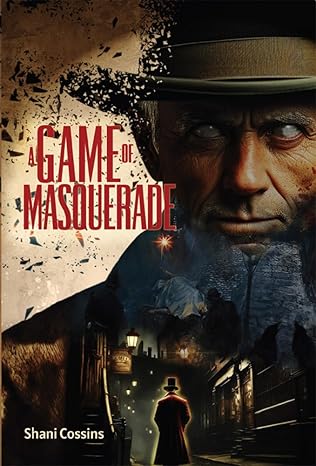

A Game of Masquerade blends historical crime with speculative fiction, pulling Jack the Ripper out of the fog and into a stranger and darker light. The story follows Professor Orlando Delbrotman, a time-traveling outsider who stumbles into the grimy alleys of 1888 London. His mission is unclear even to himself at first, but soon he becomes entangled in the investigation of the Ripper murders alongside Scotland Yard. What begins as an observational trip turns into a dangerous game of survival, trust, and pursuit, with the Professor moving between the dim-lit taverns, cold morgues, and filthy streets of Whitechapel. The setting is thick with atmosphere, and the narrative swings between gritty human suffering and the strange detachment of an alien mind learning the limits of morality.
The writing carries the weight of the setting with vivid detail, but it also knows when to lean on humor or eccentricity. I liked how the author didn’t shy away from the brutal realities of the time. The women in the story aren’t romanticized; their hardship is tangible, and their conversations are raw. The Professor, in contrast, is formal, almost awkward, and I found that gap between his precise, alien perspective and the chaos around him strangely compelling. The pacing can be a slow burn in places, but that gave me time to sit with the tension rather than rush through it.
Some parts felt theatrical, almost like a stage play with its sharp entrances and dramatic exchanges. Sometimes it worked, adding color and energy, and other times it brought me out of the scene. Still, I admired how the book balanced historical authenticity with a speculative twist without letting one overwhelm the other. The Ripper mystery has been told in countless ways, yet this take felt fresh, partly because of the outsider’s-eye view and partly because of the relatable moments that broke through the gloom.
I’d recommend A Game of Masquerade to readers who enjoy historical mysteries with a speculative slant, particularly those who like their stories gritty yet occasionally whimsical. If you’re curious about what happens when history’s shadows meet something not quite of this Earth, you’ll find plenty to chew on here.
Pages: 333 | ASIN : B0DW69W3S1

Forecast
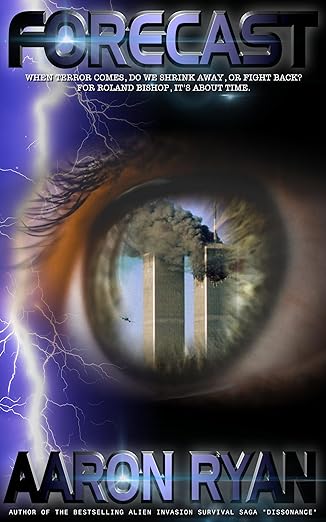

Aaron Ryan’s Forecast presents a gripping and thought-provoking story centered on Roland Bishop, a 28-year-old meteorologist from Jersey whose life is irrevocably changed after surviving a lightning strike. The incident leaves him with an extraordinary ability: he can foresee catastrophic events before they unfold. However, these visions come with a chilling caveat; they only manifest in the presence of individuals on the brink of committing devastating acts, including terrorism. As Roland struggles to understand the implications of his newfound power, he faces an agonizing dilemma: should he intervene to prevent disaster, or does meddling in fate risk unleashing unintended consequences?
Ryan weaves a story that is as suspenseful as it is intellectually stimulating, tackling themes of fate, free will, and the harrowing burden of responsibility. The novel does not merely present a man with premonitions; it plunges the reader into his psychological torment, forcing them to consider the weight of knowing too much.
The writing is sharp, immersive, and relentless in its pacing. Ryan constructs a world brimming with moral ambiguity, capturing the essence of Roland’s internal conflict with a palpable sense of urgency. The premise itself is fascinating, one man burdened with the knowledge of looming tragedies, including events akin to 9/11. Yet, it is the execution that truly elevates the novel. Each vision Roland experiences intensifies the tension, and as he attempts to alter the future, the butterfly effect looms ominously in the background. The story constantly forces the reader to question: is intervention an act of heroism or hubris?
Beyond its riveting plot, Forecast excels in its thematic depth. The age-old struggle between fate and free will is explored with precision as Roland grapples with the unnerving possibility that his actions might be predetermined. Can he truly change the course of events, or is he merely a pawn in an unchangeable timeline? The novel does not offer easy answers, making Roland’s moral dilemmas all the more compelling. His internal turmoil is visceral, his fear and uncertainty radiating from the pages, drawing readers into his desperate attempts to navigate an impossible situation.
Ryan also succeeds in crafting a world that feels unpredictable and chaotic, mirroring the protagonist’s own unstable reality. The novel blends elements of thriller and psychological drama seamlessly, offering both high-stakes suspense and philosophical reflection. Readers are not only kept on edge by the tension-laden plot but are also invited to contemplate the ethics of intervention, the limits of human agency, and the price of knowledge.
Forecast is a riveting, intelligent, and emotionally charged thriller. For readers who appreciate high-concept suspense novels laced with deep ethical quandaries, Aaron Ryan delivers a story that is as exhilarating as it is thought-provoking.
Pages: 339 | ASIN : B0DLQ9HMFP
With Full Intent

Jon Gaskins’ With Full Intent unfolds like a slow-burning bonfire in the heart of 1930s Virginia. Set against the backdrop of the Great Depression, the novel begins with a chilling discovery of multiple murders on a plantation. The narrative hooks you immediately, transporting you to a time when law enforcement relied as much on intuition as emerging forensic science. The story explores the hunt for justice in a community torn by secrets and the lingering shadows of systemic inequality.
Gaskins doesn’t just describe the rolling fields or dusty roads; he places you there, with the smells of manure and tobacco leaves filling the air. The descriptions are sharp and raw, setting a stark contrast to the brutality of the crime at the heart of the story. The pacing, particularly in the first few chapters, builds tension effectively, even if some scenes linger longer than necessary. The characters are a standout feature, particularly Deputy Kendricks, who serves as a lens into the complexities of the investigation. His mix of naivety and determination brings authenticity, especially as he navigates not only the crime but also the entrenched prejudices of his environment. Floyd Williams, the black farmhand who discovers the bodies, is another compelling character. His role highlights the intersection of race and justice, especially poignant when he’s thrust into suspicion simply because of proximity to the victims. These dynamics made me empathize with Floyd, even as I winced at the systemic injustices he faced. Thematically, the book succeeds in exploring the fragility of trust and the consequences of greed. The depiction of the Cannon brothers’ wealth as both a shield and a target is particularly sharp. Scenes involving the safe—both as a physical object and a symbol of secrets—stood out as both metaphorical and plot-driving. The novel’s treatment of burgeoning forensic science is another highlight. Kendricks’ visit to the Bureau of Investigation’s lab was a fascinating window into early criminology, showcasing both the potential and the limitations of technology at the time.
With Full Intent is a gripping historical thriller that thrives on its evocative setting and layered characters. It’s ideal for readers who enjoy crime dramas with a strong sense of history and don’t mind a bit of narrative indulgence. It is a story that lingers, reminding us of the human cost of justice and the ever-present scars of history. If you’re a fan of historical fiction with moral complexity and atmospheric depth, this one’s for you.
Pages: 229 | ASIN : B0CZV272RY

An Exercise in Self-exploration

The Ivory Obelisk follows a man haunted by his past on a redemptive journey to transform a symbol of regret into one of hope, renewal, and reconciliation. What was the inspiration for the setup of your story?
I can’t remember how the idea came to me, but I wanted to tell a story that explored the psychological side of a character and took place in a manor or mansion as a metaphor for the brain/mind. Growing up, I loved watching Clue (1985) for its comedic value and alternate endings, but I was also drawn to: the dramatic plot of Forever Young (1992) and the notion that none of us can escape aging and the end of life; the psychological thriller Identity (2003) for the suspenseful plot development; and Inception (2010) for its complex and layered storytelling. In addition to some aspects that naturally developed as I wrote and revised the story, elements of all these stories (even though they take film form and not book form) intertwined together to provide inspiration for The Ivory Obelisk.
Fabian Loxely’s journey is deeply personal and emotional. Did you draw on any personal experiences or influences to shape his character?
I have lost a number of family members over the years, with my father being the most recent and impactful experience. I’m still processing and sorting things out in my heart and mind, but I would say this life event has played the most immediate role. However, the protagonist is not necessarily supposed to be me. I also tried to tap into my emotional self beyond feelings relating to my father as something of an exercise in self-exploration.
The narrative intricately weaves Fabian’s encounters with his past. How did you approach balancing these moments to maintain emotional resonance without overwhelming the reader?
I knew early on that the flashbacks (the historical fiction piece to Obelisk) would have to be self-contained and addressed simply a chapter at a time. Additionally, I developed the plot in a way such that each of those chapters occur within the same time in the story; I set up the reader with the emotional hook and motivations, then explore the deeper aspects of that emotion through the flashbacks, with each one building on the last to bring the reader out on the other side with a piecemeal understanding of the protagonist.
What is the next book that you are working on, and when will it be available?
I have been chipping away at a project that I’ve had on my mental shelf since 2005, so I want to focus on that as my next creative project. As of right now, I’d like to think I’ll release the first book (of a potential trilogy) sometime in the next 5 years. But since writing isn’t my full-time job, I can’t say for certain when it’ll be ready. As for the project itself, I’m trying to find a way to write something between historical fiction and science fiction without attempting to recreate Star Wars or have it otherwise be futuristic and fantastical. I want to create a world that can be recycled over time, much like what has been done with Ian Fleming’s James Bond character/world over the years.
Author Links: GoodReads | X | Facebook | Website
The Ivory Obelisk
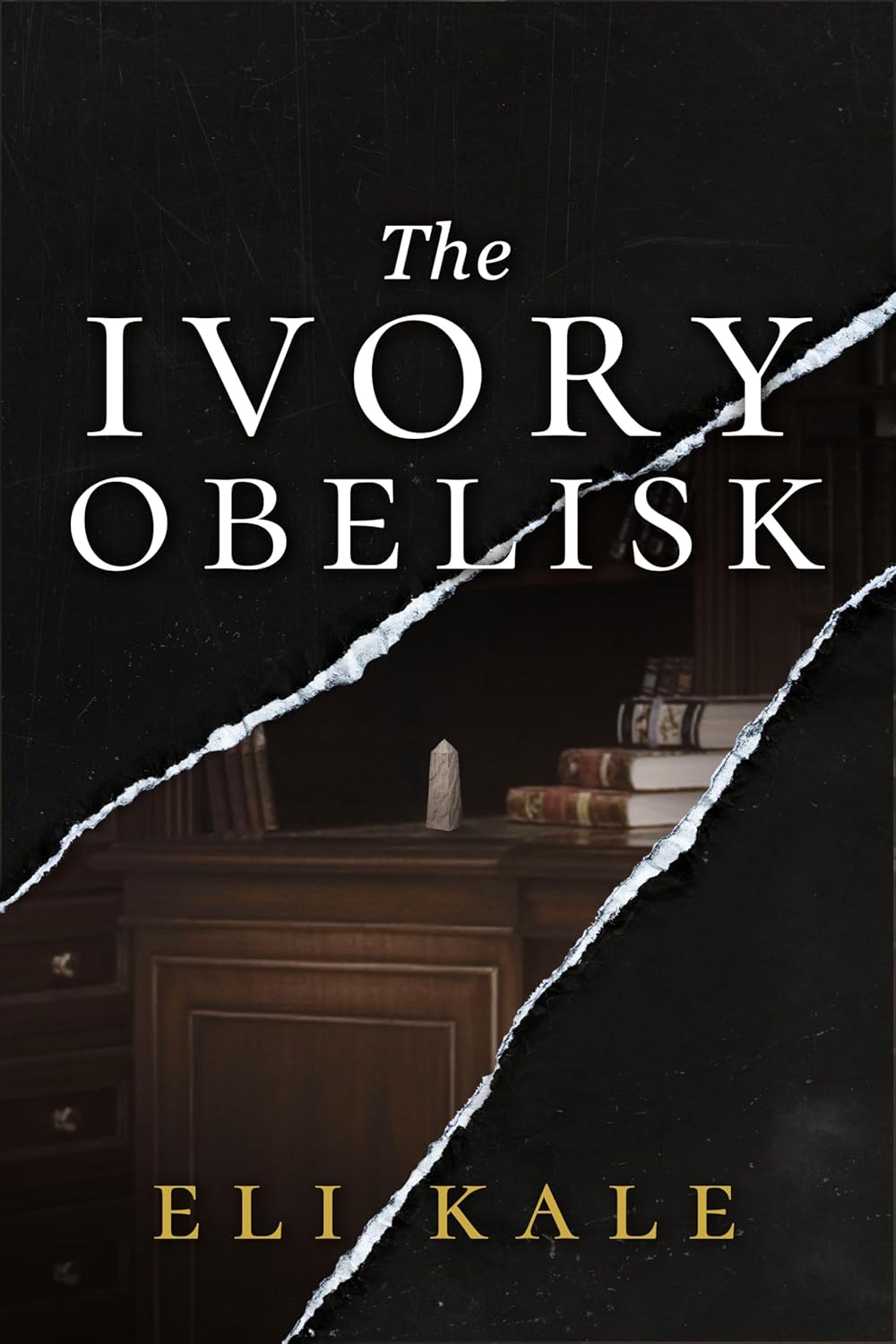
Eli Kale’s The Ivory Obelisk delves into the life of Fabian Loxely, a man weighed down by a lifetime of regrets. When a near-death experience forces him to confront both his mortality and the haunting echoes of his past, Fabian embarks on a journey of redemption. Determined to heal himself and mend broken relationships, he transforms the titular ivory obelisk from a symbol of regret into one of hope, renewal, and reconciliation.
What sets The Ivory Obelisk apart is its exceptional narrative depth. The story intricately weaves Fabian’s encounters with figures from his past, each rendered with vivid detail and emotional resonance. This meticulous craftsmanship breathes life into every character and moment, creating a story as layered as it is poignant.
The novel’s emotional arc is profound. It offers a richly textured exploration of grief, regret, and forgiveness. It is far from a simple tale. Instead, it takes readers on a journey through complex emotions that are both heart-wrenching and uplifting. The author expertly captures these sentiments, creating a story that leaves a lasting impression. Few books manage to balance such raw, heartfelt moments with the delicate promise of healing, making this one an unforgettable experience.
While the pacing begins as a deliberate slow burn, it gradually builds into a gripping narrative that refuses to let go. Admittedly, the opening can feel a bit disorienting, but as the layers of the story unfold, everything comes together seamlessly in a satisfying and impactful conclusion.
There’s little to critique in this remarkable work, a testament to Kale’s skill as a storyteller. The Ivory Obelisk is a deeply moving tale that lingers in the mind and heart, and it’s left me eager to explore more of the author’s creations.
Pages: 293 | ASIN: B0DM9X6VW5
Sweet Sorrow- Book 3 in The Jungle War series


Set during the final years of the Vietnam War, Sweet Sorrow: Book III in the Jungle War Series by Kregg PJ Jorgenson captures the complex emotions of American soldiers facing a bitter reality. As the conflict nears its end, with support at home dwindling, the men on the ground in Southeast Asia grapple with the prospect of leaving without victory. Some cling fiercely to the hope of a military win, while others grow disillusioned, their attitudes now reflecting the war-weary sentiment back home. It’s a raw, poignant portrayal of a war that left deep scars on those who fought it.
This book reminds me of films like Platoon and Apocalypse Now, but Jorgenson adds his own unique voice. The prologue sets the stage by explaining the significance of MAC-V, the nerve center for U.S. military operations in 1971. From there, we dive into the lives of the young soldiers of Company R, each dealing with the looming end of the war in their own way. Some are desperate to achieve a final victory to justify their sacrifices. Others, however, can no longer ignore the futility of the fight. These conflicting perspectives create much of the story’s tension alongside the brutal and unpredictable firefights. The clashes between soldiers, driven by their shifting beliefs, feel as gut-wrenching as the combat itself.
Jorgenson doesn’t hold back from showing the emotional toll of the war, as soldiers confront their enemies as well as each other and their own disillusionment. The realization that they’re fighting a losing battle slowly dawns on them, and I think it’s this internal conflict that adds depth to the action. The novel’s greatest strength lies in its exploration of these psychological battles, which often prove more devastating than any physical wound.
What was particularly striking to me was the youth of the characters. Many are barely more than teenagers. Jorgenson captures their transformation from wide-eyed boys eager to prove themselves into weary men, drained by the grind of war. Their lost innocence is heartbreaking, and the author’s vivid writing makes their anguish palpable. The novel doesn’t offer easy answers but instead shows the haunting aftermath of a war that offered none.
While the themes of war and loss have been explored before, Jorgenson’s portrayal feels fresh and powerful. The story’s emotional weight, combined with its gritty realism, makes Sweet Sorrow a must-read for anyone interested in military fiction.
Of Ashes and Dust

Of Ashes and Dust, by Ron Roman, is an enthralling exploration of survival, intrigue, and the human condition. Set in a small New Hampshire town at the turn of the Millennium, the novel follows Professor Will Watson, a haunted Vietnam War veteran and activist. Watson’s tumultuous past and his pursuit by the State Police and FBI form the crux of this gripping narrative. The story delves into Watson’s complex relationship with his Japanese student assistant, Kimiko, and the sinister truth about his friend Mark Mercotti, who deceives him with a covert implant. This tale of personal betrayal unfolds against a backdrop of impending Armageddon, government conspiracies, and profound emotional turmoil.
Roman masterfully weaves together multiple subplots, creating a tapestry of suspense and emotional depth. The layers of the story, from intimate relationships to broader themes of betrayal and existential dread, set this book apart in its genre. The narrative’s complexity and richness elevate it to a work of significant literary merit. I do feel that the main character’s frequent use of crude language seems inconsistent with his portrayal. I think this use of explicit language can be somewhat distracting and detracts from the character’s depth. However, this does not in any way overshadow the novel’s many strengths.
Of Ashes and Dust is a truly compelling read. The novel’s intricate plot, vivid characterizations, and intense emotional undercurrents make it a must-read. Ron Roman’s ability to interlace various elements into a cohesive and engaging narrative is truly remarkable.
For those seeking an action-packed book that also offers emotional depth and thought-provoking themes, Of Ashes and Dust is highly recommended. This masterfully interwoven novel is a feast for the senses and a testament to Roman’s storytelling prowess.
Pages: 261 | ASIN : B0B351MR6Q
A Compartmentalized Life

The Reversible Mask follows an ambitious man deeply devoted to the Catholic church who becomes a spy for the church before changing his mind and becoming a double agent serving patriotism and religion. What was the inspiration for the setup of your story?
I was fascinated by the notion of a compartmentalized life, an inner conflict that could not be reconciled. Most of us deal with pulls in opposite directions. As an insurance agent I occasionally felt torn between the need of the institution and the needs of my clients. Today, most work and personal conflicts are resolvable. I sold my practice and now write.
But my spy, Edward Latham, couldn’t achieve resolution. He’s loosely based on a double agent of the time, Sir Anthony Standen. His was a pure lifetime experience of compartmentalization. Crawling around in his psyche was irresistibile, then I put Latham at the center of the iconic struggles of the turbulent Elizabethan era. My take on Standen from his letters is that he spied out of a principle of wanting the opposing sides to moderate their violence. Which drew me into an absorbing exploration of moral choices. Being a spy requires some level of betrayal; becoming a double agent doubles it. So how does an idealistic spy construct an individual moral code with individual red lines. Latham achieves this through his adventures.
I was helped in this framing by an interview I saw with a modern spy. In the video The Green Prince, the son of a Hamas leader who spied for Israel for 10 years talks about his new red lines.
What kind of research did you do for this novel to ensure you captured the essence of the story’s theme?
Many years. A lot of primary sources and secondary sources, Standen’s letters and dispatches to his handlers. There’s still no biography of Standen to the best of my knowledge. There are several academic articles and the authors have diverging views of him, some as a near traitor, self-deluded opportunist, others as one of Elizabeth’s most enterprising and courageous spies abroad. Again, irresistible to get my fix on a fictionalized spy inspired by him.
What is it about the Elizabethan era that makes it a great setting for your spy story?
To me it’s a time that resonates today. Upending of the Catholic Church’s dominance, the discovery of the New World, the beginning of science, traditional alliances between states and between mercantile organizations like the Hanseatic League and the emerging nation states, and the beginning of the idea of the companionate marriage that went beyond property acquisition. Excitement, anxiety, backlashes of violence and superstition. What’s NOT relevant? How can anyone not love the Elizabethan era?
What is the next book that you are working on, and when will it be available?
Thank you for that question. A totally different adventure. I’m just back from a long trip to Papua New Guinea and Australia. My novel (just retitled) Beyond the Bukubuk Tree: A World War II Novel of Love and Loss is due for release in June also by MadeGlobal Publishing. The protagonist is an Australian Jewish doctor who volunteers to join the Army and is posted to Rabaul, the capital of Australia’s Mandated Territory of New Guinea, in 1941. He’s part of Lark Force, the lone and under-resourced battalion defending the town and its strategic environs. They face the full Japanese invasion. It’s a tale of love, betrayal, redemption and heroism. Lots of battle scenes, tropical medicine and polio treatment, two forbidden love stories, and diverse characters drawn from the complex society that was Rabaul in 1941. It won an International Firebird Book Award for War Fiction in July 2023.
Author Links: GoodReads | Facebook | Website
Summer 1566. A glittering royal progress approaches Oxford. A golden age of prosperity, scientific advances, exploration and artistic magnificence. Elizabeth I’s Protestant government has much to celebrate.
But one young Catholic courtier isn’t cheering.
Conflicting passions–patriotism and religion–wage war in his heart. On this day, religion wins. Sir Edward Latham throws away his title, kin, and country to serve Catholic monarchs abroad.
But his wandering doesn’t quiet his soul, and when Europe’s religious wars threaten his beloved England and his family, patriotism prevails. Latham switches sides and becomes a double agent for Queen Elizabeth. Life turns complicated and dangerous as he balances protecting country and queen, while entreating both sides for peace.
Intrigue, lust, and war combine in this thrilling debut historical novel from Loretta Goldberg.


