Blog Archives
Acceptance is Not Surrender

Brokenness Becomes Beautiful is more than a collection of poetry and reflections; it is an intimate journey through loss, healing, self-acceptance, and the quiet courage of becoming someone new. What does the title Brokenness Becomes Beautiful mean to you personally?
To me, Brokenness Becomes Beautiful is about learning that what has been broken does not have to be hidden.
After my stroke, many parts of my life changed — my body, my speech, my confidence, and the way I saw myself. For a long time, I thought recovery meant trying to return to the person I had been before. Gradually, I began to understand that perhaps I was not meant to go back.
The title reflects that shift. Brokenness can leave scars, but those scars can also become part of something meaningful. Beauty, for me, is not about becoming perfect again. It is about accepting the fragments, carrying them with honesty, and discovering that a different life can still hold purpose, dignity, and hope.
What has living with aphasia taught you about language and communication?
Aphasia has taught me that communication is much larger than words.
Before my stroke, I rarely thought about speaking. Words simply came. After aphasia, even a simple sentence could become difficult. I might know exactly what I wanted to say but be unable to find the words to express it.
That experience has changed my perspective about communication. I have learnt that we communicate through pauses, gestures, expressions, writing, silence, patience, and simply being present with another person.
It has also taught me how important it is to give someone time. When a person with aphasia struggles to speak, it does not mean there is nothing inside. The thoughts and emotions are still there. Sometimes they simply need another way — and a little more time — to come through.
What does self-acceptance mean when someone is adjusting to changes they never chose?
Self-acceptance does not mean that I have to like everything that happened to me.
I did not choose my stroke. I did not choose aphasia, weakness, dependence, or the many changes that followed. There are still moments when I miss the person I once was and the things that once came easily.
For me, self-acceptance means no longer fighting every part of the person I have become.
It is recognising my limitations without allowing them to define my entire life. It is giving myself permission to grieve what was lost while also remaining open to what may still be possible.
Acceptance is not surrender. It is making peace with reality so that I can continue moving forward from where I am, rather than spending my life wishing I were somewhere else.
How has sharing your experience publicly affected your own understanding of recovery?
Sharing my experience has made me realise that recovery is much more complicated than I once imagined.
When I first began writing about my stroke, I was trying to make sense of what had happened to me. But when other stroke survivors, people with aphasia, caregivers, and families began responding to my words, I started to see that many of the emotions I thought were mine alone were shared by others.
Their stories have changed my understanding of recovery.
I no longer see recovery simply as getting stronger, speaking better, or reaching a particular milestone. Recovery can also mean learning to live with uncertainty, rebuilding relationships, finding confidence again, discovering purpose, and accepting that progress is rarely a straight line.
By sharing my journey publicly, I have also had to look at my own experience more deeply. Writing and speaking about what happened forced me to confront emotions I might otherwise have kept buried — grief, frustration, fear, vulnerability, and the struggle to understand who I was becoming. It also made me pay more attention to my mental and emotional well-being, not just my physical recovery.
Over time, I came to understand that healing also means learning how to live with those emotions, rather than pretending they are not there.
Writing has become a way of witnessing my recovery rather than measuring it. I can see that I am still changing, still learning, and still becoming.
Perhaps that is what recovery means to me now: not returning to who I was, but continuing to discover who I can become.
Author Links: GoodReads | X (Twitter) | Facebook | Instagram | Website | Amazon
These poems were not written to offer easy answers. They were born out of searching — through days of questioning, nights of reflection, and the slow, often difficult process of growth. In this collection, Terence explores what happens when life breaks us in quiet, unexpected ways, and how those moments of fracture can become the very places where truth, healing, and transformation begin.
Moving through themes of self-discovery, self-awareness, self-acceptance, self-love, self-healing, self-care, self-growth, and self-empowerment, Brokenness Becomes Beautiful does not turn away from pain or hide behind polished illusions. Instead, it creates a brave and compassionate space where vulnerability is honoured, honesty becomes strength, and becoming is seen as its own kind of beauty.
This is a book for anyone who has ever felt wounded, lost, or uncertain, yet continues to move forward one small step at a time. Gentle yet powerful, Brokenness Becomes Beautiful reminds readers that even in brokenness, something new and beautiful is already taking shape.
Brokenness Becomes Beautiful: Inspiring Pieces of Poetry


Terence Ang’s Brokenness Becomes Beautiful is an intimate collection of poetry and personal reflection shaped by his recovery from a stroke and his experience of aphasia. Its eight chapters trace a thoughtful progression from self-discovery to self-empowerment, giving the book the feeling of a guided inner journey. Ang writes with openness about a body that has changed, words that no longer arrive easily, and the difficult work of meeting the person he’s becoming. The result is tender, candid, and deeply attentive to the small acts of courage that recovery requires.
The poems are spare and accessible, often building their meaning through images drawn from nature and everyday life. A cracked vase still holds flowers, a seed grows while hidden underground, and a tiny flame contains the possibility of transformation. Mirrors, wounds, rivers, stars, and light return throughout the collection, gathering emotional weight as the book unfolds. These familiar objects become a language for experiences that can be hard to name, allowing Ang to speak about grief, patience, self-worth, and hope with striking clarity.
Each group of poems is followed by a longer reflection that brings Ang’s lived experience into sharper focus. Here he writes plainly about frustration, vulnerability, physical limitations, and the loss of his former fluency. He also shows how writing has given him another way to listen to himself and reach other people. The contrast between the compact poems and the conversational reflections works especially well, creating a rhythm of feeling, pause, and understanding. Aphasia is part of the book’s very texture, making each act of expression feel deliberate and earned.
This is a companion for readers rebuilding a life, identity, or sense of possibility after an unexpected change. Ang’s encouragement feels personal because it grows from ongoing struggle, not distant hindsight. He understands that healing can mean taking one better step, finding one clearer word, setting one necessary boundary, or simply refusing to disappear. Brokenness Becomes Beautiful offers a warm, honest vision of wholeness as something spacious enough to include every scar. Terence Ang turns the language of brokenness into a new vocabulary for beauty, courage, and becoming.
Pages: 136 | ASIN : B0HC87NGHP

Poetry Requires Precision

Thunderstroke: A Poetry Memoir Inspired by a True Story is a deeply moving and inspiring collection of poetry and memoir, offering readers a wellspring of meaning and reflection. How do you strike a balance between clarity and ambiguity in your poetry?
Poetry is a unique space where emotions and meaning can exist between the lines. For me, finding the balance between clarity and ambiguity comes naturally through my experience with aphasia. I aim to make my poetry accessible, allowing readers to feel the raw emotions behind my words, but I also leave room for interpretation—so that each person can find their own meaning in my experiences. Sometimes, what is left unsaid carries just as much weight as the words on the page.
What was the most challenging part of writing your poetry collection and memoir, and what was the most rewarding?
The most challenging part was finding the right words to express my emotions while navigating the effects of aphasia. Writing poetry requires precision, yet my struggle with language often made it frustrating. However, this challenge also became my greatest strength—it forced me to dig deeper, to express feelings in ways beyond just words, through rhythm, imagery, and raw emotion.
The most rewarding part was seeing how the poems came together as a reflection of my journey. It was not just about my personal healing but about creating something that could resonate with others. Knowing that my words might inspire someone going through their own struggles makes all the effort worth it.
What do you hope is one thing readers take away from your story?
I hope readers take away the message that even in life’s most difficult moments, there is always strength within us to keep going. Thunderstroke is not just about my journey—it’s about resilience, hope, and the power of finding meaning in adversity. I want readers to know that no matter how tough their battle is, they are not alone, and their story is still being written. There is always light beyond the storm.
Author Links: GoodReads | X (Twitter) | Facebook | Website | Amazon
Written for those navigating the labyrinth of loss, grief, and profound change, Thunderstroke offers solace and guidance. It reflects on the fragile tapestry of existence, unraveling how we endure the thunderous ruptures that divide life into “before” and “after.”
This memoir is not just about survival but transformation—how we heal, rebuild, and emerge stronger in the face of overwhelming challenges. It is a testament to the resilience of the human spirit, embracing vulnerability as a source of strength and finding hope amidst despair.
Thunderstroke is more than a collection of poetry; it is a map for navigating the uncharted waters of upheaval. It invites readers to journey through the storm and discover the quiet miracle of renewal—a reminder that while life may fracture, it also holds the power to mend.
Thunderstroke: A Poetry Memoir Inspired by a True Story
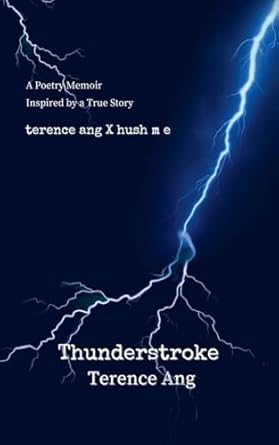
Terence Ang’s Thunderstroke is a deeply moving and profoundly inspiring poetry collection, offering readers of all ages and backgrounds a wellspring of meaning and reflection. More than just a compilation of poems, it is a poetic memoir, an intimate chronicle of resilience, born from a true and challenging personal journey.
From the opening pages, the term thunderstroke is defined as “the moment when life shifts irrevocably, altering its course in a single, cataclysmic instant.” This definition sets the stage for Ang’s story, a raw and honest account of a life upended in an instant. Without warning, his world was overturned, his health compromised, and his very way of living forever altered. In the aftermath, a torrent of emotions overwhelmed him, grief, fear, despair. Yet, through poetry, he captures this transformation in exquisite detail, chronicling his path from devastation to acceptance, from darkness to light.
The book unfolds across three distinct sections: A Cry in the Dark, Thunderstroke, and The Light. Each marks a different phase of his journey, mapping the descent into hardship, the reckoning with change, and the eventual emergence into hope and renewal. The poetry is strikingly evocative, weaving emotion into every line. As readers, we are not merely observers; we are drawn into his experience and find echoes of our own struggles within his words. Ang’s verse acts as both a mirror and a guide, leading us through the shadows of uncertainty toward the quiet strength that lies beyond suffering.
More than just a collection of poems, Thunderstroke speaks to the human spirit’s capacity for endurance. It reminds us that life’s challenges, whether great or small, shape, rather than define us. With a simplicity that belies its depth, this book offers companionship in moments of doubt, a spark of clarity in times of confusion, and a steadying presence along life’s unpredictable path. Whether seeking solace, inspiration, or simply a reason to keep moving forward, readers will find in Thunderstroke a testament to the power of resilience and the beauty hidden within life’s most unexpected turns.
Pages: 102 | ASIN : B0DTPGLT8C
The Trauma I Endured
The Boy and The Man is a visually stunning and emotionally raw graphic novel that follows your journey of resilience and self-discovery after a devastating stroke. What inspired you to create a graphic novel about your experience?
Driven by a profound need to express myself and share my story, I turned to writing as a therapeutic outlet. Though returning to work was not feasible, writing became my lifeline, as it helped me make sense of the trauma I endured. My debut book, A Cry in the Dark, chronicled my journey through pain, hope, and resilience. But as I continued to reflect on my recovery, I realized that certain emotions and experiences couldn’t be fully captured through words alone. I lacked formal art training before my stroke, yet after encouragement from Dr. Moses Koh to illustrate the book myself, I discovered a latent talent. Art became a visual language that allowed me to express emotions that writing couldn’t, which is how The Boy and The Man came to life. By blending writing and illustration, I hoped to create a more immersive storytelling experience that would resonate deeply with both stroke survivors and a broader audience.
The boy’s final quote about the tunnel feels deeply metaphorical. Was this a reflection of your own fears during your recovery, or did it come from another personal experience?
The metaphor of the tunnel reflects my own fears during recovery, particularly in the early stages. When I first had my stroke, the uncertainty about whether I’d recover fully felt like being in a dark tunnel with no visible exit. Writing, and eventually illustrating, helped me process those emotions. Each word and each image became a small victory, bringing me closer to that light at the end of the tunnel. That quote represents not only my fears but also my determination to push through the unknown, knowing there’s hope waiting ahead.
Your artwork feels so integral to the story. How did the process of illustrating your recovery journey differ from writing about it?
Illustrating my recovery journey felt deeply transformative. Writing has always been my way of regaining control, but illustrating added another dimension to that process. Although I initially wanted to hire a professional illustrator, creating the artwork myself was a challenge that boosted my self-confidence. Through this process, I discovered that art was a powerful way to express emotions that words couldn’t fully capture, especially with aphasia. Art became my visual language, allowing me to convey complex feelings in a raw and authentic way. The process of creating each image felt liberating—every stroke and color choice carried a depth that writing alone couldn’t convey. Writing with aphasia is meticulous and deliberate, but illustrating gave me the freedom to express myself in a way that felt immediate and profound.
How has sharing your personal story through The Boy and The Man affected your outlook on both your own healing and the conversations surrounding stroke recovery?
Sharing my story through The Boy and The Man has been deeply cathartic. It’s made me realize how art and storytelling have given me new ways to communicate and understand my own healing. The feedback I’ve received has opened up conversations about stroke recovery that I hadn’t anticipated—particularly regarding the emotional and mental toll it takes, which often goes unnoticed. By sharing my journey, I hope to show others that recovery is not just about the physical, but also about regaining a sense of self and purpose. The book, blending both art and narrative, has allowed me to connect with people on a deeper level and has empowered me to continue advocating for stroke survivors.
Author Links: GoodReads | Twitter | Facebook | Instagram | Website | Kobo | Amazon
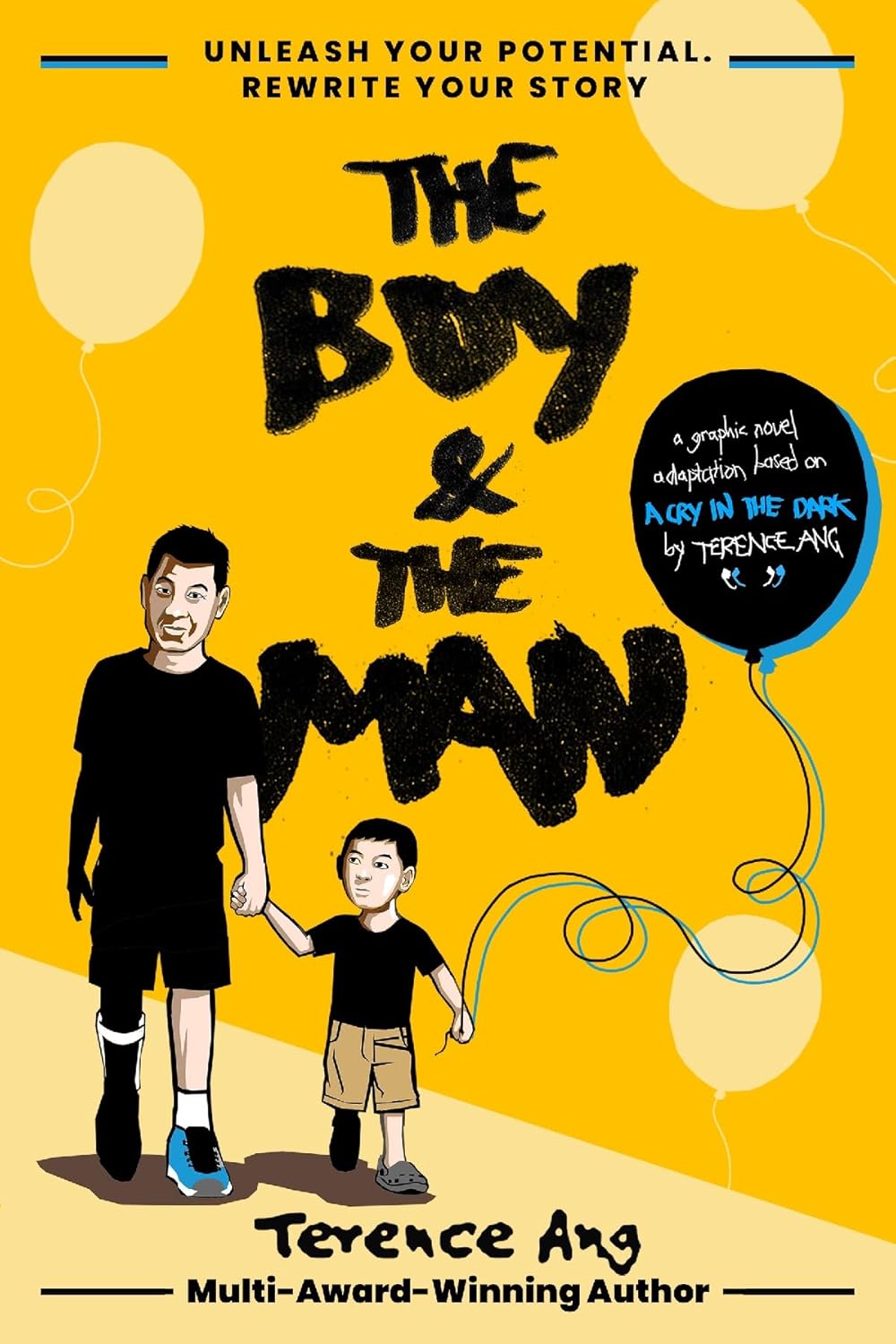
THE BOY & THE MAN: FROM A CRY IN THE DARK
From the harrowing pages of A Cry in the Dark comes The Boy & The Man, a poignant graphic novel that delves deep into the extraordinary journey of Terence Ang. Once a dynamic leader at the pinnacle of his career, Terence’s life is abruptly derailed by a life-altering stroke. Stripped of his former abilities, he faces the daunting task of relearning basic skills and reclaiming his life from the shadows of despair.
As Terence grapples with his new reality, his mind conjures a vivid hallucination— a new “team” at his workplace. Each member, flawed yet eager, becomes a mirror of his own struggles. Terence feels an inexplicable drive to guide them, to push them towards success. Through their fumbles, failures, and eventual victories, Terence begins to see these figures for what they truly are: manifestations of his fears, his doubts, and his unyielding determination to move forward.
Every victory, no matter how small, brings Terence closer to reclaiming his voice, his strength, and his identity. The vulnerable boy within him—the one who trembles in the face of fear—begins to walk hand in hand with the man he is becoming. Together, they navigate this treacherous path, forging a way out of the darkness.
The Boy & The Man is not just a tale of survival; it is a raw, unflinching testament to the indomitable human spirit. It is a story of hope, resilience, and the incredible strength that lies within each of us. For anyone who has ever felt broken, lost, or on the brink of giving up, this novel serves as a powerful reminder: even in the face of unimaginable challenges, you can find your way back. You can rewrite your story.
The Boy And The Man: Unleash Your Potential. Rewrite Your Story

The Boy and The Man by Terence Ang is a deeply moving and vivid exploration of resilience, fear, and hope. This graphic novel, born from the author’s personal experience with a life-altering stroke, captured my attention from the first hand-drawn quote: “there’s always something to laugh about, even when you’re crying.” The way Ang interweaves his recovery journey with imaginative storytelling makes this a powerful metaphor for the struggles and triumphs we all face.
The stroke that upends Terence’s life is heart-wrenching, not just in its physical toll but in the emotional fallout. His vulnerability is laid bare through fantastic sketch artwork as he grapples with the terrifying task of relearning how to do the most basic things. We all have moments where the ground is pulled out from under us, and this book becomes a mirror for those struggles.
What sets this graphic novel apart is the creative use of Terence’s hallucinations—a fictional “team” at his workplace. This device adds an extra layer of depth to the narrative, creating a bridge between the real and the imagined. Watching him guide these figures feels like a metaphor for his attempt to guide himself through the chaos of recovery.
The visuals in this novel are stunning. Terence’s use of bold, hand-drawn illustrations brings a sense of urgency and life to each page. There’s an emotional punch in every frame. I enjoyed how much depth was added to each scene using just shades of black and white. When color is used, it really pops.
What resonated with me the most was the book’s final line from the boy, “It gets real scary when you slide down super fast, or when the tunnel has many twists and turns and you don’t know when you’ll see the light. What if you get stuck in the tunnel?” This simple yet haunting quote feels like the heart of the novel. It’s a metaphor not only for life’s unpredictability but also for Terence’s journey through his own personal tunnel of recovery. It struck me as a universal truth about the fear of the unknown and the hope that keeps us moving forward.
The Boy and The Man left me both heartbroken and uplifted. It’s a raw, honest reflection of life itself, how it’s sometimes messy, often uncertain, but always moving toward the light, no matter how twisted the path may be.
Pages: 58 | ASIN: B0DFYSYXRB
The Resilience of the Human Spirit
Strength in Motion: The Next Chapter of Stroke examines not just the physical but also the psychological effects of stroke recovery. This seems like a very personal story for you. How hard was it to share it with the world?
Sharing my journey in Strength in Motion: The Next Chapter of Stroke was indeed deeply personal. It required vulnerability and courage to open up about not only the physical challenges but also the emotional and psychological aspects of stroke recovery. Initially, it was daunting to expose such intimate details of my experience to the world. However, I recognized the importance of shedding light on the holistic nature of stroke recovery, beyond just the physical rehabilitation. Through sharing my story, I hoped to offer solace and inspiration to others who might be traversing similar paths. While it was emotionally taxing at times, knowing that my words could potentially make a positive impact on someone else’s journey made the process immensely rewarding. Ultimately, the decision to share my story stemmed from a desire to break down the stigma surrounding strokes and foster a greater understanding of the challenges faced by survivors.
For those who lack a strong support system in their recovery, what advice or words of wisdom do you have for them?
Recovery from a stroke can indeed be a challenging journey, especially without a strong support system. My advice for those facing such circumstances is to remember that you are not alone. Seek out support wherever you can find it, whether it’s through online communities, support groups, or connecting with healthcare professionals who specialize in stroke rehabilitation. Additionally, don’t hesitate to lean on friends and family members who are willing to lend a helping hand and offer emotional support. Remember that every small step forward is a victory, and progress takes time. Stay resilient, be patient with yourself, and never underestimate the power of determination and perseverance in overcoming obstacles.
What is one thing that you hope readers take away from Strength in Motion and the entire trilogy?
One of the core messages I hope readers take away from Strength in Motion and the entire trilogy is the resilience of the human spirit. Through my journey and the narratives of other stroke survivors, I aim to impart a sense of hope and empowerment. I want readers to understand that while stroke recovery may present numerous challenges, it is possible to emerge from adversity with newfound strength and resilience. Additionally, I hope to foster a greater understanding and empathy towards stroke survivors, breaking down stereotypes and misconceptions surrounding this condition. Ultimately, I aspire for my books to inspire and motivate readers to embrace life’s challenges with courage and determination.
Do you plan to write more books? If so, what topics can readers expect?
Yes, I do plan to continue writing and sharing stories that inspire and uplift others. While specific topics for future books are still in development, I am passionate about exploring themes related to resilience, personal growth, and overcoming adversity. Additionally, I am keen on delving into subjects that promote mental health awareness and foster a greater sense of compassion and understanding within society. As always, my aim will be to shine a light on important issues while offering messages of hope and empowerment to readers.
Author Links: GoodReads | Twitter | Facebook | Instagram | Website | Kobo | Amazon
Strength in Motion: The Next Chapter of Stroke offers a profound look at one man’s incredible journey of triumph over adversity, shedding light on the physical, emotional, and psychological hurdles that often characterise the aftermath of a stroke.
From someone gripped by fear to an individual emerging with greater strength and confidence, Terence’s story transcends the ordinary and speaks to the indomitable spirit that resides within us all.
Within these pages, readers are taken on a voyage into the transformative power of exercise, witnessing how movement contributes not only to the restoration of physical abilities, but also the reshaping of one’s mindset.
The inclusion of medical perspectives and fellow stroke survivors’ narratives provide a broader understanding of the complexities inherent in stroke recovery. This book intertwines expert insights with Terence’s journey together with previously unreleased images providing a visual diary of his life, exploring the transformative potential of exercise in stroke recovery. It was crafted to offer a fresh perspective on the subject, with QR codes that link to various exercises featured in the book.
Strength in Motion: The Next Chapter of Stroke aims to empower survivors of stroke, and initiate discussions on how the larger society can offer support and solidarity to those on the path of recovery. It presents much opportunity to explore innovative approaches, resources, and avenues for enhancing the lives of stroke survivors.
Emerging From the Dark: Stroke … The Untold Stories

Emerging From the Dark: Stroke…The Untold Stories by Terence Ang offers a poignant exploration into the multifaceted journey of physical and psychological recovery following a stroke. This compelling collection spotlights the narratives of stroke survivors and their caregivers, offering readers an intimate view into the often unseen dimensions of post-stroke experiences. Beyond the narratives, the book is accentuated with vibrant sketches and annotations that provide deeper insights into the intricacies of the recovery process.
Approaching this book with limited prior knowledge of strokes and their aftermath, I was deeply moved by the content. Terence, along with his collaborators, has masterfully woven together personal accounts in a manner that is both candid and uplifting. The resilience and optimism exhibited by the individuals featured in these pages shine brightly, painting a tapestry of courage and hope from start to finish.
From a psychological perspective, a particularly striking revelation was the realization that many stroke survivors must embark on a profound journey of self-discovery, essentially re-acquainting with their own identities. Equally compelling are the shifts in dynamics among loved ones and caregivers as they navigate new roles and relationships in the wake of such life-altering events. The book underscores the importance of open dialogue surrounding these challenges. I am optimistic that works like this will pave the way for more inclusive discussions on recovery from health adversities.
A concise read spanning roughly two hours, every moment spent with this book is enlightening. It offers invaluable perspectives for stroke survivors, those grappling with other health challenges, caregivers, students, and professionals within both the medical and mental health realms. For those keen on gaining deeper insights into the human spirit’s resilience in the face of adversity, this book will undoubtedly resonate.
Pages: 196 | ASIN : B0CJ45MZF5


