Category Archives: Book Reviews
The Fox and the Garbage War


The Fox and the Garbage War is such an unusual and thought-provoking read. On the surface, it has the appealing ingredients kids are drawn to right away, like animal characters, dramatic conflict, and richly imagined settings, but underneath, it offers a surprisingly meaningful story about power, dishonesty, and the consequences of selfish ambition. Francis the Fox is the kind of character children will instantly recognize as charming yet untrustworthy, which makes the story especially engaging. It feels like a modern fable, one that invites young readers to think a little more deeply while still enjoying the suspense of the plot.
What I loved most is that the book trusts children to follow a layered story in which greed and manipulation slowly grow into something dangerous, as Francis and Linda build HypeX and create fear around Stargaze. The book introduces big ideas like public deception, corruption, environmental neglect, and courage in the face of lies, in a way that’s accessible through animals and vivid storytelling. As a parent, I appreciate books that open the door to real conversations, and this one certainly does. After reading it, I could easily imagine talking with a child about honesty, leadership, and why people should question things that do not feel right.
The illustrations are also a real strength. They have a soft, hand-drawn quality that contrasts beautifully with the darker turns in the story, creating a visual world that feels dreamy. That balance works so well in this children’s book because it keeps the story inviting even when the themes become more serious. I was especially struck by the images of Francis presenting himself so confidently, the fenced-in city of Stargaze, and the growing sense of secrecy around the research center; they add emotional texture without overwhelming the reader. The artwork helps make the story memorable and gives parents plenty to pause over and discuss with their children.
This is a children’s book that stands out for its ambition. It is not just cute or entertaining; it has something real to say. I would recommend it to families who enjoy storybooks with substance, especially those who like animal tales that carry a strong moral thread. For me, The Fox and the Garbage War is the kind of picture book that reminds me why I love children’s literature so much: it can be imaginative and beautiful while still encouraging wisdom, empathy, and critical thinking. It may be best suited to children who are ready for a slightly more complex and serious story, but in the right home or classroom, I think it could spark wonderful conversations.
Pages: 46 | ISBN : 978-9528205982

The Inheritance of Light

Charles L. Templeton’s The Inheritance of Light is a work of historical fiction that braids together the stories of two family lines, the Templetons and the Sewells, across generations of war, migration, labor, marriage, grief, and survival. It begins in the Revolutionary era and moves forward through the War of 1812, the Civil War, and into the twentieth century, using linked episodes, family memory, and a strong sense of inheritance to ask what exactly passes from one generation to the next: blood, certainly, but also courage, stubbornness, tenderness, damage, and a way of seeing the world.
Templeton is not trying to be slick, detached, or fashionably ironic; he is trying to honor people. That choice gives the novel an unusual warmth. I felt it especially in the letters, the battlefield passages, and the domestic scenes where homes are being built even as history keeps barging through the door. At its best, the prose has a weathered musicality to it. It’s full of smoke, mud, river, iron, and lamplight, and the book understands that endurance is rarely glamorous. It is usually repetitive, familial, and half-invisible until someone remembers it properly.
I also admired the ambition of the structure. This is not a narrow historical novel but a generational mosaic, and mosaics always risk becoming static. Here, though, the book keeps finding pulse through recurrence: fathers and sons, brothers and wives, duty and homecoming, violence and mercy, the old ache of leaving and the old ache of return. I respected the scale of the undertaking. I finished the book feeling that Templeton had written not just toward the past but toward obligation, toward the belief that family history, however ragged, is a kind of lantern.
I’d recommend The Inheritance of Light to readers of historical fiction, family saga, multigenerational fiction, Southern historical fiction, and genealogical fiction, especially anyone drawn to novels where lineage matters as much as plot. Readers who enjoy the rootedness of Wendell Berry, or the generational reach of books in the vein of Jeff Shaara’s war-centered historical storytelling, will likely find something to admire here. This is a book for people who like their history human-scaled and their memory hard-won. I think The Inheritance of Light argues, persuasively and with heart, that what survives a family is not just blood, but light.
Pages: 323 | ASIN : B0GGJQS3FC
My Friends and I Spot Fantasyland: A Puzzle Picture Book
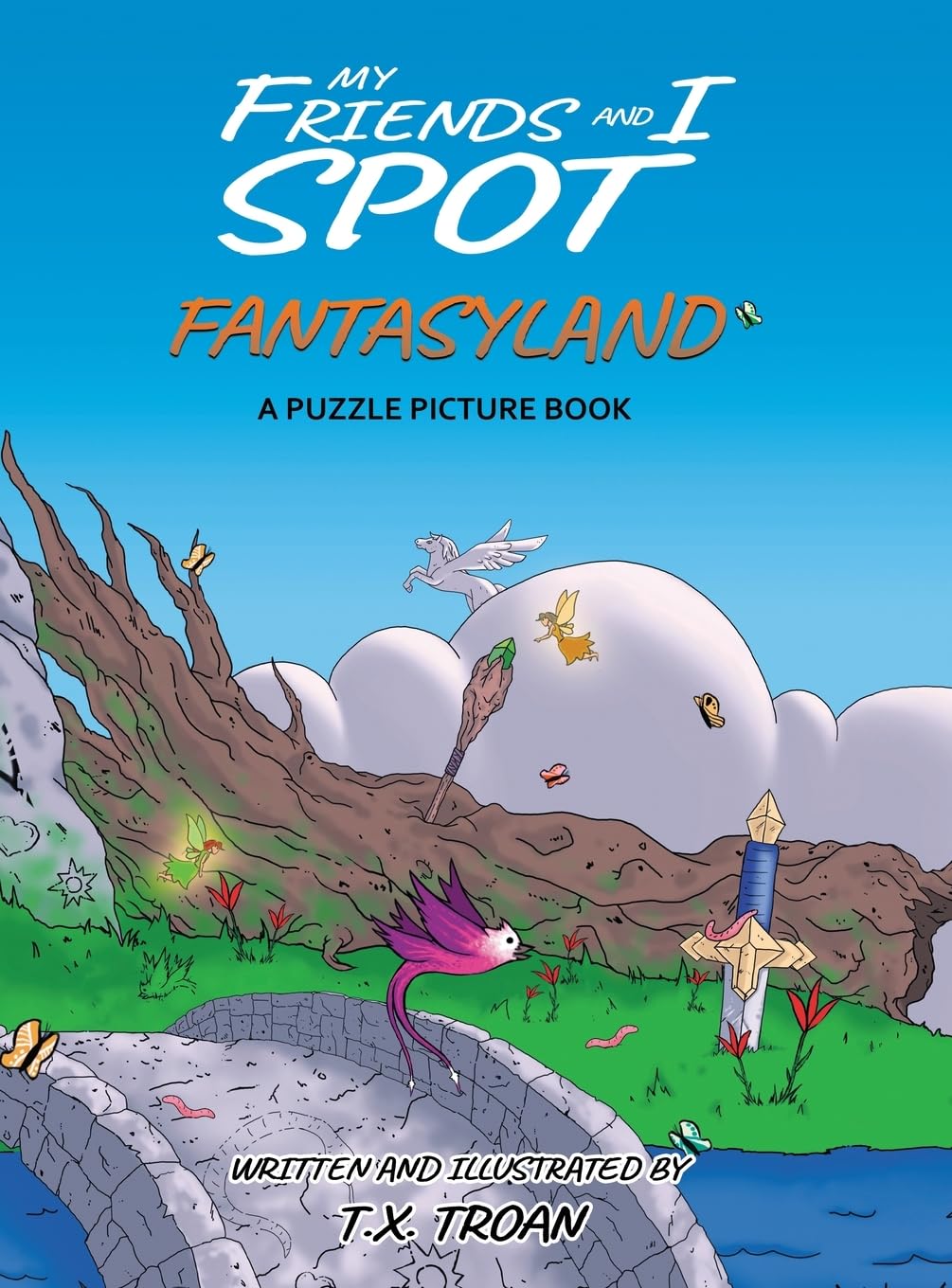
My Friends and I Spot Fantasyland is the kind of puzzle book that feels like story time and play time rolled into one. It follows Evan and Page through a colorful fantasy world packed with hidden objects, magical creatures, and fun little surprises on every page. What makes it especially charming is that it doesn’t just ask children to read, it invites them to look closer, explore, and really interact with the book. It has that classic hidden-object appeal, with the same kind of excitement that made those puzzle pages in kids’ magazines so memorable.
One of the things I appreciated most is how fun this book feels. The illustrations are charming, and that gives the whole adventure a warmth and personality that really works for this kind of picture puzzle book. The artwork is bright, imaginative, and full of detail, so younger readers can still enjoy the search-and-find elements without getting frustrated. I also liked that there’s a light storyline running through the book, which gives children a reason to keep turning pages instead of just treating it like a random collection of puzzles.
The digital version works perfectly too, since kids can take it anywhere and enjoy the search-and-find fun on the go. The story has a fun old-school feel that reminds me of a classic text adventure mixed with a traditional search-and-find book. There isn’t a lot of text to read, but readers will find plenty of fun in soaking up the details on each page.
My Friends and I Spot Fantasyland is a fun and imaginative puzzle picture book that is perfect for children who love spotting hidden details and exploring fantasy worlds. The real joy is in the adventure of searching through each scene and discovering all the little touches tucked into the artwork. It’s an entertaining pick for children, a great shared activity for families, and the kind of book that can easily be enjoyed in classrooms. It seems like the sort of book that could keep kids happily busy while also entertaining adults.
Pages: 38 | ISBN : 978-1999481384
The Reluctant Bully: A Smoochie Family Story
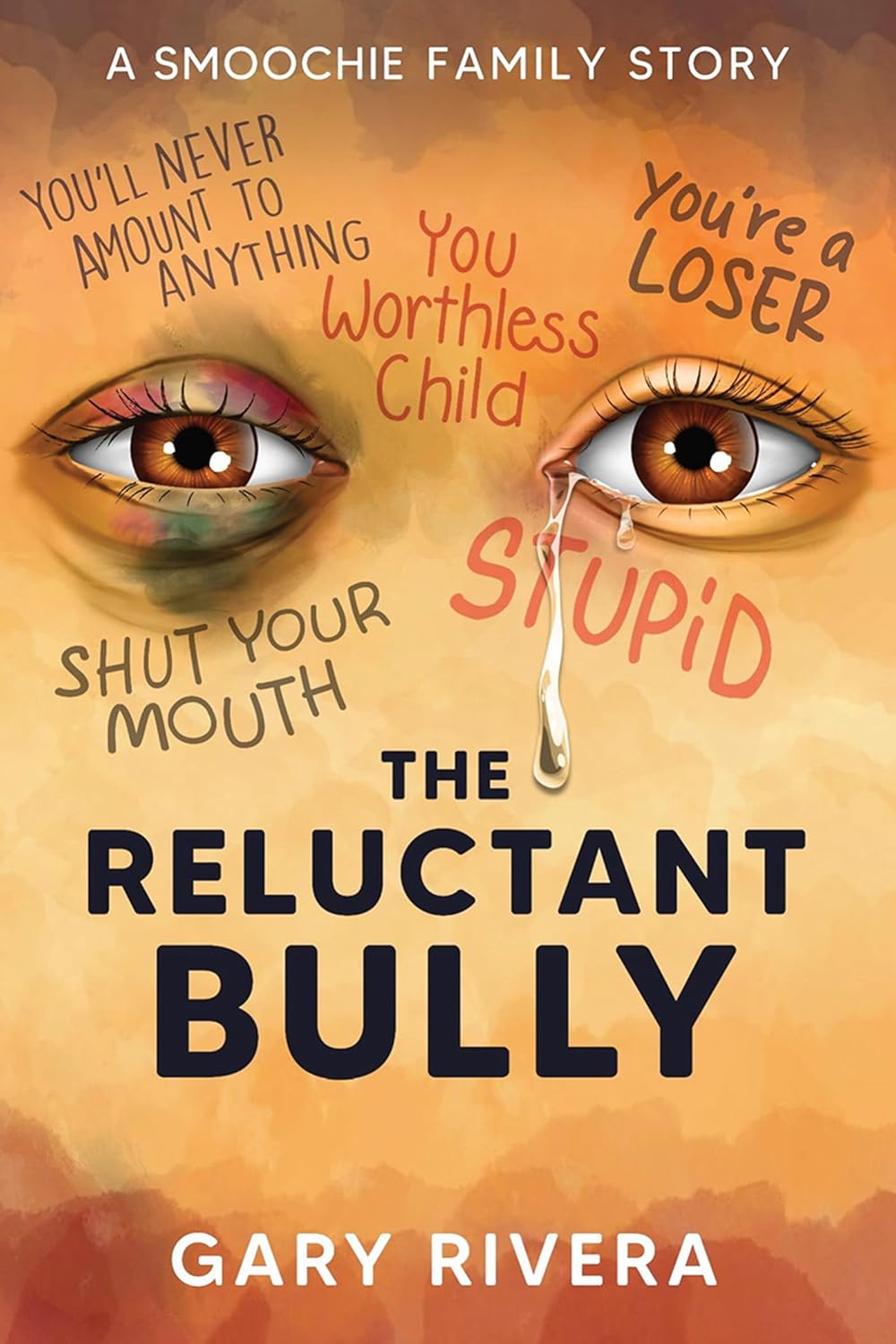
The Reluctant Bully is a heartfelt story about kids trying to make sense of pain that didn’t start with them. What I liked most is that author Gary Rivera doesn’t treat bullying as a simple good-guy/bad-guy setup. The book keeps circling back to the idea that cruelty often grows out of fear, shame, and hurt, especially through the parallel thread about Miguel in 1982 and the 2006 story centered on Lynn, her brother Matthew, and Jordan. That structure gives the novel a lot more emotional weight than a typical school story.
Lynn’s voice is a big reason the book works. She’s funny, sincere, dramatic in a believable middle-school way, and easy to root for. Her family life gives the story real warmth, too; the “Smoochie” nickname, the cookies with Luna, and the small everyday moments at home keep the book grounded even when the subject matter gets heavy. I also liked how the story slowly opens up from Lynn’s earlier lunch-money mystery into something deeper involving Matthew, Jordan, and the damage bullying can do when it follows a child home.
What stayed with me most is how compassionate the book is without going soft on the harm. Jordan isn’t written as a neat lesson; he’s guarded, hurting, and hard to read, which makes him feel real. Matthew’s role in the story adds another strong layer, especially as he moves from embarrassment and distance toward trying to help. By the end, the book lands on something hopeful without pretending everything is magically fixed, and that felt earned. Mr. Cavanaugh’s connection to Jordan and the final turn toward safety and care give the story a satisfying emotional payoff.
Like Wonder by R.J. Palacio, The Reluctant Bully looks closely at how children treat one another and how empathy can change a life. It also has some of the emotional honesty and family-centered warmth that readers often enjoy in books like Because of Mr. Terupt. One of the book’s strengths is the time it takes with its characters and their day-to-day lives. That steady, detailed pacing gives the relationships room to grow naturally and makes the emotional moments feel even more powerful when they arrive.
I’d call The Reluctant Bully a warm, earnest, emotionally thoughtful read that cares a lot about its characters and has more to say about family, kindness, and second chances than its title first suggests. I would recommend Gary Rivera’s moving story to anyone seeking a story featuring characters grounded in reality who leave readers pondering their own actions long after the last page.
Pages: 288 | ASIN : B0FH6BL6BV
A Stargazer

A Stargazer, by Tuula Pere, follows Aylin, a child laid low by a fierce fever, who becomes convinced she’s been visited and healed by Vesper, a star boy carrying real stardust. What begins as a strange nighttime encounter turns into something quieter and more grounded: a story about being disbelieved, teased, and gently pushed toward “pure science,” even as wonder keeps burning inside her. Aylin reads space books, saves up for a telescope, studies the night sky with her father, and finally finds, in the observatory’s elderly janitor, the first adult who meets her imagination with recognition instead of correction. It’s a small book, but it carries a tender argument about how a child’s inner life can survive skepticism without hardening into bitterness.
What I liked most is the book’s emotional logic. It understands that ridicule doesn’t always arrive as cruelty. Sometimes it comes as a smile from a teacher, a worried glance from a parent, a brisk appeal to common sense. That felt true to me. Aylin’s hurt at being waved off, especially when she tries to speak about Vesper at school and gets turned into a joke, gives the story its real ache. I was especially moved by the recurring image of stardust lingering on the windowsill, on her blanket, later even shimmering on her cheeks. Those touches keep the mystery alive without insisting on one interpretation, and that restraint gives the book more depth than a simpler fantasy would have had.
I also found the book interesting in the way it holds imagination and inquiry together rather than setting them at war. Aylin doesn’t become interested in space instead of believing in wonder. She becomes interested in space because of wonder. I loved that she goes to the library, learns constellations, saves for a telescope over months, and arrives at the observatory with actual written questions, only to be shut down when she asks the one question that matters most to her. I think the writing is strongest when it is simple and luminous. It leaves room for the wonderful full-page illustrations and for the book’s central idea, which is lovely and unexpectedly mature: some people are starry-eyed not because they reject reality, but because they notice more of it.
A Stargazer offers young readers a defense of curiosity, solitude, and the fragile dignity of a child who knows what she saw, whether or not anyone else believes her. I’d recommend it for reflective children, for adults reading with sensitive or imaginative kids, and for anyone who’s ever felt both thrilled and lonely in the face of mystery. This is the kind of picture book that leaves you glowing.
Pages: 42 | ISBN : 978-9528202325
Solitaire


Solitaire is a political thriller with a strong espionage pulse, and it opens by dropping us straight into a public shooting in Times Square that turns a mayoral campaign into a conspiracy story about surveillance, synthetic identities, and power hiding behind official systems. At the center are Grace Delgado, a relentless New York journalist, and Michael Sloane, a ghostlike operator tied to the Ace of Spades and a trail of old secrets, as they circle the murder of Deputy Mayor Robert Caldwell and the shadow network called KATSAI. What starts as a city corruption story grows into something broader and darker, with fake donors, weaponized tech, and a private apparatus trying to bend politics into obedience.
I really enjoyed the book’s momentum. Author Bill Pepitone writes like someone who knows how institutions sound from the inside, and that gives the novel a kind of hard floor under its feet. The scenes in City Hall, the FBI office, and the street-level New York moments have a lived-in feel that kept me leaning forward. I also liked that the book doesn’t pretend its people are clean heroes. Grace is stubborn, emotional, and smart in a way that gets her into trouble. Sloane is built like myth, but the book keeps trying to press bruises under the myth, especially in the quieter moments when his control slips. The dialogue can sometimes feel like everyone has a comeback in the chamber, but even then, the energy carries it.
I found the author’s choices around KATSAI and the fake donor machinery especially interesting because the book isn’t just chasing thrills for their own sake. It’s clearly interested in what happens when surveillance stops being a tool and starts becoming a nervous system for power. That idea lands. The novel’s best move, for me, is that it keeps tying giant systems back to private fear: Caldwell hiding a drive behind a picture frame, Shaw collapsing under pressure, Grace realizing too late that information itself can act like a flare in the dark. There is a pulp sheen to some of it, sure, and Sloane sometimes feels almost too competent, but that is also part of the book’s genre DNA. This is an espionage thriller fiction that wants to be sleek, tense, and a little larger than life, while still keeping one foot in recognizable political rot.
I came away feeling that Solitaire knows exactly what shelf it wants to sit on. It’s the kind of book I would recommend to readers who like conspiracy-driven thrillers, cat-and-mouse espionage, and stories where modern tech and old-fashioned power games collide in the same room. If you enjoy fast, cinematic fiction with a political edge, a wounded central duo, and a hero who moves through the world like a rumor with a passport, this will be very much your thing.
Pages: 259 | ISBN : 9781105802713
I Was Just Sitting There Eating A Salad…

I Was Just Sitting There Eating a Salad… is a loose, comic tapestry rather than a traditional story collection with hard walls between pieces. The book keeps circling back to Green City and its recurring cast, especially Edward Loomis, the salad-eating private detective whose disastrous encounters become a running joke, while other stories widen the town into something stranger and more affectionate. One minute, the book is leaning into broad farce with names like Randolph and Imogene Scary and a whole town rattled by an “alien” misunderstanding, and the next it opens into more ambitious comic sci-fi through Jerald Cross, Sarah Smart, Greg Lieberman, and the wormhole device that turns a small West Virginia town into the center of increasingly absurd adventures. What finally holds it together is the sense that Green City is its own comic universe, one where gossip, coincidence, pulp plotting, and homemade science all somehow belong in the same weather.
The opening salad story is such a good example of the collection’s method because it commits completely to repetition, timing, and escalation until Edward’s laugh becomes practically mythic. I also found myself genuinely charmed by the way the stories start cross-pollinating. “Wormhole” could have felt like it came from a different book, but instead, it deepens the world, giving the collection a stronger spine than I expected. The courtroom frame, the teenage inventiveness, and the uneasy moral turn after the Nevada chase give that story real momentum, and later pieces gain extra pleasure because they’re no longer isolated gags. By the time the book gets to ghosts, pranks, and military suspicion, it’s working with a whole local mythology, and I admired how casually it builds that mythology without ever sounding solemn about it.
Author Victor Coltey’s prose has a talky, easy-going looseness that can be funny, especially when a narrator is half deadpan and half delighted by his own nonsense, but it can keep pushing after the laugh has landed. Some of the character descriptions and comic premises are intentionally outrageous, though for me they worked. There were stretches where I felt the book’s affection for eccentricity and caricature was warm and knowing. The author’s note helped confirm what the stories themselves suggest, which is that the book is openly trying to mix humor, sci-fi, and what Coltey calls “a little idiocy,” and I think that self-awareness is important because it frames the collection less as polished satire than as a homemade comic world built out of tall tales, genre love, and an authentic voice.
This book is rough-edged, but also lively, distinctive, and cohesive. Its best stories have the pleasure of hearing a practiced raconteur keep a straight face while the town around him slips further into absurdity, and its larger appeal is the way it treats small-town life as a stage big enough for wormholes, ghosts, Sasquatch, and very bad lunches. I’d recommend it to readers who enjoy offbeat regional humor, linked story collections, and comic speculative fiction that feels homemade rather than slick. It’s the kind of book for someone who likes their fiction odd, chatty, and full of personality.
Pages: 203 | ASIN : B0GG7TV3TG
Donahue Pass: A Sierran Philosophy

Donahue Pass, by Charles Weeden, is a work of philosophical nature writing, part trail narrative and part extended dialogue, in which two friends hike from Rush Creek over Donahue Pass while talking their way through Darwin, Descartes, Heidegger, pragmatism, interpretation, and what it means to live with purpose. The book moves between mountain description and conversation, using the climb itself as both setting and structure, so the switchbacks become a kind of thinking pattern as the two men test ideas, joke with each other, and slowly arrive at a rough synthesis about evolution, meaning, and interpretation.
What I liked most is that the book never feels like it wants to lecture from a podium. It wants to walk beside you. That matters. The writing keeps returning to the body, to thirst, altitude, sore legs, a heavy pack, the small relief of water sitting in the mouth, and that physical strain gives the philosophical talk some grit. Without that, a lot of this could have floated away. Instead, the ideas stay tied to the trail. I also liked the friendship on the page. Mike’s sarcasm keeps puncturing John’s loftier turns, and that back and forth gives the book warmth and movement. It is often funny in a dry, relatable way. You can feel the book understanding that big ideas are easier to bear when somebody beside you is rolling their eyes.
I found the author’s ambitions more interesting than fully convincing, which is not a complaint. It is part of the book’s charm. Some stretches of the dialogue feel like a real conversation, and some feel more like a staged debate where each friend takes turns carrying a stack of books up the mountain. I did not mind that, exactly, but I noticed it. The book is strongest when the landscape and the thought are in balance, when a stream, a warbler, or the simple fact of climbing gives the philosophy something to push against. When it gets too deep into the argument, it can feel a little airless, which is maybe fitting for a book set above 10,000 feet. Still, I admired the reach. The author is braiding science and the humanities together and asks whether selection and interpretation are really separate ways of seeing the world.
I would recommend Donahue Pass most to readers who enjoy reflective nonfiction, philosophical fiction, and nature writing that is willing to stop and think instead of rushing to plot. It is especially suited to people who like books where conversation is the action, and where a hike through granite and water opens into questions about how to live.
Pages: 31 | ASIN : B07VV4X57K


