Category Archives: Interviews
I Love the Me I See In You
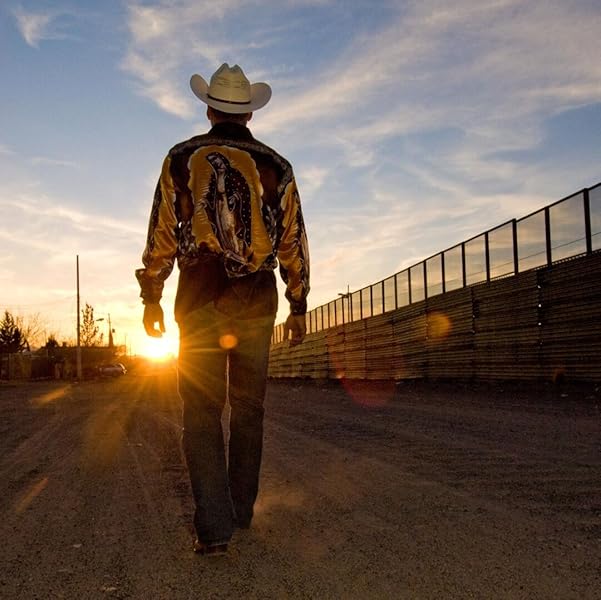
In Hope on the Border, you address existing misconceptions surrounding the US–Mexico border and offer an honest look at life in this perilous area. Why was this an important book for you to write?
America is in trouble. We are more divided and unhappy than ever. In the 2024 World Happiness Report, people under 30 in the U.S. ranked 62nd globally out of 143 countries in happiness and life satisfaction. And this abysmal ranking is plummeting. Suicide is now one of the leading causes of death for American preteens (ages 8–12). How can this be when roughly 95% of the planet is financially worse off than the average American?
(Of interest, Mexico ranked 25th in the 2024 World Happiness Report.)
At our four-decade-old Rancho Feliz Charitable Foundation, Inc., we have a proven solution, and America needs to know what we have to offer. So I decided to write a book.
Ensnared in technology’s frenetic pace, many youth and young adults in America are experiencing a poverty of purpose, meaning, and connection in an environment of unparalleled abundance. Paradoxically, this poverty fosters the same primal fear, alienation, loneliness and emptiness that haunt the poor and underprivileged in Mexico, on the U.S. southern border. In fact, both have the same negative symptoms, just on opposite ends of the socioeconomic spectrum.
Rancho Feliz’s volunteer program allows both sides of the charitable transaction to be simultaneously donors and recipients, thereby thriving in tandem. In a very real sense, the volunteers feed the stomachs of the poor and, in turn, the poor feed the souls of the volunteers. It’s an equal exchange of energy with no logical end—and it transforms the lives of everyone.
This two-pronged approach of serving the poor and creating purpose for the privileged fosters a symbiotic relationship—one in which givers become receivers and receivers become givers. Everyone benefits equally from the same service transaction. We call this reciprocal giving. Under this operating mandate, we have changed thousands of lives on both sides of the border.
To run a successful volunteer-based charity, the greed of human nature must be recognized and harnessed. In other words, service work is foremost in your best interest, and the recipient benefits as a result.
10,000 years of failed religious teachings have taught us that presenting charity as a sacrifice, an action grounded in lack, doesn’t work.
Rather, Rancho Feliz appeals to the driving force of basic human self-interest. Out of selfishness, a form of altruism blossoms.
This isn’t about helping Mexicans – it’s about helping ourselves (by which the Mexicans get helped in the process). This is a true win-win.
In light of our current situation, Americans need to hear this message now more than ever.
How long did it take to research and put this book together?
“Hope on the Border” is a collection of lessons and experiences I gleaned over 38 years of volunteering on the Mexican border, coupled with a lifetime interest in the workings of the mind. My interest in the mind led me to five expeditions into Tibet’s Himalayan “Hidden Lands of the Blossoming Lotus” A.K.A. “Beyul Pemakö” where I studied with several learned Buddhist monks and indigenous ascetics. I firmly believe that in the arena of the mind, what we believe to be true is.
To this end, I also had an early interest in hypnosis and visualization. In the late 1970’s this fascination led me to the Institute of Noetic Sciences which, in turn, led me to studying eastern philosopher Paramahansa Yogananda and his self-realization teachings. Though Yogananda was a Hindu, this study led me to a profound interest in Tibetan Buddhism. In 1993, I took my Bodhisattva Vow of Compassion directly from His Holiness the 14th Dalai Lama. This experience further strengthened my resolve to help others as a path to a rich and full life.
I attended Buddhist meditation master Chögyam Trungpa’s “Shambhala: The Sacred Path of the Warrior” classes in Boulder, Colorado, and completed all 12 levels of the meditation teachings in 1998. It’s important to me to note that I do not consider myself a Buddhist – rather I am a student of Buddhism and how our minds work.
It has been my experience that meditation changes us. It changes our brains. It changes the way we think and relate to our world and to each other. It breaks down the hard boundaries that separate us. As a life-long meditator, I have experienced this firsthand. Likewise, when I am in service, the distinction between me and you is blurred. I see myself in others.
At Rancho Feliz we have created a venue where our volunteers can see themselves in others less-fortunate. When this true view is mastered, the only logical conclusion is to serve – for in serving others you are serving yourself.
Both meditation and serving others unveil the interconnected nature of all things. This awareness further strengthens one’s resolve to help others as a path to a rich and full life.
And this is what led me to start Rancho Feliz. I began seeing myself in others. I could no longer default to ‘empathic blindness’ as I realized that the only difference between me and the poor on the border was ‘luck’ – just blind luck.”
Did you learn anything in the course of writing Hope on the Border that surprised you?
Yes. I came to understand the difference between the statements, Love thy neighbor as thyself and I love the me I see in you. I learned that the worn-out and ineffectual statement Love thy neighbor as thyself is a gullible and simply impossible moral imperative that doesn’t work. It goes against our basic instincts of self-interest. To love a stranger is treacherous. It’s a dualistic love. It assumes a separateness, a distinction between you and your neighbor. And all divisions invite conflict. All I had to do was look at our border wall for proof of that.
I love the me I see in you, on the other handis the “true view”(as the Buddhists would say) of our human condition. We are not separate and independent from each other. Rather we only exist in relation to, and are dependent upon, everything else as strands in a universal web of cause and effect.
I love the me I see in you is personal and reflective. It concentrates on unity and shared being. It’s about recognition and connection. It’s self-referential – focused on how the other person reflects you back to you. It suggests that when you look at another human being, you see yourself – echoing the same emotions, wants, needs, hopes, joys, and vulnerability of our shared experience. And you love them because they mirror what is familiar in you.
This is love based on recognizing our “oneness” – the sense that you and I are not truly separate. Love here comes from seeing ourselves in the other and recognizing our shared existence – our shared humanity. We’re all in this together. None of us knows exactly why we’re here, yet we’re all doing the best we can with the circumstances we were born into. This is a non-dual love – a love that dissolves the boundary between self and other.
In writing “Hope on the Border” I was forced to define what made Rancho Feliz different from other charities and religions. Working in one of the most divisive atmospheres on earth – the U.S./MX border – made me contemplate deeply what approach to charity is in sync with our basic human nature and what approaches are not. I attribute much of Rancho Feliz’s success to this simple but all-powerful understanding.
What is one thing you hope readers take away from this book?
We all have a hand in the maladies that plague our southern border. And the pain, suffering, desperation, misunderstanding and divisive contempt will continue until such time as we truly take to heart the fact that you can best serve yourself by serving others.
Author Links: GoodReads | Facebook-Author | Facebook-Book | Website-Author | Website-Book | Instagram
The U.S.–México border is more than a line on a map. It’s a place of hardship and resilience, inequity and generosity, division and connection. In Hope on the Border, Gil Gillenwater draws on nearly four decades of firsthand experience to bring readers face-to-face with the realities of the world’s most dangerous migrant corridor—and the hope that still thrives there.
Through vivid storytelling and dramatic photography, Gillenwater reveals the heartache and humanity that define life on both sides of the border. His unflinching accounts expose the shared responsibilities of two nations, while his insights point to a deeper truth: Mexico’s material poverty and America’s spiritual poverty are intertwined.
Readers will discover:
Authentic border experiences free from partisan narratives and media distortion.
Stories and photography capturing resilience and humanity.
Insights into poverty on both sides of the border.
A blueprint for hope through reciprocal giving.
A challenge to reflect on personal responsibility.
Hope on the Border won’t just inform you—it will transform how you see division, compassion, and your own capacity for change. If you’re willing to move beyond comfortable assumptions and discover what truly has the power to unite us, this book will be your guide.
Join the movement. Start reading Hope on the Border today.
$5 of each book’s proceeds will support Rancho Feliz’s life-changing work on the U.S.–México border.
You Can Thrive

Sociomom is a raw and gut-wrenching memoir about surviving a childhood dominated by abuse, manipulation, and the long road toward emotional healing. Why was this an important book for you to write?
It was important to me to author this book not to share my story, but to illustrate that no matter what your past is, where you come from or what your current circumstances are, you can overcome and thrive.
What were some ideas that were important for you to share in this book?
There are several:
- You are not alone in your struggles.
- If you want something different and better in your life you have to try different and better options to heal.
- No matter how hard you try, you can not and are not meant to do it on your own.
- There is no one size fits all approach but you have to lean into physical, mental and spiritual health options to move forward.
- Overcoming trauma and mental health challenges is a journey not a destination.
What was the most challenging part of writing your memoir, and what was the most rewarding?
The most challenging part was having to relive my journey and put all of my “stuff” out there for the world to see.
The most rewarding was the validations from reviews and other feedback how the book has helped others be seen and be inspired to move forward in their journey.
What do you hope is one thing readers take away from your story?
It is never too late, and you are not too broken to move forward and change your path to healing.
Author Links: Website | GoodReads | Instagram | Facebook | Tik Tok | YouTube | LikedIn
A Guide for Reclaiming Clarity

In The Cathedral of Quiet Power, you share with readers your advice for quietly rebelling in order to survive in a world whose systems of power rely on our dependence. Why was this an important book for you to write?
Because most people don’t realize how deeply they’ve been programmed — not by machines, but by systems built to keep them anxious, productive, and compliant. I wrote The Cathedral of Quiet Power for anyone who’s ever felt that quiet dread of “doing everything right” and still feeling lost. It’s a rebellion against that conditioning — and a guide for reclaiming clarity, strength, and self-sovereignty.
I appreciate the candid nature with which you tell your story. What was the hardest thing for you to write about?
The moments when I had to admit I was complicit in my own burnout. It’s easy to blame the system, but much harder to face how ambition, ego, and fear made me play along. Writing those parts felt like stripping myself bare on the page.
Did you learn anything about yourself while writing this book?
That peace isn’t found in control — it’s found in surrender. I used to think strength meant domination: of time, people, or outcomes. Through this process, I learned that real strength is quiet, unshakable, and inward-facing.
What is one thing you hope readers take away from The Cathedral of Quiet Power?
That you don’t need to burn out to wake up. The book is a map for building a life that feels powerful without being loud — grounded, sovereign, and free from the machinery of performance.
Author Links: GoodReads | Amazon
“Raw, poetic, and brutally honest. A manifesto for anyone tired of being managed by the machine.” — Editorial Review
“Bracing, honest, and not for the faint of heart.” — Verified Reader
“Bold, raw, and deeply restorative—a lifeline for anyone burned by the grind.” — Verified Reader
“It’s not self-help—it’s a system override.” — Verified Reader
“A thoughtful roadmap for resilience in chaotic times.” — Verified Reader
THE CATHEDRAL OF QUIET POWER
How to Build an Unshakable Life in a World Designed to Break You
You did everything right.
Followed the rules. Hit the milestones. Played the game.
So why do you still feel restless, anxious, and quietly trapped?
Because the system isn’t broken—it was built to break you.
It rewards noise over depth, compliance over clarity, and performance over peace.
This book isn’t motivation—it’s liberation.
Part memoir, part manifesto, The Cathedral of Quiet Power is the field manual for thinkers, builders, and survivors who refuse to be owned by the machine.
Evan Yoh takes you through the journey from collapse to clarity—
from sleeping in a leaking car to building a sovereign, grounded life on his own terms.
Inside, you’ll learn how to:
See through the illusions that keep you grinding for nothing.
Reclaim clarity in a world addicted to distraction.
Build quiet power—strength without noise, peace without permission.
Live sovereignly, free from systems designed to feed on your weakness.
Readers call it:
“A powerful blend of stillness and strength.”
“A quiet revolution for anyone tired of living on autopilot.”
“Transformational—more truth than most self-help books dare to tell.”
If you’ve ever felt like success came at the cost of yourself,
this book will help you remember who you were before the noise.
It’s not about winning.
It’s about walking free.
Make Something New
Prickly Pears is a collection of short stories that walks the line between brutality and beauty and exposes the tenderness inside pain and the violence hidden in love with fearless, poetic precision. What inspired you to write this collection?
I have had such a rigid past, that Prickly Pears allowed me to delve into experience and observation and write about it in a non-linear manner: Break chronological moments, break patterns in time and place and make something new. On top of all that came the culture in which I grew up in, that I rejected somewhat but writing has become the mediator between past and present, two countries, two cultures. Funnily, I could only write about all this here in France away from the other two places. The journey has been both instructive and healing.
There’s a dreamlike rhythm to your language. Which writers or art forms influence that musicality?
There have been many like Winslow Homer in the visual arts. In literature, you mentioned Clarice Lispector in the review and I said Wow. Yes. She’s a tough read but well worth it, Rosario Ferré, Oriana Fallaci’s Letter to a Child Never Born, prose poets like Francis Ponge and Giovanni Verga’s tales. All blending truth, history and magical realism.
What were some themes that were important for you to explore in this book?
I wanted to explore universal themes, love, violence to self, to others to animals but show that acceptance, hope, resilience and determination can co-exist and move us to a different, healthier and happier path.
What is the next book that you are working on, and when will it be available?
Prickly Pears was a collection of pieces that were first published in literary magazines or anthologies. With my next collection, which I’ve just completed, the short pieces haven’t been submitted or published anywhere yet. I hope they will be accepted by a traditional publisher. In these stories, I experiment more with structure and format.
Author Links: GoodReads | Amazon
Elevate That Inner Shine

YOU Yoga takes young readers on a wonderful journey into mindfulness and self-discovery through gentle rhymes that guide readers to breathe, stretch, and listen within. What was the inspiration for the setup of your story?
My personal Yoga Journey has given me tools to use in my own adult life that have shown great promise in easing stress, anxiety and overall improved wellness. I wanted to share my discovery with my little audiences through this story.
What were some educational aspects that were important for you to include in this children’s book?
I wanted to ensure that the book appealed to both boys and girls, therefore the protagonists in the story are depicted as animals to give that uniformity and appeal to both genders. I too wanted to ensure that readers could experience the awe and the inner knowing that we are all born with our bright light and how yoga can elevate that inner shine and promise within.
The art in this book is fantastic. What was the art collaboration process like with the illustrator Yulia Potts?
Thank you! I truly gave Yulia “carte blanche” to depict the story she saw fit with my guidance of course, but I really allowed her creativity to feel expressive throughout this book.
Will this book be the start of a series, or are you working on a different story?
This book was created as a “one off” to my traveling mindfulness Series. While the themes within all my books remain siilar, I wanted this book to have its own look and feel -thus using Yulia as my illustrator so this book could stand out and feel more whimsical and natural.
Author Links: Instagram | Facebook | Website
spark and shining brightly along your yoga
journey—a path where your little one can
begin to discover their true self.
Inside each of us lives a masterpiece, quietly
waiting to be revealed—an awakening to the
fullest expression of YOU.
May these pages bring YOU peace, like a
gentle song, and help YOU feel at home in
your heart.
It’s the calm that lingers when
the world grows loud.
Enjoy this simple story of
remembering who YOU truly are.
This is your journey.
This is YOU, yoga angel.
Seven Magic Bullets
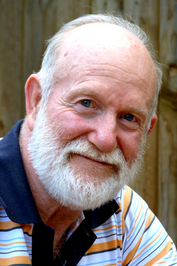
The Hole in Your Life is a compassionate and practical guide to navigating grief and bereavement, shared from a place of not just professional expertise, but lived personal experiences, making it relatable in a way other books are not. Why was this an important book for you to write?
I get a great deal of satisfaction, even joy, when I can relieve suffering. If you like, you can think of this as selfish: I’ve been cursed with way too much empathy, so, for example, the daily news is a horror show. I cannot avoid it because being informed is necessary for my job as a Professional Grandfather (striving for a tomorrow for today’s youngsters, and a tomorrow worth living in), so if I don’t take precautions, I shed sympathetic tears of blood in response to war, environmental disasters, inhumane treatment of people and the like.
This book sets out how I deal with deep distress of any kind including this second-hand grief, but also the death of my daughter, and what I have taught to lovely people during decades of my counseling psychology practice. And the good thing is that these tools are all science-validated.
All sentient beings are apprentice Buddhas, apprentice Jesuses. So, when I remember (but never when I don’t), I act as if I were already enlightened. The Dalai Lama has said, “My religion is kindness,” and “The aim of enlightenment is to be of service,” so this book is an important step on my chosen journey.
What were some ideas that were important for you to share in this book?
First, life is too short for the seriousness it deserves. There is no point in being gloomy when writing about sad topics. In fact, fun is one of the “seven magic bullets” that shoot down monsters like depression, chronic anxiety, irrational anger. When you put a good dose of the seven magic bullets into your life, you are a pogo stick: the harder life bounces on you, the higher you rise. You’ll find them described at http://bobswriting.com/psych/firstaid.html
Second, whatever is, is. Acceptance, what in Buddhism is called equanimity, is the most powerful way to deal with any problem. This doesn’t mean condoning evil, but is part of being an effective change agent.
Third, forgiveness (including self-forgiveness), gratitude, and generosity are the most important tools of positive psychology, which is the scientific basis of my work.
Oh… about generosity. I have a long-standing policy: anyone sending me proof of purchase of one of my books, and anyone subscribing to my blog, Bobbing Around, has earned a free (electronic) book.
What was the most challenging part of writing your book, and what was the most rewarding?
I love all my children. That includes the real physical two-legged beings who call me Dad, and also the children of my imagination. On three occasions, these two groups have overlapped, giving me the opportunity to give double love.
My fictionalized autobiography, Ascending Spiral, has my children in it with their genuine personalities, and the events in their lives, but fictionalized names. (How surprising is that?)
Anikó: The stranger who loved me is my biography of a remarkable woman who achieved the impossible and survived the unsurvivable more than once. She is my mother. I visited her in Hungary during her dying days and returned with a huge amount of material. I couldn’t even look at it for two years, then wrote the book, which has won four awards.
The third book is of course The Hole in Your Life: Grief and Bereavement. It uses the story of how I dealt with the death of my daughter, Natalie, so there she is, loved twice over. Is that challenging enough?
And this is also the most rewarding part. Unlike my mother’s biography, this book was almost completed weeks after Natalie’s death, thanks to all I have learned in the past twenty-four years.
What do you hope is one thing readers take away from The Hole in Your Life?
Your wonderful reviewer has pinpointed it. The best way to deal with suffering is through it rather than avoidance. This gives us the opportunity for growing from the experience. Hmm… I should be about 50 ft tall by now. Hold it, that’s not the kind of growth I mean.
Thanks to the handicap of a scientific training, I don’t believe anything but go with the evidence. So far, I’ve spent a brief 82.75 years collecting that evidence, so I won’t list it all here. There is a part-completed draft of a book hiding in my computer about that. But the conclusion is that the purpose of life is spiritual growth. There is no point in change when everything is perfect. Suffering is the spur to growth. It doesn’t feel nice—but ask a teenager about growing pains.
A major loss is awful, but it is also the opportunity for a new start.
Author Links: GoodReads | X | Bluesky | Facebook | Website
A Mother’s Determination

Born in Space: Unlocking Destiny follows a mother who donated her eggs to science, only to discover that they were used to conceive seven infants in space, who were raised in isolation and destined to define the next stage of our evolution. What was the inspiration for the setup of your story?
I wanted to explore what happens when the most intimate human act–creation–becomes an instrument of science and survival. The idea came from real debates about fertility research, genetic engineering, and the ethics of creating life beyond Earth. I asked myself: what if the first humans truly born in space were not astronauts’ children, but part of a scientific project designed to save humanity? From that spark came Teagan Ward, a mother who gave something of herself to science, only to find herself blocked from contact with the babies she loved by the doctor who incubated them.
Your novel explores the morality and the cost of continuing the human race. What are some things that you find interesting about the human condition that you think make for great fiction?
I’m fascinated by the contradictions within us-our capacity for love and empathy alongside our drive for power and control. When survival is at stake, morality becomes fluid, and that’s where stories come alive. Science fiction allows us to push those questions to their limits: What does it mean to be human when birth, love, and even consciousness are engineered? I think great fiction mirrors that tension between our ideals and our instincts, between the need to preserve what makes us human and the temptation to perfect it.
What were some themes that were important for you to explore in this book?
At its heart, Born in Space is about motherhood, identity, and the ownership of life. I wanted to examine who controls our future-corporations, governments, or the individuals who dare to resist them. There’s also an environmental undercurrent: as Earth falters, humanity’s reach for survival shifts outward, to space, but our flaws follow us. And beneath the science and technology, there’s a deeply emotional core: a mother’s determination to reunite with her children, no matter how far apart they are.
Will there be a follow-up novel to this story? If so, what aspects of the story will the next book cover?
Yes. Born in Space is the first in the Sci-Fi Galaxy series. The follow-up, Space Vault: The Seed Eclipse, takes place years later on the Moon, where humanity’s survival depends on a genetic seed vault built into the regolith. Teagan’s story continues through her naturally born daughter Diana, who becomes a symbol of both hope and fear, a genetically engineered child hunted by those who believe they can control evolution itself. The moral and emotional questions deepen as the struggle shifts from reproduction to survival: who decides which forms of life deserve to endure?
Author Links: GoodReads | X | Facebook | Website | Tik Tok
CAN TEAGAN WIN THE COSMIC CUSTODY BATTLE OF A LIFETIME?
When Teagan Ward donates her eggs to science, she never imagines that the consequences will ripple across the cosmos. As Earth crumbles under the weight of conflict and climate disaster, Teagan discovers that seven children, born from her donated eggs, are the centerpieces of a daring experiment to populate the stars. Determined to reunite with her children, she finds herself entangled in a web of greed, betrayal, and cosmic ambition.
In the year 2068, humanity’s hope for survival lies beyond the confines of Earth. Orbiting space habitats offer sanctuary to the privileged, while the rest fight for survival on a deteriorating planet. Teagan’s journey to reclaim her children pits her against powerful adversaries: a ruthless mining magnate obsessed with the treasures of the universe, a morally ambiguous doctor bent on creating life in space at any cost, and a disgraced general seeking redemption and control.
As Teagan navigates the treacherous shoals of interstellar politics and corporate greed, she uncovers secrets that could change the fate of worlds. Her children, each with unique abilities and destinies, hold the key to unlocking the mysteries of the universe and possibly saving humanity from itself.
Who Doesn’t Dream of Escape?

Sitnalta follows a young princess trapped in a kingdom ruled by cruelty and fear, who becomes restless, yearning for freedom, and escapes her captivity to embark on a journey of self-discovery. What was the inspiration for the setup of your story?
Originally, Sitnalta began as a short story written for a school project. So, for all budding writers out there: don’t throw away old stories, and inspiration can strike in the most unlikely of places.
In grade seven, my English teacher put up a tic-tac-toe board on the chalkboard and said to make a line. In the line I chose were the words “coin, princess, escape”. From there, the story I was supposed to write should have been two pages. I handed in twelve. This short story just wouldn’t leave me alone. When I got into university, I pulled it out and reread it. Aside from the fact that I found the writing and some of the characterization a little juvenile (I was thirteen!), I felt that there was something there. I worked at it and eventually had a novel, and plans for five more.
Sitnalta was born at a time when most young people can feel trapped. I myself had issues with a bully at school, I didn’t know where I belonged. My friends and I were all figuring out who we were, who we wanted to be, and the character of Sitnalta was very much an extrapolation of that. Who doesn’t dream of escape?
In many contemporary coming-of-age fiction novels, authors often add their own life experiences to the story. Are there any bits of you in this story?
I am very much all over the story. The character of Aud is in many ways inspired by my grandmother who lived with me while I was growing up. Everyone used to say that she was a second mother to me. Aud’s nature, and her relationship with Sitnalta is very her. Sitnalta herself is an amalgamation of my childhood best friend, and characters from books I loved as a child. I used to say that she is my friend Marilyn superimposed on Anne Shirley. Sitnalta’s relationship with Najort, their time together, and how they speak with one another is something that came from every person’s desire to be seen, to be loved for who they are, and the need to be heard.
What were some themes that were important for you to explore in this book?
I wanted to convey the importance of choice. Sitnalta feels that she has hers taken from her continuously. She looks at the world from a place heavy with loss, however, when her back is to the wall, she finds that there is always a choice to be made. It may not always be the best one possible, but it always exists. Everyone has the ability to take their lives into their own hands and run with it. I found that to be an important theme, how even the smallest person can make a choice and better their world.
Can you tell us more about what’s in store for Sitnalta and the direction of the second book?
Well, I don’t want to give too much away, but that pesky coin still exists, and we see so much more of the world Sitnalta lives in, even beyond the shores of Colonodona. The next book is called The Kingdom Thief, and you can read into that title whatever you want to. It’s an adventure book, and may or may not have some hints at a burgeoning romance.
Author Links: Amazon | GoodReads | Website
But Sitnalta has other ideas. Before her father can come for her, she sneaks out of her bedroom window, scales the castle walls, and enters the magical forest that surrounds her kingdom. There she meets Najort, a kind-hearted troll, who was tasked by a wizard decades earlier to protect a valuable secret—with his life, if necessary.
But King Supmylo has vowed that nothing will stop him from returning his daughter to Colonodona, and forcing her to go through with the royal wedding. With the help of friends from both kingdoms, Sitnalta and Najort flee ahead of the rabid king. For if they are captured, Supmylo will become so invincible, no one could stand against him



 LITERARY TITAN