Blog Archives
A Conflict Between Love and Tradition

Beyond the Bukubuk Tree follows a young Jewish doctor and a Catholic WWI veteran who are assigned to the same battalion and form an unlikely bond. What inspired the setup of your story?
I wanted to convey two emotional truths in the novel: the beauty of Rabaul, which has a quality of enchantment as it nestles between active volcanoes and lush green flora; and the conflict between love and tradition during wartime. An uncle I never met served in that battalion, Lark Force, and his service inspired me to write Beyond. Family anecdotes suggest that he was conflicted about his sexuality although we don’t actually know. I felt a deep connection to an unspoken pain I saw in photographs of hm. Sharing this truth in a fictionalized character allows readers to connect with characters on a deeper level. I knew that in mainland New Guinea at this time, many incidents of male-male intimacy between soldiers were investigated by the Army. Like Alan Turing, gay soldiers gave their all to their country. It’s time to honor them.
Jake and Alex both have secrets they keep hidden and struggle with their emotions while remaining strong as the battles continue. There was a lot of time spent crafting the character traits in this novel. What was the most important factor for you to get right in your characters?
That they started from one way of functioning in society that repressed vital parts of themselves. With Jake, the orthodox Jewish doctor, it was his desires. With Whipple, his childhood and war traumas gave him a nihilistic view of humanity, stifling his capacity for hope and generosity. Their deepening bond in the crucible of war transformed them.
What were some themes that were important for you to explore in this book?
First, Lark Force, the lone battalion of volunteers defending Rabaul, was under-resourced and abandoned by the Australian Government. Documents revealing that the government never had a plan to reinforce or extract them were concealed for 50 years. But the soldiers gradually realized their plight as peril approached. I wanted to bring to life those moments of revelation. Fiction seemed like a better genre for me than non-fiction.
Second, to convey the diverse population of Rabaul in 1941-2: Australian administrators and soldiers; a solid community of Chinese merchants; and the majority indigenous Tolai inhabitants. These communities’ cultures were opaque to each other but they were interdependent. I wanted characters from the different communities to have a voice in this war between white and Japanese colonists that upended all their lives. It was a risk to do this, but I felt compelled. I love Rabaul!
What is the next book that you are working on, and when will it be available?
I have a sequel to The Reversible Mask: An Elizabethan Spy Novel in rough shape but no scheduled release. Believe me, Literary Titan will be the first to know. My shorter articles on a variety of topics are likely to come out first. But thank you and readers can stay in touch with me via my website.
Author Links: GoodReads | Facebook | Website
New Guinea, 1941. Heroism, sacrifice and ultimately, hope, transcend the terrifying war.
Two men preparing for war, both with secrets they are determined to keep. Jake Friedman, an idealistic young Jewish doctor from Melbourne, is haunted by the death of a colleague he thinks he caused. Alex Whipple, a Catholic known as Wip, is a soul-scarred veteran of the First World War. Wip is an enigma who fights bullies on behalf of their victims yet has a chequered past in the wild side of post-war Paris that he is determined to forget.
Both are posted to Lark Force, a lone and under-resourced battalion defending the port town of Rabaul. It’s not long before Jake and Wip feel a deep pull of attraction. When the Japanese invade Rabaul, their battalion is abandoned by its government. Improvising a desperate jungle retreat, fighting rain, insects, disease, and vengeful Japanese pursuers, Jake will face the ultimate trials of his courage as Wip struggles to find the will to live.
***
This meticulously researched and richly textured novel is set in a lesser-known battle of the Pacific War. The strength of the human spirit, the bonds of love, and the resilience of diverse communities are tested against the backdrop of these battles. “Beyond the Bukubuk Tree” is a gripping saga of courage, love, and survival in the face of overwhelming adversity.
PRAISE FOR BEYOND THE BUKUBUK TREE
This is a war novel like no other, an aching love-story of two people trying to do right when everything around them has gone wrong. With incredibly rich detail in her characters and their struggles, treating childhood polio, indigenous Tolai beliefs, the Aussie army during World War II and much more. Central to the story is a Jewish physician fighting his affection for a fellow officer, and a captivating, widely diverse supporting cast. With lyrical descriptions, the reader is absorbed into a time and place that history has forgotten, the tropical paradise of Rabaul on the deadly Pacific front line.
Nev March, author of award-winning Murder in Old Bombay
“Exquisite battle sequences of utter chaos. Readers can taste the feel of being outnumbered with antique WWI ordnance, all communications cut off, and no place to go. Homage to James Michener, Herman Wouk, and James Jones.”
Roger Crossland, retired U.S. Navy SEAL officer and author of The Abalone Ukulele
“You convey so well in your writing that Tolia people while very respectful are also a very proud lot.”
Tolai researcher Angelique Giranah, Director, Niugini Singaut Ltd.
“Gripping and sensual love story between two Australian officers during World War Two New Guinea, one a doctor driven to heal, the other an officer with a past he is determined to forget. Amid the worlds of army camp and hospital, the native Tolai, and the fight against fungus sores, malaria, and polio, Jake falls in love with the enigmatic Wip, love which was then against the law. The two men’s spiritual and physical bond will face even dire challenges as the first enemy bombs fall. BEYOND is an utterly fascinating nove. lMagically done. Very hard to put down, impossible to forget.”
Stephanie Cowell, author of Claude & Camille and The Boy in the Rain, American Book Award
Beyond the Bukubuk Tree: A World War II Novel of Love and Loss


Set against the tumultuous backdrop of New Guinea in 1941, Beyond the Bukubuk Tree, by Loretta Goldberg, is a masterfully crafted tale of heroism, sacrifice, and hope amidst the terrors of war. The story centers on two compelling characters: Jake Friedman, an idealistic young Jewish doctor from Melbourne, and Alex Whipple, a Catholic veteran of the First World War with a troubled past. Both men are posted to Lark Force, an under-resourced battalion defending the port town of Rabaul, and both carry secrets that haunt them. Jake is tormented by guilt over the death of a colleague he believes he caused, while Whipple struggles with memories of his chequered past in post-war Paris. Their relationship deepens as they face the impending Japanese invasion, leading to a desperate retreat through the jungle. This harrowing journey tests their courage and will to survive, with Jake facing the ultimate trials of bravery and Whipple battling his desire to live.
Author Loretta Goldberg’s meticulous research and rich narrative bring to life a lesser-known battle of the Pacific War. The novel explores themes of love, resilience, and the strength of the human spirit against overwhelming adversity. The characters are deeply complex and vividly portrayed, making their struggles and growth profoundly affecting. Beyond the Bukubuk Tree stands out not only as a gripping war novel but also as a poignant love story. The relationship between Jake and Whipple is sensitively and beautifully developed, set against the chaotic and dangerous backdrop of war.
Goldberg’s lyrical prose immerses readers in the tropical paradise of Rabaul, capturing both its beauty and its peril. The novel’s authentic portrayal of historical events, emotional depth, and character-driven narrative make it an unforgettable read. Readers will be captivated by the detailed descriptions, the intense battle sequences, and the touching moments of tenderness and connection. It’s a book that not only entertains but also offers a profound reflection on the resilience of the human spirit in the face of war’s horrors.
Beyond the Bukubuk Tree is an absorbing and satisfying read that will leave a lasting impression on anyone who picks it up. Loretta Goldberg has crafted a remarkable novel that combines the best elements of historical fiction and romance, making it a must-read for fans of both genres.
Pages: 395 | ASIN : B0D4MH8D63

Big Love and War Horse: a novel
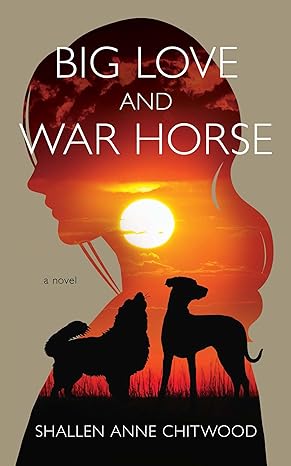
Big Love and War Horse, by Shallen Anne Chitwood, is a compelling novel that captivates readers with its fast-paced, thrilling plot. Uniquely narrated by the family’s two dogs—Big Love and War Horse—the story delves deeply into their thoughts and emotions, weaving together a fascinating and intricate narrative. Set in 1942 against the backdrop of the Second World War, the novel centers on the Deacon family in North Carolina. After the sudden death of their mother, Jonas and his younger sister Kay must shoulder new responsibilities as their father succumbs to alcohol to cope with his grief. Their dogs become a source of strength and unity for the family, guiding them through their adversities. As the Deacon family leans on one another for support, long-held secrets threaten to unravel their fragile peace.
Big Love and War Horse is a poignant exploration of love, loss, and the gut-wrenching aftermath of grief, ultimately leading to acceptance and healing. The narrative also addresses the pervasive racism and segregation of the era, portraying a powerful message of breaking barriers and hope for a future where love knows no boundaries. The novel’s twists and turns will keep readers on the edge of their seats, piecing together the past and anticipating the story’s resolution.
One of the standout aspects of this novel is the way Chitwood intricately weaves the dogs’ perspectives into the narrative. This unique storytelling approach not only adds depth to the narrative but also evokes a strong emotional response from the reader. The author’s ability to convey the dogs’ feelings and thoughts in such a relatable manner is truly commendable.
The depiction of the Deacon family’s struggles is both heart-wrenching and inspiring. Jonas, at just fifteen, and his younger sister Kay are forced to grow up quickly in the absence of their parents. The portrayal of their bond, especially highlighted in scenes like Jonas’s harsh but ultimately loving reprimand of Kay after a hunting trip, showcases Chitwood’s talent in developing complex, realistic characters. Their journey of coping with loss and finding solace in each other and their loyal dogs is poignantly written, making it easy for readers to empathize with their plight.
Big Love and War Horse is a beautifully written novel that combines a unique narrative style with powerful themes of love, loss, and resilience. Chitwood’s ability to draw readers into the emotional world of the Deacon family through the eyes of their dogs is both innovative and deeply moving. I highly recommend this book to anyone who enjoys historical fiction, animal narratives, and stories that tug at the heartstrings.
Pages: 208 | ASIN : B0D6RR9Z77
Choosing Sides

Choosing Sides, by David K. Wesel, is a compelling coming-of-age novel set against the tumultuous backdrop of pre-World War II America and the early 1930s rise of Nazi Germany. The story centers on Karl-Heinz, a young man caught between two worlds: born in Germany but raised in the United States, He returns to his homeland just as it is being reshaped by the burgeoning Nazi regime. The novel delves deeply into his inner conflict as he struggles to balance his loyalty to Germany with his appreciation for the peace and democratic values of his American upbringing. Ultimately, Karl-Heinz faces the daunting task of choosing a side in a world fraught with ideological extremes.
Set during one of humanity’s darkest periods, Choosing Sides takes a domestic approach to explore the devastating impact of the Nazi era on a single family. Wesel adeptly portrays Karl-Heinz’s ideological struggle, depicting his exposure to the Hitler Youth and the influence of prominent Nazi figures within his family, including his uncle and cousin, who are ardent nationalists. This fervent nationalism starkly contrasts with the democratic ideals cherished by Karl-Heinz’s parents, who have firsthand experience with the horrors of war. These conflicting influences anchor Karl-Heinz to a vision of a more democratic world, creating a profound tension within his character.
Wesel’s novel is both deeply moving and insightful, enriched by its foundation in the author’s partially fictitious family history. This personal touch lends the narrative a unique authenticity, making it resonate across different generations and social backgrounds. Choosing Sides provides a vital perspective on how the war affected ordinary German citizens, offering a nuanced view that differentiates between the ideologies of Hitler and the realities faced by everyday people.
For enthusiasts of historical fiction, this book is a must-read, sparking intriguing conversations about the complexities of reconciling national and personal identity. Wesel presents a thought-provoking exploration of how one’s beliefs are shaped by their surroundings, making Choosing Sides a significant contribution to the literature of this era.
Pages: 274 | ISBN : 978-1952439773
Working Toward a Singular Goal

A Beggar’s Bargain follows a discharged Army soldier during WWII who returns home to fulfill his dying father’s last wish to save the family farm. What was the inspiration for the setup of your story?
I am an avid fan of Texas music and the artists who create the songs. I listen to the radio anytime I’m in the car and one day I heard a song that caused me to pull over and jot down a note. The lyrics of the song said, “It’s fool’s gold, a beggar’s bargain…” I knew A Beggar’s Bargain had to be the title of a book. I didn’t know much more than that, but as the creative juices began to flow, I saw the time period and the story set-up. I know it might sound crazy, but the characters talked to me and basically told me their names and the story. That’s how it all started, with just one line from a song.
Your book touches on the harsh realities that faced many American’s during WWII. What kind of research did you do for this novel to ensure you captured the essence of the story’s theme?
As I was working on the story, I visited the area in and around Everton, Missouri. Through the Dade County Library, I was able to look at newspapers from 1947 on microfilm and took lots of notes from them. They gave me a good view of things the country was still dealing with from the war, such as shortages. One newspaper article was about President Truman calling for all families in America to have one day per week with no meat, as it was still in short supply. I had to include that in the book. Also, the prices of goods in 1947 were way different from today and the newspapers were also super helpful in keeping that accurate. I found the people in that area to be super interested and helpful with stories and historic facts about their community that were instrumental in keeping it authentic. I love that I was able to do hands-on research, rather than relying on the internet. I think it helped make it all more believable.
Layken and Sara Beth are forced into a marriage as strangers but must find a way to make it work. What was your process in writing the character’s interactions to develop the bond they have?
First of all, I didn’t want this book to be a romance. I wanted it to be about two people thrown together by fate and circumstances, working toward a singular goal. So, while their relationship started out awkward, as two strangers would be, through their working together and facing each hardship with determination and resilience, their feelings for each other grew slowly from admiration and respect to something deeper. While some reviewers refer to the book as a romance, it is truly historical or literary fiction. I loved allowing and facilitating the organic growth of their relationship, in response to the obstacles they faced.
What is the next book that you are working on, and when will it be available?
I am currently working on the second book in The Bargainers Series. A Noble Bargain begins in Arkansas and ends up at Layken and Sara Beth’s farm in Missouri. So, the reader gets to catch up on the couple while meeting a new cast of characters and circumstances. I am hoping to publish it in the fall of this year.
Author links: Twitter | Facebook | Website
Desperate to honor his father’s dying wish, Layken Martin vows to do whatever it takes to save the family farm.
Once the Army discharges him following World War II, Layken returns to Missouri to find his legacy in shambles and in jeopardy. A foreclosure notice from the bank doubles the threat. He appeals to the local banker for more time—a chance to rebuild, plant, and harvest crops and time to heal far away from the noise of bombs and gunfire.
But the banker firmly denies his request. Now what?
Then, the banker makes an alternative proposition—marry his unwanted daughter, Sara Beth, in exchange for a two-year extension. Out of options, money, and time, Layken agrees to the bargain.
Now, he has two years to make a living off the land while he shares his life with a stranger.
If he fails at either, he’ll lose it all.
How We Value Service

Through Her Lens follows a woman working as a photographer and British Intelligence agent who struggles for personal autonomy during a period of history where women are often overlooked. What was the inspiration for the setup of your story?
I have long loved history, but it doesn’t take much looking to realize that much of what has been kept and written about is men. One evening I was watching an episode of NOVA, a PBS program, called “3D Spies of World War II.” They talked about the V1 and V2 bombs and the pilots who took the images, but they also spoke about the women who worked at RAF Medmenham. Many of them outranked men because the creator of the 3D approach thought women would be better at analysis than men. A woman is credited for finding the V1, Constance Babington Smith. I had a short story with a character named Millie, who was being evacuated from London at the start of the war. My writing group had been encouraging me to explore a longer story for Millie and with this nugget of information about RAF Medmenham, I had my path and one that I wouldn’t have to work to fill in too many gaps. Women did the important analysis work. I only had to learn about them to create a more well-rounded Millie and the world that she would inhabit. It was a chance to tell a true and little-known story about one of the many important things women did to help the Allies’ efforts in defeating the Axis powers.
What were some of the trials that you felt were important to highlight the character’s development?
For a single woman working in the time, the trials were many. It was important to me not to gloss over that fact. For that reason, I made her family rich. Money wasn’t something I wanted her to struggle with. I did want to highlight the limited choices women had. The British government wasn’t going to give her a gun or let her take her camera into the fight for that matter, but they expected her to contribute all the same and with little or no credit. Every day Millie was going to open her beloved newspaper to see honor bestowed on the men of her day. She was going to have to risk everything, remember Britain was regularly being bombed, and get no credit at all. How was an ambitious person to manage something like this? How this would shape Millie interested me. It was also critical that her father not treat her like his sons. He could want things for and from her, but only within what his peers would find acceptable. William may have had progressive ways, due to the influences of his wife—Millie’s mother, Margaret—but they didn’t naturally flow to Millie. They would both need to bend and the conflict between them would need to shape them. Finally, I couldn’t create a world without grave personal loss. No one escaped the war without pain of some sort. Millie couldn’t be an exception.
What were some themes that were important for you to explore in this book?
The thought I kept coming back to was this: There are things we want to do and things we should do, but unfortunately they are rarely the same things. Every character in Through Her Lens struggled with this fact. I believe most of my readers do as well. In this way I was able to take an old story and pull it into the present.
I also wanted the reader to grapple with how we value service. Why is a surgeon more valuable than a garbage man? Why is a man’s work, in the case of my novel, more noteworthy than a woman’s? Why have there been countless stories told of Winston Churchill, the men who stormed the beaches at Normandy, the men who endured the Battle of the Bulge, but few if any of the intelligence work the women did on Churchill’s behalf, the women who worked alongside him in his bunker in London, or the nurses and other women who followed the men into France, or of those who worked without a gun in the Ardennes? I do not mean to diminish the work and sacrifices of the men, only to ask why not the women too.
What is the next book that you are working on, and when can your fans expect it to be out?
I found writing flirtatious banter quite fun. I have an idea swimming in my imagination of a group of female whiskey trippers, the folks who hauled booze during prohibition, and have written a few short stories to unearth my heroine. As you might imagine women were overlooked at the time and the 1920s were pretty bad for women. So perhaps an alternate reality of the time or maybe a more modern setting like revamped Smokey and the Bandit, populated by women, of course. I’d like to spend my time with a lighter topic and give my sense of humor a bit of a workout. I’ve visited a few spots in Appalachia to start getting a feel for possible characters and see who I can unearth for more inspiration. And I am constructing a cast with short stories and essays which is my second favorite part of the writing process. As to when it will be ready, who can say—soon, I hope! But research is my favorite part of the process, and it can take some time.
Author Links: GoodReads | Facebook | Website
Three years ago, Millie dutifully packed away her cameras and began her career in Secret Intelligence after discovering her surrogate mother’s flat leveled during the Blitz. Her commander has reassigned her to help verify and destroy the Nazis’ long-range vengeance weapons program before D-Day. Amidst the urgent demands of her work, a Royal Air Force pilot named Callum won’t let her forget who she is. He is always there – sneaking her a camera and tempting her with a life spent with him instead of her fiancé, Elliot.
Melissa Bacon masterfully captures Millie’s struggle to choose between her dreams and her duty to family and country. Through Her Lens chronicles a piece of history based on actual events surrounding Operation Crossbow, a top-secret intelligence investigation tasked with stopping the V1 flying bomb and V2 rocket program. This exploration of women’s empowerment is a must-read for those interested in untold stories of the heroes of World War II.
A Beggar’s Bargain

In A Beggar’s Bargain, author Jan Sikes delves into the post-World War II era through the lens of Layken Martin, a recently discharged soldier returning to his family home in Missouri. Layken is confronted with the imminent death of his father and the daunting task of reviving their struggling farm. The narrative takes an intriguing turn when Layken, faced with the bank’s threat of foreclosure, is offered a peculiar solution: marry the banker’s daughter in exchange for an extension on his loan.
Sikes’ work, rooted in historical fiction, showcases meticulous attention to period detail, echoing themes found in classics like The Grapes of Wrath. The novel’s portrayal of poverty and desperation may also remind readers of elements from John Irving’s The Cider House Rules. Layken’s journey is grounded in authenticity as he navigates not only the challenges of saving the farm but also the complexities of an arranged marriage with Sara Beth, a woman he hardly knows. The backdrop of mid-20th century America, with its societal expectations and norms, further compounds the dilemmas faced by the characters. Sikes crafts a nuanced exploration of Layken and Sara Beth’s relationship, which evolves from uneasy acquaintances to potential allies facing shared adversities. The narrative is enriched by a cast of supporting characters like Tab, a young local drawn to the couple, and Uncle Seymour, a wise hired hand offering guidance.
Sikes’ prose is concise and deliberate, a stylistic choice that complements the story’s focus on character development rather than grand historical narratives. A Beggar’s Bargain unfolds as an intimate, moving study of two individuals forced into an unexpected life together. The brevity of the chapters contributes to the narrative’s tight, almost claustrophobic atmosphere, heightening the emotional depth of Layken and Sara Beth’s story.
Pages: 332 | ASIN : B0CVK8442G
Guardians of the Latte Stones

Set against the backdrop of Sasebo’s economic struggles, Guardians of the Latte Stones, by M.K. Aleja, is a compelling historical fiction narrative interwoven with elements of folklore and the harsh realities of World War II. The story follows Yuki and Takeshi, siblings grappling with the loss of their parents and the cruelty of their guardians. Takeshi, seeking an escape, enlists in Japan’s Imperial Army, believing he’s secured a favorable position on a seemingly tranquil tropical island. However, the island harbors a dark secret, challenging Takeshi’s perceptions of warfare and morality.
Aleja masterfully merges fantasy and historical elements, weaving a narrative rich in suspense and tinged with a sense of foreboding. This novel skillfully intertwines authentic historical details with creative storytelling, immersing readers in the era’s cultural, social, and emotional contexts. Structured like a classic fairytale, it features a young protagonist navigating a world of sinister relatives and pivotal decisions. The story centers on Takeshi, whose initial dreams of glorified military service clash with the harsh realities of war, forming the story’s core. The characters are thoughtfully crafted, bringing their challenges and victories to life in a way that resonates with readers.
Aleja’s meticulous approach to narrative construction and his knack for intricate storytelling are noteworthy, offering an engaging and enlightening read. This book poignantly addresses the human toll of war, presenting a seldom-seen perspective on WWII. As the plot progresses, Takeshi and the readers encounter the ancestral spirits of Guam. These spirits, seeking retribution for past injustices, introduce a supernatural layer to the story. Their actions and subsequent developments prompted Takeshi to reevaluate the Japanese army’s role on the island, providing an insightful look at the effects of wartime occupation.
Guardians of the Latte Stones is a story that transcends its historical setting, weaving together elements of a ghost story and a poignant commentary on the futility of war. Aleja’s approach is both ambitious and nuanced, imbuing the novel with a rich emotional depth. This book is not just a historical account but a multifaceted exploration of war, cultural conflict, and moral ambiguity.
Pages: 377 | ASIN : B0CTS9KYR9




 LITERARY TITAN