Blog Archives
You Can Thrive

Sociomom is a raw and gut-wrenching memoir about surviving a childhood dominated by abuse, manipulation, and the long road toward emotional healing. Why was this an important book for you to write?
It was important to me to author this book not to share my story, but to illustrate that no matter what your past is, where you come from or what your current circumstances are, you can overcome and thrive.
What were some ideas that were important for you to share in this book?
There are several:
- You are not alone in your struggles.
- If you want something different and better in your life you have to try different and better options to heal.
- No matter how hard you try, you can not and are not meant to do it on your own.
- There is no one size fits all approach but you have to lean into physical, mental and spiritual health options to move forward.
- Overcoming trauma and mental health challenges is a journey not a destination.
What was the most challenging part of writing your memoir, and what was the most rewarding?
The most challenging part was having to relive my journey and put all of my “stuff” out there for the world to see.
The most rewarding was the validations from reviews and other feedback how the book has helped others be seen and be inspired to move forward in their journey.
What do you hope is one thing readers take away from your story?
It is never too late, and you are not too broken to move forward and change your path to healing.
Author Links: Website | GoodReads | Instagram | Facebook | Tik Tok | YouTube | LikedIn
Hope of Recovery

In Being Broken, you share the traumas of your childhood, heartbreaking losses, and how you were able to face the damage that shaped your life. Why was this an important book for you to write?
I had to understand how things could have gone so terribly wrong that my sister had to pay the ultimate price, with her life. I’m not a spiritual person, so I needed to believe that this was preventable; that there was a rational and reasonable explanation for this tragedy. Not only that, I needed to better understand my part and be able to forgive myself for either my inability to act in time, or if I had become apathetic to her plight from years of dealing with it. But the journey allowed me to view my own life from a better perspective. It allowed me to dig deep into the traumas of my past and move forward with forgiveness of myself and the fact that I was not responsible for what happened to either of us.
I appreciated the honesty and raw emotion throughout your memoir. What was the hardest thing for you to write about?
Top of that list is my sister’s death. I was so overcome with shame and guilt about not being able to save her, the only way to deal with it was to write about it. I was having a hard time articulating what I was going through, and to write it all out was relieving since the rumination during grief can be very overwhelming. However, equal to how difficult her death was, learning and writing about my sister’s rape was extremely difficult. As I wrote in the book, our parents downplayed my sister’s rape to the point where they were trying to convince me it didn’t happen. Because of their manipulation, I believed them, and the guilt and shame I felt when I read about it in her journals was heartbreaking. Knowing that I wasn’t there for her like I should have been while she was dealing with that trauma, alone, made me feel absolutely horrible. Understanding now it is not my fault, but the fault of my parents’ manipulation of me, that I wasn’t there for her during the most difficult time of her life allowed me to forgive myself.
What is one misconception you believe many people have about growing up in abusive homes?
That children, and even adults, can see and understand that they are being abused, and that escaping the situation is obvious. Many people in abusive relationships are unaware that they are experiencing abuse. I didn’t understand that my sister and I were being abused by our parents until after her death. The narcissistic front of family perfection that our parents projected out into the world made it very difficult for anyone to believe us when we talked about what was going on in that house. Further, the nature of the abuse caused us to live in fear of talking about it. To even consider sharing what was going on with us, we knew the consequences would be severe. And lastly, the amount of control my parents had over my sister’s life precluded any ability for her to escape. They had full control over everything in her life: her car, her lease/rental properties, her phone, money, even her son when she was deemed incapable of caring for him – and they constantly threatened to take it all away if she didn’t behave as they wanted. Truly understanding what was happening to us took a lot of study on my part; years of work through my sobriety, and then grief. By then, it was too late for her, but it continues to help me heal.
What is one thing you hope readers take away from your experiences?
That if you are experiencing the same type of abuse, or have in your past, that you are not alone and there is hope of recovery. The common statistic is that 1 in 4 children experiences a form of abuse. It doesn’t have to be physical or sexual abuse, the most horrific types; it could be any type of mental or emotional abuse. Everyone experiences trauma, even the same trauma, differently based on their formative childhood years. Studies show that a child who experiences repeated forms of abuse has a very altered brain than one who does not. However, through neuroplasticity, therapy, and work, we can manage the challenges of Complex Post-Traumatic Stress Disorder to rewire our brains to live healthy, improved lives and still accept and integrate what we faced as children.
Author Links: GoodReads | Bluesky | Facebook | Website | Amazon
The son, brother, stepson is the only one left to pick up the pieces. He begins a journey of the self and finds out the truth of his family. After going over letters, notes, emails, videos, and text messages, he uncovers a disturbing picture of the abuse his sister suffered at the hands of their parents. He also begins to better understand his own struggles with mental health and substance addiction because of the trauma and abuse he also suffered from their parents.
Follow the son as he looks through his family history to discover the generational abuse that trickled down through the years. Learn about how parents who suffer from narcissistic personality disorder emotionally abuse and manipulate their children. See how the abuse and trauma becomes mental illness in the abused, and how they fall into vicious traps of addiction, eating disorders, self-harm, and complex post-traumatic stress disorder. Witness the transformational change of the son as he works on the recovery of his inner child and tries to become the man he was meant to be.
Sociomom: My Story of Terror, Truth, and Triumph


Kevin Hughes’s Sociomom is a raw and gut-wrenching memoir about surviving a childhood dominated by abuse, manipulation, and the long road toward emotional healing. The book begins with a haunting scene at the deathbed of Hughes’s mother, a woman he portrays as both magnetic and monstrous. From there, he guides the reader through the labyrinth of trauma recovery, recounting his experiences with therapy, memory, and faith. The story is both personal and universal — an unflinching portrait of how the scars of childhood shape the adults we become and how confronting buried truths can lead to redemption.
Reading Sociomom felt like sitting across from someone who’s finally ready to tell the story they’ve held inside for decades. Hughes writes with an honesty that is as uncomfortable as it is necessary. His prose isn’t flowery; it’s direct, sometimes even harsh, but that’s what gives it power. There’s no pretense, no dressing up of pain. I found myself angry at times, heartbroken at others, but always drawn in. The way he weaves memory, faith, and self-reflection gives the book a rhythm that feels human, messy, and real. You can sense his years of emotional armor cracking as he writes, and that vulnerability pulls you right into his experience.
What hit me hardest wasn’t the horror of the abuse, but the quiet aftermath, the way Hughes describes trying to live as a functioning adult while feeling half-alive inside. His exploration of therapy, especially EMDR, and his struggle to reconnect with emotion felt deeply relatable. There’s pain in every line, but also resilience. The book doesn’t beg for pity; it asks for understanding. At moments, it’s almost too heavy, but then he grounds it again with flashes of humor or self-awareness that make it bearable.
Sociomom is a survival story and a testament to what healing can look like after a lifetime of emotional ruin. It’s not an easy read, but it’s an important one. I’d recommend this book to anyone who’s walked through trauma or works with survivors. It’s also for readers who crave truth told without varnish, who want to see what courage looks like when it’s stripped of polish and performed in real time.
Pages: 183 | ASIN : B0FDLFFLH8

Birth, Death, and Survival

Melanie Whyte’s Birth, Death & Survival is a raw and intimate poetry collection that traces a lifetime of pain, growth, and resilience. It unfolds like a memoir in verse, starting from the innocence of childhood and winding through heartbreak, abuse, motherhood, healing, and eventual renewal. The poems feel deeply lived-in, each chapter marking a phase of her life, from the trembling echoes of a broken home to the quiet triumphs of rediscovered love and strength. There’s a narrative thread that ties every piece together: the human instinct to keep breathing, to keep going, even when the air feels too heavy to bear.
Whyte doesn’t hold back, and I admired that honesty. Her words are simple but sharp, and she lets emotion take the lead. At times, the poems read like confessions whispered in the dark. Others feel like letters written to her past self, forgiving, reflecting, reclaiming. What struck me most was the rhythm of her healing. It’s not neat or linear, and she doesn’t pretend it is. Some verses gutted me with their quiet truth, like “The Room With No Windows,” while others, like “Still I Rise From Shadows,” filled me with soft and steady hope.
As I read, I found myself pausing often, not because the writing was difficult, but because it felt too close. There’s beauty in the way Whyte turns trauma into art without glamorizing it. The collection pulses with empathy, and even in the darkest corners, there’s light breaking through. I liked how she weaves motherhood, love, and survival together; it reminded me that rebuilding isn’t just about leaving the pain behind, it’s about learning to live alongside it.
Birth, Death & Survival is for readers who crave truth, who’ve walked through something hard and come out changed. It’s a book for survivors, for mothers, for anyone who’s ever had to rebuild themselves piece by piece. I’d recommend it to anyone who wants to feel seen, or to those who want to understand what resilience looks like when it’s written in poetry and inked with life itself.
Pages: 181 | ASIN : B0FPXNQFMP

Being Broken: Tales and Essays of Survival and Death from Narcissistic Parental Abuse
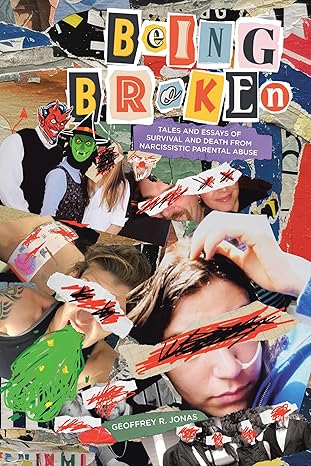
Being Broken, by Geoffrey R. Jonas, is a brutally honest memoir about trauma, addiction, and survival. It follows Jonas through a childhood steeped in neglect and narcissistic abuse, into years of substance dependence, and finally toward healing and self-understanding. He recounts the deaths of his sister, father, and mother, all in a single year, and how those losses forced him to face the damage that shaped his life. The book mixes memoir with insight–part psychology, part confession, and all heart.
Right from the start, Jonas pulls no punches. In the foreword, he admits, “I am spewing my head out onto these pages,” and that’s exactly how it reads, raw, direct, and strangely freeing. The prologue on narcissistic parental abuse hooked me. He doesn’t just define the concept; he exposes how it poisoned his family dynamic and left scars that followed him into adulthood. The mix of personal detail and clinical explanation makes it both heartbreaking and fascinating.
What I love most about this book is its honesty. Jonas never paints himself as a victim. He admits to his own part in the chaos, lying, manipulating, and self-destructing. There’s something refreshing about how he refuses to hide the ugly parts. When he writes about his sister’s overdose or his parents’ emotional absence, he doesn’t look for pity. He looks for truth. The section “Fault vs. Responsibility and Blame” really stuck with me. His idea that “it’s not their fault, but they are responsible” reframes forgiveness in a way that feels mature and real.
Jonas’ writing hits hard because it’s unfiltered but thoughtful. The poem “Broken,” written for his sister, might be the emotional heart of the book. It’s tender and painful, a mix of love, guilt, and memory. And by the end, when he says, “Here I am. A survivor,” it doesn’t sound like a line from a movie. It feels earned.
Being Broken isn’t a light read, but it’s a powerful one. It’s for people who’ve faced trauma, addiction, or toxic family systems, and for anyone curious about how self-awareness can lead to recovery. Jonas writes like a man who’s been through hell and decided to document the landscape. It’s dark, hopeful, and deeply human.
Pages: 274 | ASIN : B0DZPGY1BZ
From Pain to Reflection to Action

No Filter: From Skateboard Kid to Entrepreneur shares your story about growing up in an abusive home, joining the Army at 19, and after living through combat, trauma, and broken relationships, before turning your pain into purpose. Why was this an important book for you to write?
No Filter was the book I couldn’t keep inside any longer. For decades I carried pain — from an abusive childhood, from what I saw and did in combat, from the way I failed as a husband and father — and it was eating me alive.
This wasn’t just a “next book project.” This was my line in the sand. When I came back from Phoenix, Arizona, after attending a book award event where I felt invisible and out of place, I had an awakening. I realized I could either keep playing nice and hiding behind polite words, or I could tear the mask off and tell the truth, even if it made people uncomfortable.
That’s why No Filter is written the way it is — blunt, messy, unpolished. Thomas Anderson said in his review that it feels “alive and immediate,” like I’m sitting across from the reader, telling it straight. That was intentional. I wanted people to feel like they’re in the room with me, hearing my story unfiltered, hearing the pain in my voice, and watching me fight my way through it.
I didn’t write No Filter to be liked — I wrote it to be heard. Because survival means nothing if you stay silent about what almost killed you.
What were some ideas that were important for you to share in this book?
This book was built on three core pillars: truth, accountability, and hope.
Truth was the foundation. The world is flooded with filters and fake perfection — I wanted the opposite. That’s why No Filter is unapologetically raw. As Thomas Anderson wrote in his review, the “short bursts of thought, the blunt admissions, the cursing when softer words won’t do” make the story feel alive and immediate. I wanted readers to feel like I was sitting across from them, looking them in the eye, telling them what really happened.
Accountability was the second pillar. I’m not just telling my story as a victim — I’m standing trial in front of every reader. I’ve hurt people I loved, including my daughter, and by letting her write the first entry, I opened this memoir by facing my own guilt and her forgiveness head-on.
And finally, hope is what carries the book through the darkness. The stories are painful, yes, but I wanted readers to see the redemption too. I wanted them to feel that even if they’ve been broken, they can still rebuild.
No Filter was never about telling a pretty story — it was about building a platform readers can stand on when life knocks them down. These three pillars hold that platform up.
What was the most challenging part of writing your memoir, and what was the most rewarding?
The most challenging part wasn’t the writing — it was tearing open wounds I’d tried to keep buried for decades. No Filter forced me to relive nights I tried to drink myself numb, the deployments that left ghosts in my head, the years I watched my daughter grow up from a distance because I was too broken to be there.
But it was also physically challenging. I live with severe tremors in my left hand, a lasting effect from years of medication prescribed through the VA. I can’t sit at a keyboard and type like most writers. I don’t use AI, and I don’t hire ghostwriters. Every single word of this memoir came from my own raw voice — recorded into my phone, turned into notes, and shaped into this book. That’s why, as Thomas Anderson wrote in his review, it feels “alive and immediate.” It literally is me, speaking directly to the reader.
The most rewarding part was turning that pain into something that could help someone else survive. When a reader tells me my words made them put the gun down, pour out the bottle, or call their kid after years of silence — that’s when I know No Filter has done its job.
I fought my past, my trauma, and even my own body to get these words out — and if they give just one person the strength to stay alive one more day, then every second of that fight was worth it.
What do you hope is one thing readers take away from your story?
I want readers to finish No Filter with one truth burning in their chest: you are not alone — but you can’t keep hiding from yourself.
That’s why the cover is black and white. It’s not an accident — it’s a statement. That cover is the darkness I was in. It shows me slouched, looking like the weight of the world is crushing me. Then you turn to the back and see the only color image in the entire book — a hint that there’s light on the other side if you’re willing to walk through the darkness.
When readers turn that last page, I don’t just want them to close the book. I want them to put it down, stand up, walk into their bathroom or bedroom, and stare into their own mirror. I want them to ask themselves: “Have I been living as the real me? Or have I been hiding this whole time?”
Because that’s what No Filter is — a confrontation. It’s not just my story. It’s an invitation for readers to strip away their own filters and face the person staring back at them.
And when they scan the QR code on the back cover, I want them to realize this book is just one piece of a bigger mission — The Mirror, The Broken Mirror, and now No Filter. It’s a trilogy designed to move readers from pain to reflection to action.
If just one reader closes No Filter, looks in the mirror, and says, “I’ve been hiding long enough — it’s time to face my life head-on,” then I’ve done what I came here to do. This book isn’t just a memoir — it’s a mirror, and it dares you to look.
What happens when the kid on the skateboard grows up, trades wheels for boots, and finds himself on the frontlines of war, fatherhood, and mental health?
William A. Stephens Jr. takes you on a no-holds-barred journey through the highs and lows of a life lived at full throttle.
This book doesn’t ask for sympathy — it demands honesty. No Filter is the third installment in William’s powerful trilogy that began with The Mirror and The Broken Mirror.
Here, he dives even deeper, peeling back the final layers to reveal a man who has been broken, rebuilt, and refuses to stay silent.
It’s about facing the demons that haunted him after the battlefield. It’s about the toll of PTSD, the pain of fractured relationships, and the unrelenting fight to keep going — not just for himself, but for the ones he loves and the community he serves.
If you’ve ever wondered what resilience really looks like, this book is your answer.
🔥 What You’ll Discover Inside:
• 🛹 Childhood on the Edge – From the streets to the skate park, where rebellion and resilience were born.
• 🎖 Life in Uniform – A front-row seat to deployments, leadership, and the toll that service takes on the soul.
• 💔 The Breaking Point – PTSD, loss, and family struggles laid bare with brutal honesty.
• 🧠 Mental Health Uncensored – No sugarcoating. Just real talk about trauma, therapy, and survival.
• 💼 Entrepreneurship with Purpose – How 1821 Productions became a platform to give “Voice to the Voiceless.”
• 🎃 The Final Chapter – Why No Filter is dropping on Halloween 2025, and what it means to confront your demons.
💡 Why This Book Matters:
• ✅ Perfect for readers who crave real, unfiltered storytelling.
• ✅ A lifeline for veterans, survivors, and anyone navigating their own mental health battle.
• ✅ Proof that you can lose it all, fight back, and still build something bigger than yourself.
⭐ Reader Takeaways:
• 🌌 Hope in the darkness.
• 💥 Courage to speak your truth.
• 🔑 Permission to build your own legacy.
🎯 Ideal For:
• 📚 Fans of military memoirs & survivor stories
• 🎙 Advocates of mental health & PTSD awareness
• 🚀 Dreamers & doers chasing purpose
The Lie That Changed Everything: The Memoir of a Little Rascal
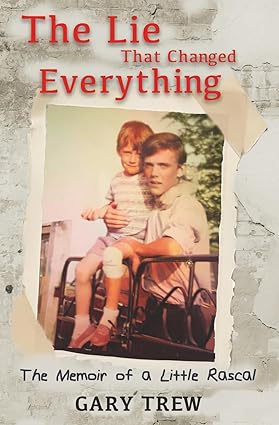
From the first page, Gary Trew makes it clear this is no sugarcoated stroll down memory lane. The Lie That Changed Everything is a memoir that blends sharp humor, biting honesty, and painful recollections into a story that feels both chaotic and deeply human. Trew recounts his early years with a mix of wit and grit, pulling readers through family dysfunction, childhood scrapes, and the bruising aftermath of being raised in a world where love often arrived tangled in trauma. It’s a tale of survival told with an irreverent laugh, even as it shines a light on moments of loneliness, rejection, and heartbreak.
I was taken in almost immediately by Trew’s voice. His writing has a rhythm that swings between wild comedy and gut-punch sadness, and that constant shift kept me hooked. Some chapters had me laughing at his absurd family stories, while others had me pausing to let the weight of what he endured sink in. The mix is unusual, but it works. He doesn’t let the pain take over, and he doesn’t let the jokes cheapen the truth either. At times, I found myself frustrated with the sheer cruelty he describes, but then he’d toss in a line of dark humor, and it felt like sitting in a pub listening to a mate tell a story he can only tell because he survived it.
There were moments where the writing felt a little jagged, but that roughness actually added to the authenticity. It made me feel like I was being trusted with unpolished truths rather than a neatly packaged memoir. I also found myself admiring his willingness to talk about shame, resentment, and fear without dressing them up. His honesty struck me as both brave and disarming. The book reminded me that family histories are rarely tidy, and sometimes the best way to survive them is to laugh at the madness and keep moving forward.
By the time I reached the final chapters, I felt both drained and strangely uplifted. This isn’t a book for someone who wants a gentle or inspirational memoir. It’s for people who appreciate raw honesty, gallows humor, and the messy beauty of a life that didn’t follow the script. If you’ve ever grown up feeling like the odd one out, or if you’re drawn to stories that reveal both the scars and the resilience of childhood, this book will resonate.
Pages: 278 | ASIN : B0FGKN1M47
No Filter: From Skateboard Kid to Entrepreneur

No Filter tells the story of a man who grew up in a home marked by abuse, found escape in skateboarding, entered the Army at 19, and lived through combat, trauma, and broken relationships before turning his pain into purpose. Author William Stephens lays out his journey with raw honesty. He doesn’t hold back on the violence he witnessed as a child, the battles he fought overseas, or the mistakes he made as a father and husband. Woven through it all is the growth of his platform, 1821 Productions, a community built on giving voice to those who feel unheard.
The writing itself isn’t polished or pretty, and that’s what makes it powerful. The short bursts of thought, the blunt admissions, the cursing when softer words won’t do. It all feels alive and immediate. I could hear his voice in every sentence, like he was sitting across from me, telling it straight. Sometimes the stories are hard to read because of the pain inside them, but that rawness makes them believable. It’s the opposite of a filtered memoir. At times, I felt frustrated with the choices he made, especially in how he treated his family, yet I also felt the weight of the demons he carried. That mix of honesty and imperfection made me respect the story even more.
What also stood out was the message underneath the chaos. Stephens isn’t asking for pity; he’s asking people to listen, to learn, and to keep going. His thoughts on credibility, leadership, and authorship resonated with a kind of tough love I didn’t expect. He’s not telling readers how to be successful. He’s warning them about the traps, the scammers, and the fake promises that he himself fell for. I could feel his hope that others might avoid the same scars. That blend of hard lessons and encouragement gave the book a surprising warmth, even when the stories got dark.
I’d recommend No Filter to anyone who values real, unvarnished storytelling. It’s not for readers looking for smooth prose or neatly tied-up endings. This is for people who want the truth, spoken in a voice that shakes but doesn’t quit. Veterans, struggling parents, survivors of abuse, and even aspiring writers will find something here to hold onto. It’s a tough book, but it’s also a hopeful one, and I’m glad I read it.
Pages: 80 | ASIN : B0FNZ89LND


