Blog Archives
My Story Wasn’t Just Mine

The Committed Professor: A Memoir is a powerful and unflinching account of your descent from contentment to emotional devastation. What were some ideas that were important for you to share in this book?
There were three key ideas I wanted to convey in this book.
First, betrayal, divorce, and narcissistic abuse aren’t just painful experiences. They can be deeply traumatic. I endured all three at once, and the psychological consequences were profound. Too often, people underestimate the lasting impact of these relational traumas. I wanted readers to know they are not alone, that their pain is real, and that these experiences fundamentally change who you are as a person. By sharing my story, I aimed to validate the emotional and psychological toll these experiences take, particularly on women.
Second, individual trauma doesn’t exist in a vacuum. It is shaped and compounded by systemic forces, especially for women. We live in a patriarchal society that often dismisses women’s pain and questions their credibility. Divorce, in particular, becomes a site where male privilege plays out in legal, financial, and social realms, making it even harder for women to break free and rebuild their lives. I wanted to explore how these structural inequalities intensify an already devastating experience, turning divorce into a broader battle for agency and justice.
Finally, I wanted to show that survival is possible. This book isn’t just about trauma. It is also about resilience. I didn’t write it to dwell in despair but to illuminate the path forward. Healing is neither linear nor easy, but it is possible. There is power in speaking our truth, in reclaiming our voices, and in understanding that we are not defined by what was done to us but by how we rise from it to help others.
I appreciated the candid nature with which you told your story. What was the hardest thing for you to write about?
The hardest part of writing this memoir was confronting the impact that my toxic divorce had on my children. As a mother, you want to protect your kids from pain, and reflecting on how my choices and circumstances affected them was heartbreaking. Writing about them meant revisiting some of the most difficult moments of my life, times when I felt like I was failing them or couldn’t shield them from the fallout of the divorce.
It was especially challenging to navigate the balance between telling my story and respecting their privacy. My children are a central part of my life, and their experiences are intertwined with mine. But as I wrote, I had to be careful that I wasn’t projecting my perspective onto their stories.
Ultimately, writing about my kids forced me to face some of my deepest regrets. It brought up a lot of guilt, but it also brought moments of clarity. It reminded me of my strength as a mother and the ways I’ve fought for them, even in the face of immense personal struggles.
What was the most challenging part of writing your memoir and what was the most rewarding?
Without a doubt, the hardest part of writing my memoir was reliving the trauma of my past. Writing a memoir isn’t just about telling a story. It is about digging up painful memories, sitting with them, and shaping them into something that resonates with others. Revisiting my ex-husband’s betrayals, narcissistic abuse, and the toxicity during the divorce process took an emotional toll. There were moments I questioned whether I could continue, especially knowing the stigma that comes with women publicly sharing their experiences. But I kept going because I knew my story wasn’t just mine. It also belonged to countless other women who have been cheated on, gaslit, manipulated, and abused.
The most rewarding part was reclaiming my voice. For so long, my reality had been distorted by my ex-husband, by societal expectations, by the family law and court systems, and even by my own attempts to rationalize what had happened. Writing this book allowed me to break free from that distortion and tell my truth on my own terms. And seeing how my story resonates with other women—how it helps them feel seen, validated, and empowered—has made every painful moment of this process worth it. The Committed Professor isn’t just about my personal journey; it’s about challenging the cultural narratives that silence women and hold them responsible for men’s betrayals and abuse. The response from readers who feel less alone because of my story has been the greatest reward.
What advice do you have for aspiring memoir writers?
My advice to aspiring memoir writers is to be brutally honest with yourself and don’t shy away from the hard truths. A memoir isn’t just a collection of events, but an excavation of your deepest emotions and experiences. That means facing parts of your past you might rather avoid. But it’s in those raw, unpolished moments that the true power of your story lies.
At the same time, give yourself permission to take breaks. Writing about your life can be emotionally exhausting, and processing trauma on the page isn’t something you can push through too quickly. Prioritize your mental health. Let yourself sit with the memories as they surface. The most meaningful writing often takes time.
Another key piece of advice is to focus on the universal themes within your story. While your experiences are uniquely yours, what makes a memoir resonate is its ability to tap into emotions and struggles that others recognize in themselves. Readers connect not just to what happened, but to how it felt.
And finally, remember that writing a memoir is as much about healing as it is about storytelling. Be kind to yourself throughout the process. Telling your story is an act of courage, and no matter how difficult it feels, the result will be worth it.
Author Links: Website | TikTok | Instagram | BlueSky
________
In The Committed Professor, A Memoir, My Fall from the Lectern to the Psych Ward, Dr. Kathi N. Miner tells the powerful true story of being married to a man with a double-life of adultery, the horrific narcissistic abuse that occurred after she filed for divorce, and the related events that led her to being committed to a psychiatric hospital. In her harrowing narrative, she demonstrates the critical role patriarchy plays in the process of divorcing abusive men.
The Committed Professor, A Memoir, My Fall from the Lectern to the Psych Ward should be of interest to:Anyone who has experienced or wants to learn more about narcissistic or psychological abuse by an intimate partner
Anyone who has experienced or wants to learn more about narcissistic, betrayal, or divorce trauma
Those with post-traumatic stress disorder (PTSD) or PTSD-related symptoms as a result of non-physical abuse from an intimate partner
Women in the midst of a marital separation or divorce from an abusive partner or who are considering leaving their psychologically abusive partner
Academics and students in psychology, women’s and gender studies, sociology, law, social relationships, and health and well-being
Those who work in the family law system (e.g., attorneys, judges, social workers, etc.)
Anyone who likes a good, true story that is full of surprising twists and turns
Crazy Has A Name
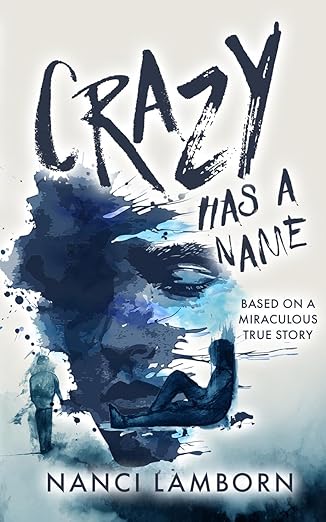

Crazy Has a Name is a raw, Christian contemporary novel that dives deep into the harrowing journey of Danny, a man haunted by his traumatic past and literal inner demons. From being born into unspeakable circumstances to navigating the voices (or “Others”) that live in his mind, Danny’s story is an emotional rollercoaster. At its heart, this book is about hope, redemption, and the powerful intersection of faith and healing. It’s a blend of brutal realism and miraculous transformations, making it both heavy and uplifting.
Author Nanci Lamborn’s voice is gritty and honest. I appreciated the candidness in Danny’s therapy sessions with Marti, especially when he recounts his childhood in “The Pit” or the horrifying truths about his foster family. One part that shook me was his reflection on being bought for $200 and how casually the adults treated it. That kind of detail sticks with you. I loved the depth of Danny’s character, but I would have loved to have seen some of the secondary characters, like his wife Grace, more fleshed out.
What I found most powerful—and frustrating—were Danny’s interactions with the “Others.” Garrison, Kendra, and the Bossman felt like fully realized characters, almost like spiritual manifestations of his fractured psyche. The scenes where Kendra scolds Danny or Garrison protects him are fascinating. However, I wanted more clarity about what these figures represented. Lamborn dances between psychological and spiritual explanations, which is intriguing.
Lamborn doesn’t shy away from portraying the darker side of life, but she pairs it with intense moments of faith-based healing. When Danny begins to unpack his trauma and face the memories he’s suppressed, you can feel his desperation and yearning for peace. The moment where he confronts his adoptive father’s cruelty while holding onto his belief in Jesus felt both heart-wrenching and hopeful.
This book is not for the faint of heart. It’s for readers who can handle heavy topics like abuse, neglect, and the complexities of mental health, all through the lens of faith. If you’re into Christian contemporary fiction with a raw edge and don’t mind grappling with some tough truths, Crazy Has a Name will grip you from start to finish.
Pages: 246 | ASIN : B0DTC2LS4W

Walk a Mile in My Shoes: Surviving Life’s Challenges


Paul Bradford’s Walk a Mile in My Shoes delves into the life of a man scarred by childhood trauma, exposing a harrowing journey from victim to perpetrator. Bradford recounts his life with unflinching honesty, refusing to excuse his actions as an adult while tracing their origins to the extreme hardships he endured as a child. The narrative begins with Bradford’s recollections of an abusive, alcoholic father whom he blames for his mother’s death. A pivotal moment in his life unfolds during a hitchhiking trip to his grandparents’ home, where he endured molestation, a secret he reveals for the first time in this book. The story continues through his unstable upbringing, bouncing between foster families, and the damaging influences that shaped his understanding of sexuality. Both the church and manipulative older boys contributed to a distorted, exploitative perception of intimacy and boundaries. Bradford’s use of vivid, colloquial language, what he describes as “hillbilly” expressions, paints a raw, authentic picture of his early years. His descriptions evoke the atmosphere of a bygone rural society, adding texture to the narrative.
As a piece of writing, the book is well-crafted. Bradford’s grammar is precise, and his articulation is engaging. Despite the deeply unsettling themes of abuse, violence, and exploitation, the narrative holds the reader’s attention through its clarity and flow. However, the focus of the book tilts heavily toward the darker chapters of his life. Positive memories, though present, sometimes feel rushed and underdeveloped. These moments, when they appear, offer glimpses of light but I feel lack the depth and exploration given to his tragedies. A more balanced portrayal, with a fuller depiction of happier times, could enrich the narrative and serve as a reminder that not all of his childhood was consumed by pain.
While the book is well-written, the content may not appeal to everyone. Bradford’s candid acknowledgment of his past wrongdoings and his struggle with trauma elicits some sympathy, but it does not mitigate the gravity of his actions as an adult. His experiences underscore how a lack of education and societal attitudes like “boys will be boys” can perpetuate cycles of harm. Yet, as someone who endured similar trauma, Bradford’s choices remain difficult to reconcile. Walk a Mile in My Shoes is a raw, unsettling account of a life shaped by adversity and mistakes. While it may resonate with readers drawn to unfiltered stories of human frailty and resilience, the graphic and disturbing subject matter makes it a challenging read.
Invitation to Co-Creation: A Spiritual Path from Child Abuse and Religious Trauma to Love, Healing, and Oneness
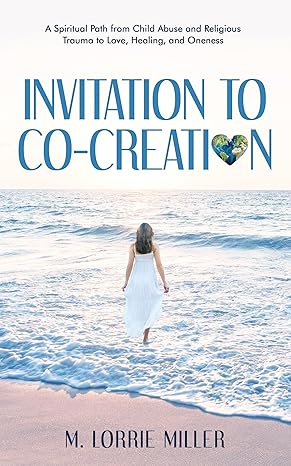

M. Lorrie Miller’s memoir, Invitation to Co-Creation, is a deeply personal and courageous exploration of healing from the scars of childhood abuse and religious trauma. Lorrie’s early years were fraught with abandonment, harsh discipline, and the weight of a toxic religious environment. These experiences led her to retreat into herself, concealing her beliefs, emotions, and painful family secrets. Everything changed when she embarked on a transformative journey. Through inner work and spiritual growth, Lorrie uncovered forgiveness, self-respect, kindness, and a profound sense of self-love. Most significantly, she found peace and love within herself. This journey allowed her to shed the trauma of her past, step into a healed version of herself, and share her powerful story of redemption and growth.
In her memoir, Lorrie answers universal questions such as how do we survive life’s most devastating challenges? How do we move forward to find hope and meaning? Her narrative is raw and vulnerable, written to inspire readers of all backgrounds—spiritual, religious, or otherwise. She bares even the darkest moments of her life to show that healing and transformation are attainable.
This book is both deep and thought-provoking. I was moved by the depth of her story and its ability to offer hope and inspiration to anyone seeking healing, regardless of their spiritual or religious beliefs. Lorrie’s unflinching honesty makes her journey relatable and impactful. While I enjoyed the book, I felt the book’s writing style occasionally affects its clarity. At times, Lorrie’s intentions were less clear, which could make it challenging for readers who are less familiar with spiritual or religious concepts to fully engage with certain passages. However, once the rhythm of her voice becomes familiar, the narrative flows more smoothly. This memoir deserves recognition for its authenticity and courage.
Lorrie’s journey is one of resilience, transformation, and the pursuit of inner peace. Invitation to Co-Creation stands as a testament to the strength of the human spirit, and I honor her willingness to share her story with such openness. Its message of healing and hope makes it a meaningful read.
Pages: 297 | ASIN : B0DPB773X8
Out of the Basement – Beyond Surviving Sexual Assault

Deborah K. Halvorson’s Out of the Basement: Beyond Surviving Sexual Assault is a deeply personal, yet universally resonant, guide for survivors of sexual assault. With a three-part structure—BE, DO, and SHARE—Halvorson walks readers through the journey of healing, from acknowledgment and self-compassion to building community and empowering others. The book is raw, heartfelt, and, above all, hopeful, offering not only comfort but also practical exercises to foster a deeper sense of personal agency.
What really struck me was how Halvorson’s writing balances vulnerability with strength. The opening chapters are beautifully grounded in a metaphor of emerging from a dark, damp basement into the light of self-awareness. There’s a poignant section in Step 1 where she describes the agony and eventual liberation that comes with acknowledging the truth of being assaulted: “Leaving the basement may be uncomfortable and scary, yes. But it won’t kill us.” Her words feel like a comforting hand on your back, gently nudging you forward. The basement metaphor felt so real to me, conjuring that familiar sense of claustrophobic shame that many survivors understand all too well. The author’s approach to healing is not prescriptive but deeply empathetic.
In Step 2, she introduces the idea of a “Spiritual Connection,” a force she describes as our “undamaged Self.” Halvorson writes with a spiritual but not religious tone, making these ideas accessible even to skeptics. She shares how this inner connection can be a source of resilience, guiding readers to rediscover their inherent worth and strength. There’s an emotional heft in passages where she admits that trusting this process is difficult. It’s this candor that kept me engaged and reassured that the book doesn’t sell false promises but offers authentic, lived wisdom.
The spiritual language might not resonate with every reader. But even then, Halvorson’s sincerity shines through, and she always circles back to practical tools for everyday coping. The exercises, like standing at the foot of the metaphorical stairs and visualizing your next step, felt grounding. I loved her suggestion of gratitude practices and using simple body movements to break up negative thought patterns. These actionable steps made the book not just a read but an experience.
Halvorson’s inclusion of survivor stories in Part III is both uplifting and heart-wrenching. Each narrative underscores the book’s central thesis: healing is not linear, but it is possible. For those who feel isolated in their trauma, these stories act as a testament to shared strength and the power of community.
Out of the Basement is a brave and compassionate guide for anyone who has been impacted by sexual assault, whether directly or indirectly. It’s for those ready to step into healing, those looking for community, and even those not quite ready but curious about what’s possible. Halvorson’s voice is one of an experienced survivor who has walked this path, making the book feel like a trusted companion rather than a self-help manual. If you or someone you love is seeking hope, strength, and a roadmap to emotional freedom, this book is a meaningful place to start.
Pages: 184 | ISBN : 1643435590
The Committed Professor, A Memoir: My Fall From the Lectern to the Psych Ward

At 40, Professor Kathi Miner believed she was living the perfect life. A loving marriage, two wonderful children, and a career teaching a subject she was passionate about. Her life seemed idyllic. However, beneath the surface, cracks were forming. Kathi soon uncovered the devastating truth: her husband was an adulterer. This revelation sent her seemingly perfect world into a tailspin. As her marriage crumbled, she found herself trapped in a cycle of psychological abuse, and her once-stable life spiraled into chaos. Filing for divorce was just the beginning of her journey through emotional turmoil, leading to a stay in a psychiatric ward as she grappled with the loss of her identity and the frightening uncertainty of what lay ahead.
The Committed Professor: A Memoir is a powerful and unflinching account of one woman’s descent from contentment to emotional devastation. What begins as a story of fulfillment and happiness takes a sudden and dramatic turn, with Miner candidly detailing how her seemingly secure world unraveled after the shocking discovery of her husband’s betrayal. It reads like the plot of a dramatic film, but this is no work of fiction. These events are real, and Miner’s retelling is raw and honest.
The second half of the memoir, where Kathi recounts her time in the psych ward, stands out to me for its mix of dark humor and pain. While her situation is often bewildering, Miner’s narrative injects moments of levity, though the suffering beneath is unmistakable. Through her deeply personal journey, two crucial lessons emerge. 1. The higher we climb in life, the harder we can fall, and 2. no matter how close we are to someone, we can never truly know them.
Writing this memoir took immense bravery. By sharing her experience, she sheds light on the devastating effects of manipulation and betrayal, offering a cautionary tale that may resonate with others facing similar emotional abuse. The Committed Professor is a difficult but ultimately rewarding read, marked by Miner’s courage to confront her trauma head-on and share her story with unflinching honesty.
Pages: 300 | ASIN : B0D3ZXDMFW

Shattered Dreams: A Story of Addiction and Recovery: Drug Addiction and Rehabilitation

Shattered Dreams: A Story of Addiction and Recovery is a powerful exploration of the devastating toll addiction takes on both individuals and their loved ones. Eddie Clark masterfully intertwines fictional elements with authentic testimonies from those entangled in the world of drug dependency, vividly portraying the grip of addiction and its far-reaching consequences. The book delves deep into the lives of those who have hit their lowest point, yet find a path toward recovery. Through intimate stories and heartfelt insights, Clark uncovers the underlying causes of addiction, the daily battles faced by those in its grasp, and the moments of victory that come with rehabilitation. More than just a narrative, this work doubles as a guide for anyone confronting addiction.
The author delivers a raw and emotional portrayal of addiction, unflinchingly revealing both its darkest moments and the glimmers of hope that accompany recovery. Clark’s storytelling immerses readers in the people’s struggles, making their experiences feel strikingly real. I found Clark’s portrayal of addiction to be raw and deeply unsettling at times, especially with Zephyr’s downfall from a promising football career. His story is tragic yet compelling, capturing how easily potential can be derailed by drugs. Seraphina’s story was both heartbreaking and frustrating. Her transition from a social media icon to a person manipulated by her friends into drug abuse felt like a stark warning about the toxic pressures of online fame. Clark does an excellent job showing the vicious circle she falls into, including the social humiliation she suffers. Aurora’s storyline, on the other hand, added depth to the book, focusing on prescription drug abuse, which is often overlooked. Her marriage to a manipulative doctor and her descent into addiction paint a nuanced picture of how even the most successful people can crumble under pressure.
Shattered Dreams is a heartfelt and gritty depiction of addiction, perfect for anyone who wants to understand the struggles behind drug dependency. This book would be especially valuable for young adults facing similar pressures or anyone in the recovery community. It’s a story that doesn’t shy away from the painful truths of addiction while offering hope for redemption.
Pages: 63 | ASIN : B0D3BRYRKM
Amidst the Darkness

The Hate Game: Screaming in the Silence is your memoir sharing the experiences you underwent at the Knoll School for Boys in Hove, Sussex, back in the 1970s and the bullying that was inflicted on you for your beliefs. Why was this an important book for you to write?
To clarify. I wasn’t bullied for my beliefs. I was bullied because I was young, an ‘outsider,’ and was a late developer. Any pupils in that category were labelled as “Jews,” by the “superior” bullies.
I had shared stories with numerous people and had pushed memories to the back of my mind. PTSD does that. Later in life, as a social worker in child protection, I came face to face with my past on several occasions. I had a “Eureka” moment interviewing a young teen who had (thankfully) failed to take her own life: her story was my story, and I started to come to terms with the horrors that had transpired during my adolescence. My extended (British) family were very resistant to me sharing truths with the world as it wasn’t the “British” way to be transparent about the past. The school and personal experiences were shocking, and rather than bury them, I chose to tell my story. The writing of The Hate Game was cathartic, albeit painful.
I appreciated the candid nature with which you told your story. What was the hardest thing for you to write about?
Everything. I felt ashamed about the bullying and abuse at school. I hadn’t told my wife and children about the historical sexual assault, so that was a challenge (despite working in a field where I encourage transparency). The death of my father and later writing about my mum brought up feelings and emotions that I had buried. I also felt shame about laughing through the dark times but understood that it is (and still is) a coping mechanism. One of the hardest things about writing a memoir is the judgment that may emanate from others. However, the overwhelming gratitude that my story could be told outweighed the negatives by a country mile.
What were some ideas that were important for you to share in this book?
It is crucial to share one’s feelings with a trusted adult. Unfortunately, I did not know any adults I could trust. The teachers were more abusive than the students, and I couldn’t rely on anyone in authority. Even today, children and young people tend to keep their distress to themselves, a concerning trend I’ve observed in my work in child protection. It is imperative for adults, particularly parents, to build a strong, trusting relationship with children. Despite my love for my family, they were not the safe haven I needed to confide in.
What do you hope is one thing readers take away from your story?
Amidst the darkness, pain, and feelings of utter hopelessness, there is a beacon of light at the end of the tunnel. I was determined to survive and, somehow, thrive. It’s imperative to foster open communication with your children rather than hastily judging them for their acting-out behaviours. There is often a deep-rooted cause, and dismissing it as merely ‘hormones’ will cause further isolation for the child or youth. My own experiences have instilled in me resilience and a profound sense of empathy for those in need, whether they belong to minority groups or are families and children in crisis. As a result of my adverse childhood experiences, I have been able to help and empower numerous vulnerable young people. My transformation from trauma to triumph, guided by a profound encounter with God, has equipped me to make a meaningful impact on the lives of others.
Author Links: GoodReads | X (Twitter) | Facebook | Instagram | Website | Amazon
At school, survival wasn’t just about fitting in—it was about making it through the day with his dignity intact. The first time they shoved Gary’s head into the toilet bowl, he questioned how much more he could take. By the time they drew a swastika on his forehead, he stopped wondering.
In the backdrop of 1970s England, Gary navigates the chaotic seas of adolescence in the English coastal town of Hove. With humour and a delicious sense of naivety, he steers through a life marked by a blend of love and dysfunction, anchored by his loving and quirky mother and his deeply cherished father. But beyond the warmth of home, school is a much darker and crueller reality. At Knoll Boys, Gary confronts a relentless and vicious bullying that pushes his spirit and resilience to the brink. The horrors he endures are not just physical—they are ritualistic and dehumanizing, the cruelty seemingly unending. Yet, Gary’s resilience shines through, a testament to the human spirit’s capacity to endure.
Despite the bruises and hate-filled taunts, Gary discovers moments of unexpected joy, like the awkward thrills of first love and the surprising strength that begins to grow within him. As he navigates his family’s unpredictable antics and the dark corridors of his school, Gary’s journey becomes one of ultimate transformation—a testament to his unbreakable spirit and a beacon of hope for all who face similar challenges.
The Hate Game is a raw and profoundly moving coming-of-age memoir that explores the power of laughter and love. It’s a story that will leave you rooting for Gary, laughing with him, and inspired by his indomitable will to rise above the pain and become the change he longed for.


