Blog Archives
Creating My Own Fantasy World

In Sorcery & Sin in the Second World: A Tale of Two, a couple who enter a mysterious portal are ripped apart, one imprisoned and one forced to marry an evil sorcerer, must face perilous quests in order to reunite. Where did the idea for this novel come from?
Some of the idea came from reading classical novels by Edgar Rice Burroughs like the Princess of Mars and Tarzan series, but also from all of the sword and sandal movies in the 1980s like Conan the Barbarian and Red Sonja just to name a few. I’ve always wanted to create my own sword and fantasy world.
Do you have a favorite character in this novel? One that was especially enjoyable to write?
It’s hard to pick a favorite character because there are aspects of each one that I like such as Rena’s resilience, Kana’s toughness, or Pal’s ability to deal with all of the B. S. whether it be in the first or second world. My favorite character to write is probably Garneth because although he’s wise like Yoda or Gandalf, he’s also a grumpy old man with a potty mouth and flaws. It makes it more fun to me that he’s not pefect.
What was your hardest scene to write?
The sex scenes can be difficult because I want to entice the reader with a bit of eroticism but at the same time convey the characters’ thoughts and emotions during them to give it some heart.
Can we look forward to a third installment in this series soon? Where will it take readers?
I’m aiming to have the third installment done by the end of this year/beginning of next. I’m thinking of Rena and Pal having more time together rather than apart but also show Rena and Kana dealing with each other because of their closeness to Pal.
Author Links: GoodReads | Instagram
Tossed into a magical prison tower after reuniting briefly with his wife Rena, Pal must figure a way out to be with her once again. In prison he meets Kana, a neighbor from back home now living in the second world for twenty-three years, not quite a day in the first world. With her help he’s determined to break out, learn about his sorcerer powers, and find Rena once again.
While her husband Pal is locked away, Rena contends with being forced into a marriage with the duplicitous Sorcerer King Sego and battling multiple sorcerer enemies. All the while, Rena keeps a secret that could change the course of not only her life, but Pal’s too.
Rena and Pal discover what they are made of, but is it enough in this second world of sorcery, sex, love, and adventure?
Unravel the mysteries of the Second Word, where a moment is a lifetime, and every lifetime is a tale of magic.
Join Rena and Pal as they navigate a land brimming with magic, ancient enmities, and timeless love. Get your copy of Sorcery & Sin in the Second World: A Tale of Two today and unravel the magic, mysteries, and monumental adventures waiting on the other side of reality.
Sorcery & Sin in the Second World: A Tale of Two
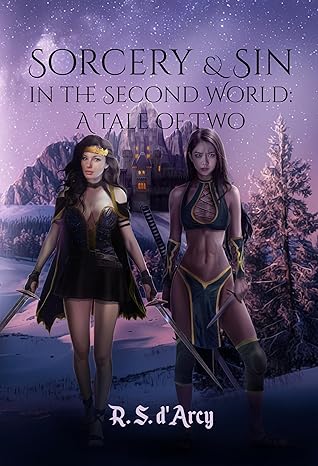

R.S. d’Arcy’s Sorcery & Sin in the Second World: A Tale of Two continues the captivating saga of Pal and Rena, a married couple navigating a magical realm far removed from their everyday life. Picking up where the first installment left off, the story plunges readers back into the Second World—a place Pal and Rena entered through a mysterious portal in their backyard. This sequel begins with Pal imprisoned in the inescapable tower, while Rena is bound to the sinister sorcerer Sego, forced into a role as his wife and queen. Though separated, their shared goal of reunion drives their individual quests, which are fraught with peril, tests of loyalty, and personal transformation.
Adventure, humor, and intrigue fill every chapter, making this story an absolute page-turner. The Second World’s unique blend of medieval and modern elements is brilliantly realized, with d’Arcy’s masterful world-building serving as a standout feature. From enchanted kingdoms ruled by powerful sorcerers to rich magical lore, every detail feels intentional and immersive. Readers are transported effortlessly into this vibrant and dangerous realm, where magic and human ambition collide.
The novel doesn’t just shine through its fantasy elements; it also explores profound themes. The treatment of women, for example, is a recurring motif that adds depth and resonance. Rena and Kana, another prisoner within the tower, exemplify the unyielding strength of women. Despite physical and emotional trials, their resilience remains a central force, particularly in harrowing encounters with the dwarves and Sego. Their perseverance and dedication to those they care for offer a powerful reminder of the indomitable spirit of women, even in the darkest moments.
Emotional themes of love, loyalty, and betrayal pulse through the narrative. Pal’s unwavering devotion to Rena propels much of the story, whether he’s battling to escape the tower or grappling with his own evolving powers. Similarly, Rena faces agonizing choices that test her endurance and commitment. Both characters are forced to weigh their survival against their love for one another, creating a gripping tension that asks the timeless question: can true love conquer all?
For fantasy lovers, Sorcery & Sin in the Second World: A Tale of Two is a must-read. It blends intricate world-building and serious emotional themes with doses of humor and fiery romantic tension. Fans of Lord of the Rings and Throne of Glass will find much to savor in this series’ unique take on fantasy. Step through the portal and embark on an unforgettable journey filled with magic, danger, and heart.
Pages: 399 | ASIN : B0DPJC8KHG

Variants of Our Future

Salvation Bleeding follows two people trapped who must pass through the Void in a desperate fight to retrieve the one artifact that can help save Utopia. What was the inspiration for the setup of your story?
The Void is where all possible futures exist. We all make decisions every day that have the potential to alter the path our lives take. Imagine facing each decision—with every possible future presented before you that flows from moment to moment—knowing that even the slightest variation in the path that looks right, could lead to your demise. The message is that the reality in which we exist is of our own creation. It is the accumulation of all our past decisions that delivers us to this moment in time. Now… whenever now is. And the next decision we make will lead to another thousand variants of our future.
When in the Void, Reyne’s choices not only impact him, but also the woman he loves, Mithany, and the future of worlds; all the while facing a malevolent being within the Void that desires to consume his soul. The representation of Reyne in the Void reflects the choices we face in our own lives every day. Our choices, knowingly or unknowingly, will lead us down a path that will not only affect us individually but all those around us as well—especially the ones we love.
And then there’s the Soul Stone. The symbolic artifact that has the power to set everything right when the past has gone wrong. Maybe not always delivering the outcome we’d expect.
This is the final book in the Utopia Falling Saga. Were you able to achieve everything you wanted with the characters in this trilogy?
Absolutely! The characters and the plot were let off the leash in book 3, Salvation Bleeding. This is an epic fantasy adventure that, at times, intentionally veers into grimdark fantasy. Reyne’s struggle with his own inner demon could only have been resolved in the way it did because of everything that preceded it. Through all the twists and turns to get there, I believe Salvation Bleeding delivers a very satisfying conclusion that the readers will love.
Do you have a favorite scene in this installment? One that was especially satisfying to craft?
There are so many scenes in this book I really enjoyed writing that it’s hard to pick just one. This being the third book in the trilogy, the need to do any extensive world-building was absent and from the first page, the plot dives right into action and doesn’t let up. BUT…if I must pick only one scene, it has to be the chapter titled “Convergence Wakes” where everything comes together in a jaw-dropping climax.
Can we look forward to more work from you soon? What are you currently writing?
Thank you for this question. Yes, I am working on two projects. The first is an omnibus edition of the complete Utopia Falling Saga trilogy that I hope to have ready as an ebook by February 2025. The second is a standalone fantasy novel that imagines what if something or someone whom we all must face one day were to write a memoir of his/her experiences. I’m about 12,000 words into what I expect will be about 75,000 when it’s finished. With a bit of luck, I hope to tease out its release later this year.
Author Links: GoodReads | Website | Amazon
Reyne must face the Void once more. But he knows an evil malevolence awaits him there, and it craves to devour his soul. If Reyne can survive the Void, if he can fend off his own inner demon, if he can kill the Devil’s Blacksmith, he will deliver Utopia its salvation, and return to Mithany, the woman he loves. … If he only had the Soul Stone! …or is it already too late?
Trials of Growth

In Old Paladins, a retired soldier is approached by a woman who needs his help avenging her family’s murder. What was the inspiration for the setup of your story?
In the early-mid 90s, I read Elizabeth Moon’s The Deed of Paksenarrion, and it has stayed with me a long time. It is a classic “hero’s journey” and bildungsroman in which we watch the heroine change greatly. The latter aspect, the growth of the character, interested me more. In Old Paladins, Sasha goes through a dramatic shift in character. And she’s not done. Her trials of growth have not ended- she hasn’t yet made a complete turn of the hero’s wheel.
Were you able to relate to your characters while writing them?
While I feel a strong connection to Gerard; because of age- I think- I can also relate to Sasha feelings of a missed life or happiness. I’ve wanted to write and publish for as long as I can remember, but circumstances prohibited that dream for quite some time.
What were some themes that were important for you to explore in this book?
Without giving too much away, the religious aspects, while minimum, were critical. Gerard is a man of faith, and it plays an intricate role in his world view and his personal quest. In addition to that, there are several scenes during Sasha’s training with Gerard that will play a later role in her future development, some of which are tied to the final novel in the planned series. Gerard seems haunted by his past … in the future, perhaps Sasha is haunted as well.
Author Links: Goodreads | Facebook | LibraryThing | Amazon
Home is where the heart is, and for Sasha Martin that was a burned farm and dead parents. The Great War was over before she was born— there were treaties and agreements, they were supposed to be safe. But what the Imperium wanted it took, and with it, all that Sasha had known. Now, a decade later, having survived on charity and boiling hatred, she sees a chance to strike back at her enemies. There’s an old man that lives outside of town … some call him a war hero.
Gerard Appleby has been a man of war, a man of honor, and now a man alone for twenty years. But when a stubborn girl bent on vengeance shows up at his door demanding that he teach her the sword, he realizes that his days of warm beer and quiet guilt are over … and there is a chance to tie up one loose end, one last battle that he should have fought twenty years ago.
Old Paladins
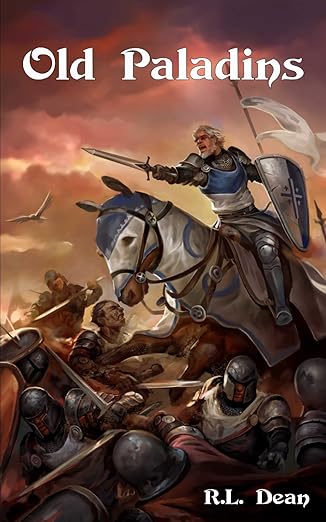
Old Paladins, by R.L. Dean, is a gripping tale of redemption, vengeance, and forgiveness, centered on two unforgettable characters. Gerard Appleby, a retired soldier burdened by the scars of war, is thrust back into the fray when Sasha Martin arrives at his doorstep. Consumed by rage and intent on avenging her family’s murder, Sasha demands Gerard teach her the art of the sword, setting them both on a journey that intertwines faith, loss, and healing.
Dean excels at character development, crafting layered protagonists whose past traumas shape their every decision. Gerard’s weariness contrasts sharply with Sasha’s fiery determination, yet their shared pain creates a compelling dynamic that drives the narrative. The meticulous attention to detail in each scene draws readers into a vividly rendered world, making it easy to imagine the landscapes and trials the characters face as they pursue their quests for justice and closure. The pacing is masterful, balancing moments of intense, visceral action with reflective interludes that explore the deeper themes of duty and faith. These quieter moments resonate just as powerfully as the high-stakes battles, offering a nuanced portrayal of what it means to confront the demons of the past.
This story leaves a lasting impression. Rarely does a book inspire the urge to scour an author’s pages in search of a sequel—but Old Paladins did just that. Although no follow-up exists, the depth of the characters makes parting with them feel almost unbearable. The ending, steeped in ambiguity, invites readers to ponder what lies ahead, creating a sense of yearning for more without undermining the story’s closure. As an avid reader, it’s a rare pleasure to finish a novel and feel as though its characters remain vividly alive, refusing to fade from memory. This enduring connection speaks to Dean’s skill in imbuing them with authenticity and life.
A particularly moving touch is found in the acknowledgments, where the author ties Gerard and Sasha to The Cure’s “Pictures of You.” This personal detail adds emotional depth, striking a chord that lingers. Having recently revisited the song myself, the parallel between its themes and the novel’s exploration of anger, despair, and forgiveness felt profoundly serendipitous. R.L. Dean’s Old Paladins offers a thought-provoking narrative, richly developed characters, and beautifully immersive prose. It’s a story that lingers in the heart and mind long after the final page.
Pages: 370 | ASIN : B0DL4HKWBV
Shadow Magic

Out of Embers and Shadows follows a woman navigating a fiery landscape in which rival nations are engaged in war as she simultaneously faces the truth about her past. Where did the idea for this novel come from?
In truth the idea stemmed from a long hike where I considered dragons and war. As we hiked both up and then back down a mountain in Slovenia I distracted myself from the grueling steepness by imagining dragons and the dynamics that would be at play if I had a dragon and others did not. Then I began to build a war around that idea and thus the Shadowfire series sparked to life.
How did you balance magic and its use throughout the story to keep it believable?
Magic is alive everywhere and for fantasy readers, I think it’s important to make it as a part of the characters as breathing is. Lora doesn’t just have shadow magic when she needs it, she feels the pulse of her power along her arms, in her very blood. She uses shadows that are already there and her magic dances with the flames from Emir or Garrison. Magic is not simply used; it is in every fiber of these characters’ being. I think having it that way helps to make the world more immersible and the magic more believable.
Lora is a memorable main character. What was the inspiration for her traits and dialogue?
I LOVE reading books that have strong female leads who are unapologetically themselves (Think Jude from Cruel Prince or Aelin from Throne of Glass). As I started really diving into the fantasy genre, I realized a lot of the female leads still leaned heavily on their male counterparts – either to train them or support them emotionally. I got tired of this so instead of searching for a book that had an already confident and highly skilled female lead – I wrote one!
Can you give us a peek inside book 2 in this series? Where will it take readers?
Book 1 is such a whirlwind and book 2 immediately picks up where book 1 leaves off. You follow Lora and Kalon as they grapple with their new “relationship” all while Lora is trying to rediscover herself while still running from her past. There are definitely more twists and turns in this one and I am excited to see how readers react to certain actions and revelations!
Author Links: GoodReads | Facebook | Website | Amazon
In a world where the clash between rival nations ignites the flames of war, Lora finds herself thrust into a whirlwind of unexpected alliances and dangerous secrets. Forged with a singular purpose, she was meant to be the weapon that brings down the Shades’ greatest foes, the war-mongering Drakes.
But fate has other plans when Lora is captured by the very enemy she was trained to destroy. Desperate to escape, Lora is offered a bitter bargain: aid her enemies in their quest, and in return, she’ll be granted freedom from the relentless grip of war.
Lora must navigate the murky waters of trust and betrayal, where the boundaries between friend and foe blur with each passing moment.
If you’ve already sacrificed everything, what else is there to lose?
Dive into a realm brimming with magic, dragons, and unexpected twists in Out of Embers and Shadows. Perfect for fans of thrilling adventures like Throne of Glass and The Bridge Kingdom, this epic fantasy will whisk you away on a journey of bravery, betrayal, and the enduring power of friendship. This tale includes an enemies-to-lovers romance, an endearing found family, LGBT representation, a battle of good versus evil, a journey of self discovery, and so much more.
Join Lora as she embarks on a journey that will test her courage, challenge her beliefs, and ultimately define her fate. Prepare to be spellbound from the very first page — click now and lose yourself in the adventure!
To Survive and Preserve

Their Village, Their Fortress, follows a soldier who defies orders and sets out on a journey to alert his home village and surrounding communities of a threat headed their way from a new weapon that causes mass destruction. What was the inspiration for the setup of your story?
There are two reasons behind how I set up this story. One is that it’s a standalone add-on to a wider series of seven books, in a world I have already built. Once I decided what kind of story I intended to write, I found where it might fit in existing continuity so that I wouldn’t have to create another new fantasy world; I don’t feel like broad-strokes world-building as much as I once did.
Conveniently, the seventh book in that series established a highland village where I had decided the villagers would tend to have Ukrainian names. I gave up on inventing names years ago, though some examples survive in earlier works. Since then, I have tried to mindfully borrow real names while considering what they mean and attempting a vague cultural consistency within a land. For example: Derek, from previous works, was from a land where most others around had Polish names, but empires tend to include many cultures for both benign and nefarious reasons, and people do move around, so you would encounter names from other cultures of Eastern Europe.
All the context the reader would need from this book gets mentioned in Their Village, Their Fortress: their old duke from a century ago, brave Galyna who went to confront him, people who fled from an aggressive imperial army to the safety of a land that welcomed them.
As for why I felt like writing a love letter to the power of community, where villagers with such names and traditional styles of dress stand together against a brutal imperialistic hierarchy… I have always used my work as a proxy to consider current events, but I have never been more direct.
What were some of the emotional and moral guidelines you followed when developing your characters?
The number one thing is balance. Even when I have a clear agenda, no named character is meant to be a caricature. The woman who believes her purpose is to interrogate every idea is valuable to the community for doing so, even if she makes enemies by taking things too far. The man with an uncanny knack for quick learning lives through severe struggles with the compassionate understanding of others; he does not just “have powers” that make him useful in the moment, he is a person with a complicated life to handle. You are meant to view the catalyst character as rather obnoxious at times, but he doesn’t ignore his missteps and at least he tries to do better.
The invading soldiers, as per my other works, are not evil inhuman creatures; they face the consequences of their participation just as they would the consequences of refusing orders, but they are people, possessing moral agency, private opinions, and responsibility for their actions. Even the character intended to be the least likable, the battalion leader, a cultist bureaucrat, believes thoroughly that his invasion is meant to improve the lives of those he intends to conquer–but his rigidly hierarchical worldview holds no space for contrary opinions, and he believes so much in this imaginary new world he would build for them that he would burn down the one they know and love. He is utterly steeped in beliefs that make him the hero of his own story and the villain of mine.
What were some themes that were important for you to explore in this book?
Community is the first thing, the heroism and value of the everyday. To handle that appropriately, I needed to flip my usual approach. So many of my prior books tell the stories of powerful people, with drama encompassing an entire continent. The action most often revolved around dukes, crown princesses, warlords, and generals. Sure, I would give perspectives and consequences, I would show you people having to abandon their homes because war is not neat or tidy and the battlefield you will read about is often someone’s ruined community space. The stories were driven by single personalities who would alter or preserve the course of their world, but only with the help of countless people who struggled, few of whom ever got named compared to their number.
For this book, I narrowed the scope. My initial idea, which I didn’t stick by, was to have the entire story happen within the bounds of Nimmlisok village–for most of these characters, that’s their world. While power brokers wage devastating wars from an impersonal bird’s eye view, I give you the story of everyday people coping with these grand maneuvers, trying to survive and preserve what matters to them. People who don’t need their world to be remade in anyone’s image, resisting the brutal power that punches down at them. This time, the power brokers from the other stories are almost entirely absent–a couple are named, while one of them says a few consequential things in the prologue. Their stories have already been told in other books.
Is this the first book in the series? If so, when is the next book coming out, and what can your fans expect in the next story?
This book is meant to stand alone as a read, though it exists as the eighth work in a single continuity.
My original plan for this series was six books: a trilogy followed by a prequel trilogy. Since the end of the first trilogy, I have tried to make everything that followed independently readable because I know how daunting it is to dive into a long fantasy series. I also think my writing has improved since the first trilogy, and I would rather lead with better material: why not jump in at Prince Ewald the Brave, or The Fate of Lenn, and read anything else at your leisure?
The seventh book, The Redemption of Jarek, was not really in this plan, but it was a contingency. The story was hinted at by existing works. I knew where it fit with the others in case I wished to keep writing, or if fans demanded more. One day, I asked myself why I should wait. If I knew what the story should be, perhaps I should write that before I forgot or before life had me otherwise occupied.
This eighth book was not even a contingency plan. I had no rough draft or even notes about it, yet somewhere between June and July, I unexpectedly had a book. Once I had it, I did not hesitate to produce it. How do I know I will ever have another idea, and such ideal circumstances to write it?
That’s how it is from now on. I can’t reasonably guarantee any more books when the eighth one was a surprise to begin with. I encourage readers to seek out and appreciate the eight that are on the market.
Author Links: GoodReads | Amazon
When a calamitous new weapon fells a fortress once considered invincible, one soldier rides home to deliver the terrible news. This journey is against orders, but he insists no village is too small to be warned of what’s coming, even if he’s not sure what they can do. He delivers an impassioned call to action, daring them to try. Reconnecting with his community involves reconsidering why he left it, and what he might regret having left behind; but he soon faces scrutiny when they realize something about his appeal doesn’t add up.
Join the struggle of eclectic villagers as each decides their answer. Each confronts what’s happening however they must, journeying through their emotions and sometimes delving into their personal histories to reconcile themselves. Each resister’s specialties enrich their efforts to scrape together a victory from what’s on hand. The events to follow reveal not just how they will fight, but why.
Their truth, their skills, and their efforts enable them to resist—but even if they believe, can a hastily-prepared volunteer militia of farmers defeat a battalion of trained soldiers?
Their Village, Their Fortress
Dylan Madeley’s Their Village, Their Fortress presents a gripping tale of courage, community, and survival set against the backdrop of a crumbling empire. When an allegedly impregnable fortress falls and the commanding general fails to warn the smaller outlying villages of an approaching threat, the story pivots to one soldier, Oleksiy. Disagreeing with his army’s decision to retreat and regroup, Oleksiy defies orders. He sets off on a perilous journey to alert his home village and surrounding communities, driven by an unbreakable resolve to prepare his people for the coming storm. The narrative follows Oleksiy’s return, where he unites with the villagers in a desperate bid for survival. As he shares the dire news, Madeley immerses readers in the lives of these ordinary people, revealing their hopes, fears, and resilience. Among the villagers, one character stands out: Vitaliy. Initially appearing overly emotional, his intense feelings seem to cloud his judgment. Yet, as the story unfolds, Madeley masterfully unpacks the complexity of Vitaliy’s character. His emotions, rather than being a weakness, become his strength, offering a unique perspective and a deep-seated empathy that shapes his actions and decisions.
Despite its brevity, the book lacks none of the essentials. The plot is expertly constructed, with clear, vivid descriptions of strategic discussions and battle preparations. The narrative’s pulse quickens as villagers debate daring, risky plans to outwit the enemy. Yet, it is the nuanced portrayal of characters that truly sets this story apart. Madeley introduces a cast of distinct individuals, each brought to life with carefully woven backstories that illuminate their motivations and fears. These glimpses into their pasts enrich the present, adding emotional depth and resonance to the unfolding drama.
One of the most compelling aspects of the novel is the portrayal of the village’s unity. Madeley captures the essence of a close-knit community where every individual has a role, and each strength complements another’s weakness. This interdependence is painted with finesse, highlighting the unspoken understanding among villagers. The friendship between Vitaliy and Denys exemplifies this bond. When Vitaliy acts impulsively, Denys never judges. Instead, he offers space and understanding, modeling a compassionate response that others in the village come to respect and learn from. It’s a testament to the emotional intelligence and mutual respect that bind these people together.
With an eye for small yet significant details, Madeley’s writing invites readers to connect deeply with the characters. Every moment, every interaction feels intentional, crafted to draw readers into the villagers’ struggle for survival. The book’s balance of action, emotional depth, and richly drawn relationships makes it a compelling read, one that lingers long after the final page is turned. Their Village, Their Fortress is a testament to the power of community, the strength found in vulnerability, and the indomitable human spirit in the face of insurmountable odds.
Pages: 140 | ASIN : B0DFTC3DNH



 LITERARY TITAN