Blog Archives
The Angel of Death’s True Origins

Inside Heaven Inc. follows the reluctant Angel of Death as he navigates celestial bureaucracy, mythology, temptation, friendship, and the realization that redemption begins with taking responsibility for his choices. What was the inspiration for the setup of your story?
The common portrayal of the Angel of Death in modern fiction is that of a lone figure. Yet, within the name there is a recognition of the Angel of Death’s true origins, that of being an angel. I wanted create a fresh take on a familiar trope by placing the Angel of Death in a world where fitting in with all that goes along with being an angel means as defined by the common portrayals of angels with within Christian, Jewish, and Islamic beliefs… with a twist. This particular angel, Azrael, ain’t a happy camper.
How did you decide which elements of biblical tradition, apocrypha, and mythology to incorporate or reinterpret?
Azrael, speaking in modern times, takes us back to when and why the job of Angel of Death became necessary—at the time humans entered the picture—and how he reluctantly got stuck with the job. While Genesis is natural starting point, there is a vast source of similar origin stories from other cultures that predates the Bible and offers stories that weren’t included. These sources combined to offer me, as a writer, a rich source of material for characters, events, and motivations that helped shape the celestial and earthly worlds I created. It’s a mythological retelling of sorts in the voice of a sarcastic narrator, Azrael, the Angel of Death who doesn’t see things the way you’d expect from an angel in Heaven.
Azrael’s sarcastic, conversational voice is central to the novel. How did you develop that voice, and did it change as you wrote?
I imagined Azrael as an everyman who’s not happy in his, and internalizes his disagreement with management’s way of doing things. An employee stuck in a job where he or she has few friends, working for a boss who doesn’t seem to care about his or her feelings, whose only objective is to see that Azrael gets the job done. The irreverent voice grows out of that perspective. Yet, as Azrael struggles over the centuries that follow, his view of Heaven and humans changes along with the narration style of his story.
Redemption becomes increasingly important as Azrael’s story unfolds. What do you hope readers take away from the novel’s ideas about accountability, mercy, and the possibility of change?
My first objective is that readers are entertained and enjoy Azrael’s story. The character might be snarky at times, ruffled by events that keep pushing him deeper and deeper into a job he never wanted, but that doesn’t mean Azrael can’t change. It takes courage for Azrael to admit to his own faults, to accept responsibility for what he has become, and when faced with eternal damnation, he will either rise above it or be condemned for eternity. Free will and accountability for the choices one makes in life aren’t unique to angels.
Author Links: GoodReads | Facebook | Website
When Azrael’s only friend, the Angel Samael, is dragged into Hell by Lucifer’s minions, Azrael must descend into the Abode of the Damned and confront the purpose he’s spent millennia railing against—his eternal fate hanging by a thread if he can’t embrace the destiny he never asked for.
A mythological reimagining of the Angel of Death—jaded and trapped in a job he never wanted, with only one way out… through Hell.
Inside Heaven Inc. Confessions of Azrael


R.C. Vielee’s Inside Heaven Inc.: Confessions of Azrael is a comic fantasy built around a clever premise: the Angel of Death is an overworked celestial employee who never wanted the job. Azrael narrates his own history, beginning with the earliest generations of humanity and explaining how Abel’s murder unexpectedly turned an Ordinary Angel into the being responsible for collecting human souls. From there, Vielee imagines Heaven not only as a divine realm but as a sprawling organization complete with management structures, assignments, procedures, internal politics, and an employee who’s increasingly dissatisfied with his position. Azrael establishes the novel’s voice immediately when he tells the reader, “Most just call me the Angel of Death. You’re wondering if the Angel of Death is real. I am.” That combination of supernatural authority and conversational irreverence defines much of the book.
The novel draws broadly from biblical narratives, apocryphal traditions, mythology, and familiar religious figures, then reshapes them through Azrael’s distinctly modern perspective. Adam and Eve, Cain and Abel, Lilith, Lucifer, Michael, Samael, Azazel, the Grigori, and the Nephilim all become participants in a celestial history that feels part theological satire, part workplace comedy, and part fantasy adventure. Vielee gives the world an unusually large scope, moving from Eden and the first human death to Hell, Purgatory, reincarnation, angelic bureaucracy, and the violent campaign against the fallen Grigori. The conceit of Heaven Inc. is especially effective because it provides a consistent framework for the mythology. Divine events become projects, assignments, administrative decisions, and occasionally serious organizational failures. Beneath the comedy, however, the supernatural machinery has consequences, particularly for Azrael, whose repeated contact with suffering and damnation gradually changes the way he understands his work and himself.
Azrael’s development supplies the novel with its emotional structure. At first, he treats his problems largely as the result of an assignment he never chose, an inflexible supervisor, and a system that refuses to let him leave. His resentment makes Lucifer’s temptations increasingly dangerous, while his relationship with Samael gives that internal struggle a personal dimension. As the story progresses, Azrael is forced to confront the uncomfortable distinction between circumstances imposed upon him and choices that remain his own. That same concern with responsibility shapes his treatment of Samael near the conclusion, when judgment is tempered by friendship, penance, and the possibility of becoming better. The book ultimately describes its own purpose succinctly: “This story is one of redemption.” The statement fits the novel because redemption here depends on accountability.
What makes Inside Heaven Inc. distinctive is the way Vielee sustains an informal, occasionally profane narrator across material that ranges from creation mythology to moral reflection. Azrael can be sarcastic, impatient, compassionate, petty, frightened, and unexpectedly tender, which keeps an immortal figure grounded in recognizable emotions. The humor carries much of the reading experience, but the novel’s lasting interest comes from the questions beneath it: what free will requires, how resentment can distort judgment, whether punishment allows room for mercy, and what responsibility means when circumstances genuinely are unfair. By the epilogue, Azrael understands that his circumstances didn’t improve simply because the world became easier. They improved when he stopped allowing grievance to determine his choices, a conclusion the book then extends directly to its human audience. The result is an imaginative, energetic fantasy that uses celestial satire to tell a fundamentally human story about responsibility, friendship, temptation, and the difficult work of change.
Pages: 290 | ASIN: B0HG2VPT37

Variants of Our Future
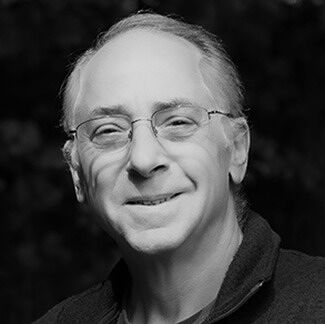
Salvation Bleeding follows two people trapped who must pass through the Void in a desperate fight to retrieve the one artifact that can help save Utopia. What was the inspiration for the setup of your story?
The Void is where all possible futures exist. We all make decisions every day that have the potential to alter the path our lives take. Imagine facing each decision—with every possible future presented before you that flows from moment to moment—knowing that even the slightest variation in the path that looks right, could lead to your demise. The message is that the reality in which we exist is of our own creation. It is the accumulation of all our past decisions that delivers us to this moment in time. Now… whenever now is. And the next decision we make will lead to another thousand variants of our future.
When in the Void, Reyne’s choices not only impact him, but also the woman he loves, Mithany, and the future of worlds; all the while facing a malevolent being within the Void that desires to consume his soul. The representation of Reyne in the Void reflects the choices we face in our own lives every day. Our choices, knowingly or unknowingly, will lead us down a path that will not only affect us individually but all those around us as well—especially the ones we love.
And then there’s the Soul Stone. The symbolic artifact that has the power to set everything right when the past has gone wrong. Maybe not always delivering the outcome we’d expect.
This is the final book in the Utopia Falling Saga. Were you able to achieve everything you wanted with the characters in this trilogy?
Absolutely! The characters and the plot were let off the leash in book 3, Salvation Bleeding. This is an epic fantasy adventure that, at times, intentionally veers into grimdark fantasy. Reyne’s struggle with his own inner demon could only have been resolved in the way it did because of everything that preceded it. Through all the twists and turns to get there, I believe Salvation Bleeding delivers a very satisfying conclusion that the readers will love.
Do you have a favorite scene in this installment? One that was especially satisfying to craft?
There are so many scenes in this book I really enjoyed writing that it’s hard to pick just one. This being the third book in the trilogy, the need to do any extensive world-building was absent and from the first page, the plot dives right into action and doesn’t let up. BUT…if I must pick only one scene, it has to be the chapter titled “Convergence Wakes” where everything comes together in a jaw-dropping climax.
Can we look forward to more work from you soon? What are you currently writing?
Thank you for this question. Yes, I am working on two projects. The first is an omnibus edition of the complete Utopia Falling Saga trilogy that I hope to have ready as an ebook by February 2025. The second is a standalone fantasy novel that imagines what if something or someone whom we all must face one day were to write a memoir of his/her experiences. I’m about 12,000 words into what I expect will be about 75,000 when it’s finished. With a bit of luck, I hope to tease out its release later this year.
Author Links: GoodReads | Website | Amazon
Reyne must face the Void once more. But he knows an evil malevolence awaits him there, and it craves to devour his soul. If Reyne can survive the Void, if he can fend off his own inner demon, if he can kill the Devil’s Blacksmith, he will deliver Utopia its salvation, and return to Mithany, the woman he loves. … If he only had the Soul Stone! …or is it already too late?
Salvation Bleeding: Forge of the Soul Stone

The Devil’s Blacksmith teeters on the brink of annihilating Tartica, pushing Utopia to the precipice of war. Reyne, the last glimmer of hope, allies with Gina, a skilled and unrelenting assassin, in a desperate bid to halt the chaos. Believing they have reached Evidar, they are horrified to discover they remain trapped in the Void—a sinister, treacherous realm that hungers for Reyne’s soul. To save Utopia, Reyne must brave the Void once more, wrestle with his own inner turmoil, and vanquish the Devil’s Blacksmith. Without the Soul Stone, his prospects appear bleak. Yet, the thought of Mithany, his long-lost love, ignites his determination to fight on and see her again.
What stands out most in Salvation Bleeding is its grounded core, despite the fantastical backdrop. The narrative’s exploration of sacrifice and the battle with personal demons resonates deeply, underscoring the lengths to which people will go to protect those they cherish. The portrayal of the Void as an oppressive, malevolent force adds depth, serving as a poignant metaphor for political control while highlighting how a single individual’s courage can spark monumental change.
Reyne’s unwavering devotion to love and his cause makes him a compelling protagonist, someone to root for against insurmountable odds. His sacrifices prompt reflection on the human capacity to endure for the sake of others, and his sensitivity to the Soul Stone’s potential and his tendency to become ensnared in personal pursuits serve to enrich his character, making him relatable. It is worth noting, however, that Reyne’s sensitivities felt somewhat repetitive. Gina’s presence brings balance and intrigue. Her unconventional methods and razor-sharp skills make her an essential counterpoint to Reyne’s emotional intensity. Despite embodying the archetype of a cold, arrogant, and seemingly emotionless killer, her character adds depth rather than detracting from the narrative. Her dynamic with Reyne highlights growth and partnership, creating a compelling duo whose synergy drives the story forward.
Salvation Bleeding: Forge of the Soul Stone captivates with its blend of high stakes, emotional depth, and rich symbolism. It’s a tale of resilience, love, and the indomitable human spirit, leaving readers to ponder the sacrifices they’d make in their own battles.
Pages: 516 | ASIN : B0DKZB3SNW
Explore the Darker Side
In Chaos Ascending: A Feast of Betrayal, a man is forced on a quest and must evade assassins all the while journeying with a man he feels he cannot trust. What was the inspiration for the setup of your story?
As both a writer and a landscape photographer, there is the experience of relying on one’s self, one’s own talents, to create something. However, I’ve also experienced many years working in a corporate environment where the motivations of other team members you depend on to succeed aren’t always in sync or even honorable. Many coworkers are wonderful teammates and work well with others, but not all. I guess the setup comes from life’s experiences, both the good ones and the bad ones. Others gunning for your job become assassins on your trail, whereas leaders with their own hidden agendas become Mera.
Did you plan the tone and direction of this second book in the trilogy before writing, or did it come out organically as you were writing?
The tone for Chaos Ascending: A Feast of Betrayal, was set even before I started writing the 1st book in the series. As a landscape photographer, I delight in finding the beauty in nature, creatively capturing it, and sharing my love of Nature with others. But there is a duality lurking somewhere in my soul that comes out when I write. Photography provides an outlet for expressing joy and wonder while my writing allows me to explore the darker side of people.
It is said there are two types of writers, plotters and pantsers. I write outlines for each book but never seem to follow them. As I get into each character’s head while writing, they sometimes take me in new directions the plot outline didn’t envision. The short answer to your question is that it all comes out organically.
What were some of your inspirations as a writer?
Back in the day, while still in high school, I pulled a book from my father’s bookshelf, Lord Foul’s Bane by Stephen R. Donaldson. It’s a dark and compelling fantasy. At the time, it seemed out of sync with the fantasy genre. I loved the entire series. Years later, I happened upon Mark Lawrence’s, The Prince of Thorns, and Joe Abercrombie’s First Law trilogy. These three authors showed me that the hero isn’t always noble, doesn’t always have to win, and the bad guy may have a valid point…based on how they see things. The traditional “Hero’s Journey” could be turned on its head, and readers wouldn’t reject the character arc. Donaldson, Lawrence, and Abercrombie opened my eyes to the world of dark (grimdark) fantasy.
I was also inspired by the state of our world today in creating the worlds of Tartica and Evidar. With so many people these days taking fervent positions on one issue or the other, unwilling to co-exist with someone who sees things differently, I wrote the Utopia Falling Saga as a reflection of that dynamic expressed in a dark, epic fantasy. I’ve left it open for the reader—from either opposing point of view—to see themselves as the hero fighting to save the world. Even the Devil’s Blacksmith, as bad as he is, is fighting to secure Evidar’s salvation from its ever-present darkness.
Can you give fans a peek inside the follow-up to Chaos Ascending?
In the 3rd book, Convergence Waking: Forge of the Soul Stone, we get to see a glimpse of the origins of The Great Destruction, and it isn’t what the utopian civilization of the Third Age presumed. One character’s discovery of that secret has a major impact on the climax.
Using multiple points of view to tell the story of the Utopia Falling Saga—the 3rd and final book in the series—delivers a fast-paced, overarching plot that weaves each storyline into a cohesive conclusion. Each character arc requires a satisfying ending as a payoff to those readers who’ve stuck with me through three books. Yet, it shouldn’t come as a surprise to dark fantasy enthusiasts that a satisfying conclusion doesn’t mean every beloved character makes it to the end. Characters we love to hate, such as Neladith, Derr, and even Jerithan, will have something to say in driving the interwoven POV plotlines to a compelling climax. And of course, the question hanging out there through three books, does Reyne ever get back to Mithany, will be resolved. And, if they do, are either the same people they were when it all began? Well, that’s an altogether different issue.
Author Links: Goodreads | Instagram | Twitter | Facebook | Website | Amazon
As civilization crumbles all around him, Reyne’s soul mirrors Tartica’s downfall; forced to abandon his bride-to-be; his brother ripped from his life; sent on a quest he neither believes in nor wants any part of; and alone, joined only by a mysterious man he doesn’t trust.
As Reyne prepares for an impossible transition through the Void to enter the dark realm of Evidar, he plots his own deception. But Evidar assassins are on his trail. They know he’s alive and they’re not only getting close, they’ve found him!
With betrayal lurking in the shadows, Tartica’s future, Evidar’s salvation, and Reyne’s life, all hang in the balance.
Reyne’s journey in the adult themed, dark, epic fantasy trilogy, The Utopia Falling Saga, continues in second book, Chaos Ascending: A Feast of Betrayal.
Chaos Ascending: A Feast of Betrayal


Chaos Ascending: A Feast of Betrayal, by R.C. Vielee, emerges as a compelling dark fantasy novel, intricately weaving themes of internal conflict, fate, and the interplay of parallel universes. Set against a backdrop of political intrigue and spiritual turmoil, the story unfolds in a world teetering on the brink of collapse. The protagonist, Reyne, is thrust into a treacherous journey through the Void to Evidar, grappling with the burdens of deception and destiny while evading assassins. His story is a reflection of the broader narrative: the struggle of Tartica under Chancellor Tomelai’s oppressive rule and the looming threat of the Devil’s Blacksmith.
Reyne’s character is deftly portrayed, and his inner turmoil echoes the larger societal decay and the tension between conformity and rebellion. This complexity lends him a relatable depth, particularly in his struggles with moral ambiguity and trust, mirroring the human inclination to adapt for survival.
Mithany’s character complements this dynamic, offering a poignant exploration of guilt and honesty amid a web of deceit. The antagonist, known as the Devil’s Blacksmith, injects a palpable sense of dread into the narrative, embodying the despair and dangers lurking within the story’s universe. The juxtaposition of Evidar and Tartica skillfully illustrates the perpetual battle between darkness and light, resonating with the complexities and dualities of real life. Vielee’s novel is notable for its meticulous attention to detail and the seamless integration of sophisticated themes, especially the exploration of physics elements. The characters are crafted with depth and nuance, making their struggles and triumphs resonate with the reader.
Chaos Ascending is more than a fantasy novel; it’s a thought-provoking exploration of the human condition set against a richly imagined world. A highly recommended read for anyone seeking a compelling dark fantasy that will remain with the reader long after the last page is turned.
Pages: 609 | ASIN : B0CTGJW7Y4


