Blog Archives
The Cats of Caylor Academy: The Pharoah’s Catacombs
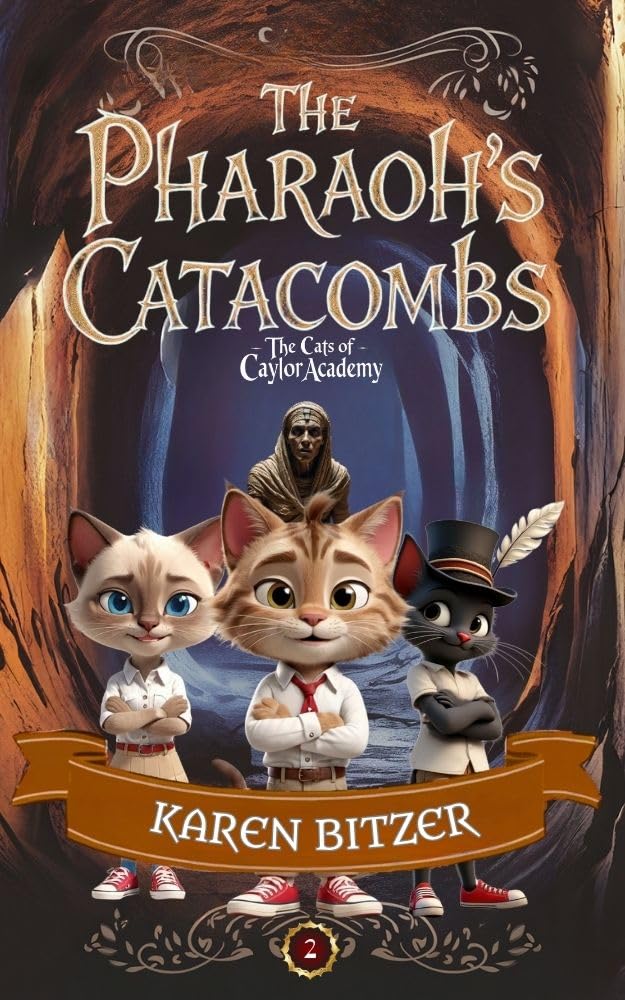

What unfolds when a band of spirited young cats collides with supernatural adversaries in the shadowy depths of Paris’s underground funerary labyrinth? A mix of intrigue, humor, and unexpected poignancy, far richer than one might anticipate from a children’s tale.
Karen Bitzer’s The Pharaoh’s Catacombs, the second entry in The Cats of Caylor Academy series, offers a brisk yet absorbing read. Five feline protagonists, each with quirks and flaws as vivid as any group of adolescents, must rely on cleverness and the unshakable bond of friendship to survive. Their adventure carries them into danger, wonder, and the kind of magical mayhem that feels instantly captivating. Historical touches, woven seamlessly into the narrative, lend an educational edge to the book’s enchanting blend of action and charm.
Comparisons are inevitable. Some readers may catch echoes of Harry Potter in the camaraderie and peril, while others will recognize the wry tone of James and Deborah Howe’s Bunnicula novels. Yet Bitzer carves her own imaginative space. Even those who missed the first volume needn’t worry, this story stands solidly on its own, thanks to the memorable personalities of Quinn, Buckley, Tank, Sheba, and Ruby.
Bitzer wastes no time tossing her band of misfit cats into trouble, and watching them claw their way out is a consistent delight. Each character resonates in archetypal fashion: Quinn, spirited and eccentric; Buckley, the thoughtful strategist; Ruby, bold and daring; Tank, ever resourceful; and Sheba, sharp-eyed and strong-willed. Young readers will almost certainly discover a favorite, a kindred spirit among the whiskers and tails.
Beyond its magic and mischief, the book respects its audience. It challenges as much as it entertains, delivering both excitement and substance. The Pharaoh’s Catacombs proves itself a children’s story of uncommon depth, one that educates, enchants, and refuses to underestimate the intelligence of its readers.
Pages: 177 | ASIN: B0FLH1R587

Assassin Royale
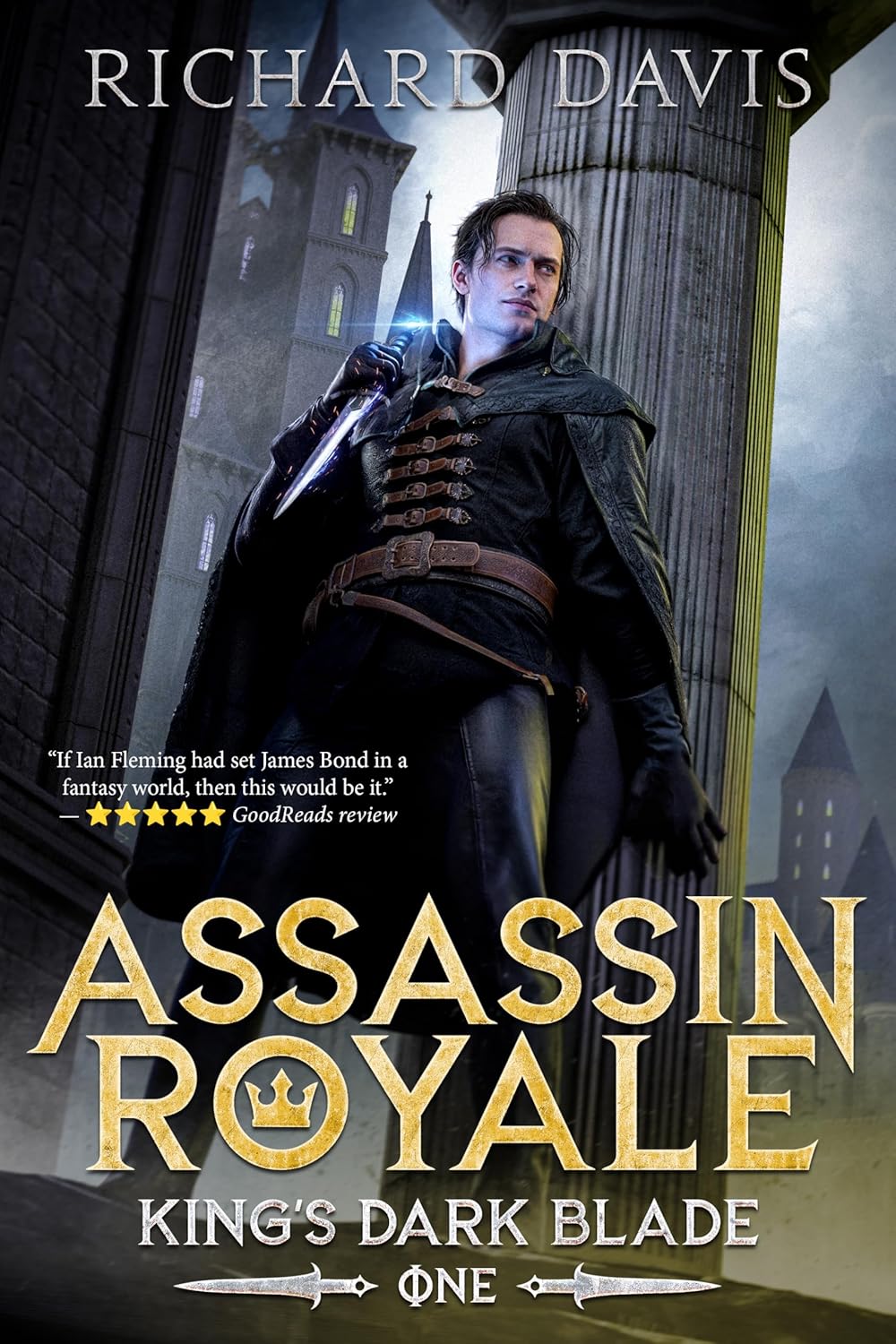

Assassin Royale sweeps readers into a world of intrigue, blood, and shadowed loyalty. The book follows Killian Lord, an assassin bound to King Ember, as he navigates political schemes, supernatural weapons, and his own sense of duty. It blends classic fantasy tropes like warring kingdoms, orcs, and noble houses, with the sharper edges of espionage and assassination. The opening threads with Tom, a boy orphaned by cruelty and thrust into a violent fate, layer the tale with tragedy and innocence lost. As plots twist around Maximilian Durandal’s obsession with power and the mysterious Moonlight Shard, the narrative grows into a tale of personal vendetta, war, and the unshakable ties between assassin and king.
I found the writing both sharp and indulgent. Sometimes it lingers over food, scars, or clothing in a way that paints the world richly, almost cinematically, though it sometimes slows the pace. What really pulled me in was the texture of Killian Lord himself. He’s scarred, bitter, but strangely noble. I enjoyed the banter, the gallows humor, and the way his cynicism bumps up against moments of raw loyalty or unexpected tenderness. Durandal, in contrast, is the kind of villain I love to hate. He’s flamboyant, predatory, a man whose charm makes his cruelty sting all the more. There’s an energy to these characters that kept me turning pages even when the plot meandered. I’ll admit, sometimes the political intrigue felt familiar, but the smaller character moments gave it fresh life.
What surprised me most was the emotional punch. Tom’s chapters nearly broke me. His fear, his resilience, his desperate need for safety, those parts had me tense and aching. And then there’s the king. Ember is drawn with such warmth and dignity that I felt Lord’s loyalty as my own. The book thrives on drama, spectacle, and old-fashioned stakes.
I’d recommend Assassin Royale to readers who like their fantasy with grit but also a strong sense of heart. If you enjoy assassins who brood yet bleed with conviction, kings who inspire, and villains who make your skin crawl, this will hit the mark. It’s entertaining, vivid, and full of moments that you’ll remember. Fans of political fantasy like Game of Thrones or assassin-driven sagas like The Night Angel Trilogy will devour this book.
Pages: 298 | ASIN : B0FHTMGWVN

Stone of Faith, Book 6 Stones of Iona Series
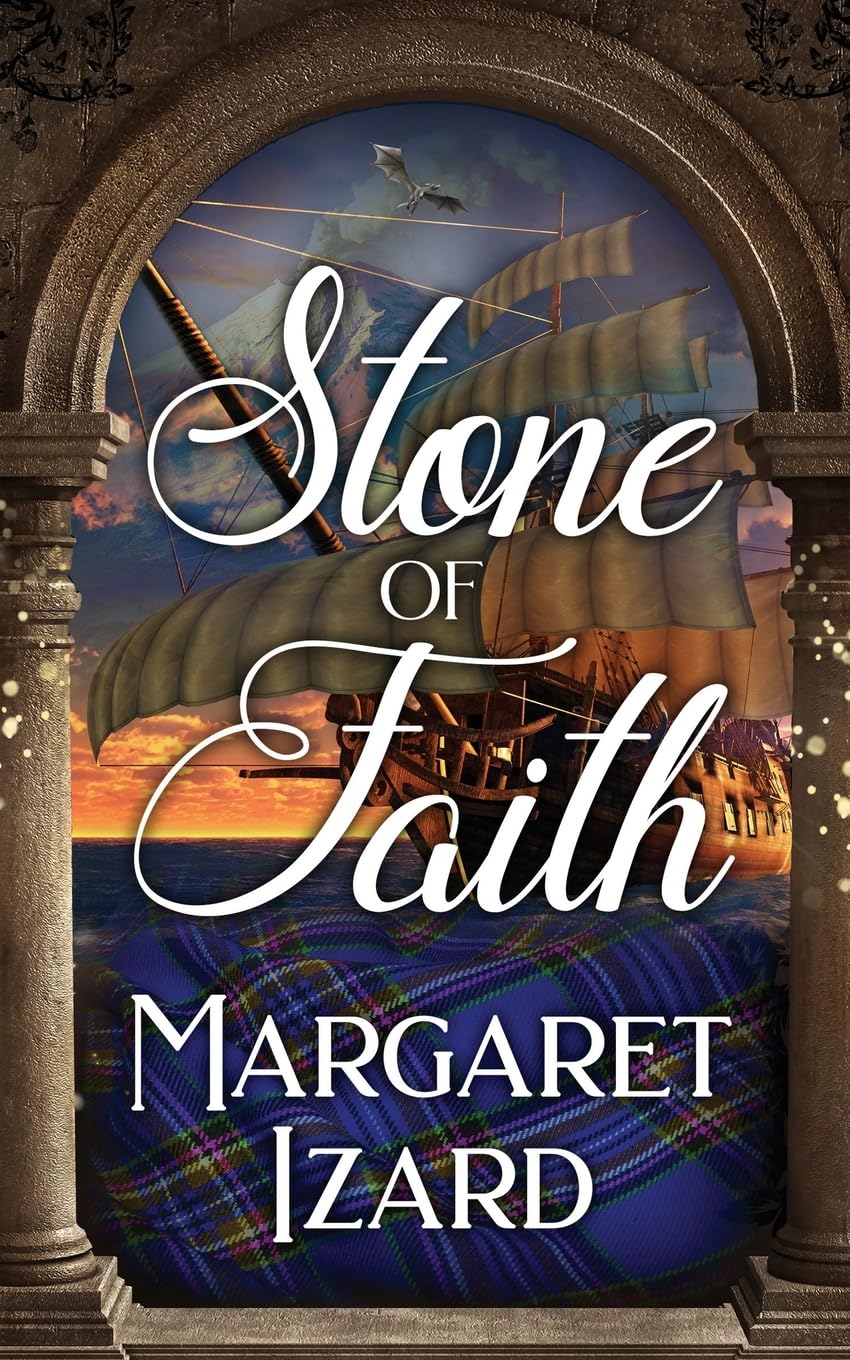
The story is a sweeping mix of time travel, seafaring adventure, romance, and myth. At its center is Ewan MacDougall, a man torn between his life in the twentieth century and his calling across the centuries as a pirate captain with a conscience. He frees enslaved people, battles rival captains, and searches for the legendary Stone of Faith while haunted by visions of a mysterious red-haired siren who may hold both his destiny and his doom. The novel blends Scottish folklore, Fae magic, and high-stakes clashes on the sea with a deep undercurrent about love, sacrifice, and the meaning of faith.
I found myself caught up in the action. The writing has a pulsing energy, full of sword fights, cannon fire, and heated confrontations, but what grabbed me most was the way the quieter moments landed. Ewan’s doubts, his search for belonging, and his hunger for something more than adventure made him feel relatable. At times, the dialogue leaned a bit theatrical, but the ambition of the story and the emotion it carries more than made up for that.
I also really admired how the myth and family legacy were woven into the narrative. The fables within the story felt like campfire tales passed down through generations, both charming and ominous. There’s a kind of wild joy in how Izard throws together pirates, ghosts, Fae kingdoms, and love stories without apology. I sometimes shook my head at the boldness of it all, but I kept turning the pages. It made me smile that the book never lost sight of the heart, the way faith, in love or in destiny, can carry someone through storms.
Stone of Faith is a book for readers who like their romance tangled with fantasy, who enjoy folklore alongside duels at sea, and who don’t mind when the story goes big rather than subtle. It’s heartfelt, dramatic, and fun, and while it can be a bit over the top at times, I think that’s exactly what gives it charm. If you like your adventures with a mix of magic and tenderness, this book will be worth your time.
Pages: 246 | ISBN : 150926275X
Myth-inspired Fantasy

Resurrection follows a woman caught between two identities, the adopted daughter of mortals and the blood-born child of the King of the Faeries, who has to decide what she is willing to risk, and what path her future will hold. What was the inspiration for the setup of your story?
The inspiration came from Irish folklore and the land itself. The Scald Crow introduces Calla Sweet and sets her on the path that carries her straight into the faerie realm in Resurrection. My worldbuilding is rooted in the Tuatha Dé Danann of Irish mythology, and the setting is drawn from Donegal County in Ireland, a place I had the privilege of visiting. Walking that landscape—its bogs, cliffs, and souterrains—helped me plot the story directly onto the land, blending the myth-soaked history of the region with my characters’ journeys. Rather than magical realism, I would call it myth-inspired fantasy: the legends of Ireland reimagined in a way that asks Calla, and the reader, what risks are worth taking and what future is worth choosing. Readers who enjoy romantasy grounded in rich folklore—think ACOTAR with a darker, more mythic edge—will feel right at home.
I find the world you created in this novel brimming with possibilities. Where did the inspiration for the setting come from, and how did it change as you were writing?
The setting began with Donegal—the wild Atlantic coast, the ruins, the hidden valleys. That landscape gave me my foundation, but as I wrote Resurrection, the world kept expanding. The faerie realm began to layer itself over the geography of Ireland, drawing on souterrains, standing stones, and cairns, reimagined as portals, prisons, or thresholds of power. What started as a place grounded in Ireland’s physical beauty grew into something more myth-drenched and shifting, shaped as much by the Tuatha Dé Danann as by Calla’s choices. In many ways, the setting became a character in its own right, evolving in step with her journey. For readers who crave immersive, atmospheric worlds where myth and magic are woven into every shadow, this is that kind of story.
In fantasy novels, it’s easy to get carried away with the magical powers characters have. How did you balance the use of supernatural powers?
Each character in Resurrection has a specialty, a gift that feels innate to them, yet the Tuatha Dé Danann as a whole share the same mystical capabilities. What creates balance is not the sheer presence of power, but its limits. The abilities come with costs, consequences, and vulnerabilities, and those aspects are as important as the magic itself. I was careful to keep the focus on the characters—their decisions, struggles, and relationships—so that the powers serve the story rather than overwhelm it. In that way, the supernatural becomes a natural extension of who they are, rather than the entire definition of them.
Where does the story go in the next book, and where do you see it going in the future?
Beyond the Faerie Rath is, at its heart, the story of three sisters—Calla, Nemain, and Macha—whose destinies are bound to the faerie realm in dangerous and surprising ways. Book Three, Tides of Treachery, follows Macha into the House of Faces, a place of illusion and betrayal where every mask hides a threat. If Resurrection was about identity and belonging, Macha’s journey delves into deception, ambition, and the peril of choosing the wrong allegiance.
As the series continues, each sister’s path will unravel different facets of the Tuatha Dé Danann and the shadows working against them. Their stories are meant to build layer by layer, until the moment their journeys converge again—when the fate of the realm will rest on the choices of all three.
Author Links: GoodReads | Facebook | Website
Colm, weighed down by more than just his name, embodies the voice of an ancient power that risks consuming him, even as he strives to protect his loved ones. When a threat jeopardizes everything dear to him, he ventures into the Faerie realm—pursued, haunted, and determined to find Calla before it’s too late.
Ciarán returns, but the burden of freedom weighs heavily on him. Can he let go of past wrongs and live in the light?
Saoirse shines brightly. The land feels it. The old gods stir.
Their journey continues in Resurrection, a darkly romantic fantasy where love is dangerous, power is awakening, and the dead whisper.
Driven: The Founder’s Seed Book 3
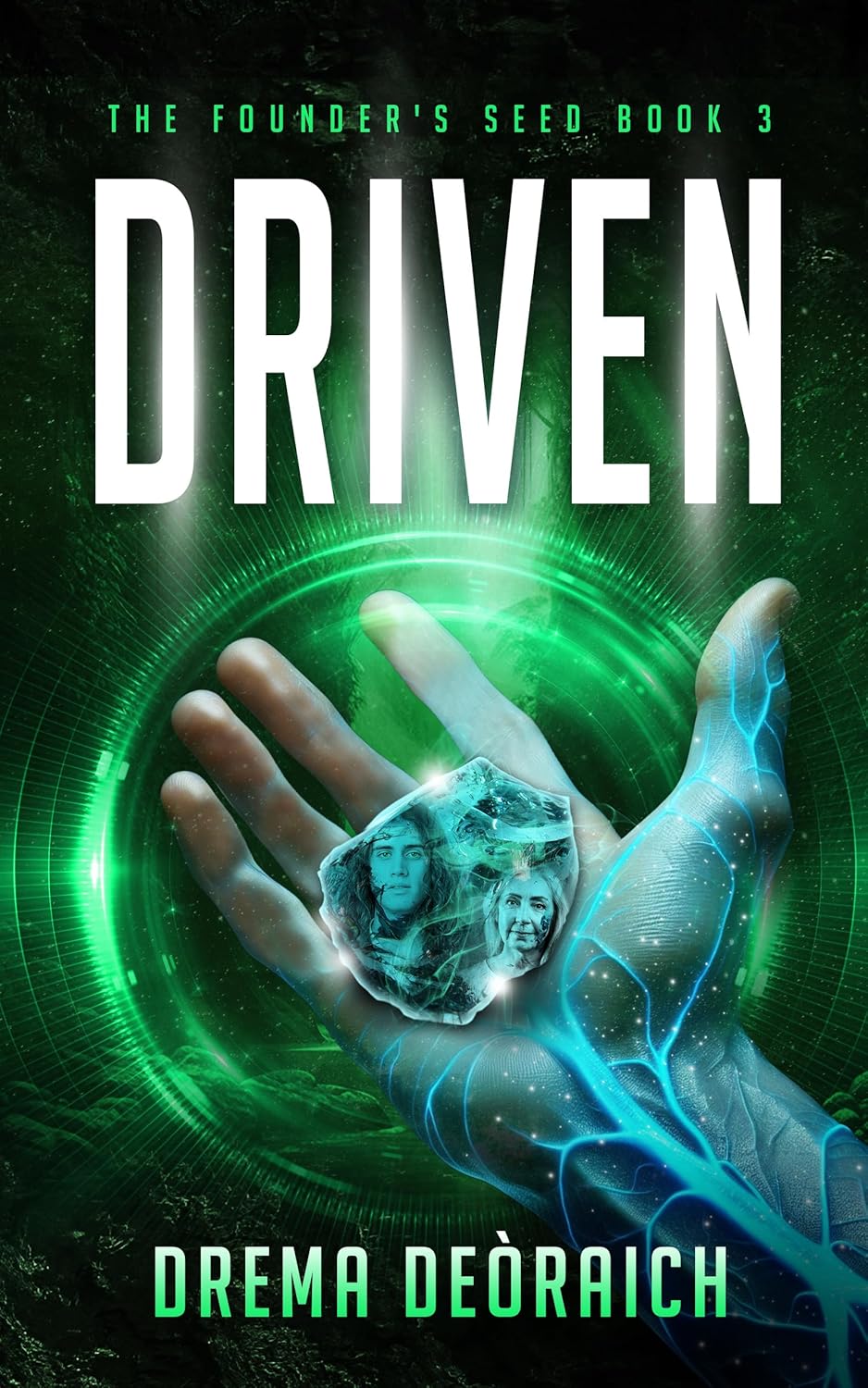
Driven is the third installment in The Founder’s Seed series, continuing the riveting saga with even higher stakes and deeper revelations. The book pulls you straight into a galaxy alive with politics, betrayal, and fragile alliances. Admirals, traders, and hidden survivors of a nearly lost people clash in a world where loyalty is currency and compassion is weakness. At the heart of it all are Alira, still wrestling with her fractured self, Botha with his quiet wisdom, and Thrace carrying the burden of leadership under constant threat. The novel moves between brutal experimentation on the mysterious Iridosians, tense negotiations among rival factions, and deeply personal struggles for survival. It is a story of ambition, cruelty, resilience, and the thin thread of hope that refuses to snap.
Reading this book stirred a mix of awe and discomfort in me. The clinical coldness of Knøfa’s experiments made my stomach twist, yet I couldn’t look away. The writing is vivid, even when it’s painful, and that’s part of its power. I found myself admiring the author’s willingness to go dark, to show how curiosity can turn into obsession, and how power can warp good intentions. At the same time, the quieter moments between Alira and Botha gave me room to breathe, to feel the warmth of trust slowly taking root in frozen soil. Their scenes lingered with me, like a candlelight after the storm.
There are a lot of moving parts here. Political factions, shifting alliances, plots within plots, and it took me a while to sort through them all. But once I settled in, I found myself hooked. The author doesn’t coddle the reader. She trusts us to keep up, and I respect that. What I loved most was the emotional honesty tucked between the battles and schemes. Fear, hope, guilt, tenderness, it all feels raw and real, even in the middle of starships and alien physiology.
Driven left me both unsettled and uplifted. It’s a rewarding read. I would recommend it to readers who enjoy science fiction with grit and heart, to those who don’t shy away from moral grayness, and to anyone who loves stories that ask what survival truly costs. If you like your space operas full of high stakes but also deeply human at the core, this book will leave a mark.
Beyond Superhero School: Let The Games Begin!
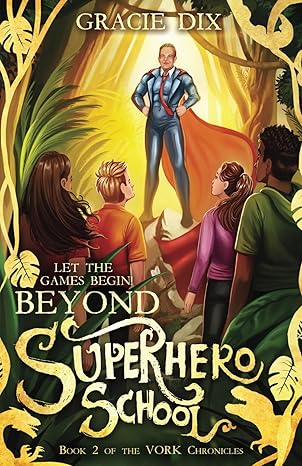
Let The Games Begin! picks up right after Gracie Dix’s Welcome to Superhero School and throws us straight into the lives of a group of teens who are trying to navigate the awkward balance of being both teenagers and superheroes. Their old school is gone, and now they are forced to attend a “normal” high school, hiding their powers while still facing dangers, bullies, and the ever-present shadow of VORK. It’s a story about friendship, secrets, and resilience, wrapped in a mix of action, humor, and heartfelt moments.
I loved how much energy pulses through the writing. The dialogue feels natural, and the banter between characters often made me smile. Some scenes, like Nick’s struggles with PTSD triggered by a history class video, hit harder than I expected. Those moments reminded me that beneath the flashy powers, these kids carry real pain and complicated histories. The story rushed from fight to fight. The momentum kept me turning pages, eager to see what the group would stumble into next.
I also loved how the friendships felt genuine. The teasing, the loyalty, and the occasional tension reminded me of my own messy and chaotic friendships when I was younger. A few lines of dialogue leaned cheesy, but honestly, that gave the book its charm. The heart of the story, the kids sticking together, was a wonderful heartbeat that consistently beat throughout the novel. Dix crafts the kind of book that makes you remember how important it felt to belong to a group, especially when the world seemed confusing or hostile.
Let the Games Begin! is perfect for readers who love fast-paced adventure, quirky humor, and found-family dynamics. It’s a book I’d hand to middle schoolers who want something fun but also real enough to stir up emotions. And for anyone who ever felt like an outsider trying to hide a part of themselves, this story hits home in a surprisingly tender way.
Pages: 508 | ASIN : B0F4Y6ZCBY
Requiem For Arcology Prime
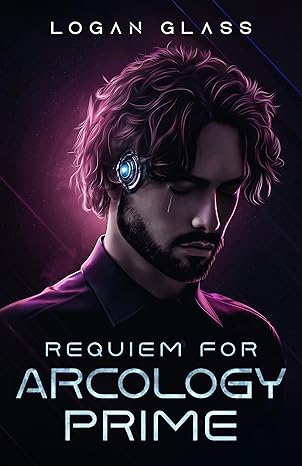
Requiem For Arcology Prime tells the story of Elio, a grieving man in a futuristic society where humanity lives in a single megastructure called Arcology Prime. Stricken by the death of his husband Locke, Elio turns to forbidden science, determined to bring him back through memory uploads, neural mapping, and holographic projection. What begins as a desperate attempt to restore love slowly transforms into a fraught battle with ethics, obsession, and identity. Elio finds himself torn between the shimmering ghost of Locke and his growing connection with Adam, a colleague at Cortex Industries. The book blends grief and technology in a world where progress collides with human weakness, and the result is haunting, intimate, and unsettling.
The writing drew me in right away. It has this rhythm that shifts between tender and brutal, which mirrors Elio’s emotional swings. At times, I felt like I was stuck in his cramped apartment with him, listening to the projector hum and watching Locke’s hologram flicker. Other times, the prose opened up into big, cinematic moments, like the bustling labs of Cortex or the neon alleys of Arcology Prime. The rawness of the writing style worked for me. It matched Elio’s unraveling.
The ideas hit me harder than I expected. It isn’t just a sci-fi thought experiment about AI and memory, I think it’s really a story about grief and control. The way Elio clings to Locke reminded me of how loss can twist love into something dangerous. And Locke himself, once reanimated through the network, becomes this eerie mix of devotion and surveillance. I found myself frustrated with Elio, yet I couldn’t stop caring about what happened to him. The book kept poking at questions about whether love justifies breaking boundaries, about whether digital resurrection is really love at all, or just a mirror that blinds us.
By the end, I was wrung out but also strangely hopeful. I’d recommend this book to readers who want their sci-fi messy and emotional, not sleek and clinical. If you like stories where technology digs into the heart instead of just dazzling the eyes, you’ll enjoy this sci-fi book.
Pages: 183 | ASIN : B0F7J2MXKT
How Flowers Got Their Colors

How Flowers Got Their Colors follows a young shepherd living in a quiet valley where the world is stuck in just three colors. Everything is green, blue, or yellow, and the flowers are plain white. One day, he sees a rainbow after a storm and dreams of capturing those colors to brighten the meadow. After many failed attempts, a bit of clever thinking, and some patience, he finally gathers the rainbow’s magic in his bucket. He pours it into the stream, and suddenly the flowers and everything around him burst into color. It’s simple, whimsical, and full of wonder.
I found myself smiling at how childlike and hopeful the shepherd felt. The writing isn’t complicated, and I like that. It’s a fun bedtime story. The repetition of him trying and failing before finally figuring out how to “sneak up” on the rainbow made me laugh. It carries a sweet message about patience and persistence without ever hammering the point too hard.
The idea of color spilling out into the world and changing everything, even the shepherd’s coat, is delightful. That moment is the kind of payoff kids love because it feels magical and surprising. I also enjoyed how the story leaned into imagination more than logic. Catching colors in a bucket is such a playful idea, and that’s exactly what makes it charming. It made me think of those times as a kid when I’d stare at a rainbow and wonder if I could touch it. The artwork in this picture book is eye-catching. The artwork is full of details that make the valley and the rainbow come alive. I especially liked how the white world transformed into a burst of colors.
I’d recommend this charming children’s book to parents who love reading short, cozy stories with their kids at night. It’s also a great fit for little ones who enjoy whimsical tales with a bit of magic and a happy ending. It feels like a story you’d remember long after because of its gentle charm.
Pages: 38 | ASIN : B0FC1XT5BS



 LITERARY TITAN