Blog Archives
Life, Love, and Happiness

Stikki the Squirrel follows a young grey squirrel who tumbles his way through one adventure after another and, along the way, makes some new friends. What was the inspiration for the setup of your story?
Some ideas for a book can come quite quickly, while at other times it can be a hard slog even to get going. But it was on this one rather memorable occasion, when I was standing beside my window gazing into our back garden, that I saw a family of squirrels climb tentatively over the wooden fence. A moment later, they were on the ground, moving slowly across our lawn, pausing to sniff and dig randomly in the grass. I watched their playful interactions quickly turn into a full-blown display of speed and agility as the youngsters abandoned the protection of their mother’s side to dart among our shrubs and trees with growing confidence, and of course, mischief. I smiled, then gasped, as a host of possibilities set my mind buzzing.
And so, Stikki the Squirrel was born – well, in my head to start with. I wanted to make the story light-hearted and entertaining for young children to read, and for them to imagine my little characters and the urban setting in which they live.
We, as a family, enjoy encouraging squirrels into our garden, filling their squirrel feeder daily with nuts and seeds for them to eat. We have witnessed several generations grow up and leave to find their way in the world. Ever since that day, we have been entertained by these intelligent, charming, furry little animals.
Although not every day, watching our squirrels is a happy, entertaining experience, because on occasion, urban foxes enter our garden on the hunt for an easy meal. Domesticated cats like to lie in wait among the shrubs, hoping to ambush a squirrel foraging on the ground. The squirrels’ acute senses warn them of danger, and they quickly climb over the fence or scale up the side wall of our house to escape. But when the three species meet, there is usually trouble. We have witnessed scuffles and near misses that have made us gasp in fear for the squirrels’ survival. But squirrels are quick and clever, usually evading these predators with ease.
We have grown very fond of our rodent visitors. Noting their athletic behaviour and individual personalities. They are adorable little animals that inspired me to write about a family of cheeky grey squirrels and the discoveries, dangers, lucky escapes, and the good friends they make along the way.
What were some educational aspects that were important for you to include in this children’s book?
Each of my characters in Stikki the Squirrel represents a unique glimpse into the world of nature from an individual animal’s perspective. I have combined a light-hearted tale with humour, interspersed with facts about squirrels’ lives, and their interactions with predators, including the natural habitat in which they thrive.
My little characters have hopes and dreams, which is quite normal as squirrels, like all animals, are intelligent, caring, and resourceful. Squirrels are good at problem-solving; we have all seen a squirrel navigate a maze, or climb a vertical pole, or scoot across a tightrope with ease in its determination to claim the food at the end of the man-made obstacle course. Squirrels show affection and anger, too. Squirrels are territorial and will respond to family members, warning each other of any approaching danger by issuing a rasping, throaty call that carries on the air.
Stikki the Squirrel carries a message about protecting endangered species to the detriment of others. A tale of adventure, learning about life, its pleasures, and its hazards. Whilst making wonderous discoveries, and friends who help and support each other on the road through life, love, and happiness.
What scene in the book did you have the most fun writing?
This is a hard question to answer because the entire book was such an enjoyable experience to write and illustrate. Without giving away any spoilers, I think one particular scene comes to mind that had me chuckling – it was when Stikki first met Rella. He was so awkward and unsure of himself. A typical teenager.
There were many other scenes in Stikki the Squirrel that end in a hilarious, eye-watering way. Read the book yourselves and see what happens to Stikki and his woodland friends.
What story are you currently in the middle of writing?
I am taking a break from writing at present, because I am busy finalising my new book. Title: Stikki the Squirrel: Tree Spirits, book two, publication date, February 28th, 2026. It is a very busy, exciting time, working with my publisher to get my new book and my illustrations ready for the printing press, plus tinkering with some weird and wild ideas for another book.
Author Links: Goodreads | X (Twitter) | Facebook | Website | Amazon
Readers’ Favorite – 5 Star Review.
“We must always be wary of the longlegs for they are unpredictable and puzzling.”
Join Stikki the Squirrel on his madcap adventures as he leaves his nest and sets off to explore the world around him. Mischievous and a little reckless, Stikki manages to get himself into scrapes at almost every turn.
When Stikki and his sisters, Mollie and Tia, venture out of their familiar surroundings for the first time, life changes dramatically for our little explorers.
Danger and peril lay on their chosen path – and, as with every exciting adventure, there are spills and thrills and good friends to be made along the way.
A whimsical, heartfelt story of friendship, bravery and love for each other.
The Adventure of Writing

The Beast Keepers follows a young veterinarian who takes a job in rural Ohio and discovers that his new patients include mythological creatures hiding in plain sight. What was the inspiration for the setup of your story?
Several years ago, while my flat-coated retriever, Mr. Bingley, and I waited at the holistic vet for a chiropractic adjustment, I studied the poster showing the acupuncture points for dogs. I wondered if animals such as turtles, frogs, snakes, porcupines, etc., had acupuncture points as well.
While the vet worked on Bingley, I asked him whether he learned acupuncture for animals besides dogs, cats, horses, etc. He replied that there were classes for “other” animals. Though I think he probably meant animals such as goats or sheep, there was something about the way he said “other” that caused me to think:
“You meant Gryphons? Centaurs? Fauns?” Showing a modicum of restraint, I did not ask that aloud. I did, however, spend the remainder of the day contemplating how you would treat medical issues in mythological animals. If a Gryphon had a lung infection, would you be treating bird lungs or mammalian lungs? Can centaurs get gout, and if so, how would it manifest? Can unicorns get laminitis?
Thus was born the idea of The Beast Keepers, an adult literary novel with a twist.
I enjoyed the depth of the main character, Jonathan, who is flawed and relatable, making him likable. What was your process to bring that character to life?
The first thing that helped me to get an idea of who Jonathan would be was getting his name right. I tried a lot of different names, especially for his first name, but Jonathan seemed to have the right sound, feel and be appropriate for his age. His last name is particularly dear to me. St. Roch is the patron saint of dogs (St. Francis of Assisi is the patron saint of animals, hence Jonathan’s middle name), and a favorite of mine since visiting a church in France where his story was carved into the staircase for the lectern. Being a dog trainer for almost 20 years, it seemed a fitting way to honor the many wonderful dogs and clients I had over the years.
Next, I fleshed out his character. The book Story Genius, by Lisa Cron, was really helpful in that process. I created a backstory and wrote about critical events and people in his life up to where the book started. Knowing him as a full person (with doubts, strengths, fears, longings, etc) helped me to shape his reactions, dialogue, and ultimately how he would respond to the challenges of the people, and events that he encountered.
I had a lot more of his background story in the first draft of the book, but my developmental editor helped me to trim it back so that it was suggested and you could see how it had shaped him, but it didn’t overshadow or interfere with the story being told.
What were some themes that were important for you to explore in this book?
One important theme is: What is the quality of mercy that we owe our enemies? And, how do we implement that mercy? Other themes include: How do we find balance in our lives? The importance of integrity in our actions and in our relationships, and how does one manage mistakes or difficult situations?
Will this novel be the start of a series, or are you working on a different story?
I have been asked to do a sequel (or a prequel explaining how the mythological animals got there), but I don’t have plans for either at the moment. Right now, I am working on a novel I’ve tentatively titled The Boy Who Danced For The Moon. I was about 2/3 of the way through it when I decided it needed to be revamped, so I am in the process of starting over. I have some parts I can save, but the adventure of writing a book is partly the process of finding your way to the story. Once I have the story, the writing tends to flow.
Author Links: GoodReads | X (Twitter) | Facebook | Website | Amazon
American Tiger
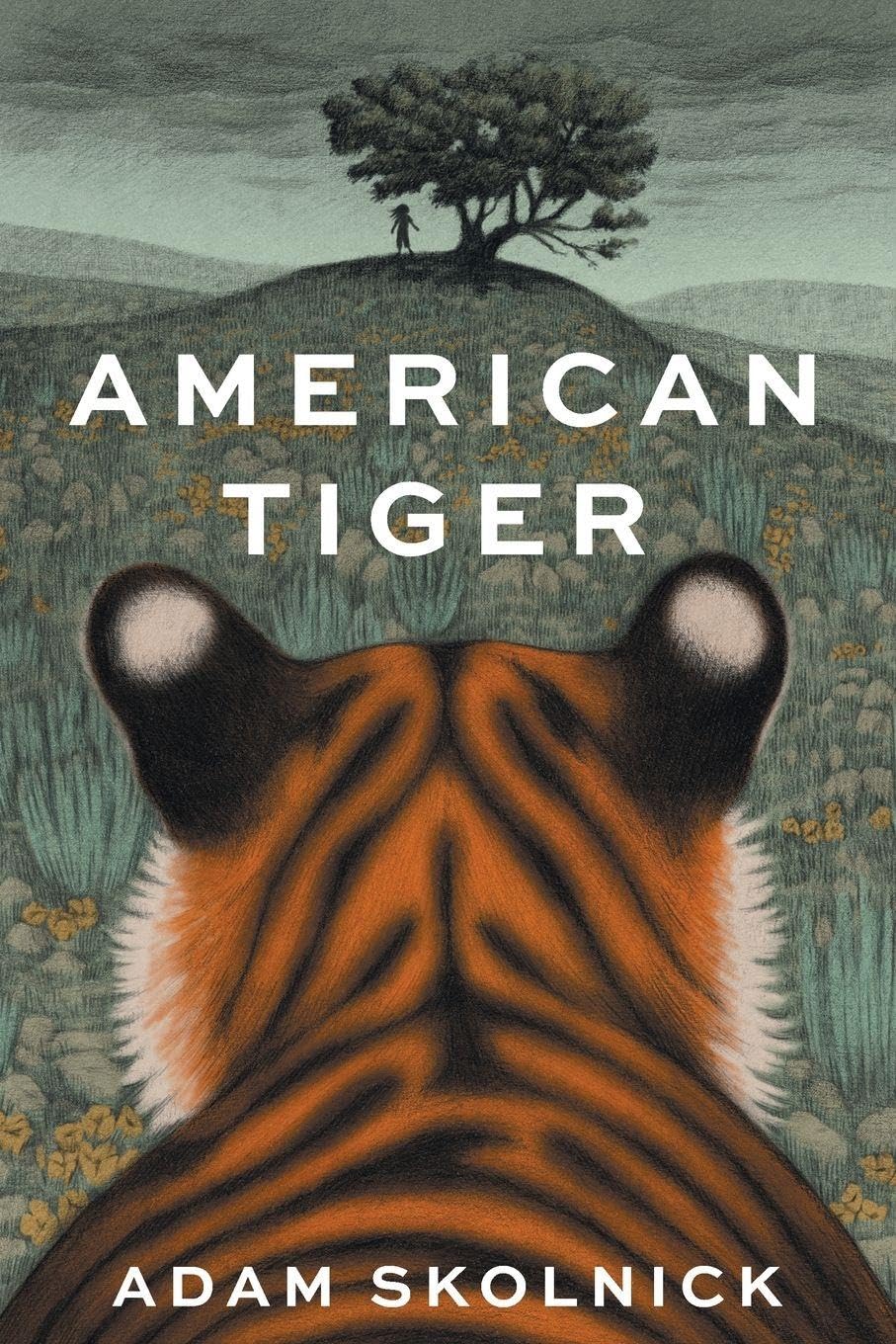

American Tiger follows nine-year-old Bell Tern, a sharp and wildly imaginative kid who becomes the first person in quiet Alisaw Valley to spot a tiger wandering near a Target loading dock. No one believes her, not even her father Jay, a game warden who knows there should be no tigers in Ventura County. As more strange sightings ripple across the valley, the story blends tension, family struggle, and ecological wonder. The tiger becomes a spark that exposes fear, disbelief, and a father and daughter’s effort to bridge the widening gap between their inner worlds. The opening chapters paint Bell’s devotion to drawing and documenting wildlife, her loneliness at school, and Jay’s steady but fraying attempts to raise her while holding the wild at bay.
This book pulled me in fast. I felt a kind of fond ache watching Bell try to prove what she saw. Her imagination is so alive that you can’t help rooting for her, even when it gets her labeled as a liar. The writing hits a sweet spot. It’s warm, direct, and paced in a way that made me forget I was reading. I liked how the author paints the valley around them. The details are simple but vivid. The land feels baked into the bones of the characters. I also noticed how naturally humor and sadness sit together in the scenes. One minute I was smiling at Bell’s oddball survival kit in her backpack. The next I felt a sharp little twist in my chest as the bus full of kids turns on her when she reports the tiger.
I also found myself moved by the relationship between Bell and Jay. Their dynamic is messy in a relatable way that I appreciated. Jay tries so hard to be steady and rational, but he’s worn down. The moment he gets a report of “a striped tail” under a pepper tree, something shifts in him, and I felt it. The writing lets him be flawed without judgment, and that made me care even more. The stakes get bigger as the search spreads. Experts arrive, each with their own trauma or agenda, and everything grows more tangled. I liked that the book never leans into cheap danger. Instead, it digs into fear, memory, loss, and what wildness means in a world that keeps shrinking.
The story touched that soft place where wonder and grief live side by side. I kept thinking about how a giant animal roaming the suburbs could expose so much about the humans who live there. The book surprised me. The writing has heart. It’s clear and calm on the surface, but there’s a current running underneath it that pulled me along.
I’d recommend American Tiger to readers who enjoy character-driven stories with a strong sense of place. It’s great for people who love literary fiction that carries a hint of adventure and for anyone drawn to stories about family, nature, and the things we try to believe in. It would also hit home for readers who like books told through the eyes of kids who see the world in ways adults forget.
Pages: 326 | ASIN : B0FTGLN6X2

Deep, Soul-Level Understanding

Safe Haven follows a fallen Chicago news anchor who retreats to a crumbling farmhouse and finds redemption among strangers learning to live with their own brokenness. What inspired you to center Safe Haven around rebuilding after loss?
I love writing stories with broken characters—individuals struggling with grief, loss, and regret. People whose wounds run deep, whose silence often speaks louder than words. Yet within this brokenness, they somehow find a thread of hope, a quiet courage, a stubborn perseverance that keeps them moving forward. If they push through the pain, they come out on the other side changed in a way that makes them view the world in a different light. And when their eyes are open, they start to see the silent battles others are fighting. That recognition—that deep, soul-level understanding—is empathy. Empathy is not a character weakness. It is strength wrapped in softness. It is the heartbeat of humanity. To feel deeply is not to be fragile—it is to be brave. In my writing, I strive to illuminate the power of empathy, compassion, and hope for humans and animals alike.
The relationships in East Haven feel real. Were any of the characters or their struggles drawn from people you’ve known?
They didn’t come from any one person, but from a collection of individuals. People who have endured pain and carry wounds that don’t always show, but shape the way they move through the world. I’ve known people who have been through unimaginable tragedies, who have suffered physical, mental, and emotional abuse, and have found a way to heal those wounds through faith, hope, and love. Not in a religious sense—although many people find healing that way—but in a spiritual sense: in the presence of someone who cares deeply, in the quiet of nature, in the soul of an animal. Those are the kind of people I love to write about. The kind I find strength in. The kind that endures and transforms.
You write grief with so much restraint and honesty. How did you find the right emotional balance without tipping into sentimentality?
Finding that balance was incredibly difficult for me. I’ve always been someone who feels deeply, so stepping into Michael’s point of view—a man who struggles to name, express, or even acknowledge his emotions—was a struggle. His tendency to shut down or get angry felt foreign to me. But what started as a challenge became a blessing. It was a character fault that didn’t just serve the story—it shaped it. Michael’s silence, his internal battles, became a starting place for the growth he’d experience throughout the novel. Two things helped me keep the portrayal raw and honest. First, I created Mac—a character who became a mirror and a guide for Michael. Mac wasn’t just a sounding board; he’d done his own emotional work and could recognize the pain Michael was trying to hide. Through their dynamic, I could give Michael space to stumble, to resist, and eventually to speak. Mac helped him find language for the things he’d buried, and in doing so, helped me stay true to the emotional arc without forcing it.
Second, I had a writing partner who acted as an emotional compass. Doug wasn’t afraid to tell me when my own feelings were bleeding too heavily into the narrative—when Michael’s voice started sounding more like mine. That feedback was invaluable. And I learned that emotional truth doesn’t always mean emotional intensity. Sometimes, it means restraint. Sometimes, it means letting the silence speak.
What is the next book that you are working on, and when will it be available?
I’m currently working on the sequel to Safe Haven and, if all the stars align, hope to have it published sometime next year. I am also looking at publishing a collection of short stories.
Author Links: GoodReads | Facebook | Instagram | Amazon
On the eve of his 40th birthday, Michael Russo faces a devastating trifecta: the loss of his job, a crisis of self-doubt, and a broken engagement with the love of his life, Anna. On impulse, he buys a run-down forty-acre farm unaware the dilapidated barn, home to a one-legged turkey and a blind rooster, harbors mystery.
It isn’t long before Michael’s life is once again turned upside down and he finds himself raising his daughter, Brie, alongside Anna’s overbearing parents. While they fight about what’s best for Brie, she develops an enigmatic attachment to the barn’s residents. A bond that cannot be broken.
As Brie struggles with one mysterious illness after another, Michael discovers she was born with a unique gift. One that has the power to change the world, but also the potential to endanger her life.
In a race against time, Michael must face his greatest fear to safeguard his daughter, whose innocence and extraordinary talent have forever altered his life.
Elizabeth Stiles’ debut novel, Save Haven: Where Hope Lives, intricately weaves together themes of loss, resilience, and the unexplainable, culminating in a poignant exploration of the power of love, healing, and the interconnectedness of all beings.
An Ocean Life


T.R. Cotwell’s An Ocean Life is a character-driven novel chronicling the emotional and physical journey of Mark, a stressed-out tech entrepreneur, as he attempts to unwind with his family during a long-awaited trip to Maui. The story moves fluidly between vivid underwater exploration, tense family dynamics, and quiet introspection. While Mark tries to reconnect with his wife Cecilia and their daughters, old habits and personal ambitions resurface, threatening the fragile balance he’s trying to hold onto. At its heart, the book is about reckoning with aging, love, guilt, memory, and the pull of the ocean.
What I liked most about Cotwell’s writing was its intimacy. The prose is sharp but unpretentious, and there’s a warmth in the way he describes both the mundane and the majestic. The dialogue felt natural and unfiltered. Scenes like the failed dinner reservation or the late-night beach encounter made me cringe and laugh at the same time. I felt for Mark, even when he was being a bit stubborn. Cotwell doesn’t paint his protagonist as a hero, and that’s what makes him believable. The underwater scenes are particularly special. There’s a kind of reverence in the way Cotwell writes about the sea. It’s calm, awe-filled, and precise.
Some sections about startup life or diving gear got a bit long. I appreciated the detail, but occasionally it slowed the momentum. I enjoyed Mark’s inner monologue, and I wished Cecilia’s voice came through more. She’s clearly grappling with a lot. Still, their tension is what kept me hooked. They’re two people still in love, trying to remember how to show it, trying to find each other again in the chaos of family, work, and life.
An Ocean Life is tender and thoughtful. It’s for people who have ever felt torn between what they want and what they’ve promised. I’d recommend this book to anyone who enjoys quiet stories with emotional depth, especially readers who have weathered a few storms of their own.
Pages: 347 | ASIN : B0D2L2SBBL
Connections Make the World Go Round

Before We Arrived follows three people, each marked by loss, resilience, and quiet strength, who seek refuge at a goat sanctuary; they find not only healing but also a found family. What was the inspiration for the setup of your story?
First I’d like to thank Literary Titan for the interview. I absolutely loved writing this novel and am thrilled it’s resonating with people on a deep level.
The idea for the rescue sanctuary came easily. I adore animals and the notion that they have the power to aid in the healing process for humans. ‘Herd’ species—goats, donkeys, horses, and alpacas—were chosen because they need each other as well as their human caretakers. It was also a way to inject a bit of fun into the mix with their shenanigans. I was keen to have the work volunteers live on-site, enjoying shared meals and private sleeping spaces. I’ve had personal experience with various forms of communal living and it made sense to incorporate that. I wanted King Solomon Sanctuary to serve as an interactive setting that chunks of the story arcs could pivot around. The workers have the option to come and go as they please during off-hours but most choose to stay in close proximity to one another and the animals—it’s their own special tight-knit community of second chances.
Henry, Rivka, and Jayce all come to the sanctuary for different reasons, holding onto trauma that has kept them closed off until now. What was the inspiration for the relationship that develops between the characters?
Connections make the world go round. In Before We Arrived we witness the interactions within each of the biological families, as well as between the narrators and secondary characters as new friendships are forged and old ties change shape. All three families have struggled through adversity, and we learn the details of their backstories as the chapters progress. The world can be harsh and cold, relationships complicated and messy. What are the multitude of elements that guide our path and our decisions? Can we build a meaningful life after experiencing tragedy? How do we best care for ourselves and each other? These are the kinds of questions that motivate me to create stories.
What were some themes that were important for you to explore in this book?
I’ll preface this answer by noting that I did not set out to write a book specifically about grief and resilience; that just happened organically as the outcome of each character’s story and their relationships with one another.
The novel explores questions about race/culture/identity, the short and long-term effects of personal and generational trauma, family dynamics, and issues around marginalization. I’ve also had a perennial fascination with ancestral memories, so that was layered in, along with the underlying truths about the universality of suffering and the value of connection and empathy. Naturally some of these themes overlap.
What is the next book that you are working on, and when can your fans expect it to be out?
Before We Arrived was recently released and I’m not quite ready to think about beginning a new project. Writing does energize me so another novel is within the realm of possibilities.
Author Links: GoodReads | Website
In the summer of 2005, three dissimilar people—Henry, a grieving Black landscaper; Rivka, a restless Jewish social worker; and Jayce, a guarded Indigenous archaeologist—find their lives colliding in quiet, powerful ways.
From New England to Vietnam, this lyrical novel traces their search for peace, meaning, and joy amid the rubble of personal and ancestral trauma. Lush, moving, and deeply human, Before We Arrived is a celebration of resilience, found family, and love in its many forms.
Before We Arrived is a soulful, literary journey through grief, healing, and unexpected connections. Fans of James McBride and Lily King will feel right at home.
Before We Arrived
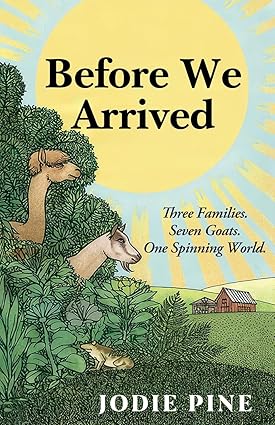
Jodie Pine’s Before We Arrived spins a beautiful tapestry of interconnected lives across time, grief, and healing. Told through alternating chapters set between 1975 and 2005, the story traces three families—each marked by loss, resilience, and quiet strength—as they find each other through fate and a shared sanctuary. A former archaeologist, a social worker, and a man recovering from injury and trauma become unlikely kin under the roof of a goat sanctuary, of all places. But it’s more than goats. It’s about second chances, and third. It’s about holding sorrow in one hand and still reaching out with the other.
As a widow, I didn’t expect this book to hit me like it did. From the very first chapter with Henry and his mangled hand, I felt my heart slide into that familiar hollow space. The line—“trying so hard to keep things light”—caught in my throat. That’s exactly what it’s like when you’re walking around with your grief zipped up under your coat. Henry’s story reminded me how healing doesn’t look like a movie montage. It’s awkward, reluctant, even a little muddy. His growth is slow but steady, like learning how to breathe again after forgetting for a while.
Then there’s Rivka. Oh, Rivka. I adored her. The way she stepped into Nina King’s quiet, grief-soaked apartment, dripping wet and uninvited, but still offering help with a kind firmness—it was deeply moving. Her voice felt familiar to me, like someone I would’ve met. Her compassion for baby David, and her refusal to flinch in the face of Nina’s silence or mistrust, showed the kind of stubborn kindness I’ve come to cherish in my own life. The moment when Nina finally lets her hold the baby? That nearly did me in.
Jayce’s chapters, especially the funeral scene and the pact he makes with his mother, stirred something in me. We can’t disappear with our dead. I loved how his archaeology background tied into the theme of digging—literally and emotionally—for what’s been buried. His arc wasn’t flashy, but it was profound. Quiet endurance. I know it well.
What Jodie Pine does so beautifully is show how people can be shattered and still be whole. There are no villains here, just folks doing their best with their pain. The prose is warm and alive, sometimes messy, just like real conversation. I chuckled more than once—especially during Henry’s first day with the goats—and found unexpected joy in the ordinary moments: Rivka eating Fig Newtons at her desk, David fixing a bike, a fox sculpture on a table. These small details made the world feel lived-in, like someone left the light on for you.
This book is for anyone who’s ever been broken open and needed help stitching themselves back together. It’s for people who are lonely but not hopeless. For readers who don’t mind stories that move like real life—with detours, overlaps, long silences, and sudden beauty.
Pages: 395 | ASIN : B0FG3L2V5Q
The Last Ayer
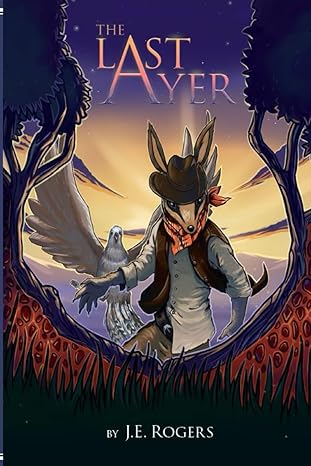

The Last Ayer by J.E. Rogers is a richly imagined, adventure-packed tale set in a fantastical version of Australia, where talking animals face ecological ruin and tyranny. The story follows Keera, a spirited young numbat with a mysterious past, as she uncovers her identity as the last of a sacred line known as the Ayers. Aided by a quirky band of animal allies, including the mimicking lyrebird Echo and the flamboyant bowerbird Griffin, Keera stands against Jago, a ruthless perentie lizard bent on domination. What begins as a story of survival quickly evolves into a narrative about nature, memory, and the courage to face your purpose.
The writing felt warm and whimsical, with a tone that dances between lighthearted banter and moments of quiet intensity. I really enjoyed how the characters spoke. There’s an earthiness to their voices, a kind of dusty charm that suits the world they inhabit. The dialogue, while sometimes leaning into a kind of theatrical rhythm, gave the book its pulse. Rogers has a knack for pacing and a keen sense for building small moments that echo large themes, like the cost of progress and the value of community.
What stood out to me was how energetic and fast-paced the storytelling felt. It moved with real momentum. The names, places, and lore were full of color and imagination, and the story never lingered too long in one place. Big moments and plot twists came quickly, which kept the tension high and the stakes clear. Keera is without a doubt the emotional center of the story, and I found myself wanting to know even more about what was going on beneath the surface. That curiosity speaks to how engaging she is as a character. There’s a deep sense of care in every scene, and it’s clear the author poured real heart into this world.
The Last Ayer is a heartfelt journey best suited for middle-grade readers or older kids with a love for animal tales, fantasy worlds, and environmental themes. It’s a great fit for readers who liked Redwall or Watership Down, but want something a little more modern, a little more playful. Rogers clearly loves these creatures and this world, and that love comes through in every description of a gum tree, every rustle of the outback wind. I’d happily recommend this to families, classrooms, or anyone looking for a story that blends fun and meaning with just enough danger to keep you turning the page.
Pages: 202 | ASIN : B0F5C4XFLJ


