Blog Archives
Passionate About Education

When You Are Curious is a picture book that explores some of the many different ways to be curious and encourages readers to expand their curiosity. What was the art collaboration process like with illustrator Johnny Plasil?
Johnny Plasil had a ‘free hand’ with the illustrations. We always sat down to think of some ideas but the whole process was very natural and rewarding.
What were some ideas that were important for you to share in this book?
I am passionate about Education and I was trying to encourage teachers, students, as well as the parents to try new things, explore their curious potential and discover their uniqueness, in order for them to grow.
What is the next book that you are working on and when will it be available?
I am hoping my next book will be available before Christmas 2023.
Author Links: GoodReads | Twitter | Facebook | Website
Kickstarted My Healing Journey

resilient shares your story of growing up with parents that were abusive, being placed in foster care, struggling with repeating their mistakes, and how you learned to heal. Why was this an important book for you to write?
Something I learned when I began to heal from all of the trauma I experienced growing up was that I needed to know that there wasn’t something wrong with me and that I wasn’t alone. Feeling alone and isolated stunts the healing process because it leads directly to feeling like there must be something wrong with us. That realization – that I wasn’t alone – truly kickstarted my healing journey. And the more I realized I wasn’t alone, the more I realized how important that knowledge was to everyone else as well, that it wasn’t just something I personally needed. I couldn’t think of a better way of helping the world to heal and become a better place so fewer people have experiences like mine, or a more meaningful way of showing appreciation for those who came before me baring their pasts, than to open up and share mine with the world. I wanted my book to find its way into the hands of others like me so they will feel less alone and more understood, and I wanted my book to find its way into the hands of those who don’t have shared experiences so they could have some level of understanding of what it’s like for survivors of these types of trauma. I also wanted to have something candid and open about what it was like going through the foster care system in hopes that my story could help to improve the system for other children.
I appreciated the candid nature with which you told your story. What was the hardest thing for you to write about?
There was a lot of my past that was difficult to write about, many times I had to step away and take a break. Different parts at different times were difficult, though not always for the same reasons. I found it extraordinarily difficult to open up about some of the destructive decisions I made because of lingering shame and embarrassment. At the same time, I struggled with writing about the sexual abuse by my mother’s drinking buddy and the assault by my boyfriend’s brothers because those events were some of the least healed parts of my past when I was drafting. Of course, writing about my sister nearly dying in the car accident we were in when I typically would have been sitting up front stirred up my feelings of having failed my sister that I had back then because I’d had to be my sister’s caretaker when we were little. I can’t say there was a single hardest thing to write about above all others, but different things for different reasons.
What were some ideas that were important for you to share in this book?
I wanted to share as objectively as possible what happened in my life and the impact it had on me emotionally. I wanted to remove the whole aspect of blame and simply expose the myriad, sometimes befuddling, ways in which trauma can manifest in a young child, as well as demonstrate how certain things, however well-meaning, can be destructive, such as having a child reperform something done to them. We can all only act on what we know, so my goal is to help increase what people know so that we can, as a whole, improve the way we act toward one another.
What is one thing you hope readers take away from your story?
I want readers to know that healing is possible. That no matter what happens to us, we have an amazing capacity to heal, as long as we’re willing to look inside and face those things we need to heal from, and that healing is going to be messy and that’s okay.
Author Links: GoodReads | Twitter | Facebook | Website | Instagram
When social services later intervenes, Katherine and her sister are placed in foster care in the countryside. Her new home and the stable and caring environment her foster mother provides are a far cry from the life she’s always known, yet Katherine’s struggles continue. As she approaches adulthood, reeling from her past and battling loneliness, life continues to beat her down with tough choices, staggering betrayals, and various assaults. For a few years, she’s able to cope by suppressing her memories and turning to self-harm and addiction. However, when she pawns her most cherished possession, she realizes that she’s following in her biological parents’ footsteps, tumbling in a downward spiral of self-destruction. Is it too late for her to escape her family’s generational inertia?
Katherine’s story is one of crippling weakness and breathtaking strength, debilitating self-doubt and defiant determination, self-destruction and healing…and the discovery of what it actually means to be resilient.
A Gift Of Evolution

What was the idea, or spark, that first set off the need to write Hidden Within Us: A Radical New Understanding of the Mind-Body Connection?
Startling observations from conversations with patients that indicated that they were unaware of emotions related to prior severe stress or trauma, and noticing rapid resolution of medical conditions among those patients who gained awareness of long-repressed emotions.
How much research did you undertake for this book and how much time did it take to put it all together?
Research over many years of clinical practice. About 4 years to write the book in my spare time.
Did you find anything in your research of this book that surprised you?
I did not put fully coalesced thoughts into the book. It was the process of writing the book that helped coalesce the thoughts.
What is one thing you hope readers take away from your book?
That they will understand the concept of repression of emotion, understand it as a gift of evolution, and trust that they can tolerate emotions that their unconscious allows to come up, and heal.
Author Links: Facebook | Website
Nearly all mind-body research and publications focus on the emotional distress we consciously experience, with limited results in terms of understanding and treating medical illnesses. Hidden Within Us brings attention instead to the burden of emotions kept from our conscious awareness by repression.
Case histories and published evidence will convey to readers the rarely recognized value, and harm, of repression: Its value as an overlooked cornerstone of emotional resilience in many of us. Its harm in the unrecognized impact of repressed, unfelt emotions on our health, with relevance to many highly prevalent yet still inadequately explained and treated medical conditions.
Our ability to repress emotions is a vital gift of evolution, but, silently, the emotions we’ve repressed do persist and can affect our health. This recognition can lead to new pathways to understanding, treatment, and healing.
Out Of The Darkness
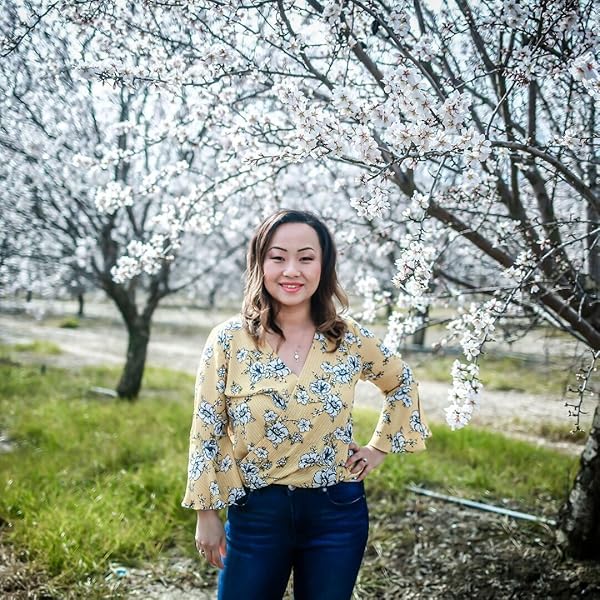
The Fifth Wife: A Memoir of Hope, Love, and Faith shares your story growing up in a Hmong family and the culture that shaped your life, and the challenges you faced. Why was this an important book for you to write?
I wanted to write this memoir to bring awareness to cultural issues, identity, and mental health. Like other Hmong refugees who have had to abandon their homes in pursuit of peace and freedom, my parents made huge sacrifices, bringing my siblings and me to this new country, America. In return, I always wanted to give them everything I could. In publishing this memoir, I wanted to honor my parents and our past life in which we have struggled and survived. In the writing process, I healed as I gained a deeper understanding of my life’s purpose and recognized what’s truly important in front of me. I wanted to share my story to inspire readers, especially those still trying to figure out themselves and where they should be regarding educational achievements, career aspirations, and family needs. This memoir is like a self-help book; you will learn to appreciate mistakes and lessons learned from unexpected circumstances.
What were some ideas that were important for you to share in this book?
An idea that I wanted to highlight was that the brightest days would surely come after you get out of the darkness. Sometimes, you live through many storms, and life seems unfair, as if a good ending may never come. Many of us go through traumatic experiences; the aftermath of these situations can linger on deep within us. There are many ways to heal, and nothing is worth dying for. Another idea I wanted to point out is this: sensemaking is powerful. We can cultivate and define our experiences to benefit and strengthen us. It takes practice to get better at this. How we tell our story to ourselves (in our head) can destroy or empower us.
I appreciated the candid nature with which you told your story. What was the hardest thing for you to write about?
Three things that were most difficult to write about:
1) Sexuality: This is a topic that can be uncomfortable for some. I was nervous at first, unsure of how much information to share. For any parts dealing with sexuality, I did my best to edit and leave in only necessary information to support the story. Still, it’s tough. I feel like, as women, we’re not supposed to express our needs when it comes to our sexuality, and love should do fine without sexual desires. But honestly, it’s hard not to bring up this topic when it comes to romantic love.
2) Depression: There is no word for “depression” in the Hmong language. And in mainstream culture, depression, like any other mental health issue – it’s not easy to grapple with. To highlight the fact that at one point in time, I was severely depressed, it can be embarrassing to admit. It makes me extremely vulnerable. Regardless, it’s a serious problem that needs more attention. I couldn’t skip over this part of my life. It took a lot from me. In return, there is much to learn from it.
3) Reputation: It was hard to write about others whose lives intertwined with me, especially my parents and husband. I didn’t want their reputation to be tarnished by telling the hurtful truths of our past. I did my best to show the different sides of each person and how we are not perfect. We have many flaws. As human beings, we’ve all tried our best to survive tough times and make the best of every decision.
What is one thing you hope readers take away from your story?
Don’t judge a book by its title. Read this memoir with an open mind. You are about to enter into a world much different than yours. After reading this book, I hope you will feel uplifted. I hope you will be inspired with renewed energy and vision to keep trying to make the best of what you have.
Author Links: GoodReads | Amazon
When Mai Cee least expects it, true love crosses her path. She falls head over heels for a charming American soldier, a hero who has come to rescue her from her dull, senseless, and conflicting Hmong life. But this amazing lover has other secrets in store, secrets that may destroy everything Mai Cee has worked for including her goal of forever trying to please her father.
The Fifth Wife: A Memoir of Hope, Love, and Faith, is a compelling story about the pursuit of excellence and honor, a daring undertaking to find true love, and a willingness to make new meanings. Follow Mai Cee’s story to understand the consequences of grief and despair; the power of faith and forgiveness; and the bliss of rediscovering purpose.
A Very Dark Place Inside

The Bishop’s Palace follows a woman journalist in the 1890s who investigates a mysterious story surrounding the Bishop’s Palace and missing children. What was the inspiration for the setup of your story?
The inspiration for this book comes from my home in Galveston. There is a very interesting place on Broadway that was given to the Catholic church. The Gothic stone building has a commanding presence you cannot ignore. At night it draws you to stop and wonder at its magnificence when built over a six-year time period between 1886-1892. A Bishop did reside there at one time, and it is open for the public to view. It is a very dark place inside and left me with an uncomfortable feeling when touring. I discovered even though something can be beautiful, it can also be disturbing and possibly hold a secret. What a wonderful setting and plot for my story.
Morlanna is strong, intelligent, and a fighter. What were some driving ideals behind your character’s development?
Morlanna, my strong New Woman, for that time period. I built her on the ideas of women such as Marie Curie, and Nellie Bly. She could be friends with Caleb Carr’s character Sara Howard from THE ALIENIST. I looked back through history and discovered many women stepped forward to break the rules of a somewhat stiff society. We are better for their refusal to be ignored or frowned upon because they broke away from the norm of that time.
What were some themes that were important for you to explore in this book?
The main theme of the book is obvious…greed. I mean who wouldn’t want to find a palace full of gold and jewels? I tried to show how greed can blind an individual to the truth standing before them. I wanted my readers to understand even a Holy Man could be persuaded away from his faith for such treasure. Strength and determination are admirable qualities, but it sometimes takes friendship and a group working together to find a solution.
What is the next book that you are working on and when will it be available?
My next novel will be published by Black Rose Writing coming out on December 14th. A CHANGE IN DESTINY, DARK CHOICES is a thriller/suspense giving you a wild ride on how love can turn dark.
Author Links: Twitter | GoodReads | Instagram | Website
To rescue all the plushies!
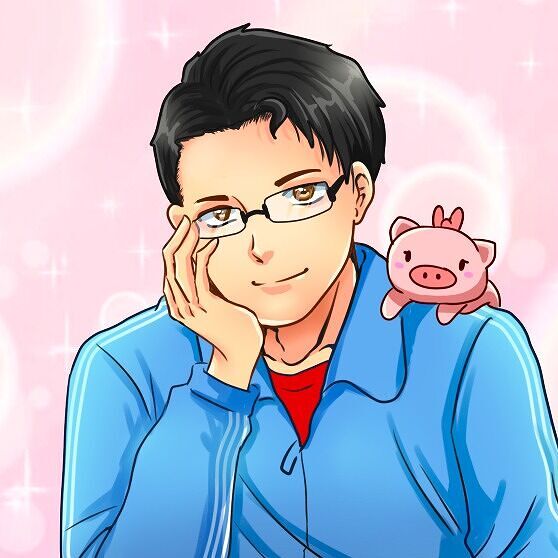
Life Lessons from a UFO Catcher is a collection of stories and life lessons that you gained from your days in the local arcade and the people you met. What inspired you to write this book?
There were several inspirations for writing this book. First and foremost is my mother who once told me: “Your life is weird. You should write a book.” As the old saying goes, mother knows best. So I ended up writing a book. Whether it’s a good book or not, I’ll leave that to the readers to decide.
Second, the process of writing my doctoral dissertation was an indirect inspiration for me to write this book. My final year of grad school was spent either couped up in my room or in the library plugging away at my dissertation. The writing process was obviously not a 24/7 affair and I did take breaks every now and again. During those breaks from dissertation writing or number crunching my research data, I found myself typing, handwriting, and even doodling random stories and anecdotes from my life. Some of those random stories eventually became the basis for Life Lessons from a UFO Catcher. Random fun fact: The original working title for the book was Weird Things, echoing my mom’s comment that my life is “weird.”
Third, while I was living in Japan and South Korea, my favorite pastime was hanging out in arcades, mostly playing retro video games and of course, crane games—or as they’re referred to in Japan, “UFO catchers.” I actually got pretty good at them, and soon my newfound hobby became an obsession and life mission of sorts: To rescue all the plushies! This is a major reason why the setting of the story is an arcade.
Fourth, being an otaku—and proud of it!—and having grown up an avid viewer of Japanese anime and manga, I knew I wanted to take more of a creative approach to my memoir. So instead of just writing words on a page, I reached out to a friend of mine whose artistic skills far surpass mine, and we partnered up to create an autobiographical manga… although this book is only the first part of a multi-volume series that I have planned. There are more stories and life lessons to come!
Lastly, I had a desire to share with others some of the important lessons I learned in life, while encouraging others to reflect on the lessons learned from their own life experiences.
I appreciated the candid nature with which you told your story. What was the hardest thing for you to write about?
I identify as both a Christian and as a Buddhist, and as my pastor once told me, the two don’t have to be mutually exclusive. That being said, I obviously don’t know with 100% certainty if God is out there and what happens after we reach our end of days. Do we reincarnate? Do we become ghosts? Do we become star stuff? Do we go to heaven or hell… or somewhere else? Or do we simply cease to be? What I do believe in though is that things do happen for a reason, and that there are signs and omens in our lives that attempt to push us in the right direction or detour us from going the wrong way. The question is: Do we notice those signs, and if we do, do we follow them or ignore them?
To get to the point, the hardest thing for me to write about in this first volume of Life Lessons from a UFO Catcher wasn’t any particular story or lesson, but how to portray the signs in my life. In the end, I took some creative license for this memoir and chose to personify those signs and portents in the form of a guardian spirit named Somi who attempts to guide the main character in the right direction and steer him away from taking a course of action that he’d regret. However, as we can see in the story, Somi often fails in her mission… mostly in part to Kenny ignoring her.
Whether my guardian spirit is actually out there and if her name is indeed Somi, I don’t know. But I like to think that there’s someone or something watching over me.
What is one piece of advice someone gave you that changed your life?
I’ve received a lot of valuable advice from many different people when I was growing up. One that still sticks with me today is the focus of the lesson featured in the final story of the book, a Chinese proverb that my grandfather often told me: 忍得一时之氣,免得百日之忧, or in English, “If you are patient in one moment of anger, you will escape one-hundred days of sorrow.”
Needless to say, my hothead got me into a lot of trouble and regrettable situations in my younger days. The climax of Life Lessons from a UFO Catcher is a perfect example of that. Although there are still times when my blood will boil in certain situations, I do my best to remember my grandpa’s words and to remain calm and collected, using my logic and my heart, instead of my rage and my fists, to resolve conflicts.
What is one thing you hope readers take away from your story?
The entirety of the story, with the exception of the epilogue, takes place entirely in an arcade, and the lessons the protagonist learns come about from him playing those arcade crane games and his interactions with others in the arcade. It’s a fairly simplistic story, but with what I believe are some valuable life lessons that the protagonist shares through his inner monologue that can be attributable to various situations and circumstances, and that people from all walks of life can appreciate and connect with. I hope that readers will be able to connect with the life lessons I’ve learned—and I have many more to share in the next volume of Life Lessons from a UFO Catcher—while reflecting on the important lessons in their own lives.
Author Links: GoodReads | Twitter | Facebook | Website
Kenny Loui is a Ph.D. student, university professor, and self-proclaimed “UFO Catcher.” This is the story of Kenny’s experiences playing arcade UFO catchers, “rescuing” cute plush dolls trapped inside claw machines, while “capturing” important life lessons along the way… Like Aesop’s Fables, but with a modern-day twist (and an awesome 80’s soundtrack)! Based on a true story.
This graphic novel collects all stories originally published in Life Lessons from a UFO Catcher #1-3 and features bonus content including extended scenes, an epilogue, BGM-enhanced stories, and character sketch art.
Finding Healing And Happiness
Madly Deeply Wildly follows an aspiring writer who has left an abusive relationship in order to start life over in her hometown. What was the inspiration for the setup of your story?
This story, as every fiction I write, had a number of autobiographical elements. Because of abuse in my own life, I also for many years struggled to write until I made some progress on healing from the abuse, and while not quite as severe as Renata’s experience, I have also been an abusive romantic relationship (both physically and sexually) and wanted to tell the story of how we can become trapped in relationships like that, and how difficult it can be to leave. There is still a persisting stigma in our society against victims of abuse, a belief that they are somehow at fault for not having left any sooner, and I wanted to help people to understand what it’s like in the mind of an abuse survivor to foster compassion in our real-life relationships. Of course, as with everything I write, I also wanted other survivors to see themselves in the story so they wouldn’t feel so alone, and so they would have hope of finding healing and happiness.
Renata leaves an abusive partner and has to rediscover herself and learn to trust in love again. What were some driving ideals behind your character’s development?
In part because of psychological abuse and in part because it’s human nature to kind of beat ourselves up when we think we’ve done something wrong or stupid, I wanted to show how that can play out in this kind of a scenario. Renata has very real, very human emotions about her ex, a mixture of the love she had for him at one point, fear, loathing, and even hatred. It’s not unrealistic to have all those emotions, even at the exact same time; in fact, it’s common, and it’s normal, and that’s something Renata had to learn for herself. She had to learn to forgive herself, to trust herself, and to trust those around her. She had to learn to undo the conditioning she experienced while she was in a relationship with Damien. And ultimately, she had to learn that she could stand up for herself, which is what she does when she leaves Chad after he becomes overprotective of her. If she had stayed, even though Chad was not abusive and would have eventually learned to temper his overprotective tendencies, Renata would not have known she had the strength and self-love to put herself first. Her decision can be easily viewed by an outsider as an overreaction to what occurred, but you have to remember that with her history with Damien, there was very little difference between Chad’s behavior and Damien’s. When she first experienced that “control” with Damien, she dismissed it and justified it as Damien caring about her. She needed to break that pattern by doing something different when confronted with a similar situation. That was the key turning point in her emotional development.
What were some themes that were important for you to explore in this book?
I truly believe that love—all forms of it—is what gives meaning to our existence and is what we need to heal the world today. All around us there is suffering and pain that isn’t necessary, that can be avoided. People are hurting each other out of fear and judgment, out of a lack of understanding and compassion and love for humanity. With this book, as every other book I write, I want to show how we can heal those things, how we can change things for the better. In order to do that, you have to foster understanding, both for those who don’t have any and for those who feel alone and isolated, so I explore along themes of healing from trauma and differing types of abuse. I want to show how easy it can be to show love to those around us, whether that’s your partner or a friend or even a stranger you meet in a coffee shop. It actually doesn’t require as much effort as many think to be kind, and that’s something I want to show. Of course, I also tackle specific themes in varying degrees in every book aside from trauma, including prejudice against the LGBTQ community, racism, sexism and misogyny, misconceptions about different careers, respecting the environment, and more. These are more subtle themes you could say, but no less important, so I weave as many as make sense into every book I write.
What is the next book that you are working on and when will it be available?
I have two more books coming out this year that are in varying stages of final pre-publication activities.
The End of Interludes will be available for pre-order soon and will be publishing in September. In this story, Nina is in her late twenties, has a lucrative career, a convenient high-profile relationship, and is content with the life she’s built for herself. That is until she runs into Myles, and the life she’s been running from her seven years will not longer remain hidden. Her once promising relationship with him had come crashing down when she was assaulted in college, an event she has all but pushed from her memory. Myles, however, remembers a very different version of Nina, and his return makes her question the reality she’s currently living. The façade of Nina’s perfect life crumbles and she’s forced to make a decision: face the music and the past she’s been running from, or continue living the lie she’s been keeping afloat for nearly a decade.
Believing in Never will be publishing in December and is the story of Drew and Tasha, who have been friends since they were fourteen and bonded over both having abusive families. Sixteen years later, however, finds them living in different parts of the country and missing the closeness they once had. When Drew comes for a visit, the first time they’ve seen each other in over four years, their relationship falls right into place, with one notable exception: they both realize they have deep, serious, romantic feelings for each other. This realization, and Drew impulsively kissing Tasha as he’s leaving town, stirs up a deep confusion in Tasha, who had been floating through life searching for someone who would love her in every guy who would look at her. Her current boyfriend, Duncan, is mad with jealousy over Tasha’s relationship with Drew and his pushy controlling tendencies intensify until he pressures Tasha into eloping with him and severing all ties with Drew. While Tasha doesn’t want to marry Duncan, she’s afraid of being alone and ultimately gives in to his refusal to accept no for an answer. What follows is a controlling, abusive marriage that Tasha immediately regrets having entered into, but is unable to escape. It isn’t until Duncan hospitalizes Tasha and she reconnects Drew that she finds the courage to leave him. But the difficulty of doing that nearly pales in comparison to the challenge ahead of her when she realizes just how much healing she needs to do if she wants a future that is different from her past.
Author Links: GoodReads | Twitter | Facebook | Website | Instagram
Things become complicated, however, when Renata discovers that Chad returns her affection and they begin dating, even as she weaves in lies about her past. As their relationship develops, and she gets closer to finding the words that used to come so freely to her, Renata realizes she can’t continue to let Chad believe things that aren’t true, even if that means the end of their relationship. Despite her concerns, however, coming clean only creates a stronger bond between them.
But that bond will be tested when Damien returns unexpectedly, determined that Renata will leave Chad for him. Will Chad and Renata be able to weather the ways in which Damien’s appearance shakes the foundations of their life together? Or will echoes of Renata’s past irreparably damage their future?
The Perceived Nature Of Time

A Question of Time follows an insightful detective Watson as he tries to piece together what happened to his partner Holmes. Where did the idea for this novel come from, and how did it develop over time?
It evolved from a fermentation of stories. I had just read an omnibus collection of Sherlock Holmes stories by various authors. This led me to reread all Conan Doyle’s Sherlock Holmes stories along with a collection of his horror stories. In that frame of mind, I reread The Time Machine by H.G. Wells. All the stories shared the same period: the environs of late 1800s London. The ambiguity of what happened to the time traveler at the end of the Time Machine, sparked the idea of having him fall backwards through time and encounter Holmes.
My research into the period filled in the color, but the real challenge was developing the multi-layered perspective used to tell the story. It is essentially a story about a story about a story.
What was the hardest part about writing a mystery story, where you constantly have to give just enough to keep the mystery alive until the big reveal?
Keeping the pace without jumping ahead.
What were some themes that were important for you to explore in this book?
There are several themes I consider important.
The perceived nature of time.
Is there really any difference between experiencing a vivid memory where taste, smell, sound, and feeling are all here and now, or physically traveling to a different point in time?
Time travel without reference points is an unrelated set of events that could just as well be in the past as in the future.
I wanted Watson to be a man of his time and it is the strong bond of friendship between Holmes and Watson that makes Holmes confront Watson’s sense of shame over his wartime PTSD. (In the Victorian period of this story, a soldier, ex or otherwise, complaining of traumatic stress from battle was considered cowardly and deranged. Not to mention the social shame of being considered ‘not in one’s right mind’ and hence, untrustworthy. Not too different than how some are perceived today.) It is this wall that Holmes efforts at breaking down.
Will this novel be the start of a series or are you working on a different story?
I haven’t decided. There are several possibilities for a series.
But I have begun another Sherlock Holmes book. The working title is ‘The Arsenic Waltz’ and it is the backwards investigation of a possible murder due to poisoned clothing. Paris Green and Scheel’s Green dyes from that period were set with arsenic compounds that actually killed people.
Another book I am working on is ‘Medea: A Prayer for Hecate’. I hope to portray Medea as a strong, capable woman not dominated by Jason or those around her. In Greek myth any woman with those qualities was often presented as a sorceress, conniving and malicious. In the archeology and the writing from the time, I believe there is sufficient evidence to indicate she was badly maligned.
Author Links: Amazon | GoodReads
Flipping through my notes from that day leaves me perplexed. Was any of it real? That is for you, the reader, to decide.” – J. Watson
On concluding a long day of house calls, Dr. Watson receives an urgent summons to attend his friend, Sherlock Holmes. He arrives at 221B Baker Street to find Holmes in a state of deep shock and wearing scorched clothing that reeks of excrement. Fearing his friend may have been exposed to a virulent contagion, Watson must race against time to retrace Holmes’ movements and discover the source of his debility, a race that leads him to a cesspit amid the ruins of a fire-gutted warehouse, and a mysterious unburned area amid the charred timbers.
Back in his apartment, a convalescing Holmes unravels the mystery by relating his encounter in the riverside warehouse with a time traveler, who recounts his amazing exploits in the world’s far future. After promising to contact Holmes in two years, the Time Traveler attempts to return to his own time, but his time machine malfunctions, resulting in a fire that eliminates all evidence of his existence. Dazed and in deep shock, Holmes manages to escape the flames and make his way back to his lodgings.
While Holmes’ recounting of the Time Traveler’s adventures at first astonish and excite Watson, the stream of strange events―the Eloi, the Morlocks, the Palace of Green Porcelain, world-wide cataclysms, and a far-flung future devoid of human life―make him doubt the story.
With the lack of physical evidence and only Holmes’ account of what transpired, Watson―hounded by demons from his own troubled past―must determine if Holmes met an actual time traveler, or if the related events are a fabrication of Holmes’ fevered imagination.
A Question of Time pays homage to three great Victorian characters of literary fiction: Sir Arthur Conan Doyle’s Sherlock Holmes and Dr. James Watson—with a sly aside to a nefarious criminal—and the Time Traveler of H.G. Wells’ The Time Machine.



 LITERARY TITAN