Blog Archives
Ripple Effect of Healing

In Mixtape, you share your experiences growing up as a mixed-race Black boy in Virginia, surviving abuse, battling confusion and loneliness, and overcoming the odds to find personal freedom. Why was this an important book for you to write?
You can’t move forward if you’re haunted by the past. Going back and exploring these stories (Sankofa) was necessary to my survival and healing. Furthermore, I believe our stories can have a ripple effect of healing when shared. I hope my story resonates with readers and makes them feel less alone. And as a father, I feel proud knowing my daughter will get to read this someday to see the work I did to create a better life for her than I had.
What role did music play in helping you process or remember different moments in your life?
I think musically. If I were filming the movie of my life, I’d be most concerned about the soundtrack. Music complements, drives, and speaks with and through my storytelling. Songs evoke memories and assure me I’ll never run out of things to write about.
How did your understanding of your parents and family change as you grew older?
I didn’t buy the lie that “We did the best we could.” They didn’t, and it shows. This is magnified by the reality that I’m a parent, and I’m successful at it by primarily doing the opposite of what my parents did. Parenting is a big responsibility. Our kids didn’t ask to be here. It is the parent’s job to be the best they can be so that their kids can thrive.
What conversations do you hope your book inspires in your readers?
I hope they recognize the need for reciprocity in relationships and that they leave feeling loved, liked, and/or understood.
Author Links: GoodReads | Amazon
In Mixtape: A Memoir, therapist and storyteller Johnzelle Anderson weaves a raw, lyrical portrait of resilience, identity, and healing.
Born to a disengaged West African father and a volatile white mother, Anderson grows up mixed race in 1990s Roanoke, Virginia—feeling like an outsider in every room. Amid childhood abuse, neglect, and racism, he clings to the safety of his grandmother’s love and his inner voice’s promise of a better future.
Told in tracks rather than chapters, Mixtape charts Anderson’s journey from trauma to triumph—from being body-shamed and silenced to building a career in mental health and forming a family of his own. Along the way, he confronts the legacy of generational pain, redefines his sense of belonging, and takes a life-changing trip to Ghana in search of the roots his father never shared.
Honest, at times humorous, and unflinching in its vulnerability, Mixtape: A Memoir is a coming-of-age story for anyone unlearning and daring to rewrite the soundtrack of their life.
Mixtape: A Memoir


Mixtape: A Memoir, by Johnzelle Anderson, is a raw, music-shaped life story about growing up as a mixed-race Black boy in Roanoke, Virginia, inside a home marked by abuse, fear, religion, confusion, and deep loneliness, then fighting his way toward self-knowledge, healing, and freedom as an adult. The book moves track by track, using songs as chapter markers, and that choice fits the material so well because memory here does not unfold in a neat line. It hits in waves. Anderson begins with family history and childhood trauma, then carries the reader through questions of race, faith, masculinity, love, work, fatherhood, and identity, all the way to a hard-won sense of peace tied to Sankofa, the act of going back to retrieve what was lost.
The voice is sharp, funny, bruised, and very alive. Anderson can make you laugh on one page and wince on the next, and that emotional swing felt authentic. I admired how plainspoken the writing is. He does not hide behind fancy wording. He just says it. That gives the book a pulse. It also gives the pain nowhere to hide. Some scenes made me angry, especially the childhood sections, because the neglect and cruelty are laid out so clearly. Still, the book never felt stuck in misery. It keeps moving. The track-by-track setup gives the memoir rhythm, shape, and personality. It feels less like a polished performance and more like someone finally telling the truth out loud.
I also found the ideas in the book strong and worth sitting with. The memoir keeps asking who gets to shape a child’s sense of self, and what it costs when that shaping is driven by racism, silence, religion, fear, and other people’s brokenness. I thought the sections on being raised in whiteness while carrying Blackness in his body were especially powerful, and so were the pages where he looks back and sees how adults around him warped his view of his father and of himself. That kind of reflection gave the book depth. It’s not just a record of what happened. It’s an argument for telling the truth about family systems, for naming harm, and for choosing yourself without apology. By the time the memoir reaches Ghana and the word freedom becomes a real personal goal, I felt the emotional release with him. That ending resonated with me.
I would highly recommend Mixtape to readers who like memoirs that are candid, emotionally intense, and full of voice. I think it would be especially good for people interested in stories about survival, race, family trauma, queer self-making, faith, and healing after a rough start in life. More than anything, I came away feeling that Anderson wrote this book because he had to, and that urgency is all over the page. I think that is a big part of why it works so well.
Pages: 392 | ASIN : B0GGDC1GDL

A Blueprint

The Bequest of John T. Ward uncovers the forgotten legacy of a formerly enslaved man who became an Underground Railroad conductor and abolitionist. The word “bequest” carries weight. What did John T. Ward leave behind that felt most urgent to preserve?
What felt most urgent to preserve was not just what John T. Ward did, but what he proved. He left behind evidence that a formerly enslaved man could navigate legal systems, acquire land, fund institutions, advocate publicly, and move people toward freedom with intention and precision. His bequest is proof of lineage, continuity, and ownership, including the legacy of what is recognized as the oldest Black-owned business still in operation today. Preserving that truth matters because it challenges the false narrative that Black progress was rare, accidental, or undocumented. It was intentional, and it endured.
What aspects of his character stood out most to you while writing his bravery, his strategy, his compassion, or his vision?
What stood out most was his strategy. Bravery is often highlighted in abolitionist narratives, but strategy is what sustained survival. John T. Ward understood timing, geography, alliances, and the power of paperwork. He knew when to move quietly and when to speak publicly. His compassion fueled his work, but his vision ensured its longevity. He wasn’t reacting to oppression; he was planning beyond it.
How did uncovering your family’s history change the way you understand inheritance, beyond land or property?
It changed inheritance from something purely material into something instructional. I inherited methods for documenting, challenging power, and protecting legacy when systems are hostile. I inherited the understanding that survival itself can be a skill passed down. This history taught me that inheritance can be knowledge, foresight, and responsibility. What was passed to me was not just what was owned, but how to hold it with tools. This book is deeply rooted in the past, yet it feels urgent today.
What connections do you see between Ward’s fight and current struggles for justice?
The connection is documentation. John T. Ward lived in a time when Black existence had to be repeatedly proven through documents, witnesses, and records. Today, we see similar struggles around voting rights, land claims, citizenship, and whose stories are believed. The fight hasn’t changed as much as the language has. His work reminds us that justice is rarely handed down; it is built, recorded, defended, and revisited. That is why The Bequest of John T. Ward is not just history. It is a blueprint.
Author Website
In this deeply researched account, author Shanna Ward breathes life into her ancestor’s journey—an unsung legend whose story is brimming with courage, resilience, and unwavering dedication to justice. Each page reveals the clandestine routes, perilous escapes, and quiet triumphs that defined John T. Ward’s fight against oppression. More than a historical recount, this book invites readers to reflect on human endurance, the transformative power of hope, and the enduring impact one determined individual can have on the pursuit of freedom.
Filled with vivid storytelling, The Bequest of John T. Ward is a must-read for history enthusiasts, social justice advocates, and anyone looking for an inspirational tale of defiance in the face of overwhelming odds. Uncover the hidden legacy of this forgotten hero and discover why his life’s work remains a beacon of empowerment, community, and the belief that true liberation comes from standing up for what is right—no matter the cost.
The Bequest of John T Ward: Uncovering A Hidden Legacy in Black American History, Exploring Stories of Antebellum Resistance

The Bequest of John T. Ward traces the long arc of a family’s history from the violent beginnings of colonial Virginia to the fierce resistance of one man who chose courage over silence. The book follows John T. Ward’s journey from enslavement to manumission, then into his work as a conductor on the Underground Railroad. Alongside his story, the author weaves the deeper roots of the Ward lineage, exposing land grabs, plantation brutality, survival strategies, and the generational spirit that shaped a family determined to rise despite every force working against them. The narrative blends historical records with vivid storytelling that brings the past into sharp focus.
As I moved through the chapters, I felt pulled in by the immediacy of the writing. The author has a way of shifting from personal reflection to historical detail with a rhythm that feels alive. Sometimes the prose hit me hard, especially in sections that explored the emotional landscape of enslaved families. I found myself pausing, letting the weight of those moments settle before reading on. The writing shows how memory, trauma, love, and resistance lived in the same breath for people who had so little room to exist freely.
The voice jumps between past and present, and it carries a raw, personal tone that makes the history feel close and human. I liked that. It felt like someone talking directly to me about their family, not a distant academic piece. The intensity of the language sometimes crowded the quieter insights, and I wished for more calm pauses to let the facts open up on their own. Even then, the author’s passion gave the book a heartbeat. The ideas about inheritance, responsibility, and the duty to remember left me thinking long after I closed the file.
The book gave me a clearer picture of how individual lives fit into the larger struggle for freedom and how resistance did not start or end with famous names in textbooks. I would recommend this book to readers who want a deeply personal look at Black American history and to anyone who appreciates stories that mix truth-telling with emotional depth. It is especially fitting for people who enjoy family histories, hidden legacies, and accounts of courage that echo into the present.
Pages: 582 | ASIN : B0FBT3HTL8
A Teacher, Evangelist, and Leader

Born Missionary tells the remarkable life story of Islay Walden, a man born into slavery who overcame blindness, poverty, and prejudice to become an educator, poet, and minister. What inspired you to tell the story of Islay Walden?
Islay Walden was the founding minister and teacher at the church and school where my maternal ancestors lived. I was aware that he was a poet, known as the “Blind Poet of North Carolina.” but when I began looking for information on his life, I noted that there was scant information published about him. Most of the information was repetitious and frequently inaccurate. In addition, none of the essays noted that his primary focus was to bring education and the gospel to his community. Poetry was a tool he would use to help him accomplish that. None of the biographical essays noted that he had begun two successful school programs, one in Washington, DC, and the other in New Brunswick, New Jersey before returning to North Carolina. However, his reputation as a teacher, evangelist, and community leader had not gone unnoticed during his lifetime or at his death. Thus, after reading an obituary that extolled his talent as a “born missionary,” I chose that for the title.
How much research did you undertake for this book, and how much time did it take to put it all together?
There was a section about his life primarily focused on his poetry in my previous book, From Hill Town to Strieby, which took about four years to research. This book was published four and a half years later. Once I began seeking research information beyond literary criticism, I found that there was very little official information available. I found that the best guide was Walden’s own poetry, which was heavily biographical, a fact not noted in any of the literary reviews or biographical essays.
What were some ideas that were important for you to share in this book?
It was important to be able to show that while Walden had been successful as a poet, he had used his poetry primarily to further his vocation as a teacher and minister. His desire to bring education and foster the faith of his community were his greatest desires. He believed those were the tools that would help all he encountered and especially his community in North Carolina prosper both materially and spiritually.
What do you hope is one thing readers take away from Islay Walden’s story?
I want people to know that his was a story of resilience and perseverance in the face of adversity. He overcame a legacy of slavery, financial challenges and physical disability to gain an education in order to help all he encountered to have a better life.
Author Links: Goodreads | Facebook | Instagram | LinkedIn | Website | Amazon
Born Missionary: The Islay Walden Story
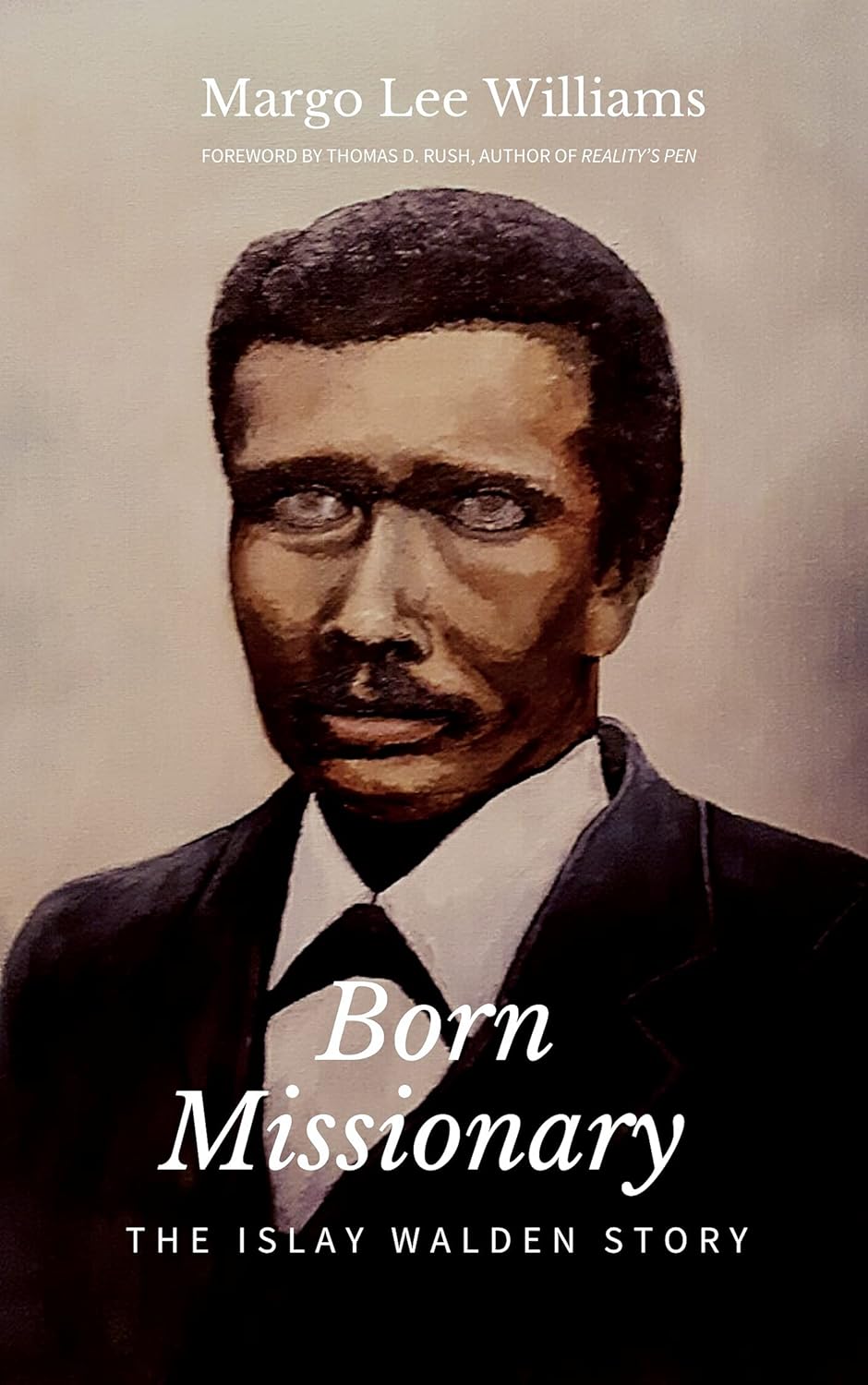
Margo Lee Williams’s Born Missionary tells the remarkable life story of Islay Walden, a man born into slavery who overcame blindness, poverty, and prejudice to become an educator, poet, and minister. The book traces his journey from the plantations of North Carolina to the halls of Howard University and the New Brunswick Theological Seminary, where he became one of the first African Americans ordained in the Reformed Church in America. Through meticulous research and a clear narrative voice, Williams reconstructs a life of faith and resilience. She doesn’t just recount events. She restores the humanity and voice of a man who was almost lost to history.
Reading this book stirred something deep in me. I could feel the grit in Islay’s story. His persistence through blindness and hardship hit me hard. The way Williams weaves letters, poetry, and newspaper clippings into a vivid picture of his struggles makes the past feel close. Her writing feels both scholarly and warm, and she lets the historical documents breathe. I’ll admit, there were moments when the detail slowed me down, but I didn’t mind. The care she took made me trust her. I found myself rooting for Islay, not as a distant historical figure, but as someone I might have known. Williams also captures the contradictions of his time, the faith that built him up, and the racism that tried to keep him small.
Emotionally, I found myself angry, proud, and sometimes just quiet after reading a passage. Williams doesn’t sermonize; she shows the quiet power of purpose. Her portrait of Islay’s devotion to teaching and preaching made me think about how education itself was a kind of rebellion. I liked how she handled the tension between his poetry and his ministry. You can sense that both were ways for him to see beyond blindness, to express what light looked like to him. It’s moving without ever feeling forced.
I’d recommend Born Missionary to anyone who loves history that feels alive. It’s perfect for readers interested in African American heritage, the Reconstruction era, or stories of perseverance that don’t sugarcoat the past. Teachers, pastors, and anyone who believes in second chances will find something here. It’s not just a biography, it’s a reminder of how one life, lived with courage and faith, can echo through generations.
Pages: 121 | ASIN : B091MF5B48
Healing and Honesty

In A Journey into Manhood from the Path of an Idiot, you share with readers your reflections on childhood, family dynamics, and your personal growth. Why was this an important book for you to write?
This book was deeply important to me because I believe it’s vital for young boys and men to understand that making mistakes is part of life—and that it’s okay. Growth comes from acknowledging those mistakes, learning from them, and moving forward with purpose. My own life has faced challenges in every area imaginable, but through accountability and embracing my past, I was able to turn my struggles into stepping stones for success. Sharing this journey offers hope and encouragement to others who might feel trapped by their circumstances, showing them that change is possible and that their past does not define their future.
What was the hardest thing for you to write about?
The most challenging part was opening up about the death of my nephew. My editor suggested I start the book with something compelling that would grab readers’ attention, but I hesitated because I had always hidden that pain. Confronting that loss forced me to face what I had been running from for years. Writing about it was emotionally challenging, but ultimately, it was a necessary step toward healing and honesty—both with myself and my readers.
What is one piece of advice you wish someone had given you when you were younger?
I wish someone had told me not to fear success. Growing up, I found failure easy to accept because no one expected much from me. When success did come, I struggled to believe I deserved it or that I could overcome my mistakes. If I had known that success was attainable and that I was worthy of it, I might have approached life with more confidence and a greater belief in my potential.
What is one thing you hope readers take away from your experiences?
I want readers to see that no matter how many mistakes they’ve made, they can still achieve greatness. The key is to look past those errors and recognize the inner strength and goodness within oneself. Everyone has talents and a purpose—they just need to embrace who they are and keep pushing forward, helping themselves and others along the way.
Author Links: GoodReads | Facebook | Website | Amazon
The title of this book could have been written backwards, and it would still have conveyed the same meaning. From The Path of an Idiot to A Journey Discovering Manhood is the story I never thought I’d have the strength or the literacy skills to tell. This book is my truth—born from anger, shaped by confusion and survival, and ending in transformation. I wrote this for the boy I used to be: lost, unloved, and misunderstood. I wrote it for the man I was becoming—reckless, hardened, and trying to find meaning in a world that never gave me a blueprint for manhood. And I wrote it for every person who has ever wondered if redemption is still possible.
Through raw reflection and hard-earned lessons, I open the door to my past from illiteracy, juvenile detention, and gang involvement to the struggles of fatherhood, faith, and forgiveness. This isn’t a polished tale of overnight success. It’s a testimony of stumbling, standing again, and finding purpose on the road I once thought would destroy me.
If you’ve ever felt broken, overlooked, or counted out, I hope this book reminds you: the journey may start in darkness, but it doesn’t have to end there.
This is my journey. These are my lessons. This is Manhood, revealed.
–Carandus T. Brown Sr.
A Journey Into Manhood From the Path of an Idiot
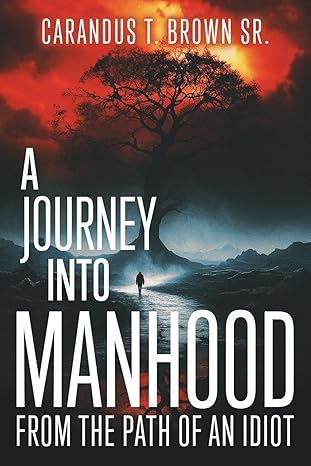

Carandus Brown’s A Journey into Manhood from the Path of an Idiot is a raw and deeply personal memoir that chronicles one man’s long, often painful climb from childhood confusion to adult accountability. With each chapter framed as a “lesson,” Brown reflects on his life from traumatic events and broken family dynamics to brushes with the law, misguided relationships, and spiritual reckonings. What starts as a candid account of pain and dysfunction slowly morphs into a powerful meditation on growth, faith, and the courage to confront your past. This is a book about how a boy with no clear path to manhood stumbles, fights, learns, and ultimately walks that road anyway.
Reading this book felt like being handed someone’s journal, written with no filter and no concern for appearances. I admired that. Brown’s writing is emotional and gritty, full of hurt and hope in equal measure. He doesn’t try to dress up his experiences. He owns his mistakes, often with heartbreaking honesty, and that kind of vulnerability resonated with me. Some parts were painful to get through, especially the loss of his nephew and the scenes with his father, but those chapters gripped me. It’s not just the storytelling, though. It’s how Brown unpacks each memory, not just to remember it, but to understand what it meant, what it cost, and how it changed him.
There were moments when the writing got a little long-winded. I sometimes wished he’d pulled back just enough to let the reader breathe. But even in those moments, I could feel the sincerity behind every word. And there’s poetry in how he writes, even when he’s angry or confused; there’s rhythm and raw beauty to the way he strings his thoughts together. His lesson on education, how he faked reading as a kid just to survive the shame, hit me in the gut. And the spiritual themes, especially his talks with God, felt real. Not polished. Not preachy. Just real.
This isn’t a polished self-help book or a clinical story of recovery. It’s a firestorm of memory and meaning, one that will resonate with anyone who’s ever felt lost, unloved, or misunderstood. I’d recommend A Journey into Manhood from the Path of an Idiot to young men navigating tough upbringings, to anyone grappling with forgiveness, and to readers who crave stories that bleed truth. Brown may have taken the long way to manhood, but this book proves he got there, and he brought a whole lot of wisdom with him.
Pages: 160 | ISBN : 978-1681116082


