Blog Archives
Nuggets of Gold

In Careers By the People, you present the average workday through interviews from a broad spectrum of careers, offering advice and inspiration for high school and college graduates as well as those looking for change. Why was this an important book for you to write?
Careers By the People was written because I didn’t prepare for the workforce, and I had no idea what I was getting myself into, so my goal was to put my thoughts and ideas to paper to help the next generation with career choice and career readiness. I was a first-generation, low-income student which is deemed an FGLI. About 50% of college students are in this category. So, I wanted to tell my story and note what I should have done to prepare for the workforce, so they do not make the same mistakes.
My goal was simple; get a job that pays well. Selling technology pays well, but didn’t interest me, so I was bored to tears for years. I try to drive that message home when I speak to students, as many believe money equates to happiness, so I inform them that money is great, but also to enjoy your labor, hence why I write about career readiness, speak about it, produce YouTube videos about it and more.
What was your process for selecting the interviewees for this book?
Some of the process was a joy, such as reaching out to leaders in the industry I knew in the hopes they would tell their story about how they secured elite positions. Receiving those questionnaires was a big score. Others I connected with via professional associations. Another angle was through advertising in my college’s alumni network and magazine. Basically, any angle and way I could think of to ask workers to take 15-30 minutes to fill out a questionnaire about their occupation. Many were intrigued, and many couldn’t careless.
Did you learn anything during the course of your research that surprised you?
A lot. When it came to the questionnaires, I received some from former associates who I barely knew who answered the questions succinctly whereas close friends wouldn’t take the time to fill them out.
As for the workers themselves, the ones who took risks were happier or satisfied versus the risk-averse ones. One that stuck out was a clerk who truly disliked her job, and her responses, even after many edits, were hysterical.
Another curveball was when the professional truly disliked their occupation, and on one of the last questions asking if they would do the same career again, they said yes, which is mind-boggling.
Please understand that I had to review and edit a variety to find 101 nuggets of gold. Some questionnaires were “yes/no” for 90% of the questions. The goal was to determine what it was truly like to be an x, y, or z as the only person who knows about your job/career is you, so what’s it like to be an actuary?
What is one thing you hope readers take away from Careers By the People?
The questions. I hope anyone in school, the military, or changing careers views the questions and asks people in the industries that interest them the questions so they know what they are getting into instead of guessing “Yeah, I hear that it pays well, I will do that.” I want people to do a little homework on career choice before spending time and money on an occupation that won’t last 3 years, and then they are starting from the beginning again, trying something else.
The book is a fun read and offers suggestions and ideas to help you choose what profession is best for you.
Author Links: GoodReads | Website | YouTube | LinkedIn | Amazon
After three decades in corporate America, Mike Wysocki wondered if the grass really was greener on the other side. So he put his background in sociology to work and spent years surveying industry veterans in a variety of occupations.
The responses were eye-opening: an honest, insider’s look at what workers say about their careers outside of the office.
Wysocki chose the 101 most powerful responses for the two-time award-winning Careers By the People to demystify the world of work with practical experience rather than theory. These industry profiles pair the practicality of guidance counselors with the storytelling of a networking event (without the small talk).
Told in a Q&A format, insightful answers to thought-provoking questions include:
descriptions of a day-in-the-life of the profession they chose.
truths about conflicts, co-workers, and management.
common misconceptions, issues and what pitfalls to avoid.
what’s fulfilling, what’s draining, and what’s worth it.
With humor and authenticity that doesn’t hold punches, this career guidebook will help you narrow down career choices so you can determine what is best for you.
All paths lead to retirement—which one are you on?
Careers By the People won a 2024 Bronze IPPY Award in the BEST FIRST BOOK – NON-FICTION – INFORMATIONAL Category as well as a 2025 Silver Axiom Award – Career.
It’s a great book for Careers & Technical Education as it views 101 occupations that break down into California CTE Career Pathways. In the book there are (4) in Agriculture and Natural Resources (7) Arts, Media, & Entertainment (1) Building & Construction Trades (14) Business & Finance (18) Education, Child Development, & Family Services (1) Energy, Environment, & Utilities (5) Engineering & Architecture (3) Fashion & Interior Design (10) Health Science & Medical Technology (3) Hospitality, Tourism, & Recreation (5) Information & Communication Technologies (6) Manufacturing & Product Design (14) Marketing, Sales, & Services (6) Public Services (3) Transportation.
Since the book has been published, I have spoken at many high schools and colleges about career and career readiness such as Cal State Dominguez Hills, Boston University, UMass Amherst, Univ. of New Hampshire, Suffolk University, Hawaii Pacific University, Weymouth High School, Holbrook HS, New Milford HS, Randolph HS, Maui HS, Kapolei HS, University of Hawaii Maui College, University of the Pacific as well as many others.
Careers By the People was published to help students with career choice and career readiness. It’s a story of Wysocki, a first-generation low-income average student that makes it out of college unprepared for the real world and the obstacles that one faces. Thirty plus years later, the book is out. Each person was asked 20+ questions and the majority had 5+ years’ experience. Moreover, Hollands Occupational Themes is incorporated as the chapters with modern day terminology. It entices the reader with history and humor.
The website, http://www.careersbythepeople.com, has an excerpt to download, videos of the reasons for the book, the full list of endorsements, interviews, book reviews, YouTube Channel with over 80 videos about career readiness, a speaking engagement at Hawaii Pacific University etc…
Careers By the People: Candid Career Advice from 101 Experienced Professionals

Careers By the People is a wide-reaching look at what real work feels like for real people. Mike Wysocki gathers 101 interviews that span everything from CEOs to beekeepers to teachers, and he lets each person speak plainly about what their days look like, what they enjoy, and what grinds them down. The book moves through these stories with an easy rhythm. It shows how career paths twist and turn. It also explains how personality, luck, stubbornness, and honest self-reflection shape a life more than any job posting ever could.
I liked how direct the voices were, since many career books wrap advice in buzzwords. This one does not bother with that. The interviews feel like short but candid coffee chats. I caught myself underlining certain lines because they hit close to home. The mix of pride, regret, humor, and grit reminded me how messy most careers really are, and that made the entire book comforting. I also appreciated how Wysocki frames the stories with his own reflections. He speaks openly about his missteps. His tone feels friendly, almost like a mentor who refuses to sugarcoat anything.
At times, the honesty stings. Some stories feel heavy, and a few made me anxious in the best way because they pushed me to think harder about my own choices. When several similar roles appeared in a row, the forward momentum slowed. Still, that repetition also proved the point that every job contains highs and lows. I found myself enjoying the unpredictable flow of opinions. Some workers adore their field. Others are blunt about their frustration. I liked that mix. It made the book feel alive.
I would gladly recommend Careers By the People to high school and college students, early career professionals, and anyone who feels stuck or restless at work. The book works well as a guide, but it also works as a reality check. It gives readers permission to explore, to question their assumptions, and to admit when something does not fit. If you want straight talk, human stories, and a push to think about what you actually want from forty years of work, this book will serve you well.
Pages: 570 | ASIN : B0BPX59FT5

How to Find Work for the Rest of Your Life
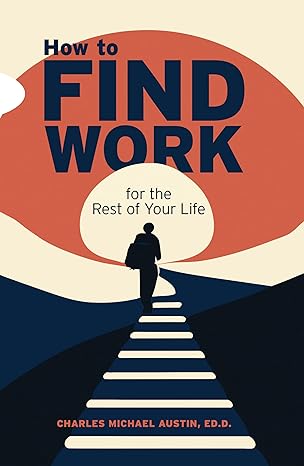

How to Find Work for the Rest of Your Life is an honest, no-nonsense guide to navigating the job market in an era where stability is a relic of the past. Austin makes it clear from the start: the working world has shifted into a gig economy, and if you want to succeed, you have to adapt. Through 15 chapters, he breaks down how to redefine career success, sharpen job-seeking strategies, build a personal brand, and ultimately, market yourself like a business. With practical advice and a tough-love approach, the book is packed with career wisdom that applies to anyone, whether they’re fresh out of school or facing a mid-life career shift.
One of the most compelling aspects of the book is Dr. Charles Michael Austin’s directness. In Distinguish What Is from the Way You’d Like Things to Be, he lays out the harsh truth: lifelong careers with pensions are gone, and everyone is essentially a freelancer now. He reinforces this idea with the mantra, “Adapt or die.” While it might sound dramatic, it’s refreshing to see a career guide that doesn’t dance around the truth. I found this section particularly eye-opening because it forces you to accept the current job market as it is, rather than how you wish it were.
Austin also has a way of making career advice personal and engaging. In Find Your Passion, he dismisses the idea that you need to have your entire career mapped out before taking action. Instead, he urges readers to experiment, try different jobs, and embrace the unknown. His example about salsa dancing—how he struggled through learning the steps but kept at it because of the joy it brought his wife—resonated with me. It’s a great metaphor for career growth. His writing here feels less like a lecture and more like a conversation with a mentor who genuinely wants you to succeed.
Another highlight of the book is the emphasis on self-marketing. In Develop Your Sound Bite/Elevator Pitch, Austin explains how crucial it is to articulate what makes you unique. He drives this point home with clear, actionable steps, like crafting a one-sentence statement that sums up your skills and value. This chapter stood out because it’s something so many professionals struggle with, yet Austin breaks it down into a simple, repeatable process. I appreciated how he linked branding to everyday networking—whether you’re in an interview or just making small talk, you should always be prepared to sell yourself.
This book is an excellent read for job seekers who need a wake-up call and a strategy to stay relevant in a rapidly changing workforce. Austin’s writing is straightforward, often humorous, and deeply practical. He doesn’t waste time with fluff; every chapter is packed with usable insights. If you’re someone who prefers hand-holding and step-by-step instructions, this book might feel a bit intense. But if you appreciate candid, experience-based advice that will push you out of your comfort zone, How to Find Work for the Rest of Your Life is a must-read.
Pages: 215 | ASIN : B0DJFX8WPD
Build a Solid Business

The Freelancer’s Compass provides both aspiring and experienced freelancers with the tools needed for navigating the intricacies of becoming self-employed. Why was this an important book for you to write?
Many people go from a corporate career into freelancing or consulting but give up a few months later. I believe part of their challenge is the lack of understanding how working for a business is different from running your own business. Freelancers and consultants are business owners, and they need business tools and systems in place to be successful.
Great books have been written on the subject of freelancing, but many focus on things like marketing and getting clients. While those are very important aspects, you also need to organize your business in a way that will ensure its longevity. So, I wanted to share what I’ve learned in my 25 years of business about the “back end” — operations — and provide a step-by-step guide on how to set up a solopreneur business for long-term success.
I work with clients in the technology sector primarily and I’ve watched many of my corporate colleagues lose their jobs in the past year or two. Which is why originally, I set out to write the book for knowledge workers (especially those in marketing and technology) who may be considering going solo. However, most of the advice is also relevant for less experienced or struggling freelancers who want to figure out how to level up their game and build a solid business.
Independent, or gig, work continues to be a growing trend — the number of full-time independent workers has grown exponentially between 2020 and 2024, according to data from MBO Partners. That’s why I believe that this book is especially timely now.
How much and what kind of research went into putting together this guide?
The Freelancer’s Compass is based on best practices I’ve learned from running my business, other successful freelancers in my extensive network, my coaches and mentors, and knowledge I’ve gained over the years from books, workshops, and trainings. That said, I spent a good amount of time researching current freelance trends and looking for resources to include. I also interviewed several successful peers who have run successful businesses for many years and included those interviews for additional insights.
What is one misconception you believe many people have about freelance work?
I actually list three myths about the self-employment life in my book: that you can do whatever you want, that you have a flexible schedule, and that “feast or famine” is the way of life. These are all true in some ways, but there are nuances and caveats — and if you don’t have tools and processes in places, they become pitfalls.
If I had to pick just one misconception, I would say it’s that you can work whenever you want. Sure, you’re your own boss and clients can’t tell you when to work. But that doesn’t mean you can just show up to your office or desk whenever you feel like.
Oftentimes, you’re at the whim of client deadlines, have to plan days off around project cycles, and possibly even cancel plans at the last minute. Of course, you can avoid a lot of these issues by understanding your priorities, setting boundaries, and managing client expectations. And even if you don’t have any projects in flight, you still have to show up during your business hours so you can work on your business. But many new and inexperienced freelancers don’t realize that even if they don’t have to “clock in,” running an independent business is still like a job in this regard— especially since they don’t have a boss or a traditional paycheck compelling them to show up every day.
What is one thing you hope readers take away from your book?
I hope it helps them build a good foundation for their business if they’re just starting out, or uplevel their game if they’ve been freelancing for a while and are struggling to grow their business.
I focus on four aspects — infrastructure, processes, tools and support systems, and roadmapping — and lay them out in three tiers (“must have,” “nice to have,” and “highly recommended if you want to uplevel.”) This way, readers will find something helpful regardless of where they are in their business.
I also tried to not take myself too seriously when I wrote the book, and my tone is borderline snarky — so if nothing else, I hope it’s mildly entertaining.
Author Links: GoodReads | X (Twitter) | Facebook | Website | Amazon
Second-Place Winner, The BookFest, Fall 2024, Business – Entrepreneurship
Did you embrace the freelance life by choice, to escape the corporate grind? Or was it by necessity, after being swept away by a corporate “pivot”? Either way, congrats on boldly going where so many other daredevils have gone before. Now, buckle up. You’re not just a freelancer — you’re a business owner. And running a business is a roller-coaster ride.
Making the transition from being a cog in the corporate machine to being the machine takes more than a mindset adjustment and a sweatpants shopping spree. Starting a freelance business successfully requires business processes, support systems, and tools — contracts, bookkeeping, standard operating procedures, and other mundane stuff that was somebody else’s problem before (and will most certainly make your eyes gloss over). You probably didn’t know these were included in the price of your newfound “freedom” — and, like many other solopreneurs, you’d happily trade them for a root canal.
The Freelancer’s Compass takes you through the fundamentals of launching and managing a freelance business that thrives. You’ll discover all the less-glamorous steps of building your back-end operations — from someone who got the T-shirt and lived to tell the story.
The Freelancer’s Compass: How to Navigate Your Way from Corporate Cog to Solopreneur Star
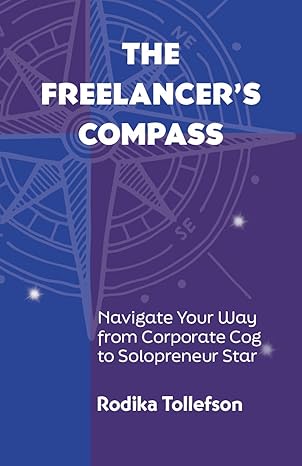
The Freelancer’s Compass serves as a comprehensive guide for both aspiring and experienced freelancers navigating the complexities of self-employment. Drawing from over 25 years of freelancing expertise, Rodika Tollefson offers actionable strategies for transitioning out of corporate careers and building successful freelance businesses. From marketing and project management to cybersecurity and financial planning, the book provides practical solutions for managing critical business operations. Real-world success stories from freelancers further enrich the content, delivering valuable insights into overcoming industry challenges and adapting to a dynamic market. Readers gain a clear, step-by-step roadmap for launching, managing, and scaling their freelance businesses sustainably.
The book’s structure is meticulously organized, with each section addressing a key facet of freelancing. Tollefson’s expertise shines through as she demystifies essential processes like client onboarding, financial tracking, and legal compliance. Notably, her focus on cybersecurity and data management feels timely and relevant, particularly in today’s remote work landscape. Case studies and freelancer profiles add further dimension, offering real-world examples that bring theoretical concepts to life. Readers can easily follow the logical flow, progressing from foundational principles to advanced business strategies without feeling overwhelmed.
Tollefson leaves no stone unturned in addressing the entrepreneurial and operational realities of freelancing. Her thorough guidance covers setting up business systems, managing clients, and handling administrative tasks with clarity and precision. By weaving in freelancer profiles and personal anecdotes, she creates a richer, more contextualized learning experience. These stories provide varied perspectives and actionable lessons that resonate with freelancers at all stages of their journey. Challenges like marketing, financial planning, and project management are tackled head-on, giving readers an honest, unvarnished view of freelancing’s demands while equipping them with tools for success. The content feels empowering but grounded, ensuring readers understand both the rewards and challenges of freelancing. Tollefson’s ability to educate while maintaining an engaging narrative ensures readers remain invested from start to finish.
For professionals transitioning from corporate careers, new freelancers seeking direction, or seasoned solopreneurs looking to optimize their workflow, The Freelancer’s Compass, by Rodika Tollefson, is an invaluable resource. Tollefson dismantles freelancing myths and presents a realistic picture of self-employment—one that demands hard work, strategic planning, and persistence. By blending strategic advice, real-world stories, and business insights, the book delivers a well-rounded toolkit for thriving in the freelance industry. It stands as both a motivational guide and a practical manual, empowering readers to build sustainable, fulfilling freelance careers.
Pages: 153 | ASIN : B0DFLPPCB1



 LITERARY TITAN