Blog Archives
Ava and the Last Bird
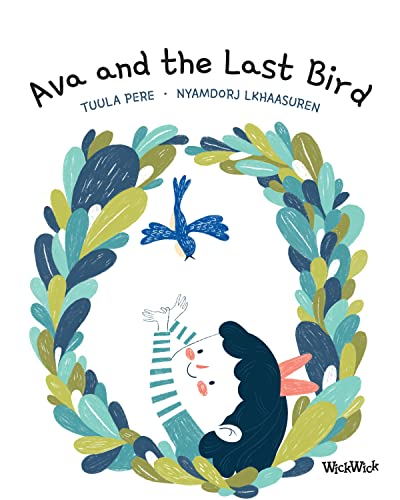

Ava discovers a bird’s nest outside her window. Each day she enjoys watching the nest to see what they will do. She loves watching the little chicks as they hatch and grow to wait to see if they can learn to fly.
Now Ava is very curious and wants to help the birds. So she tries reading to them. Her best friend Axel hears her outside reading and soon is bird watching with her as they watch the little birds learn to fly. Then a tiny little bird falls out of its nest. Ava and Axel don’t know what to do, but Ava’s grandmother does. He says, leave the baby alone it’s parents will come to rescue it when we go away. Sure enough, that is what happened. So Ava and Axel continue to watch the birds until they can all fly.
Ava and the Last Bird is a wonderful picture book for kindergarten and young elementary school children. Author Tuula Pere teaches children that nature is a wonderful place full of amazing creatures to discover. He also teaches children that they need to not interfere with the animals that surround them. Birds know what is best for them, and people must let them take care of their own families.
The artwork by illustrator Nyamdorj Lkhaasuren is fun and colorful. I loved how Ava dressed up as a bird to sing and dance for the baby bird that fell. The whimsical characters will keep children entertained as they follow along with the story.
Children and teachers will love following the adventures of Ava and Axel as they discover how the birds in their backyard live. This is a great way to introduce children to bird watching and how to properly observe the animals that live around them without causing distress or getting hurt.
Pages: 36 | ASIN : B09K4BTNW1

Ten Precious Pigs
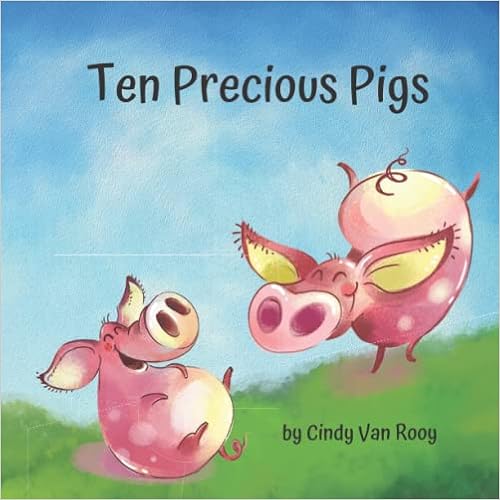
Ten Precious Pigs by Cindy Van Rooy is a delightful and educational children’s book. It takes place on a farm, showing ten precious piggies in their pen. Over time, they slowly leave one by one to do their own thing. From beach days, and car rides, to yoga in the forest, these pigs do it all! Eventually, it becomes time for the piggies to get into their pajamas and prepare for bed. Their long day comes to an end, and now it’s time for them to huddle up and rest by the fire!
Author Van Rooy provides children with a charming and colorful story that also educates kids on counting and rhyming. As the pigs leave one by one, children are asked to count how many pigs are left in the pen. The rhyming scheme also gets young readers engaged while making it fun. The author provides multiple educational tools to children from rhyming, counting, and learning colors all in one book. The art in the book is beautifully illustrated and pleasing to the eye as it looks like watercolor painting. With vibrant colors and playful animals, this book is sure to entertain young readers. Van Rooy includes a riddle in the short story and made this book an interactive read which allows little ones to immerse themselves into the story. It’s definitely a must-read for young children!
Overall, Ten Precious Pigs is an inviting story that I would recommend all parents to get for their young children. Especially those who are just learning to read, rhyme, or count! The aesthetic of the book is appealing and cute, and all the vibrant colors and fun illustrations would keep any child interested! All the characters look so lively and enthusiastic, you can’t help but smile! So, if you’re looking for a fun book to read as a bedtime story, or to practice reading, this is definitely the best choice.
Pages: 46 | ASIN : B09V4G2LX7
Volcanoes For kids
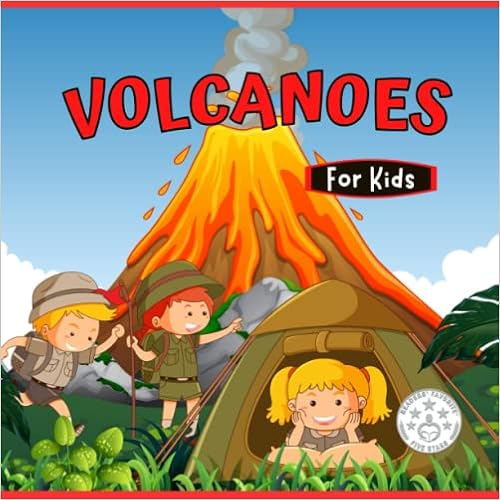

Volcanoes For kids by Samuel John is a brightly illustrated educational book that teaches children all about volcanoes. The author provides young readers with detailed background information on volcanos, the anatomy of volcanoes, their locations, and much more information in a short read.
Author Samuel John has put together a well-researched read that will captivate children. The book is separated into sections that provide colorful yet educational images paired with interesting volcano facts. The author’s writing is easy for young readers to follow along with while teaching and engaging them. This entertaining book will get children interested in our planet. Each page includes detailed beautifully illustrated images to go along with the facts, helping children to better visualize what they’re reading.
Little do children know they will be learning while having fun! This would make a great resource for kindergarten or homeschoolers to introduce the topic and get children interested in the sciences.
Volcanoes For Kids is the perfect book to start your young readers on an educational journey. The author provides everything they need from diagrams to colorful illustrations, to written facts for children to enjoy. Every page will pique their curiosity as they follow along with fun facts presented in an alluring manner from the first page till they turn the last page. A must-read for young readers whether they are curious about volcanoes or simply want an entertaining read.
Pages: 28 | ASIN : B09PJW7549
Molly the Mallard Duck: The True Story of Kathy and the Mallard Duck She Named Molly
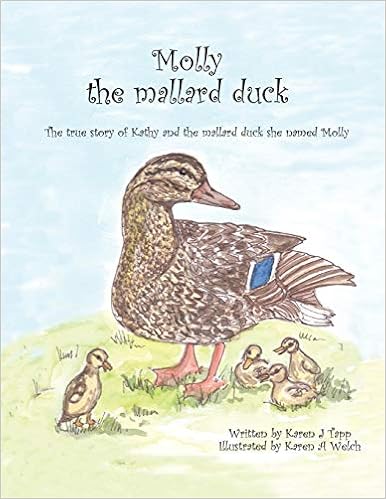
When Kathy finds a mother duck sitting on a nest of eggs near her home, she takes it upon herself to protect the mother. But when the ducklings hatch, they fall into a nearby sewer. Will Kathy be able to return the ducklings to their mother? Follow the noble true story of Kathy and her urban crusade to save a duckling and return it to its mother.
Molly the Mallard Duck is a charming and educational children’s book that shows how caring for wild animals is a lot more challenging than expected. With simple language that is suitable for early readers, this children’s book tells a lovely story that conveys compassion and kindness.
Illustrator Karen Welch does a fantastic job of reflecting that same warmth through magnificent sketch art that children will be able to relate to. I love how readers are able to see all of Kathy’s emotions in the illustrations as she is very expressive. This makes the story more emotional that I would have thought and shows just how much Kathy cared. Every time the ducklings were on the page my young child was glued to the book.
With a hilarious ending Molly the Mallard Duck is a picture book that will tug at the heart strings while it tells a delightful story about caring for all living creatures and helping when needed. With lovely illustrations and cute ducklings running around, kids are sure to be wrapped up in this entertaining story.
Pages: 32 | ASIN: 1466985240
The Ghost of the Torn Underpants
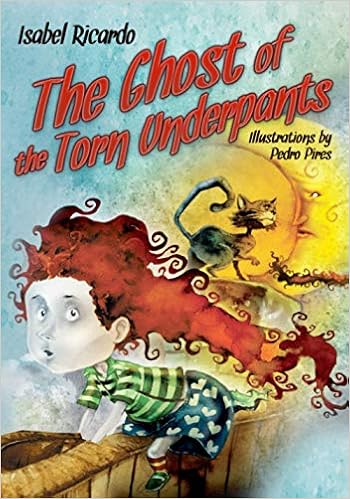
A ghost has the unfortunate luck of getting bestowed the name Ghost of the Torn Underpants. Now the way it works is once another ghost gives a name to an unnamed ghost, it can not be changed; that is just how it works. Upset and frustrated at the constant teasing he endured after receiving this name, Ghost of the Torn Underpants moved to a new mansion alone. He was very lonely, but it was better than being teased nonstop over a name he could not change.
One day the ghost postman brought him an invitation to a party at his old mansion. He decided to give it a try as he was lonely all alone. He found a girl ghost sitting alone when he arrived, looking sad. When he asked her what her name was, she shyly said it was Ghost of the Backwards Dress. She was teased just as much as he was, and they formed a friendship. Together they learned to love their unique names and realize being different does not make you a bad person or less worthy of friendship and respect.
The Ghost of the Torn Underpants, written by Isabel Ricardo and illustrated by Pedro Pires, is a captivating children’s story about differences and accepting those that are not the same as you. With the increase in diversity in schools, there are many names children have never heard before. I think this book is an excellent resource for teachers and parents to show that names are unique and not something to be teased about. Ricardo teaches children about acceptance of themselves and others, standing up for themselves, and the value of friendship.
The bold and beautiful watercolor illustrations bring this meaningful story to life. The Ghost of the Torn Underpants has bright red hair that waves like a flame. This makes him stand out visually as well as his name, drawing attention from the other ghosts that fit a more traditional appearance. All the illustrations are engaging with small details that children can pick up on and look for. This is further enhanced by an exercise at the end of the book. The author asks questions about what children saw in the pictures, like how many letters the postman carries.
The Ghost of the Torn Underpants is a well-crafted children’s book combining important messages about acceptance, diversity, and friendship. The author writes in a manner that young kindergarten children will understand the message but is mature enough that children in older grades will be drawn to the story as well.
Pages: 37 | ASIN : B08QG9NGK8
I Write for the Benefit of Children
You Can Fly, Little Bird follows three sibling birds and how they are different from each other and that it is ok to be different. Why was this an important book for you to write?
There were three children in my own childhood home, each with a particular personality from the very beginning. The nest was everyone to share, but each child had their way of approaching the world around and testing one’s skills there. In the three little birds of the book, I recognize many traits from my own sibling series.
It is not always easy for parents to find a suitable way to encourage different children. First, they must know the children well enough; their skills must be valued and supported. You can help with choices, but it is not good to influence the direction too much.
As I wrote my book, it was interesting to experience the perspective of three different siblings leaving the nest – through birds’ eyes. One is longing for the top of the mountain, with its strong winds, and is not afraid of danger. The other one is an explorer by nature, and for the last sibling, the nearby forest is a suitably safe place.
I think this book is necessary for both children and their parents, who hopefully read it together. The story provides an opportunity for deep discussion about children’s needs and desires. At the same time, it reminds parents of the individuality of each child.
When you’re writing an emotional or difficult scene, how do you set the mood?
When I write a story, it takes me entirely with it. Actually, the whole story has already been born before this somewhere in my head. Writing is really just about putting a story into text. Its content and atmosphere already exist for me.
I hope and trust that my readers will sense the authenticity of the moods that I describe. I don’t strive and push any mood. I live a genuine atmosphere of the story myself. I don’t like pretending, not even in writing fairytales.
With my most difficult and sensitive stories, I have cried myself. While my own emotional turmoil can be intense, I want to filter it out so that the reading child finds the book safe and encouraging anyway. There is always at least a hopeful ending to my fairytales.
I have also shed tears of joy when writing stories. I rejoice at the family getting back home after the war. I am happy when Colin the Crab, who lives alone in his cozy house, finally finds his beloved spouse. There are many big and small moments of happiness in my fairy tales.
In real life, joys and sorrows are often present simultaneously, which is possible even in a story aimed at children. No reason to hide that! Children understand much more than adults will ever believe!
What book (or books) are you currently reading?
I recently bought a pile of books published by the Finnish Literature Society. I am now reading a travelogue from 1828, written by Elias Lönnrot. In English, the title would be “The Wanderer.” Lönnrot has many literary and linguistical accomplishments – the most famous being the Finnish national epic, Kalevala.
He wandered for months in remote areas, met ordinary people in the countryside, and gathered Finnish oral tradition. Many of the places described in this book are familiar to me.
It is touching to read the observations of Lönnrot, a wise and attentive person, about nature and people two hundred years ago. The world is changing, but some things remain the same. Fortunately, there are always people who love both poems and stories and the language in which they are told.
I could praise Lönnrot even more, but let it be enough to say that in this book, too, he shows his intelligence, attentiveness, and sense of humor as well.
Has writing and publishing a book changed the way you see yourself?
I have written and published over 50 original stories. Each of them means a lot to me in its own way. I have incorporated some of my thinking and heart into all of them. When I’m writing my stories, I also think very deeply about my life and everything I’ve experienced. I could claim to be having a discussion together with my text. At the same time, it influences and develops my own thinking.
Especially when writing about the most demanding topics, I go very deep into my thinking and morals, even if it may just be reflected in what I write on the lines. So, the writing process touches my heart. I need to be sure about and in balance with everything I write. I feel that it’s my responsibility to the young readers and their families. I demand a lot from myself in this regard.
Before becoming a children’s author and publisher, I had professionally done a lot in my life. Although my career in legal posts and corporate management was meaningful and rewarding, I feel I am fulfilling the most important calling of my life now, in children’s literature.
When I look back on my life, it feels natural that I have ended up as a children’s writer and publisher. It combines my love for children, writing, and social impact – in a gentle way. Even my background as a Ph.D. in Law can be put to good use in children’s literature as its moral backbone.
Becoming a children’s author has not made me see myself differently, as I feel always being the same person – just in different roles. But I genuinely feel the joy that I have gotten closer to myself.
The most important thing is to connect with my readers’ minds. Nothing coming from outside of this relationship affects how I see this task. I don’t try to please anybody; I just honestly write for the benefit of children. I’m not sure if this change is due to the new path I chose or is simply due to growing older. Either way, it feels good and natural.
Author Links: Facebook | Website
Finally, curiosity wins over fear, and Serene discovers that her wings can keep her aloft. Once she gets to know her surroundings, she finds joy in her skill. She also finds there’s plenty of space for all kinds of birds in the forest, including timid Serene.
Not Just a Writer, an Author
My Sunflowers follows a young girl that wants to grow sunflowers despite being told she is too young to do it herself. What was the inspiration for this story?
Often children have fun ideas that adults don’t support. The reasons are many; it’s dangerous, takes too much time or money, or disturbs the others. However, we must give space for the child’s natural curiosity and desire to experiment. They must be encouraged to try new things and trust their abilities.
Sometimes children make mistakes – as we all do, and their actions involve a certain amount of danger, but coping with risks is essential for the learning process. Once the children have received basic information and instructions from their parents, it’s gradually time to face the outside world more widely. I was lucky to live in the safe freedom of my childhood. It included many bike rides, forest exploration, and other outdoor activities.
I still remember how exciting it was to go out alone to try new things. Luckily, I never hurt myself worse, even though I climbed tall trees and steep cliffs. I learned to take a suitable number of risks and to survive with odd tasks, people, and places. All those skills have been beneficial later in my life. Without that kind of childhood, I wouldn’t be the person I’m today.
Why did you choose sunflowers for this story over another type of flower?
I have always loved sunflowers, even though I have not grown them myself. They have a lot of energy, both in terms of their name, color, appearance, and height. The sunflower is a positive and proud plant that can be used in many ways. In my story, the size of the sunflowers has its special meaning.
The girl has the challenge of getting the tall flowers to cope with two obstacles. First, large flowers are difficult to grow unnoticed by others. The more significant threat, however, is a storm rising overnight. Long stems and heavy flowers are in danger when a storm blows and rain hits the yard.
The help and advice of a friendly gardener are crucial for the child. With the support of some sticks, the plants withstand the storm and rain.
After My Sunflowers was already published, growing sunflowers and their intense yellow color under a blue sky have become a symbol of staying strong in difficult times. If my book helps somebody keep their head high and trust themselves, I appreciate that.
When did you first call yourself a writer?
First, I’d distinguish between calling myself a writer or an author. I have felt like a writer much earlier than I dared to call myself an author.
Writing has been an essential part of my legal studies and my work as a lawyer and the head of corporate communication in large companies. But that has been non-fiction writing of articles, contracts, and presentations.
I have always written a lot in my free time, too. Those texts have been only occasionally published in some local newspaper or taken part in some competition. The turning point was 2010 when I published my first children’s book Stella and the Magic Stone. At first, I was a little shy to call myself an author because I had started publishing independently through my company Wickwick Ltd. Becoming a member of The Finnish Youth Writers Association and The Association of Finnish Nonfiction Writers encouraged me nationally though my focus has always been mainly international.
Now, after twelve years of active publishing, I finally feel not just a writer but an author, too! I have written and published over 50 original children’s books in several languages and sold translation rights to many international publishers. I still have some connections to my previous professional past, e.g., I recently worked as a contributor to a “Research Handbook on Contract Design” by writing an article about contracts and the human factor.
To sum up. In a broader sense, I have been a writer – also professionally – for about forty years and an author for over a decade. As you can see from this answer, we, lawyers, often make simple things very complex. I may be a little too serious here, but writing is such an important and responsible task for me. I feel privileged because I have the opportunity to reach people through it and try to make a difference in their lives.
What advice would you give to help others create plotlines?
I don’t feel like advising other writers as storytellers. It’s best for everyone to find their individual style and way of telling stories. Of course, anyone can constantly improve their written expression in a linguistic sense. But as a storyteller, one must take responsibility for having enough to say and being able to do it properly.
Having a genuine voice is the key. I don’t think anyone should listen too much to the instructions of others about the story itself. It may result in trying to please the publisher or, at worst, mimicking the way others tell stories.
Of course, books often have their natural narrative rhythm. But a skilled writer can and should be brave enough to break these rules if needed. However, besides interesting stories and captivating plotlines, the readers deserve that the language has been used correctly.
It’s beneficial for children’s writers to test their way of telling stories in front of their actual audience. When you tell or read the stories face-to-face to the children, you immediately see and feel the reactions. It’s wonderful to see on their faces that the story also reaches the heart. It’s best if a compelling story leaves a profound impact and gives its listener or reader something helpful in growing as a person.
Author Links: Facebook | Website
Diplomacy Of The Heart
Between the Walls follows a wondering traveler that comes across two towns that are divided by two walls and works to reunite them. What was the inspiration for this story?
In real life, there are many situations between both people and different groups in society where a mediator is needed. His role is not easy because it requires both sensitivity and strength.
The mediator must be a person that the parties to the dispute and conflict can rely on. Independent and fair in one’s actions. This diplomate needs to be able to listen, understand different points of view, and find compromises that can connect as many people as possible behind them. The solutions that are created must seem fair and justified to everyone. So the task is extremely demanding!
I chose this topic for my children’s book because it’s good to introduce this kind of thinking about resolving disagreements as early as possible. I call this approach “diplomacy of the heart.”
Of course, the use of the brain must not be forgotten, but it is often taken more for granted. In general, too little attention is paid to the human factors that guide our solutions, even at the highest levels of society and the world.
It would be helpful for adults to keep in mind the basics of a child’s way of looking at the world. The protagonist of my book represents such common sense and a natural way of treating people even when they live across borders and behind walls.
Did the personality for Leo’s character come from anyone you know in real life?
Fortunately, there are a lot of people like Leo in the world. They are everywhere and in all kinds of roles in society.
Many go unnoticed because they don’t make much noise about their activities. Nevertheless, they are essential for the whole community. They may have a bearing on the wellbeing of all the others, as they prevent problems from escalating and resolve them in case others are unable to do it alone. Their performance may be invisible, even though it is a crucial adhesive and lubricant for the entire “interplay machine.” We find these people in their homes, jobs, and hobbies.
I am also interested in the dynamics of high political life at the societies and the international level. Fortunately, there are active mediators and organizations – with Leo’s type of motivations, too. They work both nationally and globally, even at very high levels and positions. Their actions are not only guided by cold facts, but they are also able to understand situations through their human dimension. As those skills can also be used for evil purposes, the motive of such an organizer is crucial.
At their best, for example, heads of state and prominent representatives of peace organizations can do a lot of good and take the international debate toward the common good.
What is a significant way your book has changed since the first draft?
My stories don’t change much during the writing process. Often the whole story is intact and pretty finished in my head even before I sit at the computer. This same applies to Between the Walls. Of course, I still read it through many times, made minor refinements, and corrected the language.
I also do this finetuning when I participate in translations into English or Swedish. I speak those two languages myself. Interlingual “cultural interpretation” sometimes brings up interesting details.
Collaboration with illustrators is an exciting step, too. Sometimes I still grind some points even then to make the interaction between the illustration and the text as seamless and smooth as possible. This phase may require changing the name or color of the bird species or plant in the text. But like I said, the main lines in the book are strong and remain from the beginning.
If you could spend a day with another popular author, whom would you choose?
A natural choice for me to meet would be Zachris Topelius (1818-1898). We have a lot in common regarding our general interests and roles in society. True love for telling stories for children and improving their knowledge and wellbeing is something we share, too.
Although my work and influence as a writer are far more limited than Topelius’, I strongly connect to the idea of defending the weakest in society with various literary means. I respect his work for families and those who were less fortunate in the community. I consider myself working for the same purposes, so we certainly had a lot to discuss.
The power of rich imagination and a warm heart in stories is irresistible. Topelius combined facts and fiction in his vast children’s book production and kept his goals clear throughout his long career as an author, journalist, and respected scholar. Topelius used all his skills and positions in society to make a difference. In the same way, I think the weakest in life need the strongest defenders. The more fortunate should use their abilities to help others in whatever position there have.
If I could meet Topelius, I’d love to use the “time capsule” and meet him both in his time in 19th century Helsinki and today’s independent Finland. I would be happy to show him how the Finnish society has improved in social and educational aspects and become a genuine democracy to provide even better possibilities for everyone. I think he would be pleased and proud.
Like Topelius, I also love history and nature. We would undoubtedly ponder the changing societies and nature around us. We could take a long walk outside to admire forests and shores of lakes and the sea. I could take some photos and videos with my mobile and let him be surprised.
To end the day, I could repeat one of his thoughts that I like a lot – “… open the window and allow the air from the world to flow in!”
After that, I could concentrate on my favorite thing, writing stories for the world’s children – and use both my brain and heart!
Author Links: Facebook | Website
The angry mayors won’t allow the traveler inside their stone walls. But luckily for Leo, between the two towns lies a piece of land that nobody owns. It is just big enough for his neat little cabin and garden, where many flowers bloom and the beautiful sounds of his violin fill the air.
On warm nights, people climb onto the walls together to admire the view and listen to the music and the sea.
“Would it be better, after all, to tear down the walls that separate us?” the townsfolk begin to wonder.



 LITERARY TITAN