Blog Archives
Blending Adventure With Science

Galileo’s Points of Light in the Night Sky follows a pair of curious siblings and Dr. K and her magical time portal, who travel back to Renaissance Italy to meet Galileo and experience firsthand the wonder of his telescope and discoveries. What was the inspiration for the setup of your story?
The inspiration came from my desire to make science and history feel alive for children. Galileo’s discoveries changed how we understand the universe, yet for many young readers, history can feel distant or abstract. By introducing a magical time portal and pairing the story with two inquisitive siblings, I wanted to create a bridge between today’s readers and the past. The setup allows children to see history not as dusty facts in a textbook but as living experiences full of curiosity, wonder, and adventure.
I enjoyed your characters, especially Dr. K. What was your favorite character to write for and why?
Dr. K was certainly the most rewarding character to write. She is both a guide and a fellow traveler, modeling how to ask questions, nurture curiosity, and balance seriousness with a sense of wonder.
Through her, I was able to weave together elements of science, history, and imagination.
She is not only a mentor to the children in the story but also a representation of my own lifelong passion for encouraging young minds to explore the world around them.
What were some educational aspects that were important for you to include in this children’s book?
I wanted to emphasize both Galileo’s scientific process and the cultural context of his discoveries.
Children learn not only that Galileo built a telescope and observed the moons of Jupiter, but also that these observations challenged established beliefs of the time.
The book highlights critical thinking, perseverance, and the courage to question accepted truths.
I also included a “Science Primer” at the back of the book to give readers and educators additional resources, ensuring that the story supports learning in both classrooms and homes.
Can you tell us more about what’s in store for Dr. K and the direction of the second book?
The second book, Marie Curie’s Radiant Quest, transports readers to Paris at the turn of the 20th century.
In this story, Dr. K and the siblings meet Marie Curie and learn about her groundbreaking work with radioactivity.
The narrative continues to blend adventure with science, showing not only Curie’s discoveries but also her perseverance in the face of challenges as a woman in science.
The series as a whole will continue to introduce children to great scientists across time, always with an emphasis on curiosity, resilience, and the wonder of discovery.
Author Links: GoodReads | X | Facebook | Website Books | Website Authors
In the awarding-winning Galileo’s Points of Light in the Night Sky, the first book of the captivating Dr. K’s Portal Through Time series, Jennifer, a vivacious 10-year-old, and her intellectually curious 8-year-old brother, Daniel, embark on an exceptional voyage through the annals of time. Guided by the enigmatic and brilliant scientist, Dr. K, they are transported to the heyday of Renaissance Italy, straight into the workshop of the iconic astronomer, Galileo Galilei.
As they traverse the time portal, Jennifer and Daniel experience firsthand Galileo’s groundbreaking observations of the celestial expanse through his innovative telescope. They are enlightened about the significance of questioning established norms and the audacity needed to defy the status quo. The siblings witness Galileo’s unveiling of the cosmos’s wonders and his revolutionary proposition that our Earth is not the center of the universe.
Throughout their journey, Jennifer and Daniel support Galileo in chronicling his pioneering discoveries. They confront challenges that enhance their problem-solving abilities and deepen their grasp of the scientific method. Their adventure cultivates an appreciation for the quest for knowledge and the potency of curiosity.
This enthralling tale seamlessly blends history, science, and adventure. It offers young readers a captivating, educational narrative, introducing them to the mesmerizing world of astronomy and the enduring contributions of one of history’s most illustrious scientists. The story of Jennifer and Daniel will inspire the readers to question, explore, and cherish the pursuit of knowledge, just like Galileo did. The book, while being a thrilling read, also helps foster a love for STEM disciplines in young, inquisitive minds, making it a perfect addition to any child’s reading list.
At the end of Book 1 is a QR code for the Science Primer, a comprehensive, free downloadable guide over 100 pages long, written specifically for parents and teachers. It also includes a complete Teacher’s Guide with detailed lesson plans, a glossary of terms, and an extensive list of resources such as books, videos, websites, and other online Resources for teaching about Galileo and his discoveries. The primer is designed to make science education engaging and accessible. Each of the books written for the series will feature its own tailored Science Primer. Book 1 itself also includes a glossary of terms and resources designed specifically for children ages 8-12, complementing the exciting adventures of Jennifer and Daniel.
The Beauty of Horror

Ghost Train follows a samurai’s daughter living during the time that Japan is experiencing a battle between modernization and tradition, who accepts help from a kitsune in exchange for confronting the demons rampaging Kyoto. What was the inspiration for the setup of your story?
True events were the inspiration! I’m a former journalist who loves sharing real stories of real people with audiences who can learn or grow from reading about them. Historical events and recurring societal reactions to them can reveal so much about humankind; my hope is we can recognize the harmful patterns in time to break them, so as not to repeat history, but rather, grow and evolve positively from it.
1877 was a pivotal year in Japan; the Samurai Rebellion (a la The Last Samurai) was taking place, roughly 270 years after the events of Shogun. Feudal Japan had just fallen, only to be replaced by Imperial Japan, which saw the re-opening of Japan’s borders to the world for trade and diplomacy after almost three centuries of self-isolation. The world was eager to work with Japan, so the Japanese saw an influx of technology imports and Westernization in a very, very, short time, and I always wondered how that would have affected the human psyche to experience such rapid change.
Today, in 2024, we are living in globalization and information (and disinformation) eras. We know something of rapid changes and waking up to find laws turned upside down, new technologies rolling out, and conflict and agreement between nations. But we also have a greater concept of the world around us, and firmer grasp on greater contexts to these inventions and events, thanks to the internet, social media, and access to journalism. In 1877 Japan, they didn’t have all of the answers at their fingertips, which meant that they often had to fill in the gaps of knowledge on their own — which usually resulted in making up their own answers and pulling from folklore.
Ghost Trains are a real phenomenon that happened in the 1870s and 1880s. Conductors were driving trains for hours and hours (they were much slower then!) and often operated alone, leaving them fatigued to the point of exhaustion. They sometimes hallucinated things they feared: including crashing their train into another one. It’s similar to long-range truck drivers who share their experiences of seeing cars or animals that don’t exist, due to fatigue. But when I heard about “ghost trains” I got to thinking: what if, instead of a rational, science-based explanation, the folklore the Japanese believed in at the time was real? And who would be best to tell this story? I chose a young woman, on the brink of adulthood, who was experiencing a social status change and trying to find her own identity in this new world while witnessing the changes from Old Japan to New Japan. From there, I devoured history books, and firsthand accounts, and researched through thousands of sources, working to tell the story of the summer of 1877 Kyoto.
There is a lot of time and care spent with descriptions of the scenery, the setting, and the story’s tone. Was this out of necessity to develop the depth of the story or was it something that happened naturally as you were writing?
I would say yes — a little of both. Kyoto and its summer atmosphere served as a second main character in some ways; the city was alive, and felt the pain of the changes — both cosmetic and undertones — and breathed and sighed with Maru. The trees bent with the winds both in the air and from the gasp at the Emperor’s decisions. I took a lot of my experience from living in Japan and experiencing summers in Kyoto and weaving them into the story, almost as if I were transposing parts of my diary, or describing photos I had taken.
I really wanted the audience to step into the world and be caught up in the mystery and tension of it all, and help them forget their world around them. When I started writing, a lot of the descriptions came first so I could get a feel for the setting and where the characters would see ghosts and demons, where conversations would take place, where main activities would be held, and so forth. Then in the editing process, I curbed some details, but then emphasized some specific points to really help it come alive and evoke the time period, to give a heightened sense of danger and awareness that the reader needed to have. I really wanted them to come away from the story feeling as if they not only visited but learned something, too.
What were some themes that were important for you to explore in this book?
First and foremost, Ghost Train is a coming-of-age story of a young woman going through the tumultuous experience of growing up, and the chaotic early reign of Emperor Meiji. Her personal world was mirrored by the changes of her external world; and I hoped that readers who suffer from anxiety and fear over change may find comfort in her confusion, mistrust, and disdain for all that is happening. Maru also suffers from grief and depression, which is a theme in a lot of my writing. Those emotions are some of the deepest humans can feel, and I think a lot of readers, like myself, are always looking for more ways to cope through difficult times and learn others’ perspectives.
And, of course, Ghost Train is also a ghost story. The beauty of horror is it’s more than just scares: it’s a social commentary wrapped up in a package that is meant to disorient and challenge the reader. Ghost Train wants people to look at history through another lens and see that progress, while usually not a linear path, can be both good, but come with a price and sacrifice. In 1877 Kyoto, that price came in the form of a loss of women’s rights, though Japan gained a number of allies, a new government, new social structure that healed their old divides, and strengthened economy that pulled them out of starvation and plagues. These fears and the pain of these losses are described through Maru’s sightings of ghosts: listless, and in need of help.
Maru’s journey too is about overcoming her own doubts and reliance on her family to become her own person and find her own strengths from within. She always relied on others, like her friends or family, for validation and decisions. But this is a new world, in which she can make her own path and has a say in her future. So as she grows up, she also learns to harness her voice and find herself. It’s what we’d all like to do for ourselves, right?
I find a problem in well-written stories in that I always want another book to keep the story going. Is there a second book planned?
Thank you! I am so excited you and other readers are asking for more. And, you’ll be happy to learn: there is both a second and a third! I wrote all three books at once; which also explains the pacing and the heavier descriptions in Ghost Train. The second book would pick up from the very next day that Ghost Train ends, and each character would go a lot farther. If I can share anything at all, it’s this: the third is my favorite.
There are a lot more mysteries yet to be revealed and pivotal moments in that time period to explore and experience through the eyes of Maru. In fact, a lot of Ghost Train really lays out the pieces that set up the ultimate climax of the trilogy, so I think readers will feel a lot more confident after learning all of the terminology and getting to know these characters. They will also truly get all of the answers that they may still be looking for after finishing Ghost Train. If sales go well, you may just see those two in bookstores in the near future!
Author Links: GoodReads | Instagram | Threads | Website | Amazon
Inspired by true historical events and based on myths of yokai, this story began taking shape first in 2010. With guidance by historians both in Japan and the US, subject matter experts in geisha, kimono, and samurai life, and countless beta readers and supporters, Natalie Jacobsen has carefully crafted this historical fantasy to reflect 19th century life during the tumultuous, society-altering leadership of Emperor Meiji… just with a few more ghosts.
The Aftertime


The Aftertime by L.L.H. Harms uses a magical healing knife as a powerful symbol, weaving a tale rich with struggle and history. The story moves between 18th-century Virginia and the present day, exploring the deep and complicated friendship between a Monacan boy and an English boy. Against the backdrop of English colonization, Harms paints a vivid picture of Monacan society and culture, showing us the trials these 12-year-old boys face as their lives collide. With careful attention to the customs and language of the Monacan people, the author brings to life the difficulties of cross-cultural bonds and the painful choices that come with loyalty to one’s heritage.
Harms addresses themes of conflict, morality, and cultural understanding, delving into the devastating impact of colonization on Indigenous communities. Yet, the novel also highlights the connections that can form when people from different backgrounds choose to find common ground. These themes resonate throughout, making the story not only historically significant but emotionally compelling. Nathan’s perspective was especially moving for me. His fear of the dark woods felt raw and relatable, giving his character a genuine vulnerability. As he wrestles with his fears and learns to face them, Nathan’s growth shines through. His protectiveness toward his family and his quiet empathy add layers to his character, making him feel both wise and deeply human. I admired how he navigated the tension between his evolving sense of self and the demands of his new life. On the other hand, Zack was a burst of energy and charm. His spontaneous storytelling, like the tale of the white deer, kept me captivated. He felt sweetly youthful, his rapid-fire thinking and fierce devotion to his family making him unforgettable. The writing style impressed me with its introspective and emotional depth. Harms uses rich imagery that makes the themes of the book come alive. I could almost feel the forests, sense the tension, and hear the whispers of the past. However, the pacing wasn’t always consistent. At times, the narrative lingered too long on small details, slowing the flow, while some emotionally crucial moments seemed to rush by too quickly. Even so, the author’s genuine respect for Native American culture was clear throughout. Harms invites readers into an often-overlooked world, offering an enlightening perspective on the effects of colonization.
The Aftertime is a beautifully written, thought-provoking novel that gives a voice to important cultural and historical themes. It’s perfect for readers who appreciate stories filled with emotional and cultural nuance. If you’re looking for a book that honors Indigenous traditions while exploring complex friendships and moral dilemmas, this one should be on your reading list. Harms has created a tale that stays with you, both haunting and hopeful.
Pages: 242 | ASIN : B0D4VWFWGT

Duty, Courage, Honor
Charlotte’s Ghosts: The Mystery of the Vanishing Boy follows a grieving middle school girl who moves across the country and meets a ghost on the Civil War Battlefield near her new home. What was the inspiration for the setup of your story?
The original idea for Charlotte’s Ghosts began almost exactly as the story opens, I was running with my dog on a Civil War Battlefield in Virginia, although it wasn’t Manassas. The enormity of the tragedy that occurred there overwhelmed me; of the people lost, and the effect those losses would have had on the families of the young men who gave their lives. In a time with no genetic testing, and when dog-tags were not standard issue, I wondered about the difficulty of the task of identifying those who were killed. I couldn’t imagine the grief associated with not knowing what happened to a brother, father, son or husband of that era. Or, to be the ghost of someone who could not rest because they would never be reunited with their loved ones.
Charlotte struggles with losing her father, moving across the country, and starting a new school all at once at a challenging time in childhood. What were some driving ideals behind your character’s development?
Charlotte adored her father. For her, losing him knocked the very Earth off its axis. To honor him, and to keep his memory alive, she tries to stay true to the ideals he instilled in her: duty, courage, honor. Those are hard ideals to uphold. By rediscovering the depth and strength of his love for her, and hers for him, she is able to help Jeremy, and despite the distractions that tempt her to give up on all that he taught her, she finds her place in a new world without him. In the end it is experiencing Jeremy’s grief, and remembering her father’s love for her, even after he is gone, that connects her to Jeremy and that moves them both to the beginning of healing.
What were some educational aspects that were important for you to include in this children’s book?
The story originally explored the role of Southern intransigence around slavery. As the story evolved, I realized that the most genuine information the story could convey was the indiscriminate horror of war. The US Civil War was the bloodiest war in American history in which hundreds of thousands of people suffered, were injured, or died. The tragedy of war is not just in the battles, but the privations and destruction that war causes. The true horror of war is the same for those who fight it, and those who witness it as civilians, no matter the weapons or the reasons for it.
Also, I hoped readers would learn a little about life in the 1860s by comparing a world without cell phones, electricity, mass communication, or even grocery stores to their own lives. Life for Jeremy and Charlotte could not have been more different, but the pain they experienced was equally devastating.
Will this book be the start of a series or are you working on a different story?
I am currently working on a totally new story that definitely has series potential, but unrelated to Charlotte and Jeremy. It involves a secret intelligence agency that is composed entirely of animals.
Author Links: GoodReads | Website – Dragon Song Publishing | Author Website
The spring before 7th Grade, tragedy strikes C. C. Cross. Dad won’t be coming home from Afghanistan. When her mother packs her up and moves her across the country to Manassas, Virginia, C.C. finds herself in a new neighborhood, a new school and a new life, one without her mighty, fearless, and beloved father.
As C.C. struggles to build a new life, she meets a boy on the Civil War Battlefield near her home. Then he disappears right before her eyes. C.C. knows that somehow, she must uncover the truth about the disappearing boy, and why he haunts the Battlefield.
…In the spring of 1861 Jeremy Turner wants nothing more than to join Lincoln’s army and shoot himself some Rebels, if only Ma would sign the enlistment papers. Not until he abandons his family farm and leaves behind everything he loves, will Jeremy find his way into the bloodiest war in American history.
Can these two broken hearts help one another find their way home?
Charlotte’s Ghosts


Charlotte’s Ghosts by L.P. Simone is a thoughtfully crafted novel that deftly weaves the threads of historical fiction, mystery, and supernatural elements. The book opens with the protagonist, C.C. Cross, grappling with the loss of her father, a pivotal event that sets the stage for an intriguing narrative. Simone artfully navigates the dual storylines of C.C. in the present and Jeremy Turner, a boy from the Civil War era, creating a rich tapestry of interconnected lives.
The plot centers on C.C.’s quest to unravel the enigma surrounding a boy who vanished on a Civil War battlefield, a mystery that gradually intertwines her life with Jeremy’s. Simone’s skillful storytelling oscillates between these two distinct periods, maintaining suspense and intrigue while expertly avoiding spoilers. The novel’s setting is rendered with vivid detail, immersing readers in both the turmoil of the Civil War and the nuances of modern life. The characters of C.C. and Jeremy are particularly noteworthy for their depth and development. Their individual journeys, marked by challenges and discoveries, form the backbone of this dynamic narrative. Simone’s writing style, characterized by warmth and a personal touch, underscores the emotional layers of the novel, particularly in its exploration of themes like grief, connection, and the lingering impact of historical events.
For those drawn to the allure of mysteries, this book offers a brisk and engaging pace, seamlessly blending the lives of characters separated by over a century. Simone’s depiction of the Civil War era is immersive, lending authenticity and depth to the historical backdrop of the story. The characters’ struggles are portrayed with a sensitivity that evokes empathy, enhancing the reader’s engagement with their journeys. The book’s structure, alternating between different timelines, enriches the story’s complexity and depth. The resolution of the central mystery is both satisfying and thought-provoking, adding a layer of depth to the novel’s exploration of grief and historical context.
Charlotte’s Ghosts is a commendable addition to the realms of historical fiction and mystery. L.P. Simone’s novel is original and resonates with a wide range of readers, appealing to both young and mature audiences. Its unique blend of genres and eras offers a reading experience that is as enlightening as it is captivating.
Pages: 184 | ASIN : B0C77VVTX2
Finding Friendship in Unlikely Places

Partners in Time follows two boys from London who use a secret underground tunnel to travel through time and have to fix the broken timeline before all of history is altered. What was the inspiration for the setup of your story?
I’ve always loved time travel stories and time travel movies. And the idea of travelling back into the past and seeing some amazing historical events (and people from history!) unfold right before your eyes has been an idea that has thrilled me since I was a kid. So when I decided to write a middle-grade novel it was a no-brainer that it would feature two kids time travelling through history.
Harry and Jett become unlikely friends, and their bond deepens as they travel through time to repair the historical timeline. What was your inspiration for the characters and their relationship?
I’m not sure there is one inspiration for their relationship. Both those characters are very close to my heart and once I started to write them into scenes together, the friendship between them just evolved. Maybe having a best friend you could travel in time with would have been my dream when I was their age? I’m not sure…
What were some themes that were important for you to explore in this book?
To me the book is really about two boys, each with hardship in their lives (especially Harry) finding each other and becoming friends. The plot is what they are doing while becoming friends, but the story itself is about discovering friendship in unlikely (impossible) places. And the courage that having a true friend by your side gives you.
When will book two be available? Can you give us an idea of where that book will take readers?
The post-credits scene at the end of Partners in Time gives a big hint as to where Book 2 will go. Suffice to say – time travel is never quite straight forward and it’s really important to close doors properly. The only other clue I can give is that the next book explores a part of history completely different from in Partners in Time. With luck I’ll have book 2 ready to launch mid way through 2024.
Author Links: Facebook | Website
Jett was just happy to make a new friend.
He honestly didn’t mind that Harry claimed to have time travelled via a secret underground tunnel from wartime London all the way to twenty-first century New Zealand.
Nothing wrong with a kid having a great imagination.
Except Harry wasn’t lying or making it up.
There really was a tunnel.
An impossible link between the past and the future.
But tampering with time travel, even by accident, has unintended consequences.
Now Harry and Jett have to race against time to mend what was broken or nothing in the past, the present or the future will ever be the same.
An unlikely adventure that will make… or break… history.
Partners in Time is a story of fixing history and making friends, a most unexpected (and sometimes smelly!) time travel tale.
With cheese toasties.
“If I wasn’t in this book, I’d definitely want to read it.” – Harry, aged 11. England
“Such a good story, I hope they make a movie, and I get to play me!” – Jett, aged 11, New Zealand
Mother’s Bread Dough
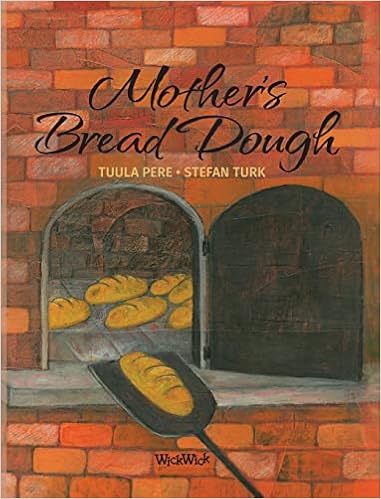
Leo’s father has gone off to war, and he is now the man of the house. He and his mother make plans to bide their time making delicious bread together. While they go about the task of baking bread, they are startled to find they must evacuate their home. Leo’s mother, determined to save a family treasure, prepares her sourdough starter for the journey away from their home. Leo and his mother flee but not without their fresh baked bread and the remainder of the dough. The last-minute decision to take the bread on their journey may just be the one thing that saves them and everyone they encounter.
Mother’s Bread Dough, written by Tuula Pere and illustrated by Stefan Turk, is one of the most heartwarming children’s stories I have come across in many years. Pere has incorporated historical fiction with a wonderful tale of hope, love, and faith. Leo and his mother are the bearers of many blessings as they travel, and readers will watch in wonder as his mother’s bread continues to provide food for many along their journey and beyond.
Illustrations are such an important part of any children’s picture book. Some hit the mark, and others don’t quite live up to the storyline. I have to say that Stefan Turk has exceeded all expectations with the illustrations of Leo, his mother, and their very trying journey. The mood created by the illustrations is spot-on. I absolutely adore the style Turk uses throughout the book.
Mother’s Bread Dough, written by Tuula Pere and illustrated by Stefan Turk is a highly recommend book to any elementary teacher seeking to incorporate a truly impactful story into their Reading or Social Studies curriculum. This is truly a beautifully written tale for the ages.
Pages: 46 | ISBN : 9523578316
The News According to Mr. Freels
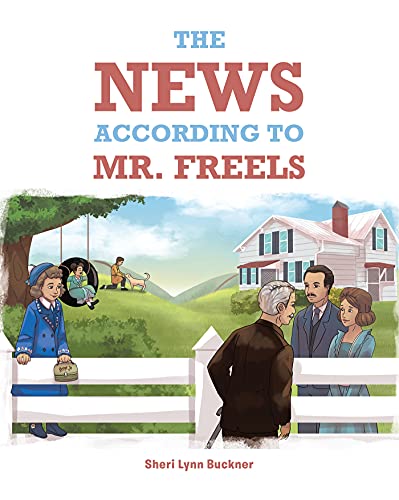
The News According to Mr. Freels is a feel-good read that will have you smiling from beginning to end. Readers are introduced to an old man named Mr. Freels, who lives alone and spends his days sitting on his porch listening to the news. Mr. Freels likes to share the news with anyone who would listen, but unfortunately, he cannot hear so well, so the news he relays to others is not always accurate.
Author Sheri Lynn Buckner has written a story that takes young readers to a time when life was simple, and people would enjoy time outside and even enjoy having conversations with one another. Mr. Freels’s character is charming, and he reminded me of hearing a story about my grandfather. The images in the story are so beautiful and transport the reader into Mr. Freels’ world. I appreciated that the author not only told a story but she also aimed to challenge the reader by asking questions at the end of the book. This is the perfect way to involve the reader and to test their comprehension. There is also a section at the end of the book where the reader can write down the definition of words that they did not understand.
This book is the perfect read for parents to share with their young ones, and the activities at the end will certainly be a great project to work on together. I highly recommend this charming and captivating read to those who want to learn a little about history and simpler times.
Pages: 46 | ASIN : B093LKCSBF



 LITERARY TITAN