Blog Archives
What It Really Means To Give

Tithing and Giving: A Biblical Study guides readers through an in-depth exploration of biblical tithing, contrasting Old Testament mandates with New Testament freedoms, structured around the idea that the commonly accepted modern practices of tithing, especially monetary, are misunderstood and not supported by Scripture. What inspired you to write this important book?
That is a good question. In truth I had no intention on writing a book about tithing and especially had no plans to teach on giving. This all began with the idea to take some study material I had already done on biblical tithing and do a short study on it for my family.
The title was literally A short Study on Tithing. However, when I began to type things out I felt that the Holy Spirit was leading me to write a book. It was some what terrifying for me as I did not feel qualified and was not looking forward to the heavy pushback that I would get. Since this was not the first time I have had this experience with the Holy Spirit as far as being inspired to teach as he instructed me, which is what happened with The Beauty of Tribulation, I decided not to fight. Once I gave in it felt more like he was using my fingers to convey the message he desired and I was just along for the ride. It did not even feel like time was passing at a significant rate as my fingers danced across the keyboard. Then the next scary thing happened, he had me teach on giving. I was not prepared to do such a thing and did not really want to do so, who in the world am I to teach anyone on financial stewardship? Again, I yielded and the rest is officially history. I am learning more and more that it is not about being comfortable, competent or prepared when God desires you to obey.
What is the most common misconception you feel people have about tithing in today’s world?
This is not an easy question since I feel the misconceptions are all equally concerning. One that God taught me through writing this book is that Christians should not expect God to give them a reward just because they have done as he has commanded. God owes us nothing but is greatly moved by obedience. Even so you will not get like for like as a precedent set in stone regardless of how much you give or do. The reason that this one is so damaging is that it is used greatly in so-called messages about prosperity.
What were some ideas that were important for you to share in this book?
As I was writing these are some of the important ideas that God brought to my attention in this teaching.
· What Paul taught about when not to give.
· What it really means to give hilariously or cheerfully.
· What sacrificial giving actually is?
· That the act of giving is the blessing not what you get because you gave.
What is one thing that you hope readers take away from Tithing and Giving?
One thing I pray that readers take away from Tithing and Giving is the freedom to give to God from their heart not out of obligation, fear, tradition or because they feel that they must so that they can truly experience his blessedness as well as the understanding that giving to God is also looking out first for those who are members of his body and then those who are without.
Author Links: GoodReads | X | Facebook | Website
What does the Bible really say about tithing, giving, and Christian stewardship?
Is tithing a command for today—or a misunderstood tradition?
Tithing and Giving: A Biblical Study is a comprehensive guide for believers who want to understand God’s plan for finances, generosity, and blessing. With clarity and compassion, author J.A. Cox explores what Scripture actually teaches about biblical tithing, New Testament giving, and the difference between religious obligation and Spirit-led generosity.
✅ Inside this Bible-based study, you’ll discover:
What the Bible says about tithing in the Old and New Testaments
The difference between biblical stewardship and church tradition
How to discern truth from myths in Christian financial teaching
Whether Christians are still required to tithe today
What it means to give with faith, freedom, and love
The true connection between giving and God’s blessing
This book is written for thoughtful believers who want to grow in faith while also handling money in a way that pleases God. If you’ve ever asked, “Is tithing biblical?” or “Should Christians tithe today?” — this study is for you.
By the end of your journey, you’ll gain a deeper understanding of scriptural giving, a renewed appreciation for Christian generosity, and practical guidance on how to walk in biblical financial stewardship—free from guilt and full of grace.
Tithing and Giving A Biblical Study
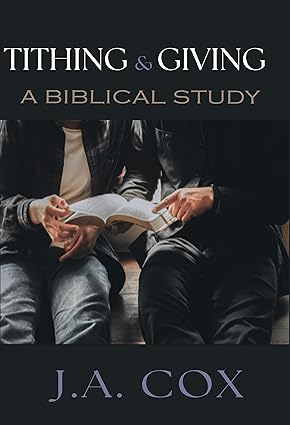

In Tithing and Giving, J.A. Cox walks readers through an in-depth exploration of biblical tithing, contrasting Old Testament mandates with New Testament freedoms. The book is structured around the idea that the commonly accepted modern practices of tithing, especially monetary tithing, are deeply misunderstood and not supported by Scripture under the new covenant. Cox builds his argument with a step-by-step examination of Hebrew terms, priestly duties, Old Testament law, the sacrificial system, and its fulfillment in Jesus Christ. He stresses that obligatory tithing, once rooted in supporting the Levitical priesthood, has no place in the life of a Christian after the death and resurrection of Christ, who he argues has fulfilled and replaced the entire priestly system.
I admired Cox’s commitment to sticking with Scripture, often going to great lengths to explain each passage and how it fits within the larger biblical story. At times, the repetition felt heavy, but it also showed just how passionate he is about getting this point across. I didn’t always agree with every conclusion, but I couldn’t deny the depth of thought behind it. Cox’s argument that many churches today push tithing based on verses taken out of context was uncomfortable but also thought-provoking.
I did find the writing style to be pretty raw at points. There were parts where I wished for smoother transitions. But then again, that direct and sometimes urgent tone also gave it character. It read less like a theology textbook and more like a heartfelt letter to fellow believers who might be misled. The emotional weight behind his convictions was clear. You can feel his frustration over what he sees as false teaching, and also his deep care for the truth of Scripture. That kind of honesty gave the book power, even when the prose didn’t always flow easily.
I think Tithing and Giving will really connect with readers who are looking for a strong biblical case against mandatory tithing in the modern church. It’s not light reading, and it’s certainly not trying to sugarcoat anything. But if you’re a pastor, a Bible teacher, or just a Christian who’s tired of feeling guilty over giving, this book will give you something to think about. I’d recommend it to anyone open to rethinking what the Bible really says about giving.
Pages: 121 | ASIN : B0F9TZCK7W

My Foundation

The Importance of Tithes and Offerings emphasizes financial obedience and the sincere conviction behind tithing as a Christian. Why was this an important book for you to write?
For as long as I can remember, this topic of tithes and offerings seems to always spark a question or becomes an issue. Do we have to? Didn’t tithing end back in the Old Testament? Doesn’t God prefer me to take care of my family before taking care of the church? All of these are good questions, and on a human level understandable, but are not biblical. God’s Word is the only source we stand on whenever we have questions or concerns. God is a Spirit, and they that worship him must worship him in spirit and in truth. (John 4:24) How we personally choose to honor God with our finances is up to the individual that I cannot nor anyone else can answer for you. Therefore, for either of us to debate our opinion against each other is useless. This is why I explain in my book that you must decide how you will personally choose to honor God.
Do we have to? If you have to ask why or struggle with the heart to do so; then keep your money. God is not begging for your money, God only wants your heart and He wants a heart that gives cheerfully and not grudgingly.
There may be some who think that tithing ended back in the Old Testament. The only part that ended was the law requirement to do so.
Jesus says, in Matthew 5:17, that he did not come to destroy the law, but to fulfill it. Since we are under grace because of what Jesus Christ did for us on the cross, we now have the freedom to choose. You can choose to tithe or not to tithe, just like you have the choice to serve God or not to serve God. Remember, God does not want robots, He wants each person to freely choose Him with their heart and their money.
When it comes to taking care of your family versus the church? Here again, you cannot compare the two. Saying the church dismisses the true one you should have the focus on giving to and that is God. As I discuss in the book, God is fully aware of our responsibilities and when we take care of God’s house (the church) He will take care of our house. But if you already have the wrong focus in your giving you will not reap the benefit of the blessings. If we find the need to keep going back and forth disputing why we should not tithe or offer, it just further shows our reluctance to trust God with our finances. This reluctance also shows that we do not trust that He is more than able to take care of our family and us through the tough times. But I know, God is able!
Do you view writing as a spiritual practice?
For me it is my foundation, I always say, it is all God through His Holy Spirit whenever I write a book. Otherwise, I will not do it. When I receive a topic in my spirit to write about, I pray and seek the Lord to see if this is something I am hearing from the Holy Spirit or something that I just want to do. If it does not flow from God’s Holy Spirit to me, then it is clear it is not for me to do.
How much and what kind of research did you undertake in order to put your book together?
I would say it came from my experience from tithing and offering for over 30 years, as well as my personal relationship with God for over 50 years. I know nothing by myself, it all comes from spending time with God and by reading His Word daily. It is true what the Word says in John 14:26. The Holy Spirit will bring all things to your rememberance. This is all I need to achieve and complete whatever He directs me to do.
What is one thing you hope readers take away from this book?
I hope readers take away the importance to seek God whenever you have questions or concerns. Tithes and offerings are only one aspect of our personal relationship with God. God wants to be Lord of all areas of our life and not just the areas we decide to pick and choose to let Him in. Anytime you surrender yourself to God, He will give you the peace and understanding you need for every area of your life.
Author Links: Goodreads | Website | Amazon
We honor God when He is first place in our life. Sowing “tithes and offerings” is especially honorable when it is given from our first fruits and not our last fruits. Proverbs 3:9, says, “Honour the LORD with thy substance, and with the first fruits of all thine increase:” In 1 Corinthians 14:40, it states, “Let all things be done decently and in order.” This lets us know that there is “order” expected even in our giving.
In this book, I address whether “tithes and offerings” is a practice that should be honored today, and if so, what is the order according to God’s Word. I also discuss what I have learned through my life experiences, that has proven to me, obedience to God’s Word is far better than sacrifice. (1 Samuel 15:22)
The Importance of Tithes and Offerings
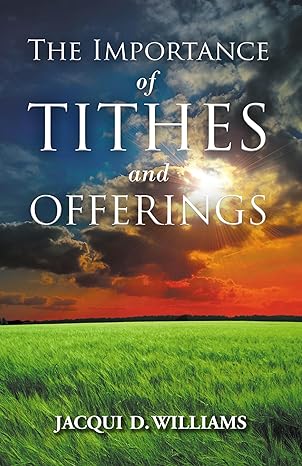

Jacqui D. Williams’ The Importance of Tithes and Offerings is a heartfelt and deeply personal exploration of biblical giving. The book lays out the spiritual and practical reasons for tithing, emphasizing that it is not merely an obligation but an act of faith and love toward God. Williams combines scripture, personal stories, and practical advice to make her case, drawing from both the Old and New Testaments. She argues that giving should come from a place of devotion rather than duty, and she shares how financial obedience has shaped her own spiritual journey. The book also touches on common debates about whether tithing is relevant today, ultimately urging readers to honor God with their resources as a demonstration of trust.
One thing I appreciated about this book is its sincerity. Williams writes with conviction and passion, making it clear that this is not just theology for her—it’s personal. She shares how her mother and sister influenced her giving habits, and she openly talks about the period in her life when she struggled with tithing. Her transparency makes the book relatable, especially when she describes how prioritizing bills over God led to financial and spiritual struggles. She doesn’t just throw scriptures at the reader; she walks you through them, explaining how they’ve played out in her life. Take Malachi 3:10, for example—the famous passage about bringing tithes into the storehouse. Williams doesn’t just use it to tell readers what they should do; she explains how she tested God in this area and saw blessings unfold in unexpected ways.
The book leans on personal conviction. While Williams acknowledges that tithing is not a requirement under New Testament grace, she firmly believes in its importance. The writing style is conversational and easy to read, but certain points are hammered home multiple times in different ways. If someone is struggling with the idea of tithing or wondering if it still applies today, her arguments are clear, persuasive, and rooted in scripture.
I’d recommend this book to Christians who want to deepen their understanding of giving, particularly those who are uncertain about tithing or struggling to be consistent with it. If you want a personal, encouraging take on why giving matters and how it can change your faith, Williams delivers. Her passion for the topic is evident.
Pages: 38 | ASIN : B0984PBJ23
Simple Money, Rich Life
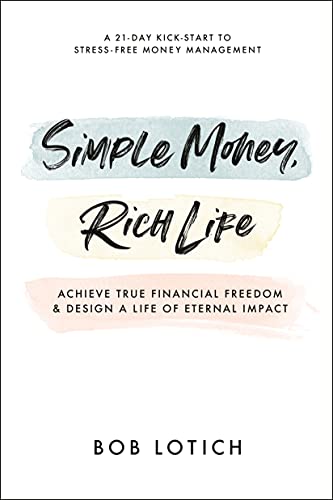
Bob Lotich shares his story of strength, hope, and faith. Going through this book, readers will respect the author’s work and the lessons that he shares. Bob Lotich lays bare his journey with finances and, in a free-flowing manner, gives direction on how to achieve financial freedom with the resources you have.
I respect that the author does not sell a fantasy tale about money-making. Instead, shares his secrets to success and what has worked for him, giving real-life examples of people who have made it without being given a head start. The primary lesson you get from this book is that you do not have to come from money to be wealthy. Instead, money attracts those that are hungry enough for it.
Simple Money, Rich Life is the book you did not know you needed until you read it. Bob Lotich writes about finances, making money, and how the path you take affects your financial outcome and eventually your lifestyle.
In his book, Bob Lotich starts by discussing his relationship with God. The first chapter is titled ‘The Battle is His, But You Have to Show Up.’ A befitting title for the content inside the chapter. In this chapter, you learn how crucial money is in every setting, how draining having a debt can be, and its impact on your life. I love that the author introduced the religious aspect of things, as it gives readers faith and hopes to trust in God.
Reading Bob Lotich’s book gives readers a sense of realization. His relationship with God is amazing, and his perspective of life is fascinating. Lotich’s words are intriguing and inspire one to take the straight path. Throughout the book, you see the importance of religion as it has been a pillar to the author and his wife and helped him get back up. By the end of the reading, you feel fulfilled spiritually, financially, and socially.
Bob Lotich’s book will enable you to mold yourself to the best version. The author’s gentle words, courteous phrases, and valuable advice are worthwhile. The five critical pieces of advice I have taken from the book are budgeting and having a solid spending structure, debt management, your relationship with God, the significance of family, and making the best financial decisions. I like that the author extensively writes about saving and expounds on how you can save and still enjoy the good things in life. Bob Lotich is pragmatic, making his work stand out; he does not sell illusions.
Simple Money, Rich Life is a financial self-help book for those that want to approach financial security through faith and evidence-based methods. Readers will walk away from this educational book with renewed faith and a feeling that they, too, can reach a stable financial life.
Pages: 305 | ASIN : B094GP8MP1



 LITERARY TITAN