Blog Archives
Sundays with Jenny
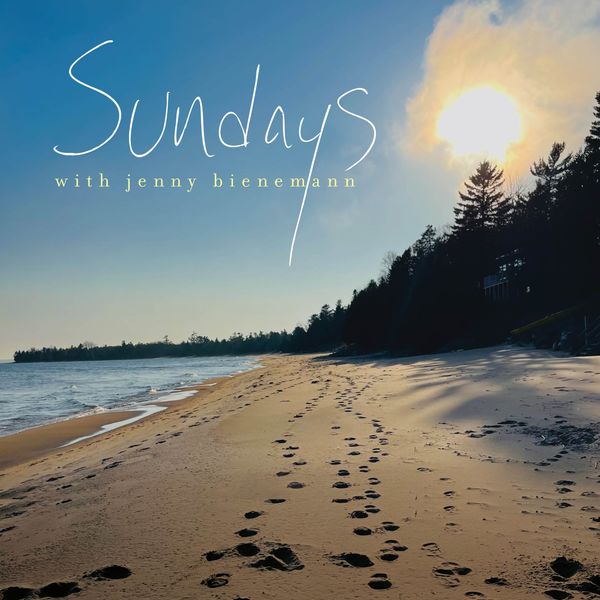

Sundays with Jenny, a collection of haiku and photographs by Jenny Bienemann, invites readers into a quiet, contemplative day filtered through the tender, unhurried gaze of a Sunday. The book unfolds in six thematic sections: Rejoyce, Rise, Renew, Reflect, Restore, and Rejuvenate. Each part marks a distinct time of day, tracing a gentle arc from dawn’s hush to the stillness of midnight. Along the way, it highlights the small, familiar rhythms of daily life.
The haiku, in true minimalist form, are concise yet resonant. Each one distills presence, healing, and wonder into just a few lines. There’s an emotional clarity in Bienemann’s verse, personal yet uncannily universal. Her images are spare but precise, offering a world that feels both intimate and expansive.
Reading Sundays with Jenny is like pausing at the top of a hill, letting out a breath you didn’t know you were holding. Bienemann captures the ephemeral, the half-thoughts and half-feelings we often brush aside, and honors them. Some haiku wrap around you like warmth on a cold morning. Others, such as “doubt magnifies faith, / asking the kinds of questions / only faith answers,” halt you mid-thought and hold you in silence.
One of the book’s quiet triumphs is its structure. The emotional progression echoes a soul’s gentle unfolding. With each chapter, readers drift from light and hope into self-reflection and eventual calm. The transitions are subtle but powerful, forming a seamless narrative of emotion rather than action.
Perhaps the most arresting quality is the immediacy it brings. These haiku do not merely observe, they awaken. Bienemann has a rare ability to locate grace in the unnoticed and pour reverence into the mundane. This book could be read in a single sitting, yet its resonance lingers. It’s especially evocative in autumn, when trees shed both leaves and memory, but its comfort endures in any season.
For those in search of stillness, or simply a companion for the quieter corners of life, Sundays with Jenny offers both presence and poetry in equal measure.
Pages: 212 | ISBN 978-0-1234-6578-8
Lovely and Suffering
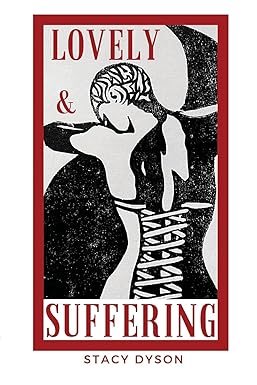
Lovely and Suffering is a searing collection of poetry from Stacy Dyson chronicling a year in the life of a Black woman navigating a pandemic, political upheaval, and unrelenting racial injustice. Spanning the deeply personal to the fiercely political, Dyson’s poems bear witness to grief, rage, resilience, and love. Written from March 2020 to March 2021, this book documents what it means to survive and speak when the world wants your silence. The poems are raw, unflinching, and achingly honest. Dyson blends lyricism and spoken-word fire in a narrative that is part journal, part manifesto, and all heart.
Reading this book knocked the wind out of me more than once. Dyson doesn’t just write poems, she lays down testimony. Her voice is unapologetically fierce, drenched in lived experience and spiritual grit. Whether she’s honoring Breonna Taylor or calling out white liberal performativity in “Karen, Your Mammy Done Left the Building,” Dyson never flinches. The writing is blunt, rhythmic, and stinging. Her mix of intimate grief and public fury creates a powerful dissonance. She doesn’t aim to make readers comfortable. She demands they feel what she feels, and she earns that demand.
What stuck with me most was the deep tenderness under the rage. Dyson’s tributes to community, family, and sisterhood are gorgeous. In “Je T’aime” and “Quieted Soul,” she reveals how healing hides in the laughter of a child or the memory of ancestors who “never run/ not unless it is toward the enemy…” These moments were breathtaking. But there’s a loneliness too, a poet aching for a better world, and exhausted by the work of building it. Sometimes, the poems felt like confessions. Sometimes, they roared like war drums.
I’d recommend Lovely and Suffering to anyone who wants to understand the emotional toll of being Black in America, especially Black women. It’s for people who want their art honest, loud, and bruising. She speaks with heat and clarity. And if you’re willing to listen, you’ll come out changed.
Pages: 146 | ISBN : 1955683018

Finitude and Beyond
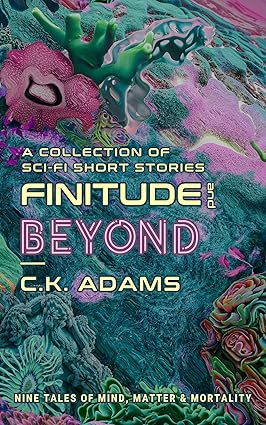
Finitude and Beyond is a collection of nine science fiction short stories that explore the edges of human existence—where time, identity, love, and mortality converge in strange and often heart-wrenching ways. The stories dive deep into themes of isolation, transformation, grief, and survival, blending speculative technology with painfully real emotional experiences. From the quiet awe of a child witnessing space travel to the unrelenting ache of a love that time itself cannot contain, Adams spins tales that are both cosmic in scale and intimate in feeling.
Adams doesn’t go for flashy sci-fi gadgets or action-packed battles. Instead, he writes stories that feel like they’ve been quietly fermenting for years, steeped in emotion and restrained power. “The Captain and the Sower” absolutely wrecked me. The way he built that decades-long relationship between Adlei and Captain Nkosi—a love story stretched across revolutions of time and biology—was heartbreakingly beautiful. I caught myself rereading paragraphs just to let the ache settle in deeper. It’s rare that a book makes me sit in silence after the last line, just thinking. But this one did.
The prose occasionally tipped toward melodrama, and some characters leaned into archetypes. But honestly, those flaws felt relatable. The book doesn’t try to be perfect—it tries to be true. And in that, it succeeds. Adams has a knack for rooting massive, mind-bending sci-fi concepts in very personal, very relatable pain. Whether it’s a grieving husband at the edge of the solar system or a synthetic scout grappling with her fading memories, each story carries a kind of quiet urgency that feels universal.
This isn’t a book for someone looking for fast-paced action or happy endings. But if you’re the type who wants to feel something, this book will hit you in the chest. I’d recommend Finitude and Beyond to anyone who loves character-driven science fiction, fans of Ken Liu or Ted Chiang, or just readers who aren’t afraid to stare down the existential questions we tend to shove aside.
Pages: 263 | ASIN : B0F9R473LB
Bare It All
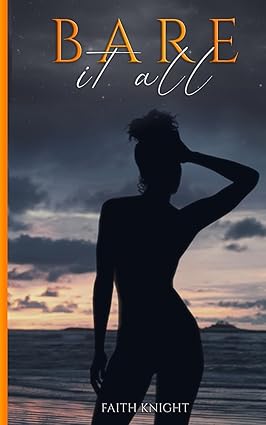
Bare It All is a raw, no-holds-barred poetry collection by Faith Knight that cracks wide open the journey to self-love, survival, and transformation. Acting as a prequel to her memoir Lay It Bare, the book reads like a series of intimate diary entries, each poem serving as a snapshot of the author’s emotional evolution. From stories of abuse, self-doubt, and motherhood to declarations of resilience, faith, and power, Knight strips back every layer of her identity with fearless honesty. The collection is deeply personal, guided by themes of trauma, identity, spiritual healing, and empowerment, written with a poetic style that’s conversational yet lyrical.
Reading this book felt like sitting across from a friend who’s finally ready to tell you everything. Faith Knight doesn’t wrap trauma in pretty metaphors or hide behind academic polish. Her words come in hard, fast, and sharp. You feel them. And that’s what makes this book so powerful—she owns every emotion and invites you to do the same. You can sense her cracking open but also finding wholeness again in the process. Her honesty is tough but necessary, especially in poems like “Misplaced Girl” and “The Man They Called Krypto”—they’re haunting, and they stay with you.
Stylistically, I loved the unfiltered, almost conversational rhythm of the writing. Knight doesn’t follow a traditional poetic form, and that’s the charm of it. She writes like she speaks, and it feels real. It’s messy, fierce, sometimes even funny in the middle of sadness. She flips between vulnerability and sass in the blink of an eye, which gives the collection a kind of emotional whiplash that works. One second she’s pulling you into a deep pool of despair, and the next, she’s telling the world she’s “an entire dessert table.” That mix of pain and power? That’s real life.
I’d recommend Bare It All to anyone who’s ever had to pick themselves up after being knocked flat, especially women who’ve been told they’re too loud, too broken, or too complicated. It’s also for survivors who are still figuring out how to heal. This isn’t a feel-good book in the traditional sense, but it’s deeply comforting. It tells you the truth, even when it hurts, and somehow makes you feel a little braver after reading it.
Pages: 46 | ASIN : B0F4MJ2B5T
Where the Grass Don’t Grow and Vultures Sing


Where the Grass Don’t Grow and Vultures Sing is a gritty and unsettling collection of twelve speculative fiction stories that mix horror, science fiction, and dark fantasy into a cocktail that’s as jarring as it is addictive. Rosick sets the tone with raw, twisted narratives full of morally ambiguous characters and grotesque, often bleak, realities. Each story paints a picture of a world that’s almost like ours, but far more violent, broken, and bizarre. Whether it’s alien overlords feasting on human suffering, ghostly reckonings in small-town America, or dystopian futures ruled by invasive surveillance and social decay, Rosick pulls no punches. His introduction frames the collection as the culmination of decades of writing and rejection, driven by a persistent, almost obsessive need to tell the truth in the form of fiction.
Reading these stories felt like being dragged through a dream that’s halfway between terrifying and tragic. Rosick’s prose is coarse and visceral. In “For the Entertainment of the Gods,” for example, I felt a mix of horror and awe, watching the protagonist endure a psychic deathmatch for the amusement of alien gods. It wasn’t just the violence that disturbed me; it was the idea of what people would trade for survival. “Death Calls on Mr. Smith” is a slow, aching story about aging and the crushing weight of grief that never heals. Rosick’s ability to flip between brutal and tender in just a few pages surprised me.
Some stories felt a bit too on the nose or a little rushed toward their endings, like “The Covenant of the ARC,” which was strong in setup but heavy in its dystopian commentary. There were moments where I wanted a deeper dive or just a bit more finesse in the delivery. Still, the strength of Rosick’s voice and the conviction behind each story made up for the occasional rough patch. What I appreciated most was the honesty. These aren’t sanitized, neatly packaged tales. They’re messy, human, and more than a little feral. They reminded me of the kind of stories that live in the back of your mind, buried under the daily routine, waiting to crawl out when you least expect them.
If you’ve got a soft spot for dark speculative fiction that punches hard and lingers longer, this collection is worth your time. Fans of writers like Philip K. Dick, Clive Barker, or Joe Lansdale will feel right at home in Rosick’s unsettling worlds. Where the Grass Don’t Grow and Vultures Sing reads like a haunted mixtape of pulp nightmares.
Pages: 289 : ASIN : B0F1Z4GPG5
How to Find God on the Dance Floor

Marlene Rhein’s How to Find God on the Dance Floor is a soul-stirring collection of poetry that doesn’t tiptoe—it stomps, dances, and rages its way across the messy floor of human emotion. Rhein paints an unfiltered portrait of what it means to crave connection, wrestle with loneliness, and dig through the ruins of trauma in search of joy, self-worth, and transcendence. At its core, this is a book about movement—of body, of spirit, of memory—and the sacred power of music, particularly house and hip-hop, as a lifeline to God, to self-love, to sanity.
This is not the tidy, soft kind of poetry you wrap in a Hallmark card—this was truth with cracked lipstick and a pounding bassline. Rhein’s voice is funny, furious, messy, and sharp as glass. The poems are wild and untamed. They jump from nightclub floors to childhood wounds, from pop culture absurdity to sacred vulnerability, and somehow, it all holds together. There’s something deeply cathartic about the way she refuses to keep it cute. She says what we’ve all felt but were too afraid or ashamed to admit. That sometimes you need to dance to remember you’re still alive. That sometimes love comes in the form of sweat and strobe lights, not church pews and neat prayers.
I loved how she blends humor with heartbreak. One minute I was laughing at a dig about pop music at the dentist’s office, the next I was crushed by the weight of a poem about childhood neglect. It’s a rollercoaster, but one you don’t want to get off. Her writing is vulnerable in a way that makes you want to both cheer and cry for her. She doesn’t flinch from her pain or disguise it in metaphor—she spills it, owns it, dances through it. Her spirituality isn’t the polished, book-club kind. It’s gritty, found in flashing lights and gut-level knowing. She makes you believe that healing is possible, even if it’s slow, sweaty, and filled with bad DJs and loneliness.
This book is for anyone who’s ever felt like they didn’t belong, anyone trying to claw their way out of depression, anyone who finds God not in silence but in the chaotic joy of movement. It’s for the feelers, the survivors, and especially the dancers. If you’ve ever needed a reason to get off the couch and reclaim your magic, this book might just be your anthem.
Pages: 112 | ASIN: B0FBX5PDXZ

Tales From the Roost: Roost’n Time Tales

Mike Joyner’s Tales from the Roost is a heartfelt, often humorous, and nostalgic collection of turkey hunting stories pulled from decades of woods-walking, gobbler-chasing, and camaraderie among fellow outdoor enthusiasts. This book is about the moments that make up a hunter’s life. Each chapter offers a fresh snapshot of Joyner’s exploits across the U.S., from foggy Maine mornings to sun-drenched Texas pastures. Through it all, Joyner captures not only the thrill of the hunt but also the quiet reflection that comes with time spent in nature.
Joyner’s writing is conversational. He doesn’t hide behind fancy words or inflated drama. Instead, he tells it like it happened—funny, awkward, successful, or not. I found myself laughing at his misadventures (hello, Whack O’ Mole) and nodding along during his more poignant moments of introspection, especially when he reflected on aging, loss, and the irreplaceable bond with his hunting friends and family.
The sheer volume of stories could feel a bit overwhelming at times, and some tales tread similar ground in terms of setup and outcome. But honestly, that’s how campfire storytelling goes. You don’t critique your buddy for retelling the same tale—it’s part of the ritual. What kept it fresh were Joyner’s sharp observations, his eye for detail, and his emotional honesty. He doesn’t shy away from talking about personal health scares, the passing of loved ones, or the bittersweet ache of time slipping by. That vulnerability is rare in books about hunting, and I appreciated it more than I expected.
I’d recommend Tales from the Roost to anyone who’s ever sat under a tree waiting for a gobble or just dreamed of doing so. Die-hard turkey hunters will see themselves in Joyner’s predicaments, and those new to the woods will come away with a genuine feel for what makes this pursuit so addictive. It’s not a technical manual or a how-to guide—it’s better. It’s a tribute. This book is for the storytellers, the memory-makers, and anyone who knows the joy of a quiet sunrise and a bird that finally answers back.
Pages: 287 | ASIN : B0F1MLQNMH
Pause For a Moment

Navigation is a poetry collection that serves as a compass through personal memory, cultural history, and collective grief. What inspired you to write this particular collection of poems?
Navigation is truly a collection, a gathering of poems that I have written over a number of years about a variety of topics. When I realized that there were certain themes connecting various poems, I decided I could organize them into a cohesive collection. The topics range from exploring childhood/teenage memories to bridging nature and the human experience. The power of home and the importance of place also play a large part in this book, as does connecting to my Indigenous roots.
Were there any poems that were particularly difficult to write? If so, why?
The most difficult poems for me to write were the ones about my late father. He was such a talented, intelligent man who never had the opportunity to achieve his dreams, so I find myself returning again and again to the idea of an unfulfilled life. It is always painful to lose a parent, but I think the grief is magnified when that parent’s life was never completely realized.
How has this poetry book changed you as a writer, or what did you learn about yourself through writing it?
My first full-length book, unlike the two that followed, was also a collection of personal poems. When it was published, I felt some trepidation about exposing myself, laying bare some very private aspects of my life. Navigation also contains some extremely personal poems, but I think over the last few years, I have learned to feel less self-conscious about my poems. It is my hope that readers will be able to connect with the honesty and perhaps see themselves and their own lives in my experiences.
What do you hope is one thing readers take away from your poetry?
I hope my readers can find a thought, a phrase, or even a word that will make them pause for just a moment and reflect. I wish for my readers to find in my work something that they can relate to in their own lives, even if we come from totally different regions or backgrounds. I truly believe that one of the main purposes of poetry is to help us connect as human beings.
Author Links: GoodReads | X | Facebook | Website
—Annie Woodford, author of Where You Come From Is Gone
I have read much poetry. I know many poets. I believe the job of good poetry and good poets is to move their readers, and oh Lord, has Linda Neal Reising’s new book, Navigation, moved me. What can I possibly say to prepare a reader for what lies ahead as they navigate through the four parts that make up this book? The opening poem of Part I, “After Learning That a Woman and Her Baby Were Killed in the Bombing of a Ukrainian Maternity Hospital” seizes you in its grasp and propels you page after page. The Americana, the well-chosen epigraphs, the Native understanding of the land and the trials of poor families during hard times are masterful. This is a book not to be missed.
—Ron Wallace, author of Life Is a Disappearing Act
If one were sailing the sea of life “in a little paper boat,” the waypoints leading to some proverbial safe harbor would be easily recognized along the course so capably charted in Reising’s Navigation. With her distinctive imagination…the cardinal“slipped off her wings, and chose to walk all the way back to heaven,” and her exceptional percipience of real life experiences, Reising reveals the mastery of her poetic skills. And in spite of life’s obstacles, Reising suggests a safe harbor is within sight…a place where “sparrows sky-write lovelorn letters, where cedars keep sentry…” where “the apricot tree grows tiny moons.”
—Karen Kay Knauss, poet, Oklahoma Book Award winner for SAND, At the Mercy of Wind



 LITERARY TITAN