Blog Archives
The Road And Other Liars
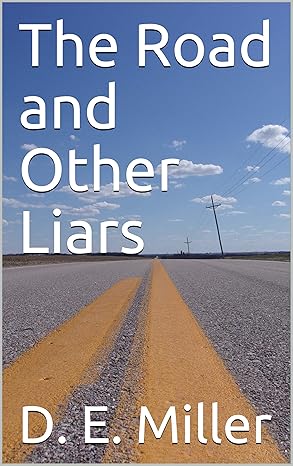

The Road and Other Liars is a collection of poems and vignettes, some like whispers, others like bruises, all orbiting the themes of wandering, memory, aging, and the aching hope for meaning. It’s not organized by topic, and that’s part of the magic. It reads like a life itself: fragmented, lyrical, surprising, sometimes funny, sometimes devastating. Miller doesn’t tell you how to feel; he just opens little doors into moments and lets you step inside.
I thought I’d be reading some quiet little poems about trees and dirt roads. Instead, I found myself slowing down, re-reading lines, and sitting in silence after certain pieces. There’s one about the moment a man realizes he’s outlived the kind of dog he could own again. That wrecked me. And the one where he imagines talking to someone, just one person, who could really, truly hear him without judgment? I’ve thought about that every day since. His writing is sparse but packed. No fluff. No pretense. Just raw, thoughtful truths wrapped in poetic stillness. Sometimes the poems feel like they were written in a dusty motel room at 3 a.m. after the kind of day that doesn’t let you sleep.
This isn’t a feel-good collection. It’s heavy in places. It’s a little haunted. But there’s also a weird comfort in how honest it all is. It’s like the book gave me permission to mourn things I didn’t know I’d been carrying around. There’s something deeply kind in the way Miller writes, even when the subject matter is brutal. He doesn’t lecture. He observes. He remembers. He wonders.
One poem that really stuck with me was “Squirrels.” It’s quiet and simple on the surface, a man watching squirrels from his window, but it hit me hard. There’s this quiet loneliness in it, the kind that sneaks up on you. He wants a connection, something to care for, but he’s also come to terms with the fact that what he really wants, a dog, a companion, doesn’t fit into his life anymore. The squirrels aren’t pets, they’re not friends, but they’re there. It says so much with so little.
If you’ve ever felt lost, or old before your time, or nostalgic for things that never quite were, this book might be for you. If you’ve loved someone and lost them, or wished for a quiet place to just be for a moment, you’ll find some of yourself in these pages. Not every poem hits with the same force, some drift by more quietly, but even the quieter ones add to the atmosphere of reflection and bittersweet honesty. It’s the kind of book you don’t just read, you sort of live with it for a while. It can be emotionally heavy, and you have to be in the right headspace for it. But when you are, it’s great.
Pages: 74 | ASIN : B086PFWWMQ

Always Something Heartfelt Life Love and Heartbreak

Always Something Heartfelt is a raw, vulnerable, and deeply personal collection of poetry and reflective prose by Ashton Harper. Spanning multiple emotional phases of the author’s life, the book travels through love, heartbreak, fatherhood, self-doubt, spiritual resilience, depression, and healing. Divided into five parts, it weaves a nonlinear journey of introspection and reckoning, delivered through conversational yet impactful language. Harper reflects on intimate experiences and societal observations with unfiltered honesty, never shying away from emotional depth.
Reading this book felt like being invited into someone’s private journal—except the handwriting was lyrical and honest to the bone. Harper’s writing isn’t polished in the traditional literary sense, and that’s what makes it special. His language is colloquial, immediate, and unpretentious. There’s something deeply brave about the way he lays his pain bare—whether it’s about being alone, yearning for his child, or admitting where he’s gone wrong in love. He manages to ask the kind of questions we all keep buried. And when he’s angry or defeated or full of love, he lets it rip. It’s messy, but it’s real. At times, I found myself underlining lines like I was trying to hold onto pieces of someone else’s heartbreak to better understand my own.
The emotional weight can be heavy, and the lack of traditional structure might not be for everyone. But then again, that may be the point. Love, grief, identity—none of it follows rules. And Harper’s refusal to wrap his pain in bows or follow poetic conventions feels like an act of rebellion. A lot of his strongest pieces come when he shifts from personal reflection to cultural critique, challenging toxic masculinity, absentee parenting, and community disconnection. That balance of personal story and broader relevance gives the book its power.
If you’ve ever loved someone who left you, struggled to find your place in the world, or looked in the mirror unsure of what you saw, then Always Something Heartfelt Life Love and Heartbreak will feel like a conversation you didn’t know you needed. I’d recommend this book to readers who crave vulnerability and aren’t afraid to sit with discomfort. It’s soulful, heavy, and at times, beautifully healing.
Pages: 148 | ASIN : B0CTFPG56X
The Narrative Arc of a Life

Universally Adored and Other One Dollar Stories is a sharp and emotionally rich collection of flash fiction that uses the humble dollar bill as a lens to explore love, loss, class, and quiet resilience in everyday lives. What was the inspiration for the setup of your stories?
I’ve been graced in life to be surrounded by hard-working people for whom money is a real thing. Something that determines fortune or misfortune, and all the complications that accompany them. And being an American, the “universally adored” American dollar perfectly captures the power money has over the narrative arc of a life.
I did not, however, set out to write a collection of “one dollar” stories. I wrote one—“Ricky Steiner Was Supposed To Die in Prison”—during a writing workshop series that I co-led for years, and it was well received. So, I riffed on the opening line again, then again, and soon it became like the “Pass the Object” theatre game in which each person in a circle must differently animate the same everyday object, like a bowl, without using words. The bowl becomes a hat, a knee brace, steering wheel, etc. The opening line, “One dollar,” became my “Pass the Object” game.
If you could expand just one of these flash pieces into a full-length novel, which would it be and why?
Well, interestingly enough, I’ve done just that! As you noted, a lot of my characters are pretty lonely, and I was worried about them, so I’ve taken 10 major characters (and a few minor characters) and plopped them down together in a fictitious diner in the Gulf Coast petrochemical town of Texas City in 1980 (which is next to my hometown). You’ll be glad to know that Paulina—the woman in the low-rent motel with the mechanical bed shaker who’s on the run from her abusive ex—is one of them!
The deep back story of this novel-in-progress (which is entitled I Will Read Ashes for You from the Carl Sandburg poem “Fire Pages”) is the 1947 Texas City Disaster, which is still the deadliest industrial accident in US history and, until 9/11, the deadliest loss of firefighter lives as well.
The most central character is Ballard, the older brother in “The Tuesday Theory” story who is the guardian of his younger, autistic brother Willis. The novel is set in the same diner as that story, and the brothers’ absentee “deadbeat” dad, Keller—who is a traumatized Pearl Harbor and industrial accident veteran haunted by the dead—is the unreliable narrator. At the age of 22, Ballard has shelved the pleasures and aspirations of his young man’s life and assumed the responsibility of caring for his neurodivergent younger brother. An everyday hero for sure.
Were there any stories in this collection that you struggled to finish or almost left out?
Great question! I struggled with “Boiling the Buggers”—the story about a recovering germaphobe bartender who is laid off and otherwise undone by the Covid pandemic—in trying to get the interiority of her unraveling right. Certainly, the most bizarre and profane of the stories is “Amygda-la-la-la,” set in a dystopian future time in which two ground-down women friends find meaning in their collection of worthless paper dollars. I debated whether to include that or not—as it is way out there—and I knew it would probably confuse or offend some readers. But I loved the premise that the dollar bill is so foundational to modern human existence that our amygdala—the “lizard brain”—has been hardwired to spot it even among the rubble. The “Mouse Socks” story, told in the POV of a young girl who’s lost her father, wasn’t in the original collection, but after it was published in the South Korean Samjoko Magazine, I gave it another look and decided it was worth including. I had worried its narrative voice was too gentle for contemporary readers.
What is the next book that you are working on, and when will it be available?
My novel-in-progress that I mentioned, I Will Read Ashes for You, is approaching a finished first draft, though I’m still working through a lot of structural edits. It’s a “polyphonic” (multiple POVs), “discontinuous narrative” (meaning there are multiple, interwoven plot lines) novel that has a lot of characters and key backstory about the lingering effects of the 1947 Texas City Disaster and the cancer that riddles that part of the world. However, it is not—emphatically not—historical fiction. While I’ve done a lot of research and indeed, several characters revisit the horror of the Texas City Disaster (plus, there’s a Prologue of the real post-disaster Procession for the Unrecognizable Dead), the narrative arcs of the novel are in 1980, not 1947. There are, though, thematic throughlines about the human cost of war and prosperity, and the work-a-day valor of moving forward.
For any of your readers who have read my recent collection, Universally Adored & Other -One Dollar Stories (published by Vine Leaves Press), the other recurring characters include the diner waitress Eileen, Manny the cook, and Officer Palacios from “The Tuesday Theory;” Theo, the extreme bibliophile from “All Knowledge;” and the alcoholic grandfather Fred, grandson Ben, and Ben’s mom Colleen from “Flounder” (Chester the Bait Man also makes a cameo appearance). Paulina, the domestic violence survivor in “Magic Fingers,” reappears as the waitress Eileen’s daughter, and Paulina’s abusive ex shows up as well. Willa Rae, the Depression-era migrant farmworker girl in “Evening in Paris,” is there as the owner of the used bookstore next to the diner.
Happily, an excerpt from I Will Read Ashes for You will be published in June 2025 in the bilingual (English/Hindi) literary/scholarly online journal Setu Bilingual. The finished book, however, is probably a year or two away from publication.
Currently, project-wise, I’m also collaborating with a longtime visual artist friend, Kevin Oehler, on a chapbook of short fictions that resonate with his artworks. And, with my husband and creative partner, Robert Michael Oliver, I co-produce a weekly podcast, Creativists in Dialogue: A Podcast Embracing the Creative Life, which is supported in part by the DC Commission on the Arts & Humanities. As a former character actor, I’m also keen to produce an author-read audiobook of Universally, much like I did for my debut novel, And Silent Left the Place.
Author Links: GoodReads | X (Twitter) | Facebook | Website | Amazon
In “Universally Adored,” a color-obsessed artist draws a facsimile of a dollar—a masterpiece universally adored—to win her girlfriend back. While checking for spare change in the laundry, in “Bald Tires” a Tennessee housewife with a malcontent husband finds an unused condom in his Sunday trousers. In “The Forgiveness Man,” a runaway teen with a newborn follows a vagabond healer absolving the bedraggled godless through hugs of forgiveness. And in “Magic Fingers, a ladies’ room attendant tracked down by her abusive ex finds refuge in a cheap motel with a 1970s era bed massager.
Riffing on the intimate object of a dollar, Bruce’s humane short fictions—from a great mashed potato war to the grass Jesus walked on—ring with the exquisite voices of characters in analog worlds.
Navigation

Linda Neal Reising’s Navigation is a poetry collection that serves as a compass through personal memory, cultural history, and collective grief. Split into four parts, the book traverses everything from Native American identity to coming-of-age nostalgia to haunting reckonings with war and environmental collapse. At its core, this is a book about mapping trauma, tenderness, and survival in lyric form.
What really struck me was the way Reising’s poems blend elegance with grit. In “After Learning That a Woman and Her Baby Were Killed in the Bombing of a Ukrainian Maternity Hospital,” Reising writes of a cardinal’s remains as “feathers so pale a red they verge on pink,” a line that knocked the wind out of me. It’s delicate, yes, but brutal in its imagery. There’s no hiding from sorrow here. She doesn’t preach, she mourns. And in doing so, she lets you mourn too. That balance of beauty and ache shows up again in “Earth Day Lockdown,” where goats and jackals reclaim cities during COVID, as if nature’s revenge is not violent but theatrical. It’s weirdly funny and deeply sad.
I also loved the nostalgic, rough-edged sweetness of her childhood and youth recollections. “Dolly’s Debut” is a standout, so vivid, I felt like I was there in front of that new Zenith TV set, eating popcorn and watching Dolly Parton sparkle onto the screen for the first time. The mix of admiration and longing is infectious. Similarly, “Partial Eclipse” captures the awkward magic of being a seventh-grader with a shoebox solar viewer and a million questions you’re too young to answer. Her ability to make the small moments feel cosmic and vice versa is what gives the book so much punch.
Then there’s the raw nerve of her poems about generational trauma, especially those tied to her Cherokee heritage. “Education of a Sixth-Generation Cherokee Refugee” gutted me. Her grandmother didn’t pass down traditions, only superstitions and fear. That sense of loss, of something beautiful never even getting the chance to take root, hangs heavy. And in “Disappeared” and “The Poetry of Their Names,” Reising doesn’t flinch from the horrors of Native boarding schools and the epidemic of missing Indigenous women. These poems are like open wounds, necessary, unforgettable, hard to read, and harder to ignore.
Navigation is a powerful, heartfelt book for readers who love poetry that tells stories and stirs things up. It’s not airy or academic, but it’s grounded, lyrical, and bold. If you’ve ever felt lost, Reising might not hand you a map, but she’ll sit with you in the wilderness.
Pages: 90 | ISBN : 1639806903
Poetry for Peace

Poetry for Peace is a soulful collection of poems that gently nudges readers toward inner calm, healing, and reflection. Structured almost like a workbook, this book interweaves lyrical meditations on topics like prayer, loss, love, personal growth, and gratitude with prompts for reflection and aspiration. Through a sincere and spiritual lens, Dwyer explores how we can access peace by turning inward, embracing silence, remembering our dreams, and finding strength in grace and humility.
Reading this book felt like being invited to a quiet beach at sunrise. The writing isn’t flashy or complex—it’s earnest and heartfelt. There’s something relatable and inspiring in the simplicity of the language. Lines like “Let go, you have held the pain long enough” or “Believe in miracles, for you are one” sound almost like whispered advice from a trusted friend.
What I appreciated most is the raw vulnerability threaded through these pages. Dwyer doesn’t shy away from sorrow, confusion, or doubt, but he never lingers in darkness either. Each poem, no matter how steeped in struggle, circles back to hope. Some poems felt deeply spiritual—almost like prayers—and others were grounded in everyday beauty. I found myself unexpectedly moved by the pieces on aging, family, and the weight of forgiveness. And while not every poem landed for me, the heart behind them always did. There’s real compassion here. Real gentleness.
I’d recommend Poetry for Peace to anyone feeling emotionally overwhelmed, spiritually dry, or just in need of a quiet moment. It’s not a book to blaze through—it’s a companion to keep close by. Ideal for lovers of spiritual poetry, seekers of personal peace, and those who value affirmations and reflection. It won’t change your life in one sitting, but if you let it, it might open a door you didn’t know was closed.
Pages: 112 | ISBN : 1478793147
Analog Synthesis


Analog Synthesis is a rich and restless poetry collection by Christopher Fried that drifts through nostalgia, pop culture, and philosophical reflection. Split into two sections—“Retro Speculative” and “Iconoclasts”—the book reads like a time machine wired to a synthesizer. Fried channels memory, media, and meaning into formally composed verse, touching on everything from VHS tapes and video games to forgotten poets and outmoded ideologies. The poems pulse with synthwave energy, cinematic flair, and bittersweet homage to decades gone.
Reading this collection felt like walking through a dusty but beloved video rental store, every poem a cassette tape pulling you into another microcosm. Some poems hit like a sugar rush—immediate and nostalgic—while others unfold slowly, pushing you to sit with them. I was especially struck by Fried’s commitment to form. Sonnets, quatrains, and other metrical devices give the collection a tight rhythmic engine, but this isn’t stiff or academic; it’s playful, moody, and deeply personal. Sometimes his nostalgia is tender, then funny, then sad in the span of a stanza.
While I enjoyed this collection, I felt like the writing occasionally leans so heavily into references that it risks alienating readers less familiar with its touchstones. There were moments when the homage became a bit too insular, like a fan convention you enjoy but can’t quite join. Still, even in those moments, the emotional honesty kept me engaged. Fried doesn’t just celebrate the past, he interrogates it. The poems grieve the things we lose, laugh at the absurdity of what we remember, and hold up flickering screens to what endures. The voice is unique, sometimes jaded, sometimes ecstatic. It felt like a voice trying to make peace with both beauty and decline.
I’d recommend Analog Synthesis to readers who grew up blowing into NES cartridges, who still feel something when John Williams’ scores swell, or who find themselves haunted by the glow of an old TV set. It’s for lovers of formal poetry who don’t mind pop lyrics next to philosophy. This book made me smile, made me wince, and made me want to revisit old movies and old selves.
Pages: 85 | ASIN : B0F5MT7D8P
Foundation Under My Feet

Foundation Under My Feet is a heartfelt collection of poetry that explores the interwoven themes of faith, self-reflection, and nature’s quiet wisdom. Henschel invites readers on a deeply personal journey divided into two sections: “An Echo in the Soul” and “A Formed Foundation.” Through her words, she reflects on life’s challenges and joys while anchoring her thoughts in Christian belief. The poems ebb between internal struggle and external awe, often using vivid outdoor imagery to ground spiritual revelations in the tangible world. Each page reads like a whispered prayer, a quiet conversation with God, or a journal scribbled on a forest trail.
Reading this book felt like opening someone’s diary and finding parts of myself inside. Henschel’s poems aren’t polished in a showy way; they’re honest, even raw. She doesn’t hide from doubt or frustration, she walks straight through them with trembling hope. I appreciated the grounded simplicity of her language. She writes about everyday things: pulling weeds, sleepless nights, cloudy mirrors. Yet in those details, she uncovers depth. There were lines that caught me off guard and stayed with me long after. At times, a few pieces feel more like diary entries than fully-formed poems, but that unfiltered honesty is also part of the charm.
There’s comfort in knowing someone else has wrestled with questions of purpose, with waiting for a “yes,” with staying hopeful when things feel still. Her reverence for the natural world mirrors my own, and I found peace in the way she linked God’s presence to forest trails, rushing streams, and moonlit skies. Some readers might wish for more variety in structure or metaphor, but for me, the steady, soulful cadence felt just right, like hiking a path that rises slowly, with soft turns and sudden clearings.
I’d recommend Foundation Under My Feet to anyone looking for quiet encouragement, especially those navigating personal or spiritual growth. If you love nature, reflective writing, and poetry with a purpose, this book will speak to you. It’s best read slowly, maybe with a cup of tea, maybe while sitting on a porch or near a creek. It gently reminds you to breathe, to believe, and to keep walking.
Pages: 75
My Bee Soliloquy

My Bee Soliloquy is a sprawling meditation on bees, both literal and metaphorical. The book dances between themes of nature, spirituality, philosophy, and even history, all framed within the fascinating world of bees. It’s a poetic and symbolic exploration of life itself, borrowing from science, mythology, and personal reflection. The structure is unconventional, feeling almost like a collection of musings rather than a traditional narrative. With chapter titles ranging from “Geometry” to “Bee Math” and even “Bloods and Crips,” it’s clear from the outset that this book refuses to fit into a neat little box.
What struck me first was the sheer ambition of the writing. It moves fluidly between subjects, often blending the mystical with the scientific. There were moments when I felt completely absorbed in the poetic flow, like in the chapter “The Bee in the Apokatastasis,” which seemed to weave together theological concepts with the natural order of hive life. At other times, there are sections that jumped abruptly between ideas. While this nonlinear style adds to the book’s unique voice, it also made some parts feel like an abstract puzzle. Still, there’s something hypnotic about the way the author treats bees, not just as creatures, but as symbols of deeper truths.
Some chapters, like “Bee Believes” and “Beeology-Theology,” delved into religious and philosophical reflections that were intriguing. On the other hand, sections like “Japanese Honey Bee” and “When There Are No More Bees” were more grounded and informative, bringing a refreshing clarity amidst the more abstract passages. There’s a lot of wisdom buried in the text, but the reader has to be willing to embrace the book’s unpredictable structure to fully appreciate it.
If you love books that blur the line between poetry, philosophy, and science—books that challenge you to think in new ways—this one is worth diving into.
Pages: 80 | ASIN : B0DX8KHQLD




 LITERARY TITAN