Blog Archives
Humor is an Incredible Tool

Five Minutes from a Meltdown is a cheeky, offbeat, ridiculously entertaining mashup of punchline poetry and snarky cartoon fun. What was the initial idea behind this collection, and how did that transform as you were writing the book?
I originally started writing comedic poems to provide some joy to my friends and family who subscribed to my Substack, and they were very kind in their responses. Some might say they were too kind, as their positive feedback resulted in me writing hundreds of these poems. Some were sillier than others, some more thoughtful, and many (hopefully) a combination. The poetry collection came together slowly, until I had a manuscript of 100 poems that I thought might be a nice compilation. As I wrestled with which to include and in what order, I started with the funniest, but then began to consider those that I felt had some more meaning or sincerity to them (something I’m not always as comfortable with). I tried to strike a balance as the book came together, to get readers not just to laugh, but think just a teeny bit too.
The cartoons in this book are as entertaining as the writing, elevating this collection from amusing to laugh-out-loud enjoyment. What was the art collaboration process like with the illustrator Mark Hill?
I originally sent over some potential illustrations that I myself drew to my publishers at Yorkshire Publishing. They looked at my sketches and responded with a gist of…”Great ideas! We’ll find someone else who can actually draw” (they said this more kindly and diplomatically). That was the right choice. I’m a writer, not an illustrator. When Mark came onboard, it became clear immediately that he was going to be the right fit. His illustrations were the exact style of playfulness and thoughtfulness I hoped for, and every idea he had for the illustrations was complementary and elevated the humor and meaning of the poems. The process couldn’t have been easier, and I’m so grateful to have had him as a collaborator!
How did you decide on the themes that run throughout your book?
All the themes of the book have come up in my life. From the goofiest and most unrealistic of thoughts about our world to the most serious and real mental illness I’ve dealt with, I have personal experience with every concept in the book. For the book, I tried to navigate each topic humorously, but also treat those that needed more care both intentionally and thoughtfully. My publisher helped me pare down the plethora of poems in the first manuscript to those that had a cohesive or comedic idea, or preferably both. With their help, I am happy to say that we found the 60 poems that were the best for this collection.
What is one thing that you hope readers take away from Five Minutes from a Meltdown?
I hope to inspire a little reflection on how silly our world truly is, and remind everyone that humor is an incredible tool to help us all connect and relieve stress. If I can get a few chuckles or make any reader think about a topic more deeply, or both, I’ll be thrilled. I hope the message comes across to look around, laugh, and smell the roses (and presumably sneeze; I have terrible hay fever).
Author Links: GoodReads | X | Facebook | Website
Get ready to laugh out loud with this collection of awkward encounters, groan-worthy puns, clever turns of phrase, and hilarious cartoons. Through David Meyer’s perspective, discover the goofiness in the everyday and the idiosyncrasies of life. This collection of quick-witted, quick reads can be devoured in a single sitting or at a poem-a-day quota (to keep the doctor away).
The book is a perfect gift for a friend who likes to laugh, an enemy who hates to laugh, or a family member who needs a laugh (and to pay you back that money they borrowed).
Put it on your coffee table to be lovingly stained with hors d’oeuvres and good memories, on your bedside table to ward off nightmares, or perhaps in your bathroom, as everyone loves reading a book that other people on the toilet have been touching for years.
However you read, this comedic poetry book is sure to please.
Embracing Imperfection

Spectator: Literary Discourses With Aestheticism explores self-forgiveness, emotional conflict, hope, and transformation in a way that leaves a lasting impression. What inspired you to write this particular collection of poems?
Isolation
This collection was born out of an intimate dialogue between memory and healing. I was inspired by the quiet moments of reflection—the kinds that arrive unannounced in the middle of the night or while watching the world pass by from a window. These poems are my attempt to make sense of emotions that often go unnamed. Writing them was like stitching together fragments of vulnerability and strength, shadows and light. It was less about creating something perfect and more about honoring the complexity of being human.
What was the biggest challenge you faced in putting together this poetry collection?
The most challenging part was allowing me to be fully honest. Poetry demands a certain emotional nakedness, and letting go of the impulse to self-censor took time. There were moments when I questioned whether certain truths were too raw to share. Balancing that honesty with a poetic structure—without losing its essence—was also a delicate process. But ultimately, those challenges helped shape the authenticity of the book.
Did you write these poems with a specific audience in mind, or was it a more personal endeavor?
Initially, it was deeply personal. I used to put my fragmented poems over social media and sometimes shared amongst my friends and colleagues. These poems were my private way of processing and understanding me. But as the collection grew, I began to see threads that others might relate to—grief, hope, inner conflict, the quiet longing for peace. That realization gently shifted my perspective. I started writing not just for myself, but for anyone who has felt unseen or unheard. The goal became to offer solace, a mirror, or maybe even a gentle push toward self-forgiveness.
How has this poetry book changed you as a writer, or what did you learn about yourself through writing it?
Writing this book helped me embrace imperfection, in both my craft and myself. I learned that vulnerability isn’t weakness—it’s where true connection begins. As a writer, I’ve become more comfortable with silence, with letting the spaces between words speak just as loudly. This collection taught me to listen more deeply—not just to the world around me, but to the quiet voice within. It reminded me that transformation often begins in the most unexpected places.
Author Links: Amazon | Facebook

To those eyes that look out for content and to those hearts that seek warmth, sharing a few words that will hopefully offer a helping hand to those in a situation like this. I feel one would come across words through this book that would help him/her reflect on his/her situations that often tend to restrain one’s emotions. The work has consumed uncountable days and nights but I would like to assert here that it’s a genuine attempt at unravelling those feelings that deserve to be expressed. The amount of hardwork and dedication that has gone into it seek a bit of assurance from the readers as it will only escalate the confidence of the author to explore some more thoughts in the world of writing.
Flirting With Extinction: Collected Essays & Stories
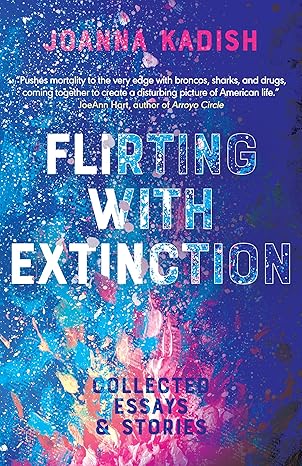

Joanna Kadish’s Flirting With Extinction is a raw and unapologetic mosaic of personal essays and stories that chart a life punctuated by grief, recklessness, resilience, and searching. The book dives headfirst into heavy themes: addiction, motherhood, loss, and the fragile line between survival and surrender. With prose that veers between unfiltered vulnerability and sharp humor, Kadish offers an intimate chronicle of a woman navigating trauma through love, memory, danger, and—sometimes—wild horses.
What struck me most was Kadish’s unflinching voice. She doesn’t tidy up her pain, doesn’t soften her edges. In the preface, she talks about clawing her way back from a state of “perpetual sadness” after losing her sons to the opioid crisis—a tragedy that ripples through many of the essays with a haunting steadiness. In “Anatomy of a Firefighter,” she captures childhood pyromania and sibling chaos in the heat-scorched deserts east of Los Angeles. It’s darkly funny, but the undercurrent of danger—both literal and emotional—never lets you forget the stakes.
Kadish’s writing is pure guts and gravel in “Calamity Jane,” where she recounts a horrifying attempt to break a rodeo bronc as a young girl. The imagery is searing: the smashed teeth, the blood, the betrayal of the body. But what lingers most is her twisted pride in lasting the “full eight seconds” before being flung like a ragdoll. There’s something electric in the way she writes pain. It’s not masochism; it’s a yearning to feel, to prove, to matter. This isn’t just about animals—it’s about people, about relationships, about the wild things in ourselves that won’t be tamed no matter how gently we try.
What I liked most about the chapter Zero Evidence was how it peeled back the layers of human fragility in the face of relentless judgment. Kadish walks the tightrope between raw confession and sharp critique, especially when she recounts the moments after her son’s overdose and the unbearable silence that followed. The way she describes the hospital room, the indifferent fluorescent lights, and the cold detachment of the medical staff—it all made my chest tighten. But it’s the emotional isolation that hit hardest. She’s grieving, furious, helpless, and still somehow worried about how others might view her as a mother. Her honesty cuts deep.
This is not a gentle collection. It won’t hold your hand or let you off the hook. But Flirting With Extinction will speak to anyone who’s lived through pain and come out the other side with scars and stories. It’s for people who can’t stop looking backward even while forging ahead. I’d especially recommend it to those who’ve wrestled with addiction in their families, lovers of memoir that bleeds fiction, and women who’ve ever been called “too much” for wanting to ride the bronc instead of just watching.
Pages: 300 | ASIN : B0DJHCQ5LT

5 Minutes From a Meltdown: A Comedic Poetry Collection
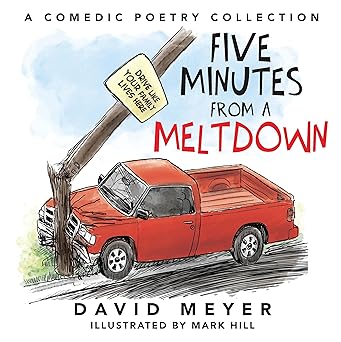
What do you get when a poet says they’re not really a poet, then proves they kind of are? You get Five Minutes from a Meltdown — a cheeky, offbeat, ridiculously entertaining mashup of punchline poetry and snarky cartoon fun. David Meyer isn’t trying to change your life. He’s trying to make you laugh out loud on a Tuesday afternoon. And he succeeds.
Right from the “this is not poetry” intro, Meyer sets the tone. No grand metaphors. No deep soul-searching. Just a parade of bite-sized poems, full of dad-joke energy, wry observations, and perfectly timed nonsense. The humor is sharp but not cruel, smart without being full of itself.
Each piece is like a mini comedy sketch. Some land like a classic stand-up punchline (“I’m the Next Great Supervillain” is a Teflon-coated jab at comic logic). Others are warm and weird, like the running gag of clueless parents and chaotic kids — see “Kids Like the Darndest Things” or the painfully real “My Biggest Fear, Ask My Exes”.
There’s a rhythm to the madness. Meyer plays with line breaks like a DJ dropping beats — awkward pauses, mid-sentence shifts, a lot of “wait, what?” moments that make the final line hit harder. The structure keeps you guessing, and that surprise is half the fun.
Now add in Mark Hill’s cartoons. They’re goofy in the best way — expressive, exaggerated, and full of that Sunday-paper charm. Each one is like a punchline’s wingman, jumping in with a wink and a smirk to make sure you get the joke. It’s not just poetry with pictures — it’s a tag team of absurdity.
This isn’t a book for your English lit professor. It’s for anyone who loves a good laugh, a clever pun, or needs a mental break from the world being on fire. Lighthearted, self-aware, and just the right amount of unhinged — Five Minutes from a Meltdown is like comedy comfort food. You’ll flip through it in a flash. You’ll quote it at brunch. You might even leave it on your coffee table, hoping guests pick it up and laugh.
Pages: 96 | ASIN : B0DK5P76RH
Spectator: Literary Discourses with Aestheticism
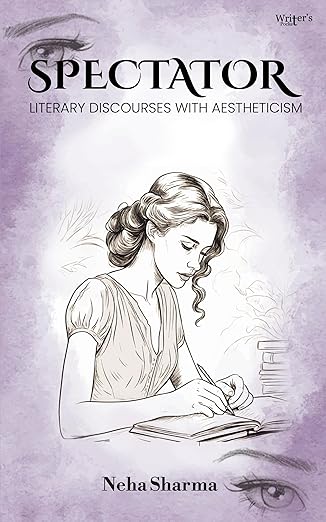

Neha Sharma’s Spectator: Literary Discourses With Aestheticism is a poetic journey through the chaos, beauty, and introspection of the human soul. Structured as a collection of reflective poems, the book explores themes of self-forgiveness, emotional conflict, hope, and transformation. With titles like “Did I Forget to Forgive Myself?” and “Let Go of Fear and Move Ahead,” each piece peels back a layer of personal struggle and spiritual growth, inviting the reader to stand as a quiet spectator to an intimate unveiling of the mind.
What struck me the most was the emotional authenticity threaded through Sharma’s writing. There’s something haunting yet comforting in the way she writes about failure in “Did I Forget to Forgive Myself?”. The repeated line “Did I forget to forgive myself?” doesn’t feel rhetorical—it echoes like a whisper we’ve all heard in our lowest moments. Another favorite, “Midnight Temptations,” blends surrealism and vulnerability with lines like “Neglected ones at Night resurrects, / Dwell in darkness Freedom abstract.” Her phrasing is bold and unusual, but it works—it catches you off guard, in a good way. Her use of metaphors is fearless, and while some are raw and jagged, others feel like balm to a tired heart.
A few poems, like “Crossroads,” try to tackle too many layers of meaning at once. Yet, there’s an undeniable charm in this unpolished honesty. Sharma’s voice doesn’t pretend to be perfect—it reflects a real, flawed, earnest attempt to grasp life’s contradictions. That messiness is part of the book’s soul. When she writes “Everything dark blossoms like lilac” in “Never Ever Look Back,” I actually felt that sentence. It’s weird, it’s offbeat, but it hits hard. It stays with you.
Spectator feels like a late-night conversation with someone who’s been through a lot but still manages to hold on to wonder. I’d recommend this poetry book to readers who appreciate emotional transparency, those who don’t mind a few rough edges in their poetry if it means getting something real. It’s for dreamers, journal-keepers, overthinkers—the ones who stare out train windows and wonder where the time went.
Pages: 54 | ASIN : B0DQKZ6VYW
Being a Voice

The Life & Times of a Poet is a raw, emotional, and deeply personal collection of poetry that traces your journey from your Caribbean roots in Barbados to the cultural tapestry of Canada. What inspired you to write this particular collection of poems?
I was inspired to write this collection of poems because after writing my first three books, people did not know who I was as an author since I was not telling my own story. So I decided to get more personal with this one.
How did you decide on the themes that run throughout your poetry book?
I chose the themes that are depicted in the book based on the experiences that I had. Therefore, if I was going through a bad situation on a given day, I would write about it and put it aside for the book.
Did you write these poems with a specific audience in mind, or was it a more personal endeavor?
I think that it was a bit of both but I wanted the black people in British Columbia to feel it more since these are some of the things that they still go through daily.
How has this poetry book changed you as a writer, or what did you learn about yourself through writing it?
This book allowed me to be more vulnerable with my writing and to be more comfortable with expressing that vulnerability. I learned that I was not the only person feeling these things and by being a voice, that would help people with their healing processes.
Author Links: GoodReads | Amazon
Travelling Souls

Death Kindly Stopped For Me is a haunting, luminous poetry collection that channels the spirit of Emily Dickinson while carving a modern and contemporary voice all its own. What inspired you to write this particular collection of poems?
I was inspired to write this collection of poems after reading Emily Dickinson’s infamous poem “Because I could not stop for Death.” Her personification of Death in this iconic poem is unique and ingenious.
How did you decide on the themes that run throughout your poetry book?
My objective was to personify Death in various different ways, using Dickinson’s poem as an example of one of Death’s multiple personalities. Further on in my book, my poems depict deaths that have resonated with me personally. In my book’s final section, I was inspired to describe experiences of travelling souls, when fear of death has been overcome.
Do you have a favorite poem in the book, and if so, why does it hold special meaning for you?
One of my favorite poems in my book is “Rather an Odd Quirk of Death”, which was first printed in Blue Unicorn Poetry Journal. It has a very tight and mesmerizing rhyme scheme, and I feel it depicts Death as a novel and intriguing personality, someone you would want to be your friend.
What is the next book that you are working on and when can your fans expect it to be out?
My next book is another book of poetry entitled Extraterrestrials Congregate and it should be out next year.
Author Links: GoodReads | Facebook | Amazon
In this mesmerizing collection, Death steps forward—not as something to fear, but as a presence offering grace, wisdom, and a strange kind of solace. Through rhythmic, lyrical verse, Jackson explores life’s impermanence, weaving together themes of faith, doubt, and the beauty of the unknown.
Echoing Dickinson while speaking to the modern soul, this collection challenges the way we see Death—not as a shadow, but as an invitation to something deeper.
The Life and Times of a Poet
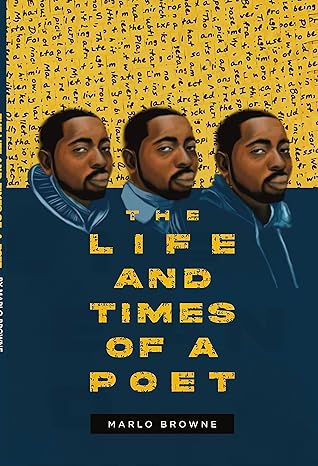
The Life & Times of a Poet is a raw, emotional, and deeply personal collection of poetry that traces the author’s journey from his Caribbean roots in Barbados to the cultural tapestry of Canada. Through powerful verses and spoken-word-style rhythms, Marlo Browne dives headfirst into topics like identity, racism, mental health, love, heartbreak, masculinity, and cultural belonging. The poems are honest, vulnerable, and often punch you right in the gut with their truth. It’s not just poetry, it’s lived experience poured into every stanza.
I found myself genuinely moved by the sheer heart in these pages. Browne doesn’t hold back. In the opening piece, “The Life and Times of a Poet,” he sets the tone with lines like “I’m living the life and times of a poet, / Probed, pushed and persecuted / With people with pitchforks.” That feeling of being out of place and under a microscope carries through much of the collection. And when he writes in “I Saw a Black Man” about seeing someone who looks like him getting arrested, it’s heartbreaking. The emotional weight is real. I also have to mention “Be More,” a favorite of mine, for its open letter vibes to other misfit poets and its honest exploration of masculinity and mental health.
But let’s talk about “Boudoir.” That poem turns up the heat, and not in a subtle way. Browne’s erotic poetry doesn’t shy away from graphic intimacy, and while it might not be for everyone, I appreciated the fearless expression of desire and vulnerability. The contrast between something like “Boudoir” and “You,” which is a tender tribute to his mother, shows just how wide Browne’s emotional range is. That’s what really stood out to me, his ability to be both fierce and soft, political and romantic, introspective and outspoken.
The Life & Times of a Poet feels like sitting down with someone who’s been through it and is finally ready to talk, no filter, no fluff. It’s especially meaningful for anyone who’s had to leave home, find their voice, or stand firm in their truth. I’d recommend it to readers who love modern spoken word, raw memoir-style poetry, or who just want to hear from a Black poet navigating life between worlds.
Pages : 135 | ASIN : B0CGW1M1S1



 LITERARY TITAN