Blog Archives
An Earned Gift

The Last Profile follows a former FBI profiler who is trying to build a peaceful life on the Cheyenne reservation but is forced back into one final investigation that exposes decades of corruption and threatens her family. Why did you want Samantha Wright Little Bear to return for “one final case”?
Sam didn’t want to return but was compelled (a call to duty) to finally attain freedom from the Bureau and the future worry that her work would bring her family. She is weary and needs to find some clarity in things, especially bringing another life into the world. The series also needed some sort of resolution with a few of the characters, and Sam was able to delve into their lives more deeply in the investigation to show readers that some people can redeem themselves, while others don’t have that capability.
How does the book examine the idea that the “bad guy” might not always be obvious?
All people have layers to themselves, and based on the circumstances that life brings them, they challenge their moral fiber; it’s almost impossible to answer the question of why some people can find a moral compass at all times and others can’t. What is a moral compass when the direction isn’t clear, and when sometimes doing the right thing does more harm than doing the darker thing? When it comes down to reflection of what one’s life has become or evolved into, well, redemption in my feeling is an apology of epic proportions that transcends the wrong done.
How does the community influence the characters’ sense of justice and loyalty?
The Tribe has tremendous influence on Sam, with a history of moving forward after what has been done to the Tribes since the beginning of their existence. Once Sam had proved herself to them, that was enough for them to support her without question. Justice is giving a voice to those wronged, and loyalty is an earned gift that other people give you when you are someone that they can count on. An intimate connection to culture, community, and to other humans who touch our lives is paramount in strength of character, the kind of character that turns the light on when you are going down a road at night.
What do you hope readers take away from Sam and Will’s journey?
I’d like readers to see that Sam and Will are a work in progress. They navigate their combined cultures, the work that each of them does, and their approach to trying to have a family life that is the foundation they can count on when things change their course. What’s the saying? Life happens when you’re making plans. Navigating a dual existence is what we all do – work and family. I’d like readers to have a sense of hope (good or bad) that all things can be a stepping stone to something of value that their lives need at that moment. The story continues for Sam and Will in five more books – there will be those that challenge the reader – but ultimately truth and love rise to the top.
Author Links: Amazon
Life is going along just as Will and Sam had planned after the last case was finally buried and put to rest, until Will opens a FedEx box from his friend Senator Stockman, whose son he had saved in Iraq years ago. What’s inside changes everything for them, especially for Sam. To finally get her freedom from the Bureau, Sam and Will join forces to prepare for The Last Profile, taking them inside the lives of Senator Stockman, Director Richards of the FBI, Special Agent Charlie Falken, Tad Collins, and Scotty Dickson all who have a connection to Chicago beginnings where their pasts all intersect.
While immersed in her book signing tour and their new job with Tad, Sam and Will find that the price of her freedom will cost them more than they bargained for. The actors (suspects) in the case are people they know and complicate things, testing loyalties, and discovering who in the end is redeemable, if anyone. Sam and her unborn child’s life are in danger as Will and her Cheyenne family race to save her as the existence of those so integral to her past unravel at alarming speed right on the reservation, their home. The Tribe will do whatever they need to for Sam, including killing
for her.
This is a fast ride on intersecting roads moving in two directions at once with two plots erupting, all pointing towards Charlie on his downward spiral. Characters you didn’t expect now step up in this fast-paced mystery to show their true colors. Who are the good guys? Can the bad guys also be good? Life, death, scandal, betrayal, and love whirl around Sam until justice is served, but at what cost?
Convey Emotion

Tracking Ariana follows a legally documented Afghan immigrant mother torn from her family by ICE, and the desperate race by her husband and unlikely allies to uncover the truth behind her disappearance. What was the inspiration for the setup of your story?
A common question for many authors is “How do you come up with Ideas to write about?” For this book, it was the topic of news reports that had raised my awareness and ire. Witnessing unfairness triggers emotions in most of us, at least it does me. Those emotions were my motivation for Tracking Ariana.
How did you balance portraying political systems with keeping the emotional core grounded in family and character?
Something I’ve had to learn as an author is to convey emotion to my readers. Writing is not just telling a story, it’s giving the readers a reason to become invested in the story. I’m getting better at it, I hope. In the case of Tracking Ariana, the political aspects were just the vehicle to take them there.
Ariana’s internal fear and self-blame feel especially intimate. What guided your approach to writing her interior life?
I think all parents share a love for their children, and it is this love that makes us question our actions when caring for them—to do better. In Ariana’s case, she realized, too late, that by wearing a hijab in the United States, she had endangered her family. Reflecting on that, she uses prayer to regain her footing.
What do you most hope readers carry with them after finishing Tracking Ariana?
I’d hope they find empathy for those having their human rights taken away from them. As Mia said in the book, “You know, we’re all orbiting the sun together on this tiny blue ball. We should be trying to get along, not hating one another.”
Author Links: GoodReads | Facebook | Website | Amazon
When Ariana Wilkinson—a lawful U.S. resident and Afghan-born wife of an Air Force Colonel—is wrongfully detained by ICE during a religious festival in Westchester County, her disappearance sets off a desperate search that exposes the darkest corners of American immigration enforcement.
Returning home from deployment, Colonel Joseph Wilkinson finds his house empty and his wife and children missing. When he learns that Ariana has been taken into custody, he turns to attorney Seth Bodner for help. Together, they fight to get his children back—but Ariana vanishes before her immigration hearing ever takes place.
Enter Dan Burnett, a seasoned private investigator with NYPD roots. As Dan and Seth track Ariana through a labyrinth of detention centers from New York to Florida, they uncover a covert federal program of deportation—erasing them from the system before anyone can intervene.
Meanwhile, Ariana must survive the terror and uncertainty of detention, clinging to faith, memory, and the love of her family. But as her captors move her closer to deportation, time is running out—and the truth threatens to ignite a national scandal.
Told from multiple perspectives, Tracking Ariana is a gripping legal and investigative thriller about one woman’s fight for freedom and a family’s battle against a corrupt system. Fans of John Grisham, Scott Turow, and Lisa Scottoline will be riveted by this story of courage, justice, and the power of love in a nation divided.
The Little Girl’s Mother


The Little Girl’s Mother drops us straight into a police station that turns into a battleground and then never really lets the tension slip. It follows a family whose daughter witnesses a murder and suddenly becomes the target of a powerful criminal syndicate. The parents, both former military with heavy pasts, step back into a world they hoped to leave behind. The story twists from procedural chaos into a dark rescue mission, something between a thriller and a raw look at what parents might do when no one else can keep their child alive. It moves fast. Sometimes brutally fast. And it carries a steady drumbeat of fear and determination.
Reading it, I felt myself leaning in, almost holding my breath. The writing hits with a kind of straight shot energy. There is no drifting around. The scenes move with hard edges and sharp turns. I liked that. It pulled me right into the panic, the cold choices, and the way the parents shift from frightened to focused. I cared more than I expected to and sometimes caught myself rooting for them in ways that surprised me. The emotional weight lands strongest when the parents talk to each other or when they steady their daughter. Those moments feel real. They cool the fire just enough to let the story breathe before it kicks off again.
Some scenes in the workshop are rough. Not because they are gory but because of the calm way they unfold. The tone made me uneasy in a way that felt intentional. I could sense the author pushing me to sit with the question of what desperation does to good people. I liked that the book did not try to pretend those choices are clean or noble. The pacing can feel intense. Yet the emotional through-line keeps things grounded and stops the story from tipping into pure action for its own sake.
I would recommend this book to readers who like high-tension thrillers and stories about families under extreme pressure. It fits readers who enjoy military backgrounds, tactical problem solving, and moral knots that do not come undone easily. If you want a story that grabs you by the collar and refuses to let go, then this will absolutely hit the mark.
Pages: 217 | ASIN : B0FHSHXY18

The Right Side of Wrong: A Butnari and Hill Crime Thriller
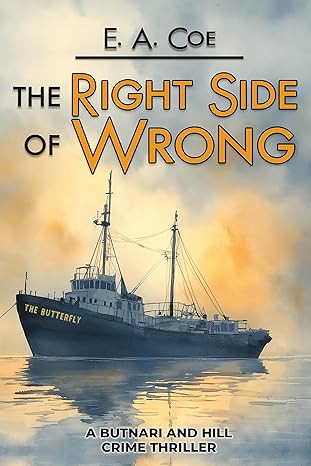
The Right Side of Wrong is a sharp, high-stakes FBI thriller that kicks off with the mysterious massacre of a cargo ship crew in Baltimore and spirals into a tense web of espionage, corporate greed, and justice. We follow Teddy Jay, an ex-operative turned banana plantation owner, as he tries to uncover the powerful players behind a brutal crime tied to a pharmaceutical heist. The story spins through the Caribbean islands, FBI offices, and secret deals, while introducing gritty, memorable characters like Special Agents Marina Butnari and Doug Hill. It’s a fast, layered read, packed with tension, heart, and a touch of moral soul-searching.
What really grabbed me from the start was the pacing and how naturally E.A. Coe sets the hook. Right out of the gate, the prologue detailing the Butterfly cargo ship murders feels ripped from the headlines. There’s a gritty realism to the newspaper-style report that doesn’t feel forced; it feels downright chilling. Coe doesn’t waste time with slow build-ups; he knows readers today want to be thrown into the fire, and that’s exactly what he does. That opening scene made me genuinely uneasy, in a good way, the kind of page-turning discomfort you expect from a thriller but don’t always get.
The characters, though, are where Coe shines brightest. Teddy Jay is a brilliant lead, a guy who’s tough but full of hidden scars. I loved the little details, like him lifting fingerprints off a water glass, showing he’s never really left his shadowy past behind. But the real star for me was Samantha Jenkins, aka “No Te Metas,” whose fierce, almost mythic reputation adds such a cool, dangerous energy to the story. The moment when Harold Stinson learns what “No Te Metas” means was priceless; you could feel his stomach dropping through the page. Coe writes these tough, layered characters without making them cartoons, and that kept me caring even when the plot got wild.
In the middle chapters, the book does lean a bit more heavily on exposition, especially during the sections about the banana plantations, Tiburon Cay, and Teddy’s backstory. These slower moments contrast with the faster-paced, action-driven scenes I loved, and I did catch myself eagerly anticipating the next ambush or interrogation. That said, even the more deliberate sections added rich layers to the world, creating a lived-in atmosphere that’s often missing from quick-paced thrillers.
The Right Side of Wrong was an intense ride with just the right blend of action, mystery, and heart. I finished it in two long sittings because I had to know how it would all crash together. If you love stories where the line between right and wrong gets blurred, where good people sometimes do bad things for the right reasons, you’ll eat this one up. I’d recommend it to readers looking for a thriller that respects your intelligence while still kicking your adrenaline into overdrive.
Pages: 369 | ASIN : B0F384T422

Odyssey in The Congo

Breakwater Bay follows a journalist who is headed to Madagascar for a diving vacation where he instead winds up sucked into a shady rescue mission in lawless Somalia. What was the inspiration for the setup of your story?
A video popped up on YouTube about a pushboat pushing 6 barges up the Congo River with 300 Congolese living in a shantytown aboard the barges. It captured my interest and I found myself researching The Congo for a possible story. It just took off from there.
How did you balance the action scenes with the story elements and still keep a fast pace in the story?
This book was a different style for me. It was more about the journey and the characters encountered on that journey. It was an odyssey in The Congo and beyond. I tend to write fast-paced stories, so it was easy for me to balance the elements.
Did you find anything in your research of this story that surprised you?
Yes. The pushboats and barges on the Congo River were intriguing as well as the use of child slave labor in the illegal diamond mines. I also wanted the book to create awareness of this sad/abusive situation.
Can you tell us more about what’s in store for Emerson Moore and the direction of the next book?
I’m developing a book that’s centered on the Lake Erie islands. It’s in the early stages. I will be releasing Not Alone At Home, a humourous Thanksgiving tale, this fall. It’s a sequel to the successful Alone At Home. I’m currently writing a romantic mystery set in Southport, NC. It will be released next spring.
Author Links: GoodReads | Website | Amazon
Investigative journalist Emerson Moore thought he was headed for sun-soaked relaxation on a diving trip to Madagascar. But when he crosses paths with a smooth-talking, down-and-out British reporter, everything changes. Sucked into a shady rescue mission in lawless Somalia with his old friend “Mad Dog” Adams, Moore soon finds himself deep in the heart of the African continent—on a journey far more dangerous than he ever imagined.
From skirmishes with Congolese militias to a harrowing expedition up the treacherous Congo River, Moore and his crew dodge corrupt security forces and bloodthirsty bandits. The deeper they go, the darker the secrets become—until they uncover a clandestine diamond operation near Kisangani that could shatter lives and fortunes.
As the chase takes them from the jungle shadows to the polished corridors of Antwerp, Moore discovers a chilling link between the illicit diamond trade and a powerful U.S. real estate empire. And when violence erupts back home in Put-in-Bay and Chincoteague Island, Moore must confront the terrifying truth before chaos spreads—and more blood is spilled.
High-octane, globe-trotting, and relentlessly thrilling, this electrifying adventure grips you from the first page to the last, perfect for fans of Nelson DeMille, Clive Cussler, and Brad Thor.
Breakwater Bay

Breakwater Bay throws you headfirst into an old-school, high-stakes adventure with plenty of attitude and grit. It kicks off with a mysterious body found in the trunk of a stolen Camaro, and then quickly pulls back the curtain to reveal a tangled backstory involving a globe-trotting investigative reporter, shady characters, hidden agendas, and some very sketchy rescue missions. The story shifts between Lake Erie and far-flung places like Madagascar and Somalia, where a journalist named Emerson Moore finds himself (once again) in way over his head. Alongside his buddy, the rough-and-ready Mad Dog Adams, Moore takes on everything from Somali pirates to drunken Brits with questionable motives.
Honestly, one of the first things that grabbed me was the pacing. Bob Adamov wastes zero time—Chapter 1 has a dead body in a trunk. And just a few pages later, we’re in Madagascar watching Moore and Adams get dragged into a so-called “rescue” mission that sounds more like a barroom tall tale than something you’d actually sign up for. The dialogue between characters—especially the dry, sarcastic banter between Moore and Adams—is a real treat.
Now, don’t get me wrong—this book is a total popcorn read. But what makes it rise above the average thriller is Adamov’s knack for creating vivid settings. He doesn’t bog it down with flowery prose—he just drops you in and lets the mood soak into your skin. That said, the story does flirt with chaos at times. When Moore and Adams agree to help a washed-up British reporter rescue a supposedly kidnapped teen, I couldn’t decide if I should roll my eyes or buckle up. Turns out, it was both. The whole setup was a con, but that twist made me laugh more than groan.
Gordy, the Brit. He’s infuriating. He lies, manipulates, and nearly gets everyone killed in Mogadishu. I wanted to throw him overboard right alongside Adams, who threatens just that at least twice. Still, I gotta admit, Gordy adds a touch of tragic comedy to the whole ride. The dude’s a mess, and maybe that’s the point. His wild, unreliable energy keeps things unpredictable, even if you spend half the book yelling at him in your head.
Breakwater Bay is one of those books you read for the ride. It’s for people who like their thrillers with exotic backdrops, lots of action, a sprinkle of absurdity, and characters who feel like your uncle’s crazy fishing buddies. It’s part mystery, part buddy comedy, part “what-could-possibly-go-wrong?” travelogue. If you’re a fan of Clive Cussler, or if you just want to kick back and follow a fast-talking reporter into mayhem, this one’s got your name on it.
Pages: 288 | ASIN : B0F2GG7LJ8
SABOTAGE
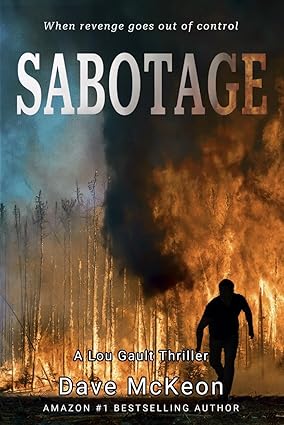
Dave McKeon’s Sabotage is a high-stakes thriller that plunges readers into a world of crime, deception, and hidden identities. The story follows Lou Gault, a former elite soldier turned peaceful resort owner, and Santino Varni, a ruthless crime lord with an alter ego, Luigi Secondo. As Varni seeks refuge in Gault’s remote fishing lodge, tension builds when he tries to buy the land for mysterious reasons. Meanwhile, a brutal murder in Boston signals that Varni’s world of corruption is far from dormant. As these two worlds inch closer to collision, Gault finds himself caught in a dangerous game of power, one that threatens his land, his family, and his life.
McKeon does a fantastic job crafting an intense atmosphere right from the first chapter. The opening scene, where an assassin methodically kills a prosecutor in a parking garage, sets a chilling tone. The detail in this sequence is gripping. The way Popeye, the hitman, relishes the kill, even taking the victim’s Italian leather shoes as a prize, immediately tells us what kind of people we’re dealing with. The book throws you straight into the fire and keeps the heat cranked up.
One of the strongest elements of Sabotage is the contrast between Lou Gault and Santino Varni. Lou is a man of integrity, a protector of the land, and someone who values the simplicity of his life. Varni, on the other hand, is a man who bends reality to his will, eliminating obstacles without a second thought. The scenes where Varni pressures Gault to sell the resort are thick with tension. You can almost hear the underlying threat behind his words, even as he tries to frame the offer as generous. When Gault repeatedly refuses, you just know things are going to get ugly.
The duality of Santino Varni, or rather his dissociative identity disorder, is one of the book’s more fascinating aspects. By day, he plays the role of Luigi Secondo, a charming, well-mannered guest who befriends the lodge’s residents. But at night, the voice of the real Varni creeps into his thoughts, reminding him who he truly is. This internal struggle adds an extra layer to the villain, making him more than just a standard crime boss. At times, I even felt a sliver of sympathy for Luigi, who seems to want to break free from the monster that created him. But then Varni reasserts himself, and the sympathy vanishes as quickly as it appeared.
The book builds to an explosive conclusion, and while I won’t spoil the details, I will say that the slow-burn tension pays off. McKeon lets the danger simmer, letting readers feel the growing sense of inevitability before delivering a hard-hitting climax.
I’d recommend Sabotage to fans of crime thrillers, especially those who enjoy stories with moral dilemmas, intense action, and psychological depth. If you like books where every interaction feels like a potential standoff, this one’s for you. McKeon keeps the stakes high, the characters compelling, and the pages turning.
Pages: 452 | ASIN : B0D9ZWHPXQ
Overcoming Trauma
Backfire is a relentless espionage thriller where a hardened operative and a cunning businesswoman navigate a web of betrayal, government corruption, and deadly alliances. What was the inspiration for the setup of your story?
My motivation for the Jaywalker series is to address a subject of supreme importance for humanity, which is already beginning to arise. There are also elements of overcoming trauma and general hardship in life, which I have personally had life-changing experiences with. But these messages are subtle and blended into my favourite genre. Backfire is the starting point, and there are hints as to where the series is headed, but the beginning needed to be a thrilling story in itself while building the scene for what’s to come. I feel like I’ve achieved that.
Jayden is a compelling protagonist. What were some sources that informed his character’s development?
From a core perspective, Jayden is a sensationalised version of myself, much like many protagonists out there. His temperament and motivations are much like my own, and there are similarities in background circumstances as well. Writing Jayden into Backfire was an extremely natural process–instinctive. Creating the other characters was more challenging, but equally, if not, more enjoyable.
If Backfire were adapted into a film, who would be your dream cast for Jayden and Patricia?
I’m not familiar enough with the current suite of actors in the matching age range to give a worthwhile answer to this one. I have watched very few movies in the last decade as I prefer to read. But to give you an idea, I’d say a 40-ish-year-old Matt Damon would have nailed Jayden, and a 30-ish-year old Eva Green or Anne Hathaway for Patricia.
Author Links: GoodReads | X (Twitter) | Facebook | Amazon
Patricia Cooper is a charismatic, natural leader who battles sporadic personality-altering darkness due to a traumatic experience in her youth. She must take action before it ruins her life. During one such episode, she encounters Jayden Walker, an ex-engineer turned maverick, blazing a new path off society’s grid, intent on making a difference.
Jayden subsequently hikes deep into the forest on his most confronting project yet: to infiltrate the base’s fortress-like defenses and eliminate key personnel. On the journey, he forms a unique bond with an orphaned bobcat before his ingenuity is put to the test. What he discovers is a beginning, and in another state, the corrupt distribution of an arts grant leaves a trail of grime. But how does this relate to Patricia?


