Blog Archives
Nero’s Nile
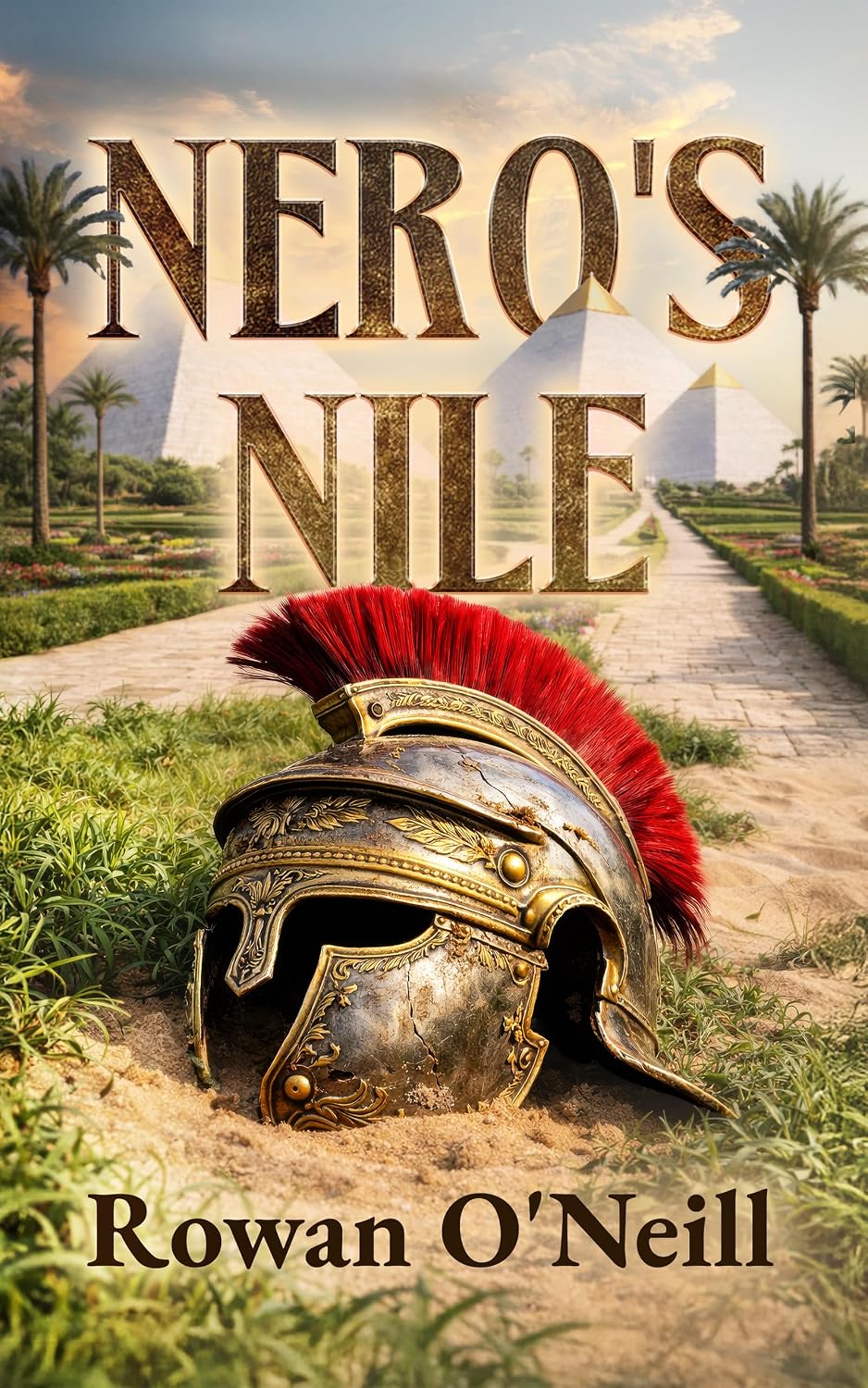

Nero’s Nile, by Rowan O’Neill, is a historical fiction adventure that follows Emperor Nero’s obsession with discovering the source of the Nile. To carry out that ambition, he draws Titus Statilius Taurus back from the quiet life he has earned and sends him into Egypt and beyond, while Rome itself rots under ambition, violence, grief, and spectacle. The novel moves between imperial politics and expeditionary danger, mixing Roman history, Egyptian myth, and supernatural menace into a fast, dramatic story about power and the price of being useful to people who see the world as something to own.
What stood out to me first was the pace. This book doesn’t linger at the doorway. It kicks it open. O’Neill writes in bold strokes, and the result is a novel that often feels closer to a sword-and-sandals epic than a restrained historical drama. Battles, assassinations, betrayals, crocodile attacks, ancient temples, and political murders arrive with steady force. I liked that confidence. The writing sometimes favors impact over subtlety, especially in the dialogue, where characters often say exactly what they mean and say it loudly. That can make some scenes feel theatrical rather than natural. But honestly, that theatrical quality also fits Nero. His world is all performance, blood, gold, and applause, so the heightened style makes a strange kind of sense.
I was most interested in the author’s choice to make the Nile expedition more than a geographic mystery. The book treats the river almost like a living border between history and myth. Titus becomes the steadier center of the novel, a soldier who wants peace but keeps getting pulled toward other men’s dreams of glory. Nero, meanwhile, is written as both ridiculous and dangerous, which can, at times, be a hard balance to hold. He is vain, childish, cruel, and sometimes oddly sad. I found that mix compelling, even when the character work leans broad. The historical fiction genre gives the novel its bones, but the adventure and supernatural elements give it its pulse. By the time the darker mythic material moves closer to the surface, the book has shifted from Roman intrigue into something stranger and more feverish.
I would recommend Nero’s Nile to readers who enjoy historical fiction that is energetic, dramatic, and unafraid to bend history for the sake of the story. If you like ancient Rome, dangerous quests, myth-soaked adventure, and a plot that keeps throwing new hazards into the river, they will probably have a good time with it. I did. The book is a torchlit march into empire, obsession, and chaos, and it knows exactly the kind of spectacle it wants to be.
Pages: 269 | ASIN : B0GY27MQ2B

When Mercy Died

Peter Van Oossanen’s When Mercy Died is a science fiction thriller that blends crime drama, superhero fiction, and romantic suspense into a story about grief, justice, and renewal. As the second book in a trilogy, it follows Sam Stanton, an extraterrestrial raised on Earth, after the murder of Michelle Bennett, her children, and her mother. The tragedy sends Sam into a deep emotional collapse, and the novel begins with a powerful focus on loss before widening into a larger story of purpose, revenge, and moral choice.
Sam is the emotional center of the book, and his grief gives the novel its strongest dramatic weight. His abilities, advanced technology, invisibility suit, and aircraft make him a compelling science fiction hero, but the story is equally interested in his vulnerability. Van Oossanen presents Sam as a man shaped by extraordinary power and profound sorrow, which gives the action-thriller elements a personal foundation. His struggle to move forward after Michelle’s death adds depth to the familiar themes of crime-fighting and secret identity.
The book’s worldbuilding expands through Prime-Even, Sam’s extraterrestrial home world, and through the contrast between that advanced society and the violence he faces on Earth. These scenes bring a strong science fiction element to the novel while also giving Sam space to recover, reconnect with family, and reconsider the mission he was born to fulfill. The combination of alien civilization, futuristic technology, and grounded emotional stakes helps the story move between intimate drama and large-scale adventure.
As Sam returns to Los Angeles, When Mercy Died becomes a crime thriller driven by kidnappings, corruption, and the search for those responsible for the attack that destroyed his future with Michelle. His relationship with Leona Martin adds a romantic suspense thread that brings warmth and momentum to the second half of the novel. Their partnership gives Sam a new emotional anchor, and it also reframes his mission as something larger than vengeance.
When Mercy Died is a heartfelt science fiction crime thriller about a hero trying to rebuild himself after a devastating loss. Van Oossanen combines action, romance, alien technology, and questions of justice in a story that’s focused on resilience and the difficult path back to hope. Readers who enjoy superhero fiction with emotional stakes, futuristic adventure, and a strong moral conflict will find Sam Stanton’s journey engaging and sincere.
Pages: 429 | ASIN : B0GKC5XBPL
Reciprocating Karma
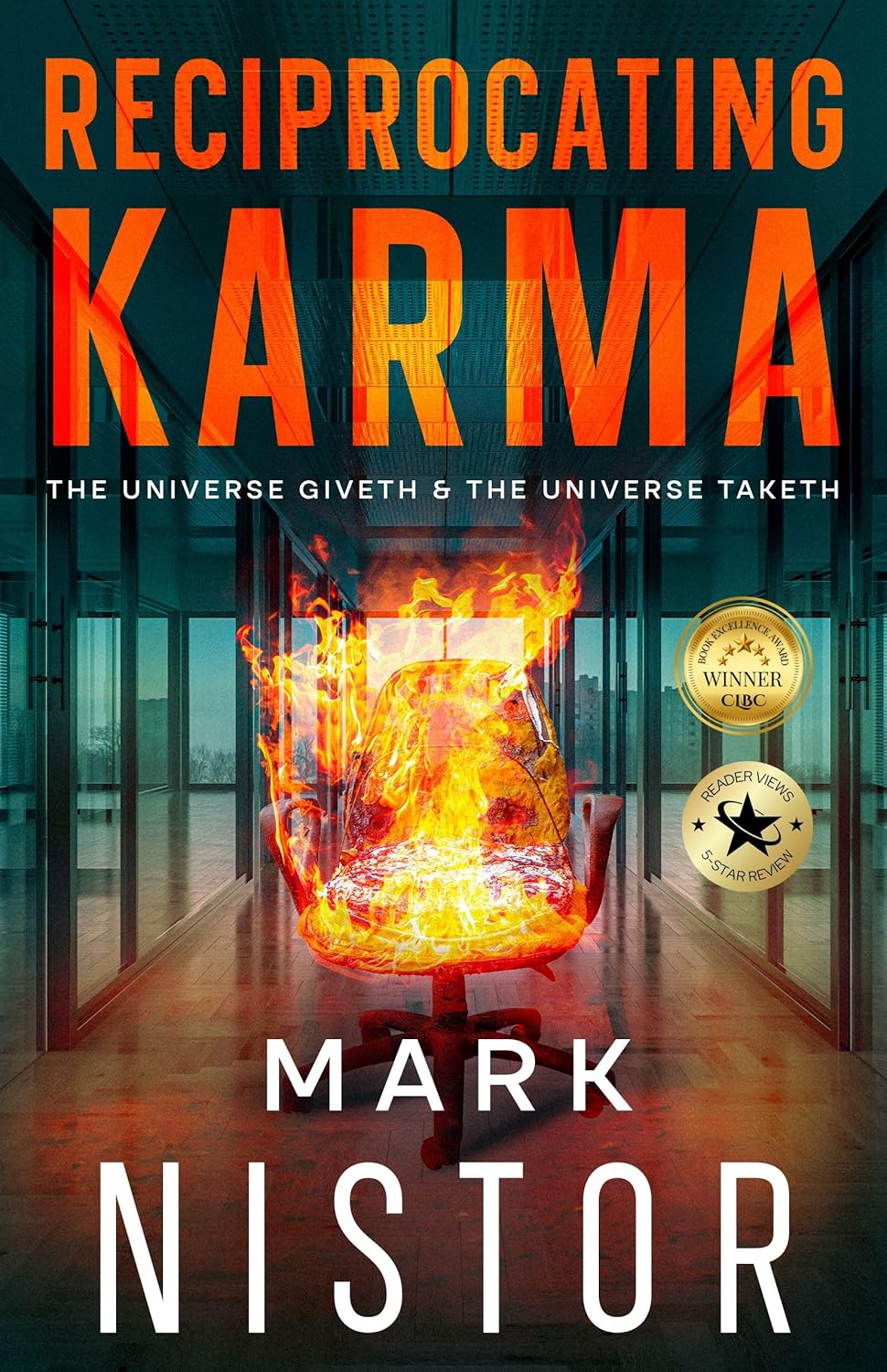

Reciprocating Karma, by Mark Nistor, is a sprawling crime thriller about consequences that refuse to stay buried. In Los Angeles, old murders, wrongful imprisonment, police trauma, family grief, and a vigilante’s twelve-week retribution plan collide around Detective Castor Jain, Ray Rix, Ashlyn, Malloy, Zoey, and a wide cast of wounded, funny, dangerous people. The book treats karma less like a moral slogan and more like a faulty machine: it gives, takes, misfires, and keeps asking who deserves to pay.
I was pulled most strongly into the novel’s sense of accumulation. Nistor doesn’t build a simple whodunit; he builds a pressure system. Every character seems to be carrying residue from an earlier explosion, an earlier lie, an earlier failure of the justice system. That makes the revenge plot feel less like a straight line and more like shrapnel moving through a city. The emotional core, for me, sits in the way trauma travels through families and friendships. Ray’s fear, Cas’s recovery, Ashlyn’s need to act, and Zoey’s pursuit of truth all give the book a bruised human pulse beneath the procedural scaffolding.
The style is distinctive, sometimes jagged, and often crowded with personality. Dialogue ricochets, jokes interrupt danger, and side characters arrive with enough eccentricity to elbow their way into memory. I appreciated that unruly energy because it keeps the darker material from becoming dour. At times, the density of names, histories, and overlapping motivations asks the reader to work hard, especially if they are new to the series. Still, that same maximalism gives the novel its flavor. This isn’t a sterile thriller; it’s messy, loud, grief-soaked, and oddly warm, like a precinct bulletin board covered in blood evidence, family photos, and bad coffee stains.
The ideal audience is readers who enjoy ensemble crime fiction with a vigilante edge, emotional backstory, and a large interconnected cast. Anyone who loves crime thrillers, police procedurals, psychological suspense, and a good mystery will enjoy this novel. Readers who enjoy Michael Connelly’s moral grit but want a stranger, more combustible cast may find this especially appealing. Reciprocating Karma is a jagged, busy, and darkly comic thriller where justice never arrives clean, but it always leaves fingerprints.
Pages: 320 | ASIN : B0G1MXJWPC
Lion’s Den

Lion’s Den is a work of dystopian political fiction with a strong coming-of-age thread, and it follows Johnny and Benny Salter after a brutal attack on their family dojo leaves their father dead and their lives split open. Set in a fractured Southern California shaped by earthquakes, tsunamis, secession politics, and street-level ideological conflict, the novel tracks grief, loyalty, revenge, and the question of what it means to inherit a legacy before you are ready for it. At its core, this is a story about two brothers trying to stay upright while the ground under them keeps shifting, both literally and emotionally.
Author Neil Citrin writes with real conviction about family, discipline, and belief, and that conviction gives the novel its engine. The dialogue can be direct, sometimes almost purposefully plain, but in a book like this that straightforwardness often works because the characters are living in survival mode. They do not have the luxury of being vague. I also liked how the novel keeps returning to Johnny’s interior balance, his breathing, his restraint, the way he tries to think while Benny burns hotter beside him. That contrast gives the story a human center. You feel the ache of grief in the pauses, in the small practical decisions, in the way these boys have to talk about trusts, schools, and housing while still reeling from loss.
I was also struck by the author’s choice to build the novel as both a personal drama and a broader political thought experiment. The alternate California, with its damaged infrastructure, breakaway pressures, and ideological camps, gives the book a tense backdrop that is more than decoration. It shapes how people talk, where they can travel, whom they trust, and what danger looks like day to day. I wanted the political material to breathe a little more and let the characters step out from under it, but I also understood why Citrin kept it so close. For him, it clearly is the weather of the book. Everything happens inside it. The martial arts thread helps too. It gives the novel a code, not just action. Discipline matters. Legacy matters. Control matters. Even revenge is treated less like a thrill and more like a test of character, which I appreciated.
Lion’s Den will speak most strongly to readers who enjoy character-driven speculative fiction, especially stories that blend family loyalty, civic conflict, and martial arts into one narrative line. It’s earnest, steady, and deeply invested in the moral choices its characters face. I would recommend it most to readers who like dystopian fiction that stays close to the heart, as well as to anyone interested in stories about brothers, inheritance, and the hard work of deciding what kind of person to be after loss.
Pages: 239 | ASIN : B0GKHF8NFK
Profound Human Elements at Stake

Talisman: Nexus follows a man known as the Talisman on a quest to rescue his sons as he faces the consequences of the cosmic bargain he made to bring back his wife. When you finished the first book in this series, did you know the direction you would take with Book 2?
No, because I never really do. As a pantster, I write very organically. Although I have a rough idea of where I’m going, I honestly didn’t have a clue with Talisman. I knew generally what I wanted to accomplish with Talisman: Subterfuge, but with Talisman: Nexus (and Talisman: Halcyon), they were the hardest novels I’ve ever written – I mean that – and they required a lot of extra push, imagination, stretching, and intentionality to get them done. In some ways, I feel like I had nowhere to go with the characters in Talisman: Nexus, given that they were all essentially trapped in The Refuge. The only one who could teleport out of there would be Liam. Ultimately, I did know that I wanted to have some kind of redemption, but I wasn’t sure what shape or tone that would take. I’m content and glad at how it all transpired, however.
Family is clearly the emotional core of the novel. How did Liam’s role as a father shape the way you wrote the stakes of the story?
Well, I’m a daddy of two boys, 10 and 6. If I were separated, or disconnected, or alienated from them, I would be disassembled. They are the title of one of my latest books: You are my whole Earth. They truly are. Where do you go if you don’t have an Earth? You drift. That’s what Liam’s doing…. Drifting, mindlessly and numbly fulfilling this Faustian bargain foisted upon him in the bleak hope that the Aeterium Axis will do what they said and restore his wife to him. It’s not founded on a false premise or fantastical thinking: they’ve proven that they’re mysterious and able to channel Janine’s voice to him. So he does have proof. Nonetheless, it’s pulled him away from his remaining family, his sons; it’s alienated him from his in-laws, his deceased wife’s parents, and it’s made him a vigilante on the run. All of that has taken a great toll on him, and he wants nothing more than to be connected with his boys.
When writing science fiction with dystopian elements, how do you keep the world grounded emotionally?
With humanity at its center. There have to be profound human elements at stake, and those stakes have to be great and weighty. I tried to do that with Nexus. I knew that Carson & Joseph had to be captured by The Zorander. What would happen to them after that, however, was anybody’s guess. I certainly didn’t know. Would I, as the writer of the story, allow them to be killed, plunging the already-vigilante Liam further into darkness and thirst for vendetta? I couldn’t do that because that’s what the Zorander is, and Liam is not the Zorander. He is very much human. I had to keep coming back to that loss, that dread, that pain of losing his wife eternally and now his sons temporarily. The stakes were real and profound, and, again, as a daddy, I would be disassembled if I were alienated from them or if I lost them.
Can you give us a glimpse inside the next book in the Talisman series? Where will it take readers?
Talisman: Halcyon is the most sci-fi of ANY sci-fi books I’ve ever written. It took me to Asimovian levels of creativity. James SA Corey stuff. I have always written in this universe, but suddenly I was hopping the multiverse with sorcerers, magic, intelligent and conversant aliens, superpowers, large ships with thrusters, strange planets and star systems, teleporting across worlds, I mean, I have NEVER written stuff of this gravity before. It truly stretched me as a writer, and I’m so grateful for that. Writers SHOULD be stretched at every turn, and the Talisman series stretched me in ways I never thought possible. You’ll see some crazy stuff happening in Talisman: Halcyon that will directly unite it with my Dissonance series, as well as with my other books, The Slide, The End, and The Phoenix Experiment. It’s truly turned into an Aaronverse, and I think that’s very cool. 😊
Author Links: GoodReads | X (Twitter) | Facebook | Website | Amazon
===
Talisman: Nexus opens in the bleak, icy expanse of Svalbard, where Liam “Foxy” Mayfield – known as The Talisman – stands at the crossroads of personal devastation and cosmic intrigue. His sons, Joseph and Carson, have been abducted by The Zorander, a former Talisman driven by vengeance, forcing Liam into a confrontation that is as much about family as it is about fate.
He is now gutted, having bargained with the alien Aeterium Axis to save one thousand lives in exchange for the resurrection of his wife, Janine… and his mission has become nothing short of a nightmare.
Within The Refuge, a clandestine Svalbard base, Liam’s allies and loved ones gather in anxious anticipation. The group is fractured by blame, particularly toward former President Vance Cardona, whose alliance with President Evelyn Lynch led to Liam’s exposure and vulnerability. Journalist Onyx Sleater, once obsessed with unmasking the vigilante she dubbed the “Dark Ghost,” is now fiercely protective of Liam.
Will Liam be able to save his sons? Will he triumph over The Zorander? What will the relationship dynamic be between Liam and his sons? And will Onyx Sleater have a much greater part to play that binds everyone together in an unexpected nexus?
The shift from personal quest for resurrection to universal battle for liberation approaches.
===
From the author of Talisman: Subterfuge comes its stunning sequel, Talisman: Nexus, balancing intimate family drama with escalating cosmic stakes. The pacing moves from tense, character-driven confrontations to high-stakes action and revelation. Aaron Ryan of the Dissonance alien invasion saga, THE END Christian Dystopian saga, Forecast, The Slide and The Phoenix Experiment delivers yet another explosive story in Talisman: Nexus. Read it and prepare for the final reckoning in Talisman: Halcyon!
Talisman: Nexus

Talisman: Nexus is a science fiction thriller with strong superhero and dystopian elements, and it picks up with Liam Mayfield, also known as the Talisman, in a place of raw crisis: his sons have been taken, his uneasy allies are trapped in hiding, and the cosmic bargain that promised him Janine’s return starts to look more poisonous than redemptive. What follows is not just a rescue story. It is a book about grief turning into rage, rage turning into clarity, and an enemy becoming something more complicated than a target. By the time the novel reaches its later revelations, Liam is no longer just fighting the Zorander. He is confronting the possibility that the Aeterium Axis themselves are the real architects of the suffering he has been living under, which shifts the whole series onto a bigger and stranger track.
What stayed with me most was the book’s emotional temperature. Author Aaron Ryan does not write this story at a cool distance. He writes like he wants you right up against the glass, feeling Liam’s panic, shame, fury, and exhaustion in real time. Sometimes that intensity really works. There are scenes that are very emotional, especially when Liam is on the edge of becoming the very thing he hates, or when the story pauses long enough to show how much loss still lives inside these characters. I also liked that the novel keeps circling back to family. Under all the powers, talismans, teleports, and cosmic stakes, this is still a story about a father trying not to lose himself while trying to get back to his children. That grounding matters. It gives the bigger mythology some weight.
I also found the author’s choices interesting in a more mixed way. Ryan leans hard into melodrama, repetition, and blunt emotional declaration. The novel sometimes prefers maximum feeling over subtlety. But I cannot say the book lacks conviction. The dual perspective work, especially with Onyx and Liam, gives the story a restless, personal momentum, and the later twist that forces Liam and the Zorander into a grim, almost tragic alignment is the kind of move that made me sit up and pay attention. That was the moment the book opened wider for me. It stopped being only a vengeance-and-rescue novel and became something more cosmic and morally tangled. Not cleaner. Better.
I’d recommend Talisman: Nexus most to readers who enjoy earnest, emotionally direct speculative fiction, especially people who like sci-fi thrillers that borrow some of the charge of superhero fiction and some of the ache of dystopian drama. If you want a story that is sincere, bruised, big-hearted, and unafraid to go all in on pain, power, faith, and fate, there is a lot here to appreciate. I think readers who already enjoy series-driven worldbuilding and characters who carry their trauma like a live wire will probably get the most out of it.
Pages: 247 | ASIN : B0GH2C6NGQ
Beneath The Rings

The Doha 2040 Summer Olympics promise spectacle and grandeur. That illusion shatters fast. Twelve Lebanese and Israeli athletes vanish, seized by a shadowy organization known as the Obsidian Hand. Their demand lands like a thunderclap: a ransom of $500 billion. Veteran journalist Nova Mendelsohn steps into the chaos, and the stakes spike with every passing hour. The Olympic Village becomes her launching point, yet the real peril lurks beyond its perimeter. The desert holds secrets. Vengeance brews. Lives hang by a thread. Unless Nova unearths the truth, the kidnapped athletes will not survive.
Beneath the Rings, by Joe Battaglia, evokes echoes of Argo while carving out its own identity. Set in a near-future landscape that feels disturbingly plausible, the novel imagines a world only a few steps removed from our present timeline.
At its center stands Nova Mendelsohn. Once the narrative machinery locks into place, the spotlight rarely shifts from her. Intelligent, relentless, and remarkably resourceful, she becomes the ideal guide through this pressure cooker of danger. Readers may catch glimmers of Dan Brown’s puzzle-laced adventures or the high-velocity grit of the Jason Bourne films, yet Battaglia builds a narrative ecosystem all his own, one defined by crisp storytelling and an inventive delivery of essential clues.
Momentum never lags. Once the plot kicks into gear, it drives forward with remarkable speed. The mystery elements hook the reader early, while the dialogue sharpens the tension. Mini cliffhangers pepper the chapters, each one engineered to tug the reader deeper into the story. Putting the book down becomes a challenge.
The Obsidian Hand also stands apart from typical thriller antagonists. As their identity and purpose come into focus, their motives, while extreme, gain a faint, unsettling logic. This complexity grants the novel an unexpected emotional undercurrent, prompting readers to consider where justice ends and fanaticism begins.
The result is a high-stakes thriller with international scope and literary ambition, a potboiler elevated by thoughtful execution. Battaglia delivers a gripping ride, and further stories featuring Nova Mendelsohn would be more than welcome.

Grounded in Reality

The Little Girl’s Mother centers around a family who becomes the target of a powerful criminal syndicate after their daughter witnesses a murder. How did you balance the action scenes with the story elements and still keep a fast pace in the story?
In my mind, it felt like these events were naturally happening at a fast pace, with the whole story taking place over only a handful of days. The pace was driven by the plot in that way and the parents’ (and Tyra’s former teammate’s) desire to “fix the problem” (so to speak) and to remove their daughter from danger as soon as possible. The very nature of the deeds that they had to undertake from the start to the end of the book meant the action and tension were not really going to let up.
Because this is the first book that I have ever written, and because it just sort of started one day, my whole approach to writing it was very inefficient and largely unstructured. I had the general plot, a few key scenes, and the rough chronology of it in my mind, but I wasn’t sure how it all joined together. I wrote an initial 10,000 to 15,000 words or so, and then I went back and read through it, making refinements and/or completely changing certain parts. Then I continued from where I left off, writing another 5,000 to 10,000 words before repeating that whole process again. I did this several times until I got to the end. Along the way, I noticed there was a drop in the action and tension around halfway through, and I immediately recognised that was the perfect point for me to add in the flashback story that Paul tells about how incredible a soldier Tyra is and why her former team mates are so indebted and in awe of her. It was like fitting that piece of a jigsaw that completes a key part of the total picture, and it felt perfect in every way to me when it was in place.
What was your favorite character to write for and why? Was there a scene you felt captured the character’s essence?
Tyra. Absolutely Tyra. She is formidable! Like her former teammates and her husband, Stephen, I am in total awe of her. If she were real, then she is the person you would want by your side in any eventuality. But my goal was to make her feel plausible and real, not some sort of bulletproof superhero who can smash through walls and defeat any foe. Metaphorically, she definitely can do those things, but I wanted her character grounded in reality. She was/is an incredibly skilled soldier and a ferocious, almost animal-like fighter, but what makes her so lethally effective is her mind and her intellect. It is like a tactical supercomputer that instantly knows what the best action is in any situation, and when that’s coupled with her other skills, she is awesome! I often find myself thinking “I wish I were like her.”
There are many moments in various scenes when I think this is clear to the reader, including in the very first chapter, when we literally see her switch from civilian mode back to Special Forces team leader mode. If there were still any doubt in the reader’s mind as to what Tyra’s essence is, I think it is absolutely clear in the finale, where we see how brutally lethal she can be. I loved discovering this about her in this story.
What was your favourite part (or parts) to write?
I genuinely enjoyed writing it all, especially the chapters for the flashback and the finale. Or perhaps it’s fairer to say that I enjoyed what I created because, to be totally honest, there were times when the writing was hard.
But without a doubt, my absolute favourite parts were the “interactions” (!) between Tyra and Shefi (the man who wants her daughter dead). I don’t want to give anything away about those moments when they come in the story, even now, after having read them countless times, I can still read them and feel the hairs on the back of my neck stand up. As I was imagining those scenes (especially the finale) and as I was writing them and even when I’ve read them back since, I found myself almost acting them out to feel the power of those moments and, really, the power of Tyra herself!
What is the next book that you are working on, and when can your fans expect it to be out?
Up until about a month ago, I would have said that I didn’t have one! I always have a fair few ideas kicking around, but they are often just a few bullet points or sentences and totally disparate. This is the first book I have ever written, and it just sort of happened (over a four-year period!).
However, much like what happened with The Little Girl’s Mother, a few of my recent ideas have started to join up and develop to the point where I’m now intrigued and excited to experience this new story myself, so I am 99% certain that I will start writing again in 2026. It won’t be in the same story universe as The Little Girl’s Mother and will be set around the early 1980s, but it will be another Action Thriller with formidable characters and an exciting storyline. As for how long before it’ll be finished, I’m sorry to say that I don’t honestly know (full-time job and full-time family commitments eat up so much free time), but I believe that, from what I’ve learned from writing The Little Girl’s Mother, it will not take me four years to finish!
Author Links: GoodReads | Amazon
A young girl witnesses a gangland murder and barely escapes with her life. The criminal responsible wants her dead at all costs but, when the police seem unable to guarantee their daughter’s safety, the father and the mother, along with the members of the special forces team that she once led, must take matters into their own hands.
There is nothing more fearsome in nature than a mother protecting its young.
This is an Action -Thriller that truly delivers plenty of action and plenty of thrills! You will not be disappointed!


