Blog Archives
Exits
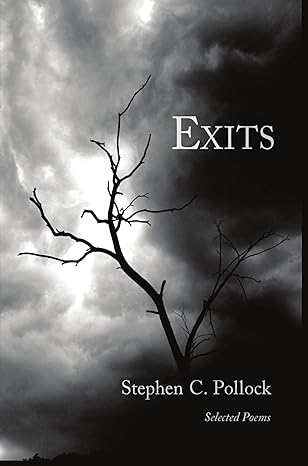

Exits is a collection of poems that moves in and out of nature, memory, and mortality with a sharp eye and an unflinching voice. Pollock balances images of birds, leaves, storms, and insects with meditations on illness, grief, and human cruelty. Each poem feels like an opening and a closing at once, a gesture toward beauty that never ignores the shadows pressing in around it. The artwork paired with the text deepens the mood, giving the reader both a visual and lyrical way to linger with themes of death, decay, and renewal.
I found myself pulled into the tension between delicacy and brutality. The spider spinning its web, the butterfly pinned by a child’s cruel hand, the leaves clinging through winter, these images stayed with me. Pollock’s language is careful, yet it carries an undercurrent of urgency, as if each word knows it has little time left. Some poems made me pause and reread, not because they were obscure, but because they struck me with a sudden intensity. Others, like “Steve’s Balloons,” were so unexpected that I had to smile even while feeling the melancholy underneath.
At times, the heaviness of the book pressed down hard. Illness, biopsy, syringe, tube, the clinical intrudes often, and it brought me back to my own brushes with hospitals and fear. That familiarity made the reading even more raw, and I appreciated Pollock’s honesty. He doesn’t romanticize suffering, but he does find ways to trace light through it. There is also a musicality to his lines that reminded me of older poets, the kind whose rhythm stays in your body long after the words leave your mouth. That mix of craft and emotion gave the book both polish and heart.
I would recommend Exits to readers who like poetry that doesn’t look away. If you’re drawn to reflections on life and death, or if you find comfort in nature as a mirror for human experience, this book will speak to you. It’s not an easy read, but it’s a meaningful one, and I think anyone who values honesty wrapped in artful language will find something to hold onto here.
Pages: 45 | ASIN : B0BXVJB79N

Relinquish the Agony

Dear Sick Mental Virus explores the brutal realities of mental illness through vivid imagery and heartfelt reflections, balancing devastation with messages of resilience and hope. Why was this an important collection for you to publish?
During my nine years as a Mental Health Paraprofessional with seven of those years being a dedicated substance abuse counselor in the United States Air Force, I was overwhelmed with vicarious trauma. It was important for me to express my pain and the pain I felt for my wife along with my patients through vivid imagery in the form of poetry. It was important for my own mental health to relinquish the agony in my heart that lay dormant for nearly three decades. A culmination of pain that I felt necessary to publish with every intention to serve people who struggle psychologically. My hope is that the resiliency sprinkled throughout the book acts as a light for the darkness people are obscured in.
You’ve created striking metaphors for depression and anxiety throughout the book. How did you come up with these unique ways to personify mental illness?
Poetry itself is unique. Quite honestly, it was my experience as a fiction writer that propelled me to paint some of these diagnoses as villains. My thought behind this was if readers could visualize a person in the form of a mental health disorder the message of how painful these disorders are in the minds of people would resonate much stronger. So, I meticulously perused the Diagnostic and Statistical Manual of Mental Disorders (also known as DSM-V or DSM-5) and created fictional characters based on the description of the diagnoses. Fun fact, the title of my book, Dear Sick Mental Virus has a hidden message which is revealed to be my definition of the acronym DSM-V. It was my way of giving back to Mental Health.
What has been the most rewarding or challenging part of sharing such deeply personal experiences with your readers?
The most challenging part in this entire movement without question was breaking the news to my mother that her old friend’s son molested me when I was six years old. Coming out and telling her that an older boy touched me in ways that traumatized me haunted me until I was nearly 30 years old. She felt like she failed as a mother, but I reassured her she was more than wonderful to my siblings and I. Til this day I haven’t told my father. I’m sure he knows and just hasn’t brought it up to me. As far as the most rewarding part in this experience I would say my readers feeling inspired to live a life they love. There have been countless moments where readers have shed tears in front of me as I’ve read my poetry from this book who were so moved by the words it acted as some sort of divine intervention for them. That is what I love about the power of poetry . . . you never know whose life you’ll impact.
Your poetry captures the struggles of mental illness with such raw honesty and vivid imagery. What inspired you to approach these themes so candidly?
When I was in the 8th grade, I wanted to kill myself. I took a pen and slashed at my left wrist repeatedly. I was lost, angry, confused, and sad despite my childhood being a great one. Saying it bluntly feels therapeutic. I mention this because I relate so candidly with the patients, I spoke with who felt a similar way at one point or another. There was such horror in stories I spoke about throughout my book that it is difficult for me to go back and read it. With my first poetry book, Sacred, Chapter 3 titled, “Mental Hell,” I realized I opened Pandora’s box with issues requiring significant attention. I heard stories of children being beaten, raped by their parents, domestic violence being normalized, patients killing themselves due to countless issues, etc. Their stories are important, and I know there are millions of people out there who need to hear this story. The last thing I will say is I provide self-help/life coaching skills on my podcast titled, “Feel Good Happiness.” You can find that show on Pandora, Spotify, Apple Podcast, iHeartRadio, Amazon Music, YouTube, and my website. It’s worth a listen if anyone would like to hear my perspective. Never give up on yourself and I’ll end it there. Thank you!
Author Links: GoodReads | X (Twitter) | Website | Amazon

Winner of the Spring 2023 Outstanding Creator Award for Best Writing, Best Poetry, and Best Short-stories/collections, O’Cyrus aims to provide healing to those enduring mental illnesses in his second poetry book publication.
Dear Sick Mental Virus places a significant emphasis on the daily struggles of anxiety, depression, and stigma of mental health. The fear of seeking help due to external concerns leave many people trapped in their own mind often leading to deeper issues lasting for years. Having dealt with mental health problems himself, the author seeks to not just speak on the concerns of suicide, domestic violence, sexual assault, and other forms of debilitating issues, but he also seeks to encourage readers with uplifting, self-affirming, motivational messages/stories throughout the course of the book for positive reassurance. Dear Sick Mental Virus is an empowering, thought-provoking, tear jerking expression of poetry and a piece a literacy that will have a lasting impact on readers.



 LITERARY TITAN