Blog Archives
To Survive and Preserve

Their Village, Their Fortress, follows a soldier who defies orders and sets out on a journey to alert his home village and surrounding communities of a threat headed their way from a new weapon that causes mass destruction. What was the inspiration for the setup of your story?
There are two reasons behind how I set up this story. One is that it’s a standalone add-on to a wider series of seven books, in a world I have already built. Once I decided what kind of story I intended to write, I found where it might fit in existing continuity so that I wouldn’t have to create another new fantasy world; I don’t feel like broad-strokes world-building as much as I once did.
Conveniently, the seventh book in that series established a highland village where I had decided the villagers would tend to have Ukrainian names. I gave up on inventing names years ago, though some examples survive in earlier works. Since then, I have tried to mindfully borrow real names while considering what they mean and attempting a vague cultural consistency within a land. For example: Derek, from previous works, was from a land where most others around had Polish names, but empires tend to include many cultures for both benign and nefarious reasons, and people do move around, so you would encounter names from other cultures of Eastern Europe.
All the context the reader would need from this book gets mentioned in Their Village, Their Fortress: their old duke from a century ago, brave Galyna who went to confront him, people who fled from an aggressive imperial army to the safety of a land that welcomed them.
As for why I felt like writing a love letter to the power of community, where villagers with such names and traditional styles of dress stand together against a brutal imperialistic hierarchy… I have always used my work as a proxy to consider current events, but I have never been more direct.
What were some of the emotional and moral guidelines you followed when developing your characters?
The number one thing is balance. Even when I have a clear agenda, no named character is meant to be a caricature. The woman who believes her purpose is to interrogate every idea is valuable to the community for doing so, even if she makes enemies by taking things too far. The man with an uncanny knack for quick learning lives through severe struggles with the compassionate understanding of others; he does not just “have powers” that make him useful in the moment, he is a person with a complicated life to handle. You are meant to view the catalyst character as rather obnoxious at times, but he doesn’t ignore his missteps and at least he tries to do better.
The invading soldiers, as per my other works, are not evil inhuman creatures; they face the consequences of their participation just as they would the consequences of refusing orders, but they are people, possessing moral agency, private opinions, and responsibility for their actions. Even the character intended to be the least likable, the battalion leader, a cultist bureaucrat, believes thoroughly that his invasion is meant to improve the lives of those he intends to conquer–but his rigidly hierarchical worldview holds no space for contrary opinions, and he believes so much in this imaginary new world he would build for them that he would burn down the one they know and love. He is utterly steeped in beliefs that make him the hero of his own story and the villain of mine.
What were some themes that were important for you to explore in this book?
Community is the first thing, the heroism and value of the everyday. To handle that appropriately, I needed to flip my usual approach. So many of my prior books tell the stories of powerful people, with drama encompassing an entire continent. The action most often revolved around dukes, crown princesses, warlords, and generals. Sure, I would give perspectives and consequences, I would show you people having to abandon their homes because war is not neat or tidy and the battlefield you will read about is often someone’s ruined community space. The stories were driven by single personalities who would alter or preserve the course of their world, but only with the help of countless people who struggled, few of whom ever got named compared to their number.
For this book, I narrowed the scope. My initial idea, which I didn’t stick by, was to have the entire story happen within the bounds of Nimmlisok village–for most of these characters, that’s their world. While power brokers wage devastating wars from an impersonal bird’s eye view, I give you the story of everyday people coping with these grand maneuvers, trying to survive and preserve what matters to them. People who don’t need their world to be remade in anyone’s image, resisting the brutal power that punches down at them. This time, the power brokers from the other stories are almost entirely absent–a couple are named, while one of them says a few consequential things in the prologue. Their stories have already been told in other books.
Is this the first book in the series? If so, when is the next book coming out, and what can your fans expect in the next story?
This book is meant to stand alone as a read, though it exists as the eighth work in a single continuity.
My original plan for this series was six books: a trilogy followed by a prequel trilogy. Since the end of the first trilogy, I have tried to make everything that followed independently readable because I know how daunting it is to dive into a long fantasy series. I also think my writing has improved since the first trilogy, and I would rather lead with better material: why not jump in at Prince Ewald the Brave, or The Fate of Lenn, and read anything else at your leisure?
The seventh book, The Redemption of Jarek, was not really in this plan, but it was a contingency. The story was hinted at by existing works. I knew where it fit with the others in case I wished to keep writing, or if fans demanded more. One day, I asked myself why I should wait. If I knew what the story should be, perhaps I should write that before I forgot or before life had me otherwise occupied.
This eighth book was not even a contingency plan. I had no rough draft or even notes about it, yet somewhere between June and July, I unexpectedly had a book. Once I had it, I did not hesitate to produce it. How do I know I will ever have another idea, and such ideal circumstances to write it?
That’s how it is from now on. I can’t reasonably guarantee any more books when the eighth one was a surprise to begin with. I encourage readers to seek out and appreciate the eight that are on the market.
Author Links: GoodReads | Amazon
When a calamitous new weapon fells a fortress once considered invincible, one soldier rides home to deliver the terrible news. This journey is against orders, but he insists no village is too small to be warned of what’s coming, even if he’s not sure what they can do. He delivers an impassioned call to action, daring them to try. Reconnecting with his community involves reconsidering why he left it, and what he might regret having left behind; but he soon faces scrutiny when they realize something about his appeal doesn’t add up.
Join the struggle of eclectic villagers as each decides their answer. Each confronts what’s happening however they must, journeying through their emotions and sometimes delving into their personal histories to reconcile themselves. Each resister’s specialties enrich their efforts to scrape together a victory from what’s on hand. The events to follow reveal not just how they will fight, but why.
Their truth, their skills, and their efforts enable them to resist—but even if they believe, can a hastily-prepared volunteer militia of farmers defeat a battalion of trained soldiers?
Their Village, Their Fortress
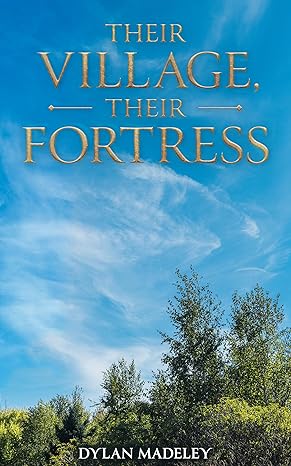

Dylan Madeley’s Their Village, Their Fortress presents a gripping tale of courage, community, and survival set against the backdrop of a crumbling empire. When an allegedly impregnable fortress falls and the commanding general fails to warn the smaller outlying villages of an approaching threat, the story pivots to one soldier, Oleksiy. Disagreeing with his army’s decision to retreat and regroup, Oleksiy defies orders. He sets off on a perilous journey to alert his home village and surrounding communities, driven by an unbreakable resolve to prepare his people for the coming storm. The narrative follows Oleksiy’s return, where he unites with the villagers in a desperate bid for survival. As he shares the dire news, Madeley immerses readers in the lives of these ordinary people, revealing their hopes, fears, and resilience. Among the villagers, one character stands out: Vitaliy. Initially appearing overly emotional, his intense feelings seem to cloud his judgment. Yet, as the story unfolds, Madeley masterfully unpacks the complexity of Vitaliy’s character. His emotions, rather than being a weakness, become his strength, offering a unique perspective and a deep-seated empathy that shapes his actions and decisions.
Despite its brevity, the book lacks none of the essentials. The plot is expertly constructed, with clear, vivid descriptions of strategic discussions and battle preparations. The narrative’s pulse quickens as villagers debate daring, risky plans to outwit the enemy. Yet, it is the nuanced portrayal of characters that truly sets this story apart. Madeley introduces a cast of distinct individuals, each brought to life with carefully woven backstories that illuminate their motivations and fears. These glimpses into their pasts enrich the present, adding emotional depth and resonance to the unfolding drama.
One of the most compelling aspects of the novel is the portrayal of the village’s unity. Madeley captures the essence of a close-knit community where every individual has a role, and each strength complements another’s weakness. This interdependence is painted with finesse, highlighting the unspoken understanding among villagers. The friendship between Vitaliy and Denys exemplifies this bond. When Vitaliy acts impulsively, Denys never judges. Instead, he offers space and understanding, modeling a compassionate response that others in the village come to respect and learn from. It’s a testament to the emotional intelligence and mutual respect that bind these people together.
With an eye for small yet significant details, Madeley’s writing invites readers to connect deeply with the characters. Every moment, every interaction feels intentional, crafted to draw readers into the villagers’ struggle for survival. The book’s balance of action, emotional depth, and richly drawn relationships makes it a compelling read, one that lingers long after the final page is turned. Their Village, Their Fortress is a testament to the power of community, the strength found in vulnerability, and the indomitable human spirit in the face of insurmountable odds.
Pages: 140 | ASIN : B0DFTC3DNH

What is Redemption?
The Redemption of Jarek follows a man struggling to find his place in the world following his banishment from the only home he has ever known and the throne he was destined to occupy. What was the inspiration for the setup of your story?
Readers of my previous material with long memories might recall when Alathea mentioned one of the fights in this book, or perhaps that goes too far back. More recent is how Jarek shows up in The Fate of Lenn, takes a beating, slinks away, and is never seen or heard from again in that book. His whereabouts near the end of that book may have even been mentioned in passing, but with no explanation given. In short, I have set the table for this story since way back, and it was waiting for me to be ready.
A personal challenge was to explore the redemption of an already introduced character who could be considered a minor antagonist during his first appearance. I have written pure villains who were killed, and some who were stopped without having to die. I have written a sympathetic book about a villain who genuinely wishes to save her world from suffering and loss she had to feel, and I hoped readers picked up on the toxic forces teaching her toxic lessons from the beginning of her life, her inability to be better than them, and how this could apply to some people in our world. I had yet to write about anyone who faced that antagonist’s defeat and, when offered a slim opportunity to do something different, successfully took what they learned and became their own kind of hero.
I find that authors sometimes ask themselves questions and let their characters answer them. Do you think this is true for your characters?
When composing the early drafts of the story, everything progresses a certain way because I have certain things in mind that I wish to happen. I couldn’t leave it like that. Over the course of revisions, trying to see the world as these characters do, I think I develop a better idea of how some things should go based on my improved understanding of what these characters would say/do. Some of the “discussion” scenes of this book retained a necessary goal given their purpose in the story, but how the characters arrive at that goal shifts to better fit the personalities involved. How do they argue with each other in the most in-character manner? It’s also important to determine how Jarek would handle his “council”, a glorified band of powerful criminals who once had royal patronage/sanction for their actions. Can he take for granted that they are on board with any plan he makes just because they didn’t have an immediately better option for a leader when they found themselves outlawed?
There tends to be an in-character answer to these questions. While the story at the top level didn’t stray far from my plan (and can’t, because it’s a prequel and certain events are canon to existing works), the way it arrives at this destination is much more fitting.
Is there any moral or idea that you hope readers take away from the story?
I often write about leadership figures because I like to contrast duty and responsibility with entitlement, but that’s just one dimension of things. I have a few things I hope the reader considers in case they haven’t before:
1. What does redemption mean? How do you arrive at it when there’s no culturally specific rite, no rubric handed to you, yet strange circumstances give you an opportunity to continue to act after your terrible failure? And what if those who have the most right to dictate your path to redemption are no longer available for guidance?
2. Some might perceive Jarek as broken by the end of his adventure, but others will see him as transformed. The path of redemption may begin with deep resentment, but by the end of it, you may resemble those you hated and wronged the most.
3. Sometimes, those who insist everyone must perceive them as absolutely powerful, absolutely dominant, those who display a need for absolute control of everyone and everything around them, they are the most broken and insecure people of all. The meaning of an imperial mask in this story has not changed at all since I wrote about Alathea. You are meant to ask what it’s there to hide. After all, this is a story about her first ancestor to insist on wearing one, and he, too, insists on being perceived as fearless, indomitable, and wise. How desperately far he feels he must take this act poses a greater long term threat to him (and by extension his people) than most of his enemies.
Also, while the current leadership of the Russian Federation didn’t invent using prisoners/captives to bloat an army to intimidating size, or to have more lives to throw at a bloodbath, I was thinking specifically of them and to some extent their mercenary partners when I wrote the chapter “Debtors and Prisoners”. Elcimer, too, must not waver or compromise, nor must anyone ever see him afraid. I wish despotic villains were relegated to historical and speculative fiction, but here we are. The archetype lives on for a reason.
What is the next book you are working on, and when will it be available?
My decision to release this book so soon after the last might not have surprised anyone more than me. In my initial view, I had an original trilogy, and a prequel trilogy, and that was that until I had some other idea beyond this series. Yet, to finish this interview with one of the facts that started it, I laid the groundwork for this story in its predecessors. I have the strangest feeling I am running out of time, and I trusted no one else to finish this for me.
Time will tell if I’m going to surprise myself again.
Author Links: GoodReads | Facebook | Website
Much of Jarek’s youth revolved around making him fit for the throne, but one terrible day in adulthood finds him defeated, humiliated, and banned from the capital. He may only return upon complete surrender. Once home, he faces a trial by his commanders, though they are also fugitives by decree. Their land is a former province cut off from royal support, only kept free by the number of soldiers loyal to Jarek; but he swore to uphold the terms of his defeat, never to attack the capital.
As every illusion Jarek lived under is falling apart, he receives a visitor who tells him how people have suffered under his oblivious leadership. He faces a choice: drink himself to death while everything falls apart or change his land for the better. The latter might be impossible.
Just as he makes his choice, strangers arrive from a part of the world unknown to him, seeking a free and peaceful life, warning of a tyrant who pursues them. The story of their homeland is also told.
What is Jarek willing to do? And will anything ever be enough?
(Contains medieval violence/combat)
The Redemption of Jarek


In Dylan Madeley’s The Redemption of Jarek, readers are plunged into a multifaceted world of political intrigue and high-stakes power games. The tale masterfully interweaves the repercussions of unchecked emotions and the weight of legacy. At its heart is Jarek, a once esteemed duke of Wancyrik, teetering on the precipice of disgrace and facing the looming threat of banishment. His egregious actions, particularly against revered elders including his own uncle and king, paint a picture of a man grappling with his place in the world.
King Elcimer, embroiled in his own storm of anger and betrayal, finds himself countering the treachery of a failed assassination by an ally, leading the realm into a war that sends its inhabitants scrambling for safety. Yet, amid this chaos, shadowy figures are orchestrating moves that could determine the fate of all, Jarek included.
Madeley’s rich world-building is commendable. As a reader, I was transported to Wancyrik, visualizing its societal intricacies and pondering the implications of a society where one’s status could dictate their likelihood of survival.
Jarek’s tumultuous journey toward redemption is engrossing. His internal conflicts, interspersed with moments of hope and despair, create a riveting narrative. Equally compelling are the villagers, whose sheer tenacity and courage against seemingly insurmountable odds represent the resilency of the human spirit.
The plot’s relentless pace ensures there’s never a dull moment. Madeley adeptly navigates a labyrinth of characters, motivations, and subplots, steadily escalating the tension. There’s a palpable sense of danger, especially during intense combat sequences, with daggers and swords at play, heightening the novel’s allure.
While I enjoyed the story, I would have enjoyed the story more if the characters in the story were developed further, as I was left wanting more insight into their emotions and passions. I feel that a deeper dive into their emotions and motivations would have added another layer of complexity to an already rich tapestry.
The Redemption of Jarek is a strategically-layered odyssey that captivates from start to finish. It’s a treat for enthusiasts of war-centric narratives and those who revel in tales of kings, subterfuge, and power dynamics. An absolute must-read for those in search of an immersive literary experience.
Pages: 334 | ASIN : B0BQ5M5Y6H
Pushed Through Extraordinary Circumstances
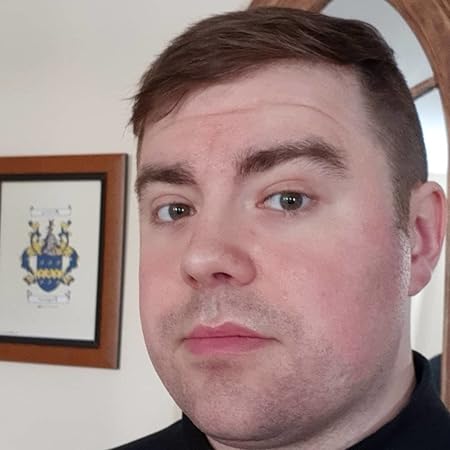
The Fate of Lenn continues to expand the world created in the Gift-Knight series with a focus on Duke Lenn Wancyek. What motivated you to write a book exploring this character?
Lenn and Zinnia appear in “flashback time” of The Gift-Knight’s Quest and they never got a complete story until now. In their first appearance, they represent intense action experiences to break up the longueurs of Derek riding to ruins, riding from his old home to his new one, and chewing the scenery. The same is true to a lesser extent for King Jonnecht the First and General Conrad, who both get a fuller story told in Prince Ewald the Brave. But the point is, an entire time period and situation were presented there that set the stage for the original trilogy. There was enough going on to deserve its own book. This time, instead of presenting a Lenn and Zinnia who are combinations of myths and legends and disputing historical records and whatever Derek might imagine them to be, I wanted to show you the reality that later got mythologized. Duke Lenn Wancyek, with a widow’s peak, a tummy, doubts and depression, well-liked but not exactly suave, and just handling life and responsibilities as best he can. A human being pushed through extraordinary circumstances.
What were some driving ideals behind Duke Lenn Wancyek character and evolution?
He is best known in the original trilogy for being a historically important figure who is willing to risk everything for a people not his own and a lover he only knows for a brief time. He recognizes that something terrible is in progress, and he expects nobody else to do much about it, yet he has the power, the privilege to do something. I needed him to be someone who understands that leadership is a role of service, one which comes with privileges that enable his work and compensate him for the burdens it places on him; Prince Ewald seems to understand the same, it is a running theme among my leader characters who have good intentions. I needed people’s lives to matter to him, not just people in his dukedom or the broader kingdom but people in general. He needed to be expertly capable of using deadly force yet reluctant to do so, because it’s a decision he can’t take back, and it tends to occur in situations that risk his own life as well. He always reaches for lofty ideals but has to work within the real, and the disparity between the two frustrates him, comparable to his descendent Derek–someone he must posthumously inspire. Most importantly, Lenn had to be the kind of person where even if it seems to be too late for him, if his situation looks no-win, he still finds the people who look like they have a chance, people he loves and people in need, and he does what he can for them. He is not the kind of person who says, “It’s too late for me, so I don’t have to care about anyone or anything else anymore.” And if it’s not too late for him to help a noble cause, perhaps it’s not too late for him after all.
What scene in the book did you have the most fun creating?
This is a tough call because I present a variety of scenes where I enjoyed different aspects for different reasons. Sometimes it’s simple: I like to choreograph a good barehanded fight because it lets me think back to my decade of commercial martial arts experience and how I would describe moves that I practiced and sometimes successfully executed in training. I also liked the entire arc of the musicians coming together to make something unique and beautiful, because I have spent so much of my spare time in the past twenty years hanging out with musicians, seeing them build something together, and always feeling like I could witness history in the making just by being their friend–yet it was so satisfying to produce this fictional account where people with completely different backgrounds and sounds figure out how to coexist and produce something brilliant. Lastly, I will admit my visceral gratification any time I got to write someone taking the piss out of Sir Wolter, whose reputation as a ridiculous man is so widespread that General Conrad took time to throw him some shade in the previous book of the series (Prince Ewald the Brave). Sadly, all the jokes in the world can’t exorcise the toxic mindset he represents and the legacy it has left/the influence it still has on the world today, but sometimes humour is the most scathing weapon I have.
Do you have future books planned for your Gift-Knight series?
At the moment, I do not. I will say this: there are two significant loose ends left between this book and its predecessor which suggest that more story could be told, and the words of Alathea herself in The Crown Princess’ Voyage summarize how those loose ends are tied together. But could it be wrapped up in a few short stories or a novella? The main reason I’m not looking at a full seventh book to the series right now relates to something you pointed out in your review, that these books do not just read like historical accounts. They are supposed to be more than that. I always have messages and ideas in mind, even if the reader doesn’t agree with them or if I don’t present the message clearly. The Gift-Knight Trilogy is about two people who have reasons to hate each other finding a way to work together because greater things are at stake, and the series has opinions about different people finding ways to coexist respectfully, without losing any of the variety and uniqueness that makes the world such a beautiful and interesting place. The prequel trilogy has a lot to say about service-minded leadership versus entitlement, and also the power of young people to either save or ruin their world depending on what guidance and support are available to them; also, the power of their elders to shape what’s to come, and how that’s a complicated process fraught with peril. But, returning to the idea of a seventh book. If I wrote one to tie up those loose ends, which would primarily be about Jarek (the reader may wonder what happened to him and there’s a reason it went unsaid) and Elcimer (the man to whom King Jonnecht offered to sell weapons and soldiers’ services) and the drama surrounding each of them before they meet on the battlefield, all I know right now is a history. “Here’s what happened, here’s the final groundwork of the world we see by the time Derek and Chandra get to have their story.” I don’t know what the intended message is or how it could be any different than what’s already presented. Or how it even upholds the messages already presented, for that matter. Idea-wise, it could easily become “a lot of sound and fury signifying nothing”, and I’m not currently interested in writing a book where I don’t even know what the broader message is. Maybe one day, if I find myself with a large fandom that craves it, I will bring that out for them. But right now it’s not even close to happening. I did release two books in a year and knowing little else of the situation someone might imagine I can pump another out, but my first drafts tend to sit for years before I know what they need. I don’t currently have any complete rough drafts ready for reworking.
Author Links: GoodReads | Twitter | Facebook | Website
You will meet everyone who looks to him and you will see their struggles which run concurrent with his: a friend and adviser who wishes to steer him right; three musicians who think they have landed the greatest job in the kingdom; a gardener who does so much yet asks so little; a woman who works to free her people. The list goes on, but time grows short.
You will meet the man who becomes the legend. You will know the fate of Lenn.
The Fate of Lenn
![The Fate of Lenn (The Gift-Knight Trilogy) by [Dylan Madeley]](https://m.media-amazon.com/images/I/514mQGVCGzL.jpg)
The Fate of Lenn by Dylan Madeley is the sixth and currently final book in his series of fantasy novels. The book follows the story of Duke Lenn a good and honest man who rules over his lands fairly and honorably. He is haunted by the loss of his father at a young age and strives to be a god and noble man. Unfortunately, these are trying times for his Kingdom, and he must come together with allies old and new to fight against old rivals and protect those he loves. He is joined by a band of musicians, a beauty from a foreign land and his loyal lieutenant Tibor.
The Fate of Lenn is one of the most interesting books I’ve read in a long time and is unlike most fantasy novels. The world building is excellent and I was immediately engrossed in his world. This world has a living breathing history that is referenced just enough that the reader knows what is going on and understands character motivations without the book feeling like a historical text. This is a fine line that Madeley treads well. Madeley also uses his world in interesting ways. Firstly, this may be a book set in a medieval fantasy world, but the setting is down to earth. There are vague references to mystical beasts and deities which some characters believe in, but it is never confirmed or denied whether they exist. Likewise, Lenn is haunted by the ghost of his father, who he talks to regularly. However, it is never made clear whether the ghost is real or part of Lenn’s coping mechanism. Even Lenn seems unsure. The world also seems to be an allegory for the modern world. Lenn’s kingdom is a liberal land and is rightly proud of this. Gay and trans characters suffer no discrimination and the King makes sure that his populace is cared for and educated. However, there are dark undercurrents. Despite the kingdoms liberal image, it soon becomes clear that xenophobia and corruption are becoming rife. Meanwhile a struggling lower class are set to revolt against their dutiful King whom they now see as an oppressor. This book explores what happens when a society rests on its laurels and let’s social decay creep in.
The author avoids overly flowery language. His writing is descriptive but also straight to the point and comes across as well written. There are few fight scenes in the book, but those it does feature are blow by blow accounts that get the blood pumping. Madeley excels at getting us to care about not just the world he’s built but the characters in it.
The Fate of Lenn is yet another riveting entry in the epic fantasy Gift-Knight series that continues to expand the alluring world.
Pages: 267 | ASIN: B09G3J7WSQ

My Real and Raw Self
Prince Ewald the Brave is the story of a young prince who becomes a respected royal by standing up to his father. Where did the idea for this novel come from and how did that evolve as you wrote?
In my first novel “The Gift-Knight’s Quest”, I kept going to flashback time to show you the life and death of Derek’s ancestor Lenn. The antagonist in that flashback time is none other than King Jonnecht, who was presented there in his brief time as two-dimensionally bloodthirsty and petty. Since that novel isn’t about him, it leaves people with many questions; you never learn what happens to him after a particular scheme he perpetuates, you never learn if he gets punished or overthrown, or why he doesn’t just try a different scheme or attack the rival land of Wancyrik. Given that we know Chandra Kenderley will be his descendant in approximately a hundred years, that also raises questions of what it’s like having this man for a father; the family dynamic. And if he treated them exceptionally well compared to how he handles everything else, then why would his successors behave nothing like him, pursuing practically the opposite foreign policy? If they had, why wouldn’t the empire have collapsed from hubris long before Chandra was born? I wanted to answer those questions, and my first draft was actually called “The Mad King Jonnecht”. But the story became far more about all the people around him and how they live with him, and I no longer wanted to name the book after its most unlikeable character. His reign and fatherhood was a problem to be solved that’s central to the story, but by no means is he the hero. And given the weird political structure the Kensrikan empire has, no one would have been better suited to stop him than a family member–such as the heir. However, this heir shouldn’t solve problems the way his father does, or it would be difficult to imagine things getting better if he wins. From that complication came a novel-length story.
This seemed like a fun novel to write. What scene did you have the most fun writing?
Well, some of Ewald’s night-time adventures in the city borrow from adventures of my own. I don’t go to medieval/renaissance reenactment parties nor is Ewald headed for alternative/subculture clubs that would make more sense in the twentieth century or later, so I had to imagine what an underground club could possibly be in such an age. I wanted it to serve a purpose for people of different social classes and backgrounds to meet each other in a more relaxed environment. I also wanted something masked, but not a ball; I use masks differently in my other novels, but this use was more of a nod to someone in my life who was known to be real and raw, but also to wear a mask, an interesting juxtaposition; he spoke to me early in my career when I was very lost and concerned about being famous and making a fortune, and he just wished I would be concerned with what my real and raw message would be. So, my candid social and political views make their way into my fantasies without restraint, and I try to be my real and raw self on social media, and I hope this would have meant something to him. We were very different people. Anyway, the nights out were fun. I would also like to give a shout out to my editor who insisted I go ahead with the wedding scene, because I was initially too scared that I would mess it up, but it turned out very satisfying to me and I know readers who agree with that.
What was something you wanted to do in this novel that was different from any other fantasy novel you read?
This might just reveal the narrow scope of my reading so far, but I wanted to look at what responsibilities a good leader should have, and the healthy/unhealthy dynamics between leaders and their following. I think there is plenty of literature about noble leaders who are born for their role and living up to their name or their destiny, and I don’t believe in that enough to write it. There are also many books about corruption, scheming, siblings and rivals backstabbing each other for an imperial throne–realistic and rooted in history, true, but this has been done many times and memorably. I wanted to focus more on the damage done when someone behaves like power is nothing but entitlement and all about what others constantly owe him. I wanted to contrast that with people who having achieved or realized their privilege understand what it is to offer a way up for others, or empathize with suffering and do something positive about it with these privileges, or who at least understand that the throne should implicitly come with responsibilities that can be very limiting to anybody who would rather just have the most fun in life. And then I wanted to spend time with all the characters who work hard every day to minimize the damage done by this irresponsible leader, and who will no doubt get blamed by that leader when things go wrong, though that has plenty of inspiration from contemporary politics; it doesn’t belong strictly to imperialism or monarchy. But I also wanted to show how very difficult it would be to unseat such an irresponsible person, without using the same toxic solutions that the leader would turn to (I already have a book about that called “Alathea: Goddess and Empress”). I wanted to give people hope that even in the face of corruption, in a system where people don’t want to put their privileges at risk, someone will learn what’s needed and reach out to others to solve a huge problem in the best way, before it gets worse for everybody. Instead of showing one hero destined to save them all, I wanted to show that making things better is a complicated issue and a team effort that should be enriched with different viewpoints and approaches. There have been so many fantasy books in and out of print that I suspect all of this has been covered before, but I felt like doing it my way.
What is the next book that you are working on and when will it be available?
My next book is a story about a melancholy Duke who finds something to fight for, a good lady who wants her people to be free by as peaceful means as possible, and three musicians who think they have landed the most extraordinary gig in their kingdom. The current working title is The Death of Lenn, and it would end the six part extended series that began with the Gift-Knight trilogy; it would be a good point to stop and think about writing a different story. I would love to have this out in 2021 to be able to say I’ve released two great personal efforts within a year, but budgetary constraints may make that a questionable timeline.
Author Links: GoodReads | Twitter | Facebook | Website
Meet the Kenderleys, the wealthiest and most powerful family in the world.
The youngest, Prince Bonifaz, takes his lessons and trusts no one. The middle child, Princess Isabel, sneaks away to a secret regency of her own making. Their mother, Queen Dulcibella, watches out for her children just as readily as she watches over them. Their father, King Jonnecht, is a capricious tyrant who hopes to control his family as strictly as he does the largest empire, and his violent rage threatens all under his rule.
Then there’s Prince Ewald, eldest and heir to the throne. No one is more aware of the threat his father poses to everyone. No one has better legal standing to do anything about it. How can he save everyone he loves while upholding his mother’s kind values? He must learn the lessons required to be the best regent, choose allies wisely and earn their trust, and enact a thoughtful and detailed plan.
And even if he succeeds in all that, can one who draws the line and conducts a plan with honour defeat one whose rage, selfishness, and deceit know no bounds?
Can Prince Ewald stop his father?
This is a stand-alone prequel to The Gift-Knight Trilogy.
Prince Ewald the Brave
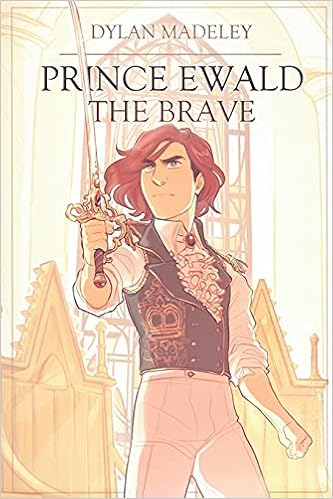
Prince Ewald the Brave, by Dylan Madeley, is the story of a young prince who becomes a respected royal. Prince Ewald is the sheltered first-born of the House of Kenderley with two younger siblings, Isabel and Bonifaz. With the help of his family, Ewald discovers who he truly is, what kind of ruler he wants to be, and how to finally stand up to his father.
Madeley begins the novel by introducing the reader to the capital, Bayrock, ruled by King Jonnecht. From the start, the reader can see that the “Great King” is a façade. To the people, King Jonnecht is the almighty conqueror who defeats their enemies, but to his family he is the villain of their story. The conflict that Madeley brews throughout the novel surrounds King Jonnecht and the affect he has on his family. Prince Ewald, being the oldest and heir to the throne, decides he wants to live life before ruling the realm. Ewald is tense and cautious, in part due to his father, but risks everything to experience a world outside of royalty. Princess Isabel helps her brother let loose and be relieved of his responsibility for a short while. These outings enrage the King who then beats his eldest son and disowns his only daughter. Ewald has finally had enough of his tyrant father and devises a plan to save his family and the kingdom.
Madeley has a writing style that effortlessly propels the plot forward. The novel intertwines modern themes of same-sex marriage and family abuse into a poignant fantasy novel. The character development of Ewald throughout the novel is wonderfully alluring. You see a cautious prince turn into a strong and clever regent-designate after confronting his father. Princess Isabel, although not in the spotlight, is a strong character that has fascinating dimension throughout the novel. Princess Isabel was my favorite character to read because she is sure of herself and what she wants out of life. Isabel’s personality and experiences show Ewald that he can choose how he wants to live, who he wants to be, and what kind of ruler he would like to become.
While the novel was entertaining overall, I felt that the war strategies of the King and his commander felt tedious. The choices the King makes throughout the war show he is not level-headed and could lead the realm to its demise, however, they were not that engaging to me.
Prince Ewald the Brave has enjoyable characters and an intriguing plot. This is a story that felt deep and thoughtful. I had a fun time reading this story because, I felt, the author had a fun time writing it. The story screams creativity and uses thoughtful but subtle social commentary to create a very compelling fantasy adventure novel.
Pages: 288 | ASIN: B092WRZDGX


 LITERARY TITAN