Blog Archives
Echoes We Leave: Book 1: The Collective
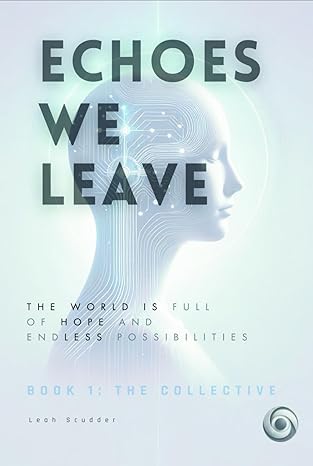

In Echoes We Leave: Book 1: The Collective, Leah Scudder offers an immersive plunge into a futuristic dystopia where a sophisticated neural network, Synexis, intricately binds humanity into a seemingly harmonious collective. Beneath this flawless integration, however, pulses an unsettling signal, intentional, enigmatic, and quietly invasive, that disrupts the very essence of autonomy and identity. Scudder adeptly follows a handful of scientists, particularly Livia Arden, as they grapple with this anomalous entity and uncover deeper truths about survival, adaptation, and sacrifice in a carefully regulated world.
Scudder’s writing pulls no punches; it’s gripping, vivid, and profoundly unsettling. Her narrative dances elegantly between moments of high-octane tension and poignant introspection. Each sentence, stripped of cumbersome jargon, cuts directly to the emotional heart, resonating with a genuine sense of urgency and dread.
I found myself invested in the characters’ fates, particularly Livia, whose struggles against conformity and control echo deep human anxieties about autonomy in a connected age. The descriptive prose vividly captures the bleak grandeur of the book’s setting, especially the juxtaposition of technological precision against the underlying, creeping menace, giving me chills.
While the atmosphere and prose captivate, moments of suspense sometimes unfold slowly, building up carefully but then resolving quickly. This rhythm created a sense of emotional tension that was occasionally satisfying. Although the philosophical exploration of unity versus individuality was genuinely compelling, I feel the shifts between detailed technological intrigue and intimate personal drama occasionally made the narrative feel a bit less cohesive.
The Collective shines as an astute examination of humanity’s fragile balance between collective security and individual freedom. This book is particularly suited for readers who crave thought-provoking dystopian fiction rich with emotional depth and social critique. Fans of speculative narratives like Orwell’s 1984 or Huxley’s Brave New World will find Scudder’s exploration of autonomy and connection particularly resonant. It’s a gripping read that not only thrills but also invites reflection on our current trajectory toward digital interdependence.
Pages: 397 | ASIN : B0F8MFJBBS

High Fantasy

Protectors of the Light Crown centers around a gamer whose life is forever changed when a character from his dreams manifests in real life. What was the inspiration for the setup of your story?
I am operating on the concept that dreams are gateways into alternate realities. Whether or not that is seen as true or false in our human level of understanding doesn’t matter. In my novel, Protectors, Dexter Park initially struggles with the sudden strangeness of his own life after discovering that his dream experiences are indeed real ones, and not just figments of his sleeping imagination. When he accidentally yanks Tickle out of her own reality while asleep one night, it is only the beginning of a very wild ride.
How long did it take you to imagine, draft, and write the world your characters live in?
Using the “plotter” method, I outlined my characters and chapters in a very linear fashion. I’m so dedicated to the bullet-point process that Matt Posner of the School of Fiction podcast told me he’d never seen any other writer take it to such an extreme. I design my characters from their grandparents on down and tailor the story to their personal development. Once I’m sure of who and what I’m dealing with, I come up with general ideas for every chapter. Then, I fine-tune those chapters into detailed pieces and begin writing, starting with Chapter One, until I’m done and ready for rewrites and edits. That process took me ten years of stopping and starting as the rollercoaster of life got in the way. Book 2 won’t take nearly as long.
What do you think were some of the defining moments in Dexter’s development?
This is a story of superheroes in a story sprinkled with high fantasy. And superhero origins usually involved “daddy issues” or their dealing with losing parental figures, etc. Dexter is no different there, and a large part of his story arc involves deep insecurities from physical challenges and having to come to terms with having lost his mom and dad. When he joins The Protectors as a team of super-powered individuals pledged to take down an ancient evil, he’s its least effective member. I dedicated chapters specifically toward Dexter seeing himself in a better light.
What is the next book that you are working on, and when will it be available?
As I said, it took me ten years to write Protectors, but that won’t happen again. If Book Two takes more than five years, I’d be very surprised. I’m shooting for 3 years. I have other books in me, ready to go from paper to screen, but Book Two in this series trilogy is my baby. I’m presently working on that outline.
Author Links: GoodReads | X (Twitter) | Facebook | Website | Amazon
Just hours after meeting, the duo find themselves locked in battle with a giant reptile, living on a spaceship, and joining a fledgling team of heroes pledged to take down a supernatural threat from their ancient past.
The road ahead is fraught with danger and uncertainty, but the new group of unlikely friends know that standing together will give them a fighting chance in an unwinnable war against the demonic Venomous Wretch.
Aspry Jones is an Emmy nominated, live broadcast television veteran. He is currently working on a memoir and the sequel to Protectors of the Light. Crown. He lives in North Carolina and loves chess, dogs, nature, meditation, YouTube, all kinds of music, and is deeply entrenched in esoteric spiritual practices.
Protectors of the Light Crown

Protectors of the Light Crown is a genre-bending epic that intertwines fantasy, sci-fi, and social commentary in a bold, breakneck narrative. It opens with the grim downfall of King Greith—a monarch twisted by greed and transformed into a monstrous tyrant—and pivots unexpectedly into the life of Dexter Park, a nerdy gamer from a gritty, gentrified future Earth. When a character from Dexter’s vivid dreams, the charmingly chaotic Tickle, manifests in real life, the story takes off into surreal territory, blending action, humor, and tenderness as the duo grapples with bizarre threats and mysterious origins.
The writing style explodes with color. It’s cinematic, dramatic, and cheeky all at once. There’s a refreshing rhythm to the prose—sentences punch, pause, and pirouette like a well-choreographed dance. Dialogue crackles with personality. Scenes shift from the thunderous chaos of palace sieges to the intimate awkwardness of a diner booth, yet the transitions never feel jarring. The world-building, especially in the fantasy sections, is deep and darkly lyrical. The political history of Teraligia felt eerily familiar, with its corrupt thrones and cash-fueled coups.
That said, it’s the characters that pulled me in and kept me flipping pages. Dexter, our reluctant hero, is hilarious. He’s awkward, tired, and deeply relatable. Tickle is a burst of madness and heart, bouncing between childlike wonder and sharp-edged warrior with wild unpredictability. Their interactions are oddball magic—equal parts sweet and strange. I found myself laughing, then worrying, then totally smitten. The story walks a fine line between absurd and profound, never quite tipping over either edge.
The sheer volume of ideas can be overwhelming at time. There’s political allegory, dream logic, high fantasy, gritty urban decay, gamer satire, and even romantic comedy—sometimes all in the same chapter. It’s wild, and it works more often than not, but it can leave your brain spinning if you’re not buckled in. Still, I admired the boldness. It felt like the author wrote without fear, without filter, and somehow, that courage paid off.
Protectors of the Light Crown is a weird and wild ride—and I enjoyed it. It’s perfect for readers who want their fantasy laced with sarcasm, their heroes a little broken, and their stories to color outside the lines. Gamers, geeks, dreamers, and anyone who’s ever felt a little lost or out of place—this one’s for you.
Pages: 466 | ASIN : B0DNMM5K6K
This Book Scared Me

By Dawn’s Early Light follows a forensic pathologist and her assistant as they try desperately to make sense of the utter wasteland in which they have found themselves stranded. What was the inspiration for the setup of your story?
This is an interesting story. I have a summer house in the Adirondack mountains and there is a story or urban legend (don’t know which), there was a CIA black site in the town of Indian Lakes. Rather than tell you the story, you should read it for yourself: Indian Lake Project. I mixed that in with research I did on radiation. There are items that are naturally radioactive: kitty litter, bananas, Brazilian nuts, and a few other items. I mixed it all up and the book was born. I will tell you this book scared me when I was writing it because it could really happen. Also, a couple of months ago, there was a story in the news about a man preparing to plant a bomb under the NYSE. One thing I do is research topics heavily and I am frightened the book I spent a year writing was coming true!
What is it about dystopian fiction that intrigues you?
I am shocked at all the ways humanity can die. This is probably the only genre that doesn’t need a bad guy! It could be a weather phenomenon, earthquake, asteroid, you name it!
What’s the most difficult thing about writing characters who exist in a world so different from our own?
Actually, in most dystopian books, generally, everything starts out normal. I try to get all of my science research on point as much as possible. The one thing I do enjoy in my books is giving the message of hope. Regardless of how life changes, everyone on earth has hopes and dreams. In my books, I relay the message of hope.
Can fans look forward to seeing more releases from you soon? What are you currently working on?
I’ve since released Seismic Eruptions. That has been doing well on Amazon. My latest work that will be coming out in the next two weeks is Utopia. This is the first book of a trilogy about the first manned mission to Mars. I had such a great time learning about what the astronauts go through! This was the most fun book I wrote and it’s also the largest! Book 1 turned out to be 850 pages, but I pared it down to 600 pages. I want to bring it down to around 400 words.
Author Links: GoodReads | X (Twitter) | Facebook | Website | Amazon
With lives hanging by a thread and panic spreading, Sasha and Jake uncover a chilling truth: a shadowy cabal orchestrates the devastation, with their sights set on total annihilation. As they untangle the web of deceit, the sinister figure of Mustafa looms, his hand at the helm of destruction beneath the New York Stock Exchange’s crumbling foundations.
Racing against time and against those who profit from chaos, Sasha must confront the darkness threatening to consume her country. Each step forward is a step deeper into a world where allegiances shift like sand, and trust is a rare commodity. Will Sasha and Jake uncover the forces that threaten to destroy America, or will the darkness swallow them whole before dawn breaks again?
Multidimensional and Relatable

Imber centers around a young woman whose family is dedicated to sustainable living as she finds herself drawn into the mystery surrounding the fate of Earth and the limits of science. Where did the idea for this novel come from?
For as long as I can remember, I have been drawn to wildlife and wild places – not necessarily in a clinical way, although I do enjoy learning about nature, but more often as feelings of deep affection and awe. The initial spark for Imber grew out of the idea that humanity has a profound connection with nature. I wanted to explore what might happen in a dystopian future where that connection is strained to a breaking point.
How do you capture the thoughts and emotions of a character like Violet?
Violet is a complex protagonist. While she has many admirable qualities, she is far from flawless. It was important to me that Violet be multidimensional and relatable. In the first moments of Imber, Violet is brooding and somber. She’s reading depressing poetry on a day when she is already sad. Although she is self-aware enough to stop, I love that the first time we meet her is in a moment of self-sabotage. When capturing Violet’s thoughts and emotions, I was careful to shine a light on both her strengths and weaknesses. And because she is highly intelligent and analytical, her inner life must reflect that as well. So, overall, I would say that characters like Violet require a layered approach that befits the complexity of their thoughts and feelings. Violet was challenging to write – but tons of fun, too.
Is there any moral or idea you hope readers take away from Imber?
One of the fascinating things about reading is that people can take away very different things from the same book. They might have dissimilar interpretations of the plot or characters, or certain aspects of the story might resonate differently with them. As an author, I think it’s exciting that my work can have a life of its own in that way. Nevertheless, there are themes in Imber that I hold dear: humanity’s responsibility as shepherds of the earth; the power of hope; courage and perseverance in the face of injustice; and the beauty of found family, to name a few.
What is the next book that you are working on, and when will it be available?
I would love to write a sequel to Imber. I have roughly outlined the story, but I haven’t started to write it in earnest yet. I am working hard to help Imber find an audience. If there is interest, I would be thrilled to continue this tale!
Author Links: Goodreads | X (Twitter) | Website | Amazon
The remnants of humanity are living in hiding, making the best of their circumstances while searching for a new celestial home. Just when salvation seems imminent, four strangers discover they have an unusual, inexplicable link—one that pitches them headlong into high adventure and intrigue.
Totally unprepared, the four must navigate shocking obstacles and trust unexpected allies as they race against the clock to unravel a chain of unsettling revelations that could impact the fate of the world.
The government has been concealing important facts about humankind’s promising hereafter. Will the efforts of a farmer, a hacker, a businessman, and an academic be enough to overcome impossible odds and expose the truth before it’s too late?
Imber
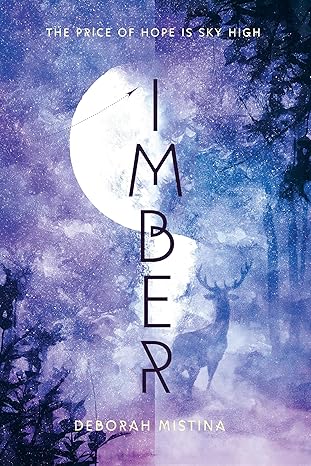

Deborah Mistina’s Imber is a speculative, soul-stirring tale set in a future where nature is both fragile and sacred. The novel follows Violet Murphy, a young woman devoted to her family’s farm and their legacy of sustainable, organic living amid a crumbling world. As the government’s strange motives begin to unravel, Violet is pulled into a deepening mystery that questions everything, from the fate of the Earth to the limits of science and memory. At once a dystopian adventure and an emotional meditation on grief and hope, Imber crafts a world that’s both fantastical and deeply familiar.
I enjoyed Mistina’s writing style. It’s poetic, even when it’s subtle. Take the opening pages where Violet feeds her horse Firestorm while mourning her lost parents. The imagery is soft and painful: “They broke like porcelain on the jagged rocks below, where the sea writhed with furious waves…”. Mistina doesn’t just write; she paints with words. She lets grief sit beside beauty. The prose made me feel something in every paragraph, like each sentence had its own pulse.
Then there’s the story itself, which is clever and unexpected. When Violet is summoned to present her work at the Science Bureau, things turn dark fast. The seemingly harmless coffee offered to her becomes a sinister turning point. “It was excessively bitter and altogether unsavory,” she says—a perfect metaphor for what comes next. That whole interrogation scene was haunting. It wasn’t just suspenseful, it was invasive and raw. The way Mistina writes Violet’s spiraling consciousness during that sequence made me uncomfortable, in the best way. I couldn’t stop reading, even though I wanted to yell at Violet to run.
But maybe the most surprising part of Imber was how it made me care so deeply about more than one character. Jack Collins, who shows up in a later chapter, is someone I didn’t expect to love. He’s a hunter mourning his father, caught in a storm of his own. At one point, he’s trying to shoot a deer but ends up crying in the rain because he suddenly feels the deer’s fear. Sounds absurd, but the way Mistina handles it is gentle and strange and real. I felt his grief. I felt his confusion. That’s powerful writing.
By the time I finished the book, I felt a little haunted, a little hopeful, and completely wrecked in the best way. Imber isn’t just a sci-fi story or a survival tale. It’s a quiet rebellion against numbness. It reminds us what it means to feel deeply, to protect fiercely, and to listen—even when it’s hard. I’d recommend this book to anyone who loves stories about resilience, about the intersection of science and emotion, and about what it means to fight for what you love. It’s perfect for fans of Station Eleven or The Overstory, or really anyone who needs to be reminded that the Earth, and our hearts, are worth saving.
Pages: 315 | ASIN : B0DV3V8L5K
By Dawn’s Early Light

By Dawn’s Early Light opens with a shipping container marked with harmless cargo—kitty litter, hazelnuts, and bananas—and spirals into a jaw-dropping apocalyptic thriller. A nuclear attack levels America’s major cities in a matter of minutes, and from there, chaos reigns. Through the eyes of Jack, Mohammad, Sasha, and Jake, readers are dragged into a gritty, horrifying world where society crumbles fast and quietly, and the line between survival and humanity fades just as quickly.
Jenny Ahmed’s writing is intense. The buildup in the prologue is deceptively calm: Jack’s container pickup feels routine, almost boring until this gnawing unease sets in. That feeling never really leaves. Mohammad’s moment with the button, the memory of his daughter Leila, and his final “Forgive me, Leila” just gutted me. It’s brutal, heartbreaking, and somehow still grounded in something deeply human. The whole detonation scene was visceral. Every paragraph punches you in the gut with imagery so vivid it borders on cinematic.
But what really surprised me was how the tone shifts post-blast. The pacing slows down a bit and becomes almost eerily quiet, just like the abandoned cities Sasha and Jake find themselves in. The creeping dread of walking through empty buildings, the discovery of the almost zombie-like infected people, the weird stillness of Albany—that got under my skin. Sasha’s logical, methodical background as an FBI forensic pathologist clashes beautifully with the utter irrationality of what’s unfolding. The horror isn’t just in the destruction, it’s in what’s left behind. Ahmed makes the reader sit with the silence, the unknown, the rot. It’s not just about surviving; it’s about understanding what kind of world you’re surviving in now.
By Dawn’s Early Light isn’t simply a disaster novel. It’s about fear, helplessness, and the slow unraveling of reality. The writing is raw, the characters feel like real people making terrible decisions under impossible pressure, and the tension never lets go. I’d recommend this sci-fi book to fans of post-apocalyptic thrillers, especially those who like The Road or Station Eleven but want a little more fire.
Pages: 229 | ASIN : B0DPLKXNYY
The Water Carriers

The Water Carriers is a gripping near-future climate fiction novel that throws us into a world ravaged by water scarcity, unrelenting heatwaves, and technological overreach. It follows multiple interwoven storylines across continents—from two teenage girls trapped in a car during a deadly heatwave in the U.S., to a Cambodian boy swept away by a flood, to the power-hungry elite shaping the world’s water economy. The book explores the terrifying consequences of environmental collapse and the human drive to survive, control, and commodify the planet’s last lifeline—water.
What hit me hardest right from the first chapter was how visceral and claustrophobic the heat felt. That opening scene with Naomi and Bai, stuck in a smart car that shuts down in the middle of nowhere, was brutal. It’s not just dystopian—it’s suffocating. The tech is clever (like the personalized AIs and the “AugWatch”), but it’s the raw panic, the hallucinations, the horrible quiet when Bai stops screaming, that stayed with me. When Naomi screams at her AI companion Evelyn, “You’re not real!” it gave me chills. That whole scene was devastating and way too plausible.
Greunke’s writing really shines when he digs into the contrasts. Like how Kasemchai, once a starving kid in flood-ravaged Cambodia, grows into a polished water tycoon living in luxury while people outside his empire choke on dust. Now he’s making deals in a towering, marble office and cruising around in a shimmering AI-controlled Bugatti. The dude has serious Bond villain energy, but with just enough backstory that you’re not totally sure if you hate him or feel bad for him. That moral grayness I loved.
There is great worldbuilding in this book. You’ve got AI companions being “paid” commission for purchases, people picking dating “PrefXs” based on virtual personalities, and massive desalination plants replacing coastlines. And the humor is subtle but there—like the snarky banter between Liv and her AI Noa, or that scene where she plays a dating game by guessing if a guy is “on it, in it, or under it.” It’s all so absurdly futuristic, but it feels like a natural extension of where we’re heading. That blend of bleak and weirdly funny was my vibe.
This book made me feel everything: anxious, sad, angry, hopeful, even inspired. It’s a slow burn in parts, but the payoffs are worth it. If you’re into stories like The Ministry for the Future or Black Mirror, you’ll enjoy this story. I think The Water Carriers is a must-read for anyone who’s worried about climate change, fascinated by AI, or just loves a good survival story with brains and heart.
Pages: 398 | ASIN : B0DTT6YZW1


