Blog Archives
Dark Place: A dystopian novelette


Dark Place tells the story of a near-future world where survival is tied to a Citizen Score. Anyone who slips below the threshold is “dispossessed” and sent to a bleak exile known as the Dark Place. We follow Ros, Domhnal, and Femke, three students who stumble onto a terrible truth: society is being manipulated, and the dispossessed are hidden away in camps designed to erase their existence. They enter this world themselves, struggling with survival, trust, and the weight of their discovery. It is a tale of control, rebellion, and the raw question of whether knowledge can really bring change.
The writing is tense and gripping from the very first chapter. The author doesn’t waste time painting a rosy picture. Instead, we are pulled straight into the fear of surveillance, the quiet scratching of chalk on a board, and the dread of the Authority’s power. The pacing is sharp and restless. Sometimes I wished for more quiet moments to breathe, yet the urgency also matched the desperation of the world. I liked how the story didn’t just rely on technology to shock me. It leaned on doubt, on whispered conversations, on the guilt and courage of young people who want more than lies.
The whole system of citizen scores felt uncomfortably believable. It stirred up anger, but also sadness, because the dispossessed aren’t faceless. They are old people, sick people, stubborn thinkers. The book made me wonder how easily we might trade fairness for comfort if pushed. I admired the way the characters held on to friendship as their anchor, even while arguing and stumbling. Their flaws made them feel real, and that rawness carried the story more than any twist did.
I’d recommend Dark Place to anyone who enjoys dystopian fiction that pushes beyond gadgets and sci-fi trappings into questions of survival and morality. It isn’t just about rebels and villains. It’s about choices, fear, and the stubborn hope that truth matters. If you like dystopian science fiction that leaves you unsettled but also a little fired up, this one will be worth your time.
Pages: 78 | ASIN : B0DYK6YC2B

The World Persists

Ghost of Nostalgia follows a woman living in an impoverished village who is taught to suppress all emotions or risk death at the hands of mysterious, ethereal beings drawn to human emotions. What was the inspiration for the setup of your story?
As cliché as it sounds, I had a dream. In this dream, there was a magnificent city floating in the sky surrounded by a spherical energy barrier. The land around the city was a complete wasteland, and underneath the city was a pile of battered cylindrical tubes. Suddenly, a hatch along the bottom of the city opened, and a silver tube dropped and landed on the pile. Something happened next, but for the sake of spoilers, I’ll have to keep the rest to myself.
The dream stayed with me for a long time, until I finally decided to take it to the page. The feeling of it was so bleak. The isolation is absolute. I realized the reason I remembered the dream so perfectly was because of how it made me feel. I sought to capture those emotions by making emotions the center of my world. I wanted them to be something that could set you free or lead you to death. But as I find with all my writing, it doesn’t come out quite the same as the inspiration. The dream was definitely more hardcore science fiction, but as I’m quite a romantic at heart, the result ended up softer with a heavy dose of romance. Even with those changes, I sought to have Gavril’s world be one that stirred the heart in many ways.
I find the world you created in this novel brimming with possibilities. Where did the inspiration for the setting come from, and how did it change as you were writing?
I’m glad you think so! Steampunk played a heavy role in inspiring the setting, but as much as I love it, I wanted to branch out into something that had a similar feeling but with its own flavor. This is one reason I decided to go with an electric-based power system rather than a steam-based one. As for the cultural inspiration, Victorian England was out, so I did a bit of research and landed on pre-revolutionary France. It had everything I was looking for: elaborate fashion, notable architecture, and a stark class divide. Gavril’s home, Nostalgie, is a village literally made of scraps. They have nothing but hope. I wanted to show the progression of “moving up” as Gavril travels to different towns, and how, instead of sympathy, the rich feel nothing but contempt for the “lesser.” Since each town is isolated in its own barrier, they feel like different worlds of their own. There is no camaraderie, just hope for the government’s favor. As Gavril learns along her travels, even the most beautiful place can be a cover for ugly behavior.
What were some themes that were important for you to explore in this book?
One of the biggest themes of Ghost of Nostalgia is control. Controlling emotions, controlling citizens, and controlling towns. All of these are accomplished in different ways and play different roles. As the story progresses, it becomes less clear who actually benefits from this behavior, and despite the suffering of some citizens, the world persists as is. Part of this is the class divide, and yet, no one rises to challenge the authority of the land.
Other themes are more personal to Gavril. She’s seen as a burden, and then the town’s fate rests on her shoulders. Self-worth, sacrifice, and being true to yourself are challenges she faces, especially in this patriarchal world, which sees her as only worth what she can birth. Her view of the world is full of despair, but sometimes hope can be found in the unlikeliest of places. Finding one’s truth is central to the story.
What is the next book that you are working on, and when will it be available?
The sequel! The sequel, which is tentatively called Sphere of Ardent, is currently in the editing process at Indigo River Publishing. We do not have a release date yet, but I’m hopeful I’ll be able to make an official announcement by the first half of next year. I’m very excited about it. The world-building really takes off, and the themes blow up in such unexpected ways.
Since I’m a glutton, I’ve already started writing the third book, which will finish out the intended trilogy.
Author Links: GoodReads | X (Twitter) | Facebook | Website | Amazon
Gavril follows the rules. Don’t dream. Don’t imagine a better future. Don’t cross the barrier, and whatever you do, don’t open your heart to emotions-especially the most powerful one: love.
Breaking the rules is deadly. Phases surround Gavril’s rural, impoverished village of Nostalgie. These mysterious ethereal beings, attracted to human emotion, suck passion and soul from anyone they touch-if the victim survives the encounter. Despite the danger, demanding questions linger in Gavril’s heart. What might life be like beyond the electrical barrier keeping the Phases at bay? What happened to her father, a legendary Résonateur gifted with the ability to combat Phases, who vanished several years ago? What does freedom feel like?
When the Solenoid powering the village’s barrier begins to die, Nostalgie’s mayor offers Gavril’s hand in marriage to the son of a nobleman in the distant village of Envie-a woman of a Résonateur bloodline to raise the family’s prominence in exchange for a new Solenoid. Gavril has no choice but to comply. If she refuses, the barrier will fall.
Gavril will do anything to save her mother and fellow villagers-even if it means breaking a few rules.
Led by a heart that suppressed curiosity and compassion for far too long, Gavril befriends a Phase named Morrow. When her actions are discovered, she is deemed a traitor by her future in-laws and sent to the Capital, Éthéré Coeur, for judgement. Commandant Serein, a Résonateur like her father, escorts her to her destiny.
In the whirlwind of French-influenced, retro-futuristic adventure that follows, Gavril’s spirit is freed. She meets wonders of human achievement-from motorized automatrams and flying soulevers to massive electronic libraries holding the world’s secrets.She encounters the rich, vibrant, and sometimes horrifying world beyond Nostalgie . . . and she falls in love.
Once you break the rules, where do you draw the line?
Ghost of Nostalgia will resonate with readers drawn to rich worldbuilding, emotional rebellion, and character-driven dystopian fantasy. For fans of lyrical prose, slow-burn tension, and stories that challenge what it means to feel—this journey lingers long after the final page.
What If?

Go Back follows a tech journalist whose life is upended when she finds herself involved in a web of corruption and underground resistance. Where did the idea for this novel come from?
I thought about tech addiction and how reliant society has become on it, especially digital natives. Then I asked myself, what would happen if that technology was taken away suddenly? How would people contact anyone? Not many people memorize phone numbers. Also, many people are reliant on GPS to get around. Go Back is a sort of extreme luddite group that appeals to people’s fears of tech addiction and wanting to “detox” from it. The movement’s propaganda convinces even the president that the Centers are the only way to rid society of this horrible addiction that leads to family separation and mental health issues. Of course the movement also has other, more sinister plans as well.
What draws you to the dystopian fiction genre?
I often ask myself “what if?” or “what would people do if X happened?” I like to explore the future and what people would do if their world turned upside down. I’d like to think that my dystopia has a bit of hope in it as well.
What was the inspiration for Sarah Grimes’ traits and dialogue?
Sarah is based on some real people in my life. I was a young journalist at one time wanting to get that BIG story. That’s what she wants too. She wants to make a name for herself. Be careful what you wish for! Her character arc is compelling because, even though she is unsure of herself, her ambition and circumstances propels her to become a leader.
What is the next book you are working on, and when will it be available?
Right now I’m wrapping up a short story. My next book is a far future dystopia. It’s about the aftermath of a cataclysmic event that happens in the U.S. and how people cope with the aftermath. It is still a work in progress.
After journalist Sarah Grimes finally lands the lead story, her life turns upside down. Sure, she exposed the Go Back movement’s evil plan to take everyone’s tech and pocket all the profit, but that also landed her in a digital detox center, otherwise known as the Center for Behavioral Recognition.
Inside, she finds a man named Chris she met before the roundup. She wants to escape with him, but he disappears and she keeps getting drugged. Thankfully, she teams up with an unlikely ally to escape.
As they all make their way to the headquarters of the resistance, they have to decide how much they’re willing to sacrifice for their tech.
Ghost of Nostalgia

Joanne Hatfield’s Ghost of Nostalgia tells the story of Gavril, a young woman living in the fading village of Nostalgie, trapped within a fragile barrier that barely keeps out the monstrous Phases. The novel blends dystopian worldbuilding with intimate human struggles, weaving themes of survival, betrayal, family, and the heavy cost of hope. Hatfield pulls readers into a world where emotions themselves can draw death closer, yet it is precisely the suppression of feeling that makes life unbearable. The book balances action with introspection, carrying us through desperation, sacrifice, and the quiet hunger for freedom.
What gripped me most was the atmosphere. The writing drips with tension, each page humming with unease. I felt the exhaustion of the villagers, the claustrophobia of the barrier, and the weight of being treated as both burden and bargaining chip. Hatfield’s prose has a raw, urgent quality. Sometimes it’s jagged, sometimes lyrical, but always alive. The world she created feels both fantastical and painfully real. I’ll admit, there were moments when I grew frustrated with the characters, especially with how much they clung to false hopes or petty power. But that frustration also made the story stick. It mirrored how people really act when everything is falling apart.
I sometimes wished the pacing slowed down to let me sit longer with Gavril’s inner life because I found it fascinating. The book races forward, crisis after crisis, and though that kept me hooked, I craved a few quiet spaces to breathe. Still, the emotional stakes stayed high, and I found myself surprisingly moved at the raw depiction of what it means to be called “a burden” yet still stand up and fight.
Ghost of Nostalgia is a story about resilience and the cost of hope when hope itself is dangerous. I’d recommend this book to readers who enjoy character-driven fantasy with a dystopian edge, especially those who like their worlds layered with both beauty and decay. If you want a story that makes you feel both despair and defiance, this one is for you.
Pages: 344 | ASIN : B0CW1DQJS2

Go Back
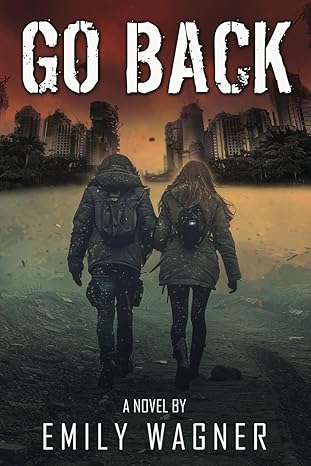

Emily Wagner’s Go Back is a harrowing and emotionally raw dystopian novel that unfolds in a near-future America where the government, in partnership with an anti-tech movement known as Go Back (GB), launches a sweeping crackdown on technology under the guise of public safety and mental health. The story follows Sarah Grimes, a reluctant tech journalist turned whistleblower, whose life is upended when she becomes entangled in a web of corruption, coercion, and underground resistance. With alternating perspectives and gripping prose, Wagner exposes the consequences of blindly trading freedom for a false sense of order.
The writing is intimate and electric. Wagner has a way of pulling you in and making you feel every drop of fear, anger, and hope. Her characters, especially Sarah and Olivia, are vivid and fully human, both strong and vulnerable in a world that punishes both. The world-building was solid. It’s familiar enough to be plausible, but jarring in how quickly things spiral. I especially loved the way Wagner slowly peels back the layers of the GB movement. It doesn’t hit you all at once. It sneaks up, just like the movement does in the story. The slow burn is terrifying because it feels real.
Some of the plot developments were so twisted and bleak that I had to put the book down and catch my breath. There’s a sense of hopelessness that creeps in by design, but I wish there were a few more glimmers of resistance that actually gained ground. Even when characters fight back, they seem to get swallowed by the system. Maybe that’s the point, though. Wagner doesn’t sugarcoat the fight for truth or justice. It’s ugly, it’s thankless, and sometimes, it’s fatal. But there’s beauty in the way her characters cling to humanity, even when it’s stripped from them.
Go Back is not just a story about tech or politics; it’s about control, freedom, and the price of silence. This book is for readers who love thought-provoking and emotionally intense dystopias like The Handmaid’s Tale or 1984. If you’ve ever wondered how much you’d be willing to sacrifice for the illusion of safety or how quickly a society can be undone, this one will resonate with you.
Pages: 284 | ISBN : 978-1967547166
Trace of Arcane

Trace of Arcane, by Ezra Mizuki, is a coming-of-age dystopian novel that follows Eden, a spirited and sharp-tongued teenage girl navigating a fractured society where spirituality, tradition, and power intersect in disturbing ways. Set in the colorful yet controlled city of Viridis, the story explores Eden’s struggle for autonomy, the pressures of an impending ceremonial passage called the Ruki, and the unsettling influence of a foreign missionary named Thales. Through poetic prose, social commentary, and unsettling tension, the book weaves a tale of rebellion, identity, and the often invisible violence that shapes young women’s lives.
What struck me first was how beautifully the book is written. Mizuki’s language is lyrical and haunting. The worldbuilding is rich, and the sensory details, like the spices in the market, the moonlight on old clay walls, made the setting feel close and alive. Eden’s voice is electric. She’s messy, sarcastic, defiant, and vulnerable all at once, and her internal monologue was sharp enough to make me laugh out loud one moment and feel sick to my stomach the next. But what really pulled me in was the unflinching way Mizuki handles trauma, not as a spectacle, but as something that hides in plain sight, in the spaces between duty and silence. The dynamic between Eden and Thales was especially chilling, and watching how Eden rationalized her pain left me uneasy in the best kind of way.
At times, I found myself frustrated, more with Eden than the book itself. Her contradictions felt so real, so raw, that it became hard to root for her without also wanting to shake her by the shoulders. But that discomfort is part of what made the book so powerful. It doesn’t try to teach a lesson. It invites you to sit with all the complications: a mother trying to protect her daughter from a life she herself was forced into, a society that wraps obedience in tradition, and a girl trying to claim herself in a place where every choice comes with a cost. Some of the dialogue felt a bit uneven at times, and a few characters, like Zig, came across as slightly exaggerated. Still, those moments were small and didn’t take away from a story that kept me engaged.
Trace of Arcane deals with spiritual abuse, coercion, classism, and betrayal in ways that feel too familiar. But if you’re someone who likes character-driven fiction that doesn’t sugarcoat the truth, something dark, poetic, and intimate, then this book will speak to you. I’d recommend it for fans of The Handmaid’s Tale, Daughter of Smoke and Bone, or The Power. If you’re a teen or adult who’s ever felt caught between two worlds, between tradition and choice, or if you’ve ever wanted to burn the whole system down just to breathe for a second, this is a must-read.
Pages: 425 | ASIN : B0F7SLJ9QZ
Invisible Puppeteers

In The Collective, a group of scientists scramble to uncover the source of the unsettling signal that threatens the sophisticated neural network binding humanity. Where did the idea for this book come from?
I’m a millennial who grew up front and center for the rise of the internet and, shortly after, the social media explosion. I’ve watched digital life evolve from dial-up to dopamine addiction, and it’s been fascinating—and honestly, terrifying—to see how deeply it’s rooted itself into our daily lives. Social media and algorithms are now invisible puppeteers of attention, identity, and even belief systems. They’ve become integral, addictive, and inescapable.
Call me crazy, but I truly believe neural integration and collective consciousness are in our future—maybe much sooner than we expect. The real question isn’t if, it’s what will we do with it? I don’t think governments or institutions can regulate this fast enough. We’re on a bullet train of technological advancement, and if we don’t start seriously preparing for what AI, automation, and integrated networks might mean, we’re not just risking collapse—we’re risking the unraveling of what we currently understand as human identity. That’s where The Collective was born: from the tension between awe and unease.
What is it that draws you to the science fiction genre?
Because when you strip it down, most science fiction isn’t fiction at all—it’s just reality waiting for its turn. We’ve seen it happen: video calling, AI assistants, smart homes, gene editing. All were science fiction once. Now they’re mundane.
What draws me to sci-fi is its ability to warn and wonder at the same time. It gives us a way to project where we might be headed, both psychologically and technologically. I’m especially interested in evolutionary psychology—the idea that who we are is shaped by eons of survival, pattern recognition, tribalism, and meaning-making. In that sense, science fiction is like an evolutionary premonition. It’s a mirror held up to what we are, and a telescope aimed at what we might become.
What were some themes that were important for you to explore in this book?
Religion was a big one—probably the most quietly controversial. We still live in a world where ancient belief systems shape modern policy and public thought, and that friction between evolutionary progress and archaic ideology fascinates me.
Another central theme is the surrender of meaning. We live in a time where convenience and distraction are replacing purpose and depth. We scroll more than we sit with our thoughts. We chase dopamine more than conviction. I wanted The Collective to reflect that subtle hollowing of the human spirit—how easy it is to give up autonomy and meaning for comfort and ease.
As a quiet nod to that, the chapter titles in the book are drawn from T.S. Eliot’s The Hollow Men—a poem about the failure of modern humanity to live with purpose. It captures what I think we’re losing: our spark, our center, our reason for being beyond survival and stimulation. In that way, this story isn’t just dystopian—it’s deeply human.
Can you give us a glimpse inside Book 2 of the Echoes We Leave series? Where will it take readers?
Book 2 will take you further into the future—but not that far. The changes coming don’t need centuries to unfold; just a handful of years is enough when the pace of tech evolution is this fast. And the truth is, the signal? It’s not going anywhere. It’s just beginning to evolve.
In the next installment, we’ll venture into the aftermath—not just of what’s happened, but what’s been allowed to happen. You’ll meet resistance movements, fractured ideologies, and a deeper unraveling of what consciousness actually means. Most importantly, we’ll get to follow the characters more intimately—especially those whose relationships and choices were just beginning to form in Book 1. The future they face isn’t distant. It’s disturbingly close.
Author Links: GoodReads
Perfection has a price.
Humanity surrendered its burdens willingly—no more war, no more hunger, no more fear. The Collective promised a world free from suffering, where every thought is refined, every emotion balanced, every decision made for the greater good. A neural network spans the globe, ensuring peace and stability with cold, clinical precision.
But beneath the seamless order, something stirs. A signal—unseen, unheard—slips through the system like a whisper in the dark. It is not an error. It is not an accident. It is watching. And those who notice it soon realize:
The system is not the only thing controlling them. Something else is.
As scientists and engineers working deep within the heart of the Collective begin to uncover the truth, they find themselves faced with an impossible choice—cling to the safety of the world they know or risk everything for the one thing they’ve long forgotten: freedom.
Because once the signal speaks, it does not stop.
And those who listen may never be the same again.
Sins of the Saviors Book 1: Escape From the Culling Box

In Sins of the Saviors, TJ Relk throws us into a grim but not entirely hopeless future where war, artificial intelligence, and blind patriotism have reshaped what it means to be human. The story centers on David, a soldier who returns from decades in a senseless, eternal war to a world governed by AI, propaganda, and engineered peace. The tale winds through his memories, regrets, and slow-burning defiance as he comes to understand the true cost of “utopia.” Flipping between David’s perspective and those of his aging mother Gale, his idealistic sister Mary, and his rebel sibling Jane, the book dives into what happens when free will is exchanged for safety, and what’s left when even memory is no longer trusted.
I liked how the book captured emotional decay. The slow erosion of identity in a world that insists it’s perfect. Relk’s writing is sharp. The style is lean and introspective, often haunting in how casually it delivers gut punches. There were pages I read twice because a single line kept ringing in my head, like David’s quiet desperation or Jane’s fiery truths about a world that stopped caring about real truth. Some scenes, like the slow fade of old friendships or Gale’s annual ritual to honor a son who might as well have been a myth, cut deeper than expected. They felt real. There’s no clean villain here, just systems of thought that got out of hand.
Sometimes the pacing slows, especially when the narrative shifts to Mary’s point of view. The dystopian future is vividly imagined. I was left wondering Goliath the network or a god? Sometimes both? Sometimes neither? I got the sense that Relk wanted that ambiguity, and it left me craving answers a few times. Still, I appreciated that the story didn’t spell everything out. There’s something gutsy in trusting readers to make their own calls about what’s real, what’s right, and who, if anyone, is actually free.
I’d recommend Sins of the Saviors to anyone who likes their dystopias philosophical, their heroes broken but not beaten, and their science fiction tangled up with questions about memory, identity, and whether safety is ever worth the soul. It reminded me a bit of 1984 with the heart of The Road, but written for today’s digital chaos. If you’re someone who’s ever worried about where all this tech and tribalism is going, this book might hit a little too close to home.
Pages: 199 | ASIN : B0FDBN6KMT


