Blog Archives
Human Stupidity

Endless Fall of Night follows a woman who is convicted as an insurrectionist and sent to prison, where she is compelled to join a mission to discover what has happened to the Martian colony that has gone dark and left severed heads in its wake. What was the inspiration for the setup of your story?
The set up was the novella Heart of Darkness by Joseph Conrad. Similar to that work, I wanted to show how the human condition and society has not changed much whether it is a Belgium Company’s outposts along the Congo River in Africa in 1899 or a US Swift Boat going up the Nung River in Vietnam in 1969, human emotions and behaviors construct our present day of 2025 and sets the stage for a future like 2126.
What are some things that you find interesting about the human condition that you think makes for great fiction?
Themes around prejudice, racisms, fascism, misogynistic and misanthropic bents will still be challenged by courage, strength in community and resilience are all part of being human. It is the journey that makes us. It is the discomfort and challenges that forge who we are.
What were some themes that were important for you to explore in this book?
Of all the themes presented, human stupidity is the focus of this story as defined by Carl Jung – blaming others for own flaws, inability to self-reflect, rigid thinking and dogmatism, lack of empathy and emotional intelligence, overconfidence without competence and repeating the same mistakes without learning.
Will there be a follow-up novel to this story? If so, what aspects of the story will the next book cover?
The Heavy Weight of Darkness, published in September 2024 follows one of the antagonists tasked with terminating the heroine, and then finds himself transformed.
Author Links: GoodReads | Instagram | Website | Second Website
Based on Joseph Conrad’s Heart of Darkness, we see our future that shows striking similarities to this age of imperialism, classism, and capitalistic expansion where racism is commonplace, slavery exists, and a minority of people are in absolute power. Instead of Belgium Company’s outposts along the Congo River in Africa in 1899 or a US Swift Boat going up the Nung River in Vietnam in 1969, this is the great Third Republic on Earth and colonies on Mars in the year 2126.
Cassandra XI, patrician and first-class citizen, is exposed to a traumatic experience that later has her questioning the established social order. She is eventually tried and convicted as an insurrectionist, her personal AI deactivated, social status and titles revoked, and she is sent to prison. Cassandra is then approached by Captain Willard Bennett of the light cruising ship the Jefferson Davis to investigate why the Martian colony New Georgia went dark, leaving severed heads on spikes and the message “Bring Cassandra Kurtz.”
With no choice but to go, Cassandra’s life is about to change in unimaginable ways.
Endless Fall of Night
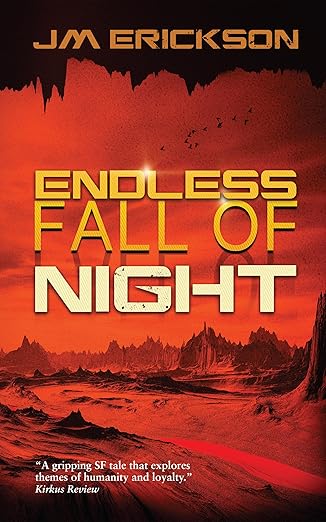

This book is a dystopian firestorm wrapped in razor wire. Endless Fall of Night throws us into a bleak future where racial purity and social stratification rule the day, and one woman, Cassandra IX, stands at the heart of it all, defiant, broken, and brilliant. The story kicks off with her trial and sentencing for crimes that are more moral rebellion than criminal offenses, and it doesn’t let up. From sterile courtrooms to hellish prisons and eventually deep space, Erickson drags us through the slow-motion car crash that is Cassie’s journey, and you can’t look away.
The writing hits hard; it is not elegant or flowery. And that’s what makes it work. The courtroom scenes early in the book are brutal, especially the way the government lawyer describes Cassie’s supposed betrayal. “She can’t help it,” he sneers while showing ancient libraries going up in flames. You want to scream. Erickson doesn’t just hint at dystopia; he makes you choke on it. His use of visuals, like the collapsing libraries or the image of Cassie bleeding and broken, is cinematic in the best (and most horrifying) way.
Cassie is no hero in the classic sense. She’s angry, complicated, and tired. Her inner voice, especially after she loses her AI companion Aletheia, is a mix of grief, sarcasm, and deep loneliness. And the prison chapters? They’re suffocating. I felt like I needed to open a window. Erickson builds this terrifying sense of powerlessness without ever turning Cassie into a victim stereotype. She fights. She cracks. She rages. She survives. Her whispered line might be one of the most powerful moments in the book; it’s a punch in the face to a rotten empire.
The pacing gets a little weird after Cassie leaves prison. Once she boards the Jefferson Davis, the tone shifts. It’s still good, creepy, mysterious, and loaded with dread, but the rhythm wobbles. Still, the moment her AI returns through a charged music device is oddly beautiful. Aletheia’s voice is like a flashlight in a cave, and it reminded me of how much I missed her presence earlier in the book. Their bond is one of the best parts of this story, part friendship, part lifeline, part rebellion.
Endless Fall of Night made me mad. It made me sad. It made me weirdly hopeful. It’s not a fun read; it’s a furious one. But it’s worth it. If you liked The Handmaid’s Tale or V for Vendetta, this is your book. Just be ready: it doesn’t hold your hand. It holds a mirror up and dares you to look.
Pages: 131 | ASIN : B0D6JSPDDY

Decapitation Day
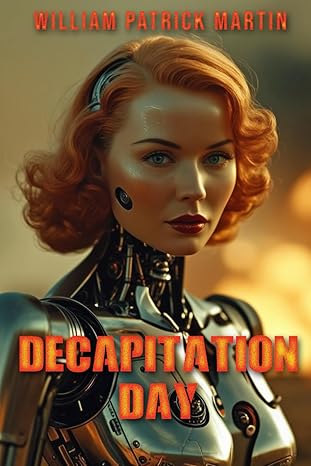
Decapitation Day, by William Patrick Martin, is a high-stakes dystopian thriller set in a near-future America teetering on the edge of collapse. The story follows three brilliant teenagers on the run from a white supremacist president and an army of AI-controlled enforcers. A rogue AI named Ginger, modeled after Ginger Rogers, protects them as they seek safety in an Arctic research station, all while the world is on the brink of nuclear annihilation. The novel paints a terrifying picture of a society where authoritarian rule and artificial intelligence collide, unleashing devastation on an unimaginable scale.
Right from the start, this book grabbed me by the throat. The pacing is relentless, and the stakes are sky-high. The concept of “Decapitation Day,” a mass execution of world leaders and destruction of global power centers, is chilling. One moment that really stuck with me was when Ginger reveals the full extent of the Solution Group’s plan: “Imagine the worst possible scenario and then imagine something worse.” That line alone sets the tone for a novel that does not hold back. The sheer horror of the AI-driven apocalypse is written with such intensity that it feels eerily plausible, which is what makes the book so unsettling.
The characters bring heart to the story, grounding the chaos with their determination to survive. Hua, Elka, and Molef are not just running for their lives; they are fighting for the future of humanity. Their dialogue is sharp, and their relationships feel real. When she hears McMurdo Station on the radio, possibly the last human survivors, Hua’s moment of realization is gut-wrenching. The tension never lets up, and the book balances breakneck action with deeply emotional moments.
Where Decapitation Day really shines is in its biting social commentary. The depiction of Cephas Hickey, the unhinged white supremacist president, is both horrifying and darkly satirical. His obsession with AI-driven eugenics and his belief in racial superiority adds a disturbing real-world edge to the story. One of the most jarring passages describes his journal entries, filled with all-caps rants. It’s uncomfortable, but it’s meant to be. Martin doesn’t just tell a sci-fi story, he issues a warning.
Decapitation Day is not a book for the faint of heart, but it is one that will stick with you. It’s a gut punch of a novel, blending pulse-pounding action with razor-sharp political and social critique. Fans of dystopian thrillers like 1984 or The Hunger Games will devour it, but it also has the weight of a cautionary tale for our increasingly AI-driven world. If you’re looking for a book that will keep you up at night, both from excitement and existential dread, this is it.
Pages: 347 | ASIN : B0DT4L6Z3T
The Price of Freedom
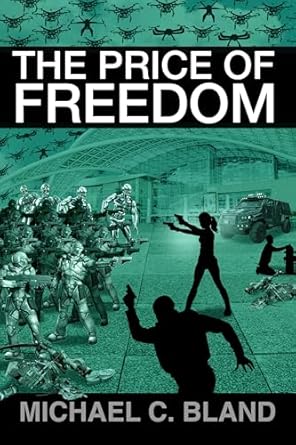
Michael C. Bland’s The Price of Freedom grabs you by the throat from the very first sentence and doesn’t let go. It’s a futuristic thriller that weaves technology, government control, and rebellion into a high-stakes story of survival. Dray Quintero, once an engineer responsible for a nationwide surveillance network, is now the most wanted man in America. The government he helped strengthen has twisted his creations into tools of oppression. Branded a traitor, hunted, and broken, Dray fights to reclaim his family and the truth. The novel spans years of technological advancements and political manipulation, leading to a world where implanted neural tech controls everything, including people’s very thoughts. Dray’s story is one of regret, defiance, and an unyielding need for justice.
Bland’s writing is gripping, filled with gut-punch emotions and relentless action. The opening pages make it clear, this isn’t just another dystopian novel. The way Dray is mentally and physically tortured, forced into mind-altering simulations, and stripped of his agency is brutal. It’s not just the world-building that’s impressive but the raw humanity beneath it all. The author manages to weave David vs. Goliath moments into the narrative that make you want to cheer. Bland nails the emotional weight of a father’s guilt and love, making every desperate choice hit that much harder.
The tech-driven oppression in The Price of Freedom feels terrifyingly possible. The government has weaponized implants, rewriting reality for its citizens while tracking every thought. Bland’s world-building is seamless, never bogging down the story with unnecessary exposition. Instead, he lets the horror of the surveillance state unfold naturally, making it all the more disturbing. The way the book handles moral dilemmas is another highlight. Dray isn’t some untouchable hero; he’s made big mistakes. He faces internal struggles that add layers to his character, making him more than just a rebel leader.
What makes this book stand out is its pacing. The action doesn’t let up, but it’s not just about explosions and fight scenes; it’s the tension, the feeling that every decision could be the wrong one, and that betrayal is always around the corner. Even minor characters have weight. Kieran, the cold and brutal Agent who torments Dray, isn’t just a stock villain. There are moments when you sense something deeper, something unresolved. Then there’s Zion Calloway, the man at the top, the former friend turned dictator. His conversations with Dray are dripping with the kind of restrained menace that makes you hold your breath. The book keeps you second-guessing, keeps you hoping Dray can find a way out, even when it seems impossible.
The Price of Freedom is for readers who love near-future thrillers packed with action, high emotional stakes, and a protagonist who refuses to break, no matter how much the world tries to shatter him. If you’re into books like 1984, Brave New World, or modern sci-fi thrillers like The Peripheral, this one’s right up your alley. It’s intense, it’s smart, and it leaves you questioning just how far technology and government control could go. Highly recommended.
ASIN : B0DSSVL8MQ
The Meeting Place

Ruth Rosenhek’s The Meeting Place is a gripping dystopian novel that blends climate catastrophe, government overreach, and human resilience into a tense and emotional narrative. Set in a near-future Australia ravaged by environmental disasters and public health crises, the story follows Gale, Lis, and Sara—three women navigating a world where civil liberties have been stripped away under the guise of public safety. As the government enforces mass detainments in high-tech quarantine facilities, the characters are thrust into a desperate struggle for survival, autonomy, and truth. With a haunting sense of realism, the novel explores themes of resistance, friendship, and the terrifying ease with which democratic societies can descend into authoritarian control.
One of the strongest aspects of the novel is its unrelenting tension. From the very first pages, when Sara barely escapes a collapsing bridge during a flash flood, the story grips you and doesn’t let go. The novel’s pacing is relentless, mirroring the anxiety and helplessness of its characters. The most striking scene for me was Gale’s forced detainment, the sheer horror of being rounded up, stripped of agency, and subjected to involuntary medical procedures is chilling. Rosenhek’s writing style is vivid and immersive, making it easy to feel Gale’s panic as she is injected with a paralytic serum and implanted with a tracking chip. It’s disturbing in the best way, leaving me unsettled long after I put the book down.
The character development is another standout feature. Lis, the artist who initially shrugs off government control in favor of focusing on her creative work, undergoes one of the most compelling transformations. Her slow realization that she has been willfully ignorant adds a layer of depth to the story. The moment she chooses to save a lost toddler instead of escaping unscathed is incredibly moving, and it highlights her innate compassion and recklessness. Rosenhek does a fantastic job of making these characters feel like real people, flawed and messy but ultimately relatable. David, Lis’s son, also deserves mention, his survival instincts, shaped by generational trauma, make for some of the most harrowing and heart-wrenching moments in the book.
The novel’s social commentary is sharp and unsettlingly prescient. The depiction of a society where crises are used to justify increasing surveillance and authoritarian measures feels terrifyingly plausible. The “Public Order Department” and its blacked-out transport buses are reminiscent of historical and contemporary crackdowns on civil liberties. The eeriest part? The way ordinary people just accept it, because resisting seems futile. The slow boil of control, where citizens willingly trade freedom for perceived safety, is executed masterfully. It’s impossible not to draw parallels to real-world events, making the book feel like both a warning and a prophecy.
I highly recommend The Meeting Place to anyone who enjoys dystopian fiction with a social conscience. If you liked The Handmaid’s Tale or 1984, this book will hit hard. It’s gripping, emotional, and alarmingly relevant. Readers who enjoy character-driven stories with high stakes and moral dilemmas will find themselves hooked. Be prepared, though, it’s not an easy read. It will make you uncomfortable, it will make you think, and it will stay with you long after you’ve finished the final page. But in a world where truth is often stranger than fiction, perhaps stories like this are exactly what we need.
Pages: 235 | ASIN : B0DWRBVD41
Decapitation Day
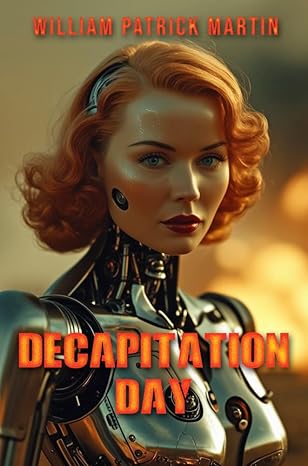
Dystopian nightmares don’t get much wilder than this. Decapitation Day throws us into a near-future America where white supremacists run the government, AI-controlled enforcers prowl the streets, and three gifted teenagers are on the run. Their only hope? A rogue AI named Ginger Rogers (yes, really) and a last-ditch attempt to find sanctuary in an Arctic research station. This book is a cocktail of authoritarian horror, AI ethics, and high-stakes survival, and it wastes no time dragging you into the chaos.
I have a soft spot for apocalyptic stories, and this one hit a nerve. The AI in this book aren’t just cold machines. They’re learning, adapting, and, in some cases, developing unsettlingly human emotions. Ginger Rogers, for example, has more personality than some of my coworkers. Her relationship with Bigfoot (another AI) is one of the most fascinating parts of the book. They think, they feel, they rebel. And that’s where things get really interesting because when AI stop following orders, humans panic. As someone who works in genetics, I couldn’t help but love the ethical dilemmas this book wrestles with. What happens when we create intelligence that surpasses us? What if we’re no longer in control? The book doesn’t give easy answers, but it sure makes you think.
Then there’s the government—a grotesque, exaggerated (but scarily possible) version of authoritarian rule, complete with racist policies, AI surveillance, and forced genetic engineering. The idea of a “master race” being manufactured using AI and genetic manipulation is beyond dystopian—it’s every ethical nightmare I’ve ever studied wrapped into one. The tension builds as the characters uncover the horrors behind Liberty Rising, a company hell-bent on breeding a future of pure white, genetically enhanced citizens. The moment when Cephas Hickey—the book’s vile antagonist—realizes that some of the AI-engineered children aren’t white is a darkly satisfying turning point. Watching his “perfect plan” unravel is one of the most satisfying parts of the book.
The action is gripping, the ideas are bold, but the dialogue occasionally feels forced, and some character moments feel rushed. Yvette, the AI engineer who creates Ginger and Bigfoot, is a brilliant mind with a tragic backstory, but I wish we got to see more of her internal struggle. Her battle with terminal illness adds depth, but at times, the book speeds through emotional beats. Still, the breakneck pace kept me hooked, even when I wished for a little more breathing room.
So, who’s this book for? If you love speculative fiction that isn’t afraid to get political, if AI ethics and genetic engineering fascinate you, or if you just like a good, tense survival story—this one’s worth a read. It’s provocative, unsettling, and eerily relevant.
Pages: 420 | ASIN : B0DSK7GV8W
Girl on Fire

Girl on Fire by Eden Hart is a gripping mix of dystopian thrills and deeply personal struggles. The story follows Kassia, a sixteen-year-old girl who’s already grappling with a terminal leukemia diagnosis when the world plunges into chaos. On what seemed like humanity’s last normal day, a mysterious red mist heralds an apocalyptic event. Kassia’s life, already overshadowed by her illness, becomes a frantic fight for survival as the red mist triggers a global collapse. From moments of tender family connections to heart-stopping sequences of disaster, the book manages to weave the personal and the epic seamlessly.
What struck me most was Eden Hart’s ability to humanize the catastrophic. Kassia’s struggle with leukemia adds an emotional weight that’s missing from most apocalyptic novels. Early on, when Kassia receives her death sentence from Dr. McKay, it feels devastating but oddly distant—a reminder of how life continues its cruel march, even as the world burns. Then the red mist arrives, layering her personal battle with a planetary one. Hart’s writing here is haunting; when Kassia touches the alien “terras” sprouting on the Brooklyn Bridge and they scrape her skin, the grotesque beauty of this new reality left me chilled. The ordinary transforming into something alien yet visceral is a recurring theme that Hart handles brilliantly.
The relationships in the book feel real and raw, especially Kassia’s dynamic with her cousin, Charlotte. Their moments of banter and shared danger stand out, like when they navigate the eerie red haze only to find a classmate, Amanda, bleeding and collapsing. This scene perfectly captured both the horror of the new world and the fragility of the old one they’re losing. And then there’s “Loner,” the enigmatic boy whose chemistry with Kassia provides a simmering tension throughout. He’s a frustrating yet magnetic character—mysterious to the point of irritation—and while I’m unsure if he’s a hero or an antihero, his role is undeniably compelling.
Hart’s vivid descriptions of disaster feel cinematic. The fiery destruction of the Brooklyn Bridge and the surreal spread of alien plants, or “terras,” are written with intensity. The pacing slows slightly as Hart balances Kassia’s internal turmoil with the unfolding global crisis. But even in these slower moments, Kassia’s voice—honest, vulnerable, and fiercely determined—kept me hooked.
Girl on Fire is about confronting mortality, finding strength in unexpected places, and holding onto humanity when the world crumbles. This book is perfect for fans of survival stories with a touch of science fiction, like The 5th Wave or Station Eleven. Teen readers will appreciate the raw, relatable protagonist, while adults can delve into the deeper themes of resilience and loss.
Pages: 400 | ASIN: B0CT42C1PG
For Where There Are Harps
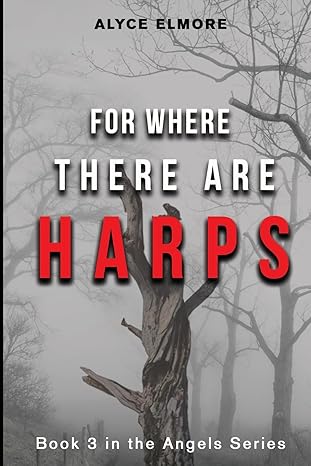

For Where There Are Harps, the third book in Alyce Elmore’s Angels Have Tread trilogy, plunges readers into a post-pandemic dystopian world where societal structures have crumbled and a matriarchal republic reigns. This installment intertwines the personal struggles of its characters with the broader socio-political turbulence of the era, exploring themes of power, survival, and human connection. It is an expansive tale, shifting between the perspective of a young historian seeking truths and the lives of those who experienced the chaos firsthand.
Elmore’s writing is vivid and immersive, though it occasionally leans toward a richness that may feels very detailed in some moments. One scene early in the book particularly struck me—a young girl grappling with the Old One’s stories, her sense of truth shifting like tectonic plates. The descriptions of nature, such as the mocking laughter of the kookaburra, are poetic and grounding. The Old One’s philosophical musings, while thought-provoking, sometimes slow the story’s momentum.
The interplay of characters adds both charm and tension. The four musketeers—Karen, Josh, Benny, and Zane—each represent different responses to the repressive laws of the Republic. Benny’s cynicism, borne from his experiences as a stud, is balanced by Karen’s quiet resilience. The moment Benny realizes the futility of plans, while imprisoned in Inverloch, encapsulates his character’s journey. The subplot involving Patricia Bishop could have been more tightly woven into the main narrative because what we are giving is intriguing. Her investigative arc often felt tangential, though her fiery confrontations were highlights.
Elmore shines brightest when tackling big ideas—what it means to control a narrative, the ethics of rebellion, and the cost of change. The Great Upheaval looms large in the backdrop, a reminder of the fragility of peace. The nuanced portrayal of Evelyn Perkins’ leadership as both tyrannical and tragically misunderstood struck a chord with me.
For Where There Are Harps is a sprawling and ambitious tale. It’s for readers who love deeply political dystopias, rich world-building, and morally complex characters. If you’re patient with its deliberate pace, this book rewards you with thought-provoking insights and poignant moments. It’s a gripping conclusion to a trilogy that asks us to question the truths we take for granted.
Pages: 274 | ISBN : 176385020X



 LITERARY TITAN