Blog Archives
Avenue for an Assassin


Avenue for an Assassin is a political thriller set in the tense years after World War II. It follows Jonas Shaw, an ex-detective and former protector of Winston Churchill, as he is pulled into a shadowy plot that begins with a mysterious shooting on a rural French road. From that moment, the story widens into a web of money couriers, Soviet operatives, Resistance veterans, and a looming operation that threatens to destabilize nations. The book blends espionage, murder, and international maneuvering, and it moves with all the confidence of a classic suspense novel.
Author Steve Haberman writes with a steady hand. His pacing is unhurried in a way that works well because the world he builds is thick with history and personal ghosts. Jonas, especially, carries that weight. I found myself liking him for his rough honesty and the way he constantly wrestles with past mistakes. Sometimes the plot dips into long explanations, but I didn’t mind because it is intriguing and immersive from the first few chapters.
What struck me most was the author’s choice to weave major historical power players into a thriller that still feels intimate. The Soviet angle, the old Resistance networks, the sense that Europe is still picking up its broken pieces, these textures give the book more depth than I first expected. Natasha, the operative driven by the shadow of her father, is unsettling and fascinating all at once. Haberman doesn’t romanticize espionage; he shows it as shabby apartments, bad meals, coded newspaper ads, and people who are just trying to survive the next move on a dangerous chessboard. Sometimes the scenes feel almost cinematic; other times they feel like the quiet hum of a city at midnight, when the wrong knock on the door can derail everything.
By the end, I felt Avenue for an Assassin more than delivered everything a good thriller should: tension, atmosphere, flawed people trying their best, and a mystery that slowly sharpens into something frighteningly believable. If you enjoy historical thrillers, Cold War setups, or stories where everyday streets hide dangerous secrets, this one will be right up your alley. It’s a great pick for readers who like their suspense grounded and their characters complicated, and who don’t mind taking the long way around as the story unfolds.
Pages: 221 | ASIN : B0GF9C3454

Stealing Stealth
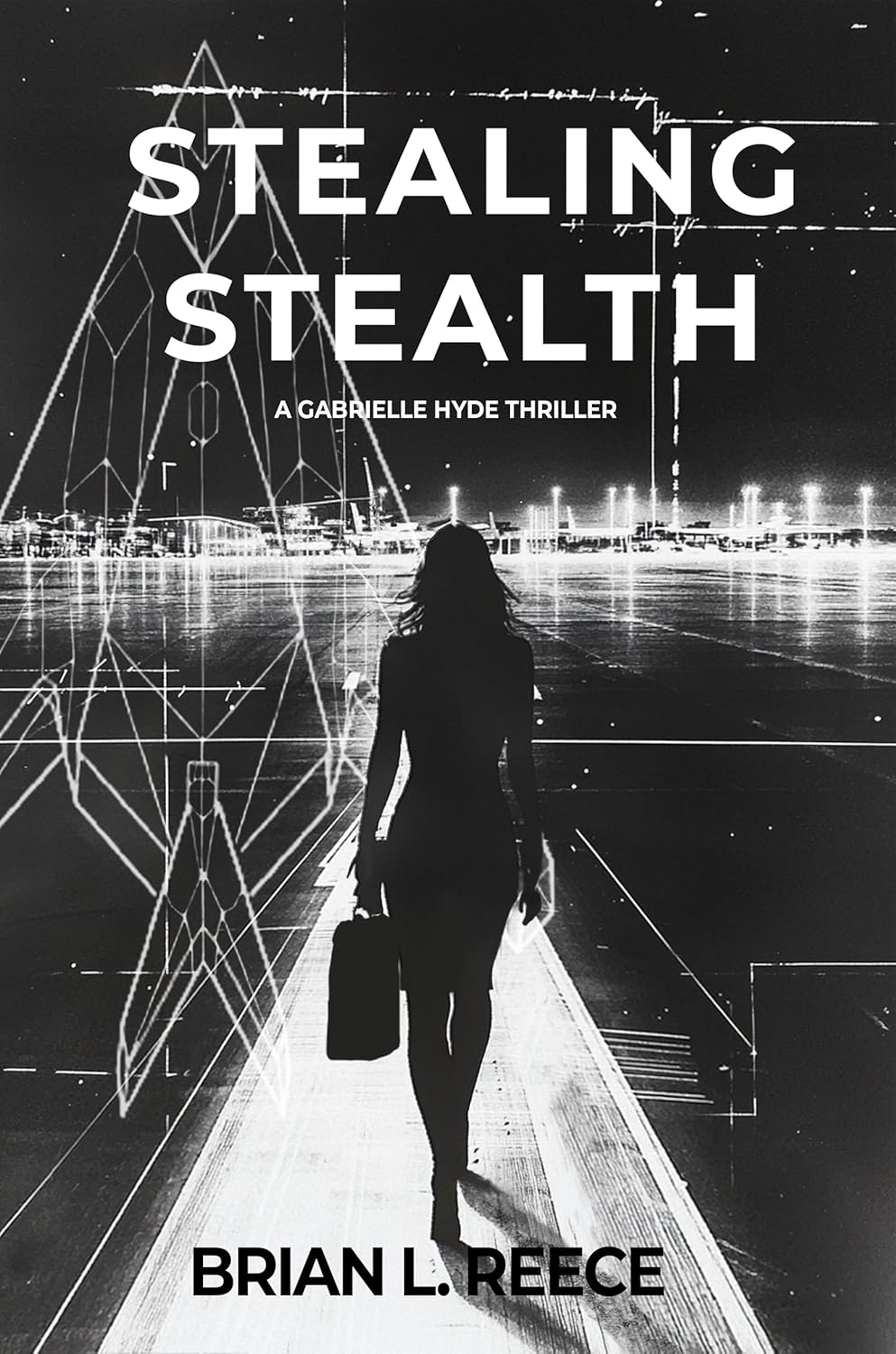

Stealing Stealth is a Cold War spy thriller about a master thief and a burned-but-still-burning CIA case officer who get pulled into a fight over the future of stealth technology. We meet Gabrielle Hyde in 1975 Toronto, dropping into a dusty old government office from a ventilation shaft to steal classified files while half the law-enforcement world hunts her. At the same time, John Olson, a young CIA case officer with something to prove, becomes obsessed with catching her and then with stopping a legendary Soviet operator, Sasha Morozov, from getting his hands on America’s experimental stealth aircraft research, the kind of “perfect first-strike weapon” that could tip the whole Cold War. Their paths cross, collide, and eventually twist together as they race from rooftops and embassies to African markets and the secretive Skunk Works facility, trying to plug leaks, uncover a mole, and keep a fragile nuclear treaty from falling apart.
Reading it, I felt like I was sitting in a dark theater watching one of those big, old-school spy movies. The writing leans into atmosphere: the musty FBI outpost, the humid chaos of Mogadishu’s markets, the cold wind high over Toronto when Olson literally throws himself between rooftops after Hyde. Scenes play out in clean, visual language that made it easy for me to track the action without getting lost in technical detail. I liked how the book switches perspectives between Gabrielle, Olson, and even Morozov, so I never felt like I was stuck on just one side of the board. The pacing feels very much like a modern spy thriller: bursts of intense action, then quieter conversations where people argue about loyalty, politics, and what it costs to do this kind of work. There are moments where the briefing-room talk about treaties and stealth programs slows things down a bit, but most of the time it adds weight instead of drag, reminding me this is not just about a cool gadget in a metal case, it is about who gets to shape the world.
What stuck with me most were the choices the characters are forced to make. Olson is haunted by a failed operation in Somalia and the death of his partner; that guilt colors everything he does after, especially when he is ordered to stand down and decides to ignore it. Gabrielle is fun to watch because she is both playful and ruthless, a thief who talks about capability as a kind of moral authority and treats sexism in the agencies as another lock to pick. The book lets her be brilliant without sanding off her sharp edges, and I appreciated that. Morozov could have been a cartoon villain, but instead, we see his grief for his granddaughter and the way he is forced back into being “the Demon” when she is taken and ransomed for the stealth data. It does not excuse what he does, but it makes him more human and more unsettling. I also liked the thread about institutions versus individuals: the CIA, FBI, and political leadership spend as much energy protecting careers and narratives as they do protecting the country, and Olson and Hyde are constantly working around their own side as much as they are fighting the enemy.
Stealing Stealth is a solid, character-driven spy thriller with a techno edge, the kind of book you pick up for the rooftop chases and Cold War tension and stay for the messy loyalties and bruised hearts underneath. If you like stories in the vein of Cold War espionage, enjoy the mix of spies, thieves, and experimental weapons, and you appreciate a capable female lead who is always three moves ahead, this book will likely hit the spot for you.
Pages: 474 | ASIN : B0FSL2KVB8

Skilled At Handling Lies

Angus Sliders follows Max as he struggles to remember what versions of history are real and what is made up from Mirror’s effects, causing history to fracture further, and possibly in irreparable ways. What was the inspiration that created the journey Max goes on in this book?
Max’s journey in Angus Sliders originates from a core question. What happens to a spy when his most trusted asset, his memory, fails him? The Mirror has always posed a threat because it warps time, but the greater threat is psychological. I aimed to examine how an experienced intelligence officer, skilled at handling lies, disinformation, and shifting loyalties, would react when his internal compass fails him.
The inspiration came from three connected ideas. The first is the fallibility of memory in espionage, where spies operate within constructed realities such as covers, legends, and half-truths. The second is what could be called post-war trauma. The fear of misremembering. Lastly, there’s the ethics of changing history. If altering one moment could save lives or end them, how does someone like Max resist the temptation or cope with the guilt of decisions made in unstable times?
So, his journey ultimately revolves around identity under pressure. Max becomes a man forced to navigate through multiple versions of his own past, aware that each step could deepen the cracks. The tension in Angus Sliders comes from whether he can hold onto the truth long enough to repair the present, or if the Mirror will completely overwrite him.
I find that authors sometimes ask themselves questions and let their characters answer them. Do you think this is true for your characters?
Absolutely. For me, that’s one of the engines behind the entire Sliders universe. I often start with a question I’m unsure how to answer, for example, what would it feel like to step into a version of history that remembers you differently? How much of your identity remains when memory becomes negotiable? What does loyalty mean when time itself can be rewritten? Then I stop answering as the author and begin listening to the characters.
Max and Alicia are both shaped by the worlds they navigate. Max, for example, rarely gives the easy answer; he provides the necessary one. Alicia responds with accuracy and restraint, revealing the cost of knowing more than she can admit. So yes, my questions start the conversation, but the characters finish it. That’s the value of writing in this universe: the characters live close to points of fracture such as history, memory, and time, and their answers often reveal truths I wouldn’t have reached on my own. In that sense, I’m not just writing them. I’m discovering what they’re willing to tell me.
I felt that there were a lot of great twists and turns throughout the novel. Did you plan this before writing the novel, or did the twists develop organically while writing?
The honest answer is both. I always start with a skeleton. The main plot points, structural pivots, and key revelations that the whole story depends on. In a book like Angus Sliders, where the narrative twists around time distortion and espionage, those anchors are crucial. Certain twists must happen for the story to have the right impact. But the best twists are the ones that seem inevitable in hindsight yet are surprising in the moment. They tend to happen naturally. They appear when characters react honestly to pressure. They surface when a secondary detail suddenly becomes essential. They occur when the logic of the world requires a new fracture in the timeline.
As I write, the characters often reveal parts of the story I didn’t fully see during the outline stage. Max, for example, rarely acts like someone who wants his arc to stay linear. The Mirror’s influence almost encourages unexpected angles. Alicia makes choices that challenge the neat structural plan, deepening the stakes. So, the process becomes a balance. Plan the structure and, to some degree, let the characters decide how to move through it. That’s where the twists come from. Structure supported by surprise, and surprise supported by character truth. If I’ve done it right, the reader feels both the inevitability and the shock.
Can you tell us more about what’s in store for Max Calder and the direction of the third book?
Without revealing too much, the third book pushes Max into the most dangerous territory he’s faced yet. Not because the enemies are stronger, but because the consequences of what he’s already survived finally catch up with him. Cuban Sliders, based in the Caribbean, leaves Max standing at the edge of a world where the Mirror has been dismantled, but its influence hasn’t disappeared – it’s just increased. The third book poses a more complex question: What does a man do when the past he fought to fix begins rewriting itself around him? Max has learned to navigate fractured histories. But now he must decide which version of himself he’s willing to live with. The third book will force him to confront timelines he thought he’d closed and choices that refuse to stay buried.
Max no longer knows if he’s fighting for the right side or if the right side even exists. If the first book broke Max, and the second tested him, the third questions whether he can survive the truth he’s spent his life trying to uncover.
Author Links: Facebook | Instagram | GoodReads | Website | Amazon | Apple Books
It’s 1948. Max Calder thought he’d escaped the Mirror’s grip. But when an encrypted MI6 radio message pulls him from the shadows, he finds himself trapped in a deeper conspiracy involving Kim Philby – one that spans timelines, and versions of himself he can no longer remember… or trust.
Partnered once again with Alicia Rayes, Calder races from Lisbon to London to Edinburgh to uncover Project Oracle, a secret MI6 experiment buried at a black site called ANGUS beneath a loch at Invershiel. There, an unstable Mirror still hums. And waiting for him is Variant 6F… a doppelgänger who might be the last warning before history fractures for good. As enemies close in and memories slip through the cracks, Calder must face the truth: the timeline isn’t broken – it’s being rewritten.
Angus Sliders is a taut, cerebral spy-fi thriller steeped in Cold War tension, noir grit, and mind-bending science fiction.
The Flight Enigma

The Flight Enigma dives straight into a storm of suspense, mixing high-tech intrigue with small-town drama. The story follows JJ and Jo, a couple seeking peace in Magnolia Bluff, only to be drawn into a national crisis when JJ’s friend Mike Hayes becomes entangled in the disappearance of secret stealth technology. What starts as a relaxing getaway spirals into a labyrinth of danger, deception, and loyalty. The narrative blends the technical precision of an espionage thriller with the warmth and humanity of a cozy mystery, creating a fast-paced tale that balances high stakes with emotional depth.
The writing is brisk, packed with sharp dialogue and layered scenes that pull you along. I loved how the authors make the technical parts feel real without bogging the story down. The tension builds naturally. It doesn’t rely on cheap tricks, just the slow burn of secrets unraveling. Sometimes, the shifts between domestic scenes and government-level suspense threw me off rhythm, but that unpredictability worked in its favor. It reminded me of life’s chaos, where personal drama and big events collide. The authors write with clear affection for their characters, and that sincerity gives the story its punch.
What really stuck with me was how human the book feels beneath all the mystery. There’s loyalty, fear, love, and betrayal, all tangled up like wires in a jet engine. Jo’s empathy and Mike’s vulnerability make the stakes feel real. I could feel their confusion and desperation, especially as they faced situations beyond their control. The writing style is smooth. It’s emotional, sometimes raw, and full of little moments that make you stop and feel. I caught myself rooting for them even when things looked hopeless. That’s a rare thing in thrillers nowadays.
The Flight Enigma is a thrilling read that surprised me with its heart. It’s perfect for readers who love mysteries with real emotional gravity, and for anyone who enjoys smart characters thrown into impossible situations. Tech lovers will appreciate the details, but it’s the relationships that make the story soar. The Flight Enigma feels like a modern twist on Tom Clancy’s The Hunt for Red October, but with more heart, sharper humor, and characters who feel like real people caught in extraordinary danger.
Pages: 266 | ASIN : B0FKKNQSB4
A Confluence of Factors

Father Lost Child Found follows three amateur sleuths — one searching for answers about her father’s death, one searching for a mystery woman who left a child in her basket, and one searching for extraterrestrials. What was the inspiration for the setup of your story?
As is often the case, a confluence of factors shaped the development of the story. Some ideas were sparked by things I’d heard or experienced personally, while others came from readers of Alone with a Tasman Tiger.
The opening scene of Father Lost Child Found was directly inspired by a conversation I overheard at Brisbane railway station while waiting for a train. A young man, freshly released from jail, was talking about his experiences. He mentioned that his father wasn’t in the picture anymore. I felt for him — his honesty, his observations — and thought he’d make an interesting character. He became the unlikely hero of my opening chapter.
I also received feedback from readers who wanted to know what happened next to Galina, the heroine of Alone with a Tasman Tiger. She wasn’t (spoiler alert!) the winner of the survival competition, but she won readers’ hearts. That encouragement got me thinking about her future.
Around the same time, I heard a radio segment about eulogies — those speeches at funerals where people sometimes say things they perhaps shouldn’t. I had great fun researching this and knew I wanted to weave a scene like that into the book.
Expanding the synopsis a little… Galina’s father died in an accident on an oil platform twenty-four years ago — on September 11, 2001, in fact. During a eulogy for one of his former colleagues, doubts are raised about the true cause of Aleksandr Ivanov’s death, setting Galina on a dangerous search for the truth.
I was also reading two brilliant novels by Terry Hayes — I Am Pilgrim and The Year of the Locust. Both are fast-paced thrillers, the latter edging into science fiction. They made me want to write something equally pulse-pounding.
Then there was an interview I heard on ABC Radio’s Conversations, where Sarah Kanowski spoke with a radio astronomer about the possibility of life on other planets. That definitely fired the neurons. And, over coffee one day, a friend and I started talking about the mysterious crop circles near Tully, first reported sixty years ago — circles that can’t easily be explained away by pranksters. That conversation sealed it.
What aspects of the human condition do you find most interesting — the things that make for great fiction?
Loss is something most of us experience at some point. You never really get over it — you just learn to manage it, if that’s the right word. Certain triggers can bring the pain rushing back.
Loss often leads to vulnerability, which is another universal theme. When we feel vulnerable, we become risk-averse — but without risk, it’s hard to escape an unhappy or stagnant situation.
And then there’s forgiveness. When someone wrongs you, the question becomes: can you forgive them? That decision always carries consequences for both sides.
What themes were important for you to explore in this book?
Identity – Who am I? I even toyed with calling the book Daughter. Drummer. Sailor. Spy. — a nod to John le Carré’s Tinker Tailor Soldier Spy.
Spying – What it requires, what it costs, and what it demands of a person. The secrecy, the deception, the time away from home — and the toll that takes.
Secrets – Discovering that someone you thought you knew was living a double life. Perhaps they weren’t an oil worker after all, but a spy.
Connection and relationships – With family, and with doing what you love. Galina leaves the survival competition in a new relationship forged under extraordinary circumstances. Can it survive the real world? Seb has already taught her to swim — now he wants to teach her to sail.
Motherhood – For Charlotte, it’s about what it truly means to care for a child, and the sacrifices and choices that come with that role.
Where do you see your characters after the book ends?
Each of the three amateur sleuths undergoes a profound transformation through the events of Father Lost Child Found. They’ll each carry those experiences into their futures — but you’ll have to wait for the next book in the series to see how those changes shape their careers and their lives.
Author Links: GoodReads | X | Facebook | Bookbub | Website | Pinterest
Charlotte Wyatt-Harmon has taken a break in cycling from Hua Hin to Phuket. While shopping at markets near the border with Myanmar, someone leaves a child in her basket, sending Charlotte on a frantic search for the mother.
Mason Murray is a journalist with a personal interest in crop circles. Some believe these patterns were created by extraterrestrials and Mason is determined to find out for himself.
These amateur sleuths learn that everyone is hiding something: a secret, a spy, even an alien presence.
FATHER LOST, CHILD FOUND delivers a twisty-turny plot until the very last page.
Father Lost Child Found

On the surface, Father Lost Child Found is an espionage thriller that opens with a daring rescue on a Brisbane train platform and spirals into a global chase across Estonia, Thailand, and beyond. Beneath that, though, it’s the story of Galina Ivanof, a woman trying to untangle the mystery of her father’s death while confronting the ghosts of her past. What begins with crop circles and whispers of buried secrets soon collides with questions of family, loyalty, and truth. The novel blends spycraft with a touch of science fiction, weaving personal heartbreak into a much larger tapestry of conspiracies and otherworldly puzzles.
The writing caught me off guard in the best way. The style is brisk and punchy, yet the author lingers at just the right moments on small sensory details. A crutch abandoned on a train platform, the cold smell of snow-soaked pine, the weight of silence between mother and daughter, these flashes made the story breathe. Sometimes the prose veers into melodrama, but I didn’t mind. In fact, I found myself leaning into it. I liked the mix of high-stakes action with quiet, vulnerable scenes, especially the strained relationship between Galina and her mother. It gave the thriller bones a very human heart.
On one page I was in the thick of a spy story tangled with oil companies, government secrets, and drones. On another, I was reading what felt like a family saga about loss and reconciliation. And then there’s the sci-fi layer with crop circles and UAPs, which added a lot of intrigue and gives readers a break from the emotional threads. I appreciated that the author took risks. It’s rare to see a thriller that dares to stretch across genres and landscapes in such an ambitious way.
I’d recommend Father Lost Child Found to readers who like their thrillers to swerve off the predictable highway. If you’re open to a story that mixes spy games with family wounds, political secrets, and just enough science fiction to keep you guessing, this book will be a ride worth taking. It’s heartfelt and surprising, and that’s what made me keep turning pages.
Pages: 186 | ASIN : B0F7JTL4SJ
Omega Deception
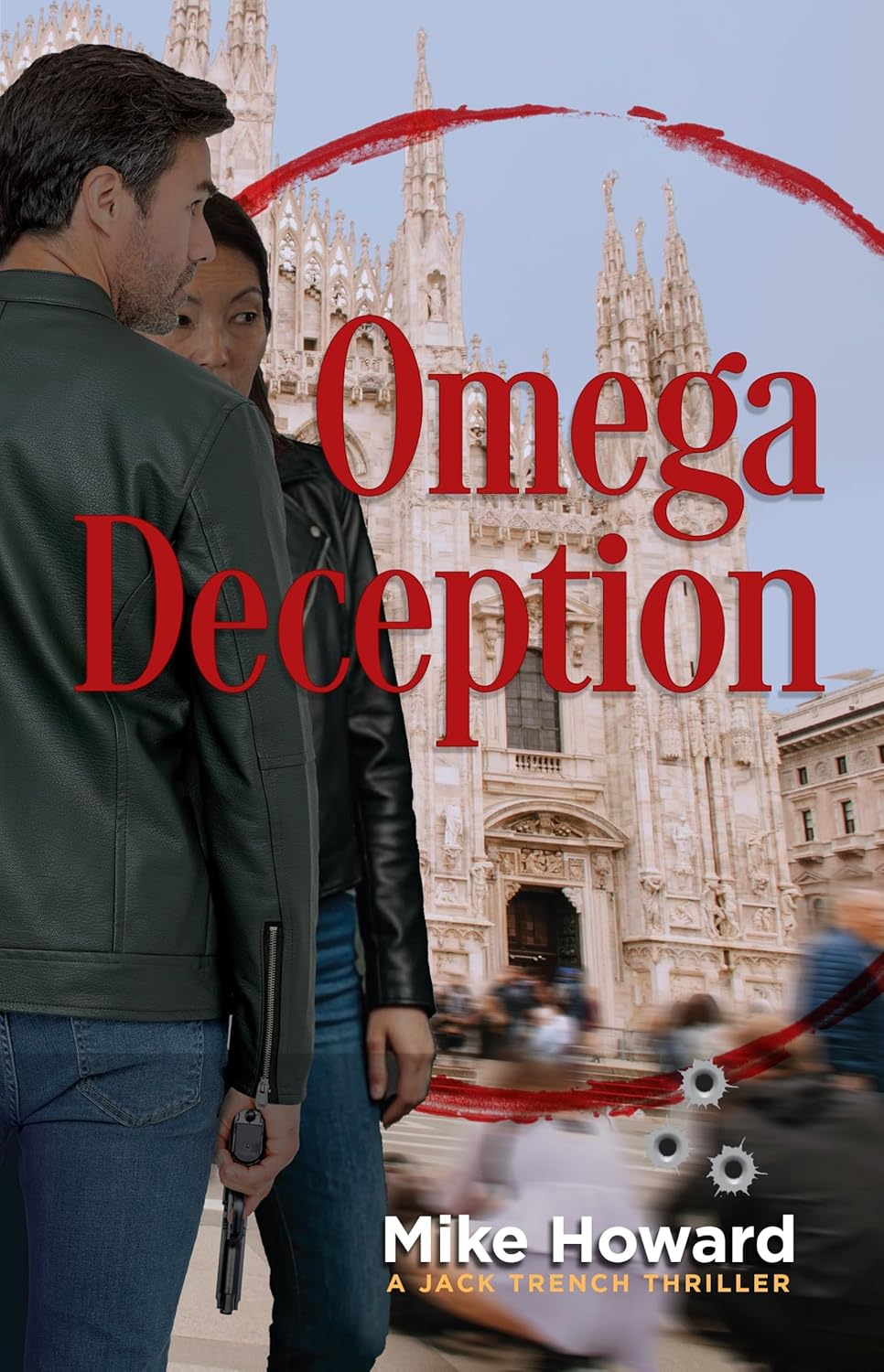
Mike Howard’s Omega Deception opens with a punch and doesn’t slow down. It’s the kind of thriller that drops you straight into the action and then keeps twisting until you’re dizzy from the pace. The story follows Jack Trench, a former Marine turned CIA operative, whose stolen Omega watch becomes the thread that unravels an international conspiracy. The novel leaps between continents and decades, weaving tales of espionage, betrayal, and revenge. From the narrow alleys of Milan to the heat of African battlegrounds, it’s part spy story, part revenge tale, and part emotional reckoning for a man whose past refuses to stay buried.
Howard’s writing has grit and authenticity. The dialogue snaps, the military detail feels earned, and the characters, especially Trench, have that rough-edged humanity that makes them believable. I found myself grinning at the old-school spycraft and then wincing at the violence that comes with it. At times, the pacing gallops so fast that I had to catch my breath, but I kind of loved that. It reminded me why I read thrillers in the first place, to feel the pulse of danger, the smell of sweat, and the uncertainty of who’s really the good guy.
What stood out most wasn’t just the gunfights or the secret missions. It was the emotion underneath it all. Howard gives Jack Trench moments of reflection and regret that hit harder than any bullet. There’s loss here, and a kind of moral exhaustion that seeps through the pages. Some parts hit like a gut punch, especially when the past comes back around to demand its due. I could tell the author respects the people who live in the shadows, the operatives who do the dirty work no one ever hears about. That respect shows up in every sentence, and it’s what lifts the story beyond a standard shoot-’em-up spy novel.
Omega Deception is a fast, lean, no-nonsense thriller that would appeal to anyone who loves stories about spies, soldiers, and secrets. It’s perfect for readers who like Clancy’s precision but want something grittier and more relatable. If you want action that feels real, characters with scars that matter, and writing that moves like a heartbeat, then this book will hook you hard and keep you turning the pages until late at night.
Pages: 325 | ASIN : B0DTVWPTZQ
Full Circle – A Jack Trench Thriller

Full Circle by Mike Howard drops you headfirst into the shadowy world of espionage and never lets you climb back out. At the heart of the story is Jack Trench, a CIA case officer who has spent decades chasing terrorists across the globe. The novel opens in Manila, where Trench faces betrayal, blood, and the ruthless world of “Sparrow Units” bent on killing Americans. From there, the story stretches into the depths of Cobra One, the CIA’s hard-hitting counterterrorism arm, and carries Trench across continents and into retirement, where old ghosts and new dangers won’t leave him alone. The story mixes high-octane operations with the slower burn of regret and memory, building a character who is equal parts hardened operator and weary man looking for peace.
What stood out to me most was how straightforward the writing feels. It’s straight-shooting, clear, and doesn’t hide behind literary tricks. The action is described in sharp detail, and sometimes I felt like I was sitting in the backseat of that armored SUV with Trench, or crouching in the shadows with The Watchers. The violence is raw, often sudden, and always personal. At times, I caught myself holding my breath. Yet, there were also moments when the prose leaned into exposition. Background details sometimes came in thick slabs, slowing down the pace I’d gotten hooked on. Still, I admired the author’s dedication to grounding the story in real-world intelligence tradecraft, it gave the book a grit that felt convincing.
Emotionally, the book hit me harder than I expected. Jack Trench is no cardboard hero. He’s ruthless when he has to be, but the man carries loneliness and loss with him like extra baggage. Reading the quieter scenes, like his battle with caterpillars in his garden or the way he pours himself a bourbon while reflecting on old missions, I felt the weight of a life lived in shadows. The blend of action and emotion is what kept picking the book every night to finish the story.
I’d say Full Circle is a great pick for readers who love military thrillers, CIA spycraft, or stories about men who can’t quite escape the lives they built. If you’re someone who enjoys Tom Clancy or Vince Flynn, you’ll feel at home here. But it’s also a good choice for anyone curious about the toll that a lifetime of covert work takes on a person. This is a story with bullets flying and blood spilling, but it’s also a story about a man trying to come full circle in his life.
Pages: 204 | ASIN : B0BYTP2KFB



 LITERARY TITAN