Blog Archives
Becoming Sarah


The story follows Sarah, a girl born in Auschwitz, who grows up amid the ruins of war and memory. From her survival as a baby in impossible conditions to her complicated relationships with families, lovers, and the ghosts of her past, the novel stretches across decades. It is a portrait of a life shaped by trauma yet driven by the relentless pull of love, survival, and identity. The book traces how one woman carries both the horror and the humor of her history, and how those who come after her must reckon with what remains.
Reading this book was not easy, and I don’t think it was meant to be. The writing felt raw and startlingly alive. Sometimes the prose slowed me down with its density, but I kept going because every page had something sharp and true. I loved how the author wasn’t afraid to mix beauty with ugliness. She gave me moments of dark humor right after scenes that tore at me. The characters were flawed, sometimes unlikeable, yet unforgettable. Sarah, especially, lingered in my head long after I closed the book.
There were also times I felt overwhelmed. The shifts between past and present, memory and dream, tested me as a reader. But maybe that was the point. Trauma doesn’t follow neat lines. The way Botnick wrote mirrored the chaos of living with scars you can’t see. And when I let myself stop fighting the structure, I found myself swept into it. I laughed in places I didn’t expect, and I cried in places I thought I wouldn’t.
I came away from Becoming Sarah feeling both heavy and strangely hopeful. This isn’t a typical Holocaust novel. It’s about the long aftershocks, the way history worms its way into kitchens, bedrooms, and even jokes. I’d recommend it to anyone who wants to feel a story as much as read it, especially those who care about how the past seeps into family, motherhood, and love.
Pages: 347 | ASIN : B0DVCX64WV

Priscilla Speaks
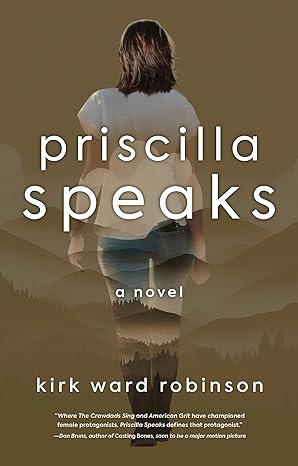
Priscilla Speaks is a raw and moving novel about a young girl born into the harshest corners of Appalachian poverty. The story begins before Priscilla’s birth, with her mother, Blaize, a fierce and wounded woman, doing whatever she can to care for her children and survive in a world that gives her nothing. We follow Priscilla as she grows up in the town of Bilbo, navigating her family’s deep dysfunction, community violence, and the emotional scars passed down from one generation to the next. Robinson crafts a brutal yet intimate look into this young girl’s life as she slowly begins to understand who she is, who her family really is, and how to carve her own place in a world that keeps trying to swallow her whole.
The writing is bold and fearless, with a rhythm that swings between lyrical and gritty. The dialogue feels authentic. The world is murky and tough. The people are full of contradictions. Blaize, for instance, is both the villain and the savior in her children’s lives. Her pain is palpable, but she also passes that pain along. It made me uncomfortable more than once, and that’s a compliment. As a reader, I felt like I was sitting on the edge of a splintered porch with these characters, watching lives unravel and harden, sometimes all in the same breath.
What really stayed with me, though, was Priscilla’s voice. She doesn’t say much, but her silence is louder than everyone else’s shouting. Her mind is sharp. She sees through people. She aches to be seen herself. And when she finally acts, whether it’s to cut off her hair or confront someone who’s hurt her brother, it never feels like a big triumph. It just feels necessary. The author never turns her into a cartoon hero. She’s messy and guarded and real. And the book respects that. The pacing slows in a few places, and some characters feel like they pop in just to fill a theme. But it doesn’t matter much because the emotions land hard.
I’d recommend Priscilla Speaks to anyone who’s tired of polished stories and wants something jagged and honest. It’s not a light read. But it tells the truth in a way that sticks. If you grew up poor, or close to someone who did, you’ll recognize the ache in these pages. And if you didn’t, it’ll open your eyes to what strength and survival really look like.
Pages: 332 | ASIN : B0FB43QHG1

When People Leave
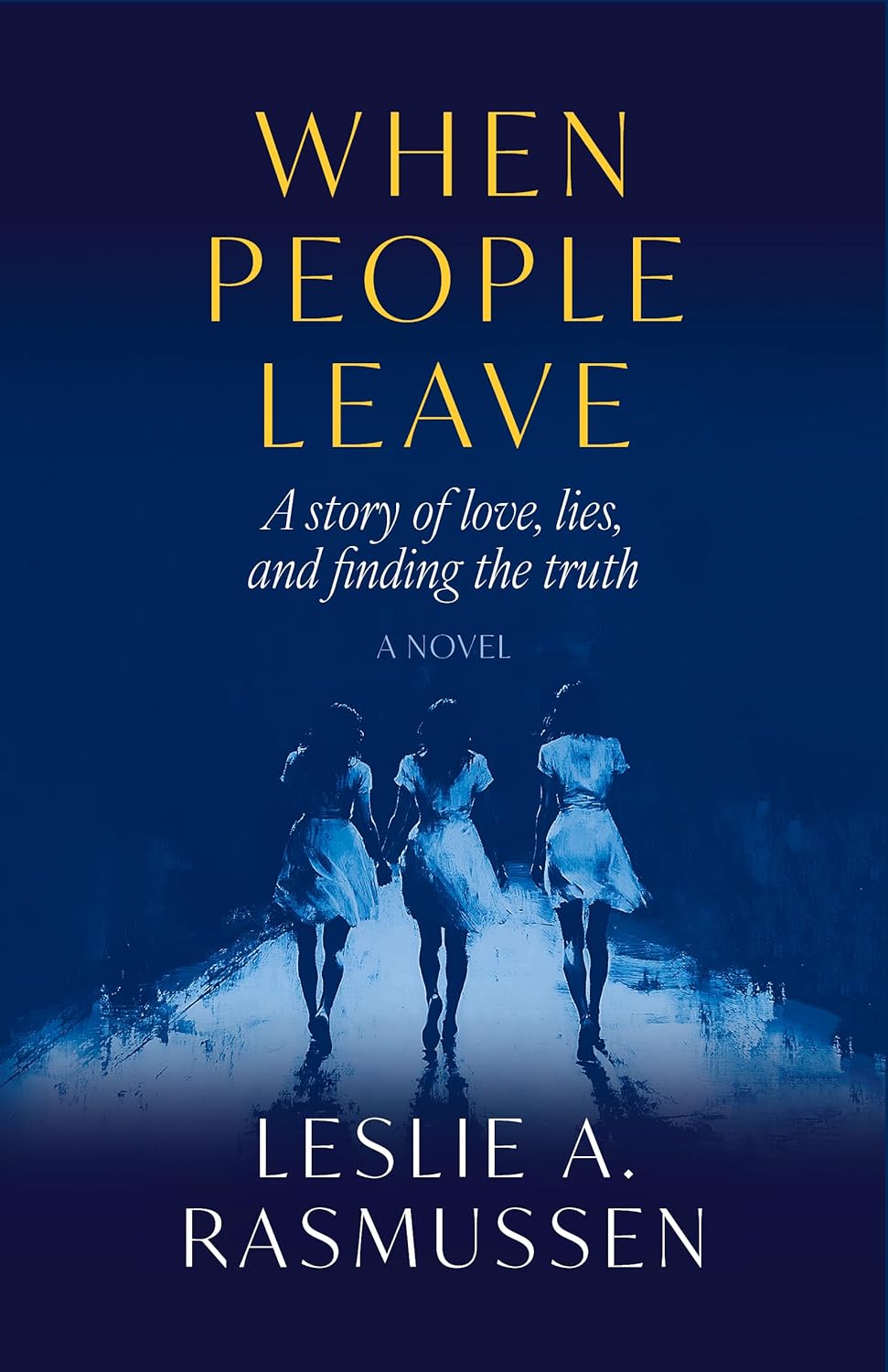
When People Leave by Leslie A. Rasmussen follows three sisters—Morgan, Charlie, and Abby—as they grapple with the shocking loss of their mother, Carla. After her unexpected death, what first appears to be a tragic suicide sets the sisters on a journey of grief, discovery, and long-buried family secrets. Alongside this mystery, the novel weaves in the sisters’ personal struggles: Morgan’s sobriety, Charlie’s crumbling relationship, and Abby’s overwhelming life as a young mother. Each chapter switches perspectives, layering the narrative with emotion, humor, and an exploration of what it means to really know someone you love.
From the very first chapter, I was hooked. Rasmussen’s writing feels natural, like a good friend sitting you down and telling you a story they have to get off their chest. Her dialogue snaps with authenticity, and the emotional beats land hard without ever feeling forced. I found myself laughing at some parts and genuinely tearing up at others. It’s rare for a book to feel this alive. The pacing was spot-on too; I never once felt bogged down or tempted to skim, which says a lot. Rasmussen nails the chaotic, messy beauty of family, and she doesn’t sugarcoat the ways love and pain can tangle together.
There were a few moments where the writing leaned on exposition, especially when digging into backstories. But honestly, I didn’t care that much because the characters were so real, so heartbreakingly flawed, that I would’ve followed them anywhere. I especially loved Morgan’s arc—her inner battles were raw and painful and, ultimately, hopeful. Rasmussen has a real gift for showing how healing isn’t a straight line but a looping, stumbling kind of journey.
When People Leave is one of those stories that lingers. It’s for anyone who’s ever wondered if they really knew their parents, or who’s ever struggled to forgive the people they love most. I’d recommend this book to readers who like emotionally honest fiction with lots of heart, a touch of mystery, and characters you want to reach through the pages and hug.
Pages: 311 | ASIN: B0DW751V7B
Locust Hill: A Romantic Family Saga


Locust Hill is a nostalgic, slow-burning romantic saga set in the rural landscape of West Virginia during the 1960s. Told through the voice of Cassandra “Cassie” Clark, a popular high school girl with big dreams and big-city expectations, the novel traces her unlikely love story with James Russell, a quiet, philosophical young farmer. What begins as a tutoring session in trigonometry unfolds into a deeply layered exploration of family, resilience, sacrifice, and the quiet kind of love that grows deeper with time. It’s a coming-of-age tale just as much as it is a love story—rooted in soil, memory, and legacy.
On the surface, it reads like a wholesome farm story, but Parsons writes with such clarity and charm that I was hooked by the end of chapter one. The first few pages in which Cassie describes her surprise attraction to the serious, slide-rule-toting Jim are full of heart and humor. The whole “fertility goddess” conversation made me laugh and then think way harder than I expected. Jim’s quiet wisdom stuck with me. He’s not just a farmer, he’s a philosopher with dirt under his fingernails.
One of the most touching and vivid sections is when Cassie visits Jim’s family farm. The way she describes the house, the land, the compost piles, the ducks, the guineas, it’s more than just descriptive. It’s loving. You can feel her world shifting as she walks through the barn or sees the warmth of Jim’s mother. Parsons doesn’t romanticize farm life. He honors it. He shows how the land, like love, takes patience, work, and guts. There’s a part where Jim says the garden “informs the fields,” and I had to pause and take that in. It’s a beautiful metaphor for how small efforts, like relationships, can grow into something sustaining.
Some chapters drift like a slow river, and if you’re expecting non-stop action, this might feel a little sluggish. But that’s kind of the point. The pacing mirrors the farm life it describes—seasonal, methodical, purposeful. There’s real tension beneath the calm, especially when the story veers into environmental issues in later chapters. Still, it’s the romance that held me. The way Jim proposes at the creek, under budding trees, made my heart melt. It’s tender without being sappy, and just the right amount of awkward.
I’d recommend Locust Hill to anyone who loves character-driven stories, rich settings, and quiet, meaningful drama. If you enjoy books where not much “happens” but everything matters, you’ll feel at home here. It’s especially perfect for readers who miss the days when love stories were more about soul than spark. This isn’t a whirlwind romance, it’s a slow build that feels earned. Like a good harvest after a long, hard season.
Pages: 220 | ASIN : B0DVCFPM4M
Those Who Live
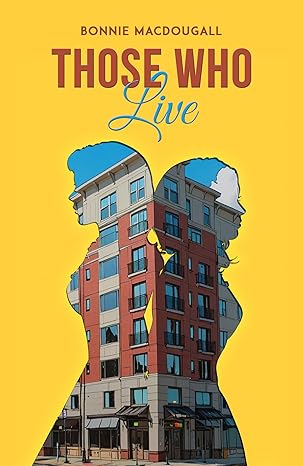
This book got its hooks in me right from the first chapter. Those Who Live follows two cousins, Chinle and Mae, who stumble onto a chilling family secret—six baby girls, all born into their family, all dead in infancy, and nobody wants to talk about it. When Mae and Chinle start digging through old diaries and confronting family members, they open a Pandora’s box of dark history, secrets and, let’s just say, not-so-trustworthy narrators. The story is told through a mix of diary entries, interviews, and personal accounts, which gives it a raw, almost documentary feel. But don’t let that fool you, this book is anything but dry. It’s eerie, emotional, and absolutely gripping.
Bonnie MacDougall has this way of making everything feel so personal, like you’re sitting in the room with Mae and Chinle, listening to them argue about who makes the next phone call or watching them lay out their case like true detectives. The dialogue is sharp, and the characters especially Chinle, have real depth. Chinle, with her physical struggles and razor-sharp mind, is one of the most compelling characters I’ve read in a long time. There’s a moment when she starts having visions of an old trauma (was it really an accident, or was she pushed?), and that absolutely floored me. The way MacDougall weaves together past and present makes the tension constant. I couldn’t stop flipping pages.
The mystery itself is layered. One of my favorite parts is when they meet their cousin Maple-Syrup (yes, that’s her real name), an alcoholic with a chip on her shoulder the size of a boulder. She’s got sass for days, and her interactions with Mae had me laughing and cringing at the same time. But she also holds pieces of the truth, and when she finally starts opening up, it’s heartbreaking. The book keeps you guessing. Every family member seems to have a version of the past that doesn’t quite line up. And then there’s Theresa’s diary (wow), which is honestly one of the most disturbing and fascinating pieces of the whole book. It completely shifts the story into something even darker than I was expecting.
By the time I reached the end, I was emotionally wrung out. But I loved it. Those Who Live isn’t just about solving a mystery, it’s about family, trauma, and the weight of unspoken history. Fans of true crime, family sagas with a dark twist, or anything Gillian Flynn-esque will eat this up.
Pages: 298 | ASIN : B0DS9RFGP6
CROSSING BORDERS AND GENERATIONS: One Man’s Journey To Search For His Ukrainian, Greek, And Bulgarian Roots

Kiril Kristoff’s Crossing Borders and Generations is a masterfully crafted fictional memoir that chronicles the lives of multiple generations of the Kakhovskiy family. At its heart is George Kakhovskiy, a Bulgarian native who, at just sixteen, escapes the oppressive grip of communism and emigrates to America. In this new world, he fights to survive, driven by the dream of a better future. However, through a surreal twist of fate following a car accident, George and his teenage grandson embark on an extraordinary, otherworldly journey—one that allows them to relive George’s past and trace the profound impact of immigration on their family’s history.
Kristoff’s use of innovative narrative techniques elevates the storytelling, making George’s life unfold in an immersive and deeply emotional way. The supernatural journey shared by George and his grandson, Alex, serves as a compelling literary device, allowing readers to experience George’s struggles, triumphs, and sacrifices firsthand. More than a mere retelling, it becomes a deeply introspective exploration of generational resilience and the enduring consequences of leaving one’s homeland.
Themes of displacement, perseverance, and the pursuit of the American dream permeate the novel. As Alex observes his grandfather’s past, he gains an appreciation for the hardships George endured. The novel effectively captures this realization and moments like these bridge the generational gap, transforming historical struggles into personal revelations.
One of the novel’s most striking elements is its ability to convey emotion through memory. The re-experiencing of George’s past does more than recount events, it immerses the reader in his emotional reality. Kristoff’s skill in translating raw emotion into words, allowing the reader to step into the mind of a man who has lived through exile, hardship, and ultimate resilience is unmatched.
Beyond George’s personal journey, Crossing Borders and Generations skillfully examines how immigration shapes an entire lineage. The novel portrays the pain of separation, the struggle to adapt, and the complex emotional landscape that immigrants and their descendants navigate. George’s mental health, his son’s feelings of alienation, and the often-complicated father-son dynamic all intertwine to form a rich, multi-layered narrative. Yet, amid the adversity, the novel celebrates the enduring strength of the human spirit and the invaluable privilege of freedom—something often taken for granted by those born into it.
Kristoff’s novel is a captivating and inventive take on the memoir genre, skillfully blending fiction with personal history. Through its unique structure and poignant storytelling, Crossing Borders and Generations offers a compelling glimpse into Bulgaria’s past and the lived realities of those who sought a better future beyond its borders. Thought-provoking, deeply moving, and beautifully executed, this book is a must-read for anyone interested in immigration narratives, family sagas, and the timeless quest for belonging.
Pages: 314 | ASIN : B0DC4QR89S


