Blog Archives
Everything We Try to Hold


Everything We Try to Hold is a work of domestic literary fiction, or family saga, told through Caroline Graham’s long memory as she looks back on the lives braided around her own: her fierce friendship with Cathy, her mother June’s unhappy marriage, the damage caused by pride and infidelity, the loss of her brother Stephen, and the way grief and love keep resurfacing across decades. The book opens with Caroline in late middle age, successful on the surface, then pulls us backward through childhood, marriage, motherhood, ambition, and old family secrets, using one discovery tied to Uncle Frank as the thread that brings the past rushing forward again.
What stayed with me most was how openly the book wants to sit with emotional history. Sometimes it feels almost as if Caroline is talking to readers directly, sorting through memory piece by piece, and that intimacy gives the novel much of its strength. I liked the way the manuscript returns to certain pressures over and over: the father’s cruelty, the mother’s quiet suffering, the steadiness of Cathy, the comfort of Uncle Frank. That repetition mirrors how family wounds actually work. They do not pass cleanly. They echo. I found myself wishing the prose were tightened in places, because the strongest scenes already have real weight and don’t need quite so much explanation. When the writing trusts the moment, especially in scenes of childhood wonder or private grief, it really works.
I also found the author’s choices interesting in how firmly the book centers women’s interior lives inside what could have been a more conventional generational drama. June’s pain, Caroline’s watchfulness, Cathy’s lifelong presence, and even Caroline’s later professional growth as a designer give the story a pulse that feels more intimate than plot-driven. There is loss here, but also endurance, self-making, and the strange way tenderness can grow in damaged ground. The late reveal involving the hidden safety deposit box and the photograph of June doesn’t explode the book so much as deepen its sadness. It asks whether the private things people hold onto are shameful, necessary, or simply human. I appreciated that the novel seems more interested in emotional residue than in neat judgment. That felt honest to me.
I would recommend Everything We Try to Hold to readers who enjoy character-centered family dramas, reflective women’s fiction, and multigenerational stories that care more about relationships than speed. This is a book for someone willing to settle in and listen. Someone who doesn’t mind a novel lingering over memory, pain, and the slow shaping of a life. Readers who value sincerity, emotional accessibility, and the sweep of a family saga will likely find a lot to connect with here.
Pages: 110
Tom Ryan’s Shoes


T.A. Keenan’s Tom Ryan’s Shoes is a famine tale told as family legend, with one foot in hard history and the other in Irish folklore. The book opens in 1933 Connecticut, where an old manuscript tucked inside a pair of shoes brings an 1846 story back to life. From there, it turns into a road story, a courtship story, and a ghost-tinged inheritance story all at once. What gives it shape is the sense that memory itself is part of the plot. This is a book about how families carry things forward: land, grief, jokes, warnings, and stories polished by retelling.
What I liked most is the way Keenan lets the famine stay present without reducing every scene to misery. Tom and Frank move through a countryside full of hunger, cruelty, and fear, but the novel keeps making room for talk, oddball humor, local characters, and flashes of generosity. That balance matters. It gives the book motion and humanity. The pig Toto is a smart touch too. She could have been a gimmick, but instead, she helps keep the story earthy and lively, which suits a novel so interested in survival at the level of the body.
The strongest thread running through the book is its belief that folklore and practical life belong together. The bean feasa, the raven, the little men, and the story of Lady Edith all deepen the novel rather than floating above it as decoration. Keenan uses the uncanny to talk about care, justice, and obligation. One of the book’s best lines is, “Farewell! May you never wear a soldier’s buttons.” That lands as both blessing and warning, and it captures the novel’s moral core better than a speech ever could.
The prose has a storyteller’s ease. It likes voices, side characters, and scenes that feel as if they were meant to be read aloud near a fire. Sometimes that means the book wanders a bit, or leans into anecdotal charm more than momentum, but even then it stays readable because the voice is so enjoyable. I also liked that the ending doesn’t just wrap up a romance. It circles back to storytelling itself, and to the way embellishment becomes part of family truth. When Quill says, “never let the truth get in the way of a good story,” I felt like the book is smiling at you and admitting exactly how it works.
This is an affectionate and imaginative historical novella that treats Irish memory as something lived, argued over, and handed down. It’s interested in courtship, class, famine, faith, and the strange half-magic logic of oral tradition. More than anything, it feels made by someone who wants these people, and this inheritance, to remain vivid. I came away thinking less about plot twists than about atmosphere and lineage: worn shoes, old roads, family voices, and the stubborn desire to keep going.
Pages: 132 | ASIN: B0GRV2NV9D

Black Sheep

Black Sheep follows Gem Alhart from a bewildering childhood in a northern village, where her mother Hattie seems to flip overnight from proud, cake-baking parent to a figure of calculated cruelty. What starts as a slightly off-kilter family set-up hardens into full-blown domestic terror: punches in the kitchen, starvation rations, nights locked in a cellar, and a school and social-care system that clocks the bruises but never manages to pull her out. An ugly confrontation with the lecherous church warden Mr Rake, ending in his fatal fall on Gem’s kitchen floor, becomes the tipping point that finally propels her to run. From there the book stretches out into a survival story: Gem turns up in London on her sister Fran’s doorstep, grafts in cafés, inches her way into a design job at Pineapple Indigo, and wrestles with therapy, romance and the long shadow of Hattie, symbolised, at one point, by a sinister black sapphire passed to her by a white-suited stranger who feels half man, half omen.
I found Black Sheep relentless in a way that’s both hard to stomach and hard to look away from. The childhood sections, especially, are claustrophobic: every treat has a price, every kindness might be a feint, and the house itself starts to feel like a malign character. The violence is not coyly implied; it lands with sickening clarity, but the book doesn’t wallow in gore so much as in the emotional aftermath, Gem’s hypervigilance, her self-blame, the way she pre-emptively shrinks to take up as little space as possible. The swearing, the gallows humour, the blunt similes (“batshit-crazy”, “like a visitor among feasting monkeys”) give the prose a sinewy, working-class bite that feels very specific rather than generically “gritty.”
I also liked how the novel refuses a neat, inspirational arc even as it moves Gem into adulthood. When she escapes, the tone loosens, there are café regulars, colleagues, real friendships, and proper laughter, but the old damage keeps barging in: in her choice of men, in her mistrust, in the way she second-guesses any good fortune. Later plot turns involving the black sapphire and the white-suited man tilt the book toward something almost folkloric or supernatural, a kind of dark wish-fulfilment about how to deal with a monstrous parent. What did work for me was the insistence that trauma isn’t tidied away just because the abuser exits the stage; Gem’s biggest battles are with the parts of Hattie that survived in her head.
I’d hand Black Sheep to readers who gravitate toward contemporary psychological fiction, domestic noir, and trauma-driven coming-of-age stories that don’t flinch from ugliness but still allow for scraps of hope. If you’ve ever wished Eleanor Oliphant Is Completely Fine came with a rougher social edge and a dash of dark, almost occult retribution, this sits in that neighbourhood. Black Sheep is a bruising portrait of a woman who learns that survival is more than just staying alive.
Pages: 159 | ASIN : B0FXXX96VH

Give Me You
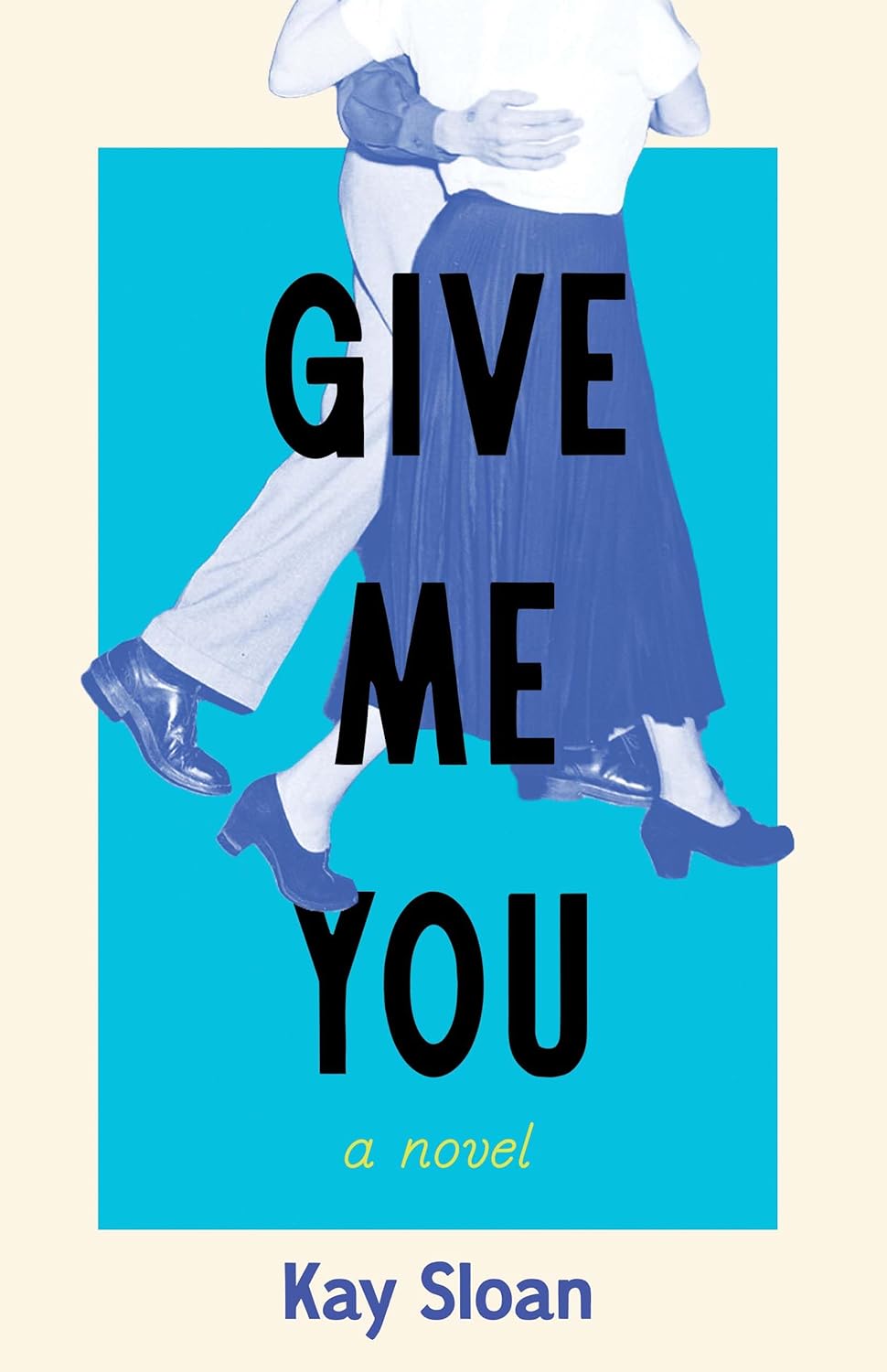
Give Me You circles around memory, aging, love, desire, and the messy strands that tie people to their past. The story follows Hilda and Rose as they move through late life with sharp tongues, scattered memories, and old passions that still burn under layers of time. Their histories unfold in fits of humor and heartbreak as the book jumps between present frustrations and vivid recollections of a wilder youth. The novel paints aging not as a slow fade but as a strange and fierce second act full of old secrets, bruised pride, and a surprising amount of longing.
I was pulled in two directions while reading this novel. Part of me was laughing at the bluntness of Hilda’s voice. The other part kept sinking into a quiet sadness as she drifted between clarity and confusion. The writing hits hard because it never settles. Scenes move fast. Thoughts jump. Memories interrupt simple moments and turn them into something richer. I enjoyed that unpredictability. It made the story feel alive and relatable. The language is sharp, witty, and shameless. I kept stopping to take in a sentence, either because it cut deep or because it cracked me up.
Rose’s chapters hit me differently. Where Hilda is all fire and stubborn grit, Rose feels like a softer ache. Her memories open slowly and with more regret and tenderness. Those sections pulled me into the emotional weight of love that lingers far longer than it should. I kept thinking about how people carry their past lovers. The book does not shy away from messy intimacy or moral gray zones, and I really respected that. Still, there were moments when the narrative wandered so far into memory that I lost my footing. I enjoyed the wandering, but I also wanted to come back to the present. I wanted more time in the room with these women as they are now because they are captivating in their contradictions.
Give Me You would be a great read for people who love character-driven stories and for anyone who wants a novel that honors aging without softening it. It is perfect for readers who enjoy family drama, sharp humor, and emotional complexity. I would hand this book to someone who likes stories that make you laugh in one breath and swallow hard in the next. Give Me You is a fierce and funny story that shines a bright light on the desires we never outgrow.
Pages: 116 | ASIN : B0G67C3DPH
Comfrey, Wyoming Book 4: Black Sheep, Black Sheep
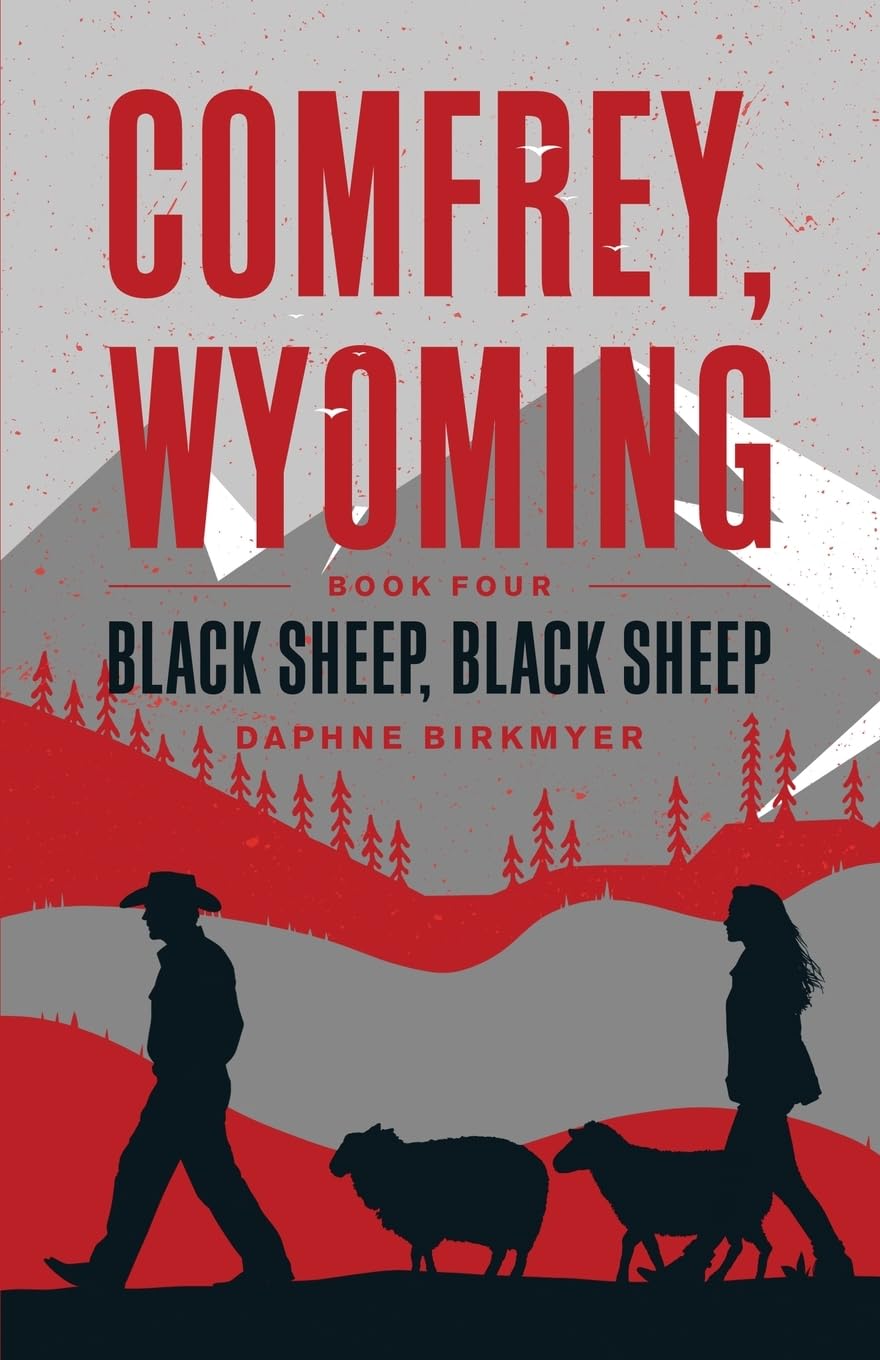

Black Sheep, Black Sheep, the fourth book in the Comfrey, Wyoming series by Daphne Birkmyer, is a layered family novel that follows intertwined lives shaped by love, secrecy, disability, and belonging. The story moves between past and present, with a strong focus on Melissa McNabb and the people orbiting her world, from siblings and parents to lovers, friends, and the quiet town that absorbs them all. It explores what family really means, how truth surfaces whether invited or not, and how difference can be both a burden and a gift.
What struck me first was the writing itself. It feels intimate and patient. The prose slows down when it needs to. It lingers on small moments. A look, a gesture, a habit. I felt close to these characters very quickly. Melissa especially stayed with me. Her inner world is rendered with care and respect, and I felt protective of her almost right away. The author never rushes her. That choice made me emotional more than once. I found myself smiling at her sharp humor and aching during her quieter struggles.
The ideas in this book landed hard for me. It takes on autism, family secrets, chosen family, and loyalty without preaching. It trusts the reader. I liked that nothing was neat. People mess up. They love fiercely and badly at the same time. I felt anger toward some choices and deep empathy for others. The theme of being the odd one out hit close to home. The black sheep idea is not just symbolic. It feels lived in.
Like Eleanor Oliphant is Completely Fine, this book feels quieter and more grounded. Where Eleanor Oliphant uses sharp humor and big emotional swings, Black Sheep, Black Sheep slowly reveals its heart in smaller, steadier moments. I would recommend Black Sheep to readers who love character-driven stories and emotional realism. It is a good fit for people who enjoy family sagas, small-town settings, and emotional books that make you think. It is especially meaningful for readers interested in neurodivergent characters written with warmth and depth.
Pages: 450 | ASIN : B0FY8W9LGM
The Seven

Igor Stefanovic’s The Seven begins as a vivid family drama wrapped in mystery and tension, and it quickly evolves into something much larger. The story follows the Meyer siblings —seven of them —each scattered across continents after their father, Abraham, sets them on a strange quest to find sculptures that represent the purity of love. The setup feels biblical, almost mythic, but the execution is modern and cinematic. From luxury yachts and family mansions to deserts and laboratories, Stefanovic paints a sweeping world filled with ego, guilt, ambition, and buried love. The tone shifts from thriller to introspection and back again, and by the end, it feels like the first act of a much grander saga.
The writing is rich and immersive, the kind that drops you right into a scene with the scent of bourbon, the thrum of a yacht party, the quiet wheeze of an oxygen tank. It’s hard not to feel something for Abraham, the dying patriarch, trying to shake his spoiled children awake. Stefanovic writes him with compassion and grit. The dialogue, though occasionally heavy, feels raw and lived-in. Some parts hit hard, like watching someone confess a lifetime of regret.
The ideas in The Seven stuck in my head. It’s about privilege and purpose, about how easy it is to lose your soul when you’ve never had to fight for it. I found myself angry at the characters but also weirdly protective of them. Stefanovic’s sense of irony is sharp, and he never lets anyone off easy. The emotional punches are subtle at first and then land all at once, like waves catching you when you’re not ready. Sometimes the prose feels indulgent, but then it snaps back with a line so clear it cuts. I liked that unpredictability.
I’d recommend The Seven to readers who enjoy family epics with emotional weight and moral complexity. If you like stories that mix glamour with existential dread, this one’s for you. The writing has heart and ambition, and it always reaches for something real.
Pages: 511 | ASIN : B0FQJNYQHF
Tequila


Tequila follows generations of the Ramirez family, from Sotero’s gamble on aging tequila in the 1950s Jaliscan Highlands to the modern corporate empire known as RAM Industries. What begins as a tale of sweat, soil, and ambition slowly becomes a saga of family betrayal, violence, and power. Across decades, we watch tequila move from rustic distilleries into the bloodstream of global trade, all while the Ramirez family wrestles with love, greed, and blood feuds that never seem to fade. It is a story that swings between passion and brutality, family devotion and ruthless ambition.
I admired the way author Tim Reuben captures place, especially the Mexican highlands where Sotero’s first plants take root. Those early chapters breathe with heat and dust, the struggle of a farmer dreaming big. Then, almost suddenly, the narrative shifts to boardrooms and courtrooms, and it struck me how ambition hardens with each generation. I found myself both hooked and unsettled. The violence was raw, sometimes shocking, yet it felt earned, a natural extension of the world Reuben built.
The writing itself is quick, sharp, and often cinematic. The dialogue snaps, the scenes cut hard, and there is little handholding. I enjoyed that rhythm because it gave the book urgency. But I also caught myself wishing for pauses, more room to breathe, especially when the story moved into modern-day plots with kidnappings, corporate lawyers, and family infighting. Still, I admired the boldness. Reuben doesn’t play it safe. He tells a story that spills over with energy, grit, and heat.
I’d recommend Tequila to readers who enjoy family sagas laced with crime, corporate drama, and old-world passion. Tequila felt like a mix of The Godfather’s family drama, the cutthroat energy of Succession, and the grit of Narcos, all poured together into one fiery shot of a story.
Pages: 407 | ASIN : B0FDH5FYHM



