Blog Archives
Make the Dark Night Shine


Make the Dark Night Shine, by Alan Lessik, is an evocative and intricately woven narrative that transports readers to the shores of Constantinople through the eyes of Kenzo Uchida, a Japanese foreign ambassador. Set against the backdrop of the interwar period, the novel captures Kenzo’s incredible transformation, as he navigates a complex web of love, loss, friendship, and an unexpected career shift. Lessik’s prose is rich and rhythmic, creating an almost lyrical quality that enhances the storytelling.
The novel unfolds as a recollection to Kenzo’s daughter, unknown to him, providing a deeply personal perspective on a turbulent historical era. Characters vividly recount their experiences of the First World War, setting the stage for the impending Second World War. Kenzo, along with his advisor and partner Mitsu, discovers a life starkly different from their homeland upon their arrival in Constantinople. The narrative details their adjustment to foreign customs, aided by their new acquaintances Gul and Elisa, a refugee with aspirations of high society. As the story progresses to Paris and edges closer to another war, the lives of these characters gradually unravel, depicting the subtle yet unstoppable forces of change. The novel explores themes of destiny and decision-making, emphasizing the belief that while we cannot control life’s trajectory, we can have faith in our choices. Family dynamics, both by choice and by bloodline, are central to the narrative, underscoring the interconnectedness of life. Lessik’s novel is a masterful blend of personal journey and historical context while maintaining an uplifting spirit even in its darker moments.
Make the Dark Night Shine is a testament to the resilience of the human spirit, offering a poignant and thoughtful reflection on life’s complexities. Its narrative never feels hurried or overwrought, but rather presents an honest account of one man’s journey through a life marked by both privilege and challenges. This book is a compelling read, offering insights that resonate well beyond its final page.
Pages: 334 | ASIN : B0CGYZF33J

What the Heart Knows
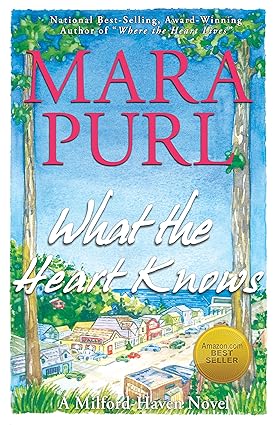

What the Heart Knows, by Mara Purl, offers a gentle narrative set in the serene town of Milford-Haven, California. Distinct from the bustling energy of Los Angeles, Milford-Haven is characterized by its tranquility and charm, making it an ideal backdrop for self-discovery and personal growth. The story primarily follows Miranda Jones, an artist who finds her identity and purpose in this quaint setting.
The book captivates from the start with a suspenseful prologue in which a reporter delves into a possibly illicit construction project, setting the stage for an unfolding mystery. The story then skillfully shifts to Miranda Jones in her art studio, introducing her as a key figure in a tapestry of intriguing characters. Although the narrative leaves room for further development of characters like Jack Sawyer and his ex-wife Samantha, their presence adds depth and intrigue. The initial mystery around the reporter’s death, while not fully resolved, serves as a compelling backdrop that enriches the overall narrative.
Purl’s writing style is fluid and accessible, effortlessly drawing readers into the world she crafts. Her attention to detail is particularly noteworthy, vividly painting scenes that come alive in the reader’s imagination. This aspect was especially appealing to me, as it allowed the narrative to unfold like a film in my mind. One of the intriguing aspects of What the Heart Knows is its diverse cast of characters. As a fan of the rich ensembles found in science fiction and fantasy, I appreciated the variety of personalities in this story. Among them, Miranda and Zack stand out as particularly engaging, and the subtle tension involving Cynthia adds an interesting dynamic. Although I believe these relationships and plotlines offer room for further exploration, they contribute to the novel’s rich tapestry and keep the reader engaged with their potential.
What the Heart Knows is a well-written, sweet story set in an idyllic town. It presents a tapestry of characters and a hint of mystery, but I feel the narrative could benefit from a more focused exploration of fewer characters and a clearer resolution of its central mysteries. Despite these elements, the book offers an enjoyable journey into a world of introspection and artistic discovery.
Pages: 332 | ASIN : B077HRPHP5

Contrasts Erupt Into Humor

Raptor Canyon follows a gin-brewing recluse, who witnesses a murder, and sets out to investigate what is happening in the canyon. What was the inspiration for the setup of your story?
Discovering ancient petroglyphs in unexpected places off-trail sparks curiosity and imagination: What do some of these unusual shapes mean? Is it possible that some depict extinct dinosaurs? This possibility inspired this key question in Raptor Canyon.
All of your characters are unique, and readers would not automatically expect them to be put together in a story. What was your approach to writing the interactions between characters?
Conflict and contrast between characters display their personalities and also shove the story forward, sometimes in surprising ways. I like to let the contrasts create conflict. I especially like to let those contrasts erupt into humor.
Your novel takes readers through some hair-raising action at times. How did you balance the action scenes with the story elements and still keep a fast pace in the story?
I think the story elements often happen best when the characters are running for their lives. I think you have to tell the story through the action.
What will the next book in that series be about, and when will it be published?
The Relic novels are not a “series,” strictly speaking. Sometimes I refer to them as a series, so readers know they are closely related, and involve the same key character, but each is a “stand alone” novel. The next is Moonshine Mesa, set to be released later this month.
Author Links: GoodReads | Facebook | Website | Amazon
As a fresh graduate, Wyatt is anxious to make his mark among the army of lawyers in a respected Denver law firm. When his boss invites him to tour a client’s development project bordering Canyonlands National Park, Wyatt jumps at the chance, but his boss is not what he seems…
When a treacherous security chief tries to kill Relic, Wyatt is caught in the deadly chase. An unusual pair, Wyatt and Relic must tolerate each other while fleeing through white-water rapids, remote gorges, and hidden caverns. Relic devises a plan to save the treasured canyon but Wyatt must come to terms with the cost to his career if he fights his powerful boss…
A college student with secret ties to the site, Faye joins the kitchen crew so she can spy on the enigmatic project. She catches Relic and Wyatt red-handed, preparing for action. But when she hears their desperate plan, she has a decision to make…
Armed with a full box of toothpicks (and a little dynamite), can the unlikely trio monkey-wrench the corrupt land deal and recast the fate of Raptor Canyon?
Raptor Canyon

Raptor Canyon by A. W. Baldwin plunges readers into a gripping tale where capitalism clashes with history and ancient relics. Dive into a world where a scheming group, which includes lawyers, unlawfully claims land from an elderly man to set up a resort. Their audacity doesn’t stop there – they plot to place fake petroglyphs on rocks, hoping to lure in more tourists. Yet, within this group, one conscientious lawyer overhears their intentions and bravely opts out, setting the stage for a thrilling chase.
Baldwin’s narrative style pulls you in, effortlessly blending action-packed sequences with realistic scenes that address today’s concerns about preserving natural landscapes. In a post-coronavirus world where we’re eager to explore, it makes us question: At what cost? The story reminds us that as we seek solace in nature, there are those who exploit it for profit, reshaping and even fabricating its history.
I was particularly enthralled by the vivid portrayal of the protagonist’s adventures and escapes. The encounters with sinister characters, the narrow getaways, and the intricate planning elements all craft an exhilarating thriller. While the ending offers hope, Baldwin leaves some threads untied, giving readers a touch of intrigue even on the last page.
Raptor Canyon is a must-read for those craving an adventure tale infused with timely environmental themes. Dive in and get lost in Baldwin’s riveting world.
Pages: 342 | ASIN : B07G1FFZ29
The Keeping Of Secrets
BUT DO YOU LOVE ME WITH LOCURA? follows a woman struggling with her career and failed relationship who visits Mexico and meets a doctor who is also struggling with life. What was the inspiration for the setup of your story?
There was a coming together of many elements, but my moving to Mexico in 1990 was the main set-up. I wasn’t a journalist as Rosie is, but new and often confusing wonders popped into my life daily. I often saw things that didn’t seem to go together, to fit, but there they were, and they somehow worked. So utter fascination was part of the setup.
People who move to another country often re-invent themselves there or bring to the foreground aspects of themselves that have been in the background. I saw that taking place around me. I am intrigued by how and why this reinventing happens. My characters who change countries do not re-cast themselves exactly, but they do find their identities wobbling all over the place.
What were the morals you were trying to capture while creating your characters?
Morals? I didn’t think about morals at all. I was just aiming to tell a story—or in this novel, four stories, given that the story is told through the eyes of four characters: Rosie the journalist; her mother the artist; Dr. Juan Ramón; his father, the orphan who became a self-made man. I did think about my characters’ values, which you could say are closely related to morals.
One thing I explored was the keeping of secrets. Each of these four main characters has a secret at some time in the story. The secrets eventually cause problems, partly because the very act of withholding, of keeping something hidden, implies not having come to terms with an aspect of oneself but also not trusting others. Secrets siphon off energy and can keep a person stuck.
A related value is the willingness to change. Each of the four characters is off balance in old mud, the dried, deep grooves in the road. The characters have to realize that their habitual ways no longer serve them and be willing to risk something different.
What were some themes that were important for you to explore in this book?
One theme is the enormous pull of family. Along with the pull of familiarity and comfort come duty and responsibility. Certainly Rosie feels a sense of duty toward her mother, all the more so because Rosie is an only child. If not her, then who? Yet there’s a desire to escape the expectations and pressure that family exerts, sometimes unknowingly, just by its existence. One’s culture does the same thing. Both Rosie and Juan Ramón struggle with that desire to escape.
Another theme focuses on what happens when someone loses control. No, I should use another word than “loses” because it sounds accidental, like, “oh, whoops. I mislaid my control.” Instead, what happens when someone voluntarily surrenders control? What happens when someone consciously stops acting as though there is only one right and perfect way to be or do or have an outcome?
We might as well let go of our effort at control because we rarely can assess the full picture anyway. There’s always an underpainting that we probably don’t detect. We see from only a narrow angle. One way this “not knowing” is reflected in the book is through language and its subtext. Any English speaker who has tried to learn a foreign language has probably struggled to learn its subjunctive mode, its “what if” forms that suggest doubts and uncertainty and wishes. The Spanish language uses the subjunctive mode far more than English, adding to Rosie’s feeling early on of always walking on unsteady ground.
What is the next book that you are working on and when will it be available?
The next book is also set in Mexico, but in a different region than this current novel. Like BUT DO YOU LOVE ME WITH LOCURA? it explores family dynamics. It will also feature betrayal and the sense that things are not as they seem. There will be a murder—or does it just look like a murder? There is a ghost. Alcohol will be involved. It’s an ongoing project, so I don’t know yet when the book will be finished.
Author Links: Amazon | GoodReads
“Each chapter drew me further into the beautiful and lyrical connection between the two main characters and into the hindrances around them.”
—Wanda Maureen Miller, author of Last Trip Home and Madeleine: Last Casquette Bride in New Orleans
“Exciting and suspenseful, with all the beauty and joy, along with the frustration and pain, of crossing cultures . . . exquisitely expressed.”
—Andrea Usher
“Mexicans speak mostly Spanish, but Rosie Logan discovers that within it lies another language composed of deliberate uncertainties that leave her rudderless.”
—Geoff Hargreaves, author of The Collector and the Blind Girl
If I Want The World To Change
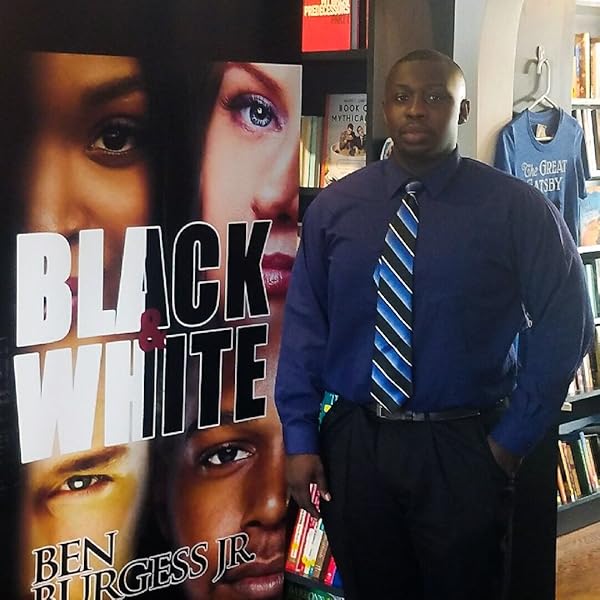
Mothers Vol. 1 follows a widowed mother of two boys who is working in a job she hates while caring for one child with cancer and the other who feels neglected. What was the inspiration for the setup of your story?
I based some of the story and characters on my mother, other mothers I’ve met, and my earlier childhood. This story was needed because I believe there is a negative stigma about single mothers and people who live in and/or come from housing projects. While impoverished areas might have higher crime and negative aspects than some areas, good people live in and come from these areas too. My main goal with every book I write is to improve race relations. If I want the world to change, I have to help it change, and I’m trying to do that with my writing.
What were the morals you were trying to capture while creating your characters?
There were a lot of morals to the story, but a few are: Don’t judge a book by its cover. Always think before you act. Your actions have consequences.
What was the chosen theme of the novel or did it develop organically as you were writing?
The theme was to honor single mothers. Juanita is a widowed single mother working a job she hates to provide for her two sons. Tracy is a single mother working nights at the hospital as a nurse’s aide to provide for her twins, Akeem and Ebony. Unfortunately, the father of her two children abandoned his responsibilities and enjoyed street life more than being a father, leaving Tracy to pick up the slack alone. Debbie is the only Caucasian mother in the novel, but she represents that single mothers come in every race, shape, and kind. She has Multiple Sclerosis and still struggling to raise her only son to be a man alone after her husband left her because he didn’t want to be a father. (This also shows that situations like this happen to every race and is just the typical stereotype for minorities) It is one thing to be a mother taking care of a sickly child, but to be a sickly mother that has to muster up the energy every day to raise your children takes strength and fortitude.
What is the next book that you are working on and when will it be available?
The next book I am working on is Mothers Vol. 2 which will be somewhat of a sequel to my novel “A Father’s Sacrifice: Daddy’s Girl. I’m a huge perfectionist when it comes to my writing, so I hope to have it finished in a year or two.
Author Links: GoodReads | Twitter | Facebook | Website
In 1995, tragedy struck when Maurice Wilson returned home from the grocery store and was killed by a stray bullet, leaving his wife, Juanita, a widowed single mother of two. Having no life insurance and barely any savings, Juanita is forced to sell what few valuable items she has to give her husband a decent burial. With her husband no longer around as the primary breadwinner and without his salary, Juanita struggled to financially keep her and her children’s heads above water, but she managed to survive.
Tragically, two years following the death of her husband, her youngest child is diagnosed with cancer, leaving Juanita deeply in debt due to copayments for treatments, surgeries, prescriptions, and transportation to and from her job and doctors’ visits. Overworked and underpaid, Juanita works a job she hates at the prestigious law firm of Wayne, Rothstein, and Lincoln to provide for her children. When her oldest child, Jalen, begins to feel neglected because his mother cannot afford to buy him the things he wants, constantly works overtime, and is always taking care of his younger brother, he is lured by the streets and a local drug dealer named Drastic. Will Jerami, Juanita’s youngest son, survive cancer? Can Juanita endure being drowned in debt and working a stressful job? Will her eldest son, Jalen, continue to be drawn to and consumed by the streets? Mothers, Vol. 1, is the riveting prologue to the award-winning novel, Defining Moments: Black and White, about a mother’s bravery and fortitude to do whatever is necessary for her children.
We Are All Humans And We Must Live Together
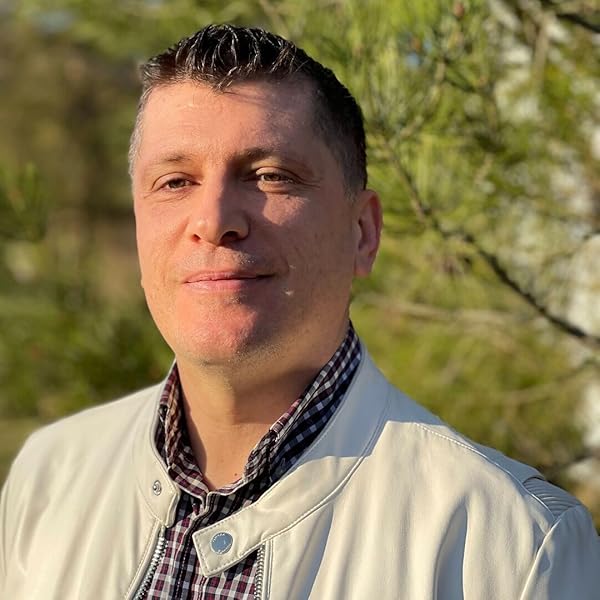
The Soul Machines follows three young friends who discover a mysterious artifact that brings out the worst in people. What was the inspiration for the setup of your story?
I chose Transylvania, the place where I grew up and that I still visit every year, because it is a region with a convoluted past, where different ethnicities, cultures, and religions coexist. I wanted to depict life at the dawn of two of the most devastating political currents in our history, because I see a lot of unfortunate similarities between the rise of extreme left and extreme right politics and the current tendency to move away from the political center.
What were the morals you were trying to capture while creating your characters?
My goal was to challenge the reader to be less hasty when judging other people, irrespective of their identities. I tried to pack this message in a story that shows love, beauty and generosity, but also hatred, cruelty and insanity. I wanted to emphasize the inner struggle of my characters, and to show their growth. You can still recognize who the “good” and “bad” characters are, but in some circumstances, good people do bad things and vice versa. I wanted to show that it is important to navigate through life following strong principles (things like taking care of the family, following your dreams, helping others, and so on), yet without committing to any idea too far. We are all humans and we must live together if we want our civilization to continue to flourish.
What were some themes that were important for you to explore in this book?
Among the many themes I tried to portray in this novel, I’d mention the coming-of-age, prejudice, family, life and death, change vs. tradition, and more.
Where does the story go in the next book, and where do you see it going in the future?
At the end of “The Soul Machines” I closed a full circle from the moment the main character unearthed the artifact in Transylvania to the moment an explosion buried it again in Austria. There are many directions to explore in a sequel with our heroes facing the rise of socialism and nazism in Europe. But first I need to publish my second novel, this time a Science Fiction story set in the near future – just a few decades from now.
Author Links: GoodReads | Twitter | Facebook



 LITERARY TITAN