Blog Archives
Woman in the Abbey
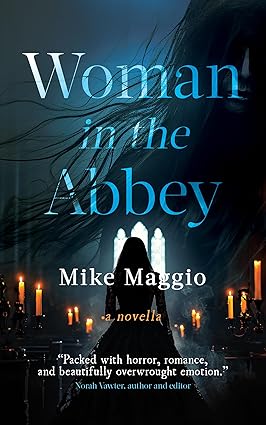

Woman in the Abbey is a rich and relentless gothic tale, told in a voice that’s both seductive and sinister. The novel spins a dark fable about temptation, regret, faith, and the blurred line between good and evil. The story is narrated by a voice we eventually come to recognize as infernal—Lucifer himself—who recounts a centuries-old cycle of suffering, fear, and tragic desire, all centered around a decaying abbey haunted by the sins of its cloistered inhabitants. Two women—Perdita and later Graziella—are pulled into the abbey’s clutches, and their stories unfold with dread, horror, and strange tenderness. The narrative is drenched in fire and shadow, full of rich, lyrical descriptions and emotional torment, while Lucifer himself wrestles with an aching, impossible longing for love and redemption.
The writing is intense—florid, poetic, deliberately archaic at times—and it works, because the story needs to feel like a fever dream. Maggio clearly delights in language, and he lets the sentences unfurl like dark ribbons, twisting into corners you didn’t see coming. I found myself rereading lines out loud just to let the rhythm hit. That said, the style won’t be for everyone. It’s indulgent, dense, and sometimes over-the-top, but honestly, that’s part of the fun. The narrator is a fallen angel who wallows in tragedy, so of course, he’s going to be melodramatic. But the emotional core, his longing, his regret, his unholy desire to be seen, is real and even moving. There were moments when I pitied him, hated him, and rooted for him, all at once.
What really got me was how Maggio managed to make this ancient villain feel heartbreakingly human. I didn’t expect to feel so much for a character that’s supposed to be the embodiment of evil. And Graziella—sweet, terrified, resilient Graziella—she felt like a candle flickering in the dark. Her struggle to escape, her confusion, her faith, all hit harder because we see it through the eyes of someone who both adores and threatens her. The abbey itself feels alive, crumbling and grotesque, a character in its own right. Sometimes the horror is physical, other times it’s spiritual or emotional, but it’s always there, pressing in. The book doesn’t give easy answers or tidy arcs. It leaves you rattled, unsettled, but also weirdly satisfied.
I’d recommend Woman in the Abbey to anyone who loves gothic fiction, horror with a heart, or stories that sit in your gut long after you’ve closed the book. It’s for readers who like to get lost in dark places—not just spooky ones, but the kinds lit by flickering candles and lined with grief. If you want atmosphere, emotion, and a narrator who’ll charm and repulse you in equal measure, this book will stick to your bones.
Pages: 134 | ASIN : B0DMNG21RT

No Plan, No Outline

Talking White Owl follows a 15-year-old teen who wins a prestigious academic scholarship, but he has no idea this is part of a plan that has been in the works for decades. What was the inspiration for the setup of your story?
First off, I wish to thank Literary Titan for the thoughtful review of my novel. The image of the young man who was to evolve into Viktor Talking White Owl was conceived in my teen years and remained with me well into adulthood when, out of the blue, he began to relate his story to me. Viktor was greatly inspired by W.H. Hudson’s wood-nymph Rima in his book Green Mansions. The setting was the Venezuelan jungles and Rima was the lone survivor of a race that had vanished. A favorite movie at the time that surely influenced me was the 1939 version of Lost Horizon. The idea of Shangri-La, a hidden valley tucked deep within the Himalayan mountains, sparked my imagination.
When creating Viktor Talking White Owl, did you have a plan for development and character traits, or did it grow organically as you were writing the story?
No plan, no outline. Plot and characters unfold as I write, which is fun. It’s a mystery as to how things emerge from the subconscious. That Viktor should be a Lakota Indian from South Dakota surprised me, having never met any Native Americans nor been exposed to aspects of reservation life. As the storyline took shape, I did a lot of research, in order to better inform myself about events, places, and the personalities involved.
What were some themes that were important for you to explore in this book?
It is only in hindsight that I recognize some themes since I didn’t start out with an agenda. My purpose in writing the book was to entertain the reader from beginning to end. Family dynamics turned out to be far more important than was ever intended. I realized early on that Native culture would play a prominent role, and I therefore needed to make details surrounding Viktor’s background especially believable. I wanted to convey the satisfaction derived from intellectual pursuits, as well as the sheer joy that comes from playing a sport, which in Viktor’s case is football.
Where do you see your characters after the book ends?
The end of the book alludes to a history-making event that will occur a decade into the future, one spearheaded by Viktor along with his daughter, Honor Red Hawk, who by then becomes a force in her own right.
Approximately 679 pages long.
Going Postal
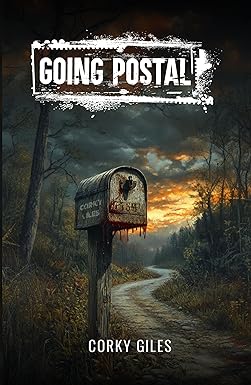

In Going Postal, Corky Giles crafts a quiet yet increasingly unsettling descent into the psyche of Fred Hart—a beloved small-town mailman whose patience, kindness, and dignity are slowly eroded by years of unspoken trauma and everyday indignities. Set in the idyllic but claustrophobic town of Cedar Creek, the story begins with Fred as a model citizen: generous, thoughtful, and tirelessly dependable. But as the narrative unfolds, and as one insult after another chips away at him, we watch Fred transform from a gentle soul into someone capable of violence and ultimately murder. The shift is slow, chilling, and heartbreakingly believable.
Reading this book made me uncomfortable, and that’s precisely what makes it so compelling. Giles’s writing has a quiet power, building tension with scenes that seem simple on the surface but simmer with suppressed emotion. The prose is honest and unflashy, letting the story’s emotional weight carry the reader. I felt an uneasy empathy for Fred, which left me questioning where the line between victim and villain really lies. The character work is so rich that when Fred finally snaps, it doesn’t feel sudden. It feels inevitable. That inevitability is what haunted me most.
Some chapters could have benefited from tightening, and occasionally, the dialogue meandered. But even when it wandered, it felt real. I also found myself frustrated, not with the book, but with the people in it—how they treated Fred, how they dismissed his quiet suffering. That frustration morphed into sadness, then dread. Giles doesn’t glorify Fred’s choices. He doesn’t excuse them. Instead, he shows us the raw, lonely road that led there. It’s not a whodunit or a thriller in the traditional sense. It’s more of a psychological slow burn, with a main character who gets under your skin and stays there.
Going Postal is a powerful, emotionally complex novel for readers who like character-driven stories with dark edges. It’s for those who wonder what happens when good people get pushed too far. If you’ve ever felt invisible, used up, or dismissed, this book might shake something loose in you.
Pages: 100 | ASIN : B0F3V4T8PG
UNSPOKEN
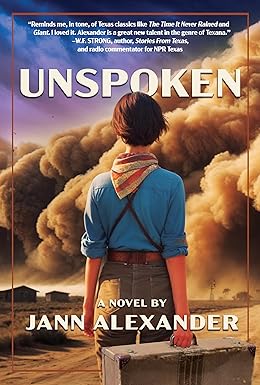
Jann Alexander’s Unspoken transports readers to the bleak and unrelenting dust storms of the 1930s Texas Panhandle, blending a vivid historical backdrop with heart-wrenching family drama. The novel opens with Ruby Lee, a young girl, grappling with the twin tragedies of her grandmother’s and baby sister’s deaths. Through her eyes, we witness the despair of her family as they fight for survival in a time and place where hope is as scarce as rain. The story spans Ruby’s journey from her dust-laden home to Waco and beyond, interweaving themes of resilience, sacrifice, and belonging.
Alexander’s prose is breathtakingly visceral. Her descriptions of the black blizzards felt suffocating. The moment in the opening chapter where Ruby witnesses birds panicking inside the church while a dust storm barrels toward them was especially haunting. The interplay of nature’s fury and human helplessness sets a tone of impending doom that lingers throughout the novel. This strong, sensory writing was a highlight.
The story shines brightest in its quieter, emotional moments. Ruby’s internal struggle after being sent to live with Cousin Bess in Waco adds depth to her character. I felt her rage and heartbreak as she battled feelings of abandonment and alienation. Her mute defiance, coupled with her obsession over colors and rain, was both poignant and relatable. However, some of the flashbacks, particularly those involving her mother’s mental deterioration, left me craving more development to fully understand their fractured bond.
Perhaps the most compelling aspect of Unspoken is its exploration of human resilience. Despite their desperate circumstances, Ruby’s family clings to slivers of hope. Her father’s quiet determination to rebuild their farm and Ruby’s eventual journey toward self-discovery remind us that even in the harshest conditions, life persists.
Unspoken is an evocative story best suited for readers who appreciate historical fiction steeped in grit and emotional intensity. Fans of novels like The Grapes of Wrath or The Nightingale will likely feel at home here. I recommend it for anyone ready to weather an emotional storm in exchange for a beautifully written tale of survival and hope.
Pages: 426 | ASIN : B0F2GMQF75

Love’s Lifeline
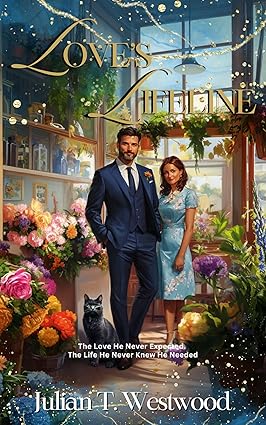
Julian T. Westwood’s Love’s Lifeline tells the story of Dr. Reginald “Reggie” Fitzwilliam, a polished and buttoned-up couples therapist whose life is meticulously ordered, until it’s not. Set largely in his office and personal sanctuary, the book unfolds through therapy sessions with clients, private reflections, professional pressure, and the unexpected companionship of a perceptive British Shorthair cat named Freud. What begins as a chronicle of others’ love lives slowly peels back Reggie’s own carefully constructed walls, revealing his struggles with vulnerability, approval, and connection. The story builds through subtle moments and personal revelations, ultimately landing on a touching and honest reckoning with his past and the possibility of new beginnings.
As the story progresses, layer after layer of Reggie’s composed exterior came off, and I found myself rooting for him more with every page. Westwood’s writing is clever and filled with understated emotion and wry humor. The dynamic between Reggie and Freud is one of the book’s most endearing elements; it gives the narrative a cozy heartbeat amid the psychological introspection. The therapy scenes themselves are handled with grace and humanity. They’re believable and gentle, and they sneak up on you emotionally. There’s a patience in the pacing that lets the weight of small moments linger, which I appreciated. But what got me most was Reggie’s slow unraveling, the way his struggle to admit his own need for love mirrors the very people he helps every day. It’s painfully real, and it hit home.
There were stretches where I wanted the tension to snap a bit louder or for a character to say something messy. The conflicts, especially with Cassandra, his sharply drawn colleague, felt a bit too restrained, and I craved more sparks. Also, the prose, while elegant, occasionally felt a little too polished, like Reggie himself. Still, even with that, Westwood’s command of character and emotional insight is clear and compassionate. This is a book written by someone who understands the ache of longing and the awkward dance of self-discovery.
Love’s Lifeline is a warm, reflective, and gently transformative story. I’d recommend it to anyone who enjoys character-driven fiction, especially readers who are drawn to stories about personal growth, emotional complexity, and the quieter forms of bravery. Therapists, perfectionists, and anyone who’s felt boxed in by expectations will likely see themselves in Reggie. It’s not flashy or fast-paced, but it lingers in your mind and in your chest.
Pages: 278 | ASIN : B0DG5TR66Q
Deception’s Edge
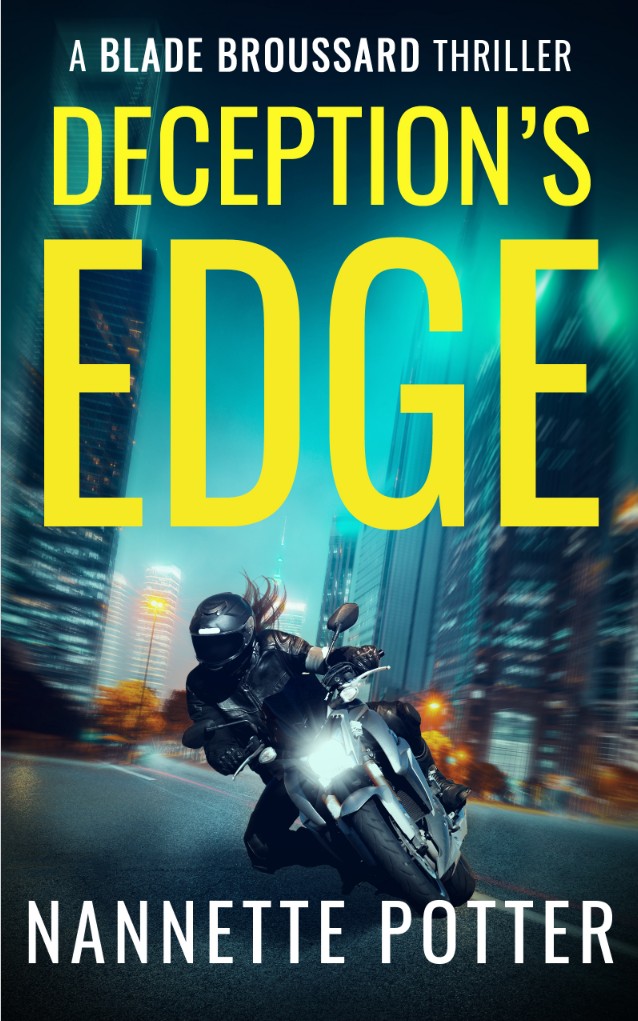
From the very first chapter, Deception’s Edge plunges you into a world that fuses action, espionage, faith, and deep personal trauma into a globe-spanning narrative. The story follows Blade Broussard, a knife-throwing performer with a haunted past, and a covert brotherhood known as the Soldati di Cristo, as they navigate an escalating series of violent confrontations and spiritual reckonings. Across cities like New Orleans, Rome, and Pyongyang, Potter weaves together a story that pits characters against ruthless regimes, their own inner demons, and a ticking clock that adds weight to every decision.
I found myself torn in the best possible way while reading this book. On one hand, the writing is brisk, full of punchy dialogue and vivid action that reads like a cinematic thriller. On the other hand, there are deeply reflective moments, grief, redemption, and hard-won faith that give the story emotional muscle. What impressed me most was Potter’s ability to bring out the complexity in her characters. Blade isn’t just a revenge-driven protagonist; she’s deeply flawed, grieving, sometimes reckless, but always inching toward growth. And Chase, who starts out as a bit of a mystery, becomes a steady heartbeat in the chaos, a man whose convictions give the plot real weight. Potter doesn’t just throw her characters into wild situations; she lets them break, rebuild, and wrestle with truth.
With a cast this large and subplots this layered, I sometimes struggled to keep track of shifting motivations, especially across the international set pieces. The story juggled many threads, action, espionage, faith-based conflict, and interpersonal drama. But I can’t deny that even when the plot got tangled, the emotional stakes stayed strong. The writing has heart, and that matters more to me than perfect pacing.
Deception’s Edge surprised me. It’s not just another thriller. It’s part Jason Bourne, part missionary story, part personal redemption arc. I’d recommend it to anyone who enjoys high-octane action with soul. It’s especially a good fit for readers who appreciate stories that ask hard questions about faith, forgiveness, and how we move forward when everything’s been taken from us. If you want a thriller with grit and grace, give this one a shot.
Meaningful Introduction to Books

Harry the Hedgehog’s Harvest follows a group of friends excited about the harvest festival who after a heavy rain washes away many of the acorns and seeds, they rally together, plant anew, and discover the power of kindness and community. What were some educational aspects that were important for you to include in this children’s book?
It was important for me to include language patterns, alliteration, sounds, reading and listening, creating a fun and engaging method in reading in learning.
What experience in your life has had the biggest impact on your writing?
As an educator, I appreciate how essential learning, listening language through words and pictures can be inspiring and a meaningful introduction to books. As a younger me, I remember vividly going to the library and reading, Jemima Puddle Duck by Beatrix Potter. Her books left a remarkable mark on my life. Life experiences enforce the joy of books. I believe reading should start young and the illustrations must be relatable.
What will the next book in that series be about, and when will it be published?
I have written the next book in the series, and I am currently waiting for the illustrations to arrive. Harry the Hedgehog and the Lost Eggs and Bluebird’s Engagement.
Author Links: GoodReads | X (Twitter) | Facebook | Instagram | Website | Amazon
Harry and his friends are very upset to find that the entire harvecst has been washed away by rain.
How will they overcome this disaster?
Will they ever have a harvest feast again?
A Diagnosis Is Never the End

Lexi and the Super Chair is the empowering story of a young girl whose life is changed by paralysis, but who rediscovers freedom, adventure, and joy through a magical power chair and an unbreakable spirit. Why was this an important book for you to write?
I actually became fully paralyzed in 2014 when I was 21 years old. I now can only move my head a little, and I have to use a ventilator to breathe. In the first couple years of my journey through paralysis, I struggled greatly with depression and grief. But as my journey has continued, I have become a happy and successful individual, not in spite of, but in some ways because of my paralysis.
Needless to say, I understand the struggle of physical disability. I’ve always been a lover of children, and when I imagine kids in this situation, or in other situations involving disabilities or diseases, I know some of them must struggle as well. So I wanted to write this book for several reasons, chief among them to give a boost and hope to kids with disabilities and diseases, to help them and their families realize that a diagnosis is never the end of someone’s story, but that you can still achieve great things no matter what.
My grand scheme is to have this book freely available in hospitals and rehab centers for children and their families who need it most.
How did you approach writing about disability in a way that’s honest yet hopeful for young readers?
Personal experience had a lot to do with how I wrote the book. But I also know that children are endlessly curious and incredibly strong. When kids come up to me, usually somewhat shyly at first, I make sure to tell them the truth of my situation. They always take it surprisingly well and ask a million questions if their parents don’t steal them away too quickly! I never want to shy away from the truth with them, but being a hopeful person myself, I don’t want them to feel bad for me, either. From this attitude sprang my approach to writing this story.
What do you hope children, both with and without disabilities, take away from Lexi’s story?
I love that you mentioned children without disabilities as well as those with them because they are an important part of the audience I’m trying to reach, as well. But the messages are essentially the same for both kinds of kids: there is always hope, no matter the situation. I want children to be happy being themselves, I want them to be able to take pride in their achievements, and I want them to be empathetic and understanding of those in situations differing from their own. That is my hope for Lexi’s story.
When and where will the book be available?
I’m still searching for a publisher, but you’ll be the first to know when I find one! I will include here my website, Instagram, and Facebook page so that you can stay up-to-date with Lexi and her story.
Author Links: Facebook | Website | Instagram



 LITERARY TITAN