Blog Archives
Razor’s Return


Razor’s Return tells the story of Senior Chief Petty Officer Zack “Razor” Reston, a Navy SEAL with a quiet intensity, and Eve Patterson, a confident, self-sufficient realtor with a military legacy of her own. What begins as a simple community service assignment, Razor caddying for Eve at a charity golf event, quickly snowballs into an unexpected and heartwarming romance. As they navigate their growing connection, the story dives into their vulnerabilities, the burdens they carry, and the unique challenges that come with loving someone tied to the military.
What I loved most about this book was the grounded chemistry between Razor and Eve. Their banter felt real, at times awkward, at times electric, and it reminded me of the stumbling starts of many true-to-life relationships. The dialogue never felt forced. Razor, despite his intimidating presence and gruff exterior, was a refreshing kind of romantic lead: quiet, respectful, haunted, and utterly sincere. And Eve, God, I admired her fire. She wasn’t waiting for a man to rescue her; she held her own, physically and emotionally. Watching her disarm men, sometimes literally, while navigating Razor’s rough edges was deeply satisfying. The scenes were often intimate, not just physically but emotionally, and they stuck with me.
Razor’s inner monologue, especially about how out-of-place he felt or how “classy” Eve seemed, sometimes circled the same track. Still, it’s a small gripe. Biggerstaff clearly writes with affection for the characters and with knowledge of military life. There were heartfelt moments, especially the ones tied to Eve’s father, that hit harder than I expected. It’s a romance, yes, but it’s also a quiet nod to service, sacrifice, and resilience. It reminded me how much emotion lives just under the surface for folks in uniform.
Razor’s Return is an easy recommendation. If you’re into military romance that feels authentic but isn’t bogged down in melodrama, this one’s for you. It’s tender, funny, and surprisingly deep in parts. Perfect for fans of quiet tough guys, strong women, and second chances.
Pages: 215 | ASIN : B0F2P3XLVS

Beginning With The End In Mind

The Last Altar Boy follows a deeply wounded man traveling through the American heartland to scatter his daughter’s ashes and make peace with his past. What was the inspiration for the setup of your story?
I’m an ardent believer in beginning with the end in mind.
In September 2014, I had a dream, unlike any dream I ever experienced. (If readers wish to know more about that dream, they’ll find the link to an essay I wrote in 2023, before launching “Charlie”: https://carlreinelt.com/blogs/blog/the-story-behind-the-story-of-charlie )
When I took to the road in June 2015 to begin writing what would become an epic quest for redemption, I wasn’t thinking at all about a series. I was merely responding to a calling to write a story that paralleled the sins of my own dysfunctional life. I wasn’t even sure why, but I was acting on faith. Prior to that road trip, three years of intensive psychotherapy had opened my eyes to many aspects about the nature of childhood trauma, drug addiction, and the terrible cost they exact on families, friendships and the human spirit. Bundle all that with other family tragedies of abuse, neglect, and loss, and you’ve got a character named Charlie Houden.
Reflecting, two years later, on the surreal nature of that 2015 road trip, I realized that any true healing arc for Charlie Houden must begin with psychological healing, culminating in the intense desire to traverse the bridge into spiritual healing. Thus, the realization that “Charlies Ladder” was merely the beginning. Surprisingly, I had already acquired the material necessary for the sequel from that original road trip.
Revision upon revision over the next four years brought me to a Roman Catholic priest, who validated the assumption that true healing must occur in this order. (That priest, by the way, has a Ph.D. in clinical psychotherapy.)
It seemed like you took your time in building the characters and the story to great emotional effect. How did you manage the pacing of the story while keeping readers engaged?
What a perceptive question! Pacing and plot management, indeed, were major challenges. Realizing I needed an ultimate antagonist, such a figure had to lurk and operate in the shadows for a time, to introduce an itch the reader couldn’t scratch. Using the theme of a demon Charlie couldn’t exorcise from his psyche, and amplifying the mischief that demon could cause — “through the prudent use of humans” — kept me thinking about ways to continually “up the ante” by painting Houden ever more tightly into the demon’s trap. Doing so without Houden’s knowledge made for some delicious options and detours into dramatic irony.
Given Houden’s early grounding in Catholic doctrine and theology, which informed his choices, I had to become quite familiar with the spiritual teachings of the “father of western philosophy,” Saint Augustine. Providing the reader with enough data — to help their understanding of Charlie’s actions — had to be carefully balanced with the need for ever-faster pacing.
However, the biggest challenge was bringing all the lethal forces together at once — in a sequence that felt logical — while approaching a frenzied pace. Scene changes had to be swift and creative, yet revealing. Tightening the narrative prose with constant rewrites over time helped “tighten the noose,” amplifying the sense of dread.
What were some themes that were important for you to explore in this book?
There were several themes that kept presenting themselves. Part of the value of the rewrites was sharpening the focus on the most salient themes to the story arc. Seven themes emerged:
- Trauma, and its dark impact across generations.
- Apophenia — and its challenges as a result of trauma.
- Human capacity for good and evil.
- The power of faith and our relationship to God.
- Conversely, the loss of that faith, and how it blinds us to truth.
- Agape love and self-sacrifice.
- The vital role of self-forgiveness in healing.
Where do you see your characters after the book ends?
Generally speaking, none of the characters are unaffected. No one who was there on the seventh day could remain indifferent. Without indulging spoilers…I think the three characters who most inspire imagination concerning the direction of their lives are:
- The papergirl
- The Police chief
- The priest
However, all who witnessed the climactic confluence of good vs evil are forever changed. And that truly IS the point: in the end, Charlie Houden is each of us; and we ARE Charlie…struggling to bring order from chaos, thereby finding our ultimate purpose.
The Quantum Gate
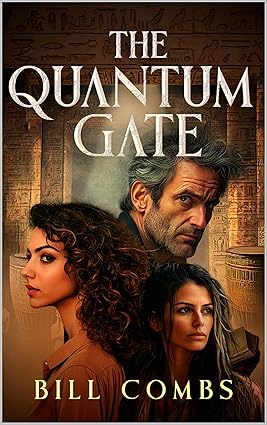

The Quantum Gate by Bill Combs is a richly layered blend of speculative science fiction, metaphysical intrigue, and family drama. The novel follows Ethan Cross, a disgraced physicist whose theories about consciousness and quantum mechanics have cast him out of academia. After receiving a mysterious letter from a presumed-dead mentor and a mystical compass pointing to Egypt, Ethan sets out to uncover the truth behind the fabled Hall of Records, a legendary archive of human knowledge hidden beneath the sands. Alongside him is his estranged daughter Sofi, a staunch rationalist and astrophysicist, whose journey becomes as much about reconciling with her father as it is about the greater cosmic mystery unfolding around them. As ancient secrets clash with shadowy forces, the novel builds toward a confrontation not just between characters, but between faith and reason, memory and truth.
Reading this book felt like falling into a dream that’s just real enough to unsettle you. Combs writes with a cinematic flair; the imagery of Cairo’s sunbaked streets, flickering candlelit archives, and high-stakes archaeological catacombs are vivid and haunting. The characters, especially Ethan and Sofi, are relatable, flawed, conflicted, and driven by wounds that feel real. I appreciated how the novel didn’t rush. It took its time to steep in emotion and doubt, letting revelations come like whispers instead of shouts. There’s a beautiful sadness that runs through the pages, especially in the echoes of lost love and fractured family. That emotional weight gives the high-concept science-fiction backbone a surprising intimacy.
There are moments where the dialogue leans into explanation-heavy exchanges, and some plot turns felt more told than shown. But even so, I never felt like I was slogging. The writing has heart. It feels personal, like a story the author has lived in for a long time. And that makes all the difference.
I would recommend The Quantum Gate to readers who love a thoughtful, emotional dive into mystery and mysticism, especially fans of Dan Brown, Carlos Ruiz Zafón, or those who enjoy science fiction that dares to ask big questions about consciousness, destiny, and the human soul. It’s for anyone who’s ever lost someone and wondered if maybe there’s a hidden truth behind the veil of what we call reality. If you’re open to stories that blend science, spirit, and sorrow, this one will be a great book for you.
Pages: 290 | ASIN : B0F2JBYH5Y
Who Am I?
A Code of Knights and Deception follows a disillusioned stay-at-home mother, who is unexpectedly thrust into a medieval world after a visit to Warwick Castle. What was the inspiration for the setup of your story?
The seed for this story was planted over a decade ago when I was going through major life changes—navigating motherhood, grappling with identity shifts, and craving a sense of purpose beyond the everyday routines. One day, I found myself imagining a woman standing in a historic castle, feeling invisible and out of place in her own life, when suddenly everything changed. What if she wasn’t just visiting history, but living it?
I’ve always been fascinated by time travel stories like Outlander, but I wanted to explore something different. What would it be like for a modern woman with a scientific, logical mindset to be thrown into the raw, brutal reality of medieval England? Not a fantasy version, but a historically grounded one—with real stakes, real danger, and no magic to save her. I wanted her disorientation to feel authentic, her reactions believable. That meant no corset-loving romanticism, but real struggles: survival, powerlessness, the aching separation from her child, and the weight of being a woman in a society that barely saw her as a person.
Warwick Castle was the perfect setting. I spent time researching its layout, history, and the de Beauchamp family, who ruled it during the 1400s. I loved the idea of grounding her journey in an actual place with rich historical detail while weaving in the mystery of how—and why—she ended up there. What unfolds isn’t just a survival story, but a deep personal reckoning with identity, freedom, and desire.
What were some of the emotional and moral guidelines you followed when developing your characters?
I wanted the characters to feel emotionally raw and morally complex—especially Sophia and Henry. Sophia is thrust into a world where her values and modern sensibilities clash with the brutal, hierarchical system of medieval England. I didn’t want her to be overly idealistic or immediately capable; she reacts with fear, grief, rage, and resilience in believable ways. Her love for her son grounds her, even as her growing connection with Henry threatens to unravel everything she thought she knew about loyalty and love.
With Henry, I had to be especially careful. He’s not a modern man, and I didn’t want to sanitise or romanticise him. But I also didn’t want to make him irredeemable. His morality is shaped by a violent, patriarchal world, and yet he’s quietly resisting it in his own way. His protectiveness, secrets, and inner conflict make him both dangerous and compelling.
Even the secondary characters—like Lizzi or Charles—had to reflect the values of their time while still offering space for nuance. I avoided making anyone purely good or evil. Instead, I focused on motivation, trauma, and the grey areas where love, duty, and survival intersect.
What were some themes that were important for you to explore in this book?
The central theme is identity—what defines it, what threatens it, and what reshapes it. Sophia is a woman who has slowly lost herself to motherhood and societal expectations. Being thrown into the past strips her of all external identifiers—her phone, her career, even her name at times. She’s forced to ask: Who am I without everything I used to rely on?
Another key theme is freedom vs. confinement. From the very beginning, Sophia is caged—emotionally, domestically, and eventually literally. The castle becomes both a place of fascination and a prison. I wanted to show the subtle and overt ways women have been trapped across time—and how reclaiming power, even in small moments, can be a radical act.
Love and moral compromise are also central. Sophia’s growing feelings for Henry don’t erase the reality that she has a husband and son in the future. She constantly wrestles with guilt, desire, and the tension between emotional truth and moral obligation.
Finally, truth and reality play a big role, especially given the sci-fi twist of VR. If your body is in one place, but your heart belongs to another… what’s real? This will become even more important in the second book, where the boundary between memory, identity, and illusion begins to blur.
Where does the story go in the next book and where do you see it going in the future?
Book two will conclude the series and picks up right where A Code of Knights and Deception leaves off—with Sophia facing the fallout of a devastating cliffhanger. Without giving too much away, she’ll be forced to make an impossible choice: stay in her world—or fight for a place in one that was never meant for her. Ethan’s secrets unravel, and Sophia must reckon with the real consequences of the technology that brought her there. Will she save the people who did her wrong?
The next book will delve deeper into the question: What is real? Memory, consciousness, emotion? If those things can be simulated, what does that mean for love—and for truth?
Expect more swordplay, political tension, emotional turmoil, and steamy scenes that test both characters’ limits.
Author Links: GoodReads | Facebook | Website
When Sophia wakes up in 15th-century England, she expects hardship—but nothing prepares her for this brutal, unforgiving world. Lost, alone, and desperate to return to her husband and son, she vows to find a way home. But as weeks pass, Sophia finds kinship and purpose in this strange land.
After a violent attack, she takes fate into her own hands, disguising herself as a man to train under Henry, the castle’s enigmatic master-at-arms. As steel clashes and their connection deepens, forbidden desire ignites.
Yet Henry is not the knight he claims to be. His real name is Ethan, and this is the least of the lies he tells her. Falling for Sophia was never part of the plan—but the closer they become, the more he realises how wrong it is to keep her in the dark.
As danger closes in and the lines between reality and deception blur, Sophia must uncover the truth about Henry—and herself—before she runs out of time.
Outlander meets Black Mirror in this sizzling dark Historical Romantasy with time travel, forbidden love, found family, a morally grey knight, and a fierce heroine—both hiding secret identities, deceiving each other in a game of survival and passion.
*Warning: strong language, steamy scenes, and graphic violence inside. Mention/Description of, but not limited to, abduction, blood, death, amputation, childbirth, death, sexual assault, suicide, violence against children, rape, and torture.*
The book is the first in a duology and ends with a cliffhanger.
Alternative Perspectives

Nanite Evolution follows a cutting-edge space yacht that collides with a freighter, leaving they are left stranded while experimental nanites with unknown capabilities begin causing problems; in order to survive, they must find a way to become allies with the nanites. What was the inspiration for the setup of your story?
First, I would like to thank Literary Titans for the opportunity to share my thoughts. The inspiration for Nanite Evolution stemmed from considering the pace of technological change and what slows that rate of progress. Many discoveries are not intended but occur as a result of accidents. In the natural world, evolution can sometimes experience significant jumps forward in a relatively short period.
Nanites and AI are in the news, and if we project into the future, it will eventually become natural to have a direct interface with nanites from the human brain. Except that such a level of change has numerous ethical and legal implications. You don’t just experiment on humans. That is our resistance. But what if the situation doesn’t have the safeguards? What if the nanites decide? What if the nanites evolve?
To make that situation happen, the setting and circumstances would need to be extreme, which would probably not be what anyone wanted.
I find the world you created in this novel brimming with possibilities. Where did the inspiration for the setting come from, and how did it change as you were writing?
The setting of the future was the natural choice, which led to it being in space. To create the conditions for the story to play out, I thought, what would be a progression from today, and how bad could it be? What extreme would provide the best conditions for the nanites to evolve?
I thought about things like, in 3,000 years, what drives space colonization and what are the political and economic norms that could drive more systematic colonization. Drawing on what we see in society today, I positioned the ultra-rich as the primary drivers of colonization. They have the money. They have the desire. But what would that look like?
Several things changed during the writing. The biggest one was realizing I needed to make the Dunks and some of the others more disgusting to convey the extremes that could happen with unchecked power. I decided to scale back on some of the world building, following the writing advice of experienced authors, to keep what is essential to the story. When there are world details, I wanted them to have a basis in physics to be real.
The science inserted in the fiction, I felt, was well balanced. How did you manage to keep it grounded while still providing the fantastic edge science fiction stories usually provide?
I’m an engineer, and I love physics, but I know the average reader is not digging into how the universe works. I view explaining some of these concepts as having just enough so that the nerds will nod and say, It sounds plausible, and everyone else will read it and think it is interesting, but I don’t need all the details. I enjoy offering alternative perspectives on technology and its applications.
What is the next book that you are working on and when will it be available?
I have two projects that are in active development. The first is the second book in the Pandemic Hacker series. It takes the protagonist from being hunted by bad guys to hunting them. It is set in 2021, immediately following the events of the first book. The first draft is complete, and I plan to release Pandemic Hacker 2 by fall.
The second project is my first book in the fantasy genre. The working title is “The Last Dwarf”. If we don’t have the legendary dwarfs today, there was a point where there was only one left. What was their adventure? I’m also exploring old ideas from traditional fantasy. Things like, why do dragons love gold if they never need to buy things?
I’m always exploring story ideas and constantly making notes to revisit in the future. This constant stream of ideas that may never be finished is why I have “No limit for your mind” on my website.
Author Links: GoodReads | Facebook | Website
Blayden Dunk, the heir apparent of the Dunk family dynasty, is launching his cutting-edge space yacht—a fusion of luxury and nerd gaming showpiece—and finds himself in a dangerous situation. The yacht, plagued by malfunctioning systems, collides with a freighter and performs an emergency jump, leaving both vessels stranded amidst the stars. The crash releases experimental nanites—tiny machines with unforeseen capabilities. Instead of behaving in expected ways, the nanites suddenly make a dangerous situation even worse. Suddenly, Blayden and his guests are stranded, and the group’s survival hinges on turning the nanites into allies.
Cher is a spy for her independent colony, searching for details of the Dunk plan. Working to protect her planet and learn the Dunk secrets, Cher discovers someone else is also trying to track down the details of the Dunks’ plan, which makes her wonder whether they’re a friend or enemy and how the missing yacht factors in.
When Blayden returns in a freighter instead of his yacht and the nanites are revealed, Cher and other interested parties must alter their plans and improvise quickly.
But who controls these powerful constructs, and what was their intent? Are the nanites the ultimate tools for construction, salvation for humanity, or an unstoppable weapon poised to alter the balance of power?
The Worst Explorers Ever
What I Did After I Died follows a man who is unaware he is dead as he enlists his family to accompany him on an unconventional treasure hunt. Where did the idea for this story come from?
I traveled north for a guys’ fishing trip in New Hampshire and a bartender told us about a lake in the mountains with free canoes. We found the lake on Google Maps and drove up a road that turned into gravel, and then into complete brush. We abandoned the car and started hiking through thickets for miles, getting totally exhausted, and never finding the lake. We were the worst explorers ever, which planted the seed to write about a disastrous mountain adventure. Maybe the ghosts idea came from all the jokes we made while hiking, that we would surely die out there. By the way, there was an alternate road that we discovered hours later, with a nicely paved trail to the lake.
What part of this book was the most fun to write?
My two prior novels, To the Top of Greenfield Street and When To Fire, are coming of age and psychic-western, respectively. Writing an adventurous quest felt different and fun. I liked the parallel of a family searching for treasure alongside a ghost searching for spiritual peace.
What characters in your book are most similar to you or to people you know?
This book is heavy on family dynamics that echo my daughter, wife, and my sister. The latter especially loved this story and urged me forward.
Can we look forward to more work from you soon? What are you currently working on?
I’m a high school teacher looking forward to writing all summer. Sometimes I read short stories that I wrote decades ago and find inspiration. So far my novels involve realism, psychics, and ghosts, so maybe my next move is aliens, haha.
Author Links: X | Facebook | Website
Talking White Owl
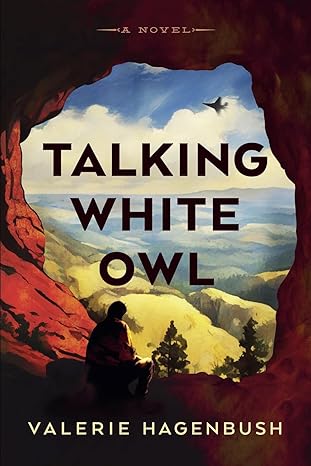
Talking White Owl, a 15-year-old descendant of the Lakota Tribe, has spent his life near the sacred Black Hills of South Dakota. When he learns he’s been awarded a prestigious academic scholarship from Ohio State University, it feels like the beginning of something promising. What he doesn’t realize is that this single moment will ignite a chain of events that will alter his life and possibly much more.
Unbeknownst to him, the elusive Rawakota Tribe, believed by many to be extinct, has been watching closely. Their sights are set on reclaiming land lost to broken treaties, a mission tied to the larger ambitions of the Council of First Nations. Their plan? To use Talking White Owl as a key figure in their efforts.
Valerie Hagenbush’s Talking White Owl is a contemporary fiction novel that blends cultural legacy, political struggle, and personal awakening. Echoes of the TV series Dark Winds and the film Thunderheart will resonate with readers, though Hagenbush brings a voice and vision distinctly her own.
Tackling Native American issues, especially the ongoing consequences of stolen land and fractured treaties, requires sensitivity and courage. Hagenbush approaches the subject with both. Her narrative doesn’t tiptoe; it confronts. And while the topic is fraught, the writing never veers into melodrama. Instead, it invites thoughtful reflection, balancing historical injustice with deeply personal stakes.
At the heart of it all is Talking White Owl himself. Grounded in tradition but disconnected from its deeper meanings, he begins to sense a spiritual link to the mysterious Rawakota. Visions push him toward answers, but clarity doesn’t come easily. As secrets emerge, he finds himself torn between honoring his heritage and questioning the motives of those who claim to protect it.
There’s a lot in motion here, political undercurrents, spiritual revelations, coming-of-age dilemmas, but Hagenbush juggles these threads with skill. She manages to weave suspense, emotional gravity, and cultural nuance into a seamless whole. Her supporting characters are vivid, her pacing assured, and her prose charged with conviction.
Talking White Owl is more than a compelling read; it’s a powerful, introspective journey. As its young protagonist grapples with his identity, legacy, and the weight of expectations, readers will find themselves drawn into a story that lingers long after the final page.
Pages: 680 | ASIN : B0DNF5JXLM

Vaccine: A Terrorism Thriller

Robin C. Rickards’ Vaccine: A Terrorism Thriller is a tightly wound medical and geopolitical thriller that spans decades, tracing the roots and reach of a mysterious virus with chilling implications. The novel kicks off with a covert extraction in post-war Vietnam, spirals into secretive military research at Fort Detrick, and stretches to the 1990s with echoes of biological danger and buried secrets. At its core, the book follows Major Darien Rhodes, a gifted but stubborn infectious disease expert, as he battles bureaucracy, hidden agendas, and his own conscience in an effort to uncover the truth behind a terrifying disease with no name, no cause, and no cure.
What struck me most was the writing’s visceral intensity. The first few chapters grabbed me, drenched in sweat, blood, and the low thrum of helicopters and paranoia. Rickards writes like someone who’s lived in a lab coat and knows what’s at stake when science goes silent. The pacing is confident, with bursts of claustrophobic tension that feel like watching a fuse burn. But it’s not just action; the book spends thoughtful time inside the minds of its characters. Rhodes is a complex, sympathetic lead — brilliant, dogged, haunted. His frustration with the military’s politics and their cold, calculated response to a mystery illness felt raw and real, especially in an era where public trust in institutions is fragile.
The plot sometimes leans on exposition. There are moments, particularly during scientific breakdowns or historical recounts, where the narrative slows and the tension thins out. At times, the dialogue leans more toward explanation than emotion, shifting the focus from character feeling to background detail. Still, I didn’t mind being taught, because Rickards clearly knows his stuff. The background in infectious disease, military protocol, and covert research added weight and believability. And when the story snaps back into motion — as it often does — it hits hard. The final act, in particular, left me uneasy in the best way, with ethical questions echoing after the last page.
I’d recommend Vaccine to readers who enjoy thrillers with brains and backbone. It’s ideal for fans of Michael Crichton, Richard Preston, or anyone who likes their fiction layered with fact. If you’ve ever wondered what kind of nightmares lie behind closed lab doors, or how far people will go to hide the truth, this book’s for you. It’s gritty, smart, and at times deeply unsettling.
Pages: 421 | ASIN : B009596W5O



 LITERARY TITAN