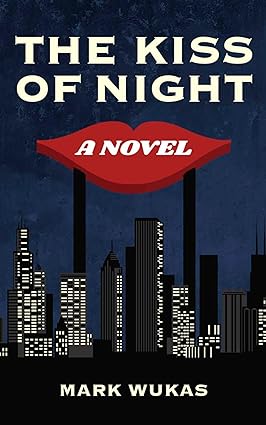
The Kiss of Night is a sharp and heartfelt novel set in the shadowy underbelly of Chicago journalism and crime. Told through the lens of Will Moore, a former classicist turned newspaper editor, the story retraces the roots of a decades-old secret between Will and retired homicide detective Frank Foley. The plot unfolds as a mystery layered with reflections on morality, loyalty, and regret. What begins with the obituary of a legendary cop slowly unravels into an exploration of a shared past haunted by violence, ethical compromise, and a chilling understanding of justice.
What struck me immediately was the writing. It’s clean, stylish, and unpretentious. Mark Wukas writes like someone who has seen things—journalism that feels lived-in, dialogue that crackles, characters who breathe. The voice is witty but vulnerable. I loved how the narrator doesn’t pretend to be a hero. He fumbles, he overreaches, he regrets. And I could relate to that. Wukas builds the suspense slowly, not with cheap thrills, but with memory, conscience, and the weight of choices. That’s what hooked me: not the mystery, but the man trying to live with it.
There’s a lot of reflection, and if you’re in the mood for fast-paced action, you might fidget through the philosophical detours. But I didn’t mind them. They grounded the story. I liked sitting in the newsroom with Will, feeling the city breathe outside the windows. And Foley? God, Foley was a character. Crude, brilliant, and strangely touching. Their relationship—gruff affection, mutual wariness, unspeakable bonds—was the novel’s aching heart.
The Kiss of Night is a book about ghosts—of people, places, past selves—and what it means to try and do right in a world that rarely lets you. It’s for readers who love character-driven crime fiction, who want a story with soul and grit, not just blood and bullets. I’d recommend it to anyone who’s worked in news, lived in Chicago, or wrestled with guilt. Wukas’s writing reminds me of Michael Connelly’s gritty realism mixed with the introspective depth of Raymond Chandler, but with the emotional resonance of Richard Russo.
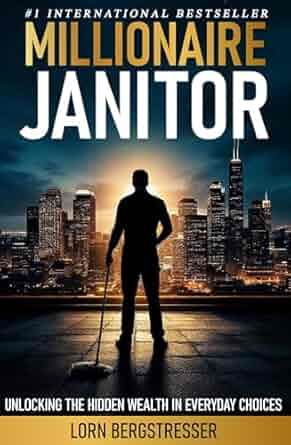
The Millionaire Janitor is a modern-day rags-to-riches story centered on Horatio Alger Jefferson, a humble and hardworking janitor, and his journey from poverty to financial stability. Set against the backdrop of gritty South Chicago, the novel follows Horatio and his partner Melody as they navigate the harsh realities of life with grit, old-fashioned values, and a relentless focus on wise financial decisions. It blends a narrative style with life lessons and financial principles, using Horatio’s fictional rise as a metaphor for the real-world potential of the average American to build wealth through discipline, sacrifice, and perseverance.
What struck me first was how charmingly simple the prose is. Bergstresser avoids flashy language and highbrow metaphors, opting instead for straightforward storytelling laced with warmth and earnestness. This isn’t literary fiction; it’s closer to an extended parable with heart. The writing may come across as a bit heavy-handed at times—some might say even moralistic—but it works within the context. There’s a homespun, almost old-school feel to it, reminiscent of stories your grandpa might tell at the kitchen table. The characters are endearing. Horatio, in particular, is drawn with such gentle sincerity that I found myself rooting for him early on.
Where the book really earns its keep is in its ideas. Bergstresser uses fiction to deliver practical, no-nonsense financial wisdom. There are detailed lessons here—how to budget, why modest living matters, and the magic of compound interest. It feels like The Millionaire Next Door had a baby with The Pursuit of Happyness. I appreciated how the story elevates the ordinary and dignifies blue-collar work, especially in a time when that’s not always the message young readers hear. There were moments where the tone crossed from encouraging to sermonizing. Still, I admire the author’s guts in taking a stand for values that aren’t always in vogue.
I’d wholeheartedly recommend it to teens and young adults starting out in life, especially those facing tough odds. It’s also great for parents and teachers looking for a clean, values-rich story that teaches life lessons without being dry. If you’re someone who likes your inspiration with a dose of practicality, you’ll enjoy this. It’s full of heart, full of hope, and packed with the kind of wisdom that never really goes out of style.
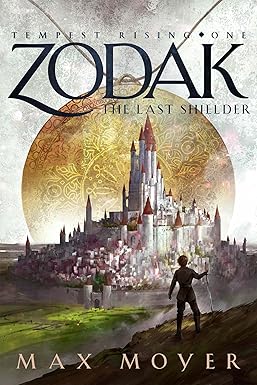
Max Moyer’s Zodak: The Last Shielder, the first in the Tempest Rising series, follows a teenage orphan, Zodak, who grows up in a cruel household where he’s treated like a curse. But something stirs in the shadows of the world—a hint of destiny, magic, and ancient prophecy. When a water sprite calls his name and beckons him toward a greater purpose, Zodak’s quiet, harsh life begins to unravel. What starts as a simple, grounded coming-of-age tale soon reveals a broader mythos full of forgotten magic, ancient books, secret lineages, and the deep, thrumming power of belief and identity in a broken world.
The writing is fluid and vivid, making the world feel dirty, real, and magical at the same time. Moyer does a brilliant job of pulling readers into Zodak’s narrow, painful life, so much so that I found myself wincing at every insult and rooting for his small moments of rebellion. The prose is clean but emotionally rich, with bursts of beauty that feel earned rather than forced. What hit me hardest was the aching loneliness in Zodak’s voice—the way he yearns for love, belonging, and meaning in a world that treats him like an afterthought. It’s not just a fantasy story, it’s a story about being seen.
The book doesn’t lean too hard into tropes. There’s prophecy, yes, but also doubt. There’s magic, but it’s quiet, hidden, uncertain. The characters feel alive, especially the complex ones—like Alana, Zodak’s cousin, who starts cruel but unfolds in a way that’s strangely touching. I’ll admit, some parts were slow, especially early scenes where the abuse piled on so thick I wanted to yell at the pages. But that pain pays off later, making Zodak’s small victories feel like revolutions. And the moment he realizes his story has power? That got me.
Zodak: The Last Shielder is about truth, pain, and the quiet force of imagination when it’s all you’ve got. It’s about choosing to believe in something bigger when the world tells you not to. I’d recommend this book to fans of grounded, character-driven fantasy with a slow build and emotional punch. Especially to teens who feel like outcasts, writers who write in secret, or anyone who’s ever hoped for a better world in the silence of their room. If you’re a fan of Brandon Sanderson’s world-building, Patrick Rothfuss’s lyrical prose, or the emotional depth and quiet magic of Lois Lowry, then you’ll really enjoy Zodak: The Last Shielder.
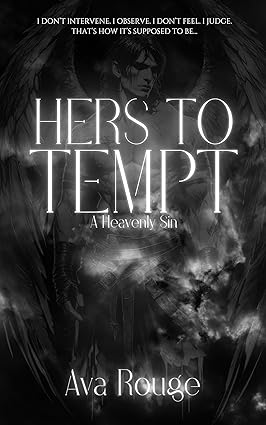
Ava Rouge’s Hers to Tempt is a dark and magnetic blend of supernatural seduction and moral chaos. The story orbits around Michael, a brooding archangel bound by ancient rules, and Lee, a defiant, street-smart hacker entangled in a black-market underworld. Their collision is anything but ordinary. Violence, forbidden desires, and twisted revelations unravel as the two confront secrets that threaten not just their lives but the fragile order of heaven and hell itself. With alternating perspectives, the novel plunges into a murky pool of power, redemption, and the terrifying pull of love.
Honestly, this book threw me for a loop. The writing is raw—almost aggressively so—and I mean that as a compliment. The dialogue snaps with grit, the prose slithers between poetic and profane, and the pacing grips you by the throat. Rouge doesn’t tiptoe around taboos; she waltzes through them in combat boots. The characters are a tangled mess of trauma, lust, and power struggles, and somehow that’s exactly what makes them feel so real. I didn’t always like Michael or Lee, but I believed them every step of the way. Rouge takes big swings with tone and theme, and even when it gets a little wild or melodramatic, it never feels lazy.
Still, there were moments I felt knocked off balance—not by content, but by the emotional whiplash. One chapter will yank your heart out with vulnerability, then the next drowns it in sarcasm or sex. It’s intense. The supernatural mythology is bold and intriguing, though sometimes murky, and the high-stakes plot doesn’t always pause to explain itself. But I’d be lying if I said that stopped me. The book has a pulsing, defiant energy that just works. It’s not perfect—it’s too fierce for that—but it’s unforgettable.
In the end, Hers to Tempt is a bold, visceral ride. If you like your romance tangled with pain, your angels morally compromised, and your heroines sharp enough to cut diamonds, this one’s for you. It’s not for the faint of heart, but for readers who live for the messy, the dark, and the daring.
Sixty Seconds with My Dog is a heartfelt middle-grade novel that centers around Phoebe, a smart, sarcastic, and emotionally raw twelve-year-old navigating life after the loss of her father. At the heart of the story is Dudley, her goofy goldendoodle, who becomes her emotional anchor. When a mysterious gift gives her the chance to talk to Dudley for just sixty seconds, Phoebe is faced with a choice: use it for fame, for fun, or for something much deeper. It’s a coming-of-age story wrapped in humor, grief, and a bit of magic.
I didn’t expect to get so sucked into a story about a tween and her dog, but wow, Foster knows how to tap into real emotion without ever getting too heavy. The writing is lively, the dialogue is pitch-perfect, and the humor hits exactly where it should. Phoebe is exactly the kind of narrator you want to follow—funny, flawed, brutally honest. Her voice is strong and clear. I loved how real her relationship with her family felt. Her grief wasn’t dramatized—it just existed like it does in real life, messy and unpredictable. And don’t get me started on Dudley. He’s a total chaos machine in the best possible way, but he’s also the emotional glue that holds Phoebe together.
The book’s real magic isn’t in the pill or the minute of dog-speak—it’s in how it forces you to think about what you’d say to the ones you love if you had only a moment. It hit me harder than I thought it would. The emotional gut punch sneaks up on you. You laugh through Phoebe’s rants about TikTok and annoying brothers and then—bam—you’re remembering your own childhood dog or the time your mom dropped a truth bomb on you in the middle of a tantrum. The writing isn’t overly polished. It reads like a real kid’s brain: scattered, passionate, impulsive. That’s the charm. And the pacing? It flies. Every chapter felt like a breeze.
I’d wholeheartedly recommend Sixty Seconds with My Dog to anyone who’s ever loved a pet, felt misunderstood, or had to grow up just a little faster than they wanted. It’s perfect for middle graders, sure, but honestly, it got to me as an adult, too. It’s funny, touching, and unexpectedly deep.
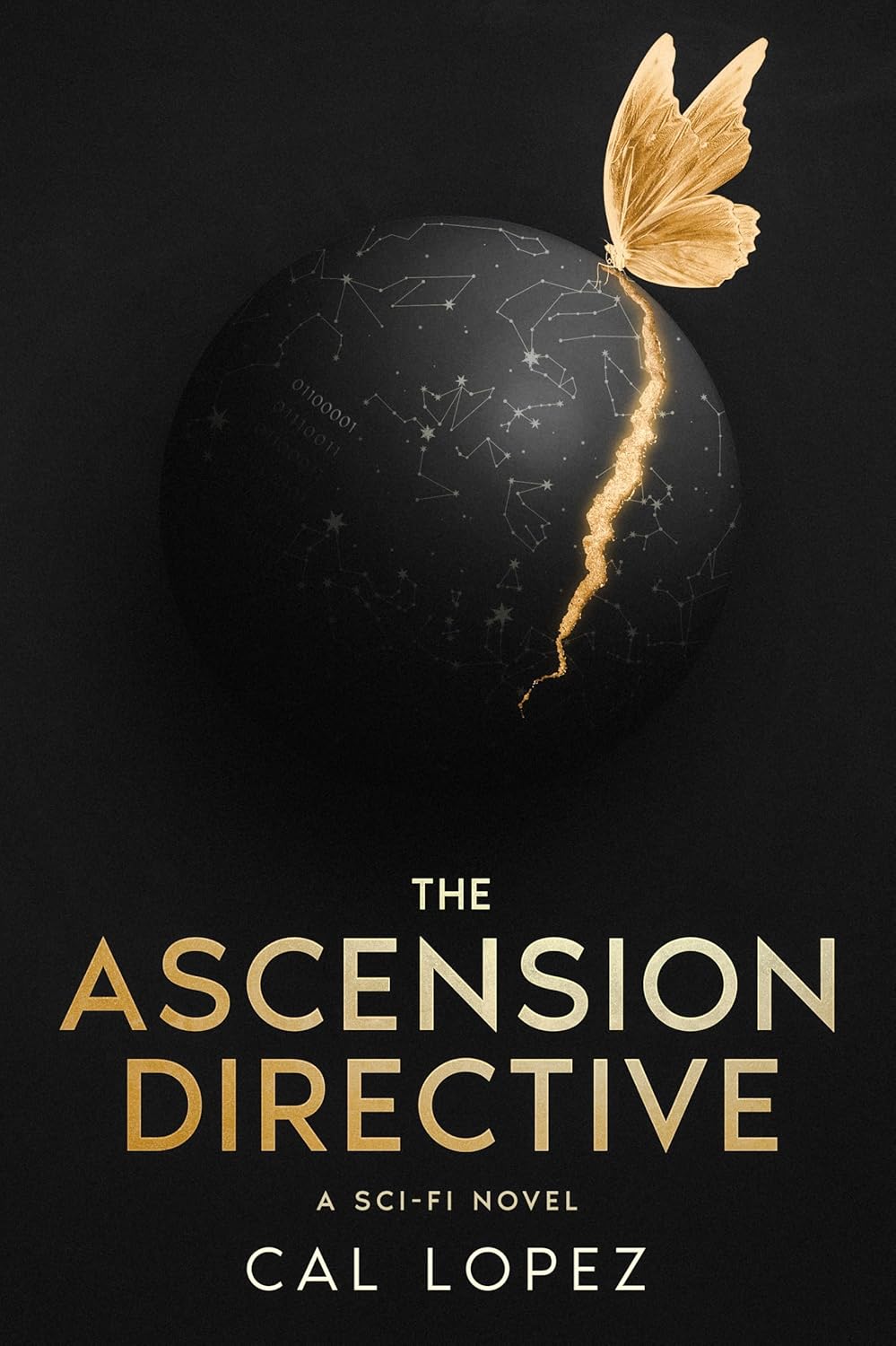
The Ascension Directive is a dystopian coming-of-age saga set in a world where progress has overtaken humanity, and technology threatens to rewrite the essence of being human. Through the dual perspectives of Catalina Restrepo and Natasha Morgan, childhood friends pulled apart by technological upheaval and ideological drift, the book explores the cost of automation, the struggle for identity, and the meaning of love, family, and choice. As their paths diverge, Catalina resisting the invasive march of artificial enhancement in Meadowbrook and Natasha chasing answers in the hyper-optimized New Avalon, the story weaves personal rebellion into a broader critique of a future that asks what we’re willing to sacrifice for perfection.
Cal Lopez doesn’t just tell a story, he excavates the emotional fallout of a society hellbent on “fixing” everything, even at the expense of its soul. His writing style is wildly unpredictable—lyrical in one sentence, brutally direct in the next—and that sharp rhythm mirrors the chaos his characters navigate. Catalina is fire: angry, unfiltered, and afraid to hope. Natasha is her counterweight: analytical, open-hearted, and grappling with the illusion of progress. I was especially struck by the way Lopez handles technology—not as a villain, but as a seductive force that feels eerily close to our own reality. I caught myself nodding, sighing, and—once or twice—clenching the book tightly.
But what really got me wasn’t the tech or the politics—it was the humanity. These characters ache. They long for lost mothers, for belonging, for freedom that doesn’t come with a barcode. There’s a part where Catalina, surrounded by perfect holograms and polite drones, just wants to feel real again—and that resonated with me. Some moments feel raw and jagged, while others are almost dreamlike. Lopez doesn’t shy away from contradictions. Instead, he leans into them, and the result is a story that’s alive with conflict and yearning.
The Ascension Directive made me feel unsettled in the best way. This book is for readers who crave more than just a cool premise—it’s for those who want to feel something. If you liked The Giver but wish it had more grit, or if Black Mirror ever made you cry instead of just freak out, this one’s for you. It’s emotional, it’s thoughtful, and it pulls no punches.
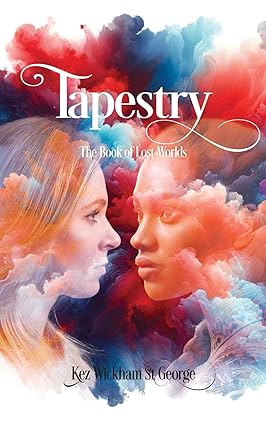
Tapestry is a sprawling, deeply intimate chronicle that threads together the ancestral stories of women from the 1700s through the 1900s. Framed as a personal and spiritual uncovering of the author’s lineage, the book blends historical fiction with memoir, wrapping readers in vivid, often haunting vignettes of women’s lives shaped by hardship, resilience, and a relentless fight for identity and survival. From Aida’s brutal beginnings in the 1700s, to Petra’s ascent through the societal maze of nobility, to Rosalie’s journey from convict to colonial mother, Tapestry is less a straightforward narrative and more an emotional excavation of generational trauma, strength, and sacred womanhood.
What struck me first was the brutal honesty in the storytelling. Aida’s story, which opens the book, isn’t just gritty, it’s gut-wrenching. The scene where she urinates over the corpse of the man who abused her as a child was both shocking and cathartic. That moment wasn’t about revenge; it was raw defiance, a twisted reclaiming of dignity. I couldn’t stop thinking about how Kez pulls no punches when it comes to pain. She doesn’t just tell you about suffering; she drags you through it, lets you smell it, feel it. It’s not always easy to read, but it feels important and necessary.
The writing style possesses a poetic and lyrical quality, though it relies heavily on descriptive imagery. Depending on one’s disposition, this can either envelop the reader like a comforting shawl or resemble the experience of navigating through a dense, obscuring fog. Petra’s transition from convent-raised orphan to royal companion was especially layered with vivid detail. I felt for her, caught between privilege and powerlessness, her identity crafted by others’ needs. Her dismissal from nobility due to a misinformed explanation of childbirth was such a tragically human moment, equal parts ridiculous and heartbreaking. And yet, these characters are never just victims. There’s a fire in them, something fierce and enduring.
What I found most touching, though, were the undercurrents of inherited strength. By the time Rosalie is shackled on a convict ship, clutching a wooden bead passed down from Aida, the emotional weight of legacy is undeniable. The bead becomes this quiet symbol of survival, of story, of womanhood passed from mother to daughter. There’s something beautifully circular in how each story is stitched to the next, even if the women themselves never meet. The tragedy is generational, but so is the hope.
Tapestry is more than a book; it is an act of reclamation. It is crafted for readers who appreciate history rendered with both grit and grace, and who are willing to endure profound emotional depth in pursuit of a narrative that is unflinchingly honest and deeply human. It speaks to women seeking to understand the inherited wounds of their foremothers, and to anyone intrigued by the lingering presence of ancestral memory. For readers drawn to a raw, emotionally resonant journey through time, Tapestry is likely to leave a lasting impression well beyond its final page.
The Lost Princess follows a young woman raised in an orphanage, who discovers she is the last surviving heir to the throne of a secretive realm called Zurdonia. What was the inspiration for the setup of your story?
I’ve always been a huge fan of the TV show Once Upon a Time and ThePrincess Diaries movies—so you’ll definitely find a bit of inspiration from both woven into this story. I love when suspense and action are blended with romance, and that mix has always drawn me in as both a viewer and a writer.
In my 18-year career in HR, one of the most important things I’ve learned is that people come from incredibly diverse backgrounds, upbringings, and cultures. I was fortunate to grow up in a home with two loving parents and siblings I’m very close to—but many of my friends and colleagues didn’t have that same kind of foundation. Hearing their stories, and seeing how much strength and resilience they carried, really inspired me.
I wanted to write a story that reflects that truth: no matter where you come from or what you’ve been through, your past doesn’t define your future. With enough heart and determination, anything is possible.
I find the world you created in this novel brimming with possibilities. Where did the inspiration for the setting come from, and how did it change as you were writing?
Lauren: Like many writers, the world of my story came entirely from my imagination—but it was also shaped by the things I love. One of my guilty pleasures is watching romance movies on Great American Family, Hallmark, and Netflix. I wanted to create a world that would completely upend Elena’s expectations—a place so rich with tradition, community, and belonging that it would both captivate and challenge her. Elena grew up in a world where nothing truly felt like her own. She’s had to fight for every inch of space, every scrap of identity. So the idea of stepping into a world that offered her roots—at the cost of some freedom—was a powerful contradiction I wanted to explore.
I drew from my own heritage—Polish, Slovak, and Italian—to infuse Zurdonia with cultural depth and warmth. As the story unfolds, I wanted readers to feel as drawn in as Elena is, to fall in love with Zurdonia as she slowly does. Though she begins guarded and resistant, I hoped to show how the quiet pull of belonging grows stronger with each page. At least—that’s what I aimed for. My hope is that readers feel that transformation as deeply as she does.
What were some themes that were important for you to explore in this book?
Lauren: One of the core themes I wanted to explore in this book is that not everyone comes from the same background or traditional upbringing, but that doesn’t mean they can’t find purpose, love, or a true sense of belonging. Elena, for example, didn’t grow up with the love and support of her parents. She never had a home where she felt safe, protected, or unconditionally cared for. She’s never seen what it looks like when someone puts another’s needs above their own.
What I hope readers take away is that love and belonging can be found in many forms—through a life partner, deep friendships, or being part of a community. My favorite part of the book is Elena’s journey to recognizing her own self-worth. Despite the pain of her past, she begins to believe in herself and learns that, with perseverance, anything is possible. That growth, that quiet transformation, is what I hope will resonate most.
Will there be a follow-up novel to this story? If so, what aspects of the story will the next book cover?
I don’t think I’m giving away any spoilers by saying this book ends on a cliffhanger—and yes, there’s definitely more to come for Elena, Alexei, Hannah, and the rest of the cast. As the story builds toward its conclusion (no spoilers, I promise!), it was important to me that Elena’s transformation culminates in a decision that doesn’t just affect her, but also the people she cares about—and the future of Zurdonia itself. That choice sets the stage for deeper complexity and consequences that ripple through every character’s journey, launching us straight into Book 2.
I can promise that the next installment is just as much of a wild ride—packed with action, mystery, and plenty of romantic tension. One of the things I love most about Book 2 is how Elena begins to uncover more about her parents and slowly realizes that not everything in life—or in love—is black and white.
While I am happy to say I finished writing Book 2…title and cover is still a work in progress. Stay tuned!
And as for the future beyond Book 2… never say never! I’ve definitely thought about writing a prequel that dives into Elena’s parents’ story, and if readers are eager for more, I’d love to keep expanding the world of Zurdonia.
Imagine growing up in an orphanage and learning you were put there on purpose by your parents, the King and Queen of another realm, who did what they had to do to save your life.
This is Elena’s new reality, and she doesn’t have time to be shocked. She has to keep her wits about her as she fends off traitors and false suitors while fighting to save her people and her country.








 LITERARY TITAN