Blog Archives
A World of Lithomancy

Dark Bringer follows a cypher cop, an archangel, and a miner’s daughter whose paths cross with the grisly murder of a corrupt consul. What was the inspiration for the setup of your story?
So Dark Bringer is actually the start of a prequel series that ties into my Nightmarked books. I’d always wanted to tell the story of how that world, called the Via Sancta, came about. When I finished that series (and fans wanted more), I knew it was time to go back and explore the origins. Kaldurite plays a large role in the Nightmarked books, and after much brainstorming, and tossing out storyline after storyline, I decided to focus on this very special gemstone that repels magic in a world of lithomancy. Where it came from, who found it, and how it ultimately shook the foundations of Sion—Cathrynne and Gavriel’s world. Of course, their love story is also a big element, and one that is touched on in the later Nightmarked books, too.
What is the most challenging aspect of planning a fantasy series?
Everything! They have so many moving parts. But having muddled through a few over the last ten years, I’ve learned to think the choices I make all the way through (as far as this is possible—there are always surprises). You’ll have to live with those choices (who survives, who dies, what are the limits of magic, etc) for many books to come, so be sure they’ll work with the larger story down the line. Some choices open doors, and others close them forever. It can be a daunting process, and I think that’s why it takes me longer to plot than it used to. I’ve made plenty of mistakes I regretted and don’t want to do that again! Oh, and here’s another one: don’t write TOO many characters, and TOO many storylines. That still tends to be my downfall, haha.
Do you have a favorite character in this first installment of The Lord of Everfell series? One that is especially fun to write for?
I’ll say it straight: Gavriel starts as an arrogant, uptight prig who needs to be taken down a notch, so I’m actually enjoying writing him more in the next book, War Witch, where he’s forced to reckon with the sins of his past. Kal is funny and smart, but she, too, is mainly focused on her own problems in Dark Bringer, and becomes more altruistic in the next one.
Cathrynne, who is both pragmatic and vulnerable, and just a decent person, is my favorite.
Can we get a glimpse inside Book 2? Where will it take readers?
I have not written the blurb yet, and it would entail massive spoilers to discuss Gavriel, but I can say that he becomes a lot more human (for an angel), Cathrynne goes on a quest to find the witch goddess Minerva, and Kal heads to Iskatar under the fake name Kayla Jentzen, which lands her in fresh trouble. Levi and the White Foxes are still in pursuit, but that’s all I can say for now!
Author Links: GoodReads | Facebook | Website | Amazon
Cathrynne Rowan is half witch, half angel. Such unions are forbidden, and the offspring – called cyphers – are reviled as abominations. But Cathrynne’s powers are indisputable, so when Lord Morningstar is nearly killed by an assassin, she’s summoned to serve as his bodyguard.
In Sion, all magic derives from gems and metals. Cathrynne and Gavriel must hunt down a mysterious stone that’s left a trail of bodies in its wake. Along the way, they forge an unlikely kinship that threatens to blossom into something more. Something decidedly dangerous.
Then Cathrynne starts having visions of a fallen angel who will tear the empire from its moorings. It seems impossible that the upright and honorable Lord Morningstar could be this Dark Bringer. But if it is Gavriel… How far will she go to stop him?
Taking place a thousand years before the events of the award-winning Nightmarked series, Lord of Everfell is set on the sprawling continent of Sion, where witches, angels, and humans populate seven vibrant realms surrounding the Parnassian Sea. Get ready for epic intrigue, dragons, and a love affair for the ages!
Dark Bringer


Dark Bringer, by Kat Ross, is a gaslamp-flavored epic fantasy that braids together a murder mystery, political intrigue, and forbidden divinity. In a world ruled by distant gods and policed by arrogant angels, we follow three main threads: Cathrynne Rowan, a hard-headed cypher cop with illegal seer gifts; Gavriel Morningstar, the severe archangel who once condemned an angel for loving a witch; and Kal, a miner’s daughter on the run after a gem-smuggling disaster. Their paths tangle around the spectacularly grisly murder of a corrupt consul in the city of Kota Gelangi, smuggled ley-gems, and the re-emergence of the draconic Sinn and the eerie Plain of Contemplation that swallows exiled angels.
I really love the world the author has created here. Author Kat Ross gives us a secondary world that feels halfway between an industrial empire and a late-Victorian university town: angel towers sharing horizons with observatories, student bars, and gossip rags; cyphers kicking down doors while White Fox witch-inquisitors swoop in to steal the glory; miners whispering prayers to monsters they also fear. The terminology, ley, liminal spaces, forcing, Sinn, never felt like a glossary dump; it arrives in the middle of chases, interrogations, and messy street scenes. I loved the way magic is both sacred and bureaucratic: archangels filing paperwork while traveling through liminal ley, witches arguing jurisdiction, cyphers grumbling about forms as they bleed all over a White Fox’s expensive car upholstery.
On the character side, the book felt like a conversation between cynicism and care. Cathrynne is wonderfully prickly. She has a brutal sense of justice, a horror of confinement, and this buried terror that her seer visions will get her entombed in a kloster for life. Watching her collide with Gavriel, who starts as the epitome of cold angelic law and gradually reveals a bone-deep loneliness, was deeply satisfying. Their dynamic shifts from mutual irritation to wary respect to something that definitely is not regulation-approved, and the last chapters lean harder into that tension. Kal’s storyline gives the book its raw, working-class heartbeat: a girl who knows the mines, who carries a wise-cracking ghost and a ship tattoo under her concealer, pulled into the same conspiracy from the opposite end of the empire. Her chapters add grit and grief to what could otherwise have stayed a high-altitude political thriller.
I’d hand Dark Bringer to readers who like epic fantasy, gaslamp fantasy, fantasy mystery, and angel-and-witch fantasy with a strong streak of character drama. If you enjoy the divine politics and flawed immortals of N.K. Jemisin’s The Hundred Thousand Kingdoms, but wish the world came with more cops-and-robbers chases, haunted miners, and draconic horror, this scratches a very similar itch while feeling distinctly its own. For me, Dark Bringer is sharp, moody, and unexpectedly tender–murder mystery in a crumbling empire full of gods and ghosts.
Pages: 410 | ASIN : B0F4KWFMTL

Guard in the Garden

In Guard in the Garden, Felton, a dwarf warrior still limping through the aftermath of the Battle of Galium, survives a dragon attack that costs him his garvawk partner, Honor, and leaves him marooned in a healer’s ward with grief that won’t stay politely in the background. When he’s finally released, the city guard assigns him to the quiet Garome District, where “protect” is mostly theoretical and “serve” turns out to be the real work. There, he’s pulled, sometimes gently, sometimes by sheer neighborhood gravity, into a small ecosystem of bakers, smiths, pie contests, and, crucially, Tilli and her bold little daughter, Lili, whose garden becomes a place Felton can learn to inhabit again, one ordinary day at a time.
What I loved first was the book’s texture. The author’s best trick is how he lets coziness do real labor. Felton’s nightmares are not decorative angst; they’re repetitive, humiliating, bodily, always the same cruelty of needing to save someone and feeling too weak to do it. And because the setting is so warm and neighborly, those moments land harder. The soft scenes don’t cancel the dark ones; they make them legible, the way lamplight makes a bruise easier to see.
I also kept getting ambushed in the best way by how funny and tender the relationships are. There’s a whole showdown where Felton tries to assert himself as the “real guard,” only to discover the garden’s actual enforcer is Templeton the tortoise, who resolves the standoff by aggressively nuzzling Felton’s beard like it’s the finest pillow in Finlestia. Later, the greenhouse becomes a quiet altar of hope: Tilli has Felton plant “special seeds,” and the act feels small until you realize small is exactly the point, tending, waiting, letting something live because you keep showing up for it. By the end, the book doesn’t chase a grand battlefield catharsis; it chooses a steadier bravery: Felton declines the pull back into wild glory because he’s finally found where he belongs, and he’s brave enough to name love as his dream.
Guard in the Garden is for readers who want their fantasy to feel like a hearth instead of a hurricane. Reading looking for cozy fantasy, slice-of-life fantasy, healing fantasy, found family, gentle romance, and for anyone who appreciates a story where recovery is incremental, stubborn, and still worth celebrating. If you enjoyed Legends & Lattes (or the way Becky Chambers makes kindness feel substantial), this will scratch a similar itch, only with more dirt under the fingernails and a sweet, persistent ache behind the smile. Guard in the Garden is proof that the bravest thing a warrior can do is learn how to live, one ordinary, luminous day at a time.
Pages: 298 | ASIN : B0DDJTWLL1

Mosswood Apothecary

Mosswood Apothecary is a cozy fantasy novel that follows Rowan Mosswood, a gentle, anxious botanical alchemist who accidentally grows invasive fungi during exams and packs dirt in his suitcase because it helps him think. After barely securing his graduation, he’s sent north to Frostfern Valley to study the region’s dwindling magic. What he finds there isn’t just a research assignment. It’s a quiet mountain town with withering crops, a long-abandoned greenhouse, a warm carpenter named Jimson, and a community that slowly becomes his home. The book blends slice-of-life pacing, soft magic, queer romance, and small-town healing, ending with Rowan opening his own apothecary and saying yes to a wooden ring carved from the oldest tree in the forest. It’s all very tender and very intentional.
The writing is simple in the best way: unhurried, a little vulnerable, and often funny without trying too hard. The worldbuilding leans more cozy than epic, even though the setting includes universities, automatons, and intricate alchemical sigils. What grounded me most were the sensory details that weren’t flashy: dirt under Rowan’s nails, windows iced in delicate patterns, the smell of elderflower tea hanging from the rafters.
I also loved how the story lets Rowan be soft. In so much fantasy, magic is about power or destiny, but here it feels like craft, patience, and care. Rowan’s magic grows wilder and more unpredictable the farther north he goes, and instead of turning that into a high-stakes threat, the author uses it to show how Rowan is changing, too. The romance builds the same way. Jimson isn’t swoony in a scripted sense; he’s solid, warm, and fully part of the town’s rhythm. Their relationship grows like something planted, slow at first, then steady, then suddenly blooming so clearly that by the time the Winter Festival proposal arrives, it just feels right. Even the townsfolk, with their worn-down farms and quiet pride, become part of Rowan’s chosen family, which gives the whole book the emotional softness of queer cozy fantasy at its best.
Mosswood Apothecary feels like TJ Klune’s The House in the Cerulean Sea crossed with the gentle, craft-centered magic of Travis Baldree’s Legends & Lattes, delivering a story that’s just as warm, queer, and quietly transformative. If you enjoy cozy fantasy, queer romance, or stories where magic supports character growth rather than overshadowing it, this book will be completely your vibe. It’s especially lovely if you like narratives about chosen family, rural communities, and soft magic that feels more herbal than explosive.
Pages: 392 | ASIN : B0FH5L8X2F
The Brothers of Dane
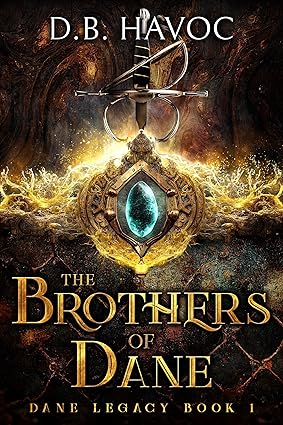
D.B. Havoc’s The Brothers of Dane begins as a tale of mischief and theft, but it quickly expands into something much grander. On the surface, the novel follows Balran, Mak, and Dag, three notorious outlaws whose exploits make them both feared and strangely admired. What starts as a high-society robbery soon spirals into a quest tied to ancient artifacts, the legendary city of Dhravendor, and the fabled Udin Stone. Beneath the adventurous exterior lies a narrative about loyalty, betrayal, and the often-fractured bonds that hold families, chosen or otherwise, together.
The opening scene at Counselor Imara Enas’s estate establishes this duality immediately. The cultivated elegance of an elven dinner party collides with the chaos of the Brothers’ sudden intrusion, led by Balran’s dryly menacing declaration: “This is a robbery.” The episode is both dramatic and darkly humorous, and it illustrates Havoc’s ability to balance tones with confidence. The moment also introduces Maeve, whose tense but charged interaction with Mak provides an early glimpse of the interpersonal conflicts that run beneath the novel’s more visible plot.
The novel’s strongest element is the interplay between the brothers themselves. Their dialogue is sharp, unpolished, and filled with an authenticity that makes their quarrels and camaraderie equally compelling. Dag, for instance, provides a mix of cynicism and biting humor, as when he mocks Mak’s affection for Maeve through his song “Sweet Maeveriene”. Balran assumes the role of pragmatic leader, while Mak wrestles with the tensions of his half-elven identity. Together, they form a partnership that feels volatile but indispensable, and it is this sense of lived-in brotherhood that makes the narrative resonate beyond its adventurous trappings.
The scope of the story broadens dramatically with the introduction of Emperor Elric Veshlor, the so-called Sun Eagle. The confrontation in the Tower of Tiriel, particularly the battle with a shadowed figure whose blows are revealed to fall from a wooden blade, is a pivotal moment. Elric’s eventual appearance transforms the narrative from one of petty thefts into an epic struggle intertwined with exile, history, and the hope of redemption. The Brothers’ shifting responses, debating whether to assist, betray, or outwit the emperor, add moral complexity and highlight Havoc’s interest in the gray spaces between honor and survival.
By its conclusion, The Brothers of Dane reveals itself as more than an adventure tale. Havoc blends action with myth, allowing the reader to move seamlessly from tavern brawls to weighty reflections on power, freedom, and legacy. At times, the exposition particularly in the sections concerning the Treaty of Maltran Heights and the dwarven astrolabe leans heavily on lore. Yet even these passages contribute to the sense that the Brothers are entangled in a world where their small-scale ambitions intersect with forces far greater than themselves.
The Brothers of Dane is recommended for readers who appreciate fantasy that is bold, atmospheric, and character-driven. It will appeal especially to those who enjoyed the grit of Scott Lynch’s The Lies of Locke Lamora or Christopher Buehlman’s The Blacktongue Thief. Havoc has crafted a story that captures both the recklessness of outlaw life and the enduring weight of myth, producing a work that is as much about the bonds of brotherhood as it is about treasure and survival.
Pages: 302 | ASIN : B0DPR7YM66
Steampunk and Victorian Vibes

The Roses of Port Townsend follows a mother and her two sons as their fresh start in a seaport town turns into a ghostly adventure. What was the inspiration for the setup of your story?
I traveled with my two sons, Ian and Ryan, from Olympia, Washington, to Port Townsend when they were younger. We stayed at Manresa Castle over Easter and had a wonderful time. During our visit, we took several photos and captured images that featured orbs. In one photo, there was an orb above each of our heads, which was quite spooky. Manresa Castle is reportedly haunted and has been featured on the television show “Ghost Adventures.”
The Victorian architecture, combined with both Steampunk and Victorian vibes, makes Port Townsend a fascinating destination. The history of the town, as well as that of Fort Worden and Fort Flagler, is all intriguing and significant. As I was writing the novel, my husband and I lived on the coast, either on Camano Island or in Ferndale, Washington, overlooking the Salish Sea. We visited Port Townsend regularly, and during those visits, ideas for my novel began to develop. I would write between jobs or in the evenings after coming home from work. Once I was able to retire, I started writing regularly, and the ideas flowed freely.
How do you balance story development with shocking plot twists? Or can they be the same thing?
I tell a good story, and plot twists are a necessity. I have always hated knowing how a story would end, and about eighty percent of the time, I can guess at even a “trick” ending and get it right. However, plot twists need to make sense and must enhance the storyline. I found that plot twists added depth to my story and made it more engaging. Everything just fell into place. I also challenged myself to revive my imagination, which had been buried in dry government documents, statistics, program requirements, rules, laws, and administrative procedures. To be truly creative, you must find the child’s voice within and ask yourself what’s truly fun, scary, exciting, whimsical, or even absurd. That’s the voice I try to tap into. I do utilize some of my knowledge about government to create an image of “them bilge-rat government types,” as the untrusting pirate, Ben Pease, would likely say. Still, mostly I rely on my imagination, the history of the area, and the joy of finding and fighting monsters. We all have to defend ourselves against monsters at some point in our lives. These days, they are less likely to be vampires and more likely to be found in the hallowed halls of our political institutions.
Do you find you are able to relate to your characters while writing?
My characters have become very real to me; they feel like members of my family now, so I have a good understanding of what they will and won’t do. I can relate to every character in my novel because they remind me of my sons or because I’ve encountered similar characters in the past. Most of my characters are a blend of people I know, historical figures I’ve discovered through reading, characters from movies or books, and aspects of my own personality.
Can we look forward to more mysteries from you soon? What are you currently working on?
I want to share that the Gumshoes are preparing for another exciting adventure. I am starting to work on “The Portal Protectors,” the next book in the “Roses of Port Townsend” series. I hope to complete my first draft by the summer of 2026.
Author Links: Website | Reader’s Favorite
In the heart of the book, The Roses of Port Townsend, you will meet Mandy Rose, a resilient schoolteacher, whose husband is missing under mysterious circumstances. Forced to leave her home in Olympia due to her school’s closure, she ventures on a daring journey with sons Max and Oscar to Port Townsend, a quaint Victorian era seaport city. Despite warnings of its eerie aura and alleged hauntings from her brother, Leo, Mandy follows the path that fate has laid down for her. The Rose family’s strength is truly tested as they confront the chilling mysteries of this Victorian city.
Mandy, Max and Oscar, and their loyal dogs, Josie and Bone, delve into a world that transcends the realm of the ordinary. The city’s scenic tranquility belies the dangers that lurk within, as the family stumbles upon supernatural beings. The Rose family is welcomed by new friends in Port Townsend; Max and Oscar develop budding romances; family members come to the rescue; and together they all become amateur detectives in the most important missing persons case they will ever face.
Not all is as it seems in this city, where an unusual tomato garden holds lethal surprises, and a pirate’s secret could be the key to their survival. As Mandy and her family navigate through the labyrinth of Port Townsend, they uncover truths that could shatter their reality. What started as a quest for employment soon turns into a race against time as they struggle to find Mandy’s husband, and to discover the secrets of their new home, Victorian cottage, “Little Red.”
The Roses of Port Townsend is a thrill-ride of whimsy, suspense, mystery, and danger. The book weaves an enchanting tapestry of suspense, magical realism, and the strength of a mother’s love. As Mandy battles the unknown, the question remains-will the Rose family bloom again in Port Townsend, or will they wilt under its haunting spell? Dive into the pages of this riveting tale to find out!
The Roses of Port Townsend
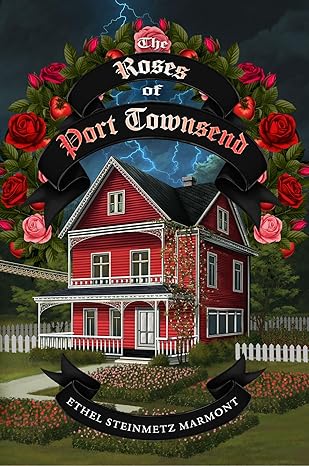
The Roses of Port Townsend is a genre-blending story set in the misty coastal town of Port Townsend, Washington, where mystery, fantasy, science fiction, and family drama intertwine. The novel follows Mandy Rose and her two sons, Max and Oscar, as they relocate to this Victorian seaport after the mysterious disappearance of Mandy’s husband, Rick. The family’s attempt at a fresh start quickly veers into strange territory, with ghostly figures, cryptic messages, unsettling townspeople, and supernatural occurrences. Many of them are tied to the town’s haunting history and a bizarre obsession with tomatoes. As secrets unravel, the Rose family must confront both literal and figurative monsters while clinging to love and hope.
Ethel Steinmetz Marmont writes with obvious affection for the Pacific Northwest, and her descriptive passages made me want to visit Port Townsend. The real heart of the story, though, is the relationship between the characters. I found Mandy’s weariness and perseverance achingly real. The banter between Max and Oscar made me laugh more than once, especially Oscar, who’s half spooky child, half comedy relief. That said, the book zigzags tonally. Sometimes it’s a whimsical ghost story, other times it’s a tech thriller or a family sitcom. It’s not a clean cut, and I loved the creativity.
The writing is imaginative and often charming. Marmont occasionally indulges in monologues or eccentric character introductions that make you pause and think. That unpredictability also gives the book its charm. I didn’t always know where the plot was headed, and I liked that. The character of Benny P., for example, feels like he walked out of a Halloween parade and straight into a ghost tour. Is he a ghost? A pirate? A time traveler? I’m still not totally sure, but I enjoyed every second he was on the page. And the tomatoes became such a strangely meaningful element of the story that I might actually never look at them the same again.
The Roses of Port Townsend was a delightful read. It’s best suited for readers who enjoy quirky tales that mix magical realism with heartfelt family drama. If you liked A Series of Unfortunate Events, Coraline, or Practical Magic, this might hit the sweet spot. It’s especially good for parents reading alongside tweens or teens. It has just enough spooky spice to intrigue younger readers while still offering emotional weight for adults. It’s a little weird, a little heartfelt, and very much its own thing. For me, that’s enough to recommend it.
Pages : 390 | ASIN : B0F277WYCR
Phantom of StainedSteam
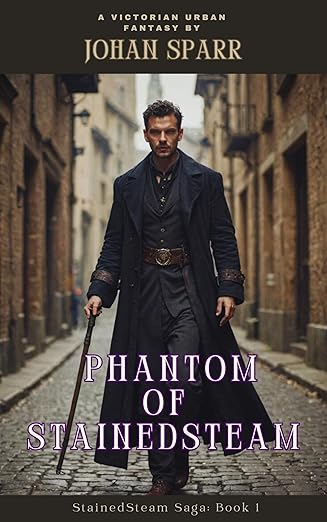

Phantom of StainedSteam is a thrilling dive into a London veiled by fog and filled with magic, secrets, and danger. At its heart, the story follows William Blackwood, a suave investigator with a knack for solving supernatural mysteries, as he confronts a dangerous cult, the Black Thorns. Alongside his eccentric companions, William races against time to unravel a plot that threatens to rip apart the fabric of reality itself. With vivid imagery and rich character dynamics, Sparr weaves a story that’s as enchanting as it is darkly mysterious.
One of the book’s greatest strengths is its atmosphere. From the foggy streets of London to the eerie glow of Highgate Cemetery, Sparr creates a world you can almost smell and touch. The opening chapter immediately sets the tone with Lilly Ravenwood navigating a mist-laden street, her sharp eyes catching glimpses of a magical underworld hidden in plain sight. The sense of wonder and menace is palpable. Sparr’s descriptions, like William’s brush with reanimated corpses on a frozen bridge, are so visceral.
That said, the characters are what truly made this book shine for me. William is charming yet layered, with his calm, sarcastic exterior masking a fierce determination. His dynamic with Jaxon Westwood, the scholarly sidekick, is a highlight. Their banter, especially in the scene where Jaxon warns William about the dangers of meddling in the supernatural, adds levity without undercutting the tension. Lilly, with her icy demeanor and fierce independence, is another standout. Her bravery during the docks confrontation, despite her injuries, shows her depth. The supporting characters, from winged cat Midnight to the gruff constable Theo, each leave their mark without feeling like filler.
While I adored the worldbuilding and characters, the pacing occasionally felt uneven. Some chapters, like the extended exposition on the origins of the Black Thorns, slowed the narrative’s momentum somewhat. I found myself wanting to jump back into the action. Additionally, while the villains are suitably menacing, I feel their motivations sometimes veer into cliché territory—power for power’s sake felt underwhelming compared to the rich complexity of the protagonists.
Phantom of StainedSteam is an absolute delight. It’s perfect for readers who love steampunk fantasy, Sherlockian mysteries, or stories steeped in magic and danger. Sparr’s London is a place I didn’t want to leave, and his characters feel like old friends by the end. If you’re looking for a tale of high stakes, rich worlds, and unrelenting adventure, you won’t regret stepping into this fog-laden gaslamp fantasy.
Pages: 738 | ASIN : B0CW1GCX1N


