Blog Archives
Witness in the Dust

Witness in the Dust by Lorrie Reed tells the story of Haiti during its years of crisis, from the hurricanes that battered Gonaïves in 2008 to the earthquake that devastated Port-au-Prince in 2010 and beyond. It blends vivid storytelling with historical detail, following ordinary families like Celine’s, local pastors, and aid workers as they fight to survive storms, floods, political collapse, and disease. The narrative draws you in with its sensory detail, grounding sweeping tragedy in the smell of dust, the taste of spoiled water, and the sound of prayers whispered in ruined churches. It is both a chronicle of disasters and a meditation on resilience, faith, and the small acts of mercy that keep people going.
I felt pulled into the dust and heat of the markets, the pounding storms, the suffocating silence after buildings fell. The writing is rich, sometimes almost overwhelming, in its attention to the textures and smells of daily life. I found myself pausing sometimes because the intensity of the descriptions made the pain so vivid I needed to take a breath. I admired how the author never lost sight of the people at the heart of it all. Celine and Gabriel felt real, their small gestures of kindness holding more weight than the trucks of foreign aid. I could feel the push and pull between despair and determination in every scene.
I also found myself wrestling with the ideas inside the book. The story makes you question what survival really means, and whether faith is something that lifts people up or just gives shape to their suffering. I loved the way Pastor Claude’s sermons weren’t polished theology but guttural cries of grief and defiance. Sometimes the repetition of disaster after disaster left me feeling hopeless. Yet maybe that’s the point. Haiti’s reality in those years didn’t allow for neat resolutions or comforting endings. The book doesn’t try to tidy it up, and I respect that honesty.
I’d recommend Witness in the Dust to readers who want a story that feels raw, relatable, and unflinching. It weighs heavily on your heart and will leave you thinking about it for a while afterwards. But for those willing to sit with hard truths, it offers not only a window into Haiti’s suffering but also a testament to the endurance of ordinary people when the world falls apart. If you want to feel history not as statistics but as sweat, blood, and breath, this book is worth your time.
Pages: 197
The Secret Rise, book 3
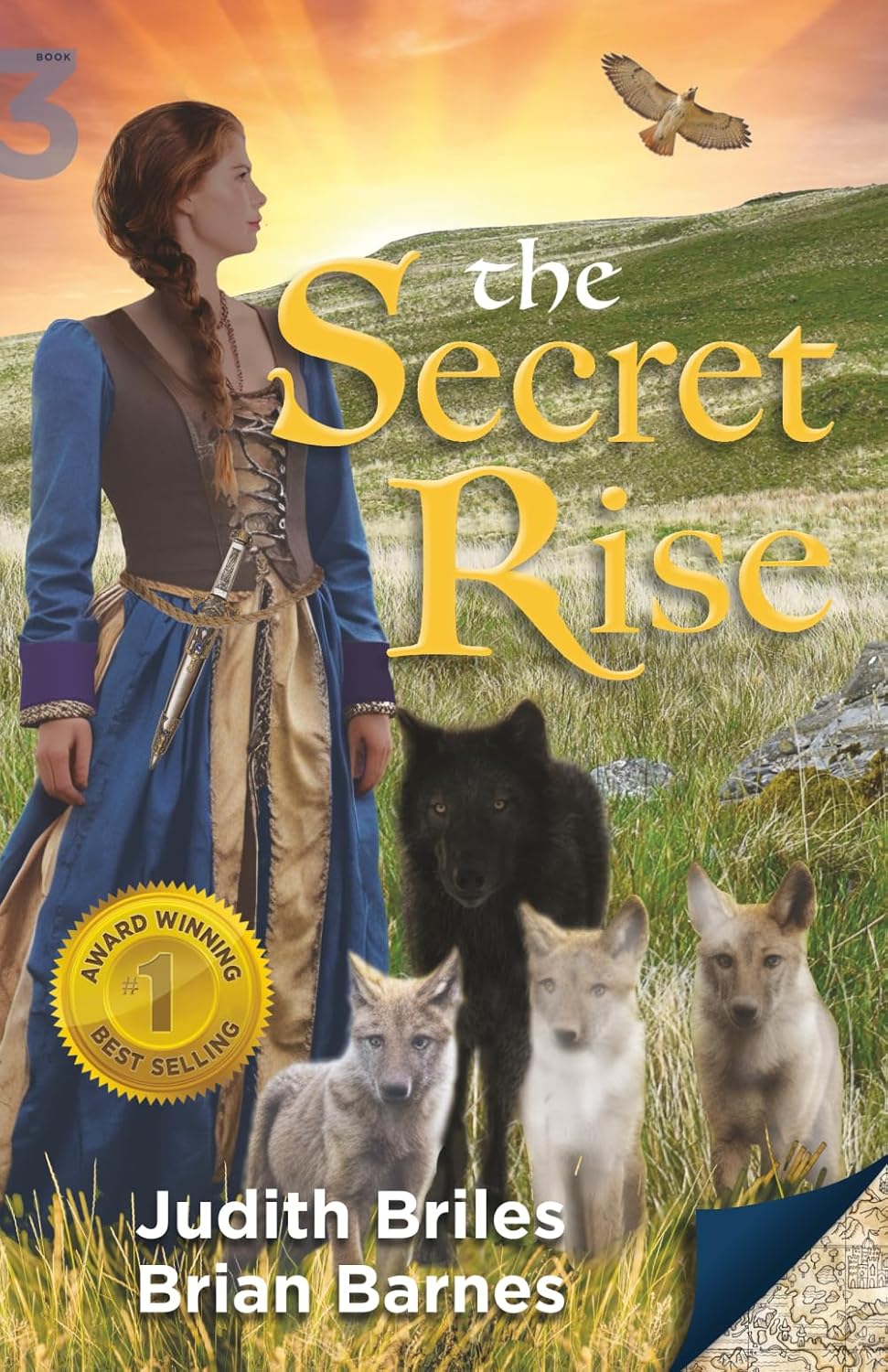

The Secret Rise is a sweeping tale set in medieval Normandy and England, where Nichol, once a girl betrayed by her family, becomes the guiding light of a hidden hamlet called Harmonie. Now a wife and mother, she carries the weight of leadership, navigating danger from enemies old and new, forging bonds with Queen Emma of England, and testing the limits of her own strength and foresight. The book follows Nichol, her family, and allies as they face betrayal, curses, prophecy, and the unrelenting pressure of survival, all while a mysterious guiding presence known as the Lady shadows her path. It is both a story of individual courage and of how a community holds together when secrecy is no longer an option.
I found myself swept up by the writing. It has a rhythm that shifts between tenderness and suspense, sometimes almost too swiftly, but that kept me hooked. The dialogue feels earnest, and the authors have a knack for describing how ordinary moments, like a meal, a walk with children, or the hush before a dangerous meeting, carry enormous weight when survival is always at risk. The prose leaned on repetition of themes like destiny and trust, yet I also caught myself underlining sentences because they had that raw, heartfelt punch that lingers. What struck me most was how alive Nichol feels. She is fierce, protective, flawed, and burdened, and that combination made me root for her every step of the way.
What surprised me was the warmth threaded through the peril. This isn’t just about battles and politics; it is about mothers feeding babies, children inventing secret languages, and villagers laughing together after fear has passed. Those touches gave me chills in the best way. I will admit, at nearly five hundred pages, the book sometimes meanders. Still, I never truly wanted to put it down. The presence of the Lady, that mysterious spiritual force, added a quiet shimmer to the narrative, and I liked how it blurred the line between faith, fate, and imagination. It made me question whether strength comes from within or from something greater that whispers in the dark.
I closed the book feeling both satisfied and a little restless, already curious about the next installment. I would recommend The Secret Rise to readers who enjoy historical fiction with a hint of the mystical, especially those who like stories centered on strong women navigating impossible choices. It’s a book for anyone who wants to be pulled into another time and place, not just through action, but through the intimacy of family and the resilience of community.
Pages: 540 | ASIN : B0FDV29WWF

“Finding Your Roots” One Man’s Journey to Discover His Ukrainian, Greek, And Bulgarian Roots

When I picked up Finding Your Roots: One Man’s Journey to Discover His Ukrainian, Greek, and Bulgarian Roots by Kiril Kristoff, I didn’t expect the ride I was about to take. The story follows Alexander Kakhovskiy, an American born into privilege, raised on excess and status, with little sense of who he really is. In one devastating night, he loses it all. After a near-fatal car accident, Alex wakes not in modern Chicago but in 19th-century Imperial Russia, stripped of his wealth and freedom, forced into the life of a serf. What begins as punishment unfolds into a profound journey of survival, faith, and love, where saints and ancestors shape his path and the brutal world of serfdom teaches him humility, responsibility, and sacrifice.
This book surprised me with its depth and scope. At first, I bristled at Alex’s arrogance, but as he stumbled through hardship, I found myself rooting for him, even protective of him. His encounters with Elizabeth, his soulmate in another lifetime, added tenderness that balanced the weight of war, betrayal, and spiritual reckoning. The way Kristoff shifts between past and present, dream and reality, sometimes left me dizzy, yet it mirrored Alex’s inner chaos. The novel also stretches beyond Alex, weaving in the stories of forefathers like Georgiy and Vasiliy, who stood on opposite sides of faith and revolution, and reminding us how much of who we are is inherited through blood and history.
Some passages hit me hard. The spiritual visions, the crushing trials, the echoes of immigrant struggles across borders and generations all resonated. At times, the prose felt heavy, yet it often swung back with vivid, aching beauty that lingered. What stayed with me most was its insistence that freedom, identity, and redemption are never free, that every generation pays its price. It is a bold, multifaceted story that dares to mix history, myth, and spiritual allegory in a way that feels rare.
Finding Your Roots isn’t a light read, but it digs deep and stays with you. I’d recommend it to anyone drawn to stories about faith, heritage, and the resilience of families across generations. If you like novels that wrestle with identity and legacy, or if you’ve ever wondered how the past continues to shape us, then this book is worth your time.
Recipient of the Literary Titan Book Award.
The Copper Scroll: Masa Chronicles
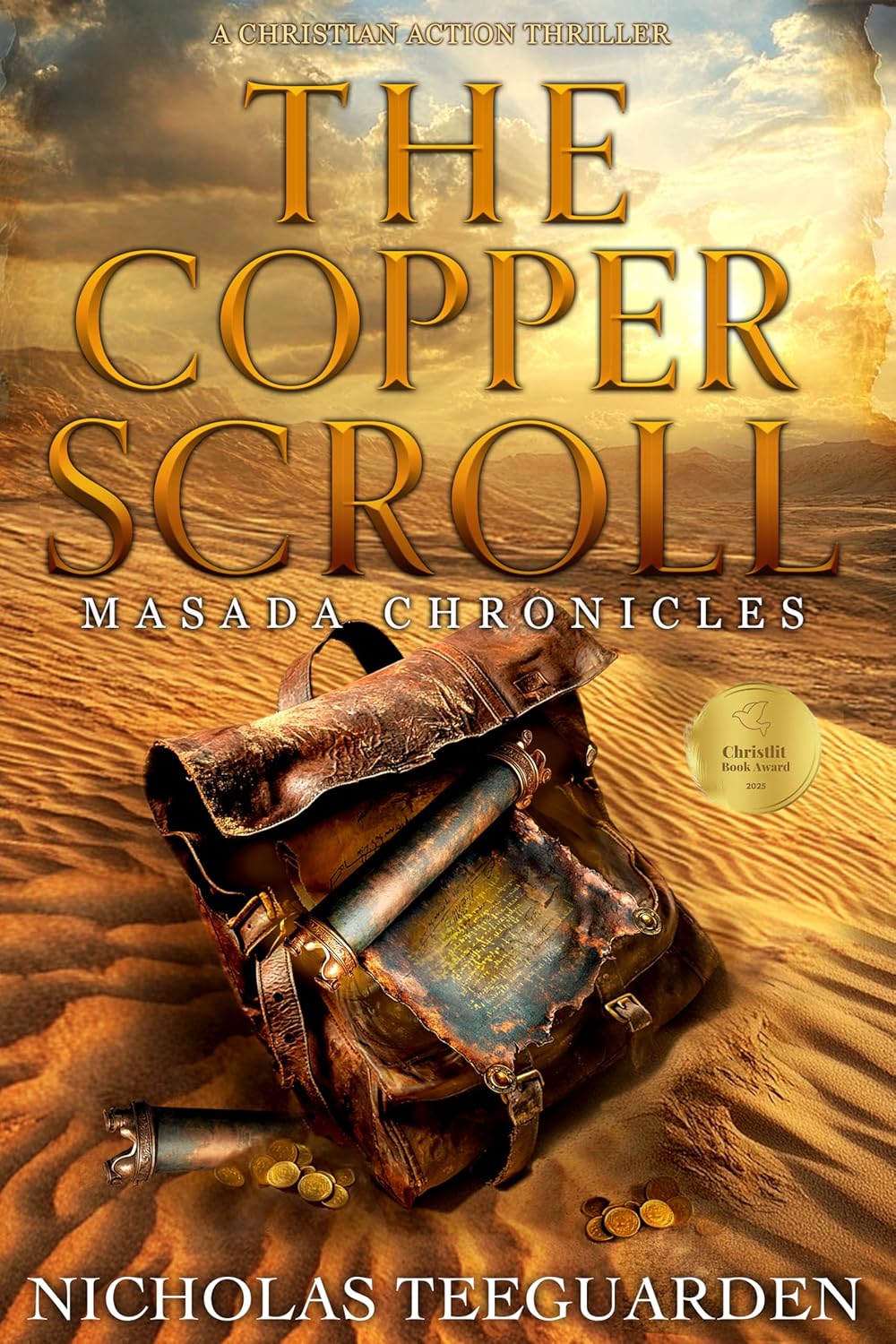
The Copper Scroll by Nicholas Teeguarden follows Joshua “Masa” Bennett, a young archaeology student with a deep faith and a restless curiosity, as he embarks on a journey from Arkansas to Jordan to study the Copper Scroll, the most mysterious of the Dead Sea Scrolls. What begins as an academic interest quickly pulls him into a world of danger, conspiracy, and discovery. Alongside Noa, a sharp and guarded fellow researcher, Joshua navigates ancient clues, personal doubts, and very real threats that blur the line between history and myth. The novel blends scholarship with thriller pacing, offering treasure-hunt suspense set against the rich backdrop of Middle Eastern history and modern tension.
I found the writing to be immersive and full of sensory detail that made me feel the dust of the caves and the press of crowded streets. The style is lively and cinematic. The vividness held me, and I often felt like I was traveling beside Joshua, seeing what he saw, feeling his awe and his unease. The dialogue is sharp, and the interplay between Joshua and Noa kept me engaged. Their banter carried the spark of rivalry mixed with mutual respect, and I looked forward to every scene they shared.
What I liked most was the balance between faith and doubt. The book treats belief not as a simple comfort but as a constant wrestle, something that can drive discovery as much as devotion. Joshua’s hunger for truth, his stubborn streak, and his flashes of insecurity made him a character I could root for. At the same time, the story didn’t shy away from showing how obsession can tip into danger. I liked that complexity. It gave the book more weight than just a straightforward adventure.
I’d recommend The Copper Scroll to readers who enjoy thrillers with a strong sense of place and a dose of history. It will appeal to fans of Dan Brown-style puzzles but also to those who like characters wrestling with faith and identity. It’s heartfelt and ambitious. If you want a story that mixes archaeology, intrigue, and personal struggle, this book is a good fit.
Pages: 254 | ASIN : B0FF2CT6CF
Beyond the Sky: A Mountain Woman’s Journey to Personal Freedom

Beyond the Sky follows Tillie Carpenter, a character introduced earlier in Ann Heap’s Hidden Valley series. The book is split into two parts. The first part traces Tillie’s journey from her teen years through college, weaving her passion for science and her involvement in the civil rights movement into a vivid coming-of-age narrative. The second part shifts back in time, presenting the journals of her foremothers, the mountain women of Hidden Valley, stretching from Irish immigrant ancestors in the 1840s to Tillie herself. The book is about heritage, resilience, and the blend of old wisdom with modern science.
I found myself swept up in the writing. The style is warm, almost conversational, yet it carries weight when the story demands it. The descriptions of family bonds, quiet mountain life, and the turmoil of the civil rights era felt raw and real. There were moments when the writing tugged me straight into Tillie’s skin, especially during her conflicts with her stepmother and her longing to merge Granny’s folk remedies with modern research. There were times the pace slowed, especially in some of the journal sections, but just as quickly, Heap would pull me back with a sharp emotional moment.
I admired how Heap connected the private, everyday struggles of women across generations with broader historical movements. It gave the sense that change doesn’t just happen in marches or headlines, but also in kitchens, gardens, and the quiet choices families make. I loved that balance.
Beyond the Sky is a heartfelt novel that I would recommend to readers who enjoy historical fiction rooted in family and community, and to those who like stories that braid social justice into personal lives. It would especially resonate with readers who appreciate strong, complex female characters and the blending of old traditions with modern challenges. It’s not a quick or light read, but if you’re willing to let the story take its time, it’s rewarding.
Pages: 352 | ASIN : B0F4RRHPQ4

Timeless

Anne Hart’s Timeless is a sweeping time-travel spy novel that blends espionage, politics, and personal struggle with a sharp eye for historical detail. At its heart is Anne, a seasoned field agent who slips between eras to manipulate history in ways that serve shadowy powers. The story unfolds across Geneva, Eastern Europe, and shifting political landscapes on the brink of war. Hart threads in rich settings, complex moral dilemmas, and characters caught between loyalty, survival, and personal desire. It is both a taut spy thriller and a meditation on the costs of living outside the normal flow of time.
Hart’s prose is crisp, direct, and atmospheric. I admired the way she captures small gestures and passing moments, the flick of a lighter, the hush of a closing vault door, a careless smile at the wrong time. These details made the story vivid. At times, the dialogue felt a little formal, as if it was doing double duty to explain the world as well as move the story forward. Still, the pacing carried me along. I wanted to know not just what would happen to Anne and Markus, but how Hart would weave together the politics of nations with the intimacy of two people’s lives.
What struck me most was the emotional undercurrent. Anne is a fascinating lead: hard-edged, sharp-tongued, cynical, yet deeply human in her weariness and longing for peace. Her smoking habit, her resistance to being told what to do, her flashes of humor, all of it made her feel alive. There were moments when I felt a kind of ache for her, as if she carried the weight of too many lives, too many timelines, too many compromises. The novel’s treatment of history, like how fragile and malleable it can be, left me unsettled, in the best way. It made me think about power, morality, and the human cost of decisions made in shadows.
Timeless is a book I would recommend to readers who enjoy spy fiction, political thrillers, or alternate history with a touch of melancholy. It will speak most to those who like their stories gritty yet reflective, where action and atmosphere go hand in hand.
Pages: 257 | ASIN : B0FQ1KJB66
Once Upon a Safehouse

The story begins in Dobbs Ferry, New York, in the early 1960s, when Ivy Halliday receives a letter out of the blue from Argentina. Her uncle, a wealthy banker, has passed away and left her a sprawling fortune, a mysterious house called Casa Florencia, and a legacy she never expected. What starts as a thrilling surprise inheritance quickly spirals into something far more complex. As Ivy, her husband Glenn, and their two children travel to Buenos Aires to claim the estate, they’re drawn into a web of secrets connected to the aftermath of World War II, old family mysteries, and unsettling ties to the shadowy presence of Nazis who fled Europe after the war. The book unfolds with a mix of domestic charm, suspense, and lurking danger that creeps in through hidden doors, whispered rumors, and strangers who may not be what they seem.
I found myself pulled into this one almost immediately. The writing has a warmth to it, especially in the early chapters with Ivy’s family, that made me want to sit at their breakfast table and listen in. The descriptions of Buenos Aires were lush and inviting, and yet every time the narrative turned toward the darker threads, like the Nazi fugitives, the shadowy history of Casa Florencia, I felt my stomach tighten. That balance between light and heavy is tricky to pull off, but Quinn manages it well. At times, the prose leans a little old-fashioned, but that suits the period setting. I liked that it didn’t try to be flashy. It let the story carry the weight. The mystery around the wallpapered door in the mansion had me grinning like a kid, and the way tension built slowly but surely kept me hooked.
What really got me, though, was the emotional undertone of Glenn’s memories from the war. Those scenes were haunting, and they gave the book a gravity I wasn’t expecting. I could feel his reluctance to face Argentina, knowing the place had become a hiding spot for men he once fought against. As someone who loves mysteries, I appreciated that the danger didn’t just come from some masked villain lurking in the night but from history itself pressing down on the present. The family scenes sometimes lingered, and I caught myself itching to get back to the secrets. But when those secrets came forward, they delivered. The mix of personal drama, historical shadows, and good old-fashioned hidden-room intrigue made for a rewarding read.
Once Upon a Safehouse is the kind of book I’d recommend to anyone who enjoys mysteries laced with history, family drama, and just a touch of gothic atmosphere. If you like stories about ordinary people stumbling into extraordinary secrets, this will hit the spot. Fans of historical mysteries or readers curious about how World War II echoes could ripple into later decades will find plenty here to sink into.
Pages: 174 | ASIN : B0FPHQG2CQ
We Choose Our Own Destinies
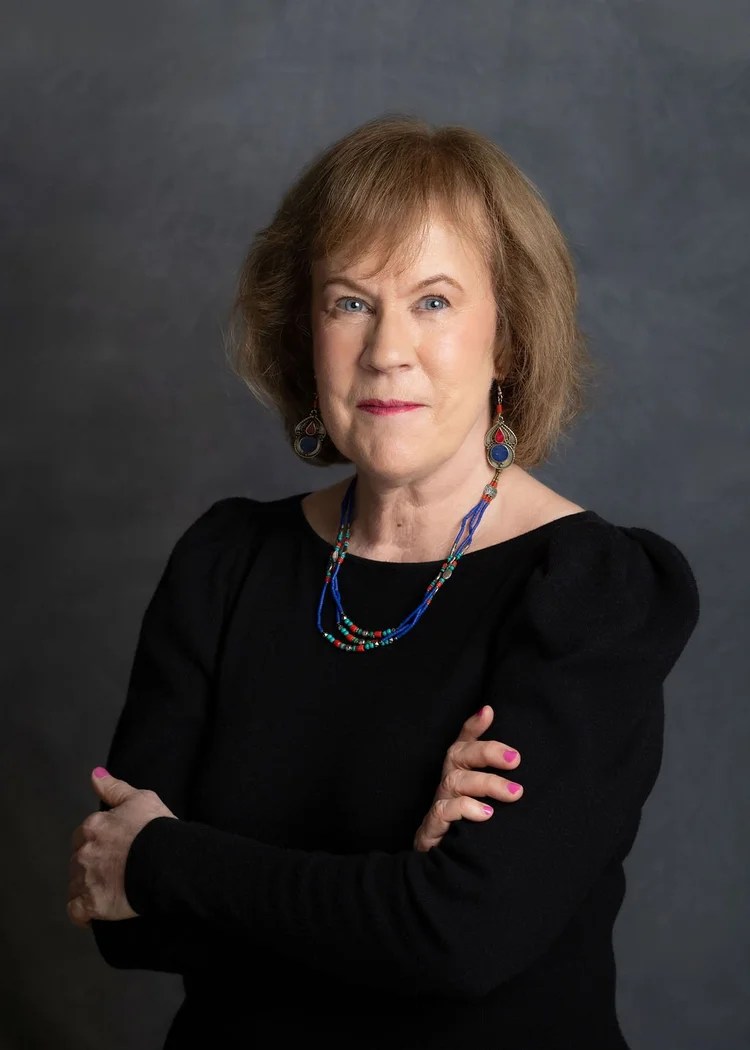
The Children of the Children follows a young man searching for answers and belonging, who found hope in an apocalyptic religious cult, one that his children would later try to escape. What was the initial idea behind this story, and how did that transform as you were writing the novel?
I got the idea for this story not long after the Cold War ended. Freedom seemed to be breaking out everywhere. What a difference a few decades have made. Authoritarianism is on the advance all over the world. So the novel became darker. Early in the story, Father Joseph says, “You give people a choice – freedom for themselves but also for their enemies, or subjugation for their enemies but also for themselves – and they’ll choose subjugation.” But it doesn’t have to be this way. I believe we choose our own destinies, both as an individual and as a society.
What kind of research did you do for this novel to ensure you captured the essence of the story’s theme?
My main research was as an observer of human behavior. I’ve watched as family and friends have joined religions and left religions, trying to understand the evolution of their views and my own. I also re-read parts of the Bible, familiar to me for years, with a more open mind, asking myself not how the words could be used to comfort or inspire, but to control. Telling people that the Bible is infallible is like putting a gun in their hands. Who knows what they’ll do with it. In fact, Father Joseph’s Letters to his followers were the easiest part of this novel to write, because there were so many verses that, read the right way (or perhaps I should say the wrong way), could be used to back up what he was saying.
What were some themes that were important for you to explore in this book?
The main theme I tried to explore was the religious theme. Religion gets to the core of who we are as human beings, offering answers to where we come from, how to live our lives, and where we go after we die. But religion can be used against us. Abuse in extremist religion isn’t just possible, it’s practically inevitable. If a religious leader’s followers believe the Bible is infallible, then that leader can use nearly anything from the Bible to justify his actions.
A second theme in the novel is how national and even international events can shape decisions that people make about their personal lives, in ways they may not realize. Danny drops out of U.S. society at the height of the Vietnam War; years later, his son tries to escape a cult as East Europeans are escaping communism. The Children of the Children is set against a backdrop of world events. This was deliberate.
Were you able to achieve everything you wanted with the characters in the novel?
I think there’s a mistaken idea that people join cults because they’re “messed up,” or had a bad childhood, or are on drugs. By telling ourselves that, we insulate ourselves from the disturbing truth: Anyone can become susceptible to cults or to cult-like thinking. I showed where Danny, Deborah, and other characters were in their lives before they joined the Fishermen, and where they ended up at the end of the novel. Yes, I achieved what I wanted to.
Author Links: GoodReads | Facebook | Website
Danny Calvert thinks part of American society is about to crash and burn. Capitalism, if he’s lucky. But when a college friend dies in jail, he joins an apocalyptic religious cult and begins printing the increasingly dark writings of its charismatic leader. Father Joseph says “unless you become like children, you will never enter the Kingdom of Heaven.”
But “become like children” means just that. Father Joseph moves his followers to Europe to avoid scrutiny, and controls them such that Danny isn’t allowed to marry Deborah, the woman he loves, but is forced to marry someone else. He has children by both women, and they’re as determined to escape the world they grew up in as Danny was to escape his own world years ago.
Set during the last years of the Cold War, and inspired by real events, The Children of the Children explores the price that people pay for following a leader who demands unquestioning belief, and the price their children pay to break free.



 LITERARY TITAN